For the Love of Gold

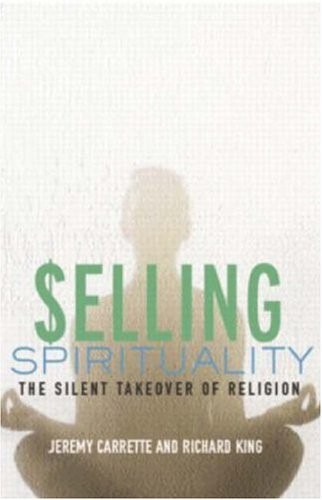
Do you ever get that feeling that you’ve been led along by a false premise that has gotten out of hand, like a practical joke that has gone too far? If I had to rate the books discussed on this blog in terms of urgency, Jeremy Carrette and Richard King’s Selling Spirituality: The Silent Takeover of Religion would top that list. I’ve felt for a long time that something’s been wrong, but I didn’t possess the training or resources to discern what it might be. I think Carrette and King may have named it. Just a few pages in and I knew there was profound insight here. Religion has been taken over by capitalism and the result is that alternatives to the godless, sanctified free market are rapidly disappearing. In a truly Orwellian sense, we have been taught the language of capitalism and have lost the ability to frame our ideas in any other way. Free markets take no prisoners—one must assimilate or die. Religions, which had traditionally served as correctives to selfishness and greed, have been co-opted into the forces of unbridled gain for the few. Amorphously marketed as “spirituality,” what sounds like religious conviction now lives in the service of consumerism.

By slowly shifting all our language and metaphors into those of Reaganomics (the very fact that you know what that means shows how far gone we already are) the capitalist machine, supported by the flaccid terms of spirituality, has established a new god—capital—and has pilloried any who dare question it. Think of the trashy phrase “prosperity gospel” for just one minute and you’ll see what I mean. Those of us who disagree with the orthodoxy that meaning can be found in money have become the resistance in a war we did not start. The twin hellions of privatization and corporatization have sunk their fangs deeply into the jugular of society and its old-fashioned value of caring for others. People are, like strangers in a strange land, just marks for the powerful. We’ll buy anything if it looks attractive enough.

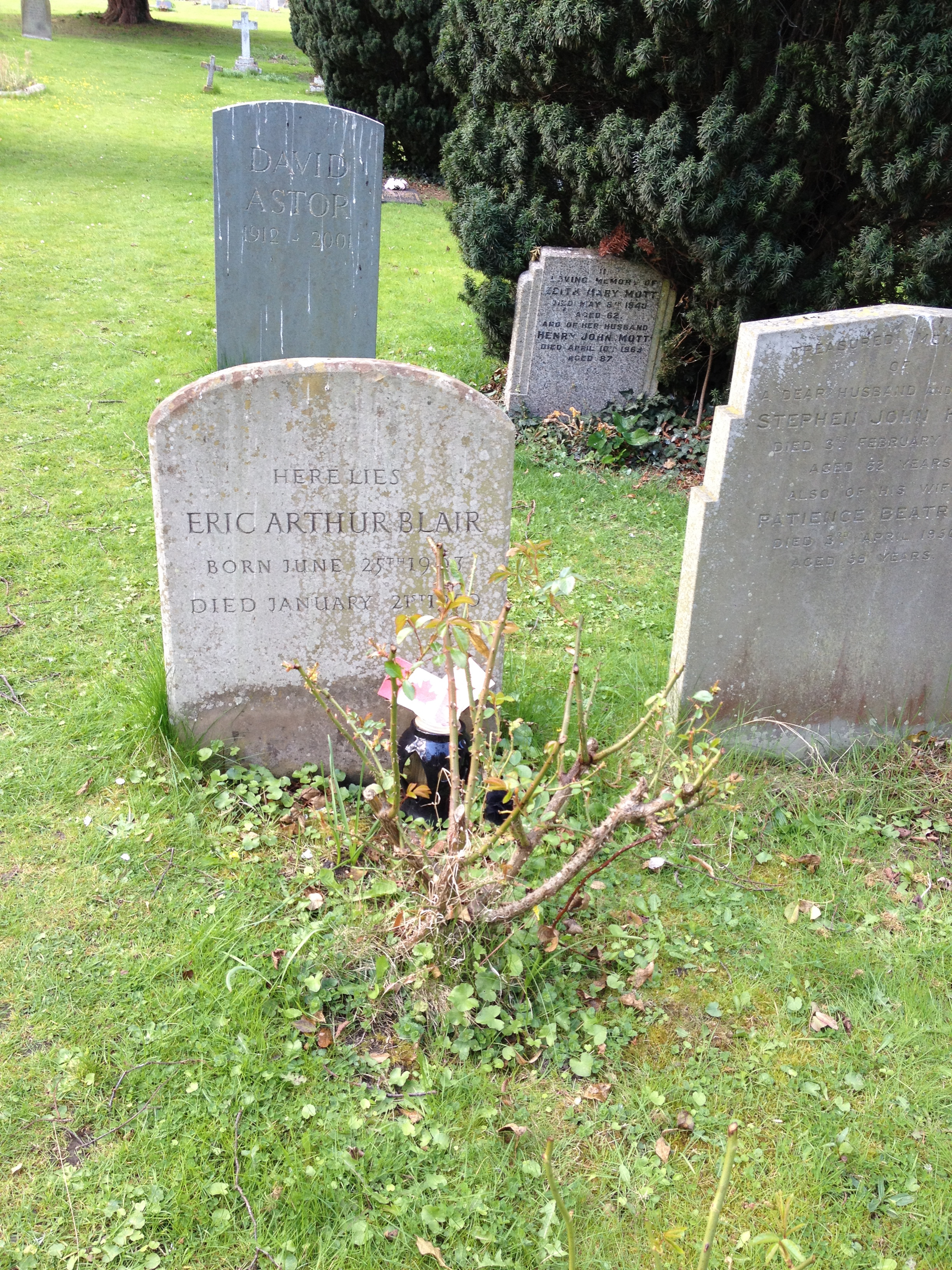
The problem with consumerism is that it is easy. We all love to play along because—who knows?—we might end up getting rich in the process. We have gained the world and lost our souls. Carrette and King show clearly how entrepreneurs have learned to market the language of religion while divesting it of its venom. Go along, it urges, everything is fine. Even the economic collapse brought on scarcely two decades after Reaganomics has failed to convince the average citizen that they are but a petroleum bi-product to grease the unrelenting gears of commerce. Anything, even salvation, can be sold. Back in April I stood beside the graves of Eric Arthur Blair (George Orwell) and Karl Marx. And maybe in an unguarded moment I shed a tear or two that critical thinking seems to have been buried along with those who were brave enough to state the obvious.
Sutton Courtenay

Sutton Courtenay lies sleepily outside the bustling business complex known as Milton Park. Over my work time at Routledge in the United Kingdom, I have been immersed in the frenetic world of academic publishing. Putting a book together and selling it may seem a simple prospect, but in reality it involves many people at multiple stages who specialize in everything from writing content to ensuring that the four-color print of the cover looks just right. Sometimes working in publishing one can get so close to the trees that the forest really does become invisible. So it was that a friend of mine took me to Sutton Courtenay over lunch one day. The hamlet was very quiet. Next to the clattering pub—the only real sign of life here in midday—stood the gateway to an abbey long decayed to dust. Iconic thatched roofs and brilliant grassy greens make this place seem very far indeed from the negotiations and dealing that take place just down the road in Milton Park.

In a silent cemetery dotted with yew trees just behind the twelfth-century Norman All Saints’ church, rest a couple of very influential people. Lord Asquith, sometime Prime Minister, holds the most prominent place. A few paces away in an unassuming grave are the remains of Eric Arthur Blair. Unless you knew his penname, you wouldn’t be aware that you were in the presence of George Orwell. Orwell never lived in Sutton Courtenay. When he died in 1950, requesting to be buried nearest where he died, there was no room in the interment grounds. Millions of people live in London and millions have died there. The image conjured in the mind is distinctly Orwellian. Sonia Brownell, his widow, with the help of David Astor, found a resting place in Sutton Courtenay.

Today one would be hard-pressed to find a school child in Britain or the United States who has not been assigned to read one or both of Orwell’s prescient novels. Orwell’s anti-fascist views were often eerily prophetic. In 1949 1984 seemed a long way off. As the latter year came and went, some heaved a sigh of relief that Big Brother never arrived. Those who labor away in busy office parks, those who attempt to board a commercial airliner, those who live in cardboard boxes on busy city streets, and those who pay taxes so that the wealthy won’t have to, however, know that Big Brother is indeed alive. He has grown crafty with age and is well adapted to camouflage. He is known by many names: Free Market, Laissea Faire, Unrestrained Capitalism. One place he is not to be found is in a quiet churchyard in Sutton Courtenay contemplating a simple stone to a man named Eric Arthur Blair.


Monsters Are Due on Elm Street

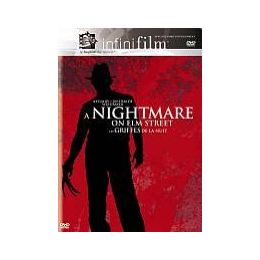
November 1984. George Orwell’s dark vision had not fully emerged, but the veneer had worn off of the fairy-tale world promoted by the evangelical, free-market professors at Grove City College. As a blue-collar kid in a blue-blood institution, I was out of place. The campus was buzzing, however, about a new movie—A Nightmare on Elm Street—for which I finally plucked up the courage to ask a cute coed for a date. I’d never seen a slasher movie before, having sampled mostly traditional monster-flick fare as a child. I felt a sense of accomplishment since some of my college friends had to leave the theater for fear. On the big screen, with no previous knowledge of the plot, the film worked for me on many levels. Last night I decided to watch it again.

My first reaction was a sense of surprise at how much of the movie I still recalled with pristine clarity. For having been nearly thirty years ago, such clarity is a rare phenomenon for many details of life, often reserved for memories of early girlfriends. A second reaction was noticing how religion featured in the film. The girls skipping rope chant, “One, two, Freddy’s coming for you / Three, four, better lock your door / Five, six, grab your crucifix.” Indeed, the crucifix features in several scenes as an ineffectual weapon against Freddie Krueger. The days of defying vampires are over when your own subconscious turns on you. In one of the early chase sequences, Freddie, raising his infamous glove, says, “This is God!” Religion and its overarching concerns with death and suffering come together with horror in that one moment. The traditional power structures of religion have lost their power to defend the troubled teenagers. The only one well adjusted is, ironically, Johnny Depp’s Glen. Even he falls victim to the revenge sought by Krueger.

Surprisingly, the scene I had most trouble recalling was the end. I recollected the bright, hazy sunshine, but couldn’t remember how Wes Craven released his audience from the drama. Of course, there is no end. Freddie came back in countless sequels, none of which I ever watched. Although I wouldn’t know it at the time, Robert Englund based the screen presence of Freddie on Klaus Kinski’s Nosferatu in Werner Herzog’s classic remake of that silent gem. Freddie is the vampire that defies religious cures. Movie villains are among the most adept practitioners of resurrection on the silver screen. The occasional E.T., Neo, or Spock will come back from the dead, but those who repeatedly return are the denizens of our nightmares. As Orwell’s vision continues to unfold in subtle ways, 1984 looks like an age of innocence before the ineffectual god worshipped by the establishment became self-image, writ large, on Elm Street.


Brave New Whirled

Today marks the triumph of capitalism. Having just finished reading Aldous Huxley’s Brave New World for the first time since my undergraduate days, I found it strangely appropriate and prescient. Huxley foresaw a bleak future where comfort and convenience outweighed concerns for truth and meaning. As the World Controller of Western Europe reveals to Mr. Savage, it was the Nine Year’s War that made people so docile that they would accept complete government control over their private lives. Read “9-11” for the Nine Year’s War, and he pretty much nailed it. Americans today put up with severely restricted freedoms because only the rich and powerful are truly free. We even have Huxley’s “feelies” – we just call it the TSA checkpoint at the airport.

“But I don’t want comfort. I want God, I want poetry, I want real danger, I want freedom, I want goodness. I want sin.” So says Mr. Savage shortly before his tragic end. The remainder of society – those willing to play along with the game, those willing to be anesthetized with the little perks the government throws their way – are already dead. “Let them eat cake.” We have our hedonistic day of shopping frenzy, looking forward to the soma of Christmas. We will comply despite the dehumanization the unemployed, the unwary traveler, the racially profiled, face every other day. As long as we have our electronic toys and the network into which they may be plugged, guide us o thou great Patriot Act. Freedom is not free. Orwell called it doublethink. Today it is doubleclick.

Novels have the capacity to say what libraries full of dusty dissertations cannot. Perhaps the future has not turned out quite the way Orwell or Huxley or Burgess predicted, but they were not far off. November has become the month of the novel. The Office of Letters and Light hosts National Novel Writing Month (NaNoWriMo for those in the know) each year to encourage others to find their creative voice. The challenge: write a 50,000-word novel fully in the month of November. I finished mine in just over two weeks. Perhaps someone who has the good fortune to break into the publishing world will once again sound that warning shot before society takes its next Huxleyian turn. But until then, anyone who says they don’t need a gramme or two of soma, well, they’re just plain lying.


Animal Alarm

Where was Moses when the lights went out?

Where was Moses when the lights went out?

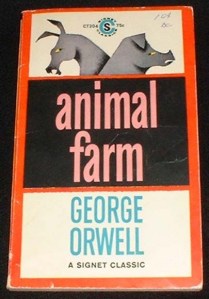
After undergoing a bout of oral surgery earlier this week, even before the nitrous oxide wore completely off, I pulled George Orwell’s Animal Farm off the shelf for a re-read. I hadn’t read it since at least 1984. It was even more disturbing reading it this time just off the Bush-Cheney years, and I realized that the Napoleons and Squealers are still with us. As a prophet Orwell may not have always got the dates right, but he was clever at spotting trends.

In this reading of Animal Farm a minor character leaped out at me. Among the tame, but non-domesticated animals was the raven Moses. Moses is the special favorite of farmer Jones and tells the animals of Sugarcandy Mountain vaguely up in the sky, where conformist animals go when they die. When the rebellion takes place, Moses flies off and remains absent until near the end of the story when the situation has deteriorated. Once again he is back to tell the others about Sugarcandy Mountain. The connection between Moses and Mount Sinai is transparent, although the heavenly connection is slightly misplaced.

The Hebrew Bible (certainly in the period of Moses) does not recognize what will become the Christian concept of Heaven. Like many ancient West Asians, they supposed that Yahweh lived “up there” at times (at other times he lived in the temple, or on the world at large, or atop some mountain). The “heaven” they knew of had no place for dead humans; the afterlife was a concept that developed very slowly. Moses’ motivation for the ancient Israelites, however, also resonates in Animal Farm, even as it does in the startlingly similar film Chicken Run — freedom. Freedom is the pipe-dream of many religions, but even as early as Moses those dreams run into regulations. Religions have laws long before they have heavens. Perhaps Orwell was onto something after all.