Beyond Redemption?

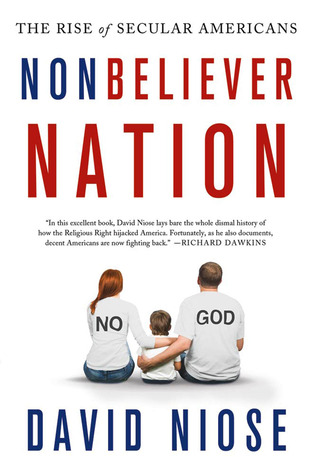
NonbelieverNation The Roman emperor Gaius, it is said, was insane. He perpetrated such antics as declaring war on the North Sea, making his horse a senator, and appearing in public dressed as various gods. Better known as Caligula, Gaius is often presented as evidence of the decadence that would eventually lead to the fall of the Roman Empire. Civilization, we’re told, has progressed enormously since then. We put people on the moon, and we carry in our pockets technology that appears, to mere mortals, as if it’s magic. We have elected an African-American to the White House and men have magnanimously granted females the right to vote. Oh how far we’ve come! And yet, in the midst of our self-congratulation, we have not one, but a plethora of high-ranking politicians in all three branches of the government who believe the world is only 6000 years old. They firmly believe Jesus will return on a white horse (presumably to be made a senator) any day now. And there will be a massive battle of good (us, or at least some of us) versus evil (those not evangelical in orientation) that will lead to the end of the world. And they are easily elected. Is that a knowing smile I see on Gaius’ face?

David Niose, president of the Secular Coalition for America, has written an important book entitled Nonbeliever Nation: The Rise of Secular Americans. Before you run for your shotguns, be assured that Niose is—like most secularists—not trying to do away with religion. Secularity is all about the founding principles of this country: freedom of conscience, the right to believe what we will. Or won’t. Up until the 1950’s the secular aspect of this country was taken more or less for granted. Tellingly, Niose opens his book by looking at the presidential elections of 1912 in which not one of the four candidates had a problem with evolution and even the most religious of them was very much a moderate. A century later and we have rampant Fundamentalists well funded and ready to push other nations toward initiating Armageddon. “Well, they started it!” And still, secular Americans are consistently portrayed as insidious snakes in the garden, trying to destroy everything.

It is difficult to read Nonbeliever Nation and not feel embarrassed as we see the promise of an advanced nation winding back its clock to the point that the educated are presented as ignorant at best—or more likely, evil. Where churches and corporations are increasingly difficult to tell apart, and where basic civil liberties for women and gays are still considered somewhat suspect, as if they hadn’t cleared the desk of the Big Man upstairs. Yes, he does have a beard and a son. And yet, despite the message of that putative son—known as a pacifist with radical ideas about social equality—the faithful bar the way for the oppressed while building the most massive arsenal in the world’s history. Rome, they say, was not built in a day. It didn’t even fall until 476, but already in the first century, large cracks had begun to appear. The difference is that America is far more religious. Does that give us any better chances, or worse? Read David Niose and decide. And, since global warming is real, the North Sea will eventually win in the end.


Truth Fully

An article on science reporting on the BBC has me thinking about truth. Again. Truth is, of course, a philosophical concept. What it means is a matter of debate, and always has been. The way that it’s used, however, is reflected in the debate-oriented situation in the story. According to IFL Science’s Lisa Winter, the BBC has been tasked with tightening up its science programs to avoid the dilemma posed by the “two sides to every story approach.” While not denying that debate is the lifeblood of science, assessing the strength of the debate is essential. For example, there is a true scientific consensus about global warming. Those who deny it are generally backed by either corporate or religious causes that motivate them to claim the truth lies elsewhere. Truth is a very slippery term. And anybody can use it and claim it. In philosophy there’s no answer key in the back of the book.

Photo credit: Marretao22, Wikimedia Commons

Photo credit: Marretao22, Wikimedia Commons

Science, which I’ve admired from my earliest years, has a really, really strong track record of describing the physical universe accurately. Truly enormous paradigm shifts are rare in science and must be accompanied by stringent evidence. Sometimes critics grow frustrated at the slowness of science to accept something that seems obvious, but scientific thinking is nothing if not careful. Enter religion. The claims of most religions lay far beyond the reach of science. And yet, religion too has a really, really good track record—not of describing the physical universe (at which it often does abysmally poorly), but of providing meaning to human lives. Scientists have actually studied this. Religion, like it or not, does help. When it makes a claim on truth, however, a religion often comes into conflict with science. And the problem is that policies based on faulty scientific outlooks can have catastrophic consequences.

So what is truth? If we define it as what really, physically describes the material universe, science is onto it. In fact, science has the best chance of giving us an intellectually honest answer. If we define truth as what a certain deity declared law about a particular aspect of human life, science can’t help. Science doesn’t concern itself with gods or their putative decrees. Religion, however, does. And a vast part of the population votes for leadership based on religious beliefs rather than on scientific principles. And most have not taken too many classes in philosophy. In a democracy we both benefit and suffer under the weight of public opinion. And right now, it seems, public opinion considers philosophy as waste of time and would prefer the truth shrink-wrapped and ready for easy consumption.


Are You Being Served?

Weary from a long day at work, I stepped off the bus last night to find the street to my house barricaded. That’s seldom a good sign. From the looks of the sludgy stains along the street, it was pretty clear that we were dealing with a water-main break. Sure enough, at home, no water. As I pondered making supper, washing dishes, and brushing my teeth—all that I usually have time for before going to bed—I wondered how I’d do any of them without water. As humans do, I managed. This morning I awoke to find the faucets still empty and considered the prospect of going to work with no shower, when a natural kind of grumpiness settled over me. We expect water. We take it for granted. For much of the world, however, lack of clean water is one of the largest problems faced. Showing up for work in a modern city with dirty hair hardly seems like a major issue when children are dying of diseases due to lack of potable water. Water is a justice issue.

Some experts have been positing that the next great war (as if there’s anything such as a great war) will not be over oil, but water. Politics aside, we know that western involvement in Middle Eastern conflicts comes down to petroleum. They have what we want. Better make some friends. But water is even more basic than oil. Scientists have discovered many odd creatures in extreme environments on this planet, and all share this quality: life can’t go on without water. Even the amazing tardigrade, able to survive a decade without water, will eventually die without it. People can barely make it a day or two. We have the technology to make clean water possible for many. Instead we wonder what’s taking them so long with the repairs this time, and my gosh, it’s time to go to work and I can’t even brush my teeth. It’s a sliding scale of fairness. The ethics of economy.

I can’t put it off any longer. I’m going to need to head for the bus stop and await my fate. I live less than fifty miles from the ocean. All oceans are interconnected, covering a full three-fourths of our planet. With water we can’t drink. We emit our gases and melt our ice caps—some of the largest natural reservoirs of fresh water on the planet—thinking only of the joyous prospect of an overflowing bank account. What will we do, however, when we awake in the morning to find the water still off? Will we think of our fellow humans dying at this very moment for lack of life’s most basic necessity? Will we rush out to petition our leaders to ensure that safe water is provided to those without? Will we even remember this tomorrow? I know that like your average other guy I’ll find myself grumbling over the fact that I don’t have coffee, and it will seem that my petty world is suffering its own little apocalypse. And justice hasn’t been served.

Photo credit: Tiago Fioreze, Wiki Commons

Photo credit: Tiago Fioreze, Wiki Commons


Global Warning

“Sticks and stones,” the childhood wisdom goes, “may break my bones, but words will never harm me.” We were taught that little mantra as a response to being teased by bullies. But words can and do hurt. They can even be lethal. Although I’ve come to realize that specific words are inherently neither good nor bad, I’m still a little shy around some of them. The website known, euphemistically, as “IFL Science!” contains an f-bomb that sometimes makes me wary—what’s wrong with just regularly loving science? In any case, perhaps this adverbial use of the most versatile swear word is intended to make the website a bit of racy fun. The posts are often very good. So it was that I recently read a story about “Friends of Science.” This group, it seems, is paying good money to convince the scientifically illiterate that global warming is natural, caused by the sun and not emissions, and so we should just chill. IFL Science! points out that the group, however, receives money from petroleum companies. Sticks and stones.

450x436_q75

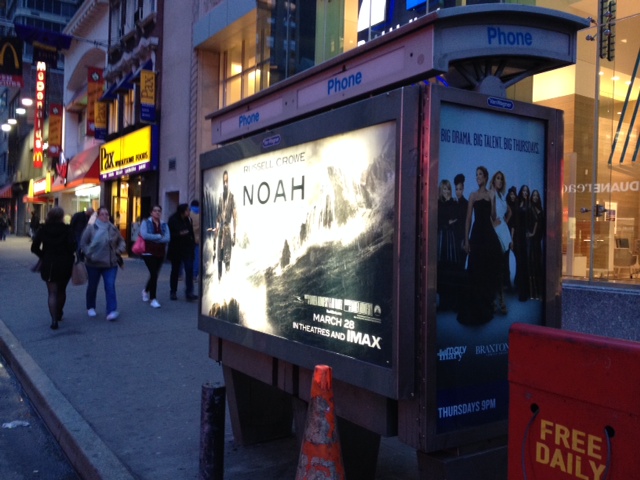
On my way to work this week, I noticed how many of the ads in ebullient, affluent Midtown Manhattan reflect dark shows and movies. It’s summertime, when we expect bright colors and sunny weather. Has it, perhaps, been too sunny? The best selling non-fiction book over the past few weeks has been on economic inequality and how it will lead to a good, old-fashioned primate crash. Going ape-crap on the bullies. Our species doesn’t tolerate radical unfairness for long. Those who suck money from under the ground may not fracking care about the rest of us, but they sure pull in the big money. Big enough to buy the truth. Our emissions, they seem to say, don’t stink. And that weird weather you’ve been noticing for the past decade or so? That’s normal. Words will never harm me.

Global warming is a reality.

Oligarchy comes in many forms, the most insidious of which is the benign overlord. The implied subtext is “if I am smart enough to make all this money, I must surely be smart enough to decide what’s best for everyone.” Call it the gold standard of hypocrisy. In an increasingly secular society where the rewards of heaven devolve to what we can grab on earth, this might even be called a kind of theology. We all know that public policy and federal laws can be purchased, if we call it lobbying. Or election fund donations. The truth it seems, is up for sale. Call it Friends of Science—the name says it all. And if we’re tempted to add our own epithets, it might pay to ask what harm can words really do?


Jonahado

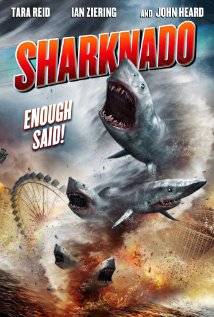
SharknadoSome movies are so bad that they become classics. Some are just plain bad. The jury in my head is still out on Sharknado. The story, obviously tongue-in-cheek, is so far-fetched as to be pretentious, and anyone who knows something about either sharks or tornadoes, or both, will likely find credibility waning from the first scene. For those sensible among my readers, who’ve not seen the movie, the title gives it all away. A global-warming-induced hurricane hurries toward Santa Monica with its forever young sun-worshippers. The hurricane floods the California coast, bringing sharks to the city streets. As our protagonists drive around somewhat pointlessly, the sharks attack their car, eventually eating everyone who’s not family. At one point the family tries to buy rations at a liquor store, only to have the news announce that this is the apocalypse. The store owner scowls that it’s the government, not God, that’s bringing this upon them. Then the waterspouts appear, morphing into tornadoes carrying sharks, still hungrily chomping at everything as they fly through the air.

Ironically a biblical theme comes about with the swallowing of Nova. As she falls from a helicopter (don’t ask), a great white shark snaps her up in mid-air, and since she’s about the only character you can care about, the movie seems to have reached its nadir. As the tornadoes dissipate and the sharks coming raining down, the eponymously named Fin is swallowed whole by a huge great white, while still holding his chainsaw. We already know that this latter-day Jonah will make his way back out, and we are supposed to be surprised that this is the very same shark that holds the reborn Nova, who admits her real name is Jenny Lynn. Like Neo in The Matrix, she is the convert to a new faith, this time in the family of Fin, whose only fault, it seems, is that he cares too much for others.

While a made-for-television B movie (although C or D might be more appropriate), Sharknado demonstrates the popular conception of the apocalypse. Not that it will involve flying sharks and destructive wind-storms, but that the end of the world is somehow inevitable. We have convinced ourselves that its a matter of when, not if, the world will meet its demise. Global warming, clearly our fault, is blamed by the movie (as is the government), but the story is that the flimsy culture we’ve constructed is subject to utter ruin by a hurricane and maritime predators. Or I could be reading far too much into this. Religious tropes may be picked and chosen at will. And when things really go wrong, like accidentally switching on Sharknado, we have a ready arsenal of religious ideas at hand to blame. And the apocalypse may be the least of our worries.


Science Fiction Double Feature

Two news stories last week—one from the Associated Press and one from the Chronicle of Higher Education—hit upon a common theme: scientific illiteracy. Both articles presented scientists who felt that if they could just reach the (mostly) American public with easily digested facts, then belief in the Big Bang, evolution, and global warming would suddenly make sense to everyone. It may not be my place to say, as I’m not a scientist, but I believe they’re wrong. Don’t misunderstand. I do believe in the Big Bang, evolution, and global warming. In fact, I spent part of last week flagellating myself (metaphorically) for not posting something appropriate on Earth Day. I worry a lot about global warming and what we do to our only planet. What I mean is, these scientists don’t understand religion. People don’t willfully reject the facts. That takes religion.

One of the reasons that I continue my daily efforts on this blog is that our educated elite constantly refuse to acknowledge the blue whale in the room. People are naturally religious. Some grow out of it, some are educated out of it. For most, however, the price to do so is far too high. Science offers little to take the place of faith. For all of its innuendo, the Big Bang tends to leave most of us cold. I don’t support religions spreading ignorance, but even the Bible recognized that it is useless to say to a poor person, “stay warm and well fed” if you don’t offer a blanket and some food as well. It’s chilly in an infinite, yet expanding universe. Why don’t scientist understand that if you give a jacket, maybe people might actually warm up and listen?

hs-2010-13-a-large_web

Religion, however we define it, is a coping mechanism. Even many atheist biologists admit that it has an evolutionary utility, embarrassing as that may be. Evolutionary scientists also tell us that we don’t evolve according to plan. Nature (de-personified, of course) opportunistically uses what’s at hand to help creatures survive. Instead of trying to understand religion, many in the hard sciences think that speaking loudly in single-syllable words will convince those who’ve found meaning in evolution’s solution of religion that somehow evolution was wrong. The worst thing we can do is to waste more money trying to understand religion! I hear it’s very cold in outer space. Still, things seem to be warming up down here. For those who can’t evolve gills, it’s time to learn to swim.


Flood of Fancy

Years ago I was approached to write a book about Noah. There was still some hope at that time that I might find a university job and that my words would have more credibility than just any old internet hack. At the time I’d read just about every book about Noah that had been written—and there weren’t that many. Biblical scholars, beyond tying the story to its obvious Mesopotamian sources, have long relegated the tale to the nursery school of biblical drama. Sure, it’s a great story, but what serious scholar takes an interest in a great story? Well, I outlived my academic job and it looks like Noah is going to have the last laugh. We’re told that the Pope has been tweeted about the movie by Russell Crowe and that several Islamic nations have already banned it. According to Today Darren Aronofsky, the director, is more interested in getting non-believers into the theater than trying to please the faithful. Well, let’s face it. A movie based strictly on the Bible would have to be pretty preachy.

The bigger draw seems to be this: our society is simultaneously deemed secular and religious. Americans go to church. They also respond to surveys that they believe in God, the Devil, Heaven, and Hell. They also act as if none of this were true. Business practices tend to be anything but caring, and we show no concerted effort to make sure basic healthcare is offered to all our citizens, let alone the millions who are daily suffering and dying elsewhere in the world. We don’t want to reduce our emissions as a real flood—a literal flood—is on the rise on a global scale. Maybe we’re waiting for a biblical-scale miracle to save us. Noah’s face stares out at you all across Midtown. Judgment is upon us.

NoahMovie

Action films draw male viewers. Religious movies draw females. Aronofsky and Crowe have the winning combination. No gender-bias for a secular-religious nation that has enough loose change to spend a weekend at the movies. The biggest complaint is that it isn’t the Bible. I have to admit I’m kind of enjoying the hype, despite the fact that I never received the chance to write that Noah book that was next on my agenda. If I had, now it might have enjoyed the sales that Irving Finkel’s The Ark Before Noah—scheduled for release three days before the movie—surely will. Timing has never been my strong suit. Of course, money can be its own sort of flood, and many more drown in it than in the literal waters of a secular-religious society. According to Genesis a raven was released to fly about looking for land. The Crowe might have been a better choice since movies, as we all know, improve upon the book.


Snow Job

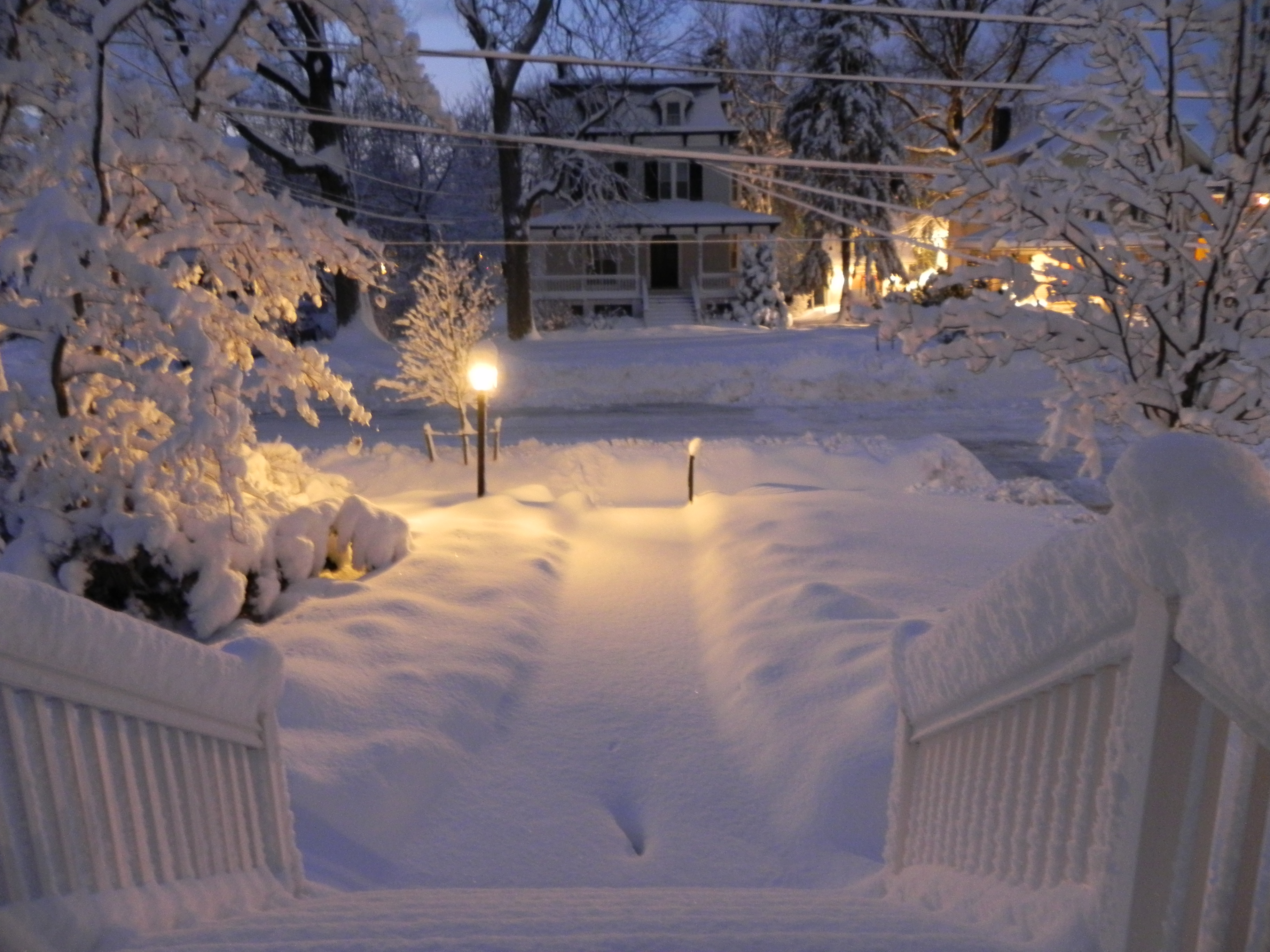
Snow does not get mentioned very often in the Psalms. Sometimes it surprises people unfamiliar with Israel that the Bible mentions snow at all. It does, and snow does fall once in a while on the higher elevations of the hills of the Levant. This year has been a memorable one for snow in the New York City area. Generally speaking, the coastal cities of the northeast are not known for their snow. This year, however, global warming is flexing its muscles as erratic weather brings storm after storm to the region. Interestingly, an internet rumor of a thirty-inch snowstorm (supposed to have come earlier this week) demonstrates just how gullible we’ve become. If it’s on the internet it must be true.

A story in the New Jersey Star-Ledger traces how the rumor began, starting with an experimental weather model by a credentialed meteorologist, which, in the keyboards of novices, grew to biblical proportions. Fact checking is something we just don’t bother with any more. The facile understanding of “global warming” as tropics for everyone shows that. The internet makes information—true or false—available at nearly the speed of light anywhere on the globe. Except where the power is out, perhaps due to weather. Not only does knowledge spread quickly, ignorance is just as fast. People weary of snow are perhaps more open to suggestion than others. We don’t hear our Minnesota or Wisconsin friends complaining (at least not too much).

There was a time when the standard sources of authority determined what we would believe. We didn’t accept just anybody’s word for it just because they had a Facebook account. For all the debunking that we hear about, it is easier to preach than to practice. Don’t get me wrong, sledging to work through piles of snow is not fun and the old circulation isn’t as vital as it used to be, so I have to add more layers than is practical to keep warm. But I’m not expecting palm trees and rain forests in Manhattan any time soon. Nor am I expecting a three-foot dump of snow. I know better than to trust what I read on the internet. After all, they even let me post things on it every day. Talk about your theoretical blizzard…

DSCN0099


Porcine Prognostication

Punxsutawney Phil phled his shadow this morning, leaving many despairing another six weeks of winter, which meteorology seems to dictate anyway. I used to tell my students that Phil is a most peculiar prophet, in that he is, presumably, neither Christian nor Jew, but rather of the rodent religion (whatever that may be). People pretend the little guy has powers beyond those of the average mammal when it comes to predicting vast, chaotic systems. If a groundhog flaps his eyelids in Pennsylvania, prepare for plows and shovels and more thermal underwear. Playing into this annual phenomenon is the provocative persistence of the idea that prophecy is prediction. As much as scholars attempt to expunge the idea that foretelling wasn’t what prophets were ever really about, the populace likely wouldn’t have paid them any attention, had the possibility not presented itself that these preachers knew something the rest of people didn’t.

Prophecy is a strange phenomenon. We claim that we would like to know the future, but I’m not sure that we really would. Knowing that we’ve set ourselves on many tracks that inevitably lead to tears, do we really want to know? After taking my daughter back to college, we sat in a fast-food place to grab a bite on the way home. It had been snowing again, as it will do in the winter, and the television in the corner was blaring on about another apocalyptic band of snow. A bearded and burly Pennsylvanian at the next table turned to me, attracted, I supposed by my own facial hair, and said, “What about this global warming?” I nodded politely, not being very burly myself, but I thought of the fact that global warming does mean more severe winters in some places and warmer conditions in others. It is marked, scientists predict, by erratic weather, not a constant sauna in those regions accustomed to snow.

Although a Pennsylvanian by birth, I have noticed that my ancestral New Jersey does not receive much snow. Until this year. We’ve had the white stuff on the ground for over two weeks in a row. Yes, it snows in winter, but not usually here. I shiver and think of global warming. It is a chilling thought. Punxsutawney Phil may live far enough inland not to have to worry about learning to swim, but the same can’t be said of the inhabitants of most of the major cities of this country. We know it is coming, but we turn a blind eye. Progress in the name of unbridled big business interests brighten a future otherwise a bit more gloomy than we might prefer. Phil ducks back into his burrow and the rest of us clutch our coats a little tighter around us. Prophecy is a mixed blessing indeed. We already know the outcome before the groundhog awakes.

An agnostic groundhog ponders the inevitable (photo credit: I. EIC)

An agnostic groundhog ponders the inevitable (photo credit: I. EIC)


Weather or Not

The internet’s nothing if not self-referential. A post by Fred Clark over on Patheos, pointed out to me by my brother-in-law, has received 235 comments (at the time of this writing) for a topic I’ve addressed repeatedly, to no avail. I know my place. In any case, the topic which brought such furor was that severe weather is caused by divine displeasure, something I’ve addressed a time or two. In fact, I’ve written a book about it. Never mind, some of us revel in obscurity. Fred is writing about the remarks of former Tory David Silvester that the UK has been suffering unusually severe weather because of homosexual marriage. That’s really old news to those of us over here in the colonies; Pat Robertson told us as much after Katrina (although he didn’t limit the sins to homosexuality). Sex tends to stir up storms of its own, regardless of divine voyeurism, while we ignore the obvious culprit—global warming. (Culprit of unusually severe weather, not of sex.)

Global warming, as a recent conversation with a very smart undergraduate confirmed, is a poor name choice. Those of us on the northeastern coastal corridor have been shivering a lot this winter, and snow has remained on the sidewalks of Manhattan for more than a single day at a time. You call this global warming? Yes. The science behind climatology tells us that warming the overall temperatures of the globe will result in erratic weather, including uncharacteristically cold and freezing in some locations, dampness in others, while yet others experience, yes, warming. We know it is real, we know it is happening. We just don’t know what to call it. Some choose to call it God’s wrath. Others choose to name it more properly human shortsightedness. After we hunted the last mammoth down, we decided to start building bigger fires to warm the ice age up a bit. Those fires have been burning ever since.

IMG_3659

My book on the weather, by the way, suggests that divine control of the elements is an essential part of the biblical mindset. To ancient folk this was a no-brainer. God is in (his) heaven and messing with the HVAC system is one of the ways (he) passes the time. Down here we may shiver, become parched, or get washed away. It’s all a matter of the divine thermostat. As Fred Clark points out, the divine temperament sets the temperature based on human activity. Sin leads to unusual weather. Unwittingly, however, David Silvester may have gotten it right. There is a sin involved, and that sin is called global warming. No deity need be involved. We have shown that humans are quite capable of messing with the thermostat on our own. And the day I get 235 comments on anything it will be a very cold day in a place famed for its heat.


Heat’s Up

800px-GISS_temperature_2000-09_lrg

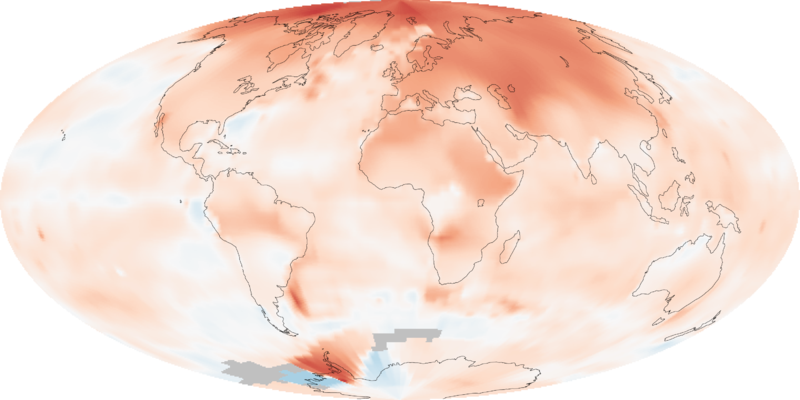
I must admit being perplexed. Days ago, although many of us have long known it to be true, climate scientists announced unequivocal evidence that human activity is responsible for global warming. I have perhaps been naive in my supposition that the “full speed ahead and damn the torpedoes” approach of some fundamentalist groups that welcome anything that speeds along the apocalypse, has played a major role. Maybe it was because so many politicians openly sided with such groups that that I supposed the two concepts to be connected. I suspect, however, that it may be something much more insidious. How can any intelligent person refuse to admit the facts when the consequences are nothing shy of catastrophic? How can elected officials turn a blind eye to the desolation of their own planet? It must be more than simple ignorance. But what?

Those in my generation—however we are currently classed—have been declared to be those attempting to make up for the excesses of the “me generation.” I’m not sure who the “me generation” is, but I know when I see individuals who allow their personal gain to endanger everything that has come along since the Sumerians invented the wheel, I feel a little queasy. What could the Zeitgeist have been that infected so many minds with such a godlike sense of entitlement? We call the younger demographic the “entitlement generation,” but when I taught them in college, they were much more environmentally conscious than many elected officials. They at least could see beyond their own wallets. They take pride in recycling.

It would seem to me that even if (and it doesn’t) the Bible suggested that the world itself would end to bring about a better one, we assume too much divine prerogative when we proactively destroy the only ground upon which we stand. Has any religion ever been so truly shortsighted? And that’s asking quite a lot, if you think about it. Or is religious faith just an excuse to gather wealth at the expense of others? Does God want you to be rich? If so, it would seem, God would also want you to act responsibly. According to a report in The Guardian, there is no longer any question that the climate blame lies with us. Perhaps now that the smoking gun is on the table we will do the right thing. But then again, I admit to being perplexed. Maybe it’s just my generation. Or maybe I’m just hopelessly naive. I’m entitled.


High Tide

While the devastating rains in Colorado this month are a very serious concern, over the past several days I heard and read the adjective “biblical” associated with them several times. Even the National Weather Service made reference to “biblical rainfall amounts.” It’s true that the Bible does contain the most famous, if not exactly original, flood story in the modern world. The tale of Noah easily goes back to the Sumerians, and there are deluge stories from around the world that rival it in most details. Even in this secular age, though, we all still know that floods are the province of providence. It is of interest, however, how the word “biblical” has taken on a distinctly negative connotation. The most noteworthy of biblical materials are high literature of optimism and potential for good—and sweet heaven when we die. And yet, floods, droughts, plagues of insects, these are the “biblical” events in our lives.

Floods can indeed be devastating. They demonstrate the illusion of solidity under which we try to assure ourselves that the high ground is the safest place to be when the globe warms up, or God grows somewhat impatient with human antics. Biology has implanted deeply in our psyches the desire for a safe haven, a place where we can store our stuff securely. In fact, the “net worth” of an individual—so noteworthy when we die—is measured in terms of the material goods which we control, or “own.” The quality of a person’s inner life is not something of their “net worth” to society; it can’t be divvied up by lawyers and investors, and, in terms of legality, is unimportant. We are valued for our things.

That’s why floods are so pernicious. I don’t devalue the lives that have been lost, but the headlines declare the dollar amounts more loudly. Here is where the obvious clash between the days of Noah and our own come into play. The only goods the delugonaut took aboard the ark consisted of food and life itself (although the Sun Pictures version shows his family with anachronistic metal knives and even some furniture). When the whole world is flooded, the only property valued at all is that on the deck next to you. Our society values people by what they acquire rather than by who they are. Floods wipe out the former, leaving the latter harried but hopefully intact. If we were to build arks today, no doubt as the clear-cutting of rain forests with the subsequent extinction of countless species shows, we would use the choicest wood and would cram every last square inch with our stuff, while people and other animals outside beg for entrance onto the boats that we “earn.”

448px-Noah_mosaic


The Weather in Kansas

In a move that threatens intellectual whiplash, the Kansas State Board of Education has backed the Next Generation Science Standards. For a state historically at war with evolution, adopting a curriculum that (rightly) presents evolution and global warming as facts, there is cause for hope. As an average citizen sometimes just struggling to get by, I watch in stunned horror as our elected officials try to repeal Obamacare without touching their own health plans paid for by yours truly (and mine truly). I see them vote themselves pay raises while pension plans and salaries of ordinary citizens are frozen. I know where the buck actually does stop. So it is strangely encouraging to see a state that has declared war on science beginning to realize that yes, the truth does have consequences.

Science does not necessarily have all the answers, but it is the best that we know. The empirical method works, and our healthcare, transportation, and communication have all benefited enormously by it. Our way of life has grown easier because of our application of evolution and its ways to our understanding of microbes and the ways to hold off their attacks. Science has been warning us since I was a high schooler, over three decades ago, that our industrialization has been causing grave changes to our ecosystem. Unfortunately, those with money to make from it can simply afford to move to higher ground. Kansas is among the Great Plains states. It is wise to recognize that global warming threatens those who live close to the earth most of all.

The intolerance to science is not simply a religious reaction, as some would characterize it. Religion may be used in the interest of business. And any savvy entrepreneur knows, and exploits that fact. It matters not a jot or tittle if you evolved from a common ancestor with the apes, as long as you can climb, like King Kong, to the highest towers and look down on all the rest of humanity. The water from melting ice caps may be rising below, but the Great Ape need not worry. Until it becomes clear that without the little guys down below, even the top monkey is nobody.

NotInKansas


Lower Education

Many people have asked me, as a former professor, why universities are so expensive. Ironically, many of these people are in flourishing businesses where the story ought to be as tired as the excuse that’s usually trotted out: faculty are paid too much, mismanagement, etc., etc. The truth is much more insidious and it begins with governments and corporate executives who can’t handle the sharp sting of criticism. I have experienced this firsthand, and unlike many academics, I have an authentic blue-collar background so that my perspective is unclouded by generations of privilege. I recently found this post on The Homeless Adjunct, and I was glad that someone is actually willing to write the truth. The high cost of higher education is because a subtle series of changes—often deliberate—that have been instituted since the 1970s to change colleges and universities into engines to power capitalistic ventures rather than to educate potential critics. Those who have a hard time accepting conspiracy theories may be disturbed by how well documented this development is.

I realize that I am a mere proverbial voice crying out in an even more proverbial wilderness. The fact is, this change in higher education, implemented since the era of protest that was the 1960s, goes on without the knowledge of by far the majority of university faculty. They still tell their promising students to continue on to graduate school, that the bottleneck that has been holding up new, or even replacement, jobs is bound to burst. Things will get better. Not. As the Homeless Adjunct points out, corporate interests now run the universities, sucking up their prestige like bloated vampires, while endorsing their own manipulative interests. How can “educated” people believe global warming is a myth? Get corporations who “oppose” global warming to fund science programs and see what happens. The truth becomes quite malleable when lucre is involved.

Even more chilling, as our brave adjunct reveals, this model has begun to filter into high school, and down to Kindergarten. The way that educational decisions are made is based only, always, and ever on the bottom line. Not for our children, but for corporations that decide what our children can, and more importantly, can’t do. Their future is being undermined.

catalog

As a former adjunct who went blindly through the system, ending up with a doctorate from a major European research institution only to fall afoul of a thickly entrepreneurial administration, the clouds were wiped clean out of my eyes. I believe in higher education. And I believe that those of us with any moral sense are obligated to take it back. We will likely be destroyed in the process, since money is the only value our society recognizes, but if we want a world where our children can thrive, education must be true education.


Flood Warning

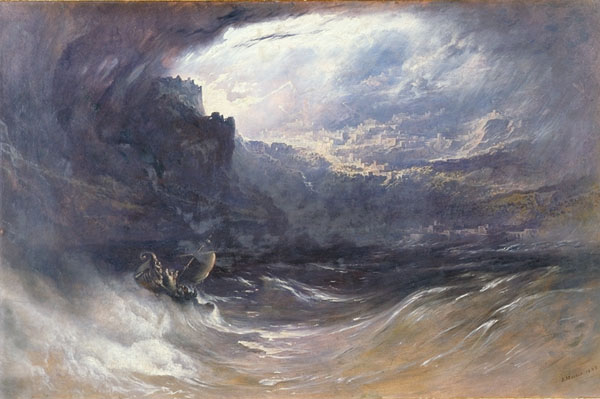
If you’re like any number of others in North America, you may be wondering when spring will arrive. Not meteorological spring—that has flown past already—but the warm, salubrious air that bears no wind chill factor. You might, like many, turn to the Weather Channel website. While you’re there you might see a story about extreme weather and Noah’s Flood. (You might need to scroll down the page to find it; the link seems to have been cursed.) The flood myth is a pervasive story. It appears in countless novels, movies (even Titanic and The Poseidon Adventure, for those who are willing to believe), and many baby’s nurseries. The weather this year has many wondering about global warming, although, honestly, we’ve known about it for years. Some are speculating that floods will become more common, and that’s almost certain. The Weather Channel, however, uses the myth to point out that people have experienced extreme weather from “the beginning.”

The trouble with this reasoning is that the story of Noah’s flood is not original to the Bible. It seems virtually certain that the writers of the biblical stories (there are two) knew the Babylonian version embedded in the tale of Gilgamesh. The writer of the Gilgamesh Epic knew the Sumerian version of the story, already centuries old by that point. And the story never really happened. At least not in historical time. Floods, yes. World-wide flood, no. The stories were told to make points, as most stories are. The point here seems to be that gods can be pretty petty if you neglect to offer them their due. Even minor sins can set you treading water for weeks at a time. Still, the Weather Channel considers the possibility that this could reveal ancient meteorology. Ancient morality is closer to the truth.

Every year around Easter the media peppers its workaday headlines with biblical tropes. It is the time to catch the quasi-religious thinking pious thoughts and click-throughs are more likely. Never mind that biblical scholars have known for many decades that this fetching tale is based more on a primitive Schadenfreude than modern science. Not that the Bible is devoid of ancient weather. I once wrote an ill-fated book about the topic. The people of ancient times knew that God has a special place in his sacred heart for the weather. It is one of the most awesome demonstrations of divine power. So it is in the story of Noah. For those of us in the twenty-first century it may still be a morality tale. This time, however, the flood is caused by human greed and lack of control. And this, when all is measured in the scales, may be among the worst sins humanity has ever committed.

Martin,_John_-_The_Deluge_-_1834