Yes, Maybe

The truth is, only experts and professionals can really keep up with horror films.  As the most successful genre of, well, genre films, there are tons of them.  I completely missed Ouija when it came out about a decade ago, despite the fact that it did well at the box office.  The only reason I watched it now was that a friend sent me a list of horror films from a reputable website that recommended the prequel to Ouija, but I felt that I needed to see the original before finding out what happened behind the scenes.  The original didn’t fare well with the critics and it’s pretty clear why.  The story, although it has twists, isn’t really convincing and the acting is off at times.  (Five teens left alone to watch a haunted house while their parents just take off for weeks at a time?)  Still, it’s atmospheric, and it plays on a scary theme.
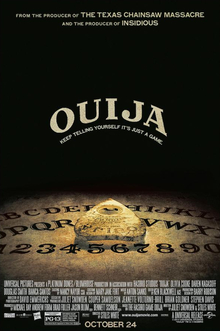
I must confess that ouija boards frighten me.  I consider myself both rational and skeptical (in the classic sense), but there’s just enough doubt with spirit boards.  I’ve never owned or played with one.  (Interestingly, the movie was funded in part by Hasbro, the current seller of the game.)  In fact, when I discovered the Grove City College yearbook was called Ouija, I was a bit put off.  (By the time I graduated they’d changed it to The Bridge.)  Although GCC wasn’t really traditionally gothic, like most colleges it had its share of ghost stories.  Even in conservative Christian country things go bump in the night.  And while most stories told about tragedy after using an ouija board are unverified in any way, still…

So, the movie posits a deceiving entity that kills teens who contact it.  I suspect I need to watch the prequel to find out why.  It does manage to have a few scares, but it’s mostly about atmosphere.  I agree with Poe on this point—atmosphere’s often the point of a story.  Although the critics are right (who discovers a body in the basement and goes to an asylum for advice instead of notifying the police?), some of us do watch horror films for this kind of haunted house experience.  And while I’ve got Poe in the room, the threat to young ladies is there.  One thing missing, though, is any talk of religion.  No Ed and Lorraine Warren warnings of demons.  This is a straight-up nasty dead person who likes to kill those who want to communicate with their dead friends.  It does create a mood.  And it cries out for a prequel.


Bigger Picture

One of the quirks of my thought process is that I tend to look for the bigger picture.  I’ve always done this and I suspect it drives some people batty when they ask me a question and I begin to answer from what seems to be a tangent.  (I also think this is why I performed well in the classroom.)  So, when I saw the article by Eric Holloway on Mind Matters, titled “Why Is Theology the Most Important Empirical Science,” I had to take a look.  Mostly a series of bullet-points that point out some of the religiously-motivated ideas that led to scientific discoveries, the article is useful.  My penchant for the big picture goes a bit broader, however.  The entire worldview in which the scientific process was born, and thus its underlying presuppositions, are religious.  Science and religion are the dogs and cats of the thought world but I’ve seen dogs and cats live happily together.

Science has always been with us.  Early peoples weren’t benighted troglodytes.  They observed, hypothesized, drew conclusions.  Science as we understand it, however, began in the Middle Ages in Europe, drawing on observations from earlier thought in the Arab world.  The context in that Arab world was solidly Muslim.  The Middle Ages in Europe were solidly Christian.  None of this discounts the contributions of Jews to the whole, it’s merely an observation regarding the larger cultural outlook.  Many of the principles of science even today (for example, that people are categorically different from other animals) are based on those religious worldviews.  We seldom go back to question whether we might’ve gotten something fundamentally wrong.  Meanwhile, the dogs began to chase the cats.

College as a religion major involved a lot of discussions about basic presuppositions.  Then questioning them.  Not much of this went on in the classroom (Grove City was, and is, a conservative Christian school).  The wonderful thing about higher education is the bringing together of people with different outlooks.  It was those after-hours conversations that helped form my questing nature.  I’d already started asking bigger questions when I was a child, annoying my parents and, I suspect, sometimes vexing clergy.  A single human mind is too limited to grasp it all, but it seems to me to deny religion a place at the table is to leave out massive amounts of human experience.  Of course, economics, the dismal science, seems well on the way to eliminating the study of religion in higher education.  And we will have lost, if this happens, a large piece of the bigger picture.

Photo credit: NASA

The Ology

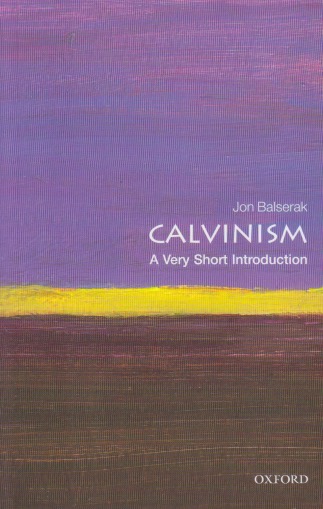
It’s good to refresh yourself once in a while.  I attended a Calvinist college and my doctoral program was in the context of an institution strongly influenced by Calvinism.  I took courses based on Calvinistic theology.  Jon Balserak’s Calvinism: A Very Short Introduction was really a refresher for me and I have to admit that it sparked a pretty strong reaction.  For one thing, many Calvinists unthinkingly accept the tradition in which they were raised.  (Call it indoctrination, literally.  This is true of most religions.)  Those I know seldom believe what Calvinism teaches, for it presents God as a monster. (This is me, not Balserak, and I mean this in the kindest possible way.)  You see, doctrinally Calvinists have to accept Scripture literally and if you do that you come up with all kinds of contradictions.  (The amount of special pleading is mind-boggling.)  The way the Calvinists landed on this was that God created us for his glory, which will be shown in predestining large numbers of people to Hell.  These people can do nothing to change that since God doesn’t really love them.  What would Jesus say?

I argued quite a lot with professors at Grove City College.  I was raised a Fundamentalist, but of the free will stripe.  The Methodist Church, which I eventually joined, was not Calvinistic in outlook.  (Neither are Lutherans or many others.)  Still, Calvinism has unduly influenced American culture—I wish the book would’ve focused more on this.  We are, culturally, heirs of Calvinism.  This little book points out one obvious way this is so, namely, the separation of church and state.  There are many other features that could be pointed out, but the book aims to be universal and this is therefore not a theme.

The book approaches Calvinism theologically.  There’s quite a lot of “shop talk” here that I imagine might put off those who don’t really care to know who said what about a particular point of doctrine.  Balserak points out that Calvinism is complex and there is no one way of looking at everything, but there are clearly some non-negotiables.  These non-negotiables are precisely what prevented me from ever trying Calvinism on for size.  I’ve moved through various religious outlooks on my journey that is geared toward finding the truth.  Calvinism never tempted me, nor did it ever seem to make sense.  It was as if the tradition accepted that Zwingli and Calvin and company had gotten the basics all correct and every act of theology since then involves a casuistry to prove the early teachings correct.  Why not question things?  Well, I guess they’re predestined not too.


More Dark Academia

It could be that I’m not smart or sophisticated enough.  Or maybe I’ve just lived a sheltered existence, although I grew up with an alcoholic parent and among a blue-collar drug culture.  Despite this, I attended a “preppie” liberal arts college, but it wasn’t in Vermont.  All of which is to say I had a difficult time getting into Donna Tartt’s The Secret History.  There may be spoilers here, so if it’s on your reading pile, maybe wait to read this.  Then tell me if you don’t agree.  So here goes.  The narrator, a perhaps unreliable Richard, is from a working-class dysfunctional family (check).  He attends a liberal arts college on scholarship (check).  It’s modeled on Bennington (the checks start stopping here).  There he works his way into an exclusive group of five highly intelligent students in a private study Greek curriculum (this is also a partial check).

The days are filled with intensive work in Greek and the nights with alcohol and drugs and cigarettes.  So many cigarettes.  I found myself wondering how such highly intelligent students accomplished so much when they were stoned all the time outside of class.  In any case, with two of the now six students not present—including Richard—they accidentally kill a man during a Bacchanal.  Their professor covers for them.  Then the other excluded student finds out and begins blackmailing the four.  Like the rest of them he’s fond of booze and he begins to let slip what he knows.  Spoiler alert: so they kill him.  This is followed by more drugs and alcohol and when the professor finds out he simply leaves his tenured post to do something else.  A rift develops in the remaining five that ends—another spoiler—the way dark academia often does, with a suicide.

Overall the story is captivating.  Overdone on the substance use and abuse, but it does keep you engaged, once you get through the first hundred pages or so.  I like dark academia, but I also like characters with whom I can sympathize.  Like Richard, I’d gone to what was at the time a selective college from a working class family.  There was drinking even at the notoriously dry Grove City College, and there were drugs.  Perhaps those from elite families indulged.  I hung out with scions of middle-class families (I didn’t know anyone else that was poor) and they didn’t spend their hazy nights under controlled substances.  Having been a professor at a gothic school, and having studied Classics-adjacent, though, I found much of this hard to believe.  It’s a book that becomes better upon reflection than in the actual reading.  Still, I’m sure that I didn’t get it because I’m not sophisticated enough.


Former Education

Like most people I don’t have time to sit around thinking much about college.  Once in a while you’re forced into it, however.  This time it was by an NPR article.  I attended Grove City College for a few reasons: it was a Christian school close to home, it wasn’t expensive, and, perhaps most of all, I knew campus because the Western Pennsylvania Conference of the United Methodist Church held its annual conference there.  I’d been several times during high school.  It didn’t hurt that I was a Fundamentalist at the time.  Grove City was a college of the Presbyterian Church and I loved having debates about predestination with professors who actually believed in it.  At the same time, I was encouraged to think things through, which liberal arts colleges are known for promoting. Is it now “conservative arts?”

Photo credit: The enlightenment at English Wikipedia

The NPR story my wife sent me was about how Critical Race Theory is disputed at my alma mater (sic).  I noticed in the article that Grove City is no longer affiliated with the Presbyterian Church.  It’s become much more right wing than that.  At the same time they ask me for money on a regular basis.  What made them think they had to go hard right?  Are they still educating students or are they indoctrinating them?  It reminded me of a sermon I heard at yet another conservative school I was associated with: Nashotah House Episcopal Seminary (or at least it was then).  The priest made an entire sermon about how it was right to be conservative, as if no matter what the issues there was some creed to get behind in staying behind.  As if virtue exists in never admitting you were wrong.

I suspect that my failure to attain a full-time academic position at a reputable school was because of what looks like a conservative outlook, despite the evidence of this blog.  Yes, I grew up Fundamentalist—you grow up the way you were raised.  Hopefully, however, you start thinking after that.  And experiencing.  And yes, using critical thought.  There comes a time when “because I told you so” just doesn’t cut it anymore.  For many of us that’s when we go to college.  If it’s a good one you’ll be encouraged to debate with your professors.  Not one of them has all the answers, I can assure you.  Education is, by its very nature, progressive.  We learn and we continue to learn.  We don’t stand still and say the 1950s was when God reigned on earth.  It wasn’t.  And it wasn’t any time before that either.  Now we know that Critical Race Theory should be taught.  We know Black Lives Matter.  What I personally don’t know is what became of a college that was once conservative, but at the same time, believed in education.


First Books

It was back in the day when I believed a book was the final word.  Remember those times?  (I have a suspicion that many Republicans really are longing for the days of simple answers: “Smith wrote it in History of Everything so it must be true,” and such.)  You’d read a book assigned in college and assume that since the author wrote a book s/he (but generally he, in my day) must be right.  If college really caught on, however, you’d start comparing sources.  Still, there was that one book that got you started thinking in a new way.  Back in the day when I believed a book was the final word I read J. Alberto Soggin’s Introduction to the Old Testament.  I remember the context well: Harrell Beck’s intro course at Boston University School of Theology.  We were given a list of texts and allowed to pick.  I chose Soggin.

Reading that book I realized for the first time that ancient Israel had borrowed from its even more ancient neighbors.  The fact that I’d attended Grove City College and majored in religion without ever having been introduced to the idea says volumes.  (Some parties, it seems, have always preferred to suppress information.)  I followed it up with Helmer Ringgren’s Israelite Religion.  I was hooked.  If we knew that there were ancient sources, and if we knew their languages and their cultures, why hadn’t it been obvious to the general public?  I started on a doctorate to uncover the truth since I couldn’t find courses on it at seminary.

We didn’t take many books with us to Edinburgh, but Ringgren was one.  By then I’d begun to realize that introductions weren’t really research books.  I spent my years digging deeper and deeper into ancient West Asian culture.  If it’d been possible I’d be there still.  Soggin and Ringgren, I realized by this point, were clearly biblical scholars, and not students of the specialized field that’s still called Ancient Near Eastern studies.  But still, their books had started something.  My copy of Soggin has followed the socks in the dryer, and I now realize the politics of introductory texts (if you believe it’s innocent you may be happier remaining in your bliss).  Still, I owe a debt of gratitude to those scholars who wrote in accessible words aimed at the novice.  Time has passed and nature has begun its own tonsure process, but this fallen monk has learned that many books are the only way of getting to the truth.


Whose DNA?

The name Francis Crick will forever be associated with the discovery of the double helix of the DNA molecule.  Indeed, he co-won a Nobel Prize for that particular insight.  Of course I didn’t learn about Crick when I was growing up—we weren’t an educated family.  I first learned about him in college when his book Of Molecules and Men was required reading for one of our religion classes.  This book is highly critical of religion, and Christianity in particular.  We read it not to assent to his logic, but rather to have it picked apart in class.  (Grove City was a conservative Christian college then, but less so than it is today.)  Although it has been over three decades since I’ve read it (I found my copy again when we moved three years ago) the sharp critique has remained.  Crick was a staunch materialist.

Image credit: brian0918, via Wikimedia Commons

Although I appreciated his contribution to science, I really didn’t have too much cause to think about Crick after that.  I’m not a geneticist and there are certainly a lot of people out there who make sharp criticisms against religion.  What brought Crick back to mind was when I recently read that he had later come to the conclusion that human DNA was too complex to have evolved by chance.  The piece I was reading used the unfortunate term “intelligent design” so I had to follow up.  Francis Crick hadn’t become a Fundamentalist, had he?  No, it turns out.  Crick had come to believe in “directed panspermia.”  Panspermia is the concept that life isn’t isolated on earth—it exists in space and was brought to our planet by space dust, or some such means.  The “directed” part was what caught my attention.

For a vocal critic of religion, Crick had come to believe that extraterrestrial intelligences had engineered at least human DNA.  This is of particular consequence because until recently the idea of extraterrestrial intelligent life was a laughing flashpoint among scientists and skeptics.  In fact, it’s still regularly labelled as “paranormal.”  I was surprised to learn that a scientist of Crick’s stature had come to this conclusion while being so utterly critical of religion.  Of course, views can change over a lifetime.  No one is born with all the correct knowledge.  It is interesting that Crick believed human DNA to require some outside intervention to become what it is.  Some religious believers share this outlook, but with quite a different origin source in mind.  It just seems to me that our collegiate discussion of his work seems to have been woefully incomplete.


Learned Ghosts

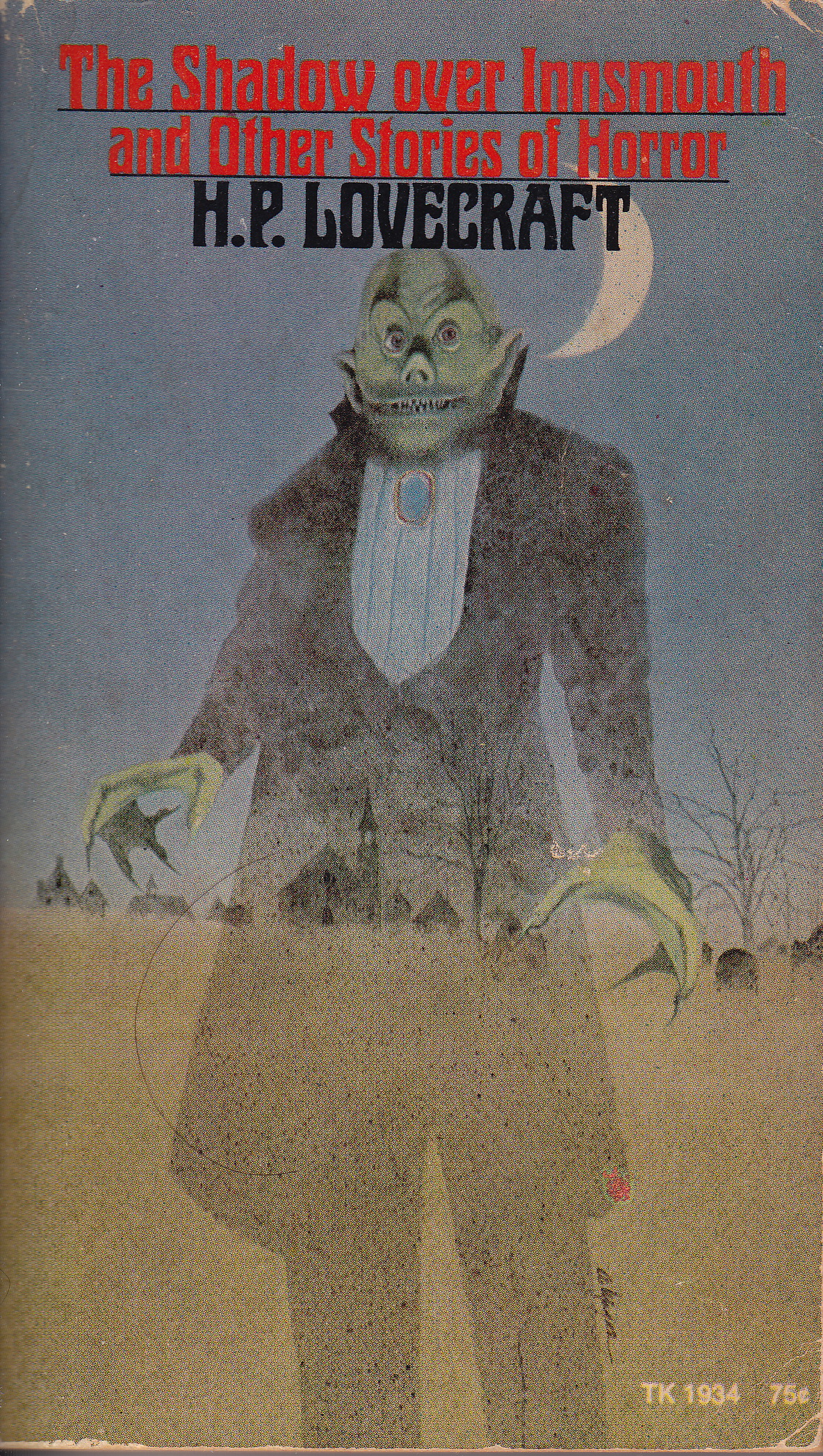
For one memorable year of what I call a career, I taught at the University of Wisconsin Oshkosh.  One in a series of near misses, this came close to becoming a full-time job.  Apart from a couple of rather humorless colleagues, the department was welcoming and an enjoyable place to be.  I even got to know the dean, now elsewhere, and planned on working on a project with him.  It was a memorable year in many respects.  One was its inherent strangeness.  I was living away from home while teaching there, and saw some odd things on my drives through the Wisconsin countryside.  It also happened to be at Oshkosh that I first discovered H. P. Lovecraft, so the weirdness was, in a word, enhanced.

Students like to tell ghost stories.  A recent article by Jocelyne LeBlanc on Mysterious Universe caught my eye because it tells of students in Oshkosh that live in a haunted dorm.  These kinds of stories are ubiquitous and Oshkosh is in no way singular here.  Students, whose brains haven’t yet ossified, are often open to new experiences.  Most of them, however, don’t possess the research skills to get behind the origins of some such tales.  Sometimes there’s an explanation.  Other times there’s not.  At Grove City College, when I was there, students told of a haunted playing field.  It was the site, it was said, of a former gymnasium.  What made it haunted was the death of a basketball player who’d smashed through a glass gymnasium door during a game and bled out before help could arrive.  It sounds improbable and I never had time to research it.

We all, I suspect, have a longing for the supernatural.  We want to believe that there’s more to this world than physics and earning money.  And strange things do happen.  I never saw any ghosts in Oshkosh, but the things I did see helped to make up for that particular lack.  Edinburgh, where I studied for my doctorate, is widely rumored to be among the most haunted cities in the world.  Although I saw no ghosts there, people flock to the ghost tours.  In fact, one stopped right below our first apartment’s window every night during the tourist season.  By the time we moved out we had every word memorized.  The haunted dorm story is a revered tradition.  Thinking about it makes me wish I could afford to be a student again.


Conservation?

I am not a conservative.  There, I’ve said it.  You have very little control over who your parents are or how they raise you.  As I confessed here many times, I was raised in a conservative Christian home of the fundamentalist stripe.  Like most kids scared of Hell I took it all very seriously.  It is the reason I followed the career path—or perhaps career swamp trek—that I have.  In any case, the other day I was looking through a Baker Academic catalogue.  Baker, in case you don’t follow the high drama of the publishing industry, is one of the many Christian publishing houses with roots in Grand Rapids, Michigan.  Like most publishers in that collective, it tends toward the conservative end of the theological spectrum.  As I flipped through I noticed bio after bio of authors with Ph.D.s from Edinburgh, Cambridge, and other prestigious universities in the United Kingdom.

I hadn’t been warned, you see.  Many conservatives who want a doctorate study in the UK because they can do so without taking all those classes that will make them examine the Bible critically.  That’s not why I went to Edinburgh, but I can see how it might look like that from the outside.  I went to Grove City College—a bastion of conservatism.  (I was raised that way, remember?)  My next educational move should give the lie to my attempt to remain conservative; Boston University School of Theology was considered the most liberal United Methodist seminary in the pre-Internet days.  I attended for that very reason.  Edinburgh, my true alma mater, was selected because they offered a scholarship that made it possible for a poor kid to finish a doctorate.  I wasn’t conservative when I went, and I wasn’t conservative when I came out.

I didn’t get the memo, I guess.  The sneaking suspicion that I might be conservative has dogged my career.  My dissertation can be read that way, but it’s not a conservative argument.  I merely suggested the decision to marry Yahweh off to Asherah was a bit hasty, based on the actual evidence.  I’m all for married deities—they tend to be less frustrated toward humanity.  Maybe the Almighty could speak to Mrs. God about correcting these worries about what I “really believe.”  I went to a conservative college to learn—there were a fair number of attempts to indoctrinate there, but if you thought about things you could see through them, even with a fundie upbringing.  But as I thumb through the catalogue I can see how perceptions can work against you, especially when your first job is at a conservative seminary, eh, Mrs. God?  


Tyranny of Plants

Notwithstanding what I wrote yesterday, there is a tyranny of plants.  Specifically those which make up lawns—in my case, mostly weeds.  A friend recently reminded me that weed is just a name for a misplaced plant, and I confess that I’m fine with weeds but neighbors may not be so open-minded.  Non-conformity is still a virulent stigma.  If an observer from outer space were to observe us during the spring and summer, they might well conclude that we were in the service of our yards.  The irony here is that yard care is perhaps the ultimate sign of success.  You have really made it if you can keep it neat and trim.  And you’ve excelled beyond that if you can pay someone else to do it for you with their tractor full of buzzing implements.

Because I’m concerned about fuel consumption, we purchased a reel mower when we bought our house.  I never mowed the lawn as a child.  First we rented, and when a stepfather came into the picture he didn’t let the kids mow.  (It wasn’t to be kind—it was a control thing.  If he saw a snake he’d race across the yard to dismember it.  More than once I’d be out playing only to find snake suey, with flies.)  College at Grove City involved carefully manicured lawns done by others, and after grad school we lived on campus at Nashotah House where the students cut the grass.  From there it was back to renting.  In other words, I never had the opportunity to learn how to mow lawns.  My lines aren’t straight, and I’m tempted to sneak out at night, when the grass is high, and leave crop circles at which the neighbors might wonder.  I don’t like being a slave to plants.

The reel mower is like pushing the grim reaper in a baby carriage.  Or at least it must seem so from the perspective of the grass and weeds I call my lawn.  The suddenness with which constant lawn care becomes a major concern has tightened my focus on the fealty we owe to ground cover.  We’ve had a break from the rain for a couple days and after work I find myself pushing that mower like a deadly thurible, releasing the scent of newly shorn grass.  Our particular town retains the right to fine those who let the grass get too long.  As I go along cutting back both grass and weeds indiscriminately, I wonder at the biblical nature of even this.


Iron Ages

I find myself in Pittsburgh again.  We set out from the former steel city of Bethlehem and ended up in the former steel city on the other side of the state.  I’m not here for the metal, of course, but to visit family.  Making our way over the great eroded spine of the ancient Appalachians, I was thinking of how cities often take on the identity of their industries.  Pittsburgh and Bethlehem vied with each other for their facility with unyielding iron—one of the technologies so important to human history that we still use the Iron Age as a marker of advancing technology.  Pittsburgh’s now a tech city, much reduced in size from its heyday when only fifteen cities in the country were larger.  Bethlehem, it seems, is still trying to figure out exactly what it wants to be.

Back in college, I used to work in a church in the south hills.  I haven’t been to Windover Hills United Methodist Church since those days.  I was weighing my future then, deciding to attend Boston University School of Theology—the seminary the pastor had attended—and exposing myself to liberal thinking rather than more of the conservative milquetoast that was mistaken for milk and honey at Grove City College.  The memories that attended the drive were powerful and poignant.  I only lived in Pittsburgh two summers—the second working as a bagger at a grocery store (I should’ve known then where a college degree in religious studies might lead, even if summa cum laude).  As iron sharpens iron, so the Good Book says.

Recently I tried to recall all the addresses at which I’ve lived.  This seems particularly important because many of the buildings no longer stand and I greatly fear being erased.  Those of us who write often do.  I can recall the cities and even a few of the streets.  Numbers often escape me, for they seem to be mere place holders.  My days in Pittsburgh were decades ago, when life was really only just beginning.  Now I drive these hills with memories my only maps, wondering if I can find the place I’m seeking.  This place is part of me, even as Bethlehem is now becoming such a piece.  Cities change depending on the laws of supply and demand that can, as we know, even break iron.  And those of us who live in such places know that any industry is subject to memory, whether of God or of steel.


Spoken Against

“Antilegomena” is a word that appears more often in New Testament studies than it does in those of the Hebrew Bible.  Still, it’s an important part of the discussion of “the Bible,” especially since Heaven stands at the end.  Antilegomena is the Greek word for “disputed texts.”  You see, when the Bible was being compiled, there were many books from which to choose.  The twenty-seven books generally recognized as the New Testament included several that were disputed.  The Antilegomena included these books: the Gospel of the Hebrews, the Apocalypse of Peter, the Acts of Paul, the Shepherd of Hermas, the Epistle of Barnabas, and the Didache, all fine and good.  But the list continues: James, Jude, Hebrews, 2 and 3 John, and Revelation.  This final half-dozen made the cut, although Revelation is still disputed in some quarters.  All of these books were, however, in some early Christians’ Bibles.  The exact date that the New Testament canon was fixed isn’t certain, but it wasn’t widely recognized until the fourth century C.E., that is, over 300 years after Jesus.

The first time I learned about canonization in college I was shocked.  Like most people raised on the Bible, I believed that it had come, fully written, from the hand of God.  Maybe there was even an autographed copy somewhere.  Grove City College, at the time, disputed the Documentary Hypothesis of J, E, D, and P, but to the credit of the religion department they did tell us about it.  Moses, of course, we were taught, did the actual writing.  But then there was the problem of the New Testament.  There were other gospels, some as old as those that made it into the Bible.  The realization dawned that “the Bible” was much more complicated than I had been led to believe.  And what was up with the Apocrypha?

One of my professors said that the problem with inerrancy is that it proposed a Bible more perfect than God.  I’m not sure that I follow the logic there, but I take his point (they were all “he”s, whoever he was).  The Bible may not be a perfect book  There are parts missing and repeated bits.  It is nevertheless one of many sacred books from around the world, and it is the holy book of much of Christianity.  From the very beginning some of the contents were disputed.  Even as an undergraduate I had some inklings that a journey that involved taking the Bible seriously was going to lead to some strange places.  That single book that had always been presented to me with a definite article—“the” Bible—was actually a book that the earliest followers of Jesus didn’t know.  And they seem to have got along fine, as far as getting to Heaven goes.


Yes or No

Reading about demonic possession is enough to scare you away from ever using a ouija board.  In fact, I’ve never played with one; growing up my strict religion would’ve prevented it in any case, and already as a child I’d been warned of the dangers.  During my research for Nightmares with the Bible, I’ve been reading quite a bit about ouija.  Originally a species of divination, the ouija, or spirit board, became popular during the growth of Spiritualism.  Spiritualism is a religion based on the idea that the dead still communicate with the living, ensuring believers that life continues beyond death.  It still exists, but not with the numbers that it boasted in the early days.  Among the solemn admonitions of Ed and Lorraine Warren (about whom I’ve posted much in recent months) was that ouija boards opened doorways for demonic entities.  Some of their stories are quite scary.

Image credit: Mijail0711, via Wikimedia Commons

Whatever else you can say about America, a fact beyond dispute is that if something can make a buck it will be marketed and sold.  So it was with ouija boards in the 1970s.  I remember seeing them on the shelf with other games at local department stores.  Even then I knew they weren’t a toy and I wondered how anyone could be promoting them for general consumption.  At Grove City College—that bastion of undergraduate conservatism—stories circulated about how students (usually coeds) were attacked in their locked rooms after playing with ouija boards.  This is, I was later to learn, a staple of collegiate urban legends.  At the time, however, I took it very seriously.  

Thus it’s strange when I find out that others my age were more curious about them.  Recently at a party with friends around Valentine’s Day, the question naturally came up of how some of us met our spouses.  One of the women mentioned that before she’d met or even heard of her future husband (who has an unusual surname) a ouija board spelled out his name.  She later met and married him, not on the board’s recommendation, but she remembered that years before she’d been given a hint.  Now these friends are not cheats and liars—they’re not even Republicans.  They’re people we trust.  On our drive home that night my wife mentioned she’d used a ouija board once, with friends, back in her high school years.  She asked the name of her spouse (long before we met) and came up with Sam.  I’m no Sam, but when we first met in grad school I was still going by my stepfather’s surname and my initials were S-A-M.  Coincidence?  Probably.  My future wife did not pursue me; indeed, it was the other way around.  Even so, there in the dark on the nighttime highway I felt a familiar frisson from childhood concerning a form of divination that seems to know more than it should.


Fictional Facts

“If you want truth,” Indiana Jones famously said, you need to go to philosophy class. The sad fact is most people have little practical training when it comes to such issues as discerning truth. Some time ago I read an article about how fake news travels faster and is more deeply believed than actual truth. I suspect that’s because the truth is hard. The age-old trope used to be a wizened elder sitting atop a mountain in the lotus position. A lifetime of thinking through the labyrinthian corridors of wishful belief to get to what is finally and unassailably true. Our president, with the full complicity of the Republican Party, is out to dismantle the concept of truth once and for all.

Indiana Jones was contrasting facts to truth in this scene from The Final Crusade. The idea was that facts sometimes make you question truth. In GOP University, however, facts have alternatives. He who bellows the loudest is the harbinger of truth. Never mind that still small voice that comes after the raging wind. The voice that can stop a fiery prophet in his tracks—a man who could raise the dead, for crying out loud—but even his successor called Herod a FOX. In the culture of the shrug, who really cares? Finding the truth is so much navel-gazing. There are real enemies to bomb and somebody has some money that I can take away and claim as my own. To do so we can make up facts as we go along and lies will see us through. With the Evangelical seal of approval.

Even with rumors of a fifth film swirling, I miss Indiana Jones. In his formative days fascists were the enemies, even of the Republicans. Although he was showing his age in Crystal Skull, Jones still couldn’t countenance oppressive regimes. Scientific studies show people would rather believe fake news. We’re hopelessly prone to fantasy, I guess. Even as I volunteered on the archaeological dig at Tel Dor, although I had little money a fedora was required. There was a difference, however. I knew I really wasn’t Indiana Jones. I was digging for facts so solid that they could be held in my hand. Unlike Dr. Jones’ students, I did go down the hall to Dr. Trammel’s philosophy class. Surrounded by the young Republicans of Grove City College, none of us doubted that truth was spelled with a capital T. Now Truth is apparently an artifact buried in the sand, awaiting a hapless archaeologist to bring it to light. Amid all the forgeries that non-specialists can’t tell apart.


Predestined?

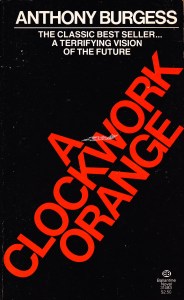
This particular doctrine struck me as evil. It violated every experience and thought I’d ever had, even raised as an unquestioning Christian as I was. Then, at Grove City College I was faced with it for the first time—predestination. If free will is an illusion, what crueler God can be conceived? I couldn’t avoid such thoughts upon re-reading Anthony Burgess’ A Clockwork Orange. A non-conforming non-conformist at the college assigned it in a science fiction class, so it has been decades since I’d read it. Now I found it perhaps more profound than before. Much has happened since my initial reading of the book, o my brothers. (And sisters.)

The framework of the story is well known. Alex and his friends are teenage punks who love ultra-violence. Alex is betrayed and imprisoned. Considered incorrigible, he’s reprogrammed to the point that he can’t even defend himself in a society that’s grown even worse during his time in jail. In the hospital after a suicide attempt, he awakes to find his old self restored, whether this is a good thing or not. The main point that’s behind this, it seems, is that without free will, repentance means nothing. In fact, in my edition of the book, an afterword by Stanley Edgar Hyman makes the point that some interpret A Clockwork Orange as a fictional defense of Christianity. Certainly the comparisons are there, from Judas through Jesus, healing, sin, and suffering. How much it actually meets that idyllic vision of God in Heaven directing the lives of individuals is, of course, an open question.

The idea that human beings are born as Hell-fodder posits a cruel and sadistic deity. Not only are the majority of human beings going to face eternal punishment for matters beyond their control, there is a divinity who planned it that way. We are all, literally, puppets in a universal morality play written by a being whose moral compass is horribly skewed. Indeed, even at Grove City some of the faculty would state that philosophically there could be no contest—free will was right. But, they would add, tapping the Bible, it’s not true because the Word of God says so. When I protested, it was declared, without irony, that even my protest had been predestined. In other words, in this clockwork universe I was clearly an Alex. Upon closer inspection, however, the truer analogy would be that we are all the victims of Alex and his droogs. But only if we have the freedom to make such an observation.