Still Sleepy

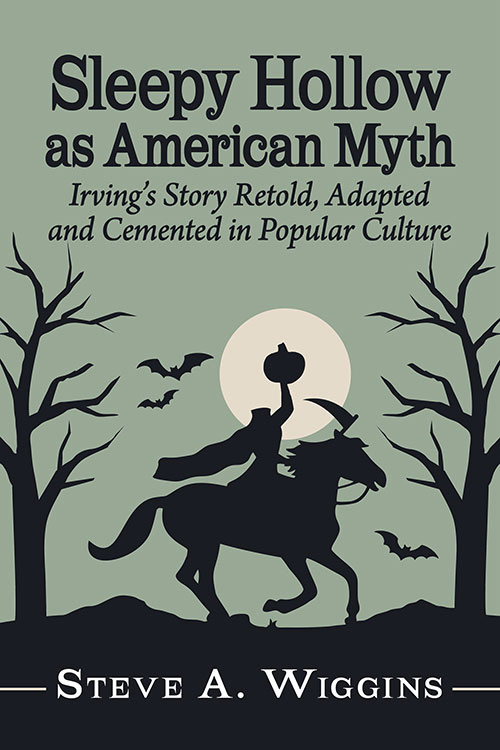
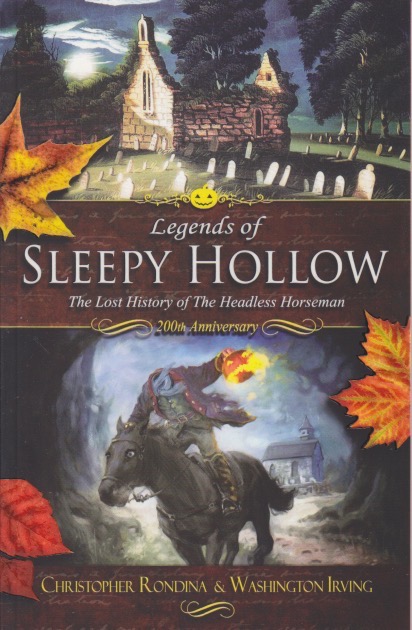
One thing I quickly learned when beginning work on Sleepy Hollow as American Myth was that the story hadn’t really been studied too much by those with academic training.  There are some exceptions, of course.  Another thing I swiftly picked up is that many people who wanted to write on the legend chose the method of publishing the public domain story with a variety of annotations, essays, and other additions, to make a salable book.  Often these are self-published and not always immediately obvious to the researcher as to whether they contain anything important or not.  I had not run across Christopher Rondina’s Legends of Sleepy Hollow: The Lost History of the Headless Horseman until well after my manuscript was submitted.  I found it in the bibliography of a ghost-hunter version of Sleepy Hollow that wasn’t even published by the time I was going into production.  (It doesn’t even have an ISBN.)

I do have to say that Rondina’s variety of this composite genre isn’t bad.  He includes Washington Irving’s story and expands it with an introduction, and brief chapters considering any historical background that there may be.  He also adds a chapter on modern media of the story that includes one television adaption that I failed to find for my book.  Interestingly, after I’d written the manuscript I discovered Joe Nazare’s similarly annotated version, also with a number of the media I’d analyzed in it.  I’d actually corresponded with Nazare earlier, having discovered his website.  Not wanting to discuss what my book was about until after I sent it in (others have more time to write, perhaps, than I do) I didn’t mention our common interest and didn’t discover his annotated version until it was too late to include as a conversation partner.

Self-publication has perhaps become inevitable since standard publishing is difficult to break into.  And the internet gives anyone the ability to self-publish without too much effort.  It does, however, make doing research a bit more difficult.  I determined early on that I could not review every annotated version of Irving’s story.  I selected a few of the most promising and moved on.  Both Rondina and Nazare had interesting things to say about the tale, and it’s a pity that they weren’t discoverable until after the fact, at least to me.  I like to give credit where credit is due, but any ideas that seem similar to these two sources in my book will have to stand as examples of convergent thinking on the part of fans of the “Legend of Sleepy Hollow.”  I know there are many other fans out there and I hope they find the resources they need to understand the story just a bit better.


This Is Halloween

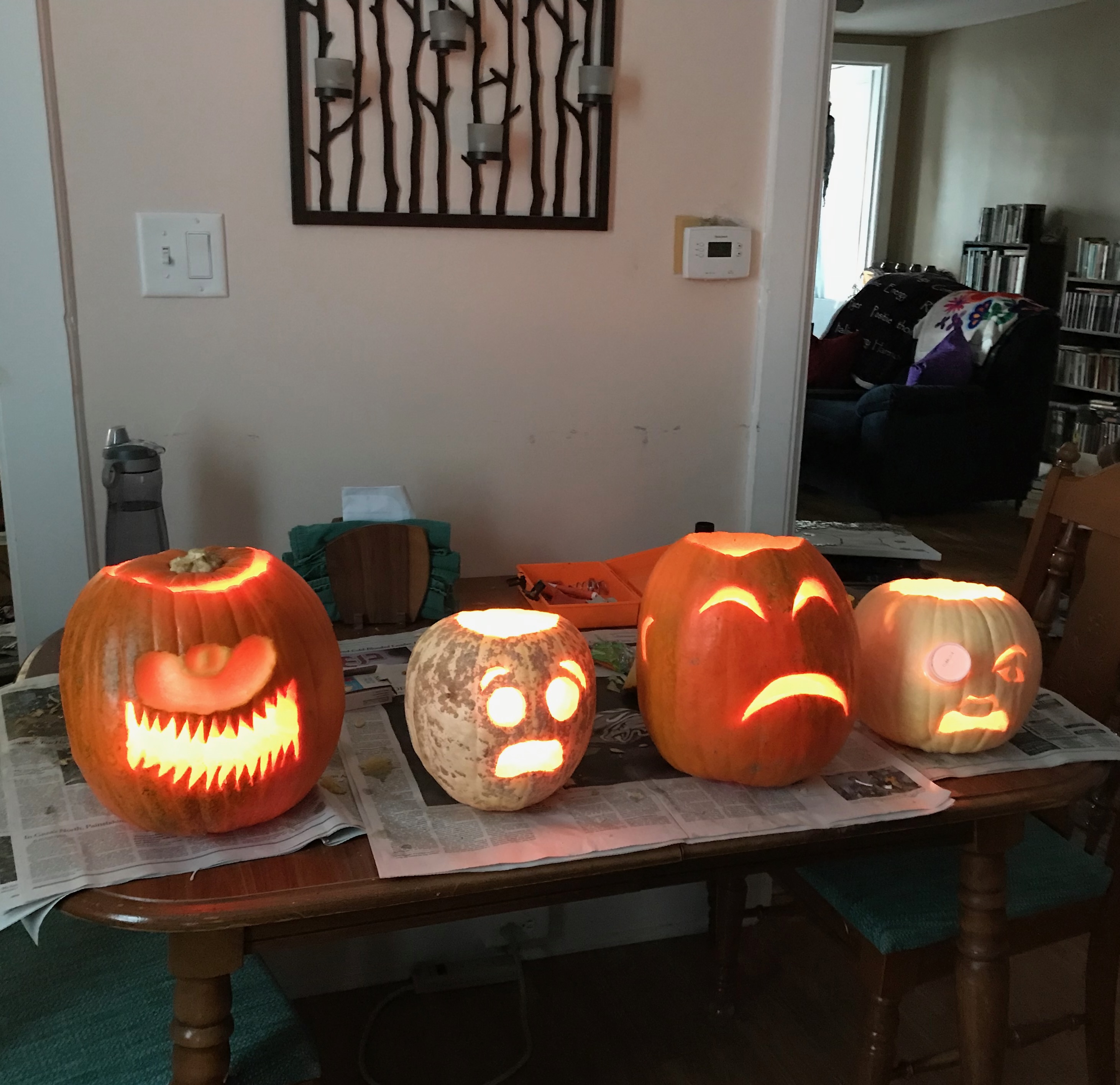
He was probably trying to impress his wife with his wit.  I was in a department store—a rarity for me.  I was wearing a mask, because, well, Covid.  As this guy, older than me, walked by he said “Halloween’s over.  Take off your mask.”  It bothers me how politicized healthcare has become, but what bothered me more was that it was only October 20.  It wouldn’t even be Halloween for another 11 days.  What had happened to make someone think Halloween was over so early?  Yes, stores had switched over to Christmas stuff by then.  In fact, I wandered into another store where Christmas carols were playing.  Capitalism seems to have wrenched the calendar out of order.  We’re tired of All Hallows Eve before it starts.  In fact, just the day before we’d gone out to a pumpkin patch to get our goods and the carved pumpkins are now showing their age.

If that little exchange in the store had been in a movie, it would’ve been a cue for me to transform into some big, scary monster.  Of course, Halloween is what it is today because of relentless marketing.  And a handful of nostalgia from people my age with fond childhood memories of the day.  For some of us, however, it is a meaningful holiday in its own right.  It makes us feel good, even after we’ve grown out of our taste for candy.  It is significant.  Christmas is a bit different, I suppose, in that there is nothing bigger following, not until next Halloween.  Besides, Christmas is supposed to go for twelve days.  The fact that Halloween is a work day makes it all the more remarkable.  We have to work all of this out while still punching the clock.

I had really hoped to be able to get to Sleepy Hollow this Halloween.  Sleepy Hollow as American Myth tries to make the case of how that story and Halloween came of age together.  It is the iconic Halloween story, what with ghosts and pumpkins and all.  And the month of October is spent with scary movies for many people.  This month I’ve posted about horror movies every other day, pretty much, trying to connect with my audience.  If that is my audience.  I tend to think of Halloween as a community.  Those of us who, for whatever reason, think of this as our favorite time of year.  A time when perhaps we don’t feel so stigmatized for liking what we do.  A time that we’re not hoping will shortly end so we can get onto the next thing.  It may have been meant as a joke, but I wasn’t laughing.  Happy Halloween!


Ichabod’s Body

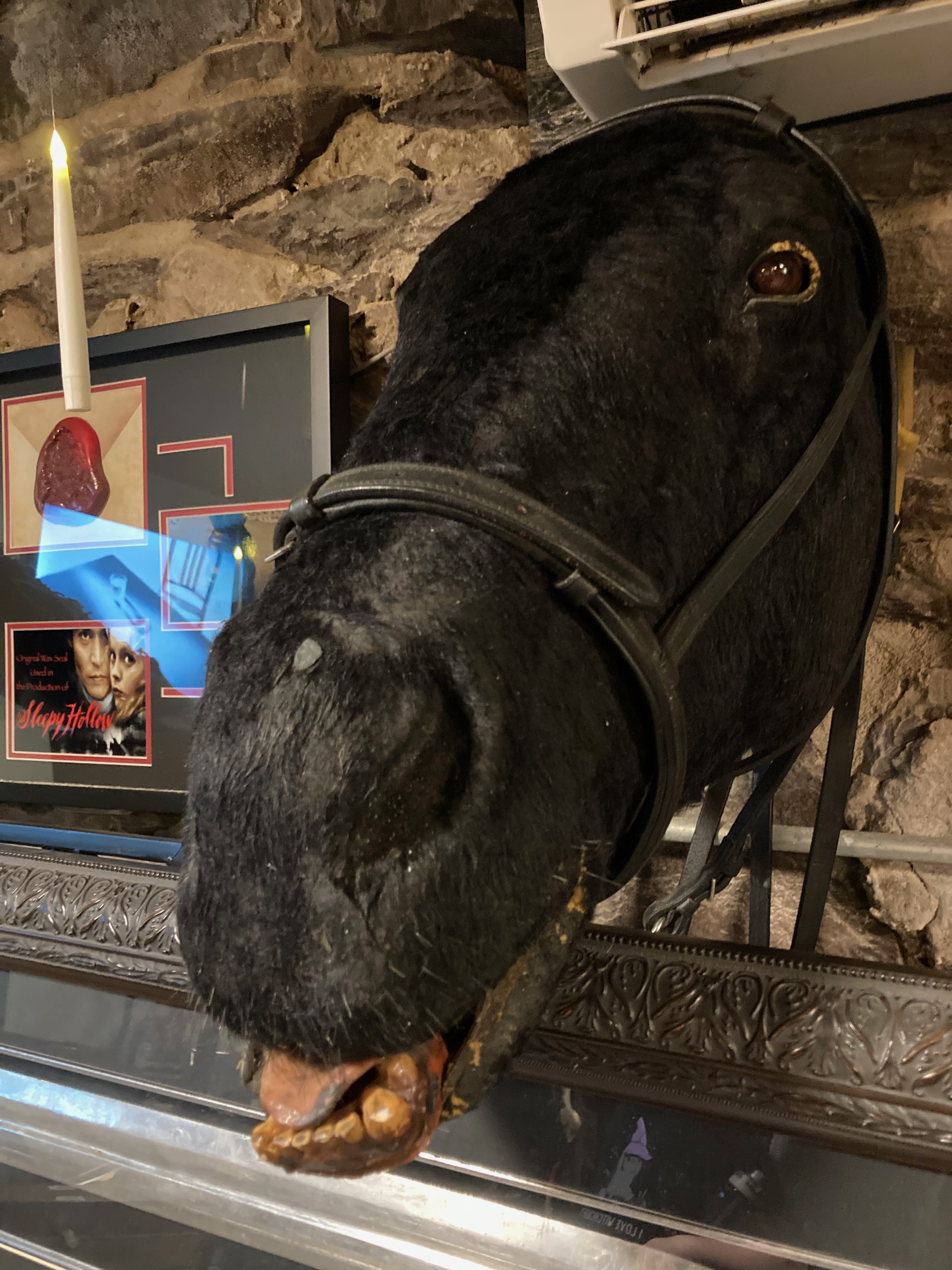
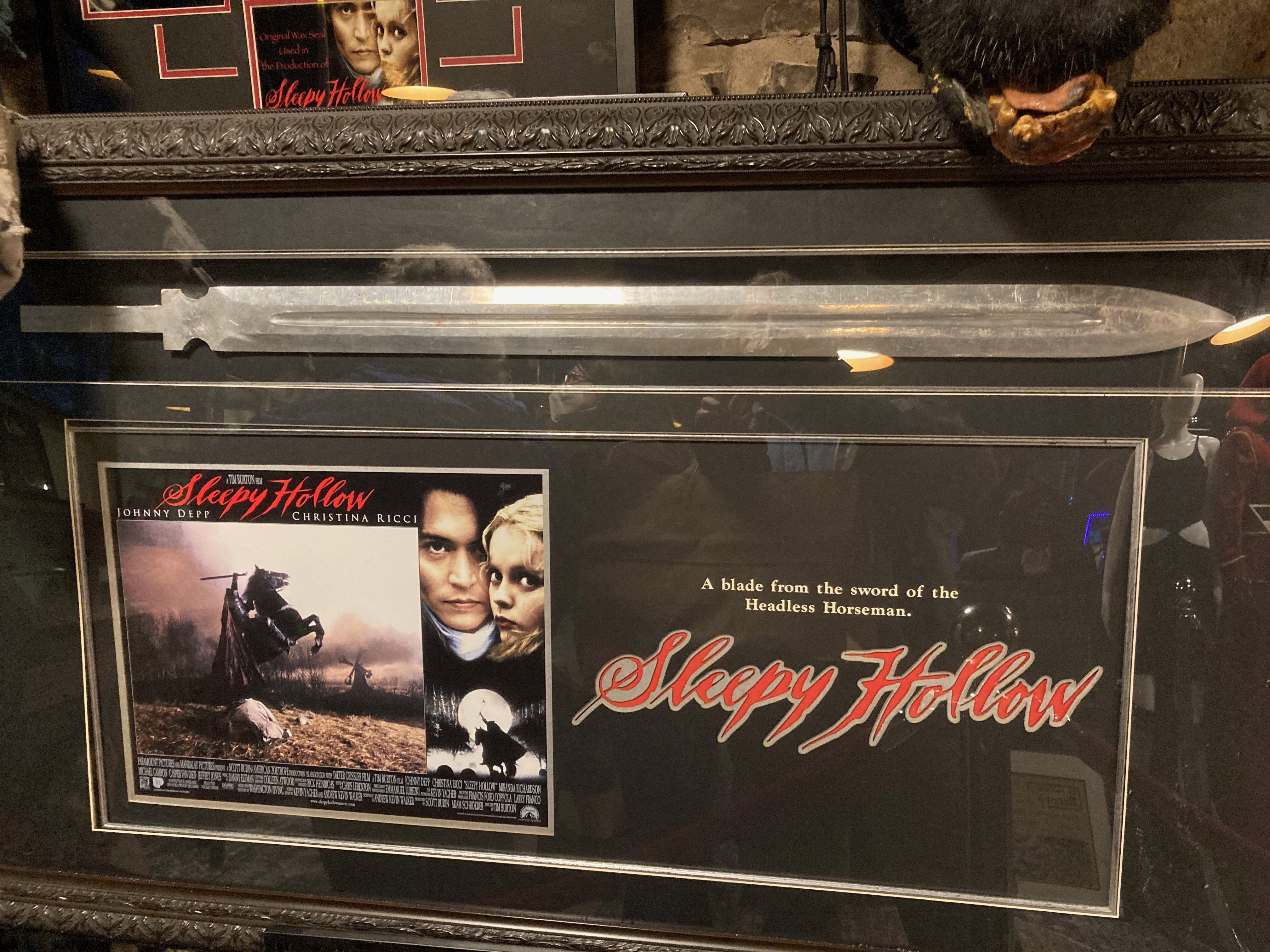
Maybe you’ve noticed this.  When Halloween comes around, the Headless Horseman and the Legend of Sleepy Hollow reemerge.  There’s a reason for that, and I discuss it quite a bit in Sleepy Hollow as American Myth.  Right now there seems to be quite an interest, or maybe I’m just noticing it more.  For example, a local theater where we saw a Poe performance last year is offering a Headless Horseman show this year.  Articles have recently been appearing on Tim Burton’s Sleepy Hollow movie, given that it was released 25 years ago—online discussion, however, is often eclipsed by the Fox television show by the same name.  And before it switched over to Christmas decorations, Michaels had its share of Sleepy Hollow merchandise.  Halloween and the Headless Horseman go together.  (Read the book to find out why!)

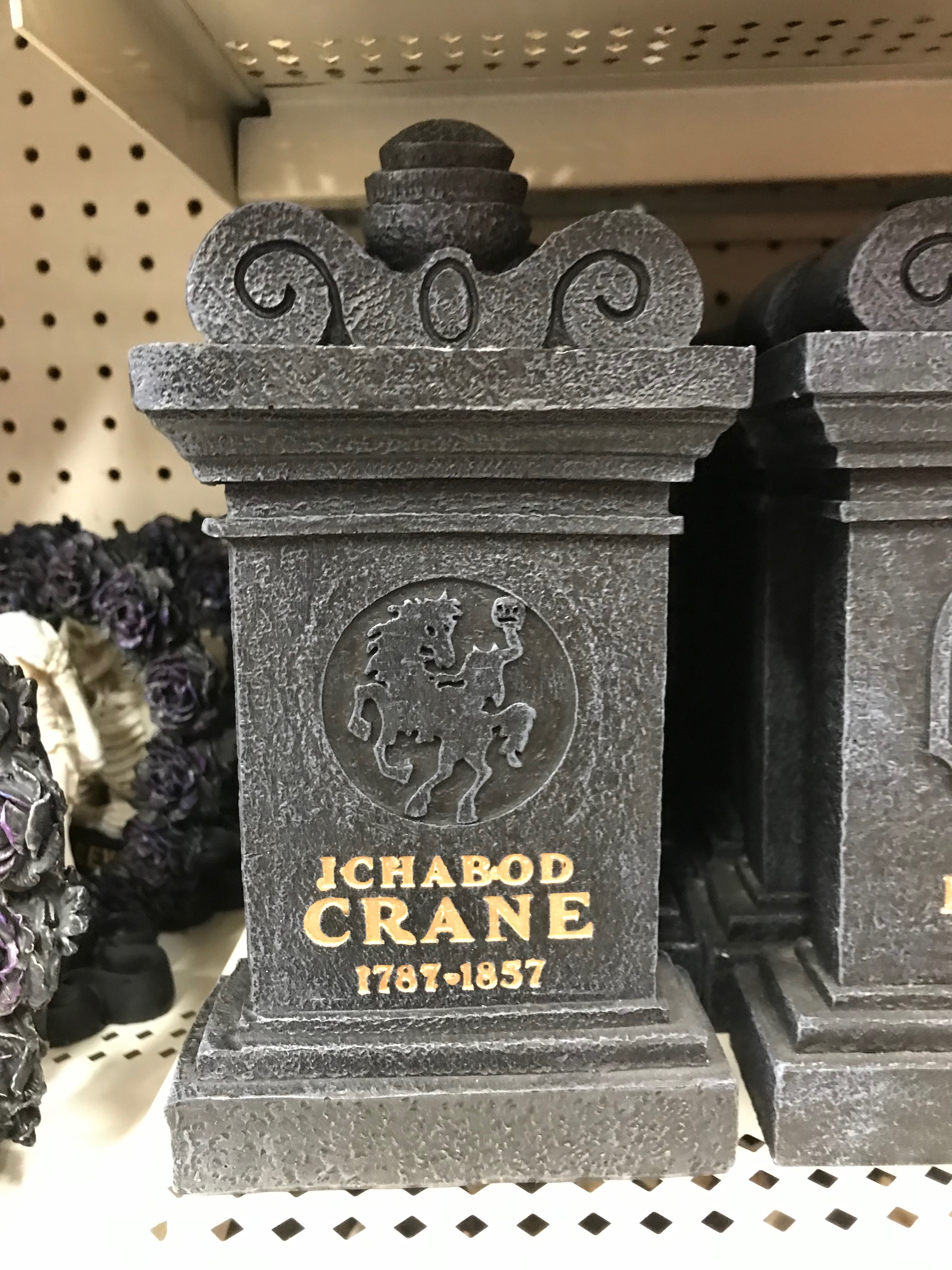
One of the tchotchkes I picked up at Michaels was Ichabod Crane’s tombstone.  In the many renditions of Washington Irving’s legend, Ichabod is treated as the protagonist of the story.  Although Tim Burton’s movie wasn’t the first to have Crane survive, besting the Horseman, the old wives’ tales, according to Irving, had him spirited away by the Horseman.  That’s why I found his gravestone so interesting.  The dates on it (1787–1857) indicate, at least according to this recension, that he died at seventy, surely not the victim of the attack that took place around the turn of the century.  If you’re not familiar with the original story, Irving set it “some thirty years since” the 1820 in which the tale was published, putting the events around 1790.  Burton shifted this to 1799, partially, I suspect, because that was two centuries before the release of his movie.

I do wonder where the maker of the Michaels tombstone got their information.  According to their reckoning, Crane would’ve been but three years old in 1790.  Of course, the story never tells us his age.  Since it is intimated that he relocated and became a judge after dabbling in politics, all of which would seem to indicate that he was a somewhat young man at the time of the tale.  To make Sleepy Hollow scary, though, having Crane cut off in his youth would seem to be more in keeping with the spirit of the season.  Of course, Sleepy Hollow is a legend that has become mythic through its many retellings.  Enough of them that someone could write a book about it all (ahem).  And this is the time of year to ponder it.  


Seasonal Poe

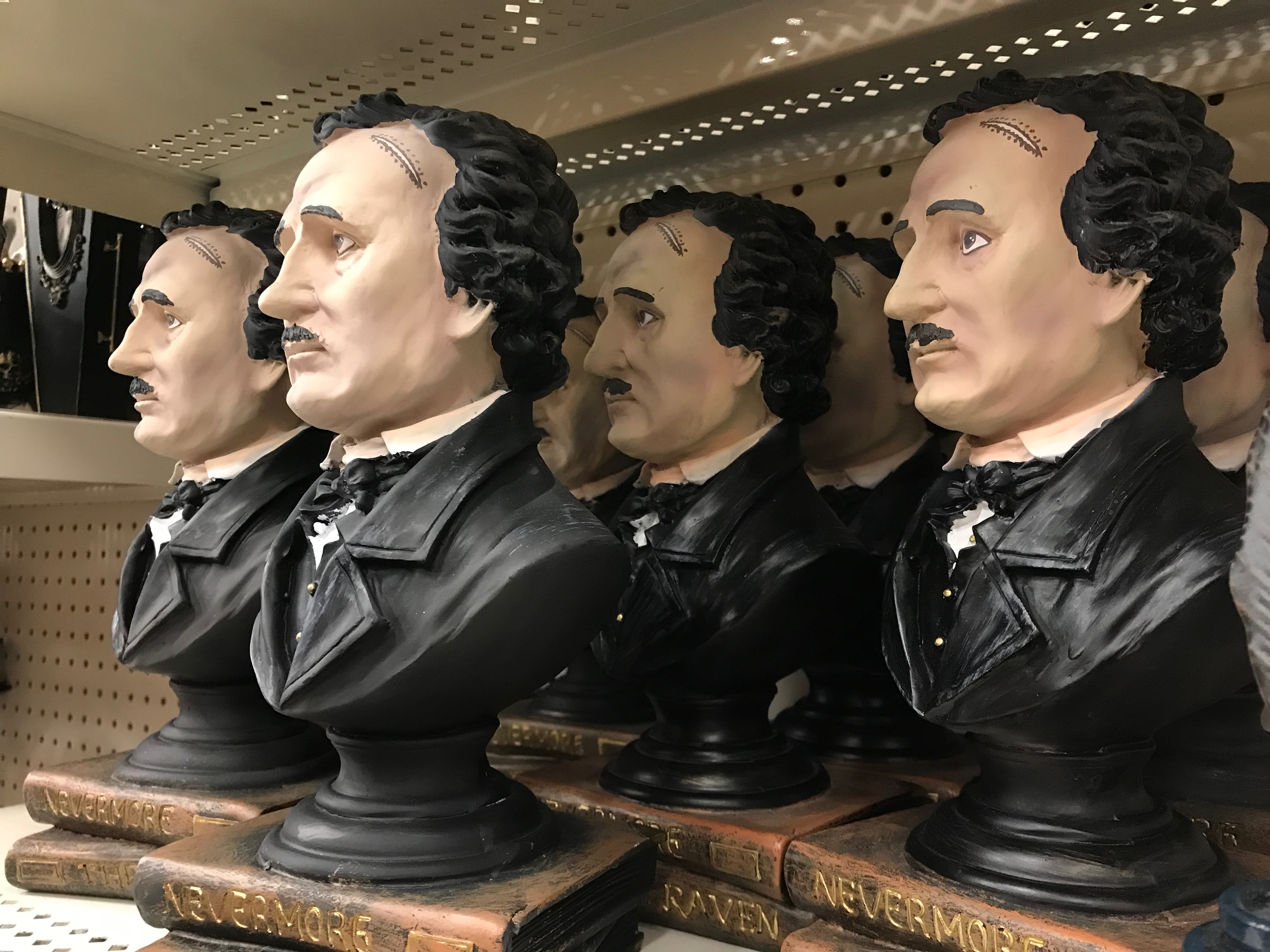
The more I read of and about Edgar Allan Poe, the more convinced I become that he wasn’t as associated with horror in his own mind as he has become.  As one of the earliest American writers, he has become the icon of those who wrote on the dark side.  His contemporaries—Washington Irving, Nathaniel Hawthorne, and Herman Melville—did as well, but it was Poe who became iconic.  On a recent trip to Michaels to take in the seasonal ambiance, Poe’s presence was difficult to ignore.  I wasn’t prepared to shoot a photo-essay (I’m not sure how they feel about such things in a store, in any case) so I didn’t photograph all the pieces.  “The Raven” is frequently referenced, with typewriters with the poem emerging and large, ominous black birds about, but Poe himself also appears.  There are, of course, painted busts of Poe.

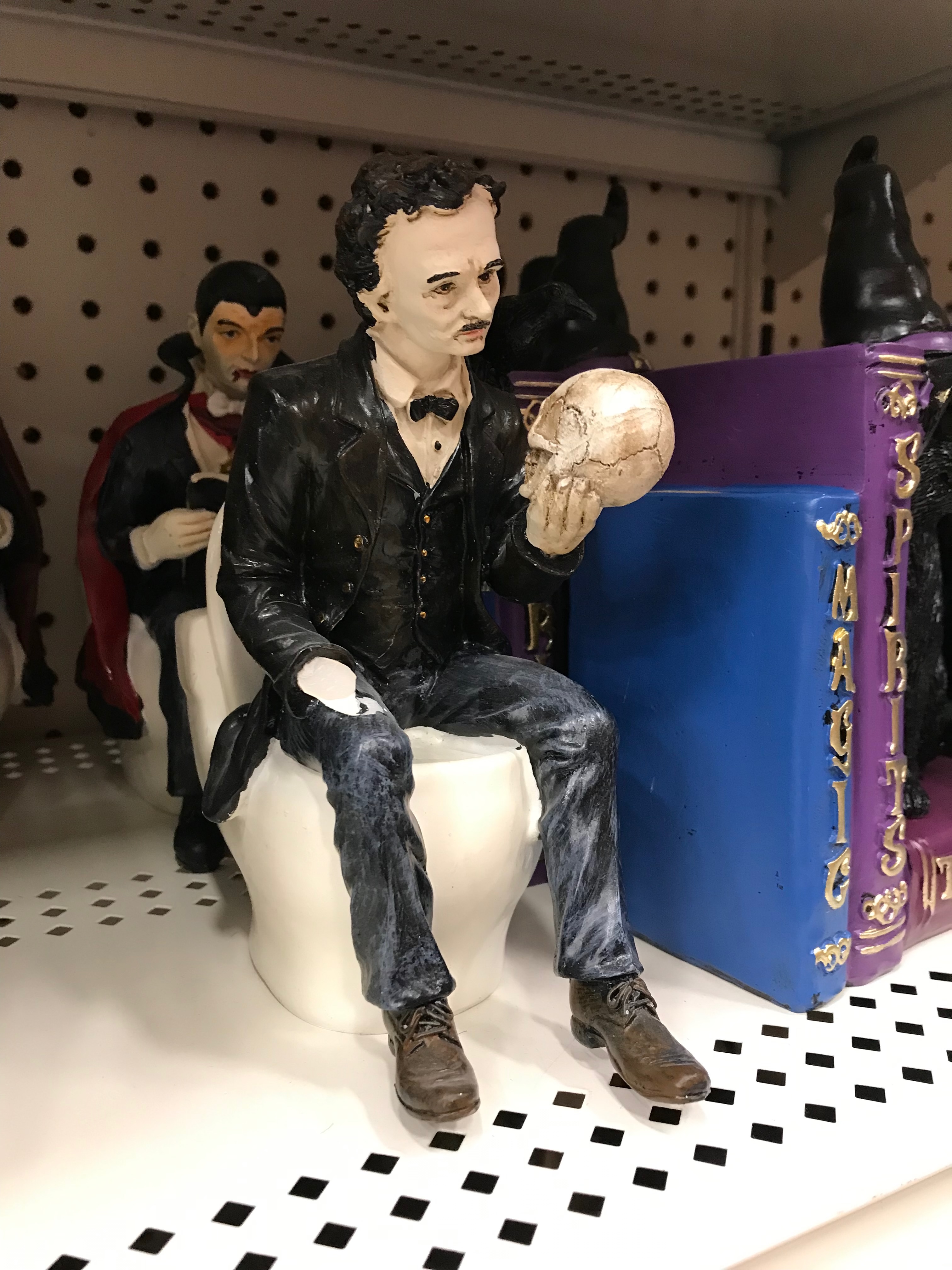
But Halloween has grown more whimsical over the years.  Arguably for my entire life it has been primarily a children’s holiday, but many have noticed that those of us who grew up with Halloween have retained adult interest in it.  Part of this is no doubt commercial since the captains of industry have learned people will spend more on Halloween than any other holiday except Christmas (I do discuss this in my forthcoming book).  And indeed, the Headless Horseman appears quite a lot as well.  Irving, however, isn’t there on the ground.  Poe is.  The whimsical part comes through in showing the humor of the season.  For example, although Poe is shown in the noble bust format, he’s also portrayed (fully clothed) on the toilet.

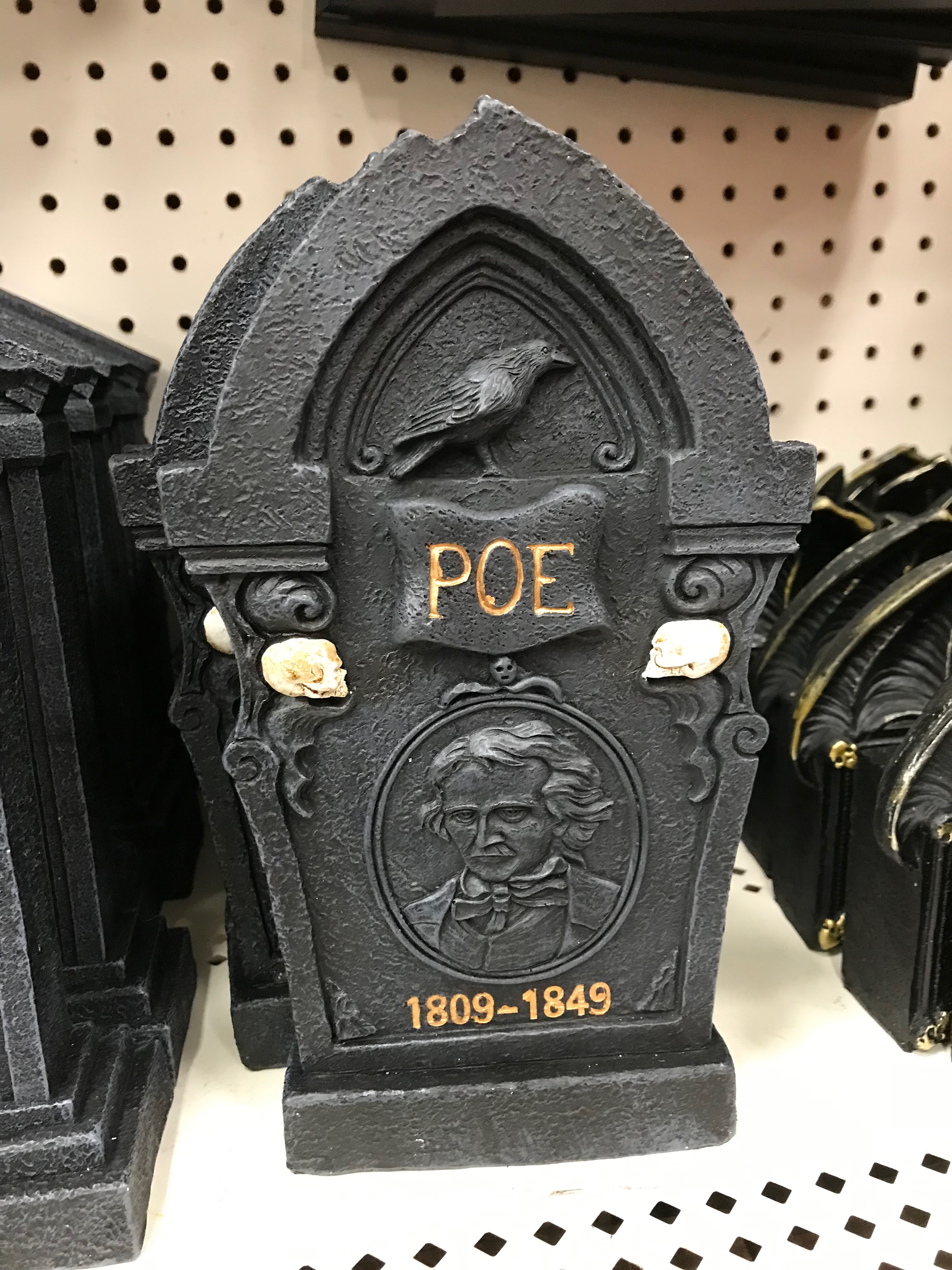
Finally, there were figurines of a fanciful tombstone of Poe.  They even got the dates correct.  Now, there’s more to be said regarding the comparison with Irving.  You can find the Headless Horseman on the toilet as well (along with Dracula).  You can find the Horseman in bust format as well.  When it comes to tombstones, however, the fictional Ichabod Crane shows up alongside the nonfictional Poe.  That casts a certain light on Irving’s most famous story.  I’ll save that for another post, however, since authors are expected to repeatedly plug their books.  I left Michaels strangely reflective.  Poe-themed merchandise is fairly typical any given year, but since we’re having our first Halloween party in some years, and since I’ve been exploring Poe’s range as a writer, this clear abundance of Poe as an icon gave me pause.  As if I were coming within view of the melancholy house of Usher. 


Under Construction

It’s fascinating, watching a book taking shape.  Just yesterday I noticed Sleepy Hollow as American Myth is now up on McFarland’s website.   And yes, it’s on Amazon too.  Go ahead and preorder!  (It hasn’t made it to Bookshop.org yet, though.)  I have to say the feed to Amazon was much quicker this time than it was with The Wicker Man.  That book took several weeks to appear, probably because it was with a UK publisher.  Yes, it does make a difference.  Now the trick is to try to get people interested in the Legend of Sleepy Hollow again.  I’m thinking I ought to join Historic Hudson Valley.  They might be interested in such a book.  It is, in a sense, right in their back yard.

The thing about writing a book is that you come to suppose other people are interested in your obsession.  I know that Sleepy Hollow is deeply embedded in American culture.  I also know that some of the fandom began to die down when Fox’s Sleepy Hollow went off the rails.  Most analysts suggest, with good reason, that the show failed when it began foregrounding white characters and writing Americans of color into the background.  A great part of the appeal was the melting-pot aspect of the cast, no doubt.  In the book, however, I suggest a somewhat different reason for the decline.  It’s one I’ve seen no one else suggest.  I’m hoping that we can both be right.  In any case, that was the fandom that got this book started.

You see, I had written my first popular culture article on the role of the Bible in Sleepy Hollow.  That article, published in the Journal of Religion and Popular Culture, led to the book Holy Horror.  I was already thinking about a project around Sleepy Hollow then, but I had a couple more books to finish first.  I’m excited about this one because it marks a move away from publishing primarily about religion to publishing primarily about a story.  There’s still religion there, of course.  We have the Old Dutch Church to pay mind to, but there’s even more about the Headless Horseman, and Ichabod Crane.  And so much more!  Sleepy Hollow as American Myth was a lot of fun to write.  I’m not sure when the book will be out, but I’m hoping next year.  Maybe if I can generate a little excitement around this Halloween—it is closely connected with the story, as I explore—there’ll be some interest next time.  Until then there are still plenty of steps to be taken. 


Summerween

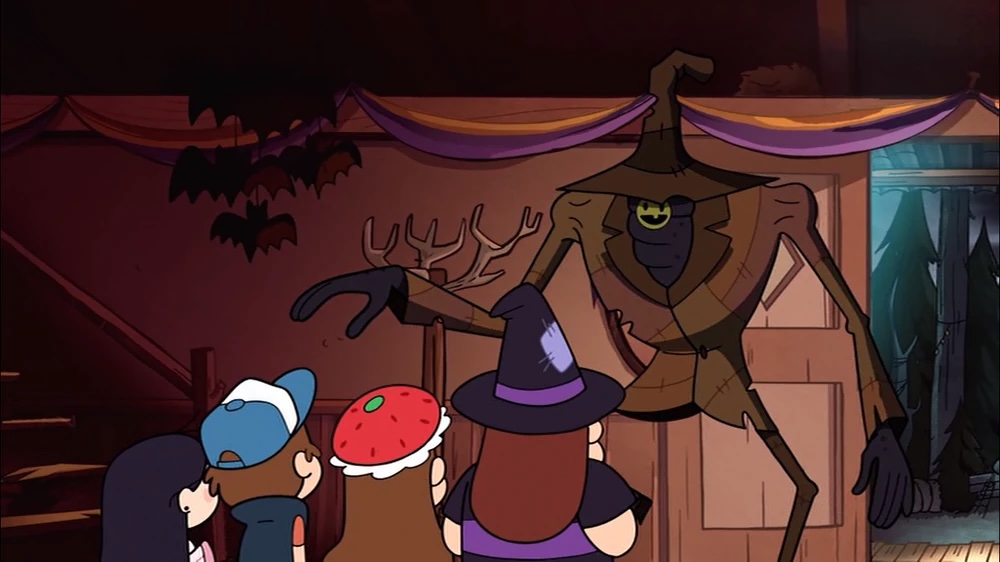
Okay, so why didn’t anybody tell me?  Well, I suppose it’s because few people know me.  But still, I had to find out about Summerween from the New York Times.  Folks, I don’t spend a lot of time online.  I work long days and I read books and mow the lawn.  I just don’t have time.  I wasn’t aware that Summerween was happening.  Interestingly, the idea got started from Gravity Falls, an animated television show based on Twin Peaks and The X-Files.  I actually watched this show because a couple of young friends, who spend a lot of time online, started showing it to me.  I didn’t remember, however, that in one episode the population of Gravity Falls decides to celebrate a second Halloween in the summer.  And now internet influencers (I’m more of an unfluencer) are popularizing the holiday.  

The need for spooky holidays is encouraging to me.  I’ve long been exploring the spirituality of the unexpected, and Summerween has the possibility of contributing to it.  According to the New York Times article there’s no set date for the celebration.  It’s more of a party aesthetic, but, the story notes, Michaels, the arts and crafts chain, has already caught on and is stocking scary summer decorations.  I have long opined (and fifteen years is a lot of daily posting—nearly five-and-a-half thousand of them) that people are afraid.  That’s why they run after unlikely political leaders and seek shelter beneath the wings of the Almighty.  Horror movies, and Halloween, simply bring this out into the open.  And what’s wrong with having a little fun with it along the way?

By the by, if you haven’t checked out Gravity Falls, you don’t know what you’re missing.  It’s a Disney production and it’s aimed at a younger crowd.  That’s one of the disconnects I experience here: Halloween is something younger people love.  At work I can’t count the number of people who’ve said (not to me directly, since few speak to me that way) that Halloween is their favorite holiday.  I guess you wouldn’t expect to find a kindred spirit among old guys who edit biblical studies, of all people.  I venture to guess that any of them would be surprised to learn that someone of my vintage even knows what Gravity Falls or Summerween is.  Well, they’d have been right about the latter, had it not been for an article yesterday in the Gray Lady.  And what a more adult way to find something out might there be?

Copyright: Disney. Summerween trickster, Gravity Falls

Out of Season

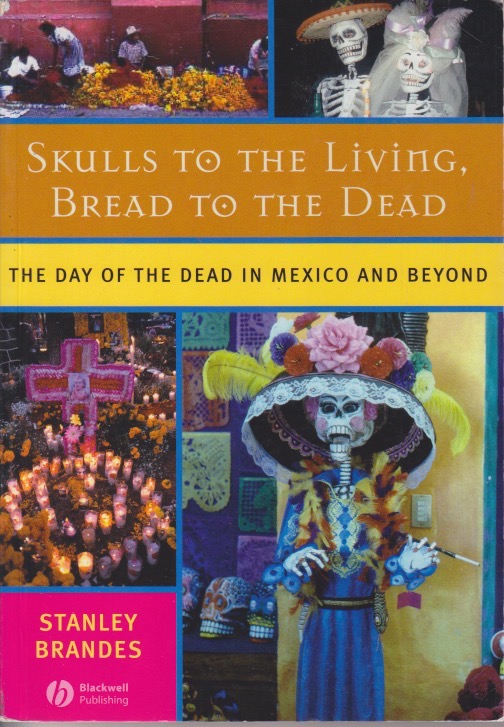
Culture fascinates me.  And one of my favorite aspects of culture is holidays.  I realize that’s a privileged thing to say but were we living among the hunter-gatherers I’d probably have ended up a shaman.  In any case, I had my eye on Stanley Brandes’ Skulls to the Living, Bread to the Dead: The Day of the Dead in Mexico and Beyond for some time now.  Like most observers of lugubrious culture, I’ve noticed the symbols of el Día de los Muertos creeping into Halloween displays in the United States for many years.  I knew that the Day (properly Days) of the Dead was connected in some way to All Saints and All Souls days.  I wanted to find out more, however.  Now, I know that one source doesn’t give you all the information, but time is limited and Brandes was recommended.

This book contains a lot of information.  I am, however, a worker in the publishing industry and that made me wonder a number of things.  The trim size (dimensions) and cover design suggest this is a textbook.  I suspect Blackwell (the publisher) wanted it so.  It is, however, written for ethnographers.  I’ve read enough anthropology over the years to have an idea of how this works, but inside the book it seemed that this was a toned-down academic monograph.  It doesn’t use a lot of technical terms, but the writing is geared toward other ethnographers, it seemed to me.  There is a bit of a dilemma here.  If you’re wanting an authoritative book you generally go to academic publishers, such as Blackwell.  On the other hand, sometimes you just want an overview that doesn’t get lost in the weeds.

The fault is entirely my own, I realize.  And I don’t mean to criticize since I learned an awful lot from this book.  Nothing is ever simple, not even holidays.  Especially holidays.  These are times we take from the ordinariness of daily living to find meaning, and often joy, in our lives.  A safe space where work can’t reach us and we can concentrate on celebrating the occasional, the unusual.  The Day of the Dead is, in the eyes of many, an unusual take on the late autumn holidays.  (Halloween is also unusual, but the two holidays are distinct.)  This book provides a lot of information on the culture of Mexico—information that derives from its most famous holiday.  You can tell a lot indeed from looking at what people celebrate.  There’s more going on than meets the eye.


Demonic Night

There’s a type of film—I don’t have the vocabulary for it—where the action is loud, brash, and in-your-face.  Colors are often lurid and, in horror, gross sounds are emphasized.  I’m not sure what it’s called, but it’s the style used with Night of the Demons.  I didn’t realize until after I’d seen it that it was a remake of an earlier film by the same name.  The one I saw was the 2009 version.  I’d just finished a book about demons, and I was looking over Amazon Prime and what I could watch without spending any more money.  Well, I did learn something.  But first, a little plot reveal: a group of friends are going to a Halloween party in a haunted mansion.  Mainly they’re looking for controlled substances and uninhibited sex.  The party hostess has rented said haunted mansion for the night.

Once they get there the final girl, Maddie (and you can tell from the beginning that she’ll be the final girl) starts to realize that there seem to be supernatural forces at play.  The cops show up and break up the rave, but seven kids remain behind since they’ve been locked in.  They find a hidden room where the bodies of six previous victims have decomposed.  This leads to the possession of the woman hosting the group and these demons are transferred either by bite or sex—they are sexually transmitted demons.  So, naturally, all the friends except the final girl fall victim.  These demons dissolve in the sunlight unless they get seven victims, so when Maddie makes it through Halloween night, the demons are defeated.

What makes this moving interesting is the type of demons on show.  These seven demons are so bad that they’ve been kicked out of Hell—they don’t follow the rules.  This made me think.  Logically, no demons in Hell follow the rules.  The root of the word “pandemonium” means “all demons.”  If none of them obey rules, how can any be kicked out for breaking rules?  Laws and rules are what preserve any civilization.  Those who use their money and power to flaunt the law are, in their own way, demonic.  These demons are kept at bay by spells written on the walls of one room in the house.  Those rules they must obey.  Is this a parable about free will?  It doesn’t seem sophisticated enough for that.  Night of the Demons is one of those fast, loud, lurid movies that need a monster.  Demons, which have no basic form, seem to be purpose made to fill such gaps.


Evolving Holidays

Holidays evolve.  I noticed this Thanksgiving that protests against the origins of the holiday have grown.  The same is true concerning the “Christmas Wars” every single year.  Some holidays (of which we have relatively few in this country) are disappearing altogether.  What seems to have been overlooked, or forgotten here, is that holidays change over time.  Public analysts and early holiday promoters encouraged government recognition of holidays as a means of bringing the nation together.  It’s easier to do this if we recognize that holidays evolve and the general trajectory is toward becoming more and more inclusive.  There will always be those who protest the “secularization” of holidays, but they share a large part of the Venn diagram with those that believe the Bible is a science book.  Things change.  Evolution is real.

I’m not just writing this because Thanksgiving and Christmas represent holidays from my tradition.  It’s true that they represent what was the majority religion (Christianity) at the time they were established here, but I would be glad for holidays from other traditions to be added as well.  Americans need more time to rest and recharge.  Anyone who’s studied the history of Christmas, say, realizes that its origins aren’t really Christian.  It’s a combination of a Christian alternative to Saturnalia, the recognition of St. Nicholas (December 6), Germanic Yule, and the festival of Roman Calends to start the new year.  Among other things.  Early Christians didn’t celebrate Jesus’ birthday.  Nobody had any idea when it was, but a tradition grew and as it grew from diverse roots it became more and more inclusive.  Why should we protest a day when we can acknowledge its troubled past and look for ways to make it better?  Something for everyone.

Holidays bring people together.  I’ve been researching them for years and I’m amazed to see how those that survive eventually catch on and bring people together for a common purpose.  Think of Halloween.  Masking disguises who we are.  It’s a day when everyone is welcome.  There are those who protest it, of course.  But holidays need not be seen as triumphal celebrations of some past misdeed.  (Here’s a hint from history: almost no historical event is seen as positive from everyone’s point of view.)  Instead, why not embrace those few red letter days that we have and use them to seek a common purpose?  Why not encourage those in positions to make decisions to consider the good of a few more holidays?  Trouble can always be found, but holidays, if done right, may help heal.  It’s the way of evolution.


All of Us

All Souls is a democratic holiday.   Since Halloween is really the start of the holiday season, we really should keep it, together with All Saints and All Souls, as a time off work.  (If I had the vacation days to do it, I would.)  I realize these are holidays of Christian origin, and some object to even getting Christmas off because of that—hey, some of us think holidays are a great and necessary part of life!  Of course, I’d be happy having Jewish or Wiccan holidays off too.  Halloween and Christmas are generally secular holidays these days, but that makes them no less meaningful.  In any case, All Souls is the day we commemorate the dead who may not have been recognized as saints.  Like the Day of the Dead, it’s a time to reflect on those we’ve loved and lost.  I always find the naming of our departed especially moving.

Doris Ruth Miller

Among northern Europeans (they aren’t all bad guys) the steps into November were a liminal time.  The restless dead might attempt to return and the living should pay their respects.  The church tried to address this through All Saints Day with its exalted music and ceremony.  Like an afterthought, it seems, All Souls was a time to remember those who are the majority.  The unrecognized, the non-famous, but often very good folk without whom sainthood would be impossible.  You see, I truly believe that most people try to live the best way they know how.  They struggle, yes, and they may have made bad decisions based on what they knew at the moment.  They were, after all, human.  The church set aside November 2 to pause and consider that death comes to all of us.  Winter is on the way.

Winter, in many ways, defines life.  It’s a time in which disaster comes to those who fail to plan ahead.  Food must be stored in advance since it will be scarce.  Nights will be long.  Even keeping warm will be a challenge.  And it can come at any time now.  Some years snowstorms come on Halloween.  And even if no snow falls we enter that fallow time when we’re forced to sit and wait.  It is nature’s way of saying, “Stop.  Reflect.”  Those already departed on All Souls are missed by those of us who remain.  We put on another layer, or perhaps turn up the thermostat, trying to distance ourselves from the chill.  We look to Thanksgiving, and Christmas soon to follow.  And those who perceive subtleties know that hope of spring begins early in February.  The souls who’ve already gone on know more than we, and the least we can do is remember them once a year on the holiday meant for all.


Halloween Spirituality

October, well September and October—actually June through October, took many unexpected twists this year.  I’ve had to lean heavily on Halloween spirituality to make it through.  That’s good because we haven’t had time to decorate for the holiday.  We haven’t had time to get out just to appreciate the leaves, to go to a farm for pumpkins, let alone carve any.  Or come up with a costume.  I couldn’t even get to the theater to see The Nun II, despite having written an article on the universe to which it belongs.  Halloween spirituality works in times of less-than-optimal circumstances.  Anyone who reads this blog more than once or twice knows that struggle is a fairly constant theme.  Halloween spirituality comes to those who need it, and it helps us to get through.  

With the death of my mother this month, I’ve been thinking a lot about family.  My family is where my spirituality began.  I’ve been haunted by the truth since I was a child.  I need to know what’s true.  It’s one of the few non-negotiables in my life.  Halloween is true because it’s honest.  We wear masks, but we do so all the time.  On Halloween we have the courage to admit it.  Some of us are scared little boys or girls inside, trying to find meaning in a world that makes no sense.  A world that is run by the ambitious and greedy—those who are powerful because others fear them (Halloween is honest, my friend)—and who make rules by which the rest of us must live.  Halloween says it’s all right to be scared.  Yes, the monsters are real.  And most of them would treat you far better than you might expect.  Trick or treat.

Halloween spirituality is about hope.  It’s a pivot point around which the year revolves.  I look forward to it each year once it has too swiftly passed.  In the slow change of progress, I hope that it will eventually be recognized as a national holiday.  I find the holidays a season of hope.  For me that season begins with Halloween.  From here it’s almost possible to see Thanksgiving and from there Christmas isn’t far off.  I save vacation days to be able to take a mini semester break—something in every teacher’s blood—that allows me to reboot.  Halloween spirituality is one that anticipates rest and quietness, celebration and reflection.  It’s a time when busyness must wait its turn.  When the dark is allowed to utter its peaceful sighs into a world where too much is happening all the time.  By the way, I decided on my Halloween costume: AI, disguised as a human being.


Halloween Tale

Halloween movies are hit or miss. Anthology movies are the same. My interest in holiday horror keeps me coming back for more nevertheless. Tales of Halloween has been fairly well reviewed over the years. As intimated, it’s an anthology film. There are ten separate stories squeezed in, leading to an average of nine minutes per episode. To make matters more interesting, each story has a different director. The end result is kind of like a pillowcase after trick-or-treating, you get some good stuff and some you’d rather not have received. The movie’s also a comedy horror so you’re meant to laugh throughout. Kind of like Halloween itself, I suppose. At least for some people. The movie didn’t do anything for me. There were no takeaways, and nothing really memorable.

Halloween is an unusual holiday.  For one thing, the way it’s celebrated is fairly recent.  Childhood memories of costumes and trick-or-treating and ghosts and goblins are all pretty new.  Well, maybe not the ghosts.  For some of us it’s a spiritual time.  A reflective season.  I’m not sure how anybody can not try to figure out what life’s all about.  Some of us have steered our lives (in as far as we actually steer them) in the direction of trying to figure these things out.  For me, Halloween is a time of spiritual growth.  Not exactly fun, but enjoyable nevertheless.  I know it’s different for different people.  Some people live for the fun and the partying.  It’s like that pillowcase all over again.  There is, at least in my experience, no perfect Halloween movie.  I won’t stop trying to find it, however.

John Carpenter’s Halloween is the movie that really kickstarted films based on this particular holiday.  Although I’m no fan of slashers, I do enjoy this one from time to time.  It’s a well-made movie, moody like autumn.  In Tales of Halloween, the background movie in two segments is Night of the Living Dead, a classic by any standards.  Carnival of Souls is shown in another episode.  Horror is a notoriously self-referential genre.  Last year I watched Trick ‘r Treat, another such anthology film.  It likewise made little impact.  On me, anyway.  Perhaps Halloween isn’t about horror after all.  It’s a time for reflection.  And pretending.  Since we all pretend most of the time it is perhaps the most natural of holidays.  Pretense on other holidays, although it happens, is considered in bad taste.  At least on Halloween we can be honest about it.  Some day someone may actually capture that in a movie.


Starting October

October’s a difficult month to quantify.  When it rolls around I get in the mood for certain books and movies, but I like to see and read new things.  I check lists to see what others recommend for what I hope is a similar mood.  A book that kept coming up was Roger Zelazny’s A Night in the Lonesome October.  Published thirty years ago, it’s not exactly new, but it was new to me.  It’s a humorous story, told by Snuff, a dog.  But not just any dog—he’s a player in a game that takes place when the full moon lines up with Halloween.  There’ll be spoilers hereafter.  The game involves two sides deciding the fate of the world, and each has the usual monsters lined up.  Dracula, the wolf man, Frankenstein’s monster and others are involved.  One side tries to awaken Lovecraft’s Old Gods and destroy the world while the other side tries to stop them.

Each chapter is a day in October and what the game is is only slowly revealed.  The antagonist for all of this is really the parson.  It turns out that he’s a minister for the Old Gods’ true believers.  Various monsters or players are killed and Sherlock Holmes is hanging about, trying to solve the mystery.  The story’s really a mash-up of several characters from yesteryear.  It’s not scary, nor is it particularly moody.  It’s a good example, however, of how religion and horror, even if it’s comedy horror, work together.  The Old Gods are an existential threat and require clergy to perform the correct rituals.  Roger Zelazny was fond of using characters from existing mythologies in telling sci-fi-ish stories, and this fits that writing mode.

This is an enjoyable story, but my October mood isn’t only a monster one.  Set in England, A Night in the Lonesome October doesn’t really have the leaves, pumpkins, and ghosts of my melancholy season.  Also, the humorous aspect is fine, but acts as a distraction from what I generally seek.  This is a magical time in northern climes.  Of course, I read a good deal of this while traveling to and from South Carolina, so getting the right mood was tricky when it’s beach weather and the flowers are still in bloom.  October means different things to different people, I know.  I’m still looking for the novel that manages to encapsulate my experience of it.  There’s something difficult to quantify about it, and that’s perhaps what I need to define.  


In the Air

It’s a strange but strong connection.  Between Halloween and me, that is.  I’ve always loved the holiday.  I don’t like being scared, however, and gory horror movies aren’t my favorites.  Still, I’m not alone with my fascination.  Lesley Pratt Bannatyne has written a couple of thorough books on the holiday.  Halloween Nation: Behind the Scenes of America’s Fright Night looks at various aspects of Halloween as it’s celebrated in America.  It’s both an imported and exported holiday, of course.  The raw materials came in mostly from Celtic countries—Ireland in particular—and got mixed in with other traditions here before being sent out to the rest of the world as it’s now known.  The thing about Halloween, or any holiday, is that it’s impossible to capture all of it in a book.  Halloween has many associations and a good few of them are explored here. Halloween’s in the air as retail stores know. So let’s take a look.

Bannatyne’s chapters on ghosts, witches, and pumpkins are particularly good.  The pumpkin connection, which is an American innovation, is particularly telling.  It’s been a few years since I’ve carved a jack-o-lantern, but it is one of the fond memories of childhood.  The challenging orange palette that has a wonderful evocative smell and feel.  Bannatyne gives good information about pumpkins and how they’ve become central to the holiday.  Indeed, the symbol that gives Halloween away is the jack-o-lantern.  I found many little gems throughout the book.

Halloween Nation is amply illustrated, in full color, no less.  Bannatyne has a good idea of what Americans do for fun.  Capturing the fulness of the holiday in one book may be impossible, but here you’ll have tours of zombie walks, fan conferences, the Greenwich Village parade, over-the-top haunted house attractions, naked pumpkin runs, and pumpkin beer breweries.  You’ll learn about the history of trick-or-treating and how grown-ups came to embrace what really took off as a day for childish pranks.  Halloween is an expansive occasion.  Holidays also have their own local flavors.  My early memories are of small town celebrations where even poor folk like us could join in the fun.  Nashotah House, for all its problems, did Halloween well when I was there.  To really do it right takes time that seems difficult to come by these days.  It’s just as easy to cue up a horror movie and promise to do better next year.  Still, every year I hope to cut through the jungle of obligations and give the holiday its due.  It’s usually a work day (Tuesday this year), but at least now I’ll be better informed about what I wish I were doing instead.


Early Halloween

Call it seasonal disorientation syndrome, but I’ve been reading about Halloween.  I’m pretty sure I’m not the only one thinking about it.  Stores will begin Halloween displays next month, if the usual pattern recurs.  So why not do a little advanced study?  Although I’ve written about holidays myself, they’re unruly subjects to handle.  Lesley Pratt Bannatyne is a name familiar to many fans of Halloween.  Her 1990 book Halloween: An American Holiday, an American History kickstarted renewed interest in the holiday and has been followed by other studies, even occasionally with academic presses.  Still, holidays are difficult to pin down.  One of the most obvious reasons for this lies in the fact that before the world became über-connected, holidays were largely local celebrations.  Trends traveled slowly and not everybody agreed on which holidays to celebrate.

The early days of Halloween are the most difficult to piece together.  This is clear in Bannatyne’s book also; we simply don’t have the written sources we’d like.  The ancient Celts, although great strides have been made through archaeology and close examination of ancient writings of outsiders, remain poorly documented.  They didn’t leave archives like the classical writers of Greece and Rome did.  And clearly Halloween has its earliest known celebration as Samhain among the Celts.  Once Bannatyne gets to America, however, there’s a trove of information in her book.  Her chapter on the celebrations among the original thirteen colonies is quite good at demonstrating regional differences not only for religions, but for tolerance for something like Halloween.  Fall festivals predated Halloween as we know it (if we really do know it), and she does a good job of demonstrating how the melting pot effect made Halloween national.

One of the problems with any history is that one event can change everything.  This book was written three decades before Covid-19 and the pandemic was one of those events that did change everything.  It makes it seem as if we were much more carefree back in the eighties when Bannatyne’s book was written.  Halloween was just starting to become an adult holiday again back then.  In the ensuing years it has become even more so.  Communities are seldom what they used to be with the extreme mobility of much of our society, but many still find a way to agree to the terms of Halloween.  Historians of holidays have a difficult task, and we’re still learning about ancient cultures and their modern manifestations.  This is a good book to start that exploration—I know it taught me a thing or two.