Allhallowtide

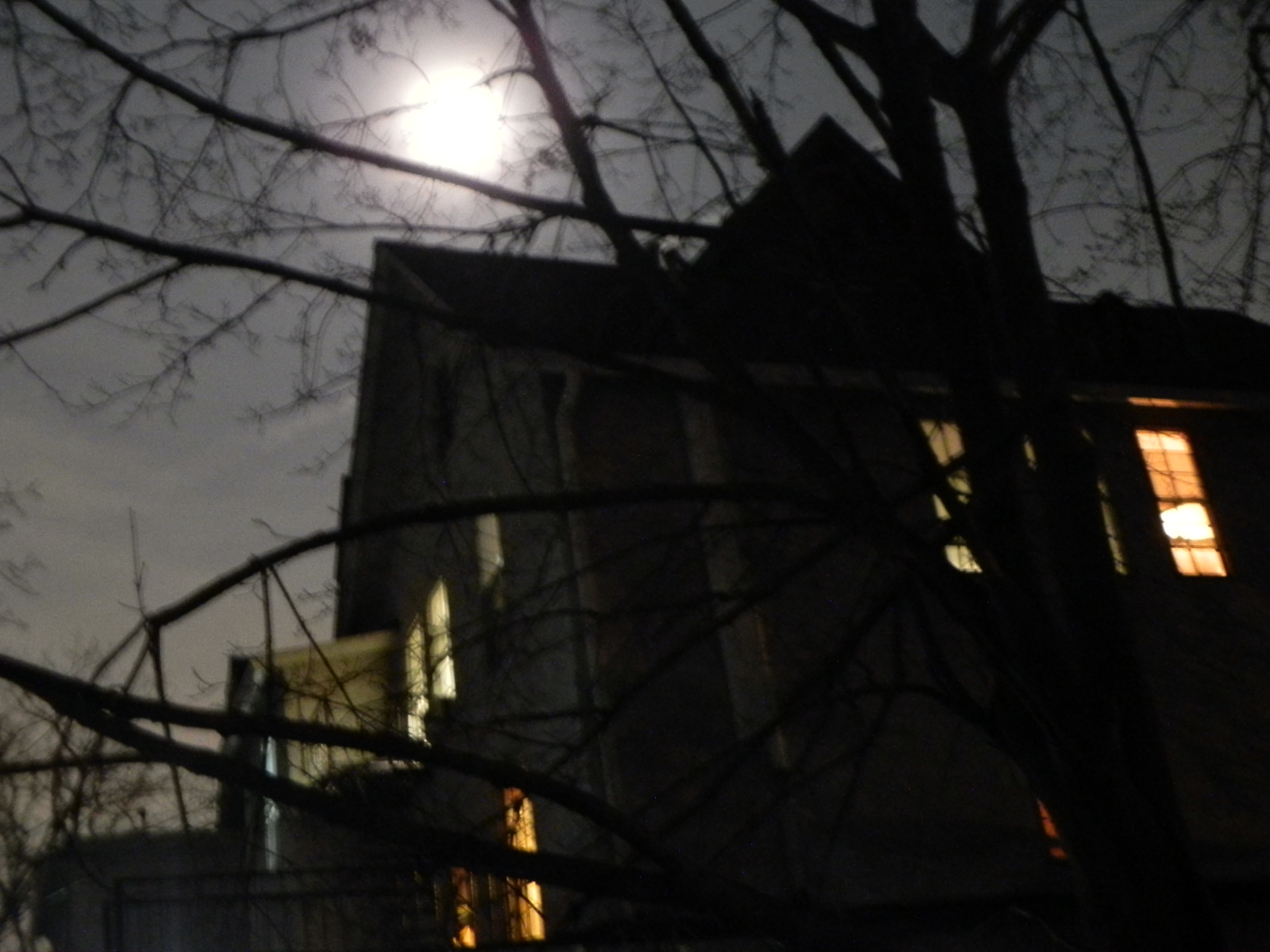
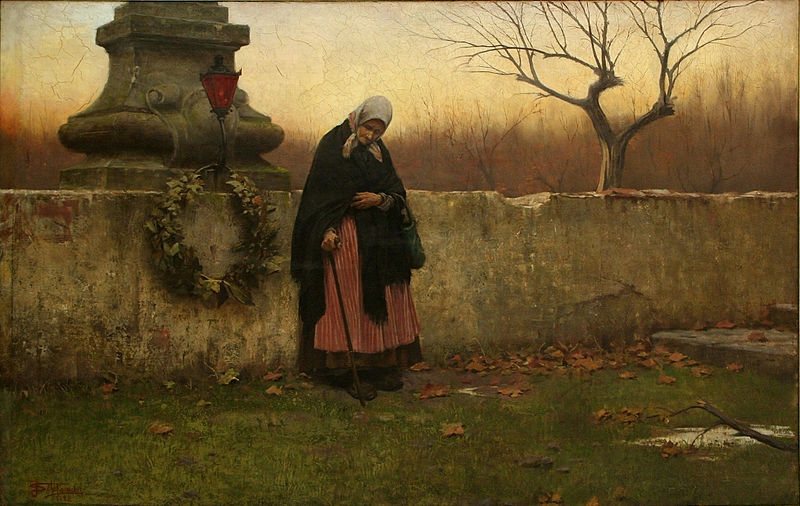
Allhallowtide is a triduum. No, I’m not writing in tongues. Ecclesiastical language can often be foreign to the secular world, and the fact that it’s All Souls’ Day for some has me thinking about feasts that come in threes. I first heard the word “triduum” at Nashotah House. There, of course, the great spring coalition of Maundy Thursday, Good Friday, and Easter made the holy triduum of required marathon chapel attendance. It was not unusual to spend a dozen hours in chapel during that stretch. Always considered less important, but perhaps far more human, was the autumnal triduum of Allhallowtide: All Hallow’s Eve (Halloween), All Hallows (All Saints, or Hallowmas), and All Souls’ Day. In Mexican tradition the three days make up the Day of the Dead. For people who live close to the economic edge of perpetual poverty, that makes perfectly good sense. Even for the liturgically literate, however, parsing the triduum of Allhallowtide takes some effort. We all know Halloween, and the title All Saints is self-explanatory. All Souls’ might require some thought.

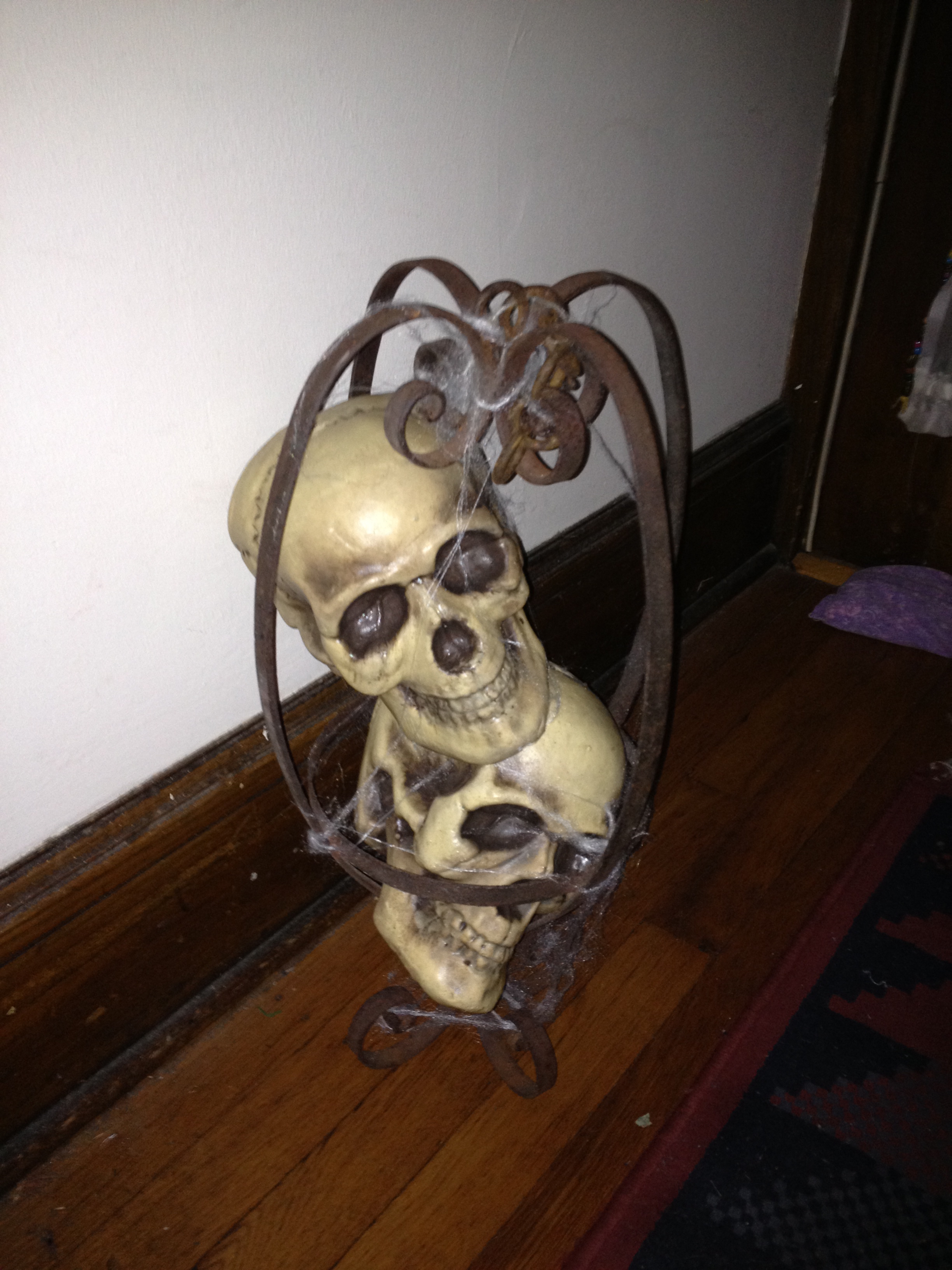
All Souls’ commemorates the “faithful departed.” We can’t all be saints. (Well, in some traditions all Christians get to use the title, but alas, in the more Catholic world, no.) What about those who’ve died believing, but not earning a place among Ralph Vaughn Williams’ masterpiece? The ordinary, like us? All Souls’ is our day. Since the macabre is considered puerile, what with its possibilities of ghosties, and ghoulies, and one-eyed beasties, the church has continued to give a polite nod to Halloween (at Nashotah it used to be done up in great style) but doesn’t take it seriously. More evangelical denominations say it’s demonic, but in actuality, historically, it is the opposing triduum to that of the spring. Liturgical life holds an incipient balance for those who don’t take things too literally. Understanding our mythologies covers a multitude of sins.

Perhaps this chilly, rainy Allhallowtide in the northeast has me far from the hot and dry Day of the Dead, but I admire the Mexican acknowledgement that something should be done about those who’ve died never knowing affluence. Somewhere just to the north lies one of the most successful (until recent years) economies in the world. Social fragmentation, violence, and drugs (which draw big money from that self-same northern economy) bring many of our fellow North Americans to their knees at the feet of Santa Muerte. The light is fading fast at this time of year, and the wind is ripping the desiccated leaves from their skeletal branches, preparing us for the long chill that is to come. While work prevents too much investment in the liturgical year, I look with a peculiar longing over this triduum, and this soul, in any case, is grateful for a weekend to contemplate it all.
Jakub_Schikaneder_-_All_Souls'_Day


Fear and Dissembling

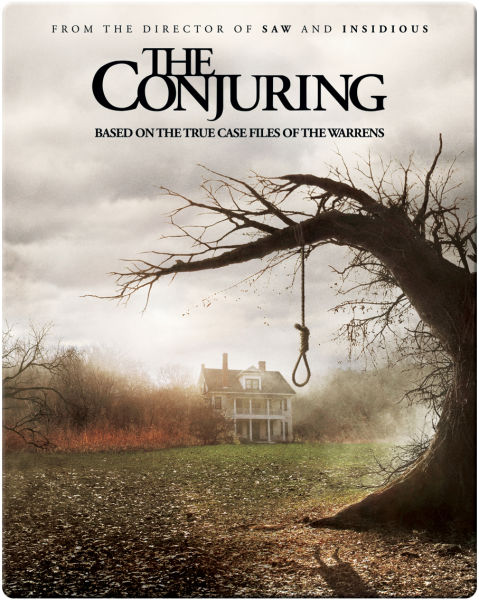
The ConjuringLast year, when The Conjuring was released, it quickly became one of the (if not the) top earning horror films of all time at the box office. Based on a “true case” of Ed and Lorraine Warren—real life paranormal investigators—the film is a demonic possession movie that ties in the Warren’s most notorious case of a haunted (or possessed) doll, with a haunting of the Perron family of Rhode Island. (The Warrens were also known as the investigators behind the Lutz family in the case of the “Amityville Horror,” showing their pedigree in the field.) Given that Halloween has been in the air, I decided to give it a viewing. As with most horror movies, the events have to be dramatized in order to fit cinematographic expectations. Apparently the Warrens did believe the Perron house was possessed by a witch. In the film this became somewhat personal as the dialogue tied her in with Mary Eastey, who was hanged as a witch at Salem (and who was a great-great (and a few more greats) aunt of my wife). Bringing this cheap shot into the film immediately made the remainder of it seem like fiction of a baser sort.

Witches may be standard Halloween fare, but when innocent women executed for the religious imagination are brought into it, justice demands separating fact from fiction. Writers of all sorts have toyed with the idea of real witches in Salem—it was a trope H. P. Lovecraft explored freely—but there is no pretense of misappropriation here. Lovecraft did not believe in witchcraft and made no attempt to present those tragically murdered as what the religious imagination made them out to be. The Conjuring could have done better here. It reminds me of Mr. Ullman having to drop the line about the Overlook Hotel being built on an Indian burial ground. Was that really necessary? (Well, Room 237 has those who suggest it is, in all fairness.) The actual past of oppressed peoples is scary enough without putting it behind horror entertainment.

A doctoral student in sociology interviewed me while I was at Boston University. She’d put an ad in the paper (there was no public internet those days) for students who watched horror movies. I was a bit surprised when I realized that I did. I had avoided the demonic ones, but I had been in the theatre the opening week of A Nightmare on Elm Street (on a date, no less) and things had grown from there. I recall my answer to her question of why I thought I did it: it is better to feel scared than to feel nothing at all. Thinking over the oppressed groups that have lived in fear, in reality, I have been reassessing that statement. What do you really know when you’re a student? As I’ve watched horror movies over the years, I have come to realize that the fantasy world they represent is an escape from a reality which, if viewed directly, may be far more scary than conjured ghosts.


Transformations

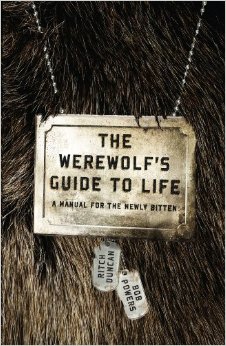
WerewolfsGuideToLifeHalloween, when you think about it, is an odd holiday. I know many who claim it as their favorite although you get no presents and not even a day off work. I suspect that part of the mystique comes in the form of Halloween representing autumn in miniature. The slow death of summer as the chill of winter settles in. The trees, vibrant in their dramatic death throes, are beautiful and melancholy at the same time. The long hours of darkness leave plenty of opportunities to see ghosts. Rich Duncan and Bob Powers’ book, The Werewolf’s Guide to Life: A Manual for the Newly Bitten, is appropriate for the season. This lighthearted parody of self-help books nicely illustrates how monsters often come into contact with religion. As a secular handbook, the Guide nevertheless addresses itself to the religious questions of life: should a werewolf go to confession? How do you deal with guilt? Do werewolves go to heaven? Monsters often force us to face the questions we just can’t answer.

The werewolf, of course, is the manifestation of a person gone feral. While people don’t actually physically change into animals, evolution has left us with a deep kinship to our fellow creatures. At times when work, or school, or relationships become trying, we are tempted to let the beast loose. One size doesn’t fit all, despite the many attempts of society to keep the vast majority of people in the same plight. Halloween is a cathartic holiday that permits us to be someone else and, perchance, to howl at the moon. Not exactly like Carnival, Halloween thrives on false appearances. We wear costumes. The trees and sunlight that apparently die are really only cycling through an annual death and resurrection.

Halloween can’t touch Christmas for a holiday that commemorates new beginnings, but in many ways Halloween is the more visceral of the two. In Manhattan, although Halloween decorations show up early in October, the holiday is lost in the city. The werewolves pretty much keep to themselves. As Christmas, with its lucre, becomes the next obvious holiday (in stores Halloween decorations already give way to those of Christmas at the start of October now) the city transforms. Despite its multi-ethnic and multi-religious makeup, Christmas trees will begin to appear, some impressively large, and the greens will remind everyone that it is time to spend. You’ll get days off work and the days will be painfully brief. Light will slowly return to the skies and the cycle will begin all over. Some will watch this all with wolf-like eyes, however, awaiting the next season of monsters and myths, knowing they are what make us truly human.


Devil’s Food

One figure among the standard repertoire of Halloween characters has never appeared on my list of favorite monsters. I suppose it may be because as a child I fervently believed there was a devil that he never made my A-list. Satan was real, according to my church, in some almost biological, corporeal form. Even as a youngster I knew vampires, werewolves, Frankenstein’s monster, and the rest, really didn’t exist (even after I hid under my covers all night once, after putting my head down on a bat that had flown into my bedroom). The devil was, however, biblical. And I never felt tempted to dress up with red horns and pointy tail, carrying a plastic pitchfork. Halloween was always among my favorite holidays, but it was for pretend monsters and ghosts (which might perhaps be real, but which were not diabolical, according to my childhood economy of the spiritual world). The consequences of devil imitation seemed eternal, and even today, in the rational light of the twenty-first century, I can still be given pause even though I know the concept is a Zoroastrian one that morphed into early Christianity’s need for a kind of anti-Christ.

IMG_0276 copy

There are many who still believe in a real devil. Some branches of Christianity (and Islam) teach that a literal devil lurks about in our world. In western culture he is a figure instantly recognizable, although there are differences of opinion in his anti-iconography. Last weekend I visited a fine little restaurant in a New Jersey town that has a reputation for being haunted (the town, not the restaurant). It was a seat-yourself day and the table my wife and I ended up selecting had shellacked cards on top as part of the decoration. There in front of me was the devil. I pondered this. The cards, all captioned in Spanish, had mundane subjects: an umbrella, a musician, plants, a spider (okay, so that last one’s a little scary too), but only one supernatural figure. Perhaps the entire deck, had I seen it, might have had more. No doubt, for a world that postulates a good God, a devil covers, well, a host of evils.

The word “devil” is somewhat loosely applied these days. New Jersey has its own cryptid called the Jersey Devil, which has led to iconic names for sports teams and perhaps a public official or two. But even in the aftermath of 9/11 there were those who seriously postulated seeing the face of the devil in the tumbling debris of the twin towers. For a character of the religious imagination, the devil has managed to impress deeply on the human psyche. I know in my rational mind that I should simply dismiss all of this and get on with the business of enjoying the monsters that will show up at my door later this week. Nevertheless, when the waiter comes out with our food, I look down at the table and decide to pass on the hot sauce for today, just in case.


Sacred Fear

Last week’s Time magazine ran a story about fear. I’m no stranger to this emotion, so long ago I decided to engage it creatively rather than run away. The article, “Monsters Inc., Inside the weird word of professional haunting,” by Lily Rothman, contains the laments of those who operate seasonal haunted houses. People are just getting too hard to scare. Some blame violence in the media and computer games, a large-scale desensitization to the suffering people might cause to others. CGI has made the most hellish nightmare realistic in the theater or on the small screen. If you can imagine it, it can be brought to life. Yesterday was Halloween, the day we’re allowed to be afraid. Of course, those who fear the influence of negative emotions on children have cute-ified the frights: bulbous air-filled creatures lit up from within billow harmlessly in front lawns, monsters of various sorts sport silly grins, and humor is liberally sprinkled in with the horror. One haunted house owner wanted patrons to walk through naked, so they could feel vulnerable. Today most people will wake up to just another day of work, while others will roll out of bed ready for All Saints’ Day and a rousing chorus of Vaughn Williams. Some of us will still be scared.

DSCN0216

Thrice I’ve had to face the highly secretive severance agreement offered by employers who know that people over forty have a difficult time rebuilding a career. I know that in this I’m not alone. If it hasn’t happened to you, here’s how it goes: you show up to work one day and begin doing whatever it is someone pays you to do. Depending on the size of the organization, either Human Resources or some level of supervisor will innocently invite you to the office. They will have solemn smiles on their faces. The door will be closed. You will be told that, for whatever reason they wish to give, your services are no longer required. In return for your silence you’ll be offered some kind of adult care package. You’ll leave shattered and stunned and willing to sign anything slipped under your nose.

The secrecy’s the thing. I’ve never revealed to anyone, under pain of prosecution, what any of those agreements said. What I have noticed, however, is the fear. The lawyer-instilled fear of bad press. Organizations want to be thought of as caring and concerned. They do not want any clandestine information released. Truth seems to be the greatest engine of fear in the corporate world. A few years back, before the Bush-whacking of the economy, I read about optimistic companies practicing “naked business.” Revealing vulnerability. I immediately admired the idea. Like walking through a haunted house in the nude, businesses could demonstrate that they have nothing to hide. But there’s real fear here. Like a ghost, truth can pass through walls. Like Godzilla, truth is indestructible. Like the invisible man, naked truth just can’t be seen.


Conscientious Ghosts

It’s finally Halloween. In keeping with the spirit of the season, NPR recently ran a story on ghosts. I’ve posted on the topic of ghosts several times since they are inherently a religious phenomenon, whether they actually exist or not. Empirical method only takes us as far as that terminal border, but not beyond. Since we all face death, the question of ghosts is intriguing to many people. In some parts of the world, according to the NPR story, up to about 90 percent of the population believes in ghosts. They have been part of the religious thought of humanity since writing began. Ghosts have haunted us from earliest memory.

What makes the NPR story so interesting is that there is a kind of moral consciousness that runs through the story. An interview with Tok Thompson, an anthropologist at the University of Southern California, makes up part of the story. Thompson notes that ghost stories often concern unresolved justice issues. He cites the overused “Indian burial ground” motif as an example—where there is a collective guilt, ghosts tend to gather. Slavery is another such social injustice, and again, ghosts and slaves are no strangers. Christianity tended to push justice off into the afterlife. The fact is many people do not receive fair treatment in their lives. Some of them are very good folk who just never get a fair chance. That troubled early Christian thinkers into making Heaven into a place where the reward came. It also, unsuccessfully, tried to suppress the idea of ghosts. Ghosts problematize such easy theology. What are they still doing here when Heaven, Hell, or Purgatory should suffice?

Hammersmith_Ghost

The NPR story even addresses the idea of possessed dolls. Tok Thompson notes that the word “doll” derives from the word “idol.” This sheds a whole new light on Barbie, I suppose. An idol is an image representing a deity. In the Judeo-Christian tradition religious statuary was problematic at first. Again, Christianity bucked the trend by allowing images because people naturally want to see what it is they believe. Stories of haunted dolls and statues and other inanimate devices are difficult to accept. They are, however, deeply religious. That’s because ghosts represent what we really believe. Death is the most parsimonious of thresholds. We can’t look over at the other side, but, if ghosts exist, they may give us a glimpse beyond human sight. And that seems like an awful decent thing to do.


Dreaming of a Black Xmas

By my best reckoning, Thanksgiving has not yet taken place this year. Since Halloween, such as it was, is now over, we must still be in November. As I was exiting my office building last Wednesday, I noticed that the holiday tree was already going up in the lobby. A few blocks away and I heard the first Salvation Army bells of the season and shouts of holiday cheer. The great tree in Rockefeller Center was being erected. (I picture burly guys with a super-sized tree stand swearing in the cold air—”Left, nudge it to the left!”) Maybe it’s just a storm-weary city glad to be rid of Sandy, but it does seem to be a bit early to me. Holidays, in any modern sense of the word are about opening wallets and injecting cash into the system. The very corpuscles of capitalism. I enjoy holiday cheer as much as the next guy or gal, but I don’t mind waiting for it to arrive. Antici-

Holiday seasons are as old as holy days themselves. In our work-obsessed culture, however, convincing bosses of the regenerative utility of granting more than a single day off at a time is an uphill battle. Productivity is what we’re all about. And so we lengthen our public show of holidays instead. Thanksgiving’s not much of a banker except for grocers, and although turkeys may make great primary school decorations, they don’t really match the productivity and professionalism that corporate offices like to promote. The December holidays, however, give us Black Friday. Listening to the news over the last few days, it is clear that many people are biding their time, already ready to get those distant family members out the door, and let’s get those bargains! pation.

Holidays reflect what we hold sacred. I’m not one of those purists grinches who see gift-giving as some inherent evil—in fact, giving things away is one of the under-utilized tenets of most major religions—but I do wonder how much of it is an appeal to the ego. I feel good when I make someone else happy. Yet at some level, I’ve indebted them to me. I’ve made a business deal. The holy days have been infected with capitalism. Warm memories of not having to go to school for nearly two whole weeks, being with my family—the place I was unquestioningly accepted—and getting presents as well? What could be more sacred than that? But I’m getting ahead of myself. It is still mid-November. After all, Black Friday (and what’s that day before that called?) hasn’t even started yet.

A waif in a manger?


November’s Vampires

It may have been the year without a Halloween here in the northeast coastal region of the United States, but it looks like some of the spirit has persisted into November. My daughter was disappointed when, due to storm damage, our local borough cancelled Trick-or-Treating for this year. So I was intrigued when I spotted a news story yesterday discussing Prince Charles’ relationship to Vlad the Impaler, the historical Dracula of yore. (And a good Christian by his own reckoning.) I wondered about the timing of the story until I noticed the gothic script on Google’s search page and realized that yesterday was Bram Stoker’s 165th birthday. Well, it would have been, supposing that he has remained dead since 1912. Completely unrelated to this anniversary, I read Dracula again in September through October and realized just how religiously charged a story it is. The Church of Ireland, to which Stoker’s family belonged, was Anglican in name and identified with both Catholic and Protestant traditions. In Dracula the more Catholic side seems to predominate.

Prince Charles’ connection to Vlad Tepes suggests perhaps a deeper meaning. The short news clip I saw (I can’t recall which network it was on) noted that the connection is being promoted by Romanian tourist agencies. Nevertheless, Prince Charles appears in the material acknowledging his hereditary connection to Vlad III, and noting that Transylvania has much to teach us. (He goes on to explain that the people of Romania have a lot to teach other Europeans about sustainable practices.) I could not help but note the irony of a member of the royal family, however, inviting comparison with a character who came to be known as the drainer of other people’s blood. Taking that which by no rights belongs to them.

Perhaps it never occurs to those with great wealth that what they amass is absconded from others. In a world that holds to a social contract that values money—which is merely a symbol—for some to have excess means that others will have less than adequate amounts. I’ve always had trouble understanding such selfishness. Perhaps it was being raised in a Christian environment with siblings with whom I was expected to share. Maybe it was just a part of the sober assessment of the social injustice I began to notice when I was a teenager. Somehow I’ve never felt entitled to much, but I do wonder how others can justify taking more than they need while knowing that many others suffer from real want. It is a matter of degrees, I realize, and we all do it to some extent. I have never complained about taxes because I know that my eyes too may be blinded by the beguiling glitter of gold. When the very wealthy don’t pay taxes (not pointing any particular fingers here), they too, like Prince Charles, may claim to be true descendants of Dracula.

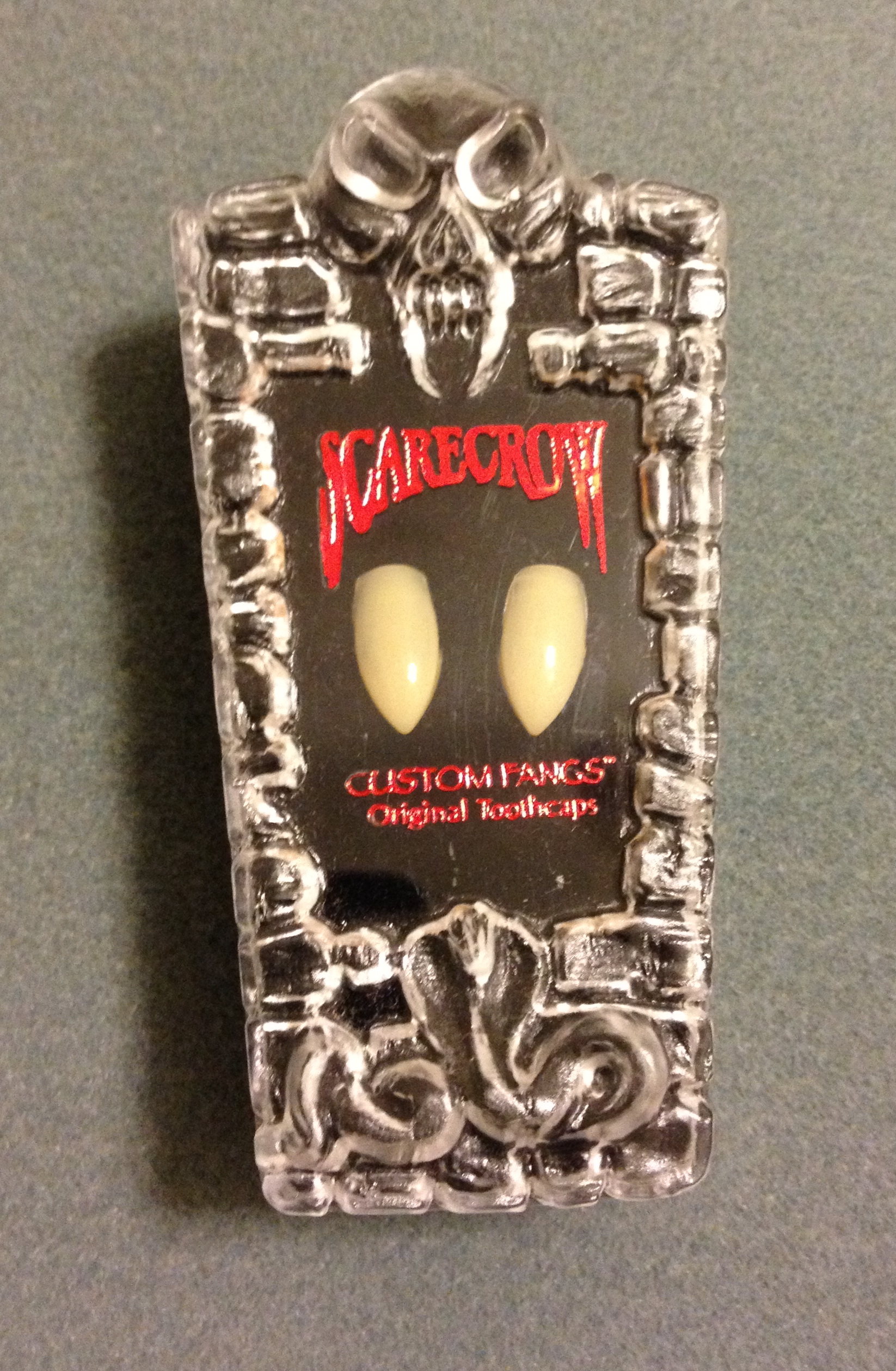
Just add vampire of choice


Two Swords

One of the more interesting situations to emerge from Hurricane Sandy’s aftermath was the celebration of Halloween. I know that I’ve already lost some readers right there since Halloween is a disputed holiday. Often Halloween is maligned as “Satanic,” a claim that is absolutely untrue. It may have some paganism in its roots, but then, so do most religious events and ideas. Halloween is a Christianization of various folk customs, frequently Celtic in origin, on a night when the protective wall between the living and the dead was believed to be especially thin. As adults grew more sophisticated and scientifically informed, the holiday lingered as a children’s fun day with dress-up and pranking, both normal childhood ways of playing. This neutered holiday has proved to be commercially viable as well, now supporting September-October Halloween stores at a density of about a dozen per square mile. Its success is rivaled only by Christmas.

In light (or perhaps dark) of the devastation of Sandy, New Jersey Governor Chris Christie canceled Halloween. We heard the news on our battery-operated radio, sitting in the dark. While this was one of those rare times when I think Christie was motivated by the concern of both poor and rich, I did ponder the implications of a government canceling a holiday. All Hallows’ Eve is the night before All Saints’ Day. “Hallows” is simply another—less used but more evocative—word for “Saints.” While largely secular in its present guise, Halloween is a religious holiday. My mind went back to the doctrine of Two Swords that I learned about many years ago. Originating in the papal bull Unam Sanctum, very early in the fourteenth century, the doctrine teaches that in spiritual matters the church holds the sword while in temporal matters the state holds its own sword. Who has the right to cancel a holiday?

Of course, Chris Christie has his own ways of issuing bull, but his real concern was that conditions were too dangerous for trick-or-treating. Indeed they were. On a short walk, I saw power cables dangling like electrified cobwebs on just about every block, snaking along the ground. Branches were still falling from trees. Curfews (many still in effect) were widespread. Not a good night for masked strangers to show up at your door. But as in the case of the Grinch leaning out over Whoville after he’d stolen all the trappings, Halloween came, it came just the same. What we saw on Halloween was people helping one another. No tricks (for the most part, although among the first to recover were businesses who recorded new ads to broadcast on the radio before the wind even stopped blowing), just good natured mortals helping one another, protecting others from the grim reaper. To borrow a line from Charles Schultz, “That’s what Halloween’s all about, Charlie Brown.”

Will the real Halloween raise its hand?


For Saints, All

The year without a winter has also become the year without a Halloween. As the first surge of Sandy made herself felt, we were among the 5 million households in New York, New Jersey, and Connecticut without power. To put things in a little context, I have training in wilderness camping, having learned to survive outside with little more than a ball of twine and a pocket knife. Still, when Sandy knocked out our lights, heat, and most importantly, Internet, for three days I found myself in a new kind of wilderness. Each night, buried under blankets, in one room lit with candles (incidentally, candles that we made ourselves nearly a decade ago on a candlemaker spree in Wisconsin), we sat around a card table and played games, read, or just pondered the imponderable. I actually took to working on a blanket I’ve been making, but had set aside for a few years. If it weren’t for wondering if I had to go to work the next day until evening every night, I might have actually enjoyed it.

And the experience has made me a little leery of what I’ve become. Less than hour after the power came back on, everyone in the family was on the Internet. I confess to feeling that missing my blog was among the most disjointing aspects of the power outage. With no way to charge my laptop’s battery, and no router to connect me to cyberspace, I jealously conserved my iPhone power to get the text message that told me if the office was open the next day and if New Jersey Transit was running so that I could get there. My dreams all week were nightmares. Mostly about missing work. Another perspective: my grandfather was born on a farm. He built his own house and raised five kids while traipsing from New York to Montana and Virginia before settling in western Pennsylvania. He didn’t go to college but he kept his family well. He never lived to see a computer or an email.

So 2012 is the year without a Halloween. The lights came on on All Saints. To me those saints are the men and women of PSE&G who finally got our power back on. I’m sure they’ll understand the darker tones my thoughts took about the company as I trimmed wicks and recharged candle holders for the third night in a row when darkness fell on All Hallows Eve. Here I am, feeling decidedly wimpy and not a little disingenuous, posting on Sects and Violence in the Ancient World once again. I managed to update my blog while on the road in England, and from hotel rooms across the country as I’ve traveled for work. I can’t help but think how this reflects on my atrophied survivor skills. Maybe I’m beginning to feel what idol worshippers experience when they neglect their gods. I wonder if there will be nightmares tonight or work tomorrow.


Hallowed Eve

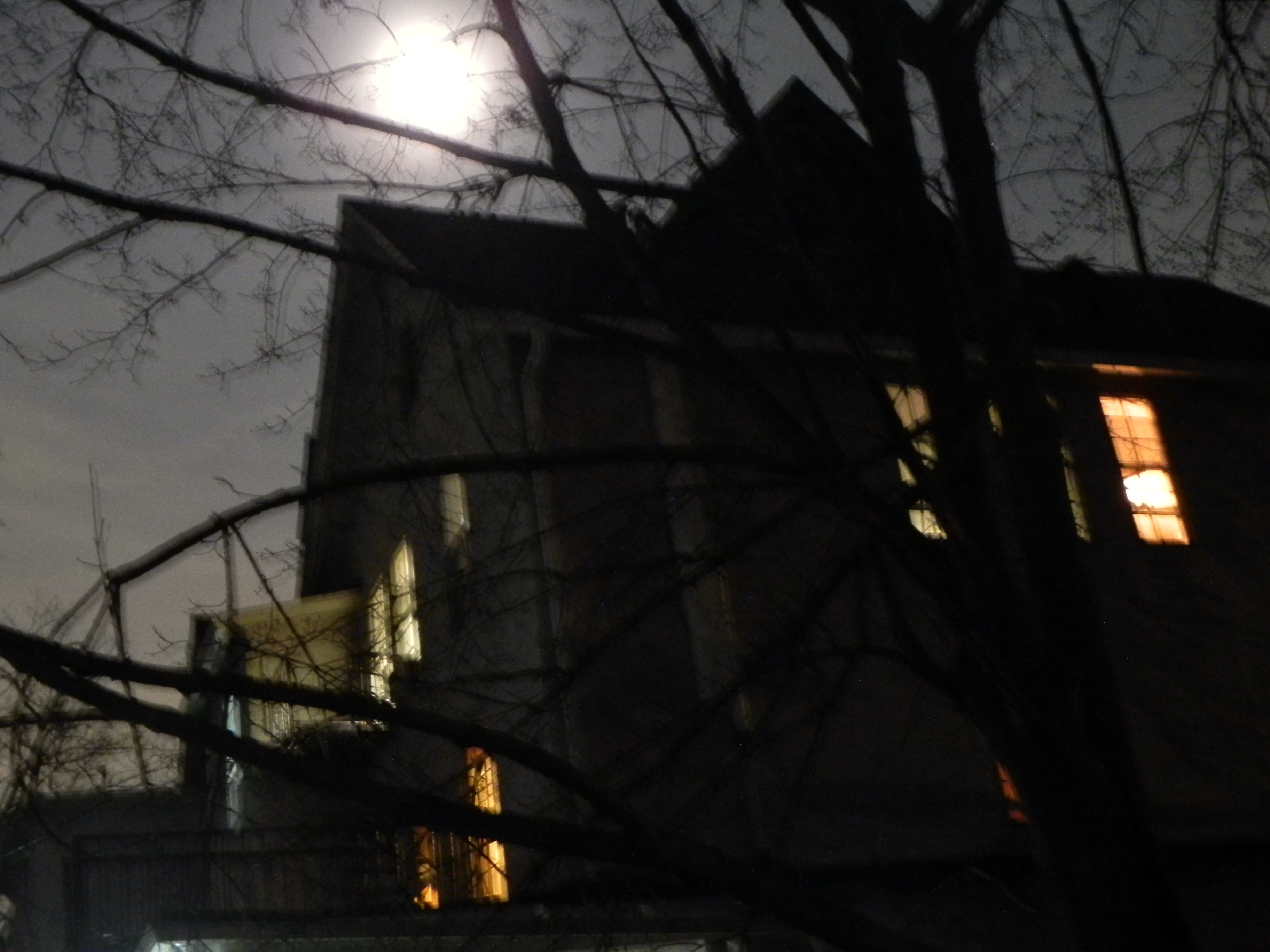
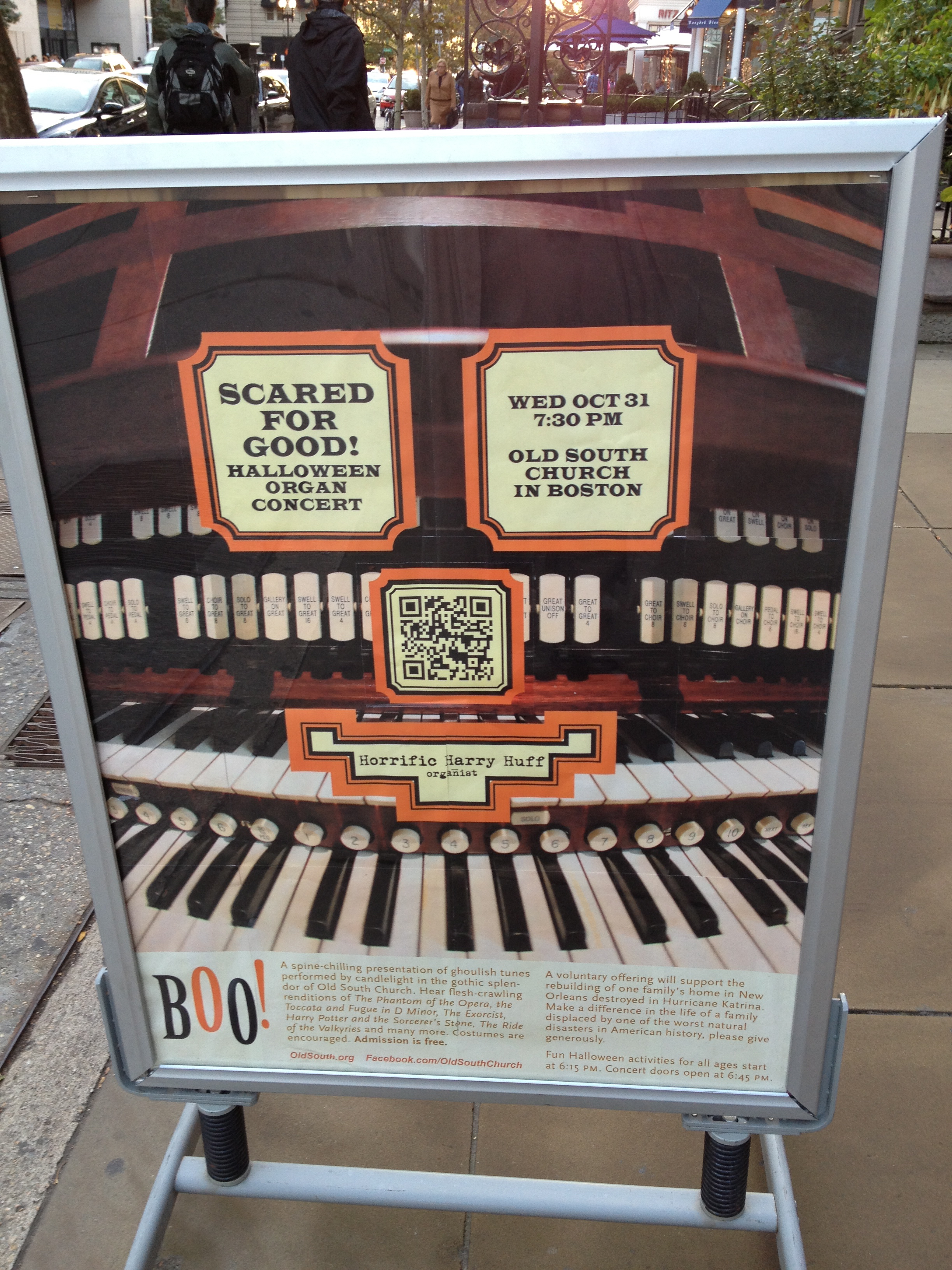
My last night in Boston found me in Copley Square. This has always been one of my iconic Boston locations; something in the juxtaposition of squat, solid, dual-toned Trinity Church with its wide, open plaza, the blue glass razor of the Hancock Tower, and the classical facade of the Boston Public Library where Sophia broods over the world, arrests my wondering gaze. Across Boylston Street stands the gothic Old South Church like a guardian for straying souls. As I walked through the square a local band of street musicians jammed and the first neons of an October evening were awaking. As I strolled past Old South I had to back up a step or two to see if I’d read the sign right.

Scared for Good, a Halloween organ concert featuring spooky music, will soon be on offer. Business-types have long noted that Halloween is a great potential selling holiday. With kids who want to dress up and parents stressed for time, the selling of costumes has grown into an increasingly substantial accessory item holiday. People want their houses to look scary, knocking down real cobwebs to make way for the artificial ones, hanging out orange and purple lights, and ordering pre-carved, artificial pumpkins. All the fear is, of course, a charade, and we laugh at ourselves for taking it too seriously. Some churches object vociferously to the very holiday itself, claiming it is devil worship and evil.

While Halloween does have some serious pagan influences, it is, in its present form, a good Catholic holiday. The night before All Saints, aka All Hallows, begins a period of reflection on mortality. I’ve celebrated “Protestant” Halloween from my youngest days and have never been in any way tempted toward devil worship. It is fun to be scared when you know it’s not real and it won’t last long. That’s why I applaud Old South Church’s Scared for Good concert. Reading the list of pieces included, it sounds like it should be a grand time. Too bad I won’t be in Boston for the occasion. As I walk back to my hotel in the chill of the evening,the only fear i feel is that moments like this evening come at insufferably long intervals for those who feel about the city as must the denizens of Copley Square.


Shopping for Fear

So I decided to visit a Halloween store. These have been showing up with metronomic regularity in September for several years now and are usually good for a cheap thrill. My personal preference for Halloween is more somber than garish, but the affirmation that other people enjoy a safe scare has a way of drawing me in. Those who read this blog on a regular basis know that I frequently point out commonalities between fear and religion. They both seem to hover around the same orbit in the brain, and, in some accidentals are very similar. Horror films therefore often indulge in religious imagery, and monsters do not infrequently partake of the divine. So it is no surprise to see my thesis borne out in shops intending to capitalize on fear.

I will freely admit that there may be cultural references that I’m missing here. A movie that I’ve neglected, or some television show or graphic novel may be informing some of the images in ways I can’t comprehend. Nevertheless, we all know of the power of the crucifix when it comes to vampires. I wasn’t aware that the cross had horrific effects on other species of monsters as well. Take this guy here. I’m not sure what he’s supposed to be—perhaps a zombie? It seems a little too corporeal to be a demon. The teeth just don’t look right for a vampire. In any case, he seems to have an extreme reaction to religion, with the cross melting right into his skull. Is there a conversion message hidden here somewhere? Of course it could be just a chinzy attempt to scare a real religiophobe. The cross has become the backup weapon against all supernatural evil.

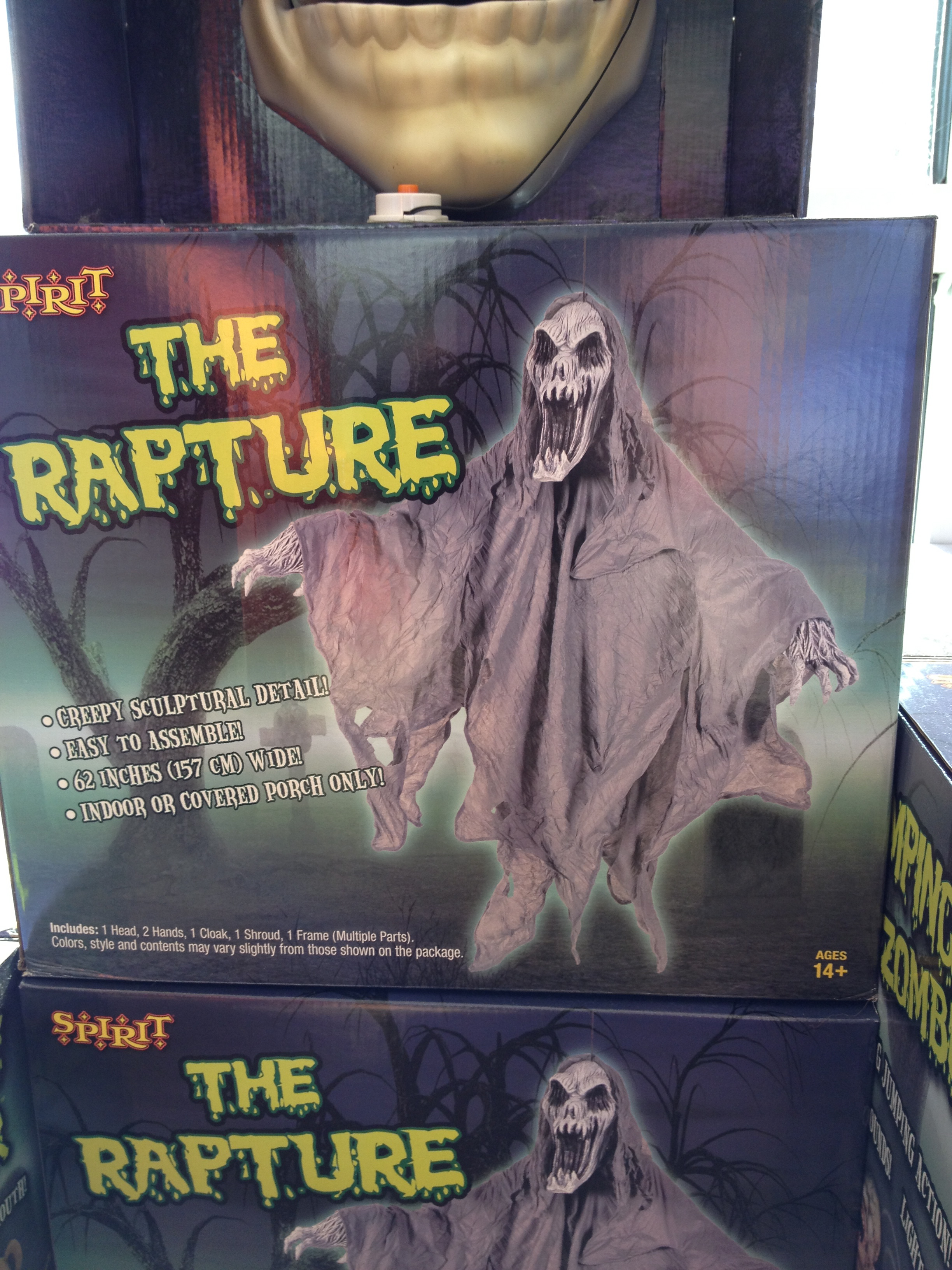
The use of a grim-reaperish ghoul rising from the grave to illustrate The Rapture was a new one on me. Last I heard only the squeaky clean and friends of the Tea Party got to go on the Rapture. (Well, the latter category might explain it.) The idea of the Rapture, as it was fabricated late in the nineteenth century, involved the chance for all the good Christians to escape before things really got rough down here for us normal folk. I would’ve thought that scary guys like this joining the heavenly crusade might take a little bit of the joy out of the occasion. Or maybe they’re being left here to haunt the rest of us. In either case it is clear that consumers respond to religious sounding language and symbolism when looking for a scare. Obviously there is plenty in the store with no religious significance at all, but finding hints of religion scattered in with the plastic scares does show a kind of Frankenstein’s monster of human sentiments and emotions. It’s only appropriate when the nights are now longer than the days.


Retrograde Hollow-days

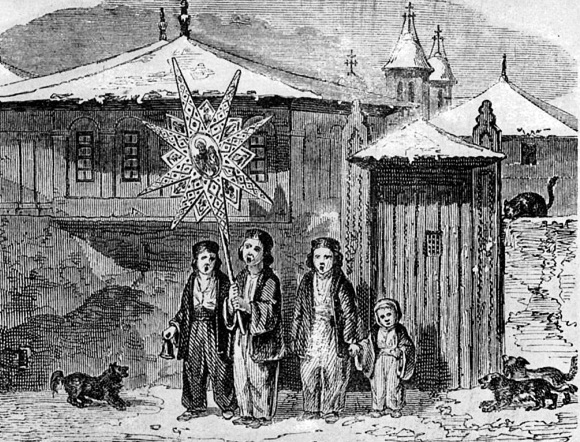
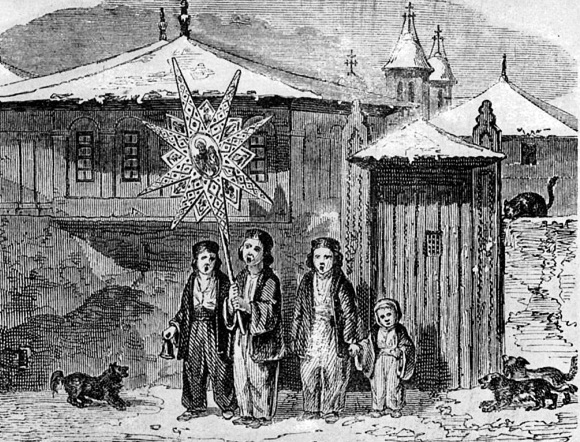
Surrounded by the intoxicatingly ebullient aroma of balsam, it is difficult to believe that it is not yet Christmas. As 4-Hers decorate their wreathes, in November, I recall that the first signs of Christmas appeared in the stores before its unexpected cousin Halloween this year. In fact, stores hawking Christmas remain open year round. This retrograde motion of the holidays in time belies the very concept of the “holy day.” Ancients, and not-so-ancients, believed that there actually was something different about particular days. The trimmings and the trappings were secondary to the point of the day; something momentous had transpired on this very day, making it unlike any other. With the advent of industrialization and its unrelenting work ethic, holidays came to represent a kind of mini-exodus, a release from labor that falls outside the insufficient weekend. Leisure time encourages shopping. A modern holiday is born.

A child's Christmas in Bucharest

The increase in labor-saving devices has placed us in a twilight of leisure. Holidays can be anticipated many months in advance—gifts purchased earlier and earlier, until the holiday itself seems to pale by comparison. Moving retrograde into other seasons. The joys of the consumer holiday are hollow. It is too easily forgotten that money is a symbol, a mere medium of exchange. It has become an end in itself. Just two centuries ago nobody would have dreamed of collecting the symbolic patina of a capitalist system for a profession. Now accounting may lead to great wealth. The wealth, however, is transparent. Millionaires, like emperors, are disinclined to have the fact that their clothes are immaterial pointed out. They are, after all, where we want to be. Let the one with no dreams pop the first seam.

Holidays have the capacity to give symbolic meaning to life. They emphasize the cycles of nature and of life itself: birth, procreation, death. Removed from context, however, they lose their meaning and become just another excuse to spend too much, eat too much, drink too much. We call it celebrating. Those on the receiving end of the cash flow have the most to gain by promoting such hollow-days. Nothing is so easily exploited as child-like anticipation. The scent of balsam takes me back to a far-distant childhood this November night. The memories, no matter how dysfunctional the setting, are serene and full of anticipation. The symbolism suggests this may not be vanity after all. Until the bank statement comes, and the hollow-days begin all over again.


All Saints

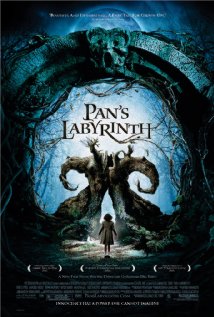
The movies of Guillermo del Toro, despite their success, must be watched with an astutely analytical eye. Although my movie watching runs a few years behind at best, a recent viewing of Pan’s Labyrinth left me feeling a little hollow and very reflective. The gruesome story is well told, and the fantasy world, even at the end, is hardly believable. Like most films that deal with disturbing issues, religious concepts are not far from the surface, or sometimes, the depths. In this case, the distinctly Christian trope of self-sacrifice opens a portal to a mystical world where a God-like father sits on a shining throne. But is it real? We are warned from the very first scene that this will not end well for young Ofelia, that “heaven” is but a fantasy seen through the hopeful eyes of a dying child. Even the faun (“Pan” of the English title) wears horns that suggest to modern minds the slightly diabolical, although he is in the service of the mystical king. I was so conflicted by end that I was glad the next day was a workday.

It is not difficult to notice that the heroes of the film are the female characters. Even the good men are generally ineffectual, but the strength of Ofelia and Mercedes bear the weight of showing any hope at all. Captain Vidal betrays his name of “life giver” time and again unless life is understood as unremitting pain and torture. Even the end of the film is set up as someone having to pay the price; the king demands innocent blood—will it be Ofelia or her baby brother? Of course, the girl must pay the price. In an interesting interpretation of the sacrifice of the only child, the daughter here becomes the savior.

Fantasy often has the power to heal. This is a key aspect that it shares with religion. Scientists have sought in vain a mechanism that would explain the brain’s remarkable ability to heal the body under conditions of belief. At times we’re reduced to name-calling, suggesting that somebody’s got something up their sleeve. After all, could a disreputable character like Rasputin really hold the key to physical wholesomeness (to say nothing of moral rectitude)? And yet, there are those who are made well by the most unlikely means.

The peoples of northern Europe believed that the veil between this world and the next was severely effaced at this time of year. Darkness is more prevalent than light. Pan’s Labyrinth begins and ends in darkness, and even the daylight—when it briefly occurs—is subdued. With Halloween behind us, the most veracious season of the year
lies ahead. Let us hope that this labyrinth contains fantasy.


Haunted Purgatory

Halloween season is a time for both pagans and evangelicals alike to tremble. Our usual local “haunted house” for charity being closed this year, my family went to the local haunted farm last night. In a nation where few of us grow up on farms, the agricultural world is already a foreign environment. And corn is a scary plant when it dries out, especially at night. The Creepy Hollow part of the farm tour was a long, rambling stumble through a corn field where costumed actors jump out at you or just as ominously shake the cornstalks as you walk by in the dark. Senses that we have long ignored leap to full attention, scanning for any possible fright. At nearly a mile long, this haunted trail was pretty intense, and I’ll admit to being glad to have seen the open field at the end. One of the props along the way was a haunted church. As I’ve noted before, religion and fear often stride hand-in-hand.

Earlier in the day, my wife had pointed out an article in the Huffington Post about the dilemma many evangelicals face when their kids want to celebrate Halloween. A holiday of Catholic and pagan origins (both feared equally by the truly staunch evangelical), Halloween is a season of dangerous influences. In response, some groups have started their own “Hell Houses” designed to show kids the horrors of Hell as they walk through a putatively non-fiction version of fear. The intention seems clear enough, although a little odd for a religion that claims to be based on love. The Hell Houses are part of an alternative holiday called “Jesus Ween” and people are encouraged to give out Bibles rather than candy. At least they got the scary book part right.

In an unrelated yet relevant story, Time projects that the seven billionth person will be born on October 31. I remember when there were just four billion of us, and my teachers began pointing out the stresses we place on our environment. Of course, those who co-opt the identity of being “pro-life” advocate for as many of our species as possible—less for God to pour out love, but better to populate Hell, apparently. The Roman Catholics share this petard with the evangelical camp, as Monty Python made famously clear in The Meaning of Life. We have overcome (largely) nature’s control on our expansion, and as Halloween, or Jesus Ween, races nearer, we have less to fear from chainsaw-wielding maniacs than we do from Bible-bearing clones who claim it is divine mandate to stress our own planet to death.