Finding the Source

I need to know the origins of things.  Call it a sickness if you will, but I’m compelled to trace things to their source.  This is why I went on to earn a doctorate, and it’s a trait that hasn’t left, despite my career malfunction.  My interest in origins was recently reawakened by the citation, in a book, of a source that was incomplete.  I turned to the internet, of course.  I found the source, reprinted on a Tumblr page, for which I was grateful, but there was no proper citation there either.  Instead, a link to another webpage, which itself consists of yet another link.  Even after pages of googling, I was no closer to finding the source.  This is why I miss libraries.  You were there with books, some of them centuries old, looking at the source.  Outside the academy this rarely happens.  Particularly when you work 9-2-5.
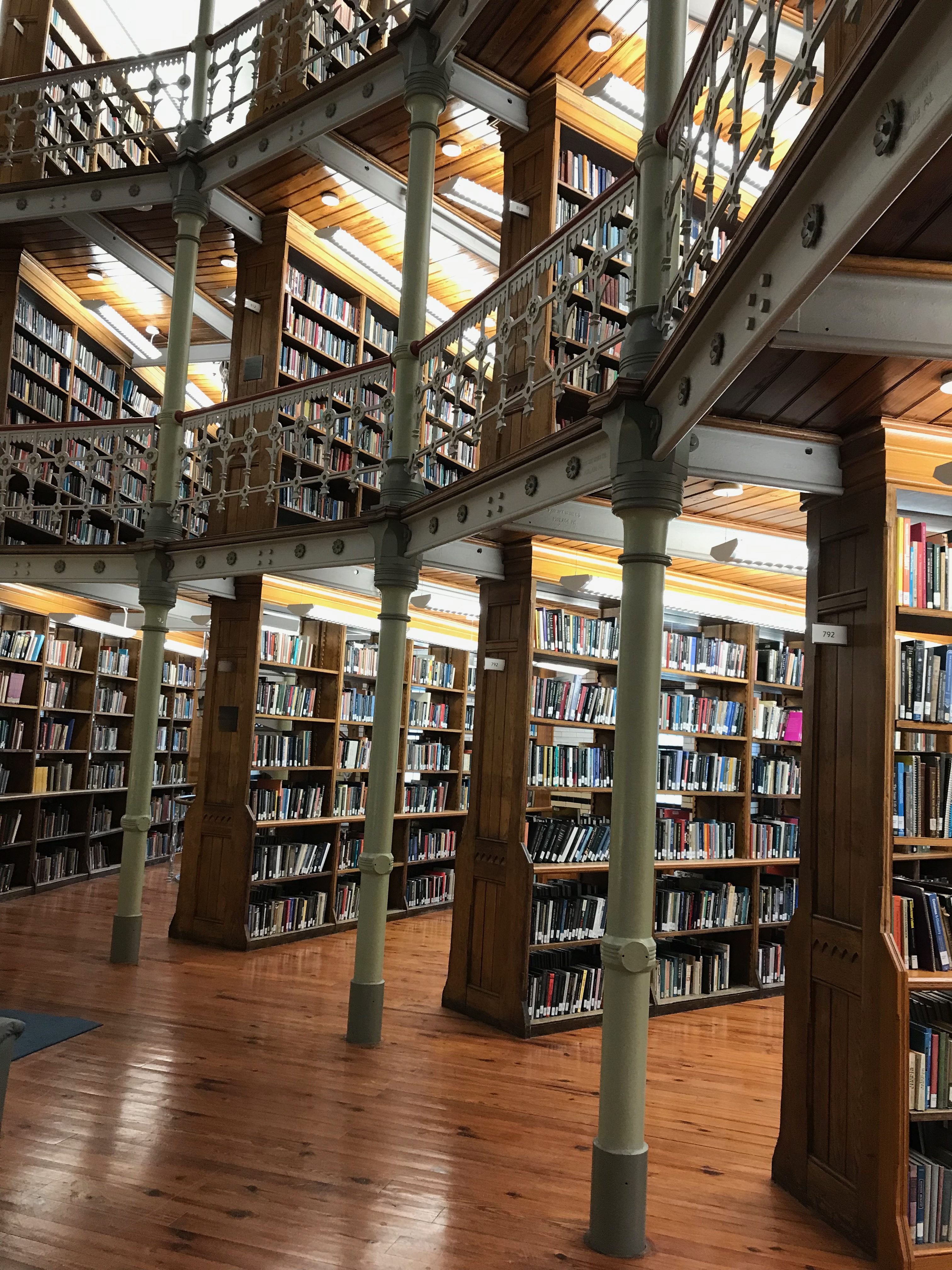
The internet age is one of taking someone else’s word for it.  That’s why it’s important to establish credibility.  The website where I found the information—the top ranked site on both Ecosia and Google—had old books as the background, but no “about” page.  Who had put this information here and where did s/he get it?  The item I was looking for was from the 1700s.  I don’t have a print copy lying around and I was wondering what the source was—a book?  A journal article?  A newspaper?  An actual archive?  And why can’t Google find it in a library?  I know the source actually exists because I also found it referenced in a reputable print book, but one with inadequate citation.  Some of us were cut out for this kind of thing.  Constitutionally researchers.  But you have to work to live.

One of the greatest pieces of advice ever is to stay curious.  It helps keep a mind active, even a 9-2-5 one.  I’ll keep looking for this mysterious source.  I’ll check out likely references in the bibliography.  I’m sure that other people have the same compunction not to take someone else’s word for it.  Particularly not an anonymous poster on some website.  Especially in this day of AI lies.  One of my high school teachers once said that a reputation for being trusted is something you earn by lifelong cultivation.  If people know you are a reliable source, they will believe the things you say.  Anonymous information can be helpful from time to time, but without knowing the source I always remain skeptical.  And curious.

Finding a Spot

Sometimes you’re not born among your tribe.  I live where I’ve moved out of economic necessity, not where my family’s located.  My family’s not quite sure what to make of me anyway, so I seek my tribe.  At first it was among the United Methodists, but when I was in seminary they let me know what they really thought of me.  The Episcopalians seemed more welcoming to my academic aspirations and my doctorate led me to believe my tribe was those who studied ancient West Asian religions.  I wrote papers, led conference sections, knew people.  When I had to step out of academe, however, they tended to fall away.  (Ironically my most-read work, according to Academia.edu, is my dissertation, revised edition.  It has had over 8,000 views.)  I still have many scholar friends, but I’m clearly no longer part of the club.

That’s why I turned to horror (as a field of study).  I was seeking my tribe.  I wasn’t at all sure Holy Horror would get published.  I was encouraged when The Journal of Religion and Popular Culture published “Reading the Bible in Sleepy Hollow.”  Then I discovered other academics (still not part of the club) were studying religion and horror.  Ironically, it was people on the horror side, rather than the religion side, who made me feel most welcome.  In the meantime, I wrote some horror stories (still do) but the fiction publishing tribe seems to be at war against the rest of the world.  You can’t breach their bulwarks.  I’ve been trying for a decade and a half.  So I continue to write books that move more toward horror, and move away from religion.  Still, hard-core horror fans don’t really pay much attention to my books, still I try, but as an outsider.

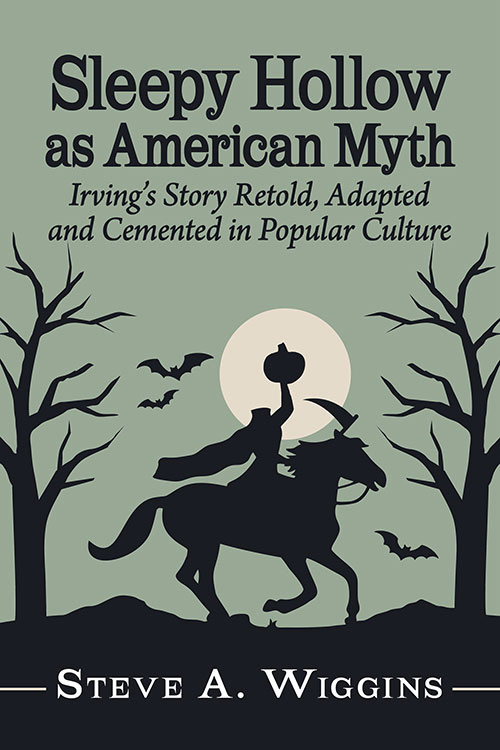
Since Sleepy Hollow as American Myth is in production, I’m working on my next projects.  I’ve been indulging in fiction again, where I’d really rather be, for a host of reasons, but unless I succeed as a double agent, I’ll remain unpublished.  My tribe, I think, would welcome more nonfiction like I’m writing.  These books haven’t been selling well, but they may eventually get referenced.  Now, many years after the fact, the ancient West Asian studies tribe cites my work and asks me to contribute more.  I’m afraid that island was abandoned years ago, former tribe-mates.  I was lonely and so I rowed across the ocean into horror territory.  If you’re looking for a tribe too, I’ll be glad to try to introduce you around.


Writing Academic

One of the things that Stephen King detests (or at least detested back in the seventies) was academic literary criticism.  Perhaps you’re more normal than King or I, but if you read such things you find yourself immediately sucked into a world where the writer seems determined to demonstrate their erudition by splicing together words that shouldn’t really sleep together and then throws theory at you until you fall off the cliff.  It can be a frustrating experience for the reader, even as the writer is granted tenure for it.  One of these days I’ll learn my lesson.  Buying books by academics is dicey prospect.  I’m drawn in by the ideas, and the early pages, then I’m soon in the deep end remembering that I never learned to swim.

Is it really fair, I wonder, to begin a book—the first one or two pages impossibly engaging—then start winging ponderous, theory-laden words at the reader?  Your publisher paid for an attractive, inviting design and the reader, lured like a child to a candy store, thinks this will be sweet.  Then the sugar coating wears off and you’re faced with another 253 pages of clawing at words you recognize, hoping to make some sense out of what seemed, and still is, an engaging idea.  This has happened to me multiple times.  I live between worlds.  Even when I was an academic, however, I eschewed theory-heavy language.  I had nothing to prove, other than the point of my article.  And to prove a point, it seemed to me, people have to understand what you’re trying to say.

Higher education is in crisis mode.  Among the various fields you can study, the humanities are under especial scrutiny.  Have you read a book by an English professor lately (present company excepted!)?  Although their title is “English” you can be left wondering what language it actually is that they’re writing.  And they are capable of plain speaking.  Those first two pages demonstrate that.  They are capable, but are they willing?  I begin to understand Mr. King’s reservations.  I’ve run into books even in the field in which I have a doctorate that I can’t understand.  I find myself tentatively cracking open the Oxford English Dictionary to see if perhaps I’ve misunderstood the connotations of that word for my entire life.  I don’t mind a challenging read now and again.  At the same time, I mourn the loss of something beautiful when I can’t make out what the author seems to be saying.  Perhaps such books should come with warning labels.  I suspect Stephen King would have a good turn of phrase for what such a label should say.


Philosophical Thoughts

Please don’t read too much into this!  I read a lot of professors who spend their careers trying to understand a previous scholar’s thoughts.  I suspect this happens quite a lot in philosophy, but it fits pretty well in religious studies also.  And I wonder, what of those intellectuals where were grappling with pure ideas?  Did they know they’d become adjectival?  In other words, did Immanuel Kant know that he was Kantian?  Or was he just writing stuff, trying to explain how he understood being in the world?  Now scholars dedicate themselves to understanding Kant.  Or in more recent times, Derrida, Lacan, and Bakhtin, or whoever’s the flavor of the day.  The ones who were too busy being Derrida, Lacan, and Bakhtin to figure out what someone else was saying about things just wrote.

Image credit: Portrait of Immanuel Kant by Johann Gottlieb Becker, 1768, public domain via Wikimedia Commons

I often wonder about how higher education has shifted the way we do scholarship.  It’s not really a place to test out ideas that the world can evaluate, but more a place where specialists can discuss possibilities and what someone else might’ve thought of something.  I guess that’s why I tend to think of my last four books as being non-academic.  I’m not using the tired formula of reacting against what some theorist has said about my subject.  I’m simply observing and drawing inferences.  Maybe it’s because I wasn’t raised in an academic environment.  I remember reading Nietzsche for the first time.  How he didn’t footnote.  How he didn’t argue against what some prominent others had said.  He simply wrote.  And he did so brilliantly.

Perhaps it’s yet another example of having been born early enough.  Tech has made it remarkably easy (for those without families to feed) to become writers.  No agent or editor required.  And things like Book-Tok can make those who publish outside the Big Five famous.  What would Kant have done?  That’s a nice Kantian question.  In fact, the whole reason I began this post was that I’d run across James C. Taylor’s A New Porcine History of Philosophy and Religion on my shelves.  Just seeing it reminded me of the Kantian pig refusing to lie to an axe-wielding maniac.  That got me to thinking of Kant and what it must’ve been like to see him being Kantian.  I’m no expert.  I took a lot of courses in philosophy and religion back in the day, but I have a book about philosophical/religious pigs on my shelf.  Somehow I suspect Kant wouldn’t have appreciated his page in this book, even though it gave me philosophical thoughts to start the day.


Those Who Know

I felt a little bit odd being asked.  A local school invited me to be consulted on classroom decoration.  I took a total of one class in interior design as an undergrad and that hadn’t been my highest collegiate grade.  So why were they asking me, of all people?  Let me put this into context for you.  It was in Wisconsin.  I’d been the Academic Dean at Nashotah House for a few years and had served for a few on the Parent Teacher Organization, one as president.  While at Nashotah I’d been tasked with making the three classrooms more appealing—choosing paint colors and replacing drapes that had been falling off their hooks since I’d arrived a decade ago.  But I believe the real reason that I was asked for a consultation was that I was a professor.  Yes, a professor of Hebrew Bible, but a professor nonetheless.

Such requests, no matter how mundane, ceased immediately when I had to take a job in publishing.  People don’t turn to an editor as an expert.  (Not even most academic authors—trust me on that.)  We like to put people in neat categories.  Boxes.  Professors are smart, so when we need advice we seek them out.  Whether or not they know anything about the topic.  I was even assigned to teach accredited courses in fields that I’d never studied.  It was a heady feeling, I have to admit, being treated like my position qualified me to speak on “ships and sails and sealing wax” and everyone listened.  What has always struck me as odd is how abruptly this stopped.  Even among church folk.

When I was teaching I was frequently asked to address adult education classes on Sunday mornings.  I had arcane knowledge that priests and ministers wanted me to share.  Once I began working as an editor I had someone from a church in Princeton contact me to ask if I could recommend someone else to do such a course.  They were somewhat taken aback when I suggested that I had some expertise in the area.  I’ve even had other academics, in the same field in which I taught, react with total surprise that I know something about the discipline.  I have a sneaking suspicion that the ease of categorizing people has been substituted for actually getting to know someone.  It’s easier to call, or email, the local university—or even, in my experience, a small, obscure seminary—to find the expert you want to consult.  You’d like to think that we might be able to ponder a little more deeply.  But trust me, you don’t want to ask me about interior design.


Prophetic Cookie?

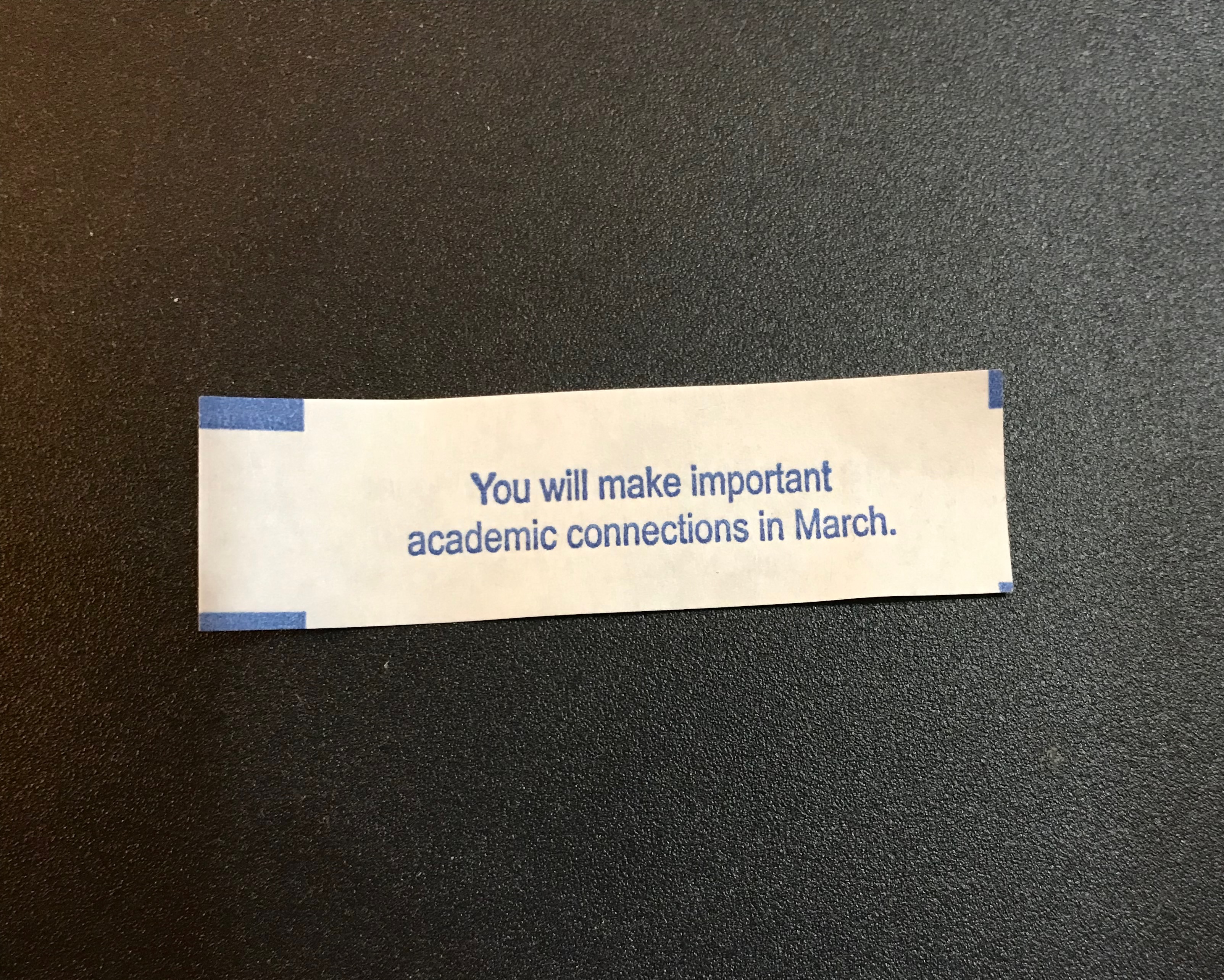
I have no idea if they really exist in China, but the Chinese fortune cookie is ubiquitous in the United States.  I’m assuming that China isn’t tracking them to know where Americans eat, but I do often wonder about what’s inside.  Many years ago I noticed that the “fortune” aspect had dropped out.  Predictions weren’t made any more and your typical cookie had an anodyne, but sometimes witty reflection in it.  They might’ve been called “aphorism cookies.”  Well, that all changed for me after a meal that included said cookies.  I was surprised to see an actual prediction, and, not only that, but one that was strangely apt.  It reads, “You will make important academic connections in March.”  Considering that academics make up a minuscule part of the population, that seems oddly specific, doesn’t it?  And with a date—March.  This differs qualitatively from “Leadership is action, not position.”

There are other future-oriented prophecies in cookies, of course.  “You will become known for your generosity.”  (Gee, that’s nice.)  Or “A short vacation is in order for you.”  But I’ve decided to hang onto this academic fortune to see if it might come true.  I do have many, many academic connections, of course.  That’s part of my job.  And I was an academic myself in my palmier days.  But what seems strange to me is that many people reading “academic” in a fortune would automatically dismiss it, I suspect.  An important academic connection, no less.  Knowing a professor, from my experience, often doesn’t help in getting you anywhere.  I value their friendships, of course, but it hasn’t sold more books.  Or got me that teaching job I still covet.

Will the cookie prevail where other measures have fallen short?  I have to wait a few months to find out.  And more importantly, I have to remember this fortune.  I can, I suppose, put it on my bulletin board amid the Sleepy Hollow and other mementos and hope that half a year from now that I’ll recollect this little post, and that little cookie.  Of course, if someone offers me a job at a local college in March I’ll consider the deal sealed—the cookie was wise.  If nothing apparently happens, however, I’ll still have to wait beyond that to see if something emerges from my many daily interactions with academics.  Maybe one of them will truly be listening.  That’s the thing about predictions—they’re as much interpretation as they are prognostication.


Waking Poe

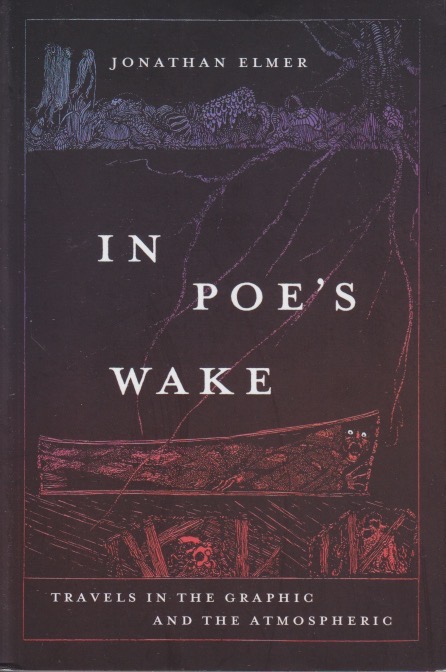
It’s personal and it’s deep.  My appreciation for Edgar Allan Poe, that is.  I’ve read a few biographies of him over the years, but my engagement with him feels more like that of a boon companion.  Still, I learn a lot from looking at him from different angles.  (And yes, he will be in my forthcoming book.)  Jonathan Elmer’s In Poe’s Wake: Travels in the Graphic and Atmospheric caught my attention but I can’t remember exactly how I heard about it.  This was a case where the back-cover copy won me over, noting as it does, that Poe’s image is everywhere.  Still, I approach things as an historian.  How did this lead to that?  And I must confess that I’m not a great fan of heavily theoretical work (I see plenty of it).  As soon as I see Deleuze, my eyes begin to glaze over.  Do we have to go there again?

All of which is to say Elmer’s book is erudite and, at times, quite academic.  I learned a lot from it, particularly the first two chapters.  Much of the rest of it was a bit too theoretical for my plebeian tastes, but I was still learning as I went.  I hope.  I guess I was thinking it would be more of a history of how Poe ended up, for example, on the cover of Sgt. Pepper’s Lonely Hearts Club Band.  Or how the Baltimore Ravens got their name.  Or even how the Ultima Thule daguerreotype became so ubiquitous.  These may well be impossible questions to answer, even as some of us are fool enough to rush in and try.  In academia, the theoretical is a much safer approach.  It impresses Deans and others in the department.

I occasionally listen to famous people talking about fame.  How it destroys some people and obliterates aspects of others’ lives.  Poe was reasonably well known during his lifetime, but not famous on the level that, say, the internet can instantly make you.  Or even TikTok.  Even back within my lifetime (which, I gather, is about the same as Elmer’s) Poe’s influence has grown dramatically.  His was a household name in my childhood, at least among a certain type of reader.  It wasn’t unusual to find people who’d never heard of him.  I suspect that is also true today, but Poe looms large over October and even the New York Times nods in his direction when the days grow shorter.  Like most writers, Poe isn’t who we think he is.  Elmer’s book does indeed explore his wake, and it is one that continues to cause waves over the centuries.


Second One

Twice in a week.  I heard (actually read) a term I’d never encountered before.  It’s one of those rare beasts—an “academic meme.”  It means nothing to most normal citizens, but it has already achieved currency in academia and on various web platforms.  What is it?  “Reviewer 2.”  Or “Reader 2.”  If that means nothing to you, you’re normal.  If you wonder, however, what this is about, read on.  (Since my posts average two readers, it seems, this is an appropriate topic.)  When universities and/or editors do their jobs, they rely on peer review.  The idea is simple enough—two recognized experts (sometimes three or more) are asked to read a dissertation, an article, or a proposed book.  They then provide their opinion.  “Reader 2” (or “Reviewer 2”) has become shorthand for the one that torpedos a project.

Getting academics to agree on anything is like the proverbial herding of cats.  Academics tend to be free thinkers and strongly individualized.  (Perhaps neurodivergent.)  I know from my nearly fifteen years of experience that the most common results when you have two reviewers is two different opinions.  Often polar opposite ones at that.  One suggestion for the origin of “Reader 2” is that some editors, or dissertation committees, wanting to spare an author’s feelings, put the positive review first, followed by dreaded “Reader 2.”  Others suggest that it’s just a meme and that over time (internet speed) the meme came to mean “Reviewer 2” was harsh and mean spirited.  The thing is, once a meme is out there it’s difficult to stop.  Now, apparently, a generation has made “Reader 2,” well, a thing.

This has been floating around for a while, apparently.  I only heard it recently and it occurred to me that I’m missing out in the new academia mystique that the internet has created.  My most popular YouTube video is one I did on “dark academia.”  I wasn’t aware this is a hot topic among the internet generation.  There is a good dose of the unknown regarding what goes on within those ivory towers where the majority of people never go.  My own experience of academia was gothic, as I explain in that video.  I have a follow-up ready to record, but outside academe finding time with a 9-2-5 and a lawn that needs mowing and weeds that just won’t stop growing, well, that’s my excuse.  Whether it’s valid or not will depend upon your assessment, my two readers.


Is That Cookie Free?

I offer free editorial advice here, from time to time.  Not many academics, I expect, pay any notice—what have they to learn from a mere editor?  Still, it’s a public service, so here goes.  It really pays to do your research.  I don’t mean about the topic of your book, but research into what publishing is and how it works.  Some authors, for example, think that if they pay an Open Access fee their book will get bells and whistles that other mere monographs won’t.  They underestimate how much it costs to print a book, especially when they’ve already undercut their own sales by making it available for free online.  There some basic business sense lacking here.  There’s a free cookie but then there’s also giving away the whole box.  Who’s going to buy what’s free?  (There are good reasons for Open Access publishing, but wishing for special favors isn’t one of them.)

I make no claims to be some kind of publishing guru.  I tend to think of myself as a guy who got lost along the way, career-wise.  But I’ve learned that I wish I’d known more about publishing when I was teaching.  I see the same rookie mistakes over and over and over again, made even by senior scholars sometimes.  I remember, however, when I was teaching.  It never even occurred to me to find out anything about publishing.  In the academic’s eyes, publishers are there to serve up what researchers discover.  To a point that’s true, but publishers vary quite widely in their tolerance for the purely academic exercise.  You see, you actually have to sell books to stay in business, and if your research to too obscure, well, I guess you could try to find some Open Access funding.

One of the things that amazes me about the biz is just how many academics assume that editors are menial workers in the larger enterprise of getting their important ideas in print.  My time in publishing has been an education in itself.  I may not have time to keep up with Ancient West Asian studies anymore (the draw is still there, but it’s a terribly expensive habit).  Horror’s a bit easier to handle since you really have only about two centuries to cover, rather than four millennia.  But I can’t help but muse on what a missed opportunity presents itself when a free cookie is passed up.  It’s far easier to stay wrapped in that academic shell than it is to try to break out and discover what is freely offered.  Strange how the world works sometimes. Have a cookie…


Lost Decade

The nineties, it seems, got away from me.  Personally, they started with living in Edinburgh with my newlywed spouse. We had no television and no money, and limited time to finish my degree.  Then we landed at Nashotah House for the remainder of the decade.  Our daughter was born, and we settled into the role of new parents as the world went on around us.  The internet hadn’t made its way to that part of Wisconsin and television reception was quite poor.  Now bear with me as I’m trying to reconstruct things.  Twin Peaks ran from 1990 to ’91.  We were in Scotland at the time and had no television.  Northern Exposure (’90 to ’95) started a few months later, and was still running when we returned to the States.  We began watching it because family recommended it, mostly on VHS.  Some family members had watched Twin Peaks, but it was darker, and we opted for lighter fare when we could see TV.  (I hadn’t undergone my horror reawakening yet.)  Then came Picket Fences (1992 to ’96), which I still haven’t seen.  The X-Files, original run, broadcast from 1993 to 2002.  What a decade to lose!

Northern Exposure and Twin Peaks had some things in common, I noticed as we watched the latter, but then they ran at about the same time.  It also seems Twin Peaks and The X-Files shared some secrets.  I can’t say about Picket Fences, but it seems that speculative elements infiltrated these nineties shows.  What’s more, they all received critical acclaim.  I would feel like I lost much of the nineties, except that I was having a great time being a parent.  Although Nashotah House rubbed me the wrong way, I was employed doing what I had pictured myself doing.  Wisconsin was a beautiful state and offered lots of outdoor opportunities, particularly when it wasn’t forty below outside.  What I really lost was pop culture of the nineties, living in a monastic setting.

I recently discovered that I’d also missed much of the music of the nineties.  I’m not a radio listener.  Too many distractions—I can’t listen to music when I write, let alone with some announcer talking.  I don’t listen to music when I jog because I find the natural world so interesting.  It occurred to me just a few months ago that I had very little knowledge of 1990s rock. (Not the preferred genre at Nashotah.)  Some of it is pretty good, I’m discovering just now.  Like a typical academic, I began to shut out the outside world when working on my Ph.D.  Now I spend my time trying to catch up.  Not that I have much time to watch television, or listen to music, but I hate to miss something that everyone else seems to know about.  Then, of course, after the X-Files, Lost ran from 2004 to 2010 and we didn’t catch that either.  Maybe I missed the first part of the new millennium as well…

Photo by Everyday basics on Unsplash

In Public

Mere days after my dentist appointment I had occasion to be back in the waiting room.  Of course I had a book with me.  Then my attention was caught by either a patient or someone waiting for a patient.  This man had not one, but two books with him.  He was poring over one of them, which was an older hardcover, like an academic.  Since I’d just posted about seeing nobody reading books, I felt I needed to publish a kind of, well, not exactly retraction, but reflection.  The sight of this man, about my age, was profoundly hopeful.  I have no idea who he was and waiting rooms are not generally where I choose to introduce myself.  I do sometimes weigh, however, the demerits of interrupting someone reading with the merits of meeting another reader.  We reading sorts can be private people, although reading in public marks us.

The book I happened to have had a bright, trade cover.  His were more somber and academic.  How could I, whose reading looked facile (it was not, but it looked like it might be) approach someone perhaps awaiting a root canal, who had some serious reading to do?  Two hardcovers bespeak serious business.  This made me reflect on another occasion in Easton.  Again, I was waiting for someone and it was summer so I sat outside on a curb, at the traffic circle, reading a book.  It was actually Toni Morrison’s Beloved.  Evening was falling.  A couple of coeds, or they seemed to eyes from my age, stopped and asked what I was reading.  I explained, and, unaccountably, they seemed never to have heard of Morrison, but were interested.  It was a teaching moment.

Back to the dentist office.  Had I missed out on the opportunity for a free lecture?  If this man were a professor, he’d likely have talked gladly about his work.  One thing I learned from being a professor myself is that people rarely ask about your work.  Yes, colleagues in the same field do, but even at Nashotah House with its small faculty, nobody seemed interested in the research of their colleagues.  As academic dean I even tried to institute a faculty seminar where we could read a paper and discuss it.  I was the only one who ever volunteered to do it.  In retrospect, it might’ve been a lost opportunity, that waiting room visit.  I’ve attended many medical appointments in my life, and finding a fellow reader at one of them was a bit of a silent gift.  I was glad to have been proven wrong.


Life Course

Curriculum vita.  The course of a life.  I see quite a few CVs, although I’m not on any search committees.  As I was examining one the other day I recollected how, when I first tried to put one together, I was told to leave high school and its achievements out of it.  Nobody’s really interested in that anymore.  Presumably college is an indication of choice whereas high school is a matter of where your parents live.  Or how much money they have.  College says something indicative about you.  Although many parents—not mine, to be clear—help bankroll college and may have a say in where you go, college is “your choice.”  Unbounded by geography, young people mostly old enough to take care of themselves, are given a really tremendous responsibility here.  And it was certainly influenced by high school.

Some choices are economic, and that also says something about a person.  Some are faith-based, which definitely says something about you.  Some are terribly ambitious, and those tend to get you the biggest head start on your life course.  Of course, some of us did not realize that.  Some of us, not sure if college would work or not, chose somewhere close to home.  Somewhere where escape, if needed, was possible.  And of course, your college shows up ever after on your CV.  I often wonder if things would’ve worked out differently if I’d gone somewhere else for college.  I needed somewhere understanding to shake me out of the false narrative I’d been told.  Had I gone somewhere more strident I might’ve retrenched in my pre-decided ideas.  Of course, those pre-decided ideas are what made me decide to go to college in the first place.

How can we possibly measure the course of a life?  From big event to big event?  So many of the meaningful bits occur in small spaces wedged in-between the large markers of who we are.  We can’t possibly know all the consequences of our choices, even as we attempt to select the right option at each step of the way.  And there’s no guarantee regarding the outcome.  Were it a feasible option I’d go back to college again—I would start at a different place this time—to test the results of my first decade of higher education.  For, I know, although a CV can reveal more than it might intend, it leaves much more unsaid than it can possibly say.


A Footnote

I was recently compelled to use footnotes.  I don’t mean the clever asides that capable writers sometimes utilize to spice up subjects by making points off topic.  No, I mean the kind with author, date, title, city, publisher, page number.  I deal with footnotes daily—it’s an occupational hazard.  As a recovering academic I’m trying to get away from using footnotes on everything from grocery lists to daily meeting reminders.  Cite your sources!  That’s the kind of rhetoric that’s pounded into the heads of bright young people, often preventing them from learning to think for themselves.  At this stage of my life a footnote is more often trying to find someone who agrees with what I’ve observed for myself.  Hmm, did anyone ever say that before?  If so, where?

My concern goes down to the level of cities.  Yes, cities.  Standard format requires you cite the city in which a book was published.  This ridiculous pre-internet artifact had a purpose originally, but I have worked for two international publishers and I can tell you two related, and perhaps contradictory points: employees can tell which office a book is from: New York or London.  And unless you work for said publisher there is almost no way for you to know.  So if a publisher has offices in a dozen cities, you need to write a dozen of them in your footnote.  Does this sound like a rational thing to do?  Don’t get me wrong—it’s important, very important to cite the publisher.  But it’s not like there are a ton of presses around with the exact same name.

There’s a move among some reference experts (refperts, if you like) to do away with the city in footnotes.  It’s a reasonable guess that Cambridge University Press is pretty widely recognized.  And that Cambridge is located in Cambridge.  Or course, there’s a Cambridge in Massachusetts, and I hear there’s a university there as well.  In any case, if you don’t know where a publisher’s located, there’s a remarkable invention called the internet where you can look it up!  Pedanticism comes naturally to academics, I suppose.  Had I not been one I would probably have had no reason to write such an anal post as this.  Still, there’s a larger point: when is one able simply to assert what one knows?  I frankly don’t remember the page on which I read most facts I point out in my writing.  Often I notice them myself and recognize them as facts when there’s good, solid evidence.  Of course, I really should footnote that.  If I can remember in which city the appropriately named Random House is located.

How do you footnote this?

Why Write Then?

People far smarter and more prominent than yours truly have pointed this out, generally in vain: academic writing is driving itself extinct.  And some of us will not mourn it, if it does.  You see, academics are taught to write with an erudition and pomposity that satisfies dissertation committees made up of people who had to do the same.  This academic hazing generally obscures otherwise interesting observations.  Now thoroughly indoctrinated, academics go on to write their next book, and their articles, in this same turgid prose that obfuscates mightily.  To what purpose?  So that those critics higher on the food chain won’t be tempted to take on this morsel, preferring instead some “popularizer” who actually knows the craft of writing?

Poor writing is poor writing.  Those of us who’ve graded undergraduate papers have spent many red pens (I used to use green, so as not to be so negative) correcting bad stuff.  Why then do we give in to writing even worse ourselves?  I’m not proud.  I’ll admit that I’ve read academic books I really didn’t understand.  And it wasn’t because I’m not properly trained.  It’s because the writing was so full of jargon and “scholar X said but scholar Y rebutted”s that I get lost in the jungle.  One of the things repeatedly said about my teaching, back in the day, was that it was effective because I could explain complicated things in ways people could understand.  Isn’t that the purpose of publication in general?  Too many scholars write only for other scholars.  Not that there’s anything wrong with that, but if they wrote clearly maybe some of the rest of us could get in on the conversation.

I’m sure I’m not the only one to get really excited about a book.  The topic doesn’t matter.  Shivering with anticipation you order it and await its arrival, staring out the window awaiting the postie or the Amazon van.  It arrives and you caress it a little before opening it.  Then you find it’s written in academese.  You struggle to get through it, uncertain that you’ve really learned anything at all.  Except how not to write.  Those in higher education lament that the system is crumbling.  One of the reasons, I contend, is that nobody can understand what they’re saying.  What’s wrong with writing for the average, educated person?  Do you need sixteen five-syllable words in one sentence?  Look, I bought your book because I already believed in you.  If you make me regret my spending you can be sure that I’ll be purchasing someone else’s books from now on.


Life Learning

One thing a recovering academic must learn is that the vast majority of people don’t really care what drives the academy.  They aren’t too worried about larger issues as systemic racism, or various groups’ feelings of unequal treatment.  In fact, most people are just looking to get by, keeping depression and hopelessness at bay.  There are few avenues to break out of the middle class, and even fewer to move up from the lower.  And going to school hasn’t been presented to most people as an opportunity, but as a chore that must be done until work can be secured and they can pursue surviving on their own.  This truth comes to me time and again when I’m reminded that deep thinking doesn’t sell books (not unless you’ve already established a reputation) and that if you try to bring the concerns of the academy to the public, they’ll look the other way.

The real trick, it seems to me, is educating people without them knowing they’re being taught.  People don’t like being talked down to.  Understandably.  When I listen to people without college educations, I learn a ton.  This is my matrix as well—it’s where I grew up.  Higher education changes the way you think, but it shouldn’t prevent you from communicating with those who are the vast majority of people in the world.  Anything can seem to be normal when it happens long enough, even living in ivory towers and discussing things almost nobody else cares about.  You see, I’m a realist.  And I still have a lot to learn.

When I write my books, my style is accessible but my topics are academic.  It has taken me years to realize this simple fact.  Anyone can read my books from Holy Horror on and understand them, but why would they want to?  The questions raised are those of the academy, and those in the academy know you by your specialization (ancient West Asian religions, historically declined, thank you).  A glance at how my Academia.edu page is viewed tells the story.  Nobody who visits there is interested in horror films or this blog.  They want the resource that can’t be renewed—my work on ancient history of religions.  I’ve moved to horror because I find lots of very intelligent people here.  Like those with whom I grew up, they are generally ignored by the academy.  They are also very accepting of outsiders.  You have to unlearn being an academic.  And it might just lead somewhere productive.