Ever-Changing Skies

The weather is something we like to think is trivial.  We’ve got more important things to do than worry about it.  Yet even our most important ways of dealing with life’s issues have to take the humble weather into account.  The fact that I was awoken by a thunderstorm at around 1:30, and, given my schedule, thus began my day, perhaps has something to do with it.  And perhaps so does a conversation I overheard on a trip to Ithaca.  Now, upstate New York isn’t known for its cooperative weather.  In fact, the alma mater of Binghamton University includes the phrase “ever-changing skies.”  I was in a public place and a conversation was being had between two men who were strangers to me.  My ears perked up when I realized they were discussing higher education.

This should surprise none of my regular readers.  Higher education has been the stand-offish lover in my life.  In any case, as one guy was explaining to the other, he worked at Cornell University—one of the Ivy League schools—and he opined that the reason it had trouble recruiting faculty was, well, the weather.  Now, I’m one to sometimes take weather personally.  (I’m still wondering what the point of last night’s thunderstorm was.  Anything that wakes me after midnight essentially personally ends my night’s sleep.)  In any case, being one of those under-employed academics I had to think about this.  I’d be glad for a university post—would I turn one down because of the weather?  Is meteorological preference really that strong?  Especially since in polite conversation the weather is considered the shallowest of topics.
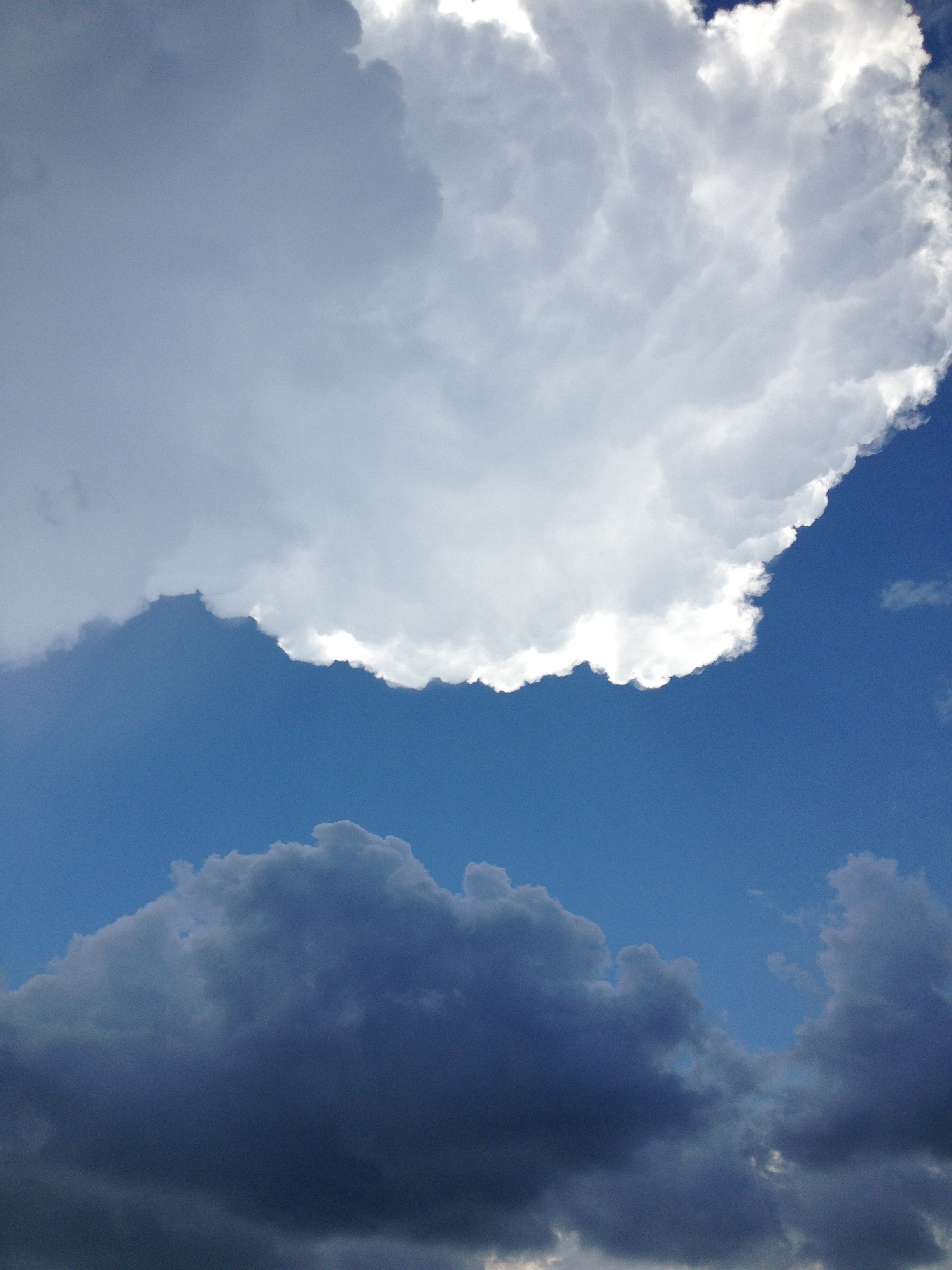
Weather is vitally important.  Perhaps because of its ubiquity we tend to overlook it.  Think about rain on a wedding day.  Or a moving day.  In the latter case it can be more than inconvenient.  Sports events can be cancelled due to weather (baseball is especially prone to this).  Extreme weather (which is becoming more common) can shut everything down.  Is is just me, or does every thunderstorm now come with a “severe” warning attached?  Weather is more than just inconvenient; our lives depend upon it.  Thoughts not unrelated to these were in my mind as I wrote Weathering the Psalms.  I’ve only ever lived in rainy climates.  I realize many others aren’t nearly so lucky.  The drought in our western states is troubling.  Perhaps higher education might be able to rise above it?  Or will the most educated turn down jobs because of the inconvenience of ever-changing skies?

Last Baptist?

The Southern Baptist Convention is the largest Protestant denomination in the United States.  It’s the core of a powerful voting bloc that gave electoral (but not popular) victory to Donald Trump.  It’s also the location of an attempted takeover by a fascist faction that wants to make Christianity the most oppressive religion in the history of the world (moreso than it has already been).  This past week the Convention narrowly avoided this by electing a moderate president for the year.  The struggle was real and the consequences very deep.  The true cost of Trump’s presidency will continue to emerge for years to come.  Permission was given for extremists to be vocal and validated and bad behavior was relabeled as “Christian.”

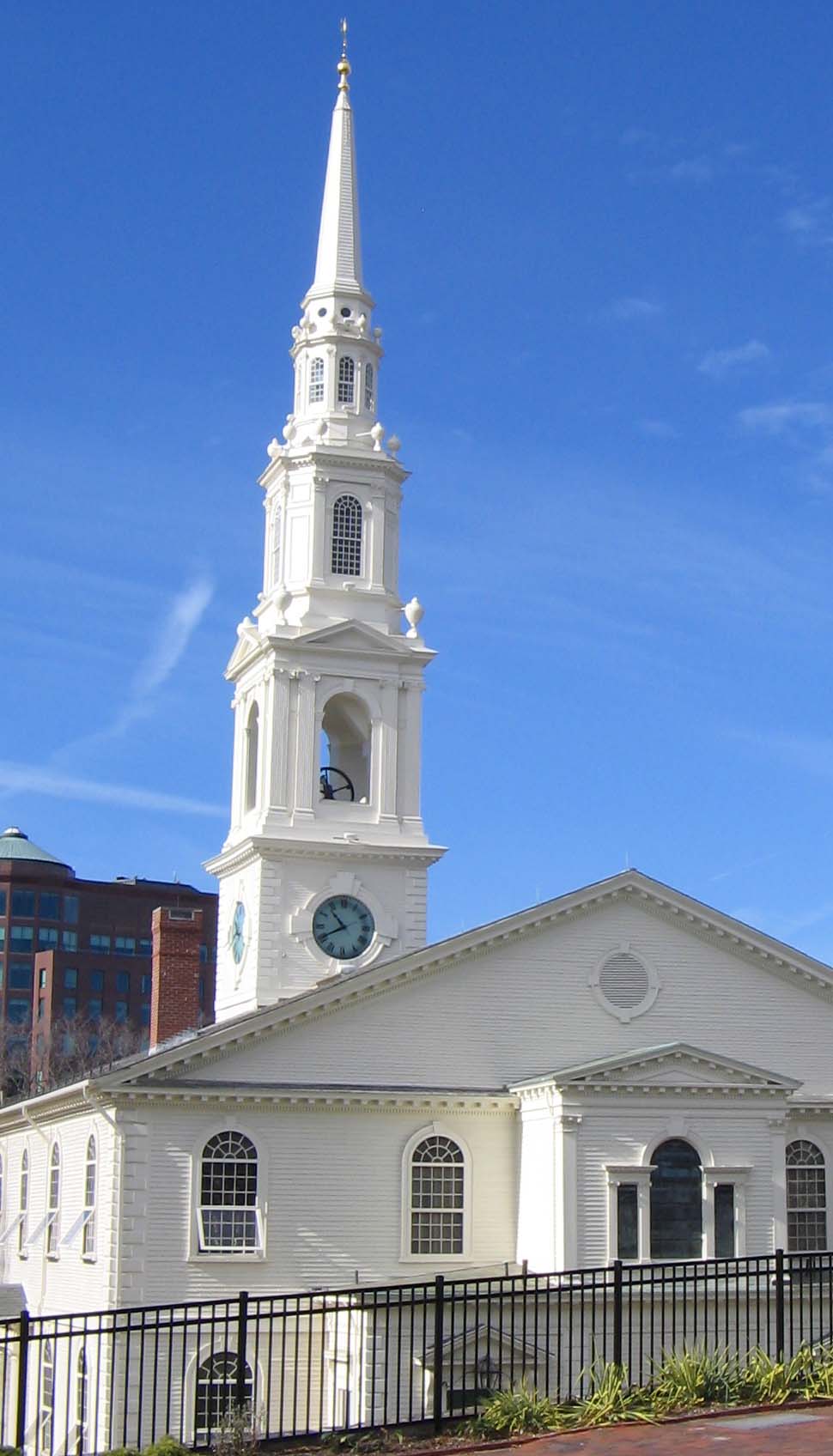
Roger Williams’ first Baptist church (in the country)

We, as a society, have a bad habit of ignoring things we don’t believe in.  Just because many educated people have come to see the lie behind much of what “Christians” say, they assume they don’t need to pay attention to them.  Years of ignoring the insidious actions of many conservative Christian groups has led us to a political precipice where many months after the fact some people who can’t count still believe 232 is greater than 306.  While some may wonder how we’ve come to this point the answer is obvious—there are groups of “Christians,” organized and well funded, who’ve been active in politics for many decades.  The Southern Baptist Convention wanted, in some sectors, to make that official.  They wished to be Trump’s own party.  They wanted white supremacy to be the norm, women to be chattels of men, and those whose sexuality differs to be criminals.  And they nearly won.

We ignore religion at our peril.  A recent study by the British Academy has shown that in the United Kingdom the study of religion is in decline.  I know of no similar study this side of the Atlantic, but anecdotal evidence suggests the same, if not worse here.  Those who study religion from within other disciplines such as sociology, history, or psychology, don’t really address the question of what religion truly is.  People experience religion as extremely urgent.  Misguided leaders instruct them that their version of God has endorsed the very tactics the Bible itself excoriates.  When the largest Protestant denomination is nearly taken over by political extremists, we should be paying attention.  A troubling template was, despite the majority vote, forced upon us in 2016.  So much so that it feels like it was a decade ago and we suffered from it for longer than we have.  And the kettle is still boiling, only this time those dancing about it claim to be Christian.


Hybrids

Photo by Maria Lupan on Unsplash

Hybrids.  They’re everywhere these days.  From hybrid cars to the modified foods we eat, mixed forms seem to be in style.  I can’t think of myself as anything other than a hybrid.  A person not welcome in academia isn’t expected to research and write books, but I just can’t seem to help myself.  There a rare excitement in finding, and loving, a new idea.  Academic writing I can do without, but the writing up of ideas, that is intoxicating.  I’m afraid I can’t always share such things here since I don’t have release time for research and publication and it can take me considerable time to gather all my sources and write up the results.  Meanwhile I’m just a working stiff like anybody else.  A hybrid working stiff.

Describing the elation of a new idea is difficult.  Knowing that something nobody else has noticed before is coming into focus, and that someone might want to publish it is thrilling.  Okay, so many people find other things like sports or dangerous activities exciting.  That’s fine.  For me an afternoon in a museum or library can do it.  You see, after finishing a big project like a book, it’s normal for me to go through a slump.  People ask “what are you working on next?” and although I have many ideas racing along it can sometimes take up to a year before a front-runner emerges.  When it does, however, all bets are off.  Ideas like this can buoy my mood for days at a time.  Now if only I had a classroom to test them out.

I mentioned The Glass Menagerie the other day.  Plays can be, and often are, mirrors of reality.  In high school we had to read Arthur Miller’s Death of a Salesman.  Although that was approaching forty years ago I still remember our teaching pointing out the real tragedy was that Willy Loman had real skills that were evident to those who knew him.  Circumstances, however, had compelled him to become a salesman.  There is a difference between a job and a calling.  Callings, however, are no protection against an economy based on greed.  Perhaps we’re all being channeled into salesmen positions.  Even if that’s the case, however, we know what brings us our sense of meaning in life.  Although there’s no inherent reason that a person can’t research and write on their own, it can be a costly and time-consuming venture without institutional support.  But a hybrid does things a little bit differently.  And hybrids are everywhere these days.


Looking In

There’s a real danger to the lifelong study of religion.  Learning to look at any tradition from the point of view of an observer will create a sense of being on the outside looking in.  I’m a member of a religious organization.  I occasionally consider pursuing ordination within it—this was my original sense of my calling in life—but I’m compelled to consider the phenomenon of being outside looking in.  When I was an Episcopalian (before the church showed its true colors in my particular case), I wrote a letter to my rector asking how I could get off of the church steps and be invited inside.  My rector wrote back with some insipid advice and was among those who voted, as a trustee, to oust me from my fourteen-year career at Nashotah House.  Outside again.

Studying the history of religions provides dangerous levels of insight.  Simple, mindless acceptance of teachings becomes impossible.  This isn’t arrogance, as any who know me can attest, but rather a form of hyper-awareness.  You can’t emerge from forty-plus years of reading about, and deeply pondering, religion unscathed.  Many, of course, dismiss any observations by those lacking the denominational seal of approval.  “If you knew what you were talking about,” so the reasoning goes, “you’d be a minister or a professor.”  So you speak from the sidelines at best.  Outside.  Even within my own group I have merely the role of “member,” lacking the official piece of paper from the seminary or other accrediting body that states I might know some things.

Of course, I have much yet to learn.  This religion thing is a tough nut to crack.  Were I younger and better paid I might consider undergoing college again to take a different path.  As it is, I’ve invested more than a half-century trying to get where I am, wherever that is.  I sit outside watching the birds.  They’re back pretty much in full force now.  They seem so certain about where they’re going.  How can you fly without a full level of commitment?  Earthbound, I muddle about with my head somewhere above the clouds I cannot reach.  I read about religious traditions unknown to me.  Often I find nuggets of great value in them.  Of course, I’m not clergy so you need not take my word for it.  I, after all, draw inspiration simply by sitting outside, always outside, and watching the birds. 


Literary Life

Trying to live a literary life is, I suppose, irresponsible.  Especially if your efforts and writing bring basically no money.  It takes considerable effort to make daily time to read and write, and so much else remains to be done.  At times I feel guilty for trying.  My books have all been published, for various reasons, with academic publishers.  Academic publishers don’t try to sell many copies of an individual book, relying as they do on the long tail philosophy.  Most academics have good paying jobs that expect research and writing in return.  For the outsider, however, there are other pressing matters.  The nine-to-five being the largest among them.  And any social organizations you join to keep you sane and connected.  Then there’s social media to take your time.  And the lawn’s ready for mowing.

I’ve always believed lack of time was (is) a theological problem.  I came up with that when I was an academic and had time to ponder such things.  Unlike many of my colleagues, I did research and write.  Now I want to move into that world where you might earn a little from all the effort.  And yet, that old Protestant guilt has a way of getting its talons around you.  You’re reading?  Shouldn’t you be doing those minor repairs you can handle without a contractor?  (Or at least think you can handle?)  Or maybe shouldn’t you be looking for a job that pays enough to hire someone to do such things?  And don’t you dare let that word “retirement” anywhere near your head.  What are you, irresponsible?

Reading takes commitment.  I try to read, on average, at least a book a week.  It requires a lot of time.  And a literary life includes giving back.  You want to share your writing with the world.  Hoping that either your fiction or nonfiction might eventually bring you some notice.  That’s the plan anyway.  The starving artist paradigm doesn’t feel so comfortable when you’ve got a mortgage.  Still, the imagination refuses to be tamed.  I’ve often said I could be content on a desert island as long as I had a huge stack of paper and never-ending supply of pens.  But that’s not the reality I inhabit.  That mortgage pays for a roof over my books and writing computer, always complaining it’s full.  It may not be glamorous.  In fact, it’s about the exact opposite of that.  But it is, after all, a literary life.


Learned Ghosts

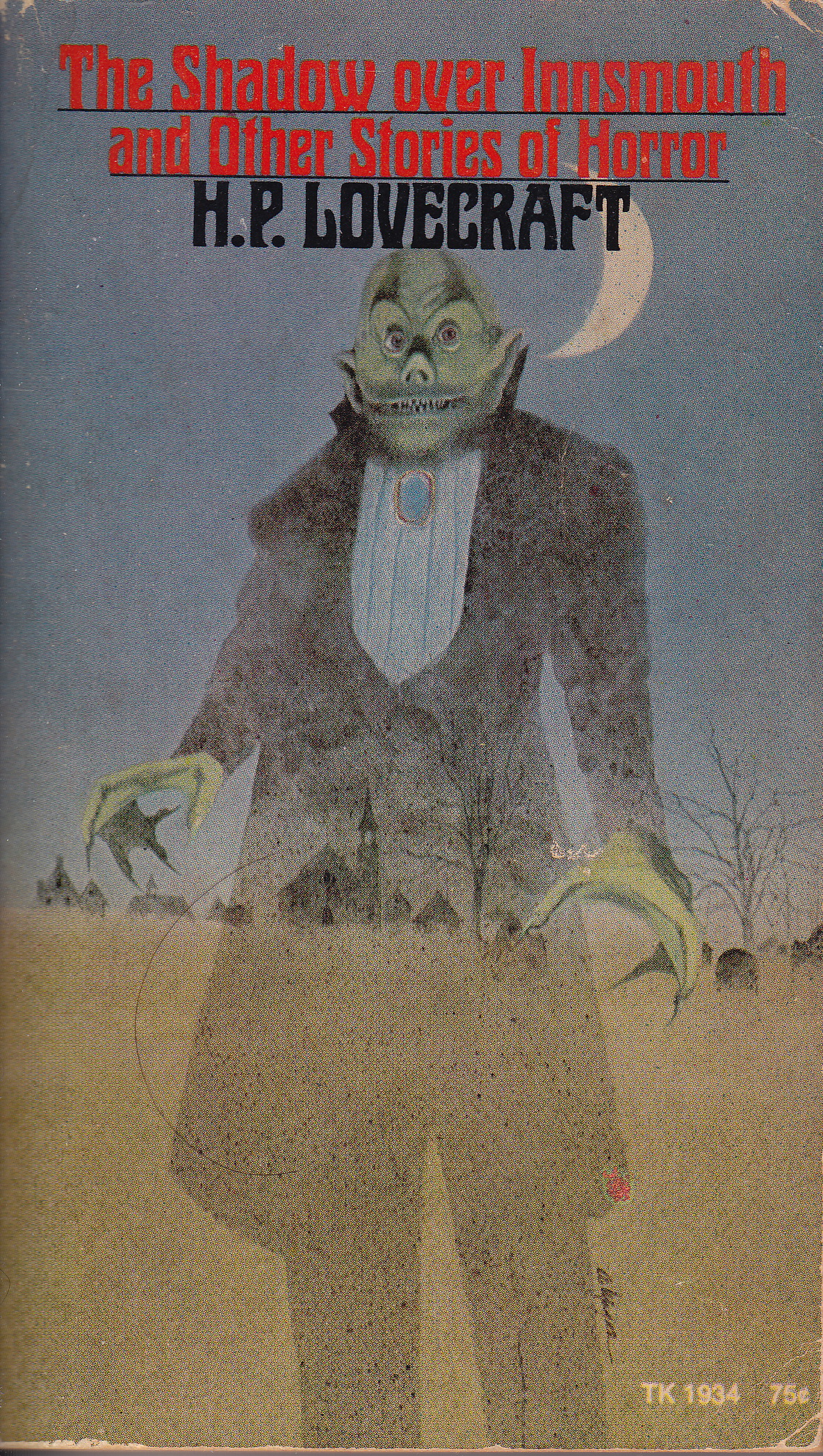
For one memorable year of what I call a career, I taught at the University of Wisconsin Oshkosh.  One in a series of near misses, this came close to becoming a full-time job.  Apart from a couple of rather humorless colleagues, the department was welcoming and an enjoyable place to be.  I even got to know the dean, now elsewhere, and planned on working on a project with him.  It was a memorable year in many respects.  One was its inherent strangeness.  I was living away from home while teaching there, and saw some odd things on my drives through the Wisconsin countryside.  It also happened to be at Oshkosh that I first discovered H. P. Lovecraft, so the weirdness was, in a word, enhanced.

Students like to tell ghost stories.  A recent article by Jocelyne LeBlanc on Mysterious Universe caught my eye because it tells of students in Oshkosh that live in a haunted dorm.  These kinds of stories are ubiquitous and Oshkosh is in no way singular here.  Students, whose brains haven’t yet ossified, are often open to new experiences.  Most of them, however, don’t possess the research skills to get behind the origins of some such tales.  Sometimes there’s an explanation.  Other times there’s not.  At Grove City College, when I was there, students told of a haunted playing field.  It was the site, it was said, of a former gymnasium.  What made it haunted was the death of a basketball player who’d smashed through a glass gymnasium door during a game and bled out before help could arrive.  It sounds improbable and I never had time to research it.

We all, I suspect, have a longing for the supernatural.  We want to believe that there’s more to this world than physics and earning money.  And strange things do happen.  I never saw any ghosts in Oshkosh, but the things I did see helped to make up for that particular lack.  Edinburgh, where I studied for my doctorate, is widely rumored to be among the most haunted cities in the world.  Although I saw no ghosts there, people flock to the ghost tours.  In fact, one stopped right below our first apartment’s window every night during the tourist season.  By the time we moved out we had every word memorized.  The haunted dorm story is a revered tradition.  Thinking about it makes me wish I could afford to be a student again.


Street Teaching

When I’m out on the street—not so often these days—I’m sometimes accosted with strange questions.  This has happened to me quite a few times over the years.  Recently, when I was taking the recycling out for my daughter on a weekend visit, I saw a couple guys in a car right by the receptacle.  I was wearing a mask, due to, you know,  Covid, so I wanted to keep social distance.  The one in the driver’s seat asked if I was going to dump the recycling and when I said I was his partner said “I’ll take care of that for you.”  They had a plastic bag full of cans and were loading glass bottles in their trunk.  I thanked them for their help and turned to go.  As I was walking away one of them called out.

“Hey!  Are you a teacher?”  I get asked that a lot.  Only the academy refuses to recognize it.  I acknowledged that I used to be.  “What level?” they asked.  I allowed as I used to be a college professor.  “Where?” I told them most recently at Rutgers.  “What’d you teach?”  This is where it always gets interesting and I start to sweat a little.  I told them religious studies.  I also said that’s why I couldn’t find a teaching job.  “The best information we ever had on religion came from a six-year old.  You know what the F in faith stands for?”  I shook my head.  “Forgiveness.  Without that the rest of religion means nothing.”  I told them I could accept that.

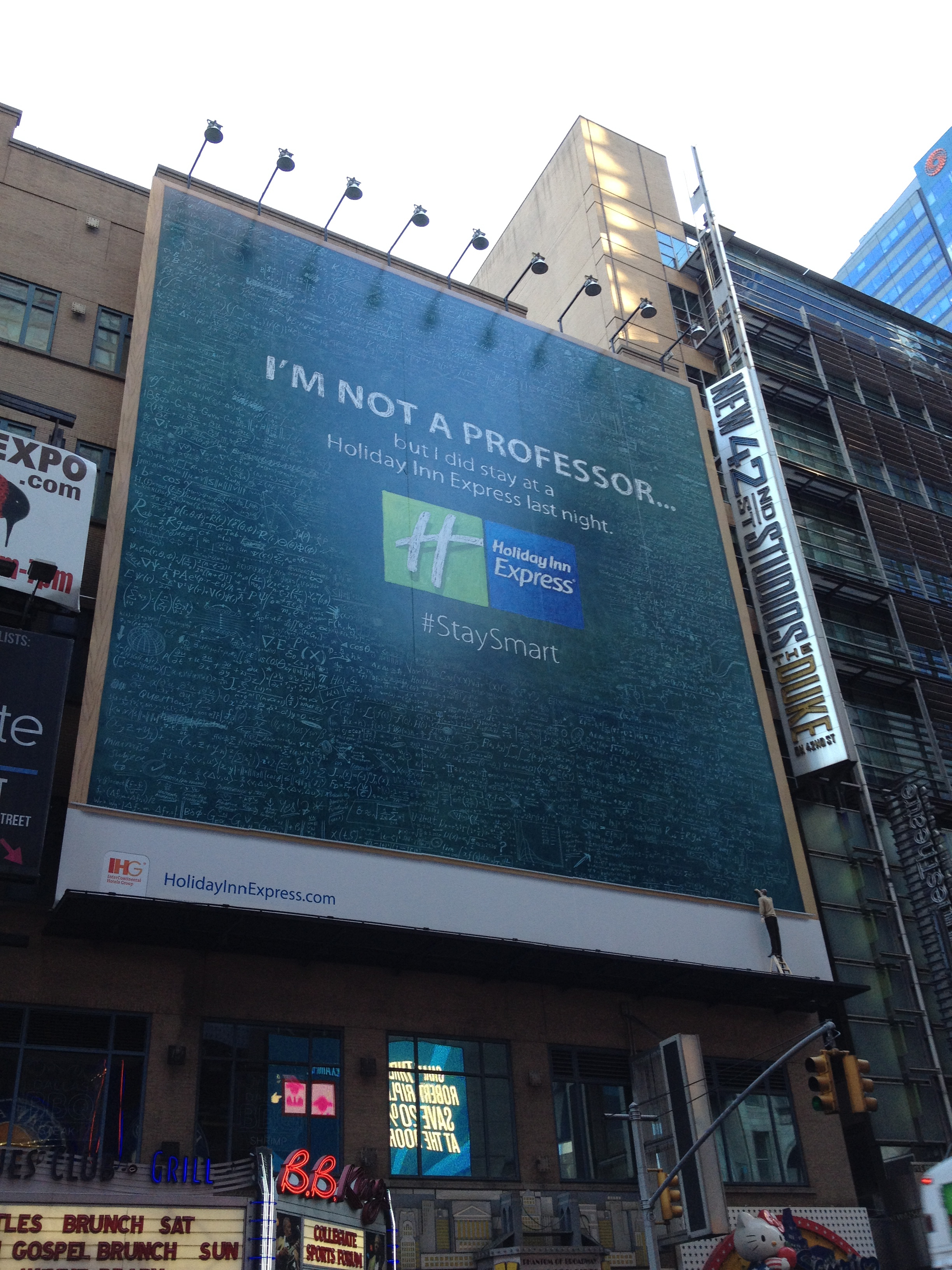
Then as I was turning to go they called out, “You know the acronym for Love?  Living our values every day.”  I told them they were now the teachers and I was the student.  They responded by telling me that they’d just sold a song they co-wrote for a million and a half dollars.  I expressed surprise at that.  They told me the title and said it was recording in Nashville this week.  I congratulated them and finally was able to be on my way.  This made me reflect on the several such strange conversations I’ve had on the street.  They often begin with “Are you” and not infrequently end with “a professor.”  This is usually followed up with some kind of intelligent question.  People, it seems to me, are eager to learn.  Maybe not in the classroom, but in what is referred to as the “university of life.”  Perhaps that’s all the schooling we ever really need.


Free Knowledge

I was struck with an idea.  Not just any idea—an academic one.  I find myself out of practice, and wondering where to find sources when I have no access to an academic library.  I’ve spent my precious writing time for the past several days trying to bang out a respectable academic article.  It represents an area that my personal library does not cover adequately.  The fully employed academic has a library and interlibrary loan to support ideas that won’t let go.  It’s a bit more tricky for the independent scholar.  I’ve contacted local schools but during these pandemic times there is no public access.  Nor electronic access—thanks to all the fancy deals publishers make to try to keep the industry profitable.

The past few academic publications I’ve had were difficult to write, particularly the footnotes. Something the garden-variety academic doesn’t understand is that the university library is a privilege.  I read a lot.  Probably more now than when I was a professor.  Still, research leads you in directions you’d never anticipate.  It’s quite a wild ride, actually.  So with my current project (I can’t tell you what it is because someone with library access would easily be able to scoop it) I’ve had to buckle up.  As I was reading an obvious connection became clear.  It reminded me of the thrill of discovery.  The researcher has a drive for new knowledge—a treasure-hunter of the mind.  It is wonderful to be reminded that there’s more out there still to be discovered.

I’d almost forgotten how an insistent idea can push other projects out of its way.  I have any number of projects going simultaneously.  They get a few minutes’ attention before the work day starts and some of them mature enough to be sent for publication.  At any given time there’s a lot more standing behind those ideas that actually show up on this blog, or in a journal, or even in the fiction venues in which I publish.  But that idea just won’t let me go.  Even while I’m at work it lurks in the back of my mind.  The professorate, for all its limitations, doesn’t pin you down to a nine-to-five schedule even when the time would be better used otherwise.  The thing is, you can’t tame ideas.  Who would want to live in a world where you could?  So I keep working away, hoping to find a library or at least electronic access.  It’s just an idea I have.


Getting into SHAPE

The British Academy, in cooperation with a publisher or two, has taken the initiative to promote SHAPE. Social Sciences, Humanities, and the Arts for People and the Economy (SHAPE) may never match the steam of STEM, but the idea is an important one.  Science, Technology, Engineering, and Mathematics have driven society (and the job market) for many years now.  It’s sometimes easy to forget that we’re human beings and we act irrationally from time to time.  (Consider the last four years in these Untied States.)  Higher education was founded on the premises that the Humanities wouldn’t get studied on their own.  Business keeps us too busy.  Either that, or the egos of rulers lead us into war after war.  What gets left behind is the study of what makes us who we are.  The liberal arts college, learning for learning’s sake, has fallen on hard times.  What’s the profit in it?

SHAPE suggests a society suffers if it doesn’t promote social sciences—the so-call “soft sciences” that state humanity the proper study of humans—the humanities, and the arts.  The acronym itself contains a lesson “for people and the economy.”  The dismal science does, in some sense drive the initiative since we live in a world where tech does most of the work we used to.  We’re left with the non-paying business of being human.  Caring for an aging population where people live longer but aren’t given jobs that pay well enough to retire.  Looking in the mirror to see that the economy’s fruits go unfairly to those who already have too much.  The rest of us, are left to survive as, well, humans do.  Why not celebrate—and better yet, value—what people do?  Or humans for humans’ sake?

I’ve long felt that the priorities of capitalism are badly skewed.  The value of gold is artificial, one assigned by human beings and their love of shiny metals.  Our entire society is set up to, as we’re told, pursue wealth.  There is far more to life.  We humans, we love to create.  We love to socialize.  We love to help one another out.  These aren’t paid activities.  They don’t have to be commodified.  The one who goes home with the most stuff isn’t always the winner, especially when the majority of humans are left without enough.  It’s too early to tell if SHAPE will catch on, but I applaud the effort.  It is time we stopped exchanging the warmth of being human for the coldness of numbers and calculation.


Religion Prof

Back in 2009, when Sects and Violence in the Ancient World started out, there was a fair bit of interest.  At one point I was listed among the top fifty “biblioblogs.”  Back in those days I got to know James McGrath, the curator of Religion Prof, a great blog now hosted on Patheos.  If you want a finger on the pulse of what’s happening in religious studies, you should read him.  With an energy I can’t conceive, he posts interesting stuff every day, even while being a professor.  And like me, he’s fascinated by religion and pop culture.  He also understands something—links and likes and shares are important.  People in my generation and beyond often don’t think that clicking that little thumbs up will do anything.  It does.  More so, that share button.

I was really pleased when James agreed to do a virtual interview with me about Holy Horror and Nightmares with the Bible.  You can find the interview here—and be sure to recommend and share it.  James has several interesting books of his own.  You should check them out.  The world of religious studies (and dare I claim it, biblical studies) is hardly moribund.  Underfunded, yes.  Socially devalued, certainly.  But alive nonetheless.  James’ blog is proof of that.  My regular readers will know my usual jeremiad about how higher education has been treating religious studies.  You see, I’m an historical thinker.  Where we come from is important.  Higher education began because of religion.  Its origins lie in monastic communities preserving learning—some of it secular—for the good of the world.  Now administrators looking for a department to cut know just where to turn. Shouldn’t we treat our ancestors with a little more respect?

I’m forcefully reminded of the many times analysts have declared that religion would fade away.  The claim has been made multiple times over the centuries.  At the same time scientists studying humankind conclude that religion is good for us, and that we’re naturally inclined to it.  Of course we should cease studying it!  Well, Sects and Violence in the Ancient World has also evolved over the years.  Not all of my posts are about religion anymore.  Most of them touch on it, however, because I’ve studied it my entire life.  Not only did religion make Homo sapiens what they are, it also formed some of us individually in ways so profound that we’ll never escape it.  Some of us even wear it proudly.  Great job with the blog, James, and thanks for the shout out!

Remember the early days?


Music Time

Although I love music I rarely have time to listen to it.  My work demands concentration and if I have music on I have trouble paying attention to the task before me.  I awake early to write, and if I try to listen to music while expressing my thoughts through my fingers I find myself conflicted.  I work until supper and the debriefing time that follows work is often fraught—we’re all experiencing frustrations with our new, pandemic reality.  By the time supper’s over, I’m ready for sleep and one of the things that can keep me awake is an ear-worm.  Awake predawn the next day and repeat.  On rare occasions when I have a thoughtless task to complete on my job, I’ll be able to put on some tunes.

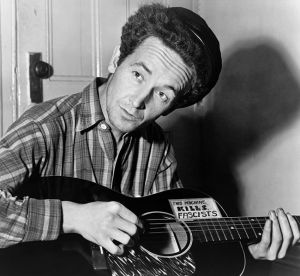
Photo credit: Al Aumuller/New York World-Telegram and the Sun, from Wikimedia Commons

When that rare syzygy came the other day I put on MCR, or, for those who like to spell things out (such as me), My Chemical Romance.  Every time I listen to MCR I wonder why I don’t do it more.  I suppose it’s because I have only two of their albums and I don’t want to wear them out.  What struck me as I listened to The Black Parade was how religious language sometimes creeps in, even when the band is secular.  This is important because rationalists have long been trying to dismantle religious thinking, falsely associating it with only certain amorphous groups such as “Fundamentalists” or “extremists.”  Religion, however, is very much a part of being human.  If we deny it, it simply crops up in another form.  It may take some time for the new shape to be recognized, but when it is it’ll be called religious.

I often wonder why universities, which are supposed to be such curious places, tend to show so little interest in religion.  It’s like that embarrassing uncle at a family gathering—the one everyone else avoids.  Still, our political system is run by religious ideology—take a look at the Supreme Court and try to deny it.  Our daily life is suffused with it like the air in a room with a scented oil diffuser.  Religion is all around us and the academic response tends to be “meh.”  I might be less distressed by this lack if it could be demonstrated that people are becoming less religious, but they’re not.  MCR doesn’t (in the albums I have) exude religious thoughts often, but they are there.  They also appear in other secular music, almost as often as sex and drugs.  If only I had more time I might be able to listen for more examples.  Right now, however, it is time to get to work.


Unintentional Patterns

Time, they say, is what prevents everything from happening at once.  I’ve noticed something about my reading life (is there any other kind of life?).  One of my favorite topics on this blog is books.  Both reading and writing them.  When I wake up and try to clear the cobwebs of sleep from my head to think about the day’s post, I always feel relieved when I have a book I’ve just finished because that’s an eager and ready topic.  When I’m in the middle of a large book, it seems like a long time until I’ll be able to jot down some thoughts on it, and the ideas don’t always flow.  It’s here that I’ve noticed a strange kind of pattern and it has to do with the way I read.  Interestingly, it isn’t intentional.  It goes back to my post-commuting literary lifestyle.

I read nonfiction in the mornings.  I awake early and after about an hour of writing I try to get in an hour of reading before thoughts turn to work and its unraveling effect on the fabric I’ve been weaving before the sun rises.  The nonfiction I read depends, to a large extent, on my writing projects.  Not exactly the kind of research that time and libraries afford academics, but still, research in my own way.  Often these nonfiction books are large—400 pagers seem to be the trend.  I’m a slow reader, so they take some weeks to finish.  At night (or actually evening, for I retire early) I read fiction.  It isn’t unusual for my fiction choices to be briefer than the nonfiction books of the morning.  It always seems, however, that I finish two books very near the same time.  Then I have two book posts in a week and many days without any.

Since we married over thirty years ago, my wife and I read to each other.  Usually she reads while I wash dishes.  Those reading choices are by mutual consent.  They sometimes make their way into my research, but more often they show up in my fiction writing.  In any case, they also seem to fit this same pattern.  When I finish a large nonfiction book in the morning, the same day, or the next day, I generally finish my fiction book.  Shortly after that our dishes-reading book finishes.  I’ve noticed this happening over the past couple of years and I always wonder about unexpected patterns that I find.  It doesn’t always happen this way, but it does often enough to make me wonder.  If I intentionally set out to do this it would be understandable, but as it is, it simply happens.  As they say, things tend to occur in threes.


Secretly

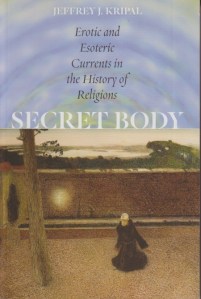
There are not too many books that I would call epiphanies.  I always lay down Jeffrey Kripal’s books with a sense of wonder and awe.  His Secret Body: Erotic and Esoteric Currents in the History of Religions is one book I initially skipped over due (as usual) to not being able to afford even modest academic pricing.  (Hey, my books are even worse in that regard, so that’s not a criticism!)  I’ve met Kripal a few times and have had some conversations with him that always leave me feeling strangely empowered.  That’s the place this book left me.  I’m a slow reader and it isn’t a small tome, so it took me some time.  Also, I didn’t want to rush it.  Doing so would’ve been like trying to jog across a boulder field.  I hardly know where to begin.

Kripal is an historian of religions.  His own experiences in the academy are narrated in this book, so I urge the curious to look.  Many people who know me think that I’m a biblical scholar.  My training, however, is in history of religions.  It’s a fool’s errand to try to classify a doctorate, but my focus was on how ideas appeared in several ancient cultures, with no real expectation of evolution beyond what appeared later in time than something else.  As many who study ancient texts know, this translates to “biblical studies” in the academy and so for many years I taught Hebrew Bible.  Friends in the academy suggested I should shift my research to Bible (as I did in Weathering the Psalms) in order to get a solid placement in academe.  It backfired in my case.  This isn’t a pointless digression.

Secret Body is a trippy book.  It deserves to be read widely and engaged with by academics (among which I no longer count).  It is a ground plan for the study of our field.  Kripal understands, better than just about anyone, why religious studies is foundering.  He’s also brave enough to delve into the unspoken areas that we all know are terribly, terribly significant.  And he isn’t a materialist.  There’s much in this book to give the reader pause.  Indeed, it’s more than a stop sign on the superhighway of the academic business.  It’s the kind of book you need to keep at hand in case “the real world” gets you ensnared in its ropes and chains.  It makes me believe that I need to go back to school all over again.


Large Projects

Now, where was I?  I suspect it’s the same with you.  We’ve got so many things going that it’s difficult to keep up with them all.  When one big project comes along—say reading book proofs for a deadline—everything else gets displaced.  After a week of intense concentration you emerge from a daze and try to remember where you left off with other projects.  What was so dreadfully important before the large project began?  I’m used to deadlines at work, but there aren’t too many in my personal life.  I have goals and targets, to be sure, but due dates slip and slide with the slings and arrows.  When the big project’s done there’s relief, but also a kind of reboot that has to take place.  I’m afraid to look at the news.

The corrected proofs of Nightmares with the Bible have been submitted, along with the index, and now all I can do on that front is wait.  Which of my many other projects, neglected for an entire week, should I take up now?  Part of the difficulty is knowing whether to work on fiction or non.  Given my work-life commitments, fiction is easier.  I enjoy writing it, but I have trouble getting published.  Nonfiction, on the other hand, is simpler to get published but brings in very little remuneration.  I know as an editor that we distinguish between academics (who already have a good paying job) and, say, journalists, who write nonfiction trying to earn a living.  What about an editor who isn’t paid like an academic, but has a regular job nevertheless?  (When talking to an independent, nonfiction publisher a few years back, I heard him respond to the question of if he was non-profit with, “Well, that’s not how I intended it…”)

I have two nonfiction books well along at this point.  I also have several fiction projects, including an eighth novel and a short story collection.  I also have some essays underway for sites beyond my own blog.  A week seems like a long time to put all these things aside and then to pick them up again.  That week wasn’t vacation either.  Nor did it suggest topics for me to address on my blog because if you want to know about Nightmares with the Bible you’ll read the book.  The evening I finished the proofs I had a dream that seemed to stretch through the entire night that I had come up with a complete college curriculum all by myself.  As much as my weary mind wanted to go on to other things it was fixated at that stage.  I awoke to wonder where I’d left off on real life projects, none of which are very near the finish line.  Now, where was I? 


Never Too Late

In these weary days of bleak news, I’m always glad to find a bit of cheer.  A friend recently shared the story of Giuseppe Paternò from The Guardian.  Paternò is a 96-year-old first time college graduate.  As the story explains Paternò had wanted to attend college his entire life but being raised in poverty he never had the opportunity.  We all know how life is a rushing river that snatches you in its current, and thus Paternò found himself unable to attain his dream.  Until his nineties.  Just this year he graduated from the University of Palermo.  What really spoke to me about this story is that Paternò is now considering working on his master’s degree.  While some might wonder if this is practical, to me it demonstrates that knowledge is never wasted.

We live in an era where education is seen as either a useless luxury or as just another business.  Both views are fatal to our civilization.  We have reached where we are by progressively educating our young (and old) so that our collective knowledge-base grows.  When education is seen as a business (and I saw this in my ill-fated university teaching career) it becomes something different.  This isn’t on the part of the faculty, for the most part, but on administrations.  Paying corporate-level salaries to administrators—schools top-heavy with deans—they can’t afford to hire faculty and cut departments that aren’t profitable.  Knowledge, in turn, suffers.  Paternò, I sincerely hope, avoided the politics of academia.  A man hungry for knowledge, he studied philosophy at an age when most of us think people should just sit around and stare at the walls all day.  Knowledge should never be wasted.

Those of us who’ve been excluded from the academy sometimes try to continue our contribution.  Some of us still write books and articles.  It does nothing for our promotion or tenure.  It certainly doesn’t bear much in royalties.  “Why do it?” a friend once asked me.  When we cease seeking knowledge we stagnate and die.  We see this playing out in the politics of our day.  Washington houses many who see education as a threat to the unrestrained acquisition of mere money.  This is why universities suffer—they are not businesses.  One size does not fit all.  At their best they’re places where those of us raised in poverty can go to have our eyes opened.  And they are places where even nonagenarians can go to contribute to the growth of knowledge.