Writing, as We Know it

Times New Roman, I believe, is the font of this blog post.  I grew curious about how our fairly long-lasting Roman letters came to be in this form we use today.  The Romans, like the Greeks, tended to write in uncial form—what we call “upper case” because printers literally kept them in a case above the “lower case” or minuscule type.  Apparently the reason all caps faded from popularity wasn’t that people felt they were being shouted at all the time, but they took too long to write.  You’ve probably seen examples of medieval manuscripts where the letters are an odd mix between uncial and minuscule forms.  These eventually settled into what is called Roman half-uncial, a font that eventually favored minuscule to majuscule—a name for uncial that has very small, or no, ascenders (as in lower case b or d) or descenders (like lower case p and q).

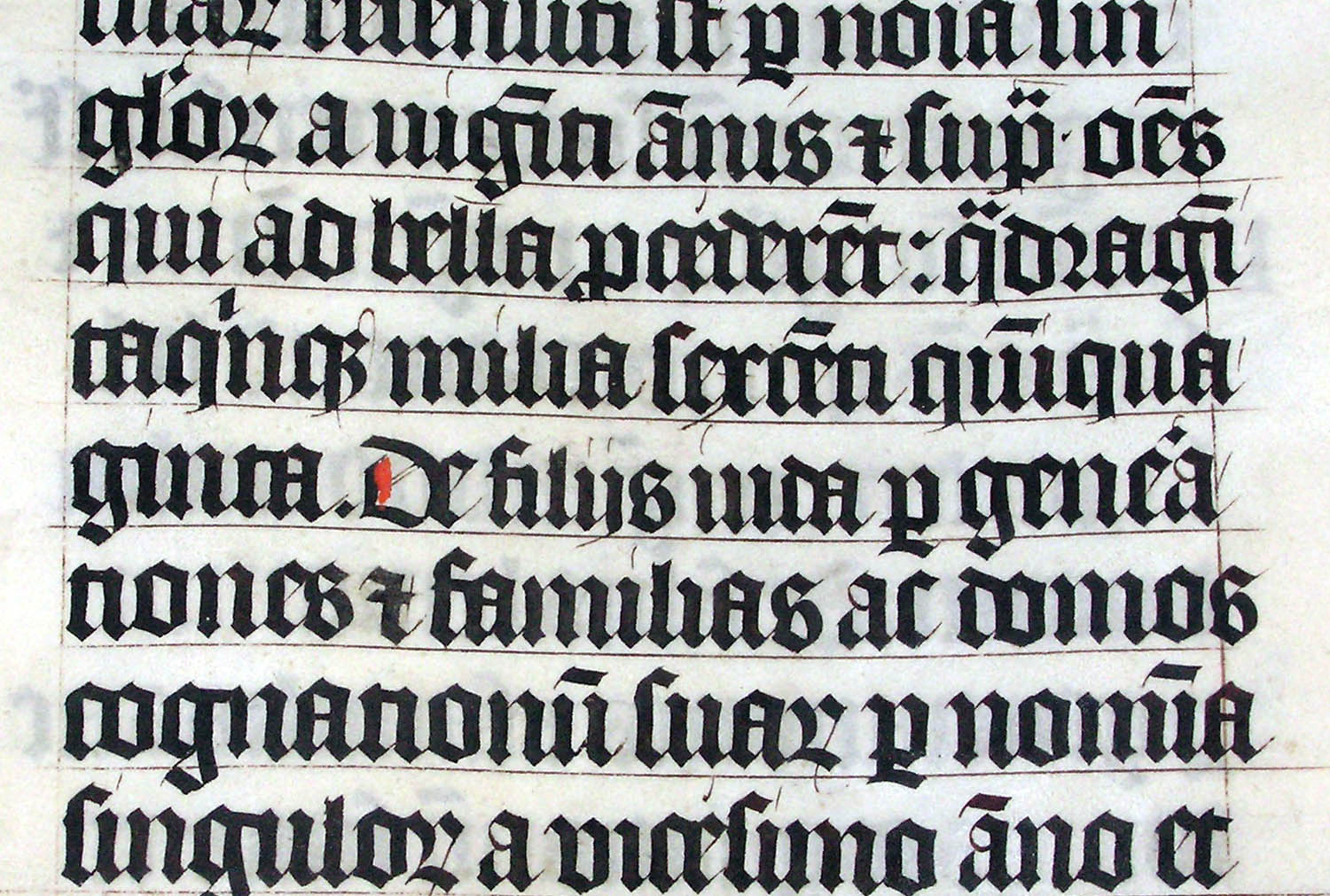
As the power of the Roman Empire waned, a variety of scripts developed in different parts of Europe.  One that eventually came to have influence on the nascent Holy Roman Empire was scriptura Germanica, or the German script.  Under Charlemagne, the Holy Roman Emperor, the favored, and widespread form of writing Roman letters was carolingian minuscule.  This isn’t too difficult to read for modern people but it’s not the script we use.  Carolingian minuscule was eventually replaced by blackletter.  This heavy, Gothic-looking script isn’t always easy to read.  (It was used for German publications until 1941; I used to have an old German book written in blackletter.)  Keep in mind that during all this time there was no printing press in Europe; manuscripts were handwritten and read by few.  Literacy was rare.  Even so, the difficulty of reading blackletter eventually led writers to go back to carolingian minuscule to develop a new writing style, influenced by blackletter as well.

Blackletter. Image credit: Arpingstone, public domain, via Wikimedia Commons

The new writing style, called humanist minuscule, also known as “whiteletter,” is basically what we use today.  It comes in several different fonts, of course, but the basic idea of capital letters beginning sentences and proper nouns, but most letters being minuscules, has become the standard for most typefaces based on Latin letter-forms.  This history of writing, let alone individual scripts, is amazingly complex.  Today fonts have to be licensed to be used by publishers of print materials and techies can invent new fonts to license or sell.  I still have a soft spot for the “Roman” style, which is why this blog post, at least on my screen, is in Times New Roman. 


Mexican Philosophy

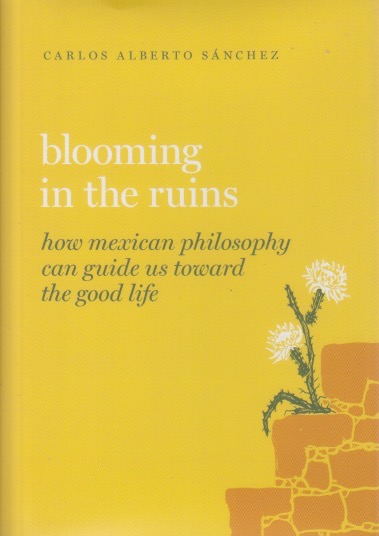
Once upon a time, I applied for a teaching post at Syracuse University.  (Actually, twice upon a time, but that’s a longer story.)  I was able to gather that one reason I failed to merit an interview was that the religion department prided itself on its dedication to continental philosophy.  Lacking imagination, I couldn’t see how that might apply to teaching Hebrew Bible but then again, I don’t know much.  I’m starting off with than anecdote because it is in keeping with the spirit of Carlos Alberto Sánchez’s excellent Blooming in the Ruins: How Mexican Philosophy Can Guide Us toward the Good LifeI recently wrote about how reading philosophy is something I enjoy when I can find the time, but what really struck me about this book is that Mexican philosophy is a counter to continental (i.e., European) philosophy and it is much closer to my own outlook.  I’m not in any danger of being offered a new job so it’s safe to say so.

I actually picked up a copy of Sánchez’s book because of a chapter that I’d read.  Much of the work begins with anecdotal accounts, followed on by something original, amplified, and solid (you’ll need to read the book to flesh that out).  Mexican philosophy rejects the idea of universals because each of us is socially located.  What may have seemed universal to European philosophers of the seventeenth through the nineteenth centuries, many of them quite privileged, simply doesn’t apply to a person raised poor in Mexico.  (Or Pennsylvania, for that matter.)  I read the continental philosophers in school, but they had not had my experiences.  My traumas.  And yes, Sánchez emphasizes that trauma is part of the picture.

While I can’t summarize this wonderful little book here, I can recommend it.  If you have an interest in the larger questions, and if you want some philosophy that doesn’t try to impress you with big words and complex grammatical formulations, this may be for you.  Sánchez writes as if he’d be willing to sit down with you and discuss the matters that make life worth talking about.  The chapter that sold me on his book was the one on the Mexican view of death.  It is only one of several that deserve a bit of your time to chew over.  So I was not welcome among those who specialize in continental philosophy.  Maybe I was looking in the wrong place.  Maybe those who are open to homegrown thinkers of sometimes deep thoughts live south of the border.


Zoning In

Born Jewish, and Unitarian by choice, Rod Serling believed in the inherent worth and dignity of all human beings.  Like many people, even Serling believed that season four of The Twilight Zone, which went to an hour format from the usual half, didn’t really work.  Nevertheless, the fourth episode of that season,“He’s Alive,” really should be required watching of every person in the United States.  This episode was written by Serling and it focuses on a young American fascist who’s having trouble gaining a following.  A shadowy figure then reads to him from what sounds exactly like Trump’s playbook, and soon decent people are raging along with him about foreigners and those who are different.  When the shadowy figure is finally revealed, we’re not surprised to learn it is Hitler.

The young man obeys without question, and soon it looks like he could be elected.  He has one of his best friends killed as a martyr to the cause.  He murders an old Jewish man who has cared for him since his youth.  He declares himself made of steel, with no feelings.  And when he ends up dead (everyone knows how Hitler’s career culminated), the spirit of Hitler rises from his body as Serling warns that wherever hatred exists, Hitler still lives.  Now this episode aired in 1963 but it could’ve been 2016, or 2024.  Prescient people, like Rod Serling, knew that mob thinking could be easily exploited.  Even in the first segment after the introduction the instructions are laid out.  Play on people’s fear of those who are different.  No matter how good things may be, people will be unsatisfied.  Add any power-hungry individual and you’ve got the recipe for a fascist overtaking.

The episode made me wonder if we could ever become a just society.  Ironically, that which calls itself “Christianity” these days stands in the way.  In its day, The Twilight Zone was amazingly influential.  It had a great impact on what was to follow and it’s still regularly referred to, even by those who’ve never seen an episode.  If only we’d pay attention to its message.  I’ve been making my way through the entire series, slowly, over the years.  Now and again an episode will really hit home.  I have to admit that I was physically squirming during “He’s Alive.”  It’s not that it is the greatest episode of the series, but its message is extremely timely.  The requirement for a better world is simple, but seemingly impossible to reach.  Treat others as you wish to be treated.


The Valley

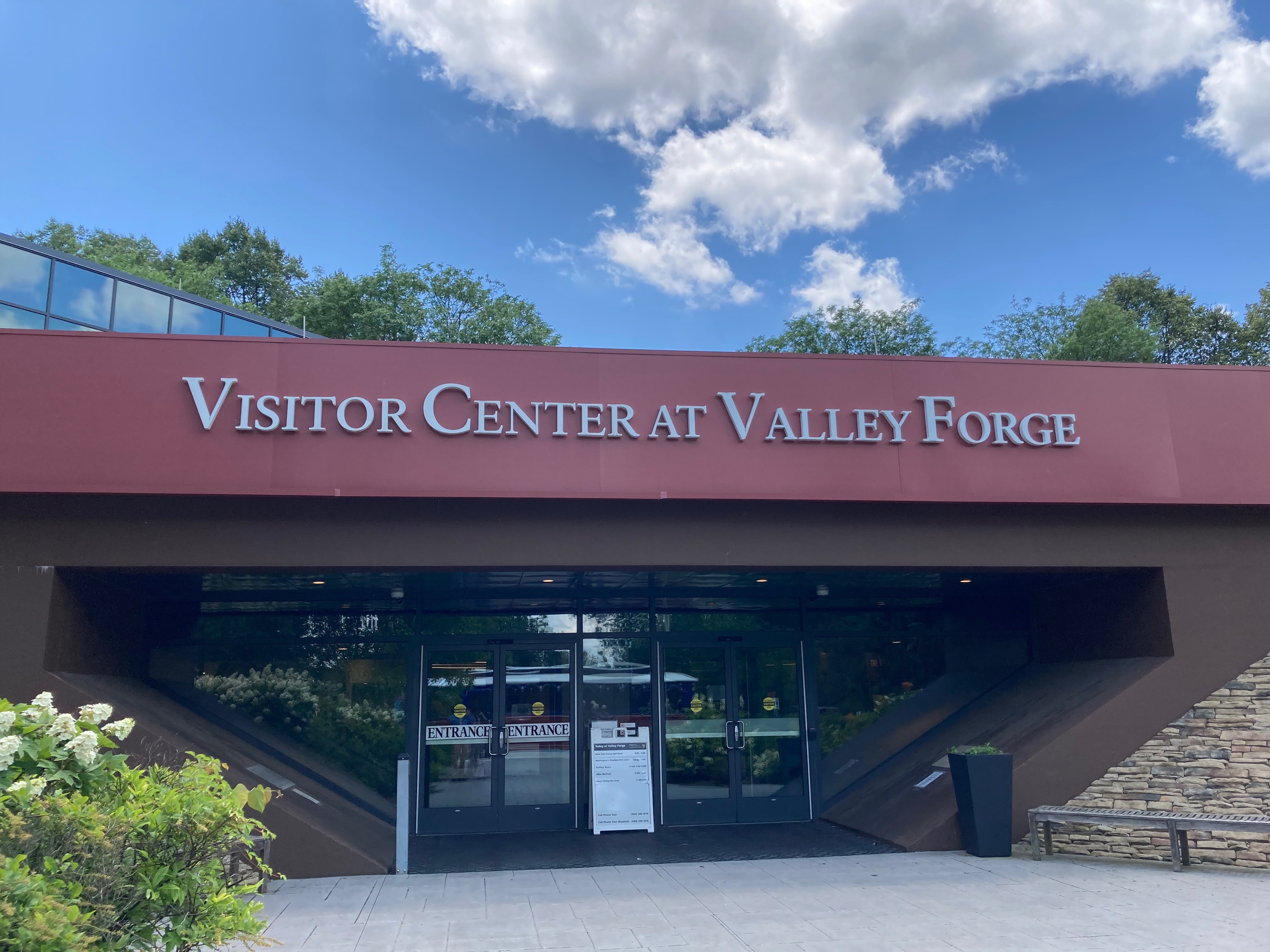
Juneteenth seemed a good day to get to Valley Forge.  With all the nonsense going on in the White House, we need to be reminded what this country was founded on and for.  I like to think that we weren’t the only ones there yesterday for that reason.  In fact, in the gift shop I found a book titled America’s Last King.  By the time we left it was sold out.  Like many Americans, I suppose, I only had a vague idea why Valley Forge was important for our young country.  We took a tour that helped explain it.  A tour that some in Washington ought be be required to take.  Valley Forge was a winter encampment—the third in the War of Independence.  George Washington had just suffered two defeats and the British had taken Philadelphia.  His poorly provisioned army set up winter headquarters in this strategically secure hill country.  Inadequately clothed, barely fed, many dying, they planned how to keep their efforts to survive alive.

What happened that winter of 1777–1778 at Valley Forge that kept the United States alive depended on two things, both brought by immigrants.  Let me say that again, in case ICE is having trouble hearing—immigrants saved America.  The young country was in very real danger of defeat.  What turned the tide was an alliance with France (the name Lafayette still looms large here in the east) and the help of Baron Friedrich von Steuben, a Prussian.  Without these foreigners, America would never have survived to become great.  Oh, and Mr. Kennedy, Washington ordered vaccinations at Valley Forge to prevent so many of his troops from dying from small pox, an inconvenient truth.  What emerged from Valley Forge that winter was a more organized, healthier United States Army that would go on to defeat the British so that we could be free two and a half centuries later.

I needed Valley Forge.  Although it was a hot day and the roads are paved, I needed to be reminded what it felt like to be proud to be an American.  Juneteenth is to commemorate the end of slavery.  History shows that many in Washington’s army were of African descent.  It seems that DC has forgotten what America is and what we were fighting for all those many years ago.  It wasn’t to exclude those who were different.  No, it was to pull together to survive.  Our would-be king spends his idle days planning military parades in his honor.  The US Army was born in Valley Forge.  And as an American with ancestors here from Washington’s day on, I really needed that visit to remind me of how America became great.


World History

I don’t doomscroll, but I occasionally fall down a virtual rabbit hole.  One of the truly interesting things about being an editor is reading proposals from other editors.  China’s been a hot topic for the past several years and so I hopped on over to Wikipedia to find out who this Chiang Kai-shek was, after reading a proposal.  I’d heard his name from childhood on, but I’d never read any history of China.  For my entire life it has been a communist country, often with frosty relations to the United States.  One thing led to another and I landed on the page titled Warlord Era.  This sounded like something out of a fantasy novel, so I thought I’d see what that was all about.  When you scroll down to the Warlord profiles section, you find some really interesting stuff.  One of these warlords was a real eclectic guy known as the “model governor.”  Another was a strict Methodist who banned alcohol and dressed like a common infantryman.  Yet another was known as the “most well endowed man in China,” in the southern regions, that is.

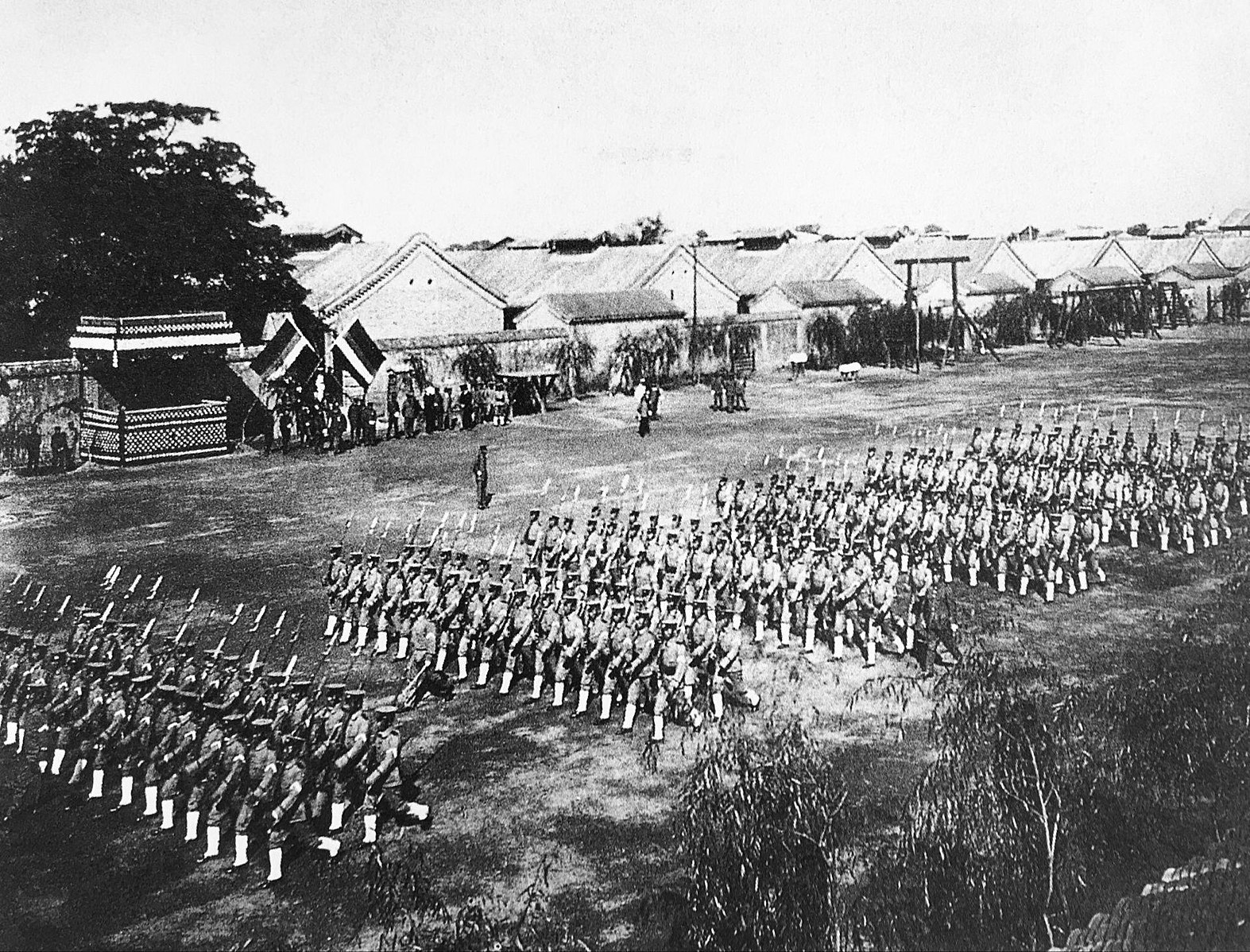
Beiyang Army; image credit—unknown photographer. Public domain via Wikimedia Commons.

Now, I’ve never read any Chinese history, but these guys sound a lot less threatening than anyone you’d find in a Mario Puzo novel.  They may have been terrifying in real life; Fidel Castro wore a common soldier’s uniform, but I’d have been frightened had I found him lurking under the bed.  Of course, I’ve never read any histories of Cuba either.  There’s a lot to learn in this world.  I enjoy reading history, but my writing projects tend to direct my non-work reading these days.  I’ve been acutely aware that my time on this fascinating planet is limited and that none of us can learn everything.  It saddens me that world leaders show so little interest in the planet they “govern.”  Even a little reading on Wikipedia should be enough to grease those wheels.

One of the strange ideas that occurred to me once while reading a different proposal was that China conducts business deals with, for example, nations in Africa, in which the United States is not involved at all.  When this thought launched I realized just how parochial the outlook of many of us is.  I lived overseas for three years, but still, the United States, in better and in worse, is my home.  It’s the place I know (or thought I knew).  Where some of my ancestors lived for over two-and-a-half centuries.  As appealing as Canada often seems, my fate appears to be here, along with my heart.  So I don’t doomscroll.  But I do read about China and realize how little I know.


Island Life

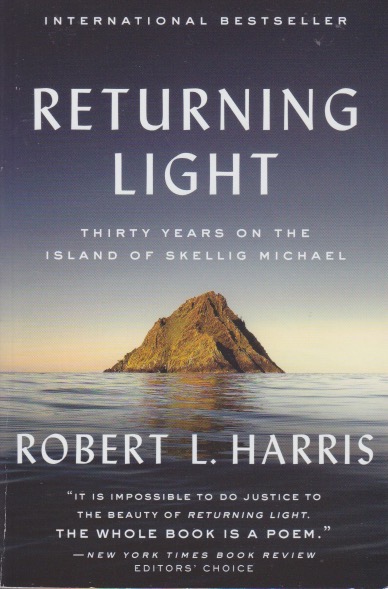
The spirituality of place.  Although it’s largely secular, Robert L. Harris’ Returning Light, his memoir of spending three decades working on Skellig Michael, is about spirituality of place.  Poetically written, his is the account of being one of the caretakers on an island about seven miles west of southern Ireland.  Some call the book nature writing, and I suppose in a sense it is.  He describes his companions—puffins, razorbills, and gannets—and life among the ruins of a monastery from the Medieval Period.  There’s no straightforward narrative arc here.  This is a set of reflections produced by a wind-swept, weather-beaten man who, when on the island, lived with very little.  His writing, as is often the case with those who isolate themselves, tends toward the reflective.  It may raise more questions than it attempts to answer.  And it fires the imagination with monks seeking such an inaccessible place to pray.

My wife and I came to read this book somewhat accidentally.  Someone we know was having a difficult time getting through it—looking for that missing narrative arc—and suggested that it might appeal to us.  In our three years and change in Scotland, we never did make it to Ireland.  From the pictures of Skellig Michael, it’s like Skye (which we did reach), only more so.  And smaller.  More intimate.  We did spend a pleasant time on Iona.  The photos didn’t turn out because, in those days you had to mail your slide canisters in the Royal Post for processing and the poor thing got crushed, exposing the film to light.  Iona is less sharp, less demanding.  More accessible.  But the idea of finding yourself an island, even if only tidal, like Lindisfarne (which we also did see), is a time-honored way of reconnecting with your soul.

Harris doesn’t write in a traditional Christian idiom, but he focuses on light.  The monks’ cells, at least some of them, share the early Celtic monument alignment with angles of the sun illuminating rooms with no artificial lights.  Illumination is, it seems, what he was seeking,  It came as no surprise that his words evoke those of Thomas Merton for some.  Harris observes, thinks, and contemplates.  Sometimes bursts into poetry.  His is a memoir of a man who spent quite a lot of time alone.  Who befriended, briefly, sea birds.  Returning Light isn’t really a book to rush through, but one to engage slowly.  In a sense, I suppose, by isolating yourself on an island where monks once hid and prayed.


Mired

For someone who grew up with an Oscar Mayer jingle forever lodged his his brain, it took decades before I became curious about the surname.  I had always supposed it was a Germanic word for “mayor” but then, if so, mayors had to be very busy in the boudoir to make so many.  The reason I grew curious was that there are so many ways to spell it.  I’ve had people complain to me about having to spell their name every time, but I’ve run across “Meyer” spelled “Maier,” “Meyers,” “Mayer,” “Myers,” and many more.  Yes, I’m afraid you have to spell it.  (My wife’s surname is Stephenson and she has to spell it every single time.  For that matter, so do I.)  Why so many Mayers?  A little (very little) research turned up that it comes from old German for “manager”—thus possibly related to “mayor” and maybe even “major”—but that over time it came to mean “tenant,” basically a freeman farmer.  That’s why so many.

Photo by Erik 🖐 on Unsplash

Growing up in a small town, the very common surnames I encountered were “Smith,” “Jones,” and “Miller.”  My mother even married one of the Miller clan eventually.  “Smith” and its variants, derive from craftsmen of various sorts, such as “blacksmith.”  “Miller” is someone who works a mill.  The odd one out here is “Jones,” which derives from a prolific “John” somewhere way back when.  I’ve written before about how common (and widely variable) the name John is.  All these names share a “non-noble” background, it seems.  People of occupations that keep us going.  It made sense that “Meyer” was a name for farmers.

I grew up with a different, but not that uncommon (as the internet has taught me), surname.  Interestingly, all of my grandparental surnames were unusual, although one is compounded with “Schmidt,” or “Smith.”  I find names fascinating.  With so many of our species running around, unique forenames weren’t in large enough supply for us to stop there.  Which John are you?  John Johnson?  Okay, now I can place you.  I tend to struggle with transposed letters from time to time, making the variants of “Meyer” particularly difficult for me.  And that “y” acts like a vowel and sometimes becomes an “i.”  Or a “j” in German.  Cheeky.  We identify closely with our names.  They say something about us.  Thankfully we have other ways of distinguishing ourselves, otherwise we’d all just be lost in the crowd.  


New Hope Nightmare

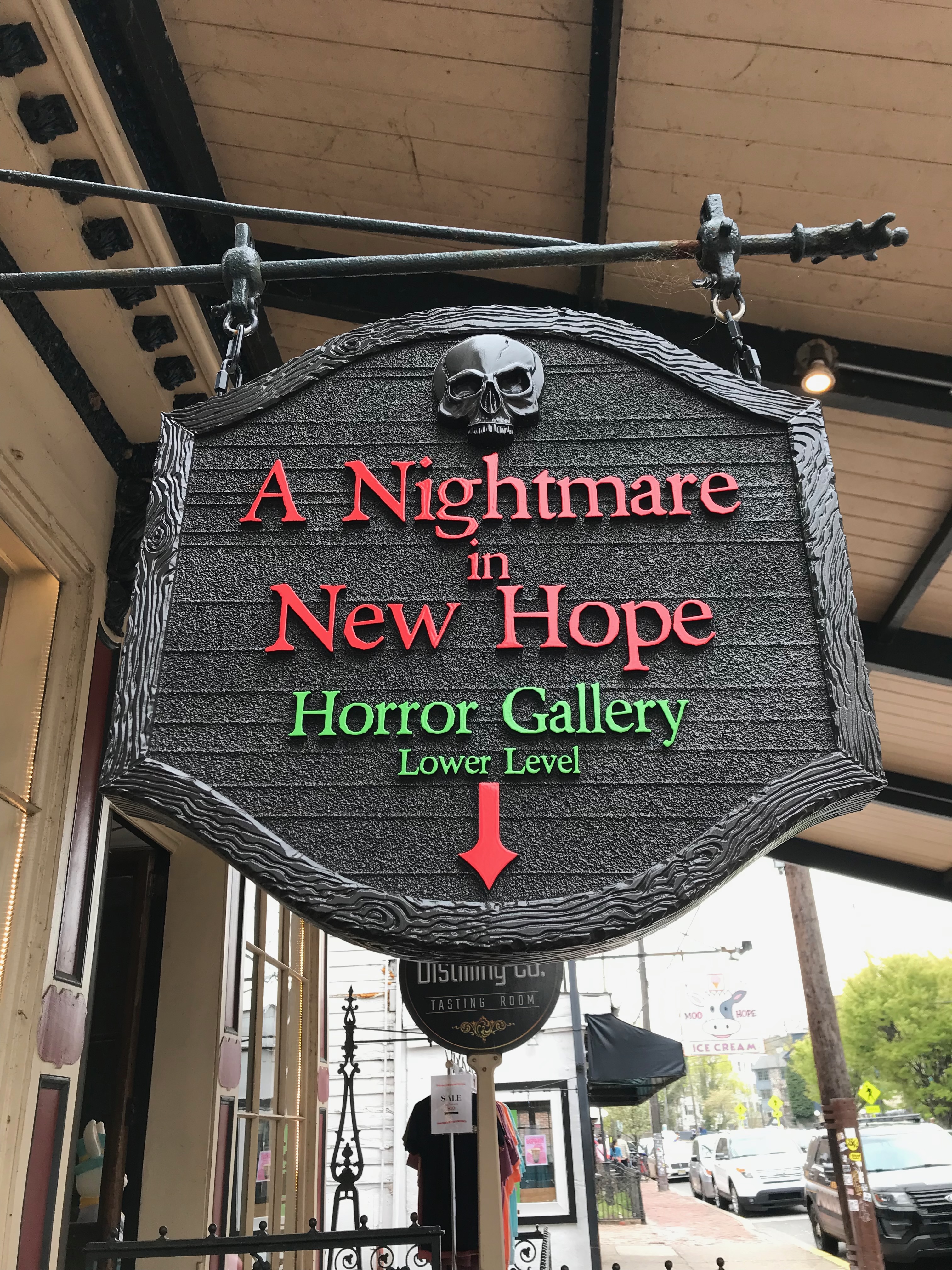
One of my favorite places along the Delaware River is the town of New Hope.  Across the river is the very nice town of Lambertville, New Jersey, but New Hope has a feel to it.  When I learned that a new horror museum had opened there—Nightmare in New Hope—we scrambled to change plans to get there right away.  We went the Saturday before Easter.  We’d planned to spend some time touring the rest of the town as well since it’d been years since we’d done so.  We managed to find parking and, since the museum opens at one, grabbed some lunch and went to Farley’s Bookshop.  Independent Bookstore Day was actually the following weekend, but bookstores need no special occasion.  Farley’s has changed a lot since our last visit.  It’s smaller (as has happened with many indies) and brighter.  I found plenty to like there, but I did miss the darker, dustier feel to the first incarnation of the store I’d known.

We made our way to Nightmare in New Hope.  And waited.  And waited.  Several people passed by, noting that they’d have gone in if it were open.  One of our party messaged the website since telephoning did nothing.  Eventually the owner indicated that he was closed for Easter.  Of all things.  A horror museum, open only on weekends, closed for the first nice weather we’d had on a weekend?  That was the main reason we’d driven an hour to get there.  We found a place with vegan ice cream and fed the ducks on the river.  I was sad that the main objective of the trip, the museum, hadn’t turned out.  And I knew it would be quite some time before we could try again.

My daughter, knowing my tendency to get depressed over such things, suggested we could go to Peddler’s Village instead.  My wife and daughter had visited it before, and so we decided to round out our Saturday trip there.  Peddler’s Village is a set of speciality shops that was born about the same time that I was.  These days there are about 60 shops with items that may or may not be strictly necessary.  Although we’d been to Farley’s, I couldn’t pass up the Lahaska Bookshop, part of the Village.  It was warm that day and we saw maybe only five or six shops.  At least one of them was an independent bookstore.  Not exactly the day we’d planned, but a day spent in and around New Hope is never wasted.  But really, closed for Easter without even putting a notice on the website?

(See updates here and here.)


Learning Bunnies

Although it was released during the first Trump administration, Jojo Rabbit was written before he was sharp bit of dust in the GOP’s eye.  Still, in the second debacle, it seemed like a good time to watch it.  Its message is appropriate for any time, but especially now.  Jojo is a ten-year-old boy who’s an enthusiastic member of the Hitler Youth.  So enthusiastic that he has Hitler as his imaginary friend.  He buys the party line without even thinking (he who has ears to hear, let him hear).  Jews are evil, according to the rhetoric.  Monsters even.  Jojo’s mother tries to help her son, missing his father, understand that love is the better way.  Then Jojo discovers something.  A girl his deceased sister’s age has been living in the walls of his sister’s room.  He quickly deduces that she is a Jew.  Were it not for her threats to implicate him and his mother, he would turn her in.

An unusual coming of age story, we see Jojo do something rare—he matures.  Getting to know Elsa he can’t reconcile what he sees with what he was taught.  She’s not evil.  She has no horns.  She’s not rich.  She fell in love with a guy and wants the same thing anyone wants.  The conflict faces Jojo every day as he decides he must learn about Jews to report this intelligence to the authorities.  The authorities, however, know Germany is losing the war.  It’s only a matter of days.  When Hitler dies by suicide, Jojo fully realizes that he has been simply following along instead of following the evidence.  His mother was hanged for not being loyal to the party and his father, he learns, was also helping the Jews.  In a moment of singular hope, Jojo grows up.

Movies can teach lessons.  Some are widely enough viewed to make a major impact on society.  Can any of us imagine a world without Darth Vader and Luke Skywalker?  In this era when sensible people seem to have forgotten that fascism is evil in its nature, films like Jojo Rabbit are important.  Thinking is not a crime.  Learning is not a crime.  Even if they’re being touted that way by the wealthy in order to protect their privilege.  We watched the movie for entertainment on a Friday night, but I received an education instead.  I wonder just when the message of love fell out of Christianity.  But then, I think it becomes clear when you think about particular movies and how we’ve come to be where we are.


Indigenous Gods

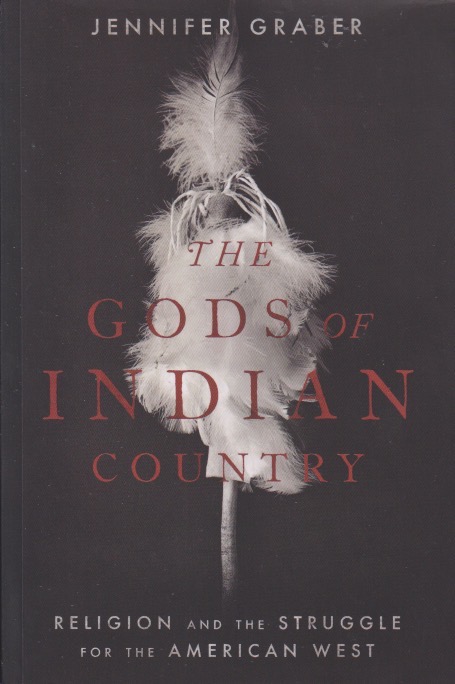
Engulfed by capitalism, it is too easy to ignore the indigenous population of this country.  I grew up thinking, in some way, that American Indians were extinct (this was small town America, after all).  Then we visited a place—in upstate New York, I think, but the recollection’s hazy—where there were real Indians.  This was before exoticism was a bad word, and I thought them quite exotic.  Maybe it was the way I was raised, but I’ve never thought of myself as better than anybody else.  Certainly not on the basis of race or gender, or even personal worth.  In any case, there were still Indians.  I’ve always been an admirer of their culture.  Jennifer Graber’s The Gods of Indian Country is an informative monograph on, as the subtitle says, Religion and the Struggle for the American West.

My interest in American history is relatively recent.  Growing up, I always found European history of greater interest, and then, for many years, the ancient history of the states along the eastern coast of the Mediterranean.  It was the antiquity of it all.  History feels safer when it’s at a great distance.  American history is not old.  When hearing that some of the events discussed by Graber took place in the 1910s, I kept thinking, “were we really that naive just over a century ago?”  Or was our nation willfully blind to the plight of the people who lived here before the Europeans arrived?  The narrative has changed.  And if it hasn’t, it must.  How would we like it if, say, aliens landed and assumed the right to take over capitalistic America?  It’s only our arrogance that prevents us from treating Indians better.

Religion, particularly Christianity, fueled many interactions with the Indians, as Graber ably demonstrates.  The assumption was that Indians had to assimilate to capitalistically-fueled Christianity.  Private ownership.  Free trade.  Otherwise the cultures could not share the land.  Treaties were broken because the “Christian” rules of the new overlords demanded it.  Graber also explores some Native American religious practices as well, chiefly among the Kiowa.  Since the book is fairly brief, it doesn’t include any kind of comprehensive coverage of Indian religion, nor, of course, of early American settler religion.  What happened is that religion and politics joined forces to justify stealing what belonged to someone else.  Those who study the history of religion recognize this pattern.  It isn’t a rarity, unfortunately.  Although my interest in American history is recent, it is growing.  What happened in your own backyard determines so much of how we’ve become who we are.


Bibliographer for Hire

Why is bibliographer not a job?  Why can’t a person make a living categorizing knowledge?  I ask this because I see YouTube videos of people saying your job should be what you enjoy doing.  What if you enjoy creating bibliographies?  You see, my research methods are a bit unconventional.  They kind of have to be since I have no institutional support for my writing, and yet I want it to be intelligent and informed.  That means I have to locate my own sources and inevitably, when I’m compiling a bibliography, I’m happy.  Even if it means ferreting out obscure sources and trying to learn where something was originally published, I’m still at the top of my game.  (Yes, this is one of those things that the longer you’ve been doing it, the better you get at it.  These days it means learning to engage the internet for research.  Since it’s more of a money-making venture geared towards entertainment, that can be tricky.)

I remember those days of typing out bibliographies by typewriter, smearing White-Out all over, or trying to use that ribbon stuff that was supposed to be able to type over mistakes.  My friends and fellow students hated bibliographies.  Secretly, and perhaps perversely, I was enjoying myself.  You see, a bibliography is gathered knowledge.  When I finish reading a nonfiction book, particularly one where I want to do further reading myself, I go through the bibliography.  I want to know the origins of ideas.  There’s an irony here since my last few books have featured quite a few of my own ideas supported by what I’d read.  And I know that unless I provide a precise footnote, anyone who might read my work might wonder “how I know” what I’m writing.  It’s increasingly becoming one of those “pay attention to your elders” sort of thing, I guess.

But the bibliographies I could compile!  The really tricky part when writing The Wicker Man was the word limit.  I know authors who struggle bringing the bibliography down to required length, and I feel for them.  I really do.  You see, a bibliography is a record of what it took to get me to write this book.  These are the things I was reading, pondering.  Or found along the way.  There’s an art to a bibliography as well.  Some topics seem to attract authors with last names beginning with a certain letter, for instance.  Or others seem to have a dearth of another letter.  I may be the only person who finds such things fascinating, but can’t that be a paying job?  It is most interesting work, and categorizing knowledge is a full-time job.  If only it was a paying one.


Philosophical Thoughts

Please don’t read too much into this!  I read a lot of professors who spend their careers trying to understand a previous scholar’s thoughts.  I suspect this happens quite a lot in philosophy, but it fits pretty well in religious studies also.  And I wonder, what of those intellectuals where were grappling with pure ideas?  Did they know they’d become adjectival?  In other words, did Immanuel Kant know that he was Kantian?  Or was he just writing stuff, trying to explain how he understood being in the world?  Now scholars dedicate themselves to understanding Kant.  Or in more recent times, Derrida, Lacan, and Bakhtin, or whoever’s the flavor of the day.  The ones who were too busy being Derrida, Lacan, and Bakhtin to figure out what someone else was saying about things just wrote.

Image credit: Portrait of Immanuel Kant by Johann Gottlieb Becker, 1768, public domain via Wikimedia Commons

I often wonder about how higher education has shifted the way we do scholarship.  It’s not really a place to test out ideas that the world can evaluate, but more a place where specialists can discuss possibilities and what someone else might’ve thought of something.  I guess that’s why I tend to think of my last four books as being non-academic.  I’m not using the tired formula of reacting against what some theorist has said about my subject.  I’m simply observing and drawing inferences.  Maybe it’s because I wasn’t raised in an academic environment.  I remember reading Nietzsche for the first time.  How he didn’t footnote.  How he didn’t argue against what some prominent others had said.  He simply wrote.  And he did so brilliantly.

Perhaps it’s yet another example of having been born early enough.  Tech has made it remarkably easy (for those without families to feed) to become writers.  No agent or editor required.  And things like Book-Tok can make those who publish outside the Big Five famous.  What would Kant have done?  That’s a nice Kantian question.  In fact, the whole reason I began this post was that I’d run across James C. Taylor’s A New Porcine History of Philosophy and Religion on my shelves.  Just seeing it reminded me of the Kantian pig refusing to lie to an axe-wielding maniac.  That got me to thinking of Kant and what it must’ve been like to see him being Kantian.  I’m no expert.  I took a lot of courses in philosophy and religion back in the day, but I have a book about philosophical/religious pigs on my shelf.  Somehow I suspect Kant wouldn’t have appreciated his page in this book, even though it gave me philosophical thoughts to start the day.


Must Be Autumn

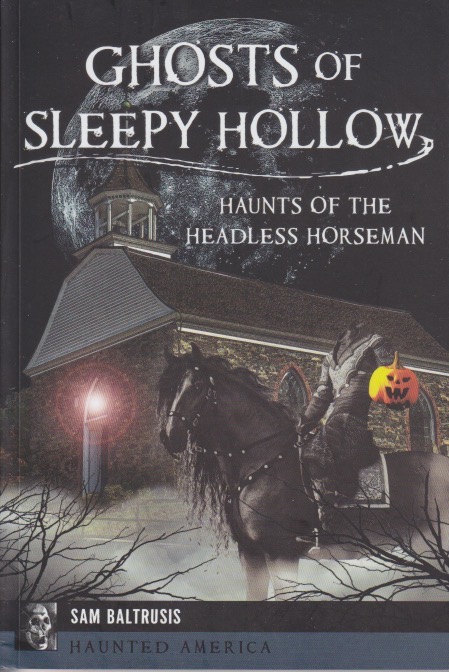
As it often goes, a friend pointed out to me a book on Sleepy Hollow that published just this week.  I preordered a copy that arrived on Tuesday and buzzed through it.  It’s what I describe to family as “one of those books”—you know, the local history, heavily illustrated quick reads from The History Press.  (I would note that I submitted what was then The Myth of Sleepy Hollow to The History Press, but they never even responded to the submission.)  In any case, Sam BaltrusisGhosts of Sleepy Hollow: Haunts of the Headless Horseman is really quite different from what I do in my forthcoming Sleepy Hollow as American Myth.  The History Press isn’t really regarded as such by historians.  I like their books nonetheless.  I was castigated by an academic journal editor early in my career for using one such book to illustrate local folklore.  (That was, by far, the snootiest rejection letter I’ve ever received.)

Aloft noses aside, there is a legitimacy in listening to what the folk say.  The tales in a book like this won’t convince skeptics, of course, but if you read them in the dark you’ll nevertheless find yourself glancing into the corner now and again, wondering if you saw something.  The book does cover the “Legend of Sleepy Hollow” and Irving’s life in a few pages—Irving was a complex man and the first truly famous American writer—before moving on to local haunts.  The thing that kept nagging at me was the easy shifting from fiction to fact.  Folklore does have a way of becoming reality (and who can definitively even say what that is?) for people.  No doubt, Sleepy Hollow has latched onto tourism in a big way.  Even more so than on my last visit there. And folklore draws on that shifting borderland between fact and fict.

One of my motivations in writing Sleepy Hollow as American Myth was that the story is largely ignored by academics and “sophisticated” readers.  It nevertheless remains important in popular culture.  Academics tend to be slow in picking up what general readers find fascinating.  I found a few academic articles on the subject, but my book was written for general readers as well.  I hesitate to say too much, otherwise, why buy it?  I have a handful of History Press (and similar) books on the region on my shelf.  I learn from them.  And I’m glad to see Sleepy Hollow getting more attention.  My only real regret about my book is that I’ll have to wait a couple of years before the price comes down.  In the meantime, those really curious about Sleepy Hollow will have this Haunted America version to read.


Borrowed Land

The thing about local attractions is that residents seldom have time to visit them.  Weekends are busy with the tasks you can’t accomplish otherwise with a 9-2-5 and being a “homeowner” is more like being owned.  Nevertheless, one Sunday afternoon we ventured to The Museum of Indian Culture, just south of Allentown.  I’d known about it for a few years, but wasn’t sure what to expect.  Occupying the house built by the Bieber family (not the singer, but the local bus-owning company that died during the pandemic) way back, the museum is small, but intimate.    The docents are unstinting with their time.  This is Lenape tribal land and the museum houses some local, and some national, pieces.  It also has a very extensive library.  

Often it’s difficult to feel proud of being of European extraction.  So many crimes were committed during the period of colonialism (and are still being perpetrated) that you just want to apologize over and over when you meet an American Indian.  The thing is, every native American I’ve met has been gracious and kind.  They still feel connected to the land in a way that seems foreign to Europeans.  Colonialists (and present-day capitalists) saw (see) the land as for exploitation.  We are slowly, hopefully, coming to realize that the indigenous way of living with the land is far more sustainable than the conquering attitude that metal smelting and gunpowder gave.  I kept thinking, what would it be like if people we didn’t even know existed showed up and just started taking everything for their own?  And claiming an all-powerful deity had given it to them?  Wouldn’t we fight back, just as the first Americans did?

I was especially hit by the hypocrisy of it all.  The code talkers helped win the Second World War.  As our docent said, at the Carlisle Indian School Indians were severely punished for speaking their native language.  They were being Christianized, of course.  Then, during the War the military realized we have a treasure-trove of languages that nobody else in the world speaks.  Suddenly their languages were an asset to be exploited.  Native Americans proudly served (and serve) in the military.  It is actually their land they’re defending.  We spent an educational hour in the small museum not far from property we “own,” according to a law code of “right behavior” drafted by others.  You might be able to leave places like this small museum, but they don’t leave you.


Things about Pennsylvania

When I used to pick up my daughter from college in upstate New York, we’d sometimes come up with ways to keep the conversation going for the three-to-four hours it’d take us to drive home.  One trip we thought of doing a parody of “Sweet Home Alabama,” namely, “Sweet Home Pennsylvania” (same number of syllables).  We sketched out some verses by her asking me what Pennsylvania was known for.  Now, I was born and reared in this state, but my ancestral states are more properly New York, North and South Carolina, and the District of Columbia.  Still, I feel at home in PA, but I’ve always felt it was one of those places that people think “Philadelphia” then call it quits.  Pittsburgh used to be much larger than it now is; it was the 16th largest city in the country when I was in high school.  So, the Liberty Bell/Declaration of Independence, and steel (also in Bethlehem), were obvious gimmes.  But what else?

The Amish.  Yes, they have colonies in many states, but Pennsylvania has Lancaster County.  The state may not be widely known for this, but it is the second biggest supplier of fossil fuels in the lower 48, right after Texas.  Indeed, the petroleum industry was born right here, not far from where I grew up.  So we have the Mennonite farmers and heavy industry.  It is really quite a varied state, my home.  We have lakefront property on Erie, and a tiny part of the Atlantic in Philly.  We have a good dose of the Appalachian Mountains.  Lots of forests, even some with elk.  We were the second state, after Delaware, and Pennsylvania is properly a commonwealth instead of a state.  Our European founding was by means of the Quakers.  Pennsylvania housed several Indian tribes.  It was known for religious tolerance.  Daniel Boone was born here.  So was Stephen Foster.  And two US Presidents.  Not bad.  Not bad at all.

Only recently did I learn that the covered bridge was invented in Pennsylvania and that we have more still standing than any other state.  The current count is about 209.  Now, there’s a romance to covered bridges.  During this summer of staycations, we started to visit some.  You can’t go shopping there, and you can’t stay overnight or even order food, but these old-timey structures are a draw all on their own.  Part of the fascination is that we don’t build them anymore.  We have cars to keep the rain off and our vehicles don’t get spooked by the sight of open water or slip unduly on wooden planks.  Back when we were trying to make up alternatives to Alabama’s charms, I wasn’t aware we had so many covered bridges.  I saw a few growing up, of course, but paid little attention.  Now they’re another part of what makes this a sweet home.