Not Alice’s

Sometimes I forget that movies are entertainment.  I mean, they’re big business and make some people obscene amounts of money.  In that respect they’re serious.  And also, they literally get into our heads and become part of our life’s experience.  Horror films, whatever that means, are often intelligent and thought-provoking.  I’ve been focusing on genre for a while now and when a friend recommended Willy’s Wonderland, and it was on one of my streaming services, I said “why not?”  This is entertainment, but the genre is all over the place.  Comedy, yes.  Fantasy, check.  Thriller, okay.  Action, definitely.  Horror, I’ll buy as well.  Nicolas Cage movie?  Well, he doesn’t look like he’s in his mid-fifties, and he doesn’t say a word in the whole thing.  The movie has possessed animatronic animals.  Satanists.  Small-town conspiracy.  Teens getting themselves killed.  And “one tough hombre.”

So what’s it about?  Hayesville has made a deal with the Devil.  A serial killer started an entertainment restaurant for kids’ birthdays, but along with his associates, began, well, killing.  Before the police could get them, they committed ritual suicide in a satanic pact, and they were permitted to inhabit the animatronic creatures.  When they weren’t fed, the machines started preying on townsfolk, so now they trap passersby and trick them into spending a night in Willy’s Wonderland so the machines can feed.  Cage’s unnamed character shows up and spends the night cleaning, killing machines, and playing pinball.  A young woman whose family had been killed tries to burn the place down, but, with her friends dead, and Cage leaving town after the carnage, she goes along for the ride.  It’s one of those movies that defies genre conventions.

As with many films released early in this pandemic, this one had a tough time at the box office.  I’d never even heard of it until the friend’s recommendation.  Lots of movies just disappear, but this one has at least the beginnings of a cult following.  It’s not difficult to see why.  If you can put up with the slasher aspect, it has quite a lot going for it.  Creepy kids’ stuff, children’s songs, and tawdry attractions are something we all experience in our own lives.  And a guy who goes around doing good—cleaning up other people’s messes, is something I think we tend to appreciate.  As a former janitor myself, I like the idea that the cleaning crew is the one who, well, cleans the clocks of the mechanical villains.  It’s a wonderland worth visiting.


Re-Unborn

Some months ago I wrote a post about the possession movie The Unborn.  I don’t watch movies to pass the time.  I watch them to learn something.  And many horror movies are fairly smart.  In my blog post on this one I didn’t go into too much analysis because I already knew at that point that I wanted to share my thoughts on the larger venue, Horror Homeroom.  My piece, “Ecumenical Exorcism in The Unborn” has just been posted there.  The fairly small number of regular readers I have know that I post about horror movies with some frequency.  They help me to make sense of things, especially in this insane world where petty dictators keep rising to the top of the political spectrum because, apparently, we hate ourselves so much.  Horror helps prepare you for that.

In any case, The Unborn is a good example of how religion and horror work together.  They cooperate very nicely, in fact.  Religion is pervasive enough in horror that it would be an error to say “religion-based horror” is a sub-genre of the whole.  No, the two go together as naturally as chocolate (vegan, preferably) and peanut butter.  If I had a million dollars I might go back to grad school to explore just this nexus.  (I wouldn’t be looking for a teaching job either, because “fool me once, shame on you; fool me twice…”)  I’m not the only one who knows that there’s something there.  Ironically, before horror films proper were even invented, many churches actively discouraged the movies.  Perhaps they were inherently aware that these represented competition.  And there was already too much competition, what with other denominations and all.  But some films do occupy the same space as religion.  Quite often horror.

If you’re interested in how The Unborn fits into this picture, head on over to Horror Homeroom.  And yes, there is a book-length project in all of this.  It’s one I’ve been chipping away at for years.  That’s because the connection is obviously there, but I haven’t, to my own satisfaction, been able to figure out exactly what it is.  Perhaps I need to add a degree in psychology to my bucket list.  These things meet similar mental needs for a cross-section of people.  I suspect that most horror fans don’t think about it too much, which may be why my blog isn’t exactly jammed with traffic.  That doesn’t mean that the connection’s missing.  There are many things in life yet to be discovered.


Suitable Genre

As I muse over genres, it seems that “low-budget Lovecraftian horror” might be an—ahem—suitable one.  This is perhaps because Lovecraft has trouble being taken seriously as a literary writer and his stories are so easily parodied.  I watched Suitable Flesh unaware that it was a Lovecraftian (low-budget) movie.  I’ve seen quite a few of these over the years and they can be pretty fun.  This one was somewhat enjoyable.  Based on Lovecraft’s “The Thing on the Doorstep,” it’s a body-swapping, possession fest that involves two psychiatrists who have been friends forever but who both become victim of a nameless possessing entity.  It took some adjusting to believe Heather Graham in her lead role here—she doesn’t strike me as the Lovecraftian type.  She does seem to enjoy her role, nevertheless.

Lovecraft famously didn’t write many women.  He was xenophobic and a racist.  He didn’t much enjoy being married.  Modern films (and even novels) based on his works tend to redress this situation, sometimes creating a little disconnect with the white-male Lovecraftian universe.  Still, the story is fun.  Dr. Elizabeth Derby (Graham’s character) encounters a young man whom she supposes is schizophrenic.  In actuality, his body is being taken over by an entity that had possessed his father.  While possessed, the patient begins an affair with Dr. Derby and that leads to her also being a target of possession.  Although not considered a comedy it does seem that part of the story has an inherent humor about it.  Some consider it camp.  Lovecraft’s mood is difficult to translate to film.

Although cinema existed during Lovecraft’s lifespan, his writing wasn’t influenced by the possibility of film conversion.  The monsters are too enormous and the concepts too broad.  The real fear here, apart from the gross-out effects, is that of losing your identity.  The whole centers around a psychiatric ward where the supernatural events aren’t really accepted by the science that reigns.  People end up dying because the supernatural is inadmissible.  In this aspect, it shares some of the overarching concepts of some great horror.  The Exorcist, for example, derives a great deal of its energy from the fact that modern people have great difficulty in accepting that a demon could actually exist and science doesn’t seem to be working.  There are plenty of other examples of this.  Lovecraft’s stories bring us close to this realm, although Lovecraft himself was an atheist.  Maybe that’s one of the reasons his works are difficult to translate to film.  Or maybe something larger is going on.


Life Plant

If your backyard is like mine, you’ll find The Ruins scary.  It’s pretty scary even if your plant-control skills are better than mine.  There’ll probably be some spoilers here, so I’ll say upfront that I recommend the movie.  If you’re wanting to see it fresh, well, you might want to pick up here afterwards.  Two couples vacationing in Mexico befriend a German who’s off to find his missing brother, last known to have visited an obscure archaeological site.  When the group arrives, they discover that the local Maya, who don’t speak Spanish or English, try to prevent them from approaching the pyramid.  Once they touch the vines growing all over it, the locals kill anyone who tries to leave.  It takes the group a few days to learn that the vines are carnivorous, and if you get a wound, they will invade your body through it.  It gets pretty gnarly.

Plants, we are coming to learn, share some form of consciousness.  They move (slowly by animal standards, but they do).  And they can quickly “consume” such things as say, oh, paving stones, that have been deployed to control them.   In a matter of maybe three weeks crab grass had nearly completely covered such stones that I laid out to try to reduce the amount of mowing the yard requires.  Plants exemplify the tenaciousness of life.  They can far outlive humans, or any other animal.  Being rooted in the earth has its benefits, it seems.  The Ruins has been described as ecological horror, and I would agree with that.  One thing, though.  Ecological horror often makes it clear that humans “started it.”  Here, the plant grows in one location only, kept under strict control by the locals.

Although the movie didn’t rock the critics, I thought the acting was good and the premise well laid out.  This writer knows how to put his protagonists at the edge of a cliff and then throw rocks at them.  The tourists are all likable people, but they’ve stumbled upon something dangerous, inadvertently, and they have to try to survive amid plants that seem to have a kind of sentience as well.  Somewhat like Triffids.  This is a very tense story.  There’s a bit of gore as well, so be warned.  Nevertheless, it’s not a gross-out for gross-out’s sake.  The larger story is intelligent and it even raises several ethical issues along the way.  And it seems to suggest that if you’re planning to travel to Mexico, stick with the well-touristed ruins rather than trying to discover some new ones.


Dark Academia

Dark academia is the new gothic.  It’s all the rage on the internet, as I found out by releasing a YouTube video on the topic that quickly became my most popular.  Still, I was surprised and flattered when Rent. asked me my opinion on the dark academia aesthetic.  You should check out their article here.  What drew me to dark academia is having lived it.  Although the conservatism often rubbed me the wrong way, Nashotah House was a gothic institution with skeletons in closets and ghosts in the corridors.  Tales of hauntings were rife and something about living on a campus isolated from civilization lends itself to abuses.  An on-campus cemetery.  Even the focus on chapel and confession of sins implied much had to be forgiven.  The things we do to each other in the name of a “pure” theology.  Lives wrecked.  And then hidden.

I entered all of this naive and with the eagerness of a puppy.  I was Episcopalian and I had attended the pensive and powerful masses at the Church of the Advent on Beacon Hill in Boston.  I was open to the mystery and possibilities even as I could see the danger in the dogmatic stares of the trustees.  It was a wooded campus on the shores of a small lake.  A lake upon which, after I left, one of the professors drowned in a sudden windstorm.  I awoke during thunderstorms so fierce that I was certain the stone walls of the Fort would not hold up.  Disused chapels full of dead black flies.  Secret meetings to remove those who wouldn’t lock step.  This was the stuff of a P. D. James novel.  Students at the time even called it Hogwarts.  They decided I was the master of Ravenclaw.

Fourteen years of my life were spent there.  I worked away at research and writing in my book-lined study painted burgundy.  Is it any wonder that I find dark academia compelling?  I’ve often written, when discussing horror films on this blog, that gothic stories are my favorites.  Even the modern research university can participate.  Professors, isolated and often unaware of what’s happening outside their specializations, still prefer print books and a nice chair in which to read them.  And, of course, I’d read for my doctorate in Edinburgh, one of the gothic capitals of Europe.   Even Grove City College had its share of dark corners and well-kept secrets.  What goes on in that rarified atmosphere known as a college campus?  The possibilities are endless.  On a stormy night you can feel it in your very soul.

That article again: Dark Academia Room Decor: Aesthetic Secrets Revealed


Still Sleepy

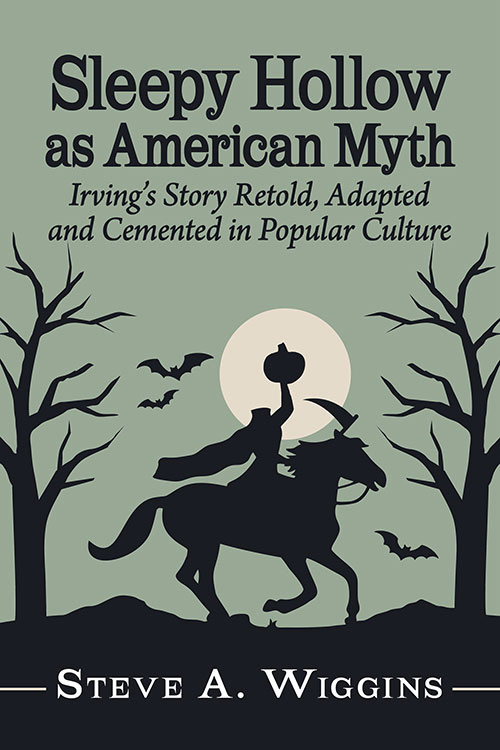
One thing I quickly learned when beginning work on Sleepy Hollow as American Myth was that the story hadn’t really been studied too much by those with academic training.  There are some exceptions, of course.  Another thing I swiftly picked up is that many people who wanted to write on the legend chose the method of publishing the public domain story with a variety of annotations, essays, and other additions, to make a salable book.  Often these are self-published and not always immediately obvious to the researcher as to whether they contain anything important or not.  I had not run across Christopher Rondina’s Legends of Sleepy Hollow: The Lost History of the Headless Horseman until well after my manuscript was submitted.  I found it in the bibliography of a ghost-hunter version of Sleepy Hollow that wasn’t even published by the time I was going into production.  (It doesn’t even have an ISBN.)

I do have to say that Rondina’s variety of this composite genre isn’t bad.  He includes Washington Irving’s story and expands it with an introduction, and brief chapters considering any historical background that there may be.  He also adds a chapter on modern media of the story that includes one television adaption that I failed to find for my book.  Interestingly, after I’d written the manuscript I discovered Joe Nazare’s similarly annotated version, also with a number of the media I’d analyzed in it.  I’d actually corresponded with Nazare earlier, having discovered his website.  Not wanting to discuss what my book was about until after I sent it in (others have more time to write, perhaps, than I do) I didn’t mention our common interest and didn’t discover his annotated version until it was too late to include as a conversation partner.

Self-publication has perhaps become inevitable since standard publishing is difficult to break into.  And the internet gives anyone the ability to self-publish without too much effort.  It does, however, make doing research a bit more difficult.  I determined early on that I could not review every annotated version of Irving’s story.  I selected a few of the most promising and moved on.  Both Rondina and Nazare had interesting things to say about the tale, and it’s a pity that they weren’t discoverable until after the fact, at least to me.  I like to give credit where credit is due, but any ideas that seem similar to these two sources in my book will have to stand as examples of convergent thinking on the part of fans of the “Legend of Sleepy Hollow.”  I know there are many other fans out there and I hope they find the resources they need to understand the story just a bit better.


Sowing Seeds

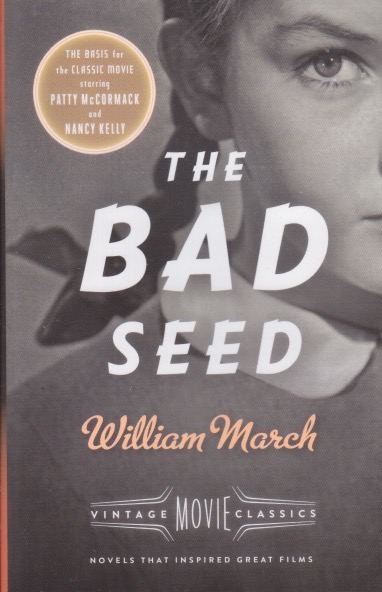
The Bad Seed is one of the scariest movies Stephen King lists from about 1950 to 1980.  Like many movies from before my time, I was unaware of it.  Projecting it back to 1956, when it was released, it’s pretty clear why it had trouble making it through the Production Code Administration.  Showing no blood or gore, this two-hour feature may seem to drag a little but it ends up in a very dark place.  I’ve never read the novel upon which it was based, but I’ve learned that the ending had to be changed because evil doers, according to the PCA, cannot go unpunished.  In fact, the ending is so dark that the director, Mervyn LeRoy, had the cast do a walk-on introduction when the movie was over, assuring the audience that this was just fiction after all.

The shock comes from a child psychopath.  So much so that Rhoda Penmark has become a character in her own right.  A sweet, innocent eight-year-old girl, she lies nearly as well as Trump and has skeletons in her closet.  Skeletons an adult shouldn’t have, let alone an eight-year-old.  Not only is she a sociopath, she’s convinced all the adults that she’s just as innocent as she acts.  The movie moves into psychological territory quite a lot, including a discussion of “nature or nurture” as the source of human evil.  The title of the film gives away the conclusion on that front.  Some children are born bad.  What’s more, this is the result of genetics, according to the story.  Rhoda is the child of an adopted woman—her adoption has been kept secret from her.  Eventually her father confesses that she was the child of a notorious serial killer, abandoned and adopted by loving parents.  Rhoda herself is raised in a loving, stable home, but she is her grandmother’s daughter.

I won’t spoil the ending, but I will say that if they had ended it at the hospital scene it would’ve been scarier.  The book, apparently, ends the scarier way.  I do have to wonder if Alfred Hitchcock was familiar with the tale in some form.  The movie was released four years before Psycho, but then again, that was based on Robert Bloch’s book.  Maybe he’d read the original.  In any case, I’d been watching King’s list of scary movies and mostly finding myself unbothered.  A couple of his choices: Night of the Hunter, and now The Bad Seed, have managed to rattle me a bit.  Even with its nearly seventy-year-old sensibilities, the latter still scares.


Out of Time

I don’t know about you, but I seldom think of Venezuelan cinema.  I feel a strange satisfaction, however, that the highest grossing movie produced in that country was a horror film.  It’s possible to find The House at the End of Time in streaming services, with subtitles.  And it’s worth doing.  It’s a movie that will stay with you.  Intricately plotted and having a lot of heart, it’s a story of loss and redemption.  After an apparent break-in at her house, Dulce is accused of killing her husband and son, and is sent to prison.  We’re shown, however, that she found her husband already dead, or nearly so, and that her son had been stolen away by a mysterious force.  After three decades, given her age, she’s released to house arrest.  A neighborhood priest becomes interested in her case, believing that she’s innocent.  It’s the house, it seems, that is haunted.  Previous families who lived there experienced similar fates.

I won’t spoil it for you, but this is a horror film with heart as well as smarts.  It also explores the life of the poor and learning to live with past mistakes.  It’s a story about a family.  Unlike many horror movies, the protagonists aren’t “all things being equal,” middle-class people.  In this regard, it reminds me of The Orphanage and The Devil’s Backbone—also both Spanish-language horror films.  And there’s a verisimilitude about the poor as the ones suffering the effects of haunting.  Now even that has become a trendy commodity.  A house haunted sometimes increases in value as ghosts become gentrified.  Obviously, ghosts can haunt anyone, but there’s almost a parable aspect to them.  Sometimes ghosts are all that the poor have.

That may be one of the reasons that The House at the End of Time is also Venezuela’s most internationally distributed movie.  And the reason that an American production company is working on a remake (presumably in English).  The ghosts here aren’t what we’ve come to expect, but religion plays a large part in the movie since the priest pays special attention to Dulce.  The reason why is eventually explained, but he is a non-judgmental cleric.  He attempts no exorcism.  Instead, he researches and seeks to find an explanation for what is happening at this most unusual house.  Catholicism is a large part of the culture in Venezuela, and I do hope that the remake doesn’t remove it.  A sympathetic cleric is often difficult to find.  And in this case, one that really pays off.


Bodies Cubed

It’s difficult to know where to start with Bodies Bodies Bodies.  It was on my watchlist because it was distributed by A24.  I’ve come to trust them for smart horror, and then I saw that the movie was soon leaving one of the streaming services to which I have access.  Nothing like “leaving soon” to make a decision for you.  An ensemble cast of twenty-somethings (or so they play) gather for a hurricane party at the mansion of one of the group.  They do a lot of drugs and drinking and then decide to play Bodies Bodies Bodies—one of those games where one player is the killer and everyone else has to figure out who the “murderer” is.  They’re about ready to start the next round, but the power goes out in the hurricane.  The accused “killer” in the first game is found, dying for real, outside.  The only car on the property has a dead battery and the friends turn on each other, unsure who the murderer might be. (No bodies are actually cubed.)

All of this is interlaced with internet culture and the panic that ensues when the wifi goes out.  Now, this is categorized as a horror comedy, but the comedy is pretty subdued until the remaining four begin to accuse each other, using trendy jargon to describe relationships and psychological conditions.  The film opens with a couple of girlfriends, Sophie and Bee, who are the last to arrive for the party.  As the morning dawns the two of them are the only survivors, but they have become distrustful of each other because of things said during the hurricane night.  There is a twist ending but the house is full of bodies, bodies, bodies.

Written and directed by women, this horror film again demonstrates how intelligent the genre can be.  As for me personally, I found it pretty good.  I wouldn’t say it’s great.  That’s because of some of my own triggers—one of the trendy words they throw around.  Mainly, in my case, because of the drug scene that makes up the reality of the friends (I’ve never been part of that) and that the game resembles too much my all-time-most-feared childhood game, hide-and-seek.  The friends, convinced that one of them is a murderer, creep around the mansion in the dark, fearful of being found.  This leaves open the potential for jump startles, of course, and I’m not a great fan of surprises.  That having been written, this is a smart movie and the ending does make you think.  And perhaps wonder how well we really know anyone after all.


Hunting

Every once in a while, I see a movie I should’ve seen a long while ago.  The Night of the Hunter is one such film.  Knowing little about it, I watched and was floored.  Not only could I have used it in Holy Horror (oh boy, could I have!), it uncovered a bit of cinema history for me.  Even just the words “love” and “hate” tattooed on Harry Powell’s knuckles have been referenced in so many places that I felt like I’d been missing a vital clue all along.  Since the movie’s now available on free streaming services, there’s no reason not to see it.  Although not generally considered horror, it is one of the genuinely scary movies of the period.  And it’s a strong blend of religion and horror, even if classified as a “thriller.”

Taking inspiration from a true story, the “Bluebeard” character of Harry Powell is a serial killer.  Styling himself as “the preacher,” he murders widows for their money.  An avowed misogynist, he’s driven purely by greed and love of violence.  Yet everyone accepts him—except children—for what he says he is during the Depression era.  He gives sermons, sings hymns, and leads revivals and even his victims come to believe what he says about himself.  This is such a good commentary on the thoughtless acceptance of religion that it’s no wonder that it was a flop in the fifties.  Since then it has become considered one of the greatest movies of all time by many.  The seamless weaving of terror and religion hearkens once again to the wolf in sheep’s clothing.  Some lessons we never seem to learn.  Nobody likes to admit to having been fooled.

In character, the closest comparison I could make would be Cape Fear, which stars the same Robert Mitchum as villain.  That movie I saw in time to include in Holy Horror.  In this one, the only adult who seems capable of seeing through Powell’s lies is a religious widow who informally adopts stray kids during the Depression and raises them with the Bible.  She also keeps a shotgun handy, just in case.  The image of the preacher slowly approaching, singing “Leaning on the Everlasting Arms,” is the stuff of nightmares.  I suspect that one reason that seminaries developed in the first place is that the laity weren’t encouraged to trust self-proclaimed religious teachers.  Of course, the town turns on the preacher once they learn, because of the children, who he really is.  If, like me until today, you haven’t seen Night of the Hunter, I can recommend it.  Especially if you have an interest in how horror and religion cooperate so nicely.


Vlad Fest

I may or may not have read at least part of this book before.  When I found it at a used book sale somewhere, it looked familiar.  Having read it, I’m not sure if it was the same one as before.  There are certain parts that I would’ve thought a high schooler would have remembered.  I recognize the names of the authors, Raymond T. McNally and Radu Florescu.  You see, one of my senior term papers in high school was on vampires.  Unable to afford books, my research was done in the school library and this book is old enough to have been in the collection.  While the subtitle, A True History of Dracula and Vampire Legends, may seem to indicate a book primarily about vampires, In Search of Dracula is mainly about Vlad Tepes, or Vlad the Impaler.  I can’t imagine myself wading through all the Romanian history in high school.

You see, I remember reading a book on the history of vampires.  The strongest memory is of reading it in our church sanctuary.  Lest you get the wrong idea, I was very involved in our youth group.  We occasionally had chaperoned sleepovers at the church and I had already had a leadership role, serving on church committees and district and conference-level events.  Nobody had a problem with me sitting in the sanctuary.  On one of the sleepovers, I awoke early (as I have always tended to do), and I went to the sanctuary to read the book by the dawn’s early light streaming through the stained-glass window.  I have kept a look out for the book, and I thought this might have been it.

I’m pretty sure it wasn’t.  While this history does have a good summary of vampire customs and even movies, it takes a stout stomach to read the material about Vlad III’s reign.  Although he is a Romanian hero, he was a cruel man and his infamy was well established during his own lifetime.  I’m pretty sure that he would’ve been diagnosed with a mental disorder, had psychology existed then.  This book does trace his history and surveys various places associated with him.  One thing that might’ve been helpful would have been more maps.  The authors are clearly well versed in Transylvanian geography, but the average reader may not be able to find some of the many place names on the one map they include.  Otherwise, this is quite an informative book, mostly about Vlad, but with useful chapters on Bram Stoker and the vampire in the media up to the early seventies.


Not Fantasy

There’s a reason I watch horror.  One of the many things you can’t find online is how popular movies were before the internet days.  This is an issue for me because I only just now found out about Phantasm, which was released in 1979.  Granted, I lived in a small town, but I did know about The Amityville Horror—everyone knew about The Amityville Horror.  The films were released the same year, but Phantasm was an indie production and probably didn’t have reach into my local region.  Nobody talked about it at school and I only became conscious of it a few weeks ago.  I learned that it was quite a box office success, but the critics didn’t care much for it (and I can see why).  It was, however, rediscovered and has become a cult classic.  I can see that too.  The thing is, it is a bad movie.  I’m learning to appreciate such things.

Part of the reason the film bothered me is that I really dislike “but it was all a dream” endings.  Even though there’s a final suggestion that some of it “really happened,” or Michael is dreaming within a dream, such endings always make me shrug.  Horror, to really work, has to be in that liminal zone between believability while on screen and the deeper knowledge that it’s fiction.  Phantasm just had too many strikes against it to be believable.  The dwarves were lifted straight from Star Wars’ Jawa.  The Tall Man isn’t scary (this is from a current-millennium perspective, granted) and while you’re just trying to get into the horror mood (the music is appropriate) a flying ball of death, a sudden sci-fi element, is thrown in.  Of course, the plot takes a kind of sci-fi turn near the end.  It didn’t, however, do any heavy lifting.

I was surprised to learn that it became a franchise, no members of which I’d ever heard.  It is interesting that speculation exists that the creepypasta stalwart, the Slender Man, was developed from the Tall Man concept.  Given that I was seventeen when this movie came out it might be someone of my vintage—but from a different vineyard—would find Tall Man scary.  Of course, if I’d seen it when it was first out, and in a theater, I might’ve gotten some chills from it.  I could have included it in Holy Horror since there is some Bible in it, but it isn’t used to its full extent for a movie that mostly takes place in and around a funeral home.  There is some comfort in knowing that even if your work isn’t great, it can still be rediscovered if enough time passes.  And there’s good reason to watch it.


Alien Invaders

I’ve been pondering genre for some time now.  And since Stephen King assures me (not personally) that Earth Vs. the Flying Saucers is horror, I figured I’d give it a try.  In fact, given the various themes of the movie, I’m surprised I hadn’t seen it before.  The title pretty much gives it away—aliens try to take over Earth with a swarm of flying saucers.  Two scientists figure out how to make their saucers stall, and even though the aliens have a disintegration ray that pretty much destroys anything, the earthlings prevail.  Having summarized it all in less than a hundred words, is there really anything worth comment here?  I think so.

Like many older movies this one makes use of stock footage to fill in action sequences and to keep the budget reasonable.  So there are big guns going off and rockets being launched.  (This was a pre-Sputnik movie and it depicts America having eleven satellites in orbit.)  But the additional footage that stayed with me was a scene of two planes colliding and crashing.  It was clear these weren’t models and the footage was authentic, apart from the flying saucer shooting the planes.  It turns out that this scene was indeed real, and that the pilots of both planes died in the crash.  During an air show outside Spokane, Washington in July 1944 this collision was caught on film by a Paramount news crew and it was reused in this film.  This got me to thinking about war footage—something that really only became possible in the Second World War.  And what we now see today in real time on the internet because the world is wired.

It’s as if those who wage war are fine with it as long as people with a conscience don’t know what happens.  There’s even a phrase used to excuse unspeakable barbarism during combat: the haze of war.  This we know about our species—there’s a tipping point beyond which rationality shuts off and we’re no longer responsible for our behavior.  We also know that war puts people in that zone.  It was fine as long as only surviving warriors were left to tell the stories of their bravery.  Photographing, particularly in motion pictures, combat revealed a much darker truth.  Well, at least in Earth Vs. the Flying Saucers the enemies under attack were fictional.  Except.  Except, some of the casualties were real people whose final moments were caught on camera.  Be sure to get out and vote today, if you’re in the United States.  There’s a party even less understanding than aliens out there, desiring to take over.


Thinking about Vampires

Any book on vampires has to be limited.  I first read Matthew Beresford’s From Demons to Dracula: The Creation of the Modern Vampire Myth back in 2009.  It has lots of information, but it was long enough ago that much of what I’d learned had grown fusty with age.  I began re-reading it as Halloween approached, and am glad I did.  The thing about vampires, however, is that you do have to compare sources.  Like many explorations of the vampire, Beresford’s notes that there are ancient analogues, but nothing precisely like we think of vampires today.  From my own perspective, I tend to think that our modern vampires, like our demons, come from movies.  Starting with F. W. Murnau’s Nosferatu, but more clearly from Tod Browning’s Dracula, our idea of what vampires are have been mediated by the silver screen.

This book ranges widely across time, region, and genre.  It discusses early reports that clearly considered vampires an actual threat, as well as movies made purely for entertainment.  One thing that I noticed this time around is that the author, being British, seems not to have noticed the tremendous influence Dark Shadows had on the popularity of vampires prior to Anne Rice’s Interview with the Vampire.  I suspect that soap operas were not widely known internationally, and even if they were, they were likely not taken too seriously.  Dark Shadows was different, however, and it made vampires chic in a way they simply weren’t before the early seventies.  At least in the United States, Barnabas Collins helped define the vampire.

Beresford makes the point that there is no single defining characteristic that applies to all vampires.  Early European vampires didn’t necessarily drink blood—they were revenants (they’d returned from the dead) but they weren’t always after blood.  In the nineteenth century bloodlust became the defining feature of vampires.  There are historical points on which to quibble with the argument here, but overall this book is a good overview of how ideas like vampires have been around for quite some time.  As someone who specialized in ancient literature for a good part of my life, I would not have called the various ancient analogues pointed out “vampires.”  Beresford is making the case that they lay the groundwork for what later became vampires.  And Vlad Tepes of Wallachia played his part as well.  As did the ancient Greeks.  It seems to me there’s more rich ground to explore here and this book provides a very good starting place.


Vampire or Not?

I’d heard that Martin was a depressing movie but I felt I should watch a Romero film that wasn’t about zombies.  I’d read bits and snatches of what happens, but I didn’t know the storyline in total.  Now that I’ve seen it, I’m still not sure what to make of it.  Martin is a young man who believes himself to be a vampire.  He does drink blood, murdering his victims, but there are no fangs, no “magic stuff” as Martin himself calls it.  It seems pretty clear that he’s mentally unbalanced, but he’s brought into his older cousin’s house in Braddock, Pennsylvania.  Cuda, his cousin, believes him to be a vampire, calling him “Nosferatu.”  He has protected his house with garlic and crucifixes, but Martin demonstrates that such things (magic stuff) doesn’t work.  

Daylight and eating regular food don’t bother him.  His cousin gives him a job at the grocery store he runs, while constantly warning Martin about looking for victims in Braddock.  Shy around women, he only has sex with his victims, after he has drugged them.  (This is a pretty violent movie, and the tone is downbeat throughout.)  Since he has no friends, he calls into a radio talk show to discuss the problems of being a vampire, and people love listening to him.  Meanwhile, Cuda arranges for an exorcism on Martin, which doesn’t work.  There are black-and-white sequences that aren’t really explained—either as fantasies or as past memories for a real vampire.  After his cousin becomes too suspicious, he stakes Martin to death and buries him in his back yard.

There are many unanswered questions about this movie.  If Martin is a vampire just about everything in traditions about them is wrong, apart from needing to drink human blood.  When Martin begins an affair with a troubled housewife, his bloodlust lessens, but he still gets “shaky” and has to find victims.  For those of us who tend to find ambiguity both beguiling and confusing, this is a vexing movie.  It makes you wonder what a vampire really is, and, as with most of Romero’s work, there’s a fair bit of social commentary—intentional or not.  Life itself has its fair share, perhaps more than its fair share, of ambiguity.  The only real certainty that Martin gives is that his victims die and he himself dies in the end.  Is his cousin correct?  Is Martin himself correct?  He may be mentally ill, but society is too.  And the working-class people of Braddock should know who the real vampires are.