For Saints, All

The year without a winter has also become the year without a Halloween. As the first surge of Sandy made herself felt, we were among the 5 million households in New York, New Jersey, and Connecticut without power. To put things in a little context, I have training in wilderness camping, having learned to survive outside with little more than a ball of twine and a pocket knife. Still, when Sandy knocked out our lights, heat, and most importantly, Internet, for three days I found myself in a new kind of wilderness. Each night, buried under blankets, in one room lit with candles (incidentally, candles that we made ourselves nearly a decade ago on a candlemaker spree in Wisconsin), we sat around a card table and played games, read, or just pondered the imponderable. I actually took to working on a blanket I’ve been making, but had set aside for a few years. If it weren’t for wondering if I had to go to work the next day until evening every night, I might have actually enjoyed it.

And the experience has made me a little leery of what I’ve become. Less than hour after the power came back on, everyone in the family was on the Internet. I confess to feeling that missing my blog was among the most disjointing aspects of the power outage. With no way to charge my laptop’s battery, and no router to connect me to cyberspace, I jealously conserved my iPhone power to get the text message that told me if the office was open the next day and if New Jersey Transit was running so that I could get there. My dreams all week were nightmares. Mostly about missing work. Another perspective: my grandfather was born on a farm. He built his own house and raised five kids while traipsing from New York to Montana and Virginia before settling in western Pennsylvania. He didn’t go to college but he kept his family well. He never lived to see a computer or an email.

So 2012 is the year without a Halloween. The lights came on on All Saints. To me those saints are the men and women of PSE&G who finally got our power back on. I’m sure they’ll understand the darker tones my thoughts took about the company as I trimmed wicks and recharged candle holders for the third night in a row when darkness fell on All Hallows Eve. Here I am, feeling decidedly wimpy and not a little disingenuous, posting on Sects and Violence in the Ancient World once again. I managed to update my blog while on the road in England, and from hotel rooms across the country as I’ve traveled for work. I can’t help but think how this reflects on my atrophied survivor skills. Maybe I’m beginning to feel what idol worshippers experience when they neglect their gods. I wonder if there will be nightmares tonight or work tomorrow.
Puny Windstorm

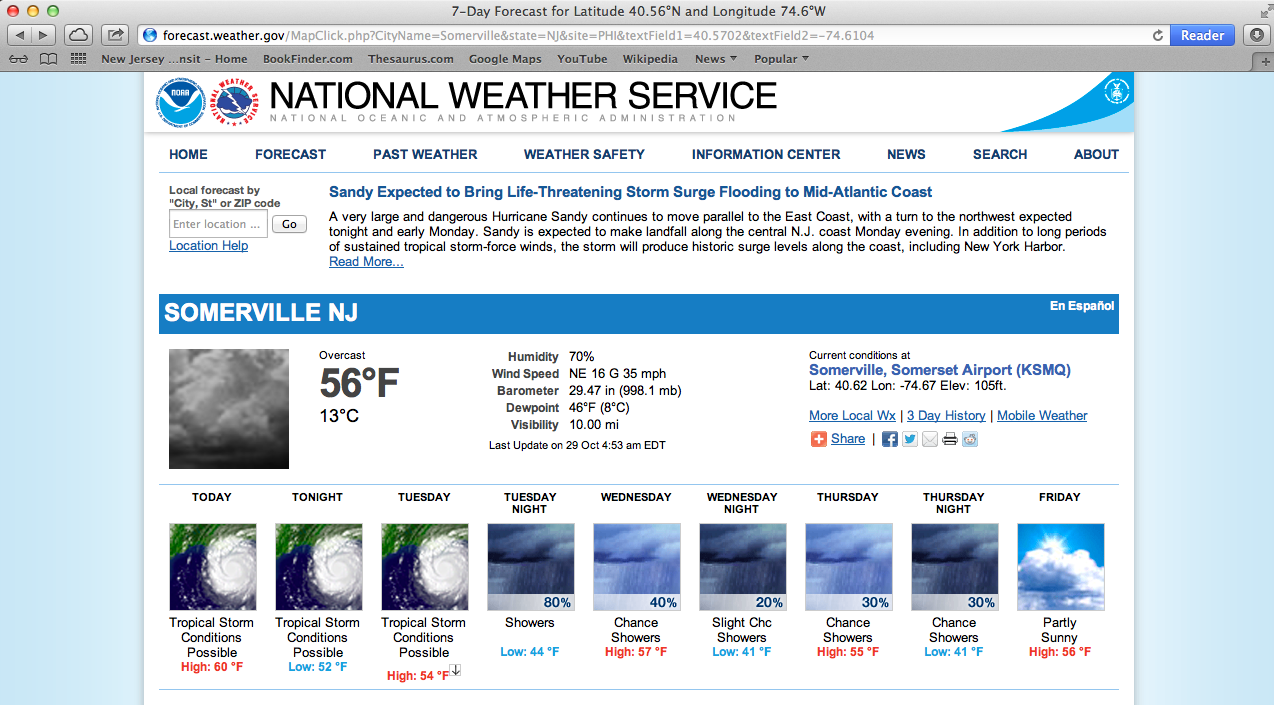
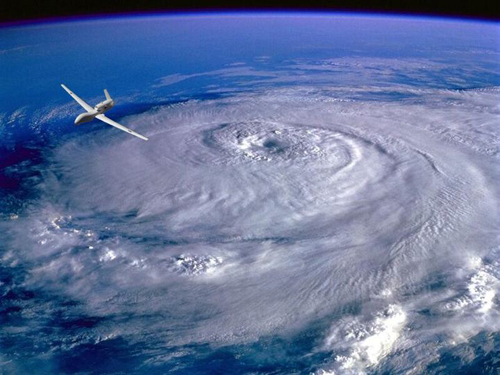
Nothing says wrath of God like a hurricane. Those of us along the Mid-Atlantic coast of the United States are hunkered down wondering what’s to become of daily life when the storm is over. Responses to the situation have been, well, religious. Store owners spraypaint prayer-like sentiments to Sandy on their plywood protection, urging the storm to be kind. Interviews are laced with language appropriately placating to a deity. The storm named after a mythical monster has become a god. Such responses are not limited to Hurricane Sandy, of course. In fact, when death is expected pleading with the powers that be is routinely recognized as Elizabeth Kübler-Ross’s bargaining stage of the dying process. We always hope that forces stronger than us might be willing to make a deal, cut us a bargain. The storm, given a human name, is personified as a deity. It is such a very human response to any phenomenon that forces us to realize just how small we are. Our egos may reach to the ends of the universe, but in reality we are fragile, scared children begging for the protection of a supernatural parent.

Last night as we were sitting here waiting to be hit, my family watched The Avengers. The juxtaposition of deities and heroes in the Marvel Universe fascinates me, and, of course, the movie has to explain that Thor and Loki are really only aliens perceived as gods. Compared with their human companions, they are immeasurably strong but they do not decide the outcome of the cosmic battle that devastates New York City. No, it is Tony Stark who flies the atomic bomb through the portal to the invading ice giants, saving humanity. Thor is too busy battling flying metal dino-whales. Humanity is responsible for its own salvation. The gods may help, but they alone cannot deliver. Against his protests of divinity, the Hulk bashes a protesting Loki into the floor of Stark Tower with the grunted huff, “puny god.” His only line in the movie. The portal, swirling hurricane-like over Midtown is forced closed and human technology, in the form of Iron Man’s admittedly cool armor, saves us all.

Hurricanes remind us that our technology can’t save us all. The advance warning may very well have spared many lives by the time this all blows over. As early as Thursday I was wondering if work would be called off or if I’d have to battle the rain and winds and storm surges to get to my office (which would have provided an awesome view of the final battle in The Avengers, facing, as I do, the Chrysler Tower and Grand Central). We have been warned. Our technology, however, can’t stop the force of the storm. Sandy may not be divine, but she is massive—much larger than any person who believes that there is some trace of divinity within him or her. As I sit here listening to the wind and the rain, I wonder what the weather is like in Asgard today.


New Prometheus

Nothing portends the wrath of the Almighty like an unseasonal storm. The late season Hurricane Sandy, now dubbed the Frankenstorm because of its potential hookup with two wintery systems making their way east and south, is poised to make an apocalyptic scenario on the east coast, we’re told. Well, it is 2012, the year of apocalypses, after all. In an interesting shift, however, this storm is named after not a divine character, but Frankenstein’s monster, the human-made nightmare. I first read Mary Wollstonecraft’s Frankenstein back in high school, and I was immediately subdued. The story, undoubtedly frightening when first heard, is unremittingly sad. The “monster,” like all of us, finds himself in a cold and lonely world where he is rejected because he is different. It is cruel and Republican kind of world. All the monster seeks is companionship, acceptance. I found the story so sad that I’ve had trouble reading it ever since.

The naming of a storm after a terror created by humanity may be prescient, in a regrettable way. Only the most gullible (read “greedy”) believe that industrialization had nothing to do with it. We toasted our own planet for a buck or two. In biblical terms we have sowed the wind, for which there is only one kind of produce. Hurricanes are quite natural, and although the irregular weather of 2012 may prove simply a meteorological anomaly, it may be the result of our tinkering with the baubles of divinity. They certainly seem to be getting bigger than they used to be.

I have to admit to having a persistent fear of those doing the cobbling. Too often their motivation appears to be flat and green and indigestible. And nothing like stockpiling it makes a person somehow less human. Mary Wollstonecraft wrote Frankenstein not for money, but for love of words. The modern chimeras we construct are mere carnival side-shows by comparison. And like Victor Frankenstein we have engineered beyond our capability to understand. Our best option may be to stand silently and wonder at the forces that hold us enthralled. For in the novel, at least, the real monster is not the cadaver stitched together underneath the sheet.