Not Content

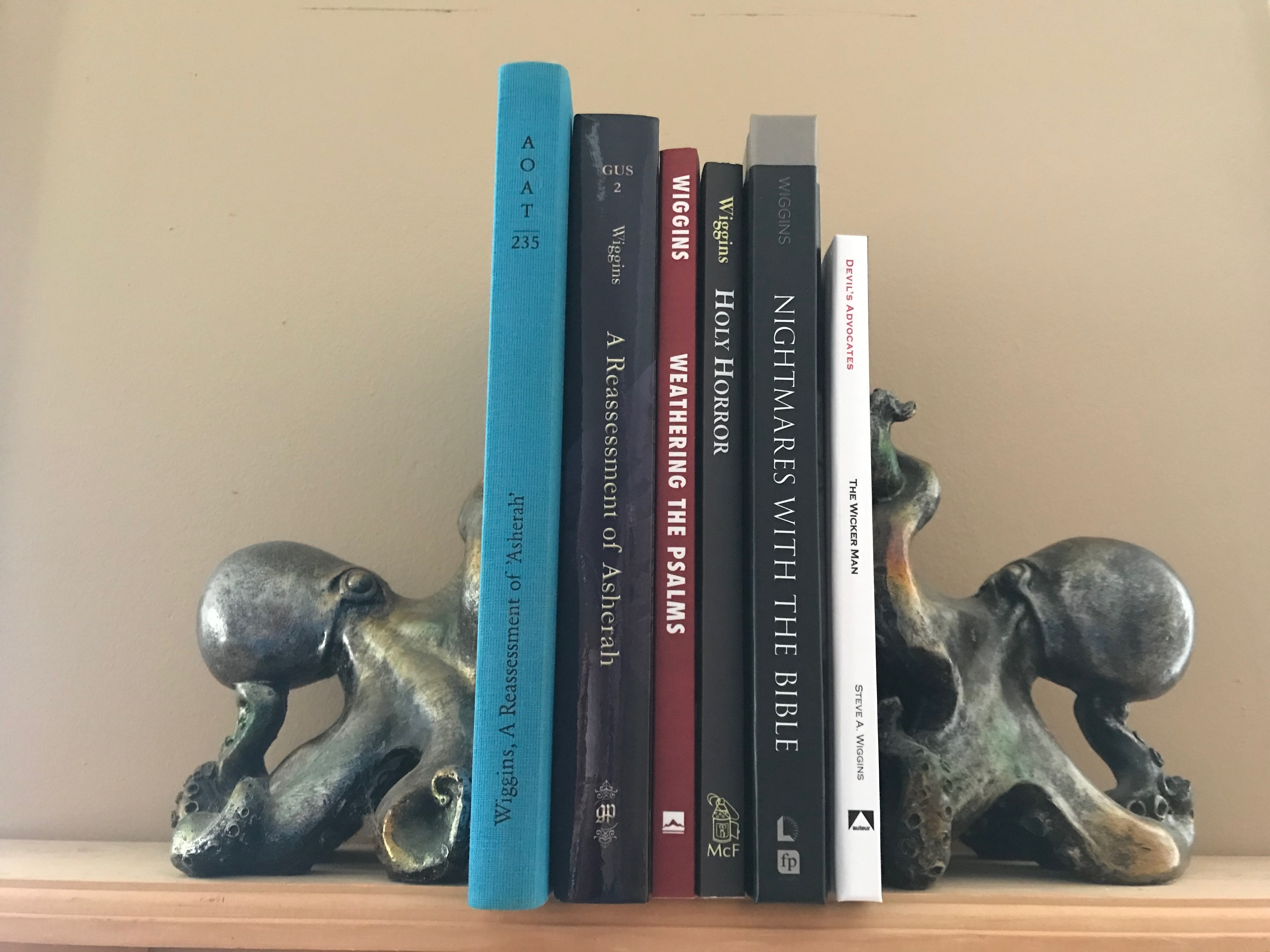
I write books.  When I want to “create content” I do it on this blog.  (And a few other internet sites.)  These aren’t the same thing.  I find it distressing that publishers are trying to drive us to ebooks where content can easily be changed, as opposed to print books.  The shelves of this room are lined with books and the technology doesn’t exist to come in and change “data” without my knowing it.  Facts are secure in print, right Ilimilku?  I’m not looking forward to a Star Wars future where there’s no paper.  I was born in the last century and, perhaps, I’ll die there too.   You see, when you write a book you have a project in mind that has an endpoint.   It may change and shift as you write, but you know what a book is and that’s what you produce.  It gets shelved and you move on to other things.  (At least I do.)
Content is something different and the creative process behind it also differs.  If I find something wrong after the fact, I go into my past posts and change it.  I’m not afraid of admitting I’m wrong.  The point of this blog is to share ideas with the world, not to write a book.  (Although, I confess that I would not say “no” if someone in publishing wanted a selection of worthwhile posts for a book… just saying.)  It amazes me how publishers have pretty much gone after the money and have forgotten what the creative process is like.  Of course, they’re having to figure out how this whole internet with free content plays into it too.  But still, my book writing uses a different fold in my gray matter than my blog writing does.  All of it feels pretty different from writing fiction too.

These things together adds up to a writing life.  I have a ton of “not for publication” writing.  This is something different again.  I suspect it will never be read by anybody, moldering away on some old hard drive after some AI-induced apocalypse.  I write it for of the same reason, I suspect, that people used to spray-paint “Kilroy was here” on things.  The book of Job, it seems to me, was the preservation of words that someone simply had to write.  We know the framing story is folklore.  But those who have words to carve with iron on lead, or engrave on a stone to last forever.  It’s more, I hope, than just “creating content.”

Too Much TMI

Okay, okay.  I admit I get overwhelmed.  There’s just too much stuff to read.  I currently have 25 tabs open on my browser, afraid that I’ll forget about something that seemed so urgent when I opened the URL in the first place.  (Two decades ago that sentence would’ve been nonsense.)  I limit my time on social media.  This can be a death-kiss for a writer, but for sanity’s sake (and work’s), I look at Facebook for literally about five minutes a day.  (If you want to reach me leave a comment on my blog.)  In those five minutes (or less) I often come away with two or three articles that I want to read but don’t have time just now.  I open a tab and hope I’ll get to it before I lose interest.  There’s a lot of information.  Too much.  Too much TMI.

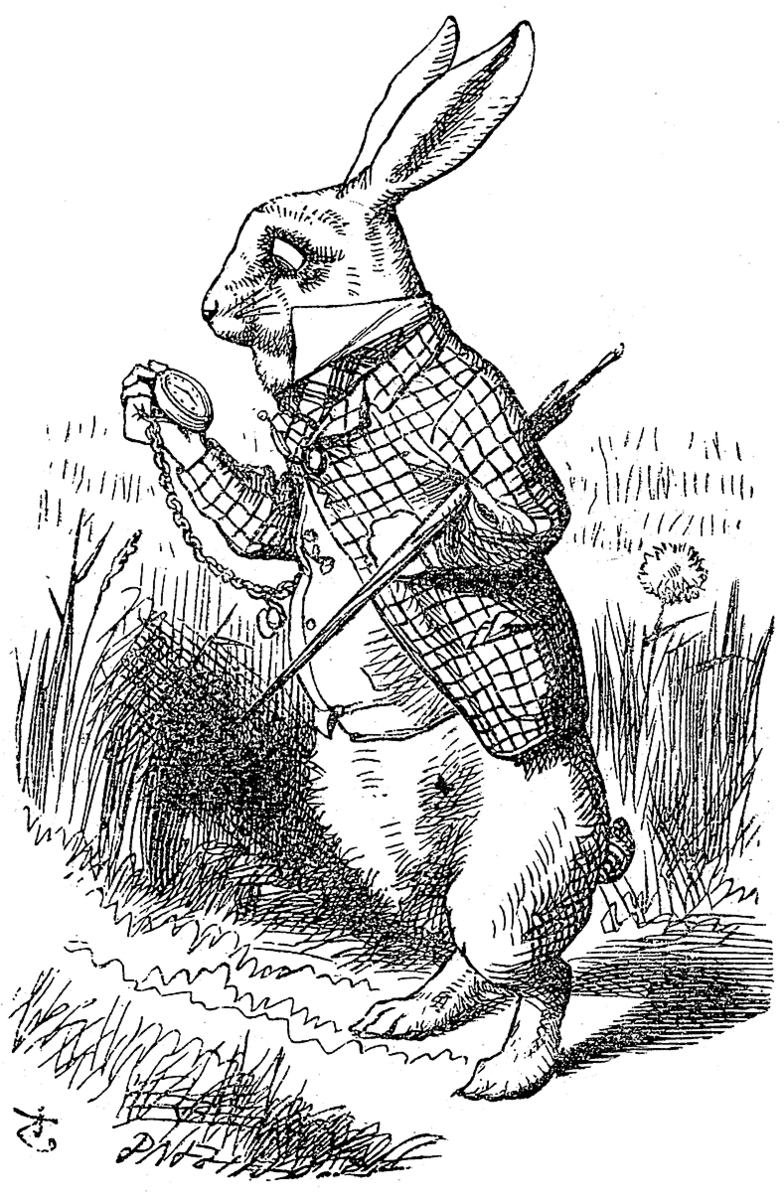
I’m a slow reader.  I sometimes wonder if I have borderline dyslexia—it once happened on a test and led me to phone a professor at night to explain—but dear reader, it slows me down.  And a writer, no matter how obscure, needs time.  I told a friend the other day that I don’t do things I enjoy, such as painting and drawing, because writing takes up so much time.  (And work does too—it gets the lion’s share.)  But those articles!  They look so important!  Some have health implications and, if you lose your health you have even less time.  The internet gives us TMI constantly.  And this field is riddled with rabbit holes.  Just ask the white rabbit about time.

Image credit: John Tenniel, public domain, via Wikimedia Commons

What are the curious to do?  I actually get an insane amount of satisfaction from closing a browser tab.  It’s a sense of accomplishment—I’ve done something that brings closure!  If I do it enough times I’ll get down to the URLs I always keep open lest I forget my place.  Some of these tabs have been open since the Obama administration.  If you’re critical of such as I you might suggest “why don’t you just read an article instead of writing about not having the time to read?”  The interlocutor here is clearly not a writer.  Or at least has different writing habits than me.  There are some non-negotiables in this world of TMI.  I suppose I’m adding to the problem.  At least if anything thinks what I present here is information.  For that I defer to Klima, who, happily, still has some time.


Why Not Love?

I learned a new word the other day: incel.  I’m not too proud to say that I had to look it up.  Although I’m on the internet quite a bit, I’m not really part of “internet culture.”  Incel is a shortened form of “involuntary celibate.”  It refers to an internet culture of mainly white, heterosexual males who consider themselves unable to find (generally) female companionship.  They often lash out at women, and sometimes at any sexually active person.  In general it seems to be a self-pitying, hateful crowd.  They tend towards misogyny and racism and, one suspects, conspiracy theories.  They apparently suffer what a friend of mine called “DSB” (deadly sperm buildup).  But the thing is, love would seem to be the cure.

Certainly women aren’t to blame.  Look, if I managed to find a woman willing to marry me there must be hope for the rest of my gender.  I’m no catch.  And why is it frustrated men take it out on women?   And underplay the achievements of women?  The Women’s March in January 2017 was the largest single-day protest in history.  Accurate numbers are difficult to attain, but it has always struck me that the U.S. Park service agents, with feet on the ground, estimated a million and a half in D.C. alone.  So we were told.  It’s almost as if nobody bothered to count because it was women.  Why is this still an issue?  How incelular are we?  Is it so difficult to give credit where credit is due?

I wonder if anybody foresaw that the internet would develop such subcultures.  Yes, Neal Stephenson’s Snow Crash gave us a metaverse where individuals lived virtually online, but did we fully realize then that sexually frustrated guys would eventually merit their own title and that some of them would perform acts of real life violence based on their own rhetoric?  Rogue males have been part of human culture all along, but the internet has offered a place to band together and become radicalized.  I, for one, had no idea that such subcultures existed.  It took reading an academic work about female leadership to learn about them.  And it makes the world a less comfortable place knowing they’re there.  Learning love is our only hope.  There are people who sublimate their frustration to hate.  What if we tried to make the internet a place where love, with or without physical entanglements, became the dominant meme?  Even those of us who work largely in isolation can see the hope in that.

Photo by Mayur Gala on Unsplash