Who Owns It?

Who owns the Bible?  No, you can put your hands down.  I mean who owns the concept of the Bible?  This question occurred to me while thinking about the Apocrypha.  Does the Apocrypha belong or does it not?  This became a polarizing issue with the Reformation and subsequent Protestant ownership of the concept of the Bible.  The Apocrypha was mostly written by Jews, but has never been part of the Hebrew Bible.  The process of narrowing down the books to include wasn’t straightforward and since God hasn’t spoken on the topic, has never really been settled.  The books of the Apocrypha circulated with the Bible, as did a few other books.  Sometimes they were even bound together inside one cover with the standard Protestant 66 books.  Obviously I’m discussing the Christian canon here.

I’m sure you’ve known someone this has happened to, if it hasn’t happened to you personally.  This person is an actual expert on a topic.  S/he goes to a place where an unexpected discussion on their specialization breaks out but nobody asks them to speak to it.  This person then becomes offended, sometimes even speaking out, loudly, that this is their area, they have expert knowledge of it and should be consulted, at the very least.  More likely than not, their opinion should be considered definitive.  This is the image I have in my head with Protestants and the Bible.  Sure, the Catholics had it long before, but they didn’t encourage individual study.  In fact, they discouraged laity from reading it.  Only when they, the Protestants, came along did anyone really pay attention to the Bible, and, it must be admitted, they do have a point.  All the Bible study that goes on today, no matter what faith tradition (if any) would not have happened without the extreme Protestant reverence for the Good Book.

But still, there are other branches of Christianity that disagree.  There are more Catholics than any single sect of Protestants.  And a great many Orthodox Christians as well.  Some of the latter include the books of 1 Enoch and Jubilees in their Bibles.  Even so, any publisher that wishes to make inroads on selling the Bible must defer to the Protestant canon.  This is the case even though the King James Bible included the Apocrypha.  So as I ponder who it is that owns the image of the Bible, my mind keeps coming back to the same place.  Those who make the loudest, and most prolonged claim are the Protestants.  They own the Bible, in the public eye.

Angles on Angels

Angels and I go back a long ways.  They were mentally part of my childhood, as I suspect is true for many.  When I reached upper-level undergraduate work, I did an independent study on angels with a professor who didn’t provide much guidance.  About the only thing I recall from that class was reading Billy Graham’s book on angels.  Not exactly an academic authority.  In these times of modern Thomas Aquinases, plenty of scholars look at angels from various angles.  I suspect the task of writing a Very Short Introduction on them was taxing.  Although the word count was about 10,000 higher, I had trouble reining myself in on The Wicker Man.  There was so much more to say!  Of course, many academics are preferring shorter books these days.  In any case, angels.

After a brief history of angels, attempting to define them, considering the main ones individually, then looking at the collective as a hierarchy and according to various roles—messengers, guardians, warriors, David Albert Jones then looks at fallen angels.  Having written on this myself in the tragically overpriced Nightmares with the Bible, I found Jones’ approach here to be of interest.  Throughout Jones tries to give equal time to Judaism, Christianity, and Islam.  All three traditions have angels, but Muslims approach demons very differently.  Djinn aren’t fallen angels.  But then it’s time to move on to the conclusion.  Brief books like this are good for making a reader hungry.  Some decades after angels had a resurgence in pop culture, academics arose to explore them.

I enjoy getting a different perspective, or angle, on angels.  It’s so easy to assume that our parents taught us correctly about the layout of the spiritual world.  Culturally, unquestioning acceptance is rewarded (it’s clear that even demons know that).  But looking closely at things, even if just for a brief time, offers a chance to learn something new.  Personally I learned new things about Dionysius the Areopagite, Joan of Arc, and Hells Angels.  I also couldn’t help but think that such a little book written by anybody else would’ve had different nuggets included.  That’s one of the problems with picking up a short book on whose subject you’ve already done quite a bit of reading.  I do it for information, but beyond that, for finding new angles.  I can’t imagine ever learning everything there could possibly be to know about angels.  And we go back a long way.


Non-Saints

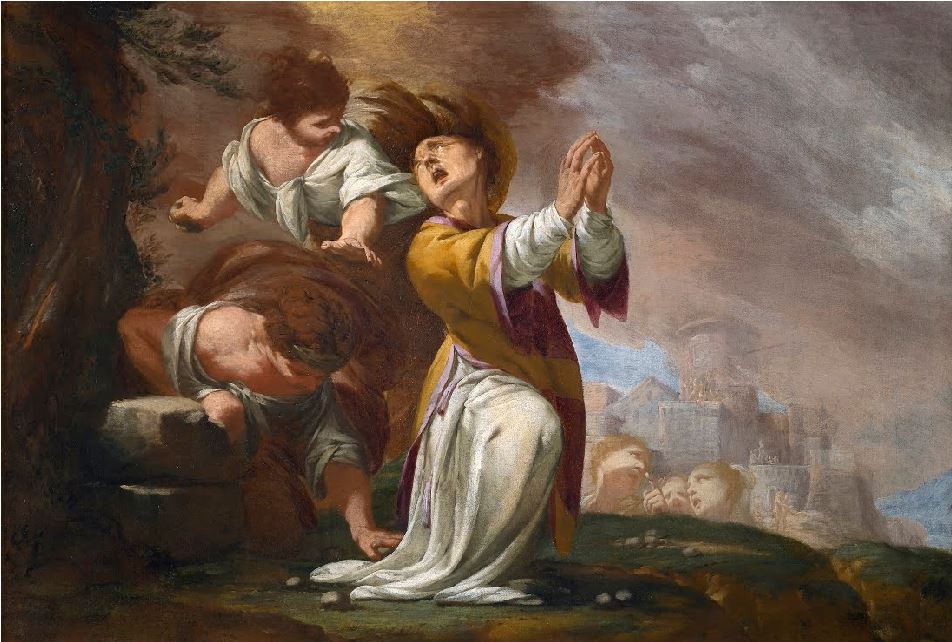
It was an epiphany.  My wife has, on more than one occasion, accused me of playing the martyr.  I know very well that I let other people step all over me.  The epiphany came when I was reading about Stephen’s martyrdom in the Acts of the Apostles (in the New Testament).  Unbidden by me, a memory—more of a distinct impression, a deeply planted feeling—arose.  I started reading the Bible at a young age.  The story of Stephen is disturbing to a child.  The thought of being stoned to death for saying what you believe is a species of horror.  The memory, or impression, was of my mother pointing out how good it would be to be like Stephen.  He is not technically my namesake, but since there were no male role models in my family, I subconsciously made the connection: Stephen the martyr, Steve the martyr.

Giovanni Battista Lucini – Martyrdom of St. Stephen, public domain. Source: https://artsandculture.google.com/asset/martyrdom-of-st-stephen/twGNCf3waLKDvA via Wikimedia Commons

It’s strange to realize this suddenly after half a century of not consciously recollecting it.  What we teach our children stays with them.  If we tell them that it’s good to die for your beliefs, well, we shouldn’t be surprised when they grow up with strong convictions.  (My brother tells me that Virgos think they’re always right and that’s why we’re stubborn; is it the stars or is it the Good Book?)  The Bible puts a positive spin on Stephen’s death.  Formal sainthood isn’t a biblical concept, but he dies forgiving his murderers.  It struck me there in the middle of a working day.  Some of my subconscious personality traits floated to the surface.

My deep desire to avoid Hell also formed my young outlook.  Although my beliefs have to be held accountable to what I’ve learned over decades of study, that fear never departs.  This too was planted in me before I had any real concept to absorb it.  When I grew old enough, the horror became academic, but nonetheless real for it.  I’d studied the history of Hell and I knew New Testament secrets.  To avoid the bad place, be like Stephen.  The dilemma is that as life goes on, we continue to learn.  Young parents don’t know as much as old ones do.  And since we have to teach our children not to run out into the street, or not eat that thing they found, we cast ourselves as The authority.  And that includes things religious.  If we live an examined life, we see shades of nuance where once there was only certainty.  And sometimes we have epiphanies.


Saint Francis

With the death of the most saint-like Pope in living memory, it feels a little like fate that I’d seen Conclave just three days before.  Francis was the only Pope I’ve seen, and am likely to see.  He cared for people more than dusty doctrines that still repress.  He laid hands on the sick and genuinely loved human beings.  Given the reactionary world of politics, I suspect his successor will be conservative, but I would be glad to be wrong.  All this seesawing on the way to progress makes me a bit seasick.  And Francis was a man who, from a humble background, understood the necessity of moving forward rather than pretending things always stay the same.  I already miss him.

It was on the rare occasion of being invited to a New York City church to offer a program that I saw him.  Since I’d be staying a couple nights in Manhattan, my wife joined me.  On the way to meet her after work on that Friday, I saw large crowds along 34th Street in Herald Square.  The buzz indicated that the Pope would be going this way on his way out of town.  The police refused to confirm that, but it seemed like a good bet.  I asked Kay, “Do you want to see the Pope?”  We found a place in the crowd (this was pre-pandemic, of course) where we had a good view of the street and eventually the motorcade rolled through, Pope Francis in his trademark Fiat, the window down, waving at the crowd.  And then he was gone.  

In New York City you see motorcades.  I’d seen President Obama’s go by once, on the way to the United Nations, I think it was.  But still, seeing the Pope was incredible.  Not shielded behind bulletproof glass, his care for the nameless crowds felt genuine.  I empathize with those raised in humble circumstances who manage just to survive, let alone become the head of the largest branch of Christianity.  I like to think he was a reluctant Cardinal, and a reluctant Pope.  Conclave is fiction, of course, but the idea of choosing someone who really doesn’t want the job is immensely appealing.  How different from world leaders we’re now burdened with!  Men (almost always) who see themselves as God’s gift to us, clawing at power.  At the same time, Francis, who was a divine gift, actually remembered what Jesus said and did.  The world is poorer for his death but richer for the lessons he taught by example.


Naming Names

I recently saw a story suggesting that Elon Musk was named after the leader of a Martian colony in an unpublished novel written by none other than Wernher von Braun.  Now, I don’t know if this is true or not, but it did get me to thinking about names.  The awesome responsibility that parents have in naming their kids.  I suppose many people don’t think much of it, but I remember asking, at a young age, why I was named “Steve.”  (There’s no “n” at the end, despite what people throughout my life have tried to “correct.”)  An old belief suggests that children might emulate those they’re named after.  Of course, some of us just can’t let things go.  Nobody else in my family was named “Steve,” and being very Protestant, I wasn’t named after no saint.  (Besides, he was Stephen.)

My mom told me a couple of things.  First of all, she wanted to name me after her father, Homer.  As an adult I think it might’ve been worth the childhood beatings I’d have to have taken, but my father vetoed it.  “Steve” was taken from a character in a Dick Tracy cartoon.  Mom liked the sound of it and my father didn’t object.  I’ve never read Dick Tracy—I’m not much of one for newspapers in general—but I did see that Warren Beatty movie back when it came out.  Once I tried to find a character named Steve in the cartoon line-up and I did find that there was a criminal by that name at one point.  Mom never told me this and I only found it as an adult, after I’d already decided against a life of crime.  But still, names sometimes inspire behaviors.  Influence choices.  Don’t they?

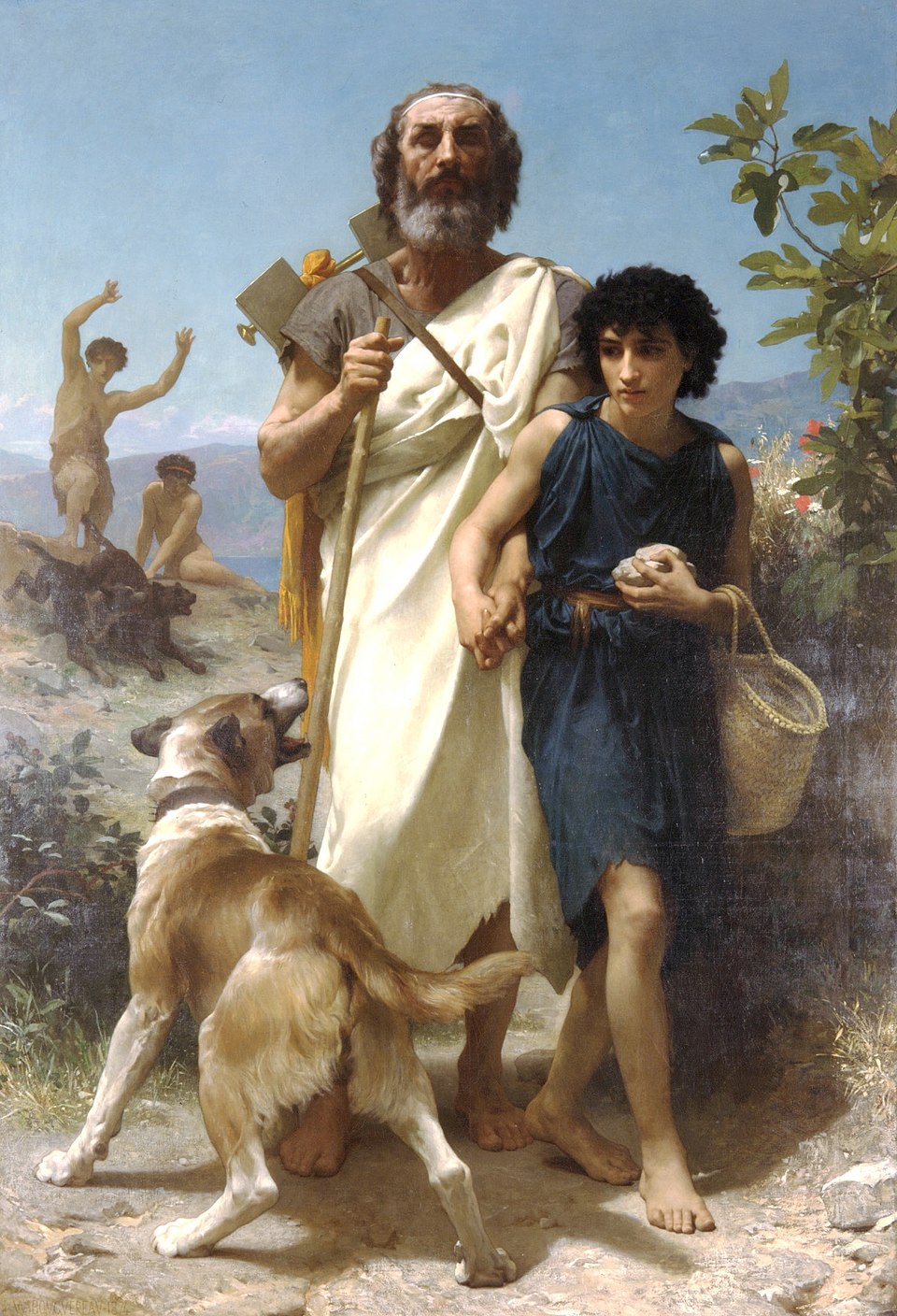
Homer and His Guide: Image credit: William-Adolphe Bouguereau, public domain, via Wikimedia Commons

Children named after their parents sometimes follow in their footsteps.  Or those named after a great person in history use that in their internal monologue as they try to attain similar things.  Now, I haven’t researched this—I’m just guessing here.  But for many years it was unusual to find a German boy named Adolf.  There are also names that are retired for someone being, say, the son of God.  Mom swore it was wrong to name a boy “Jesus,” even in admiration.  She didn’t know that the Anglicized Hebrew name was actually “Joshua,” common then as it is today.  Homer was a pagan, and I wondered how my great-grandparents came up with that name.  The best I can figure is that they were from upstate New York and there’s a town called Homer in Cortland County.  And I wonder if he ever asked his parents why he was named that way.


A Christmas Parable

And it came to pass in those days, that there went out a decree from Donald Trump that all the world should be taxed.  2 (And this taxing was first made when American troops were pulled from Syria.)  3 And all were to be taxed, every one to help build a wall.

4 And Joseph had just bought a house in Nazareth, but had to go into the IRS office, unto the city of record, which is called Bethlehem; (because he was of the county of Northhampton:)  5 To be taxed with Mary his espoused wife, being great with child but no insurance.  6 And so it was, that, while they were there, the days were accomplished that she should be delivered at St. Luke’s. 7 And she brought forth her firstborn son, and wrapped him in swaddling clothes, and laid him under a bridge; because there was no housing for them in Bethlehem.

8 And there were in the same country soldiers abiding in their bases, keeping watch over their radar by night.  9 And, lo, drones appeared before them, and the glory of aliens shone round about them: and they were sore afraid.  10 And the ETI said unto them, Fear not: for, behold, I bring you good tidings of great joy, which shall be to all people.  11 For unto you is born this day in the city of Bethlehem a Democrat, which is the Prince of Peace.  12 And this shall be a sign unto you; Ye shall find the babe wrapped in swaddling clothes, lying under a bridge in Bethlehem. 13 And suddenly there was with the UFO a multitude of the heavenly host praising democracy, and saying,  14 Glory to the American ideal in the highest, and on earth peace, good will toward women and men.

15 And it came to pass, as the drones were gone away from them into heaven, the soldiers said one to another, Let us now go even unto Bethlehem, and see this thing which is come to pass, which the ETI hath made known unto us.  16 And they came with haste, and found Mary, and Joseph, and the babe lying under a bridge.  17 And when they had seen it, they made known abroad the saying which was told them concerning this child.  18 And all they that heard it wondered at those things which were told them by the soldiers.  19 But Mary kept all these things, and pondered them in her heart.

20 And the soldiers returned, glorifying and praising democracy for all the things that they had heard and seen, as it was told unto them.

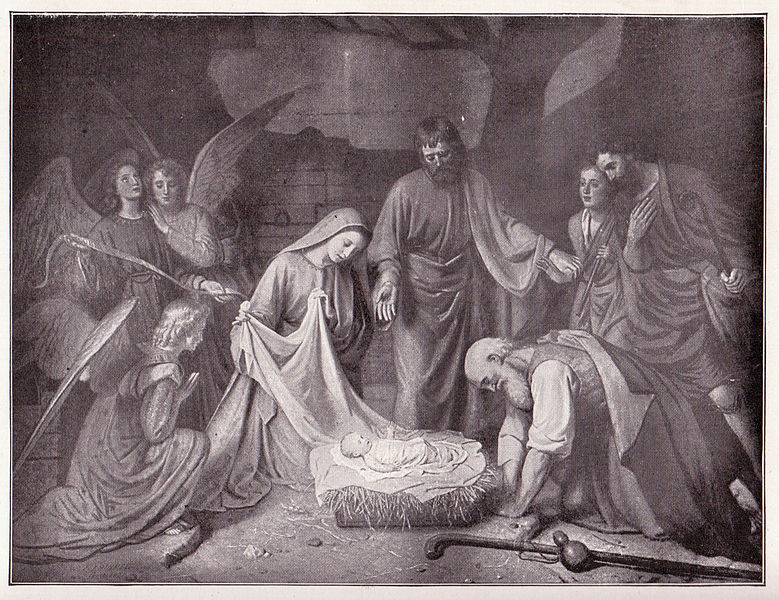
Image credit: The Harmsworth Monthly Pictorial Magazine, Volume 1 1898-9; public domain via Wikimedia Commons

Pan Pandering

The Greek god Pan has had a rough go of it.  And I don’t mean that his name is a homophone for an essential kitchen item in English.  No, Pan was mistreated by early Christians, made evil, and then good, before finally being largely forgotten.  We’ll start with the bad and move to the good.  As I discuss in one of my publications, Pan was considered evil by medieval Christians for a few reasons, apart from being a “foreign god.”  First, he was associated with nature.  Early Christians weren’t naturalists.  They were looking to escape the world (a trait that continues to be manipulated by politicians even today).  Not only that, but Pan had goat legs and horns.  While horns could be used to represent any deity, including Yahweh, the combination with goat legs suggested Pan might be demonic.

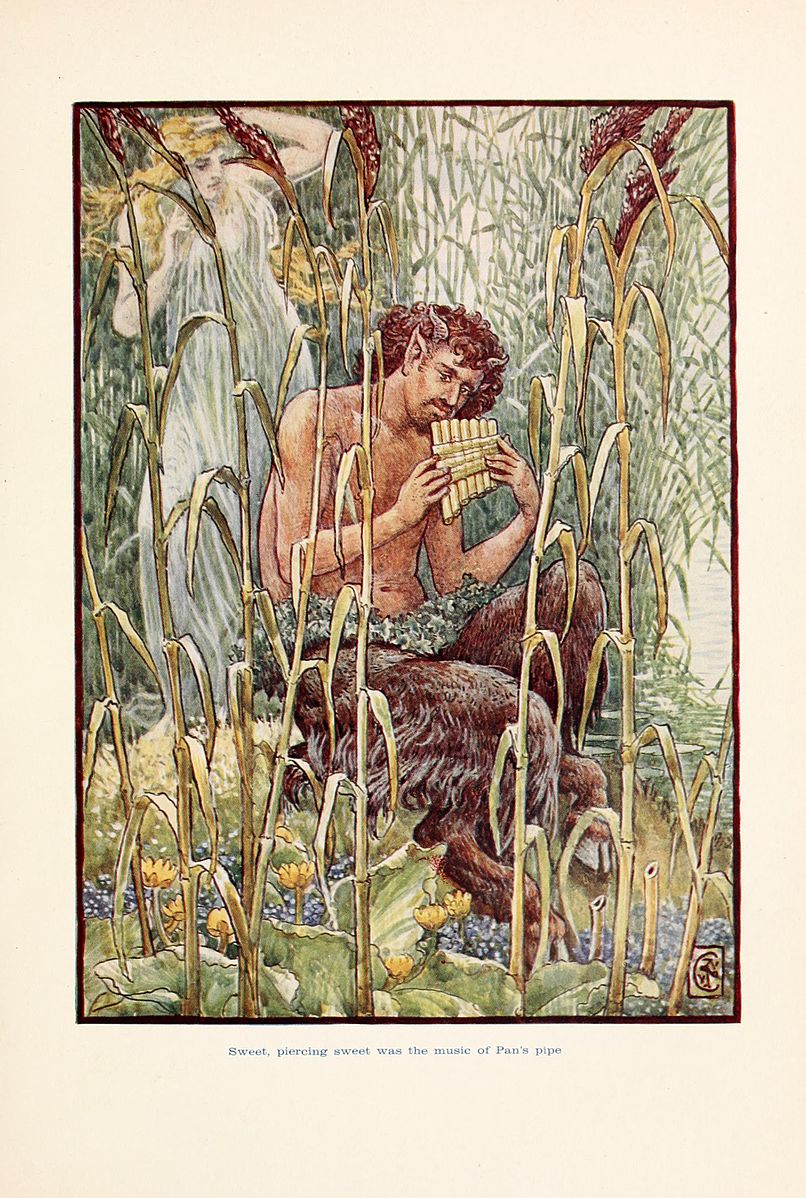
Image credit: Walter Crane, public domain via Wikimedia Commons

Nobody knew what demons looked like.  They are incorporeal, after all.  As I point out in Nightmares with the Bible, the fact that the rarely used Hebrew word for demons is roughly translated to “hairy ones” added to Pan’s sins.  This was a common Hebrew phrase for goats, and over the course of many centuries, when people had the irresistible urge to draw the invisible, they gave Satan the Pan treatment.  Goat lower half and horns on his head.  In many esoteric groups the goat, i.e., Pan, became a symbol of demons.  All of this has a rich and detailed history and it literally demonized Pan.  Yes, he was all for free love, but he was a musician, after all.  Then something interesting happened.  

When the King James Version of the Bible was first printed, the biblical books each began with an illuminated letter.  The book of Psalms began with an L.  This letter was inscribed with an image of Pan.  What the devil was he doing in the Good Book?  Well, by 1611 Pan was considered a type (or foreshadowing, if you will) of the good shepherd.  And we all know who the Good Shepherd is, right?  Not only that but his name, “Pan,” translates to “all” in English.  Since Jesus is “all” to Christians, it was appropriate that he be symbolized by Pan.  This ancient force of nature had gone from being the Devil to representing God.  Indeed, he could, at the same time, be symbolic of both.  Now this is quite an accomplishment for any entity, let alone a rustic god who was never an Olympian.  Pan isn’t much discussed in Christianity today, but he had a fascinating place in its view toward goats, both bad and good.


Mustard Monster

Speaking of mustard seeds, as a child something troubled my literalist brain.  Mark 4.31, “It is like a grain of mustard seed, which, when it is sown in the earth, is less than all the seeds that be in the earth…” According to subsequent translations after the KJV “less than all” reads, “the smallest.”  Of course, in Elizabethan English that’s what “less than all” denotes.  Since these words came from Jesus, and since the Bible was factually true on every point, I wondered how this error had crept in.  The mustard seed, I knew as a child, wasn’t the smallest seed.  Not by a long shot.  I knew, for example, that poppy seeds were smaller.  Why had Jesus said the mustard seed was the smallest when it wasn’t?  I was too young for the casuistry called exegesis, so a small crisis of faith emerged.

Pardon the resolution: I don’t have a macro lens any more. Mustard (left) meets chia seed (right).

The mustard seed has other roles in the gospels as well.  I still frequently recite “If ye have faith as a grain of mustard seed, ye shall say unto this mountain, Remove hence to yonder place; and it shall remove; and nothing shall be impossible unto you” (Matthew 17.20).  All of this made me curious as to the history of mustard.  While in Wisconsin we used to visit the Mustard Museum in Mount Horeb.  It’s now the National Mustard Museum and is in Middleton.  It seems that mustard, in its familiar paste form, was developed in China centuries before Jesus.  And people had been using mustard seeds as a spice long before that.  Jesus, like earlier prophets, used nature to make a point.  The problem wasn’t Jesus, it was literalism.  

Jesus also said “For as Jonas was three days and three nights in the whale’s belly; so shall the Son of man be three days and three nights in the heart of the earth” (KJV) in Matthew 12.40.  Modern translations of “sea monster”—for the Hebrew says it was a fish—forced me to dust off my Greek New Testament.  So Jesus said “in the belly of Cetus.”  Cetus was mythical sea monster, not unlike the mythical Leviathan God describes in Job 40.  Good thing I couldn’t read Greek or Hebrew as a kid!  Well, it seems we’ve gone from mustard to monsters.  If you’re familiar with the history of this blog, that shouldn’t surprise you too much.  I wonder what literalists believe about the Loch Ness Monster?  But don’t get me started on that or we’ll be here all day.


As We Know It

The end of the world, as we know it, is really more recent than we think.  Yes, Christians of a certain stripe have been looking for the second coming since the first leaving, but that detailed map of how we’re living in the end times, courtesy Hal Lindsey, is a new thing.  Here are the fast facts.

First and second centuries, Common Era: early Christians tended to think Jesus would “be right back.”  When that didn’t happen they began to look in the Bible for reasons why and started to develop theologies to cover the bases.

Late Antiquity to the Middle Ages: settled in for the long haul, theologians developed eschatology.  Although that sounds like a disease, it’s actually a system for thinking about how the end of the world will come down.  There were conflicting theories.  The two main flavors were premillennialism and amillennialism.

Early Modernism: Protestants came along and searched the Bible for minute clues to make into a system.  In response, postmillennialism became a thing.  Now there were three options.  Various phases were discussed: tribulation, resurrection of the dead, and the already-met millennium.

1820s: William Miller, a Baptist minister, began number-crunching and figured the end of the world would take place by 1843.  His followers, “the Millerites,” continued on after what was called “the Great Disappointment.” 

1830s: John Nelson Darby, a Plymouth Brethren leader, came up with Dispensationalism, a scheme that divides history into eras, or “dispensations.”  He thought we were living near the end of that scheme about 200 years ago.  The idea of “the rapture” was added to the other phases.

1917: Cyrus I. Scofield, published the Scofield Reference Bible.  A man with little formal education (and a “colorful” background), he applied Darby’s dispensations in his Bible, giving the United States a road map to the end times.

1970: Hal Lindsey, a seminary educated evangelical, published The Late, Great Planet Earth.  It became the best selling book (classified as nonfiction) for the entire decade.  New ideas, such as “the Rapture” and “the Antichrist” began to be read back into the Bible.  The book was made into a movie.

1976: David Seltzer, a Jewish screenwriter, penned The Omen.  The movie made use of Lindsey’s adaptation of Scofield’s adaptation of Darby’s ideas.  The wider public, seeing it on the big screen, believed it was about to happen.

2000: the world still didn’t end, either with a second coming or Y2K, as many predicted.  Round numbers will do that to people.  It didn’t stop predictions of the end of the world.

2012: the Mayan calendar gave out.  A movie was made.  People believed. Apocalypse averted.

2024: you fill in the blanks.

Image credit: Albrecht Dürer

The Truth Lies

I recently saw a Trump supporter claiming, unsurprisingly, that everyone’s lying except Trump.  Of course, I could be lying.  According to the Washington Post, Trump has made over 13,000 lying or deceitful statements since being in office.  For those who did their homework before he became the great protector of the unborn (ah, there’s one born every minute!) he was known as a crooked businessman to begin with.  With well over a thousand lawsuits against him even before being elected, we have no choice but to believe the entire legal system is lying, as well as anyone who’s had business dealings with him.  I’m just so glad that we have such a moral, upstanding paragon of Christ-like behavior in the Oval Office.  Never mind that all those witnesses in the impeachment case were speaking under oath—they all lie, but Trump.  Hey Donald, is that your real hair?

Ironically, some of the people making such claims hold the belief that divorce is not excused in the gospels (see Matthew 5:32, but Jesus could’ve been lying here—he’s not Donald Trump, after all).  It’s a matter of public record that Trump is twice divorced.  It’s a matter of sworn legal testimony that he paid hush-money to cover up affairs while married.  Well, that is if we believe this lying world rather than the one, solid, shining bastion of truth in the White House.  Someone once said (but he may have been lying) that it is easier for a camel to pass through an eye of a needle that for a rich man to get into heaven.  Just sayin’.

I have said before that all politicians lie.  It comes with the territory and only the most naive among us don’t accept that fact.  There is a difference, however, between the occasional mistruth and a lifetime, documented record of indiscriminate lying.  If it weren’t for the fact that all facts are lies (except those Trump makes up) we would see that the phenomenon of pathological lying is well known.  The presidency of the United States has never before tolerated a pathological liar.  But then again, they never had an incumbent more Christian than Jesus himself.  Now I think I remember who made that crack about rich guys.  He also said something about having no place to lay his head.  If he’d been born rich, though, you can bet the gospel message would’ve been very different.  Too bad the Bible lies.  If it didn’t such musings as this would hardly be necessary.  I could be lying, of course.  It is, after all, the new truth.


Sinful Thoughts

Nothing is quite so scary as that which is undefined.  I learned that as an Evangelical child.  There’s a verse in the gospel of Mark—I’ll use Mark because it’s the earliest, by consensus—that reads, “Verily I say unto you, All sins shall be forgiven unto the sons of men, and blasphemies wherewith soever they shall blaspheme:  But he that shall blaspheme against the Holy Ghost hath never forgiveness, but is in danger of eternal damnation.”  Now, that was heavy stuff for a kid.  There was an unforgivable sin.  Naturally, the mind goes to what exactly blasphemy against the Holy Ghost might be.  I hadn’t learned much about context by the point, but Mark places this statement right after the good people of Capernaum accuse Jesus of casting out a demon by the power of Satan.  In context the unforgivable sin in stating that what comes from God is of the Devil.  By extension, vice versa.  Keep that in mind.

A few chapters later Jesus is describing sin again.  This time he lists: “evil thoughts, adulteries, fornications, murders, thefts, covetousness, wickedness, deceit, lasciviousness, an evil eye, blasphemy, pride, foolishness.”  If you read the news these characteristics sound very much like the repeated and continued behavior of 45.  Jesus himself cites this as evil—and here’s where it’s important to remember the unforgivable sin—to claim that such things come from God is blasphemy against the Holy Ghost.  Yet Evangelicals are doing precisely that.  Every time they exonerate Trump and his ground in behavior that for any other human being would be condemned as “sinful,” they are committing the unforgivable sin.  And they’re not even scared.

When I was a child, Evangelicals took the Bible seriously.  It was more important than anything—even railroading anti-abortion judges through to the Supreme Court.  Little known fact: Evangelicals of the 1950s supported abortion.  Since that time they’ve lost their faith.  And their mind.  Sucked into a political activism controlled by forces they don’t understand—if any man have ears to hear, let him hear—they committed the unforgivable sin that kept me awake countless nights with the fires of Hell roaring in my head.  I set aside the gospel of Mark and scratched my head.  How’d we come to this?  A nation, one might say a house, divided against itself.  The kind that Jesus, again speaking of Satan, declared could not stand.  No wonder Evangelicals avoid the Bible these days.  It is a very scary book.


Truth under Fire

As Evangelicals continue their unflinching support for Trump, Rudy Giuliani has at last said something that rings true with these “Christians.”  According to a Washington Post story 45’s lawyer declared, “Truth isn’t truth.”  This was regarding the Russia probe, something that would’ve led to the ouster of any real president by now.  We’re all used to Trump’s constant state of obfuscation after all these long months, and the former mayor of New York has just come clean—truth is what we want it to be, no more, no less.  It is a meaningless word, a chimera.  If the son of god in the White House has broken the law (and he has) then the truth is there’s no law to be broken.  Democracy is just a made-up word in the hands of the Republican Party.

Now, I don’t have much truck with politicians.  Leopards, according to a certain book, can’t change their spots.  Nevertheless, Evangelicals should object to Giuliani’s direct assault on their sacred text.  The Good Book, you see, is all about “the truth.”  But the truth isn’t the truth.  When it claims that Jesus died to atone for your sins, that can’t be the truth because the truth isn’t.  The only truth is what Trump personally wants.  And the GOP won’t lift a finger to stop him.  Long ago it was clear that the party of Lincoln had abandoned the will of the people they’re elected to lead, but if there were truth we’d see the deep, stinking muck of corruption everywhere within its doors.  At least you’d expect the neat and clean Christians to object.

A certain man about two millennia ago said, according to the Book, “I am the way, the truth, and the life.”  But Rudy says “Truth isn’t truth.”  The Beatles said they were more popular than Jesus and the public revolted.  Rudy says Trump has more authority than Jesus and the Evangelicals cheer.  The capacity for untruth has always been part of politics.  Most politicians know to lie discreetly, when fact-checking will reveal some ambiguity.  Now the gospel-truth is whatever comes from the unholy mouth of Trump.  There is no truth.  There are alternative facts.  There’s fake news.  Surely the Prince of Peace wouldn’t have cancelled a military parade.  Meanwhile someone once said “the truth will set you free.”  The great Giuliani has informed us, however, that there is no truth.  And if truth isn’t truth, there’s no hope of freedom.  At least according to a guy named Jesus, whoever he may be.  


Belief Matters

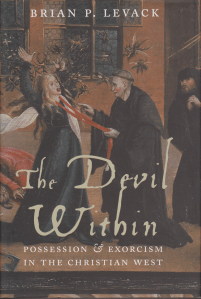
What you believe matters. This is shown clearly in the case of exorcism. Brian P. Levack admits to personal reasons for interest in this dark subject. His The Devil Within: Possession and Exorcism in the Christian West is a masterful treatment of a topic that it considers from many angles. As a form of Christian practice it goes all the way back to the beginning—Jesus’ initial fame was as an exorcist of sorts. He didn’t require any ritual or authority to expel demons, but he became a public figure largely because of his ability to do so. Levack’s study focuses mainly on the Middle Ages and the Early Modern period. The latter was the high-water mark of possessions until the resurgent interest of the post-Exorcist twentieth century.

An aspect of exorcism that had raised my curiosity more than once was its Catholic disposition. Many Protestants believe in demons, but only the Roman Church has the grand ritual to drive them out. There are Protestant exorcisms, but they have a different goal—they’re intended to eliminate sin. This leads Levack to a strong contrast between Catholicism and that most extreme of Protestant traditions, Calvinism. Few Calvinists suffered from possession. Those who did were not held blameless, as in Catholicism (if you were being controlled by a demon you could hardly be held responsible for your actions). Calvinists believed only the sinful could be possessed and since their God is Republican you can hardly count on any mercy. In fact, if you were possessed, chances were you would become a witch. And everyone in early modernity knew what the cure for that would be.

We tend to think that the Enlightenment drove such beliefs extinct. In fact, the height of both witch hunts and demonic possession came after the scientific paradigm took hold. Levack makes the point that this is a kind of theater—performance undeniably plays a part in exorcisms. Both science and Calvinism, taken neat, can leave a body feeling cold and in need of some emotion. As the book notes, you could generally find a Catholic priest who’d be glad to drive out your demons. It seems that the great forces of good and evil play themselves out not only in the spiritual realm, but in the varieties of religious experiences in the all-too-political world of the church. The Devil Within is a fascinating book with a plausible thesis written by an author who understands that ideas have consequences that aren’t always easy to expel.


Recognition

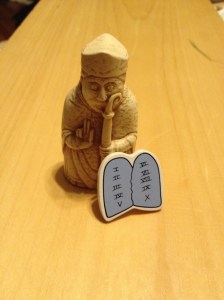
I was reading the account of the Transfiguration the other day, the way that you do, when a thought occurred to me. How did Pete, Jim, and John know that Moses was there? Yes, Elijah came along too, but the Bible physically describes Elijah. They at least knew what he wore. But Moses lived some thousand years before and the Good Book says nothing about what he looked like or his clothes. Fashions didn’t change so quickly back then. When they did it was often because an invading army from another nation was living in your town. If you wanted to blend in you’d start dressing like a Persian. Or an Assyrian. Otherwise people tended to have a set of clothes that might help identify them at a distance. But holy Moses…

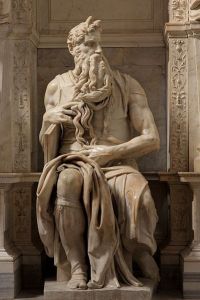
One of the commandments he handed down declared images to be prohibited. There were no pictures made of Moses, no portraits. Our view of Moses comes from sources like Michelangelo and the Charlton Heston character based on Michelangelo’s vision. The inner circle of disciples could presumably make some educated guesses—Moses would be bearded, but so would most men. Beyond that, how do you recognize someone who’s been dead for over a millennium and for whom no images or recordings were ever made? Peter was so confused he suggested camping out on the mountain in housing with private booths. Was it something Moses said that gave him away?

Photo credit: Jörg Bittner Unna, Wikimedia Commons

Or did he have a shiny face and/or horns? The Hebrew Bible’s a bit unclear on the point. Horns, far from being a symbol of the Devil in those days, were a sign of divinity. All the gods were wearing them. Call it divine fashion. Uncomfortable with the implications, later readers decided the Hebrew word meant something like “shining” or “glowing.” That fits in well with the Transfiguration theme, but horns had been signs of power and authority for millennia. Rewriting history, however, has become the fashion of this day. Picture the scene: four men on a mountain top, a bright cloud comes down and engulfs them. Now there are six, a holy half-dozen. Moses, tradition said, had been translated to Heaven. Same was true of Elijah. But also Enoch. Of the three only Enoch has no recorded words in canonical scripture. Then suddenly the mountaintop experience is over and the apostles have to face another Monday. At least they’d had a glimpse of Moses and apparently had no doubt of who he was.


Old Salt

Time has been at a premium lately, but when I have a few spare moments I like to read the Oxford Dictionaries blog. Those of us who make a living with words often find them utterly fascinating. Simon Thomas’ post, “Worth their salt: words and phrases with roots in ‘salt’” brings a number of interesting facts to light. Salt, now on the list of public enemies, is essential to our well-being in small doses. His clever post includes “salt of the earth,” a phrase biblical through-and-through. It reminded me of the fact that the Bible’s become so porous that few people can say what’s actually in it. It’s kind of a big book, and who has the kind of time needed to read it all, let alone remember what it did or didn’t say? Many phrases are attributed to Holy Writ that don’t appear within its covers, while others that do come thence are thought to originate elsewhere. Strange but true.

We may never come to an agreement on what Jesus actually said, but “salt of the earth” is a phrase attributed to him. Indeed, he may have coined the term “saltness,” but I haven’t researched that thoroughly. The idea of essences, I’m told, is outmoded. But the idea is fascinating—what is salt that has no taste? Would it work to clear our roadways in winter time? There’s a layer of salt on my car already, and it only just snowed for the first time this year. We all know what salt is, what it tastes like—but what is its essence? (If such things exist?)

Thomas notes that Roman soldiers were paid it salt. I wonder if this was behind a phrase my step-father used to use about work. Although he and I did not get along, now that he’s gone I come back to the hidden bits of wisdom he sometimes shared. He worked very long hours, and seemed happiest when he was doing so. Early in the morning he’d limp through the house and say, “Time to get back to the salt mine.” He wasn’t a literal miner, although we lived in coal country. Salt could mean food, and the salt mine was where you worked to provide food for your family. I may not have gotten along with my step-father, but he worked hard to support a family with three kids not his own. He may have been bitter about that, but today anyone who stays with a family in hard times is considered salt of the earth. And that’s biblical.