Loco Locusts

It really used to bother me.  Other kids in kindergarten or first grade called them “crabs.”  The picture, however, clearly showed a lobster.  Quiet and introverted, at least I knew how to tell apart basic body plans.  It’s a weakness I’ve always had—the need to correctly identify.  This didn’t come from my family, who really seem not to be bothered about such things.  It came from somewhere deep inside.  A lobster is not a crab.  The same applied to toads and frogs, or any number of other fine distinctions.  Now I confess that I try to stay away from Nextdoor.com.  It seems that no matter what anyone writes the comments immediately turn political and belligerent.  Such is our world.  But when someone can’t identify an animal, that’s clickbait to me.  I just have to take a peek.

A couple of months back a woman posted a photo of a cicada.  I didn’t chime in because at least thirty other people already had.  The thing was, several locals said it was a locust.  Even after previous commenters had sent helpful links showing the difference between a cicada and a locust.  Probably it comes from many years of teaching biblical studies, but I couldn’t believe anyone would misidentify a locust.  Mind you, when I taught the book of Joel we talked quite a bit about locusts—they are amazing creatures.  In a pre-market economy, they were also deadly.  They don’t attack people like they do in horror films, but they will eat every green leaf for as far as the eye can see.  They travel in huge swarms, capable of blocking out the sun when they fly overhead.  Cicadas are harmless.  Noisy but harmless.
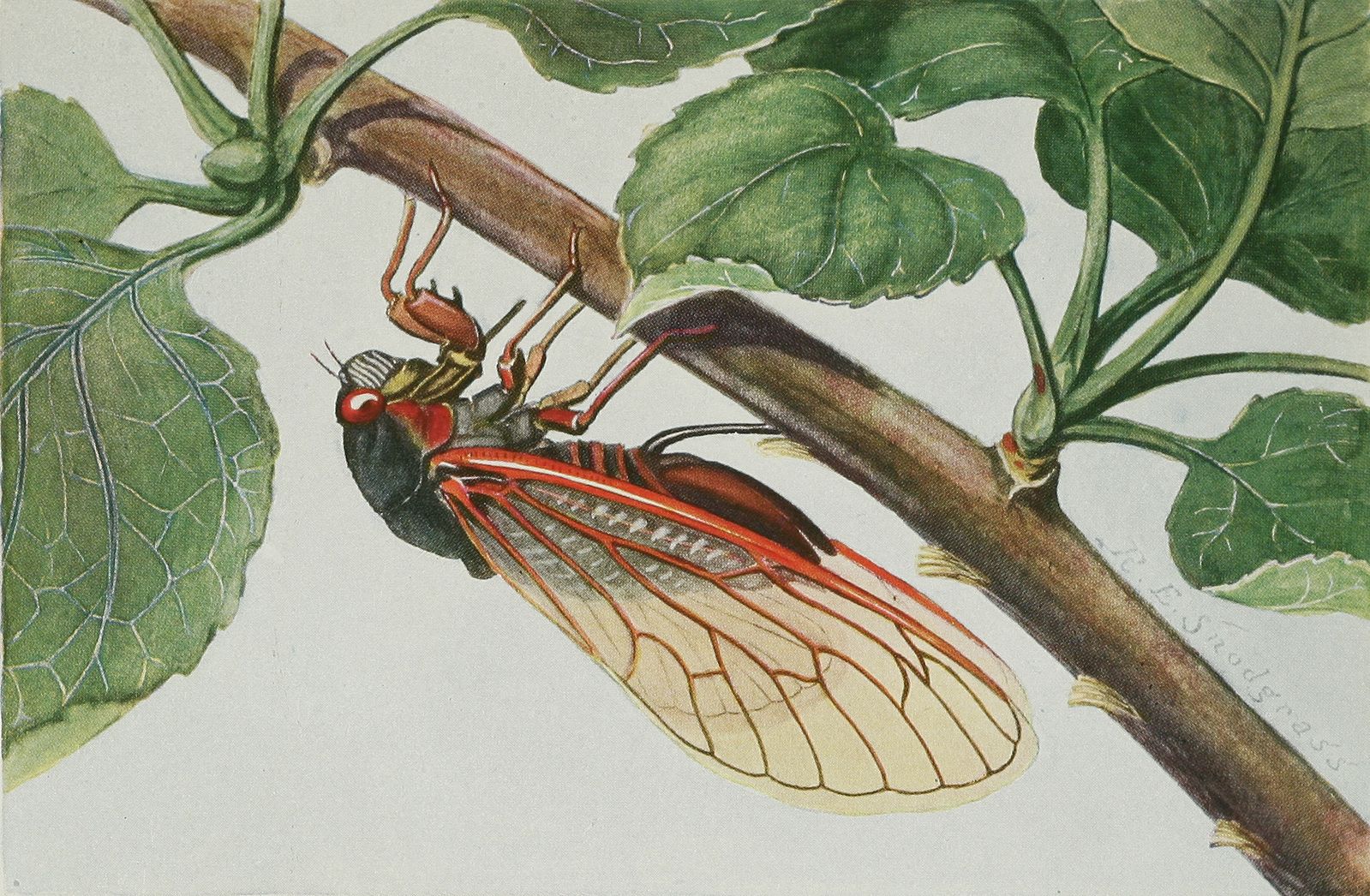
Cicada. Image credit: R. E. Snodgrass, public domain, vía Wikimedia Commons

How someone can live in the world and not care to know the other things that surround them I cannot fathom.  I can understand mistaking similar creatures—some animal mimics can be incredibly effective.  A locust, however, looks nothing like a cicada.  They’re both insects, yes, and they both have wings.  The similarity stops there.  Life is complicated, I know.  There’s a lot to learn.  As a writer one of the things constantly using up my time is trying to find the right name for a thing I know by sight but have never heard called by its noun.  With the internet, identification of critters has become somewhat easier.  But only somewhat.  You have to know where to start.  I still have the well-thumbed animal identification books from my childhood.  Outdated, yes.  Coming apart at the spine?  Definitely.  Full of childhood memories of learning what things are?  Of course.


Livin’ On a Prayer

Am I the only one who finds it disturbing that Neo-Con politicians are naïve enough to believe that prayer will solve all our problems? Where was God during the Bush years, for crying out loud? And yet headline after headline speculates about Texas Governor Rick Perry’s prayer-fest scheduled for Saturday. What is more disturbing than the lack of imagination on the part of would-be candidates is the sheep-like following on the part of a large segment of the electorate. If God is going to step in and take charge, he had a great chance back on May 21 and refused to pick up the option. If God was behind politics, why did George W. Bush fail to find Osama Bin Laden? If God is running things, why are so many unemployed? Ah, but the religious pundits have a pat answer: America is a sinful nation. What it takes is religion, Texas-style.

In the many years I spent at Nashotah House, the majority of our students hailed from Texas. They represented the conservative hard-line and doctrinal strappadoes that caused much suffering but still somehow didn’t placate an angry God. That, of course, says more about Nashotah House than it does about Texas. Perhaps it is the logical evolution of a country that began with prominent ministers gleefully describing sinners in the hands of an angry God. Nearly three centuries later and we are being told God is still angry. Thou shalt not hold a grudge, eh? The problem seems less about sinful folks just trying to get by (a la Bon Jovi) than about politicians using their religion to get elected. Centuries down the road it will be the topic of some new series of History’s Mysteries that an affluent, educated, and generally forward-looking nation cluttered its governing bodies with politicians who believed the answer to complex problems is to bow their heads and tell God how to fix it. Are we really half-way there, or have we spread our arms to embrace Jonathan Edwards once again?

In MSNBC’s article on Rick Perry’s prayer day, it is noted that the book of Joel is cited as an inspiration for the event. For such a brief book, Joel has been at the forefront of a ton of damage wrought by prooftexters. Joel wrote three brief chapters about a locust infestation for which the suggested response was prayer. One wonders if Rick Perry simply prays when the termites begin to gnaw on his expensive home, or does he call Ortho instead? Joel was truly old school. The locusts in his day meant literal mass-starvation. No chemical romance to solve the problem there. Unfortunately we don’t know how that one turned out—Joel doesn’t say. I’m just glad that Governor Perry hadn’t been reading Psalm 137 when inspiration struck, and can I get an amen from the pro-lifers on that?

Ricky used to work on the docks?

P.S. Matthew 6.5.


Now Locusts?

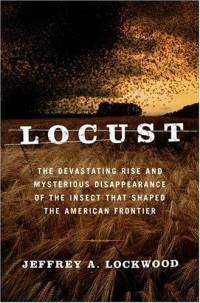
With the same page of the newspaper lamenting flooding in Iowa and drought in Florida, it seems that nature has turned against us in an almost biblical way. A more biblical plague than locusts would be hard to conceive, however, so when my wife pointed me to a current video of a locust invasion in Russia, I took notice. In the United States we seldom consider locusts since they have largely ceased to be a problem with the extinction of the Rocky Mountain locust for unknown reasons, last century. One of the more interesting books I’ve read over the last few years was Jeffrey Alan Lockwood’s Locust: The Devastating Rise and Mysterious Disappearance of the Insect that Shaped the American Frontier. Because the locust is not an American problem, biblical literalists like to transform biblical locusts into something else. The transformation is not necessary. We’ve eliminated the large predators from our planet, and the small ones often go unnoticed.

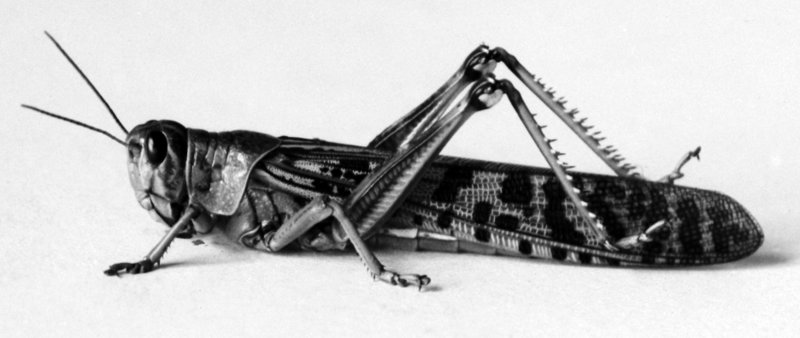
Each year as I lecture on the book of Joel, I spend a little time with locusts. The Asian varieties of locusts tend to reproduce rapidly and prolifically in the desert. Quickly exhausting the sparse food supply, they take to the air and fly for, literally, greener pastures. They can fly for three days without stopping which means they are suddenly there and eating everything. They look like divine judgment. Each locust eats its own body weight in green matter daily, and when a swarm can contain over 100 billion locusts, that can add up to 50,000 tons of food a day. Like poorly mannered house guests, locusts stay until all the food is gone, then leave. They are fully capable of devastating entire nations.

An actual biblical locust, vintage 1915.

Hal Lindsey famously converted Joel’s locusts into military helicopters, claiming that they presaged the end times. Decades later we are still here and so are, apparently, the locusts. They are part of evolution’s great machinery. The biblical view that we are the purpose behind that machinery has caused endless problems for the ecosystem. Locusts are a problem because they consume the food that we would otherwise eat or waste. In the struggle for survival, as Joel attests, it is not always the biggest that win.