A Goy in the City

Getting across Midtown Manhattan quickly during rush hour involves a kind of algorithm. That means my route to and from work each day changes depending on whether I catch that light at Eighth Avenue or Third Avenue. This past week my algorithm took me down 42nd Street on the way home. As I walked past a group of Orthodox Jews handing out leaflets, they singled me out and stopped me to ask if I was Jewish. I said “No,” but took their literature anyway. At first blush, it may seem odd to be mistaken as Jewish by some local experts (New York City has its fair share), but then again, maybe not. My brother tells me he gets asked the same question. Our great-great-grandparents left Germany in the 1820s and bore the ambiguous surname Tauberschmidt. By my great-grandparent’s generation they seemed to have been Lutheran, but before that? Hey, maybe this could explain a lot. Not to stereotype, but I do have the incessant angst that many Jewish characters exhibit in Woody Allen movies. Probably it’s my imagination. I thought it was cool to be mistaken for a “minority.” I felt, for a moment, like I belonged.

Reflecting on this incident (which made my day, by the way), I ask myself what it means to be part of a religion that has become a culture. The academic lingo for this is “cultural Jews” (in this case), but there are definitely “cultural Christians” as well. I suspect most religions have their cultural commandos. Part of the dynamic at work here is that although the world is very religious, it’s not really that religious. Most religious folks have an emotional connection to their tradition that may be, in fact, cultural rather than, for lack of a better word, spiritual. A person who is deeply religious often runs afoul of life in the everyday world. There is a sinful plethora of distractions. Those truly concerned about their religions often find themselves employed by them.

Cultural religions give the world a great deal of color. People flock to St Patrick’s Day parades when rivers are dyed green and everyone wants to be part Irish (and there is a genetic bit of this in my personal mix as well). Where would December be without Christmas and its attendant holidays? Even bunnies like colorful eggs in the springtime, so I’m told. Do any of these things make people religious Christians? I suspect few would argue that they do. I’m stretching Rousseau‘s concept of civil religion a bit tight here, but degrees of religiousness fall along a continuous spectrum rather than appearing in sharply distinguished colors. Cultural faiths are generally accidents of birth. It’s up to the individual how seriously to take it. And sometimes even the faithful misidentify one of their own.
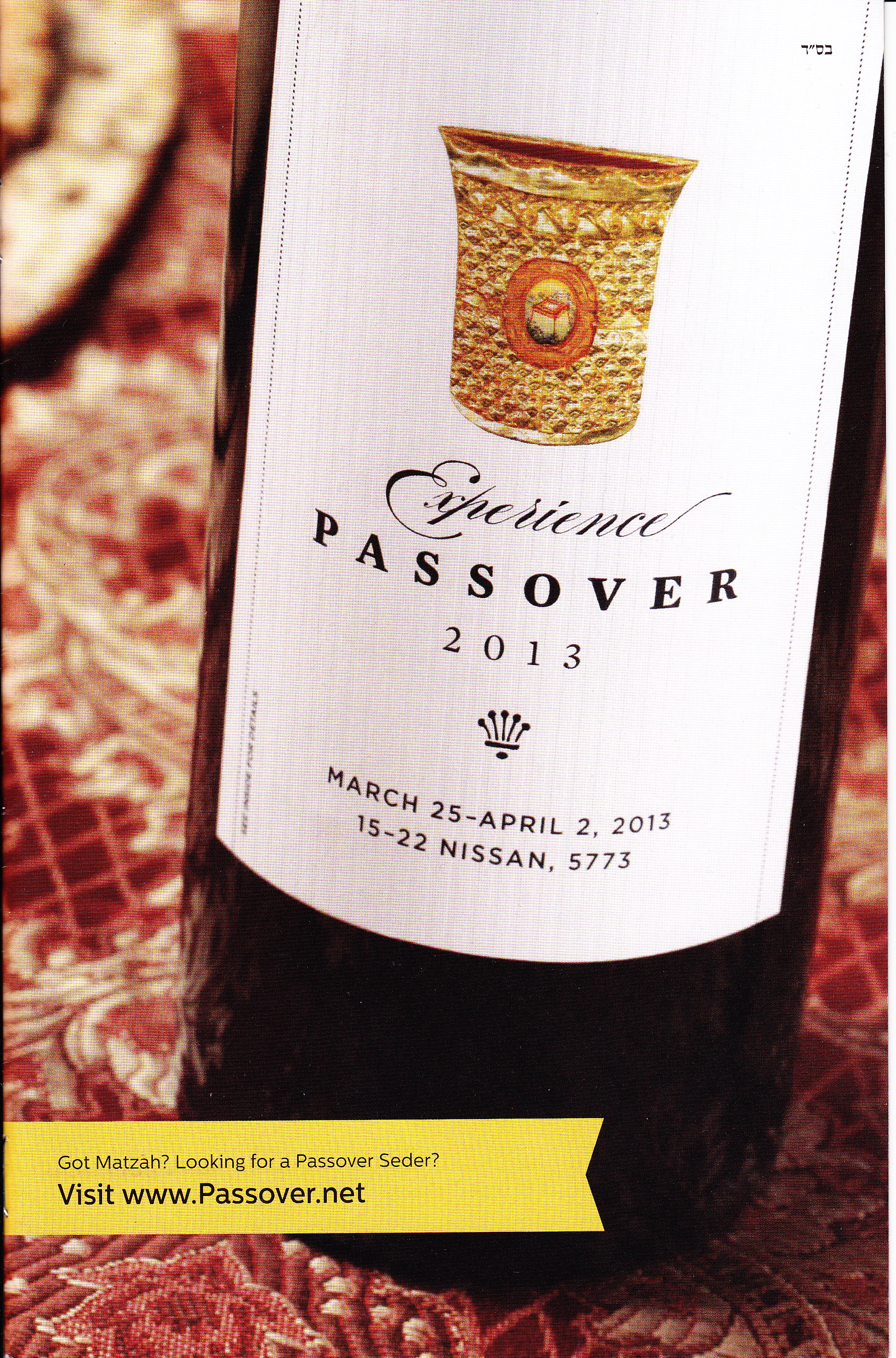
Happy Passover to my Jewish siblings!
Happy Passover to my Jewish siblings!

Out with the Old

It’s become a time-honored tradition, as an old, secular year ends and a new one, brimming with potential commences, for various pundits to sum up the past twelve months for us. And since there hasn’t been a year without religion since Adam and Eve were created, it stands to reason that the religious year in review is yet another perspective to take on this mid-winter’s day. The New Jersey Star-Ledger, my state’s answer to the New York Times, ran a 2012 top stories in religion feature on Sunday, the one day that anyone might be tempted to pay attention to things spiritual. The list reflects the view of A. James Rudin and it features several stories, most of which tend to show the embarrassing side of belief. Rudin begins his list with an amorphous Islam as reflected at unrest in the Middle East. One of the misfortunes I often deal with in my editorial role is this association of Islam with violence. There are deep roots to the trouble in the Middle East, many of them planted and watered by Christians. Religious extremists, however, are the more sexy side of the story and they always abscond with the headlines.

I should take care with my word choice, however, because yet another of the stories—dominated as they are by Christians—concerns the Catholic Church’s continuing troubles with hiding away child molesters (number five). The number two story, also about Christians, is also about sex as well. That story highlights the chagrin of the Religious Right at the recognition, long overdue, of same-sex marriages in three states. Gender plays a role in story four, the succession of Rowan Williams as Archbishop of Canterbury, but also the related story of how the Church of England still refuses to recognize women as bishops. A deity who can’t see past genitalia should be troubling to any believer. Yet a full quarter of one commentator’s top religious stories are concerned with sex. That’s how the world sees the issue.

The remaining stories Rudin points out have to do with Jewish-Christian relations, aging pontiffs, and the growth of Nones in the US religious marketplace. Anyone who spends time reading contemporary accounts of religion will be familiar with the Nones—that increasing number of people who declare no religious affiliation. Ironically, those involved in such scandals as we often see in the headlines are troubled by the number of people opting out of traditional religions. I almost wrote “opting out of faith” there, but that’s not really the issue. The Nones I know, and there are many, don’t necessarily not have faith. They have lost confidence (if they ever had it) in religious institutions. Interestingly, Rudin concludes his list with the tragedy in Newtown, Connecticut, along with the death of Sun Myung Moon and a few others. The Newtown tragedy remains the least and most religious event in the past year. And unless those of us who survive do something about it, these dead will have died in vain. Let’s hope 2013 has something better on offer.

Father_time


Spirituality Sampler

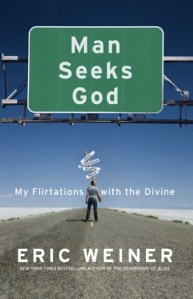
ManSeeksGodSometimes you read a book and wonder if somehow the author got into your head and fished around for material. Although I’m not Jewish, at least not that I know of, I found Eric Weiner’s Man Seeks God: My Flirtations with the Divine to be uncannily familiar at points. Not that I’ve ever been a journalist, nor have I had more than a few hundred people read anything I’ve written, but somehow I just couldn’t shake the underlying connectivity. For those of you unfortunate enough not to have read it, Man Seeks God is Weiner’s spiritual journey through various religions, seeking his God. Born culturally Jewish, Weiner never really resonated with the religious aspect until the last chapter of the book. In between, however, he shows a true pioneer spirit and tries diverse faiths, some of which are not for the fainthearted. As fits the postmodern period, he’s an authentic, intentional spiritual shopper. And he provides many laughs along the way.

Such a book must be difficult to write. There’s a lot of baring of the soul, and even a little baring of the body, at times. Weiner begins with Sufism, the mystical branch of Islam. Yes, it’s based on love. He then travels to Nepal to pursue Buddhist meditation, followed by a stint with the Franciscans in the Bronx. The only one of the “big five” he doesn’t sample is Hinduism. That might have thrown a speed-bump into his ending, though, to be fair. He makes no claims of comprehensiveness. At this point the story takes a turn toward decidedly exotic selections in the cafe of spirituality. I couldn’t read his account of the Raëlians without snorting aloud once or twice on the bus. Taoism takes Weiner to China and into a distinctly more philosophical frame of mind. He explores Wicca and Shamanism, which may be more closely related than he supposes, before coming home to Kabbalah, the mystical branch of Judaism.

Spiritual seeking is as mandatory as breathing for some people. Eric Weiner is one of those teetering on the edge of active exploration and the ability to shut out the questions, if only temporarily. Reading his confessions, it’s clear that he’s a rational, intelligent man. He made it through decades without really feeling the need for religion. When the ineffable pressed itself onto him, however, he turned to the mystical traditions. I was warned, in conservative Grove City College’s religion department, to be very careful of mysticism. The professor was dry-eyed serious as he said that seeking direct experience of God would generally lead to heresy. So there it was, in plain sight. Doctrine has precedence over the truth. Long ago someone smarter than us figured it all out. Our job? Just follow their path. I have a feeling that Weiner, having had some unexplained experiences of his own, might disagree. Sometimes you have to take out a personal ad in the spiritual scandal-sheets to get an idea what the divine really is.


Five Century Hypothesis

More than likely it is simply an oddity of history, but roughly every five hundred years a new major religion appears.  The newcomers sometimes grow into a serious concern for conservatives in the older traditions, but at other times they are simply ignored until the two (or more) come into inevitable contact.  Peering far back into history, the roots of the earliest religions of lasting durability are sometimes lost.  For a very rough starting point, we can consider Hinduism.  With roots going back to about 1500 BCE in the “Pre-Classical” era of the religion, Hinduism developed independently of the monotheistic traditions that would appear in the western half of Asia.  Although some would credit Judaism with equal (or even greater) antiquity, we get an idea that some of the basic thought that would coalesce into Judaism seems to have, very roughly, begun around 1000 BCE.  About five centuries later, Buddhism appeared.  At the turn of the era, Christianity had emerged from Judaism.  About five centuries later, Islam appeared.  Countless other religions, of course, existed concurrently with these early exemplars, but each of these has grown into a major world religion. 

Around about 1000 of the Common Era, Christianity began to fragment.  The first major, official split was between Orthodoxy and Catholicism. Christianity’s penchant for fragmentation would eventually lead to Protestantism—a religious form quite distinct in many ways from traditional Christianity—and that happened roughly five centuries later.  The most obvious split took place around 1500 with the Reformation, but it was also around that time that Sikhism appeared.  The new religions of the common era often involve irreconcilable differences within an established religion. In the western world we tend to overlook Sikhism, but in sheer numbers it is one of the largest religious traditions. And of course, there are many, many others.

As with any over-simplified scheme that tries to make sense of history, I am certain that no historian will be convinced. To me it seems obvious. Once every five centuries or so, some new religion will be born and will flourish. Perhaps it is already among us. We are about due. Like the evolution of new species, some new religions are poorly adapted to survival: one thinks of Branch Davidians or Heaven’s Gate, or Jonestown. Others, however, quietly thrive until someone looks around and says, “Where did Mormonism come from anyway?” Some will argue that it is just another sect of Christianity. Those who study its theology will realize that its conceptual world is vastly different. But anyone with a long enough calendar can see that it began about five centuries after Sikhism and the Protestant Reformation occurred. And anyone with two cents can sense its enormous bankroll—no surer sign of a religion’s viability can be offered.


Disputed Parentage

What has Athens to do with Jerusalem, Tertullian famously asked. Much, seems to be the rhetorical answer. Today, August 1, is Lammas. It is said to commemorate the wheat harvest and Lammas is taken to be derived from Anglo-Saxon hlaf-mass, or “loaf-mass.” Beneath this apparent Christian celebration is the pagan festival of Lughnasadh. I’ve posted on Lugh before, but holy days are often seasonal, and it is time to consider Lammas again. Lammas is the last of the cross-quarter days that divide the European pagan year. Some communities bake bread to celebrate it, sometimes in the shape of a person (those of you who’ve seen the original Wicker Man know what I mean).

Christianity was born a persecuted religion that grew to be a persecutor. Deeply rooted pre-Christian traditions were eradicated or sublimated in the growth of Christendom. The modern pagan movement may not have an unbroken line of tradition, but it is a tradition that has ancient antecedents. What Christianity could not conquer it assimilated. Much of what became Christianity derived from Judaism. Much of Judaism had its origins in folk religions of ancient Western Asia. In its European context, Christianity adopted the heathen traditions that fit within the pattern of Christian thought. Agricultural celebrations quite frequently matched events in the imperial religion. Or, if no so events existed, new traditions were invented. It is quite plain that that is why we celebrate Christmas in December.

Why is it that Christianity has so vociferously disavowed its lowly parentage? Being a chthonian religion should be no mark of shame. What is wrong with different but equal? Many people fear and despise those who declare themselves pagan, but paganism is a religion like any other, concerned with morality, justice, and living in accord with the power “out there.” So as August wends its way into the calendar, and the earth begins its inevitable tip towards lengthening nights and the cooling of the days, we might do well to consider Lammas. Whether from the Christian angle of Saint Peter in Chains or from the Pagan angle of Lughnasadh, Lammas is a time to eat bread and reflect, two of the most human of activities. And perhaps with thought will come tolerance.


Civil Rites

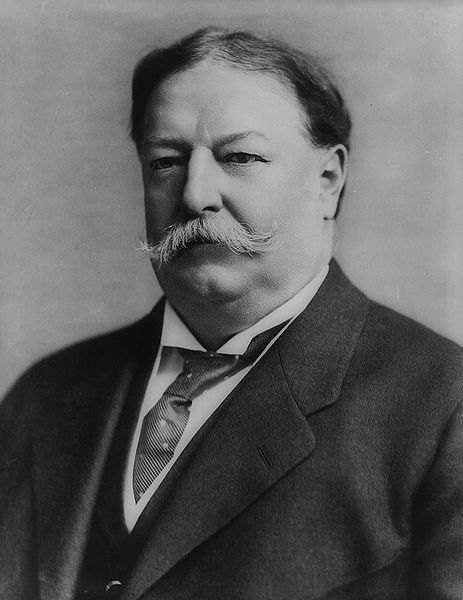
Sundays’ op-eds often have sensitive fingers on the pulse of the American religious scene. A piece by Tom Deignan in Sunday’s New Jersey Star Ledger raised a very interesting point about civil religion. Civil religion is, loosely defined, the acting out of religion in a civil-political forum as a cheap form of nationalism. We do it because it works. Noting that a presidential candidate denying the divinity of Christ in the twenty-first century would be engaging in political suicide, Deignan rightly points out that many earlier “Protestant” presidents would—and did—do just that. He notes that Taft, a Unitarian, came outright and said it. No matter the protestations of the Neo-Cons, the founding fathers were Deists, not believers in Christ’s divinity. Thomas Jefferson went as far as to excise all the miracles from his version of the New Testament. The idea that religio-politicking is business as it’s always been done is a myth.

And what a persistent myth it is! Many Protestant denominations trace their ancestry back to founders who believed that they were closer to the apostolic faith than the next guy. They legitimately believed their faith was the original, intended by God, Christianity. Thus it was in the beginning, is now, and forever shall be. Only it’s not true. Religion was purposely written out of the Constitution of the United States with the Bill of Rights declaring its freedom the ideal. What presidents believed hardly played into the concept of their fitness for national leadership in the early days. Now little else seems to matter. Deignan rightly wonders why Mitt Romney is so tight-lipped about his Mormonism. Could it be he fears what critics might say about devising a national budget through rose-colored glasses? Surely his vast personal wealth belies that concern.

So what was the original Christianity? On this point the Bible is amazingly unobscured; early Christianity was Judaism. Jesus was called “Rabbi,” and his teachings weren’t too far distant from Hillel and others near his generation. Paul of Tarsus, who pointed the nascent religion towards its evolution into Catholicism, was also Jewish. Following his faith in resurrection, some early Christians moved into the direction of eventual ritualism. The fancy hats of the papacy, it is fair to say, were never in the minds of Jesus or Paul. Not even Peter. Modern religions, even the primitivist movements, cannot reclaim the Christianity of the first century. That religion does not fit into a world of Internet, cell phones, and automobiles, let alone presidential candidates with wealth befitting King Herod. Let’s just grow up and admit where we are.


The Price of Religion

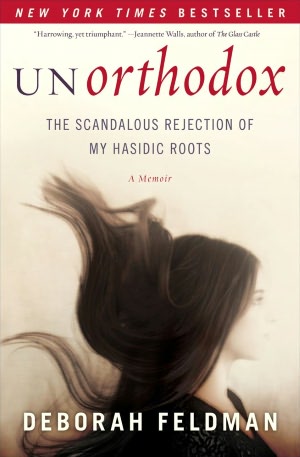
Gender is a religious construct as much as a biological one. The study of religion has brought me face-to-face with the reality that religion appeals to many women and to those who would manipulate them. Lately I’ve taken to reading the memoirs of women who’ve discovered the abuse their faith has doled out to them and who’ve taken moves to reclaim their lives. This past week I read Deborah Feldman’s Unorthodox: The Scandalous Rejection of My Hasidic Roots. As someone who has spent much of his life reading and re-reading the Hebrew Bible that gave fuel to the Mishnah that gave fuel to the Talmud that gave fuel to the Hasidic movement, I found Feldman’s narrative gripping. Some branches of Judaism, like some branches of Christianity, try hard to separate themselves from society. Their cloistered lives become secretive, and often by the standards of secular culture, incomprehensible. While reading this wrenching account of sexual domination, I kept wondering why Feldman didn’t try to escape. At the same time I already knew the answer.

I was raised by a religious mother who found her faith both a source of rules and a source of comfort. Unaware that religion can be a trap, women are frequently its victims. In a society that still refuses to give females equal opportunity for earning a living, is it any wonder that religions offer alternative routes that equally entrap? How do you appeal to a higher power when that higher power is, by biblical definition, male? Who will help you out when the largest religious structures in the world are male constructs? Yes, lately some religions have opened themselves to female leadership, but almost always at the cost of splitting off of factions that claim seniority and sanction from the beginning, when, they claim, only men ran this show. Deborah Feldman was trapped in a religion where her life, down to her hair and clothes and reading, was programmed by male expectations. In this continuum between religions we find the same progression in a series of degrees where men make the rules.

Many who read Unorthodox, I suspect, will see it as a condemnation of Hasidic Judaism. It is not. As Feldman makes clear, she has retained her Jewish identity, but she has let it evolve into a place where she is finally free to express herself. Gazing over the religious landscape, I see this as a place that many women find themselves. The very religions that had formerly held them down, however, continue to be male preserves. Even if women may join the club of bishops, clergy, or rabbinate, they do so with the constant reminder that they are only invited guests in what was once a masculine world. The world of men never voluntarily relinquishes its grip. As long as people are considered in the image of God they will always be by default male and female only as an afterthought. To conceive it any other way would be very unorthodox indeed.


Tolerance, Princeton Style

Princeton is an idealistic kind of town. A seat of great wealth, the town is dominated by the university and yet it manages to retain a sense of genteel quaintness that so often accompanies the aura of financial security. Even with my distrust of money, I love to wander its streets and imagine what the world could be like. My ideal world has bookstores, and so I always stop at the Labyrinth, the current incarnation of the university bookstore in town. Last time I was there I found an overstock sale copy of Ian Buruma’s Taming the Gods: Religion and Democracy on Three Continents. Well, both the price and the topic were right, so I read it this week. Buruma is actually a scholar of democracy, human rights, and journalism, not religion. One of the key identifiers of religion is that there is no central, unifying topic that ties all religions together, and therefore scholars of many disciplines have much to say about it. Buruma offers three chapters illustrating the way that religions interact with society, often violently. He then tenders suggestions for how this violence might be curbed.

Commenting on tensions of Islamic growth in a nominally Christian Europe, Buruma notes that one of the Enlightenment core values is a belief in universals. If truth is truth it is universal. This, he notes, often conflicts with religions since most religions also tend to make universal, often exclusive, claims. Here is precisely where human culture is brought to its knees by religion. Due to their revealed nature, western religions cannot be challenged on any rational grounds. This is as true of Mormonism as it is of Judaism. If God said it, and there is no empirical proof, people have no choice but to obey. Problem is, God can’t make up “his” mind about the final word on the subject. New religions sprout constantly, growing into inevitable conflict with their neighbors. Not to mention those who have reasoned their way out of religion.

What is the limit of religious tolerance? As Buruma notes, tolerance necessarily includes tolerating intolerance. Some religions are constrained to be intolerant of others, and how do we allow them to be part of our little tea party? (The metaphor is intentional. Think about it.) Buruma suggests, as many have, that the rule of law should settle the situation. People must learn to separate civil law from religion. But can it be done? I have serious doubts. I’ve heard this suggested before, by minds far greater than mine. Having grown up as a religious kid, however, I know that rule of law has its limits. It stops once God opens the door to direct revelation, whether to people today or thousands of years ago. Religion is not bound by the rule of law. It is its own highest authority. Many, many people throughout the world believe that. Moses, Jesus, Mohammad, all are noted to have had clashes with civil authorities of one sort or another during their lifetimes. The pattern is set. So even here in Princeton, with an engaging, thoughtful book in my greedy little hands, surrounded by great wealth, I realize just how idealistic all of it can be.


Jew Want Some Jesus with That?

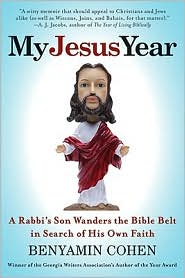
There’s been a trend in the last few years of journalists following a religious lifestyle not their own to learn something of another faith. This often leads to whimsical—occasionally funny—books that generally sell well. I appreciate the effort of those who try to open their minds to other belief systems, but the truly funny thing about religions is that they are very difficult to study objectively. There is a universe of difference between studying the papacy and being a Pope (I am only guessing here). This aspect of the religious explorer came through quite clearly in Benyamin Cohen’s My Jesus Year. Cohen, an Orthodox Jew, without compromising his faith, spent a year of Sundays attending various churches with two goals in mind: to learn more about Christianity and to appreciate his own Judaism more. The result is, for someone raised in the Christian tradition, a little disorienting.

We seldom tell children about other religions since such information would imply that religion is a choice, a marketplace. We prefer to tell our children that our brand is the right one—the only right one—because that is what we believe. By the time most children encounter those of other faiths, the indoctrination of their childhood has congealed. Many Christians will send their children to Christian daycare, often followed by parochial schools. Where would they expect to meet their first Muslim? Unfortunately, it is often on the battlefield. By protecting our children from the dangers of foreign faiths, we endanger everyone involved. So, reading a book written by a Jew, I felt a little strange—as if maybe Christianity wasn’t the majority faith after all. Given the wide diversity of Christianities Cohen cites, this is not so strange after all. Am I more like the evangelical Ultimate Christian Wrestling crowd or the Roman Catholic doing crossword puzzles during mass? Or none of the above?

Cohen notes that evangelical pastors (or laypersons, Christian or not) will sometimes share their secrets of success with those of other religions. Tellingly, he quotes Bernie Marcus, co-founder of Home Depot, explaining to rabbis how they might drum up more excitement: “You’re in the marketing business; you’re selling a product. You’re selling religion. It happens to be something that’s good for people. But you can’t get to them to sell them the religion because you’re in the marketing business and you don’t realize you’re in the marketing business.” Is that what it really comes down to? Religion is frequently described as a marketplace; it is the only paradigm available for the true capitalist. We’ve seen it take over higher education, and now those who give advice to religious leaders are the captains of industry. We have become victims of our own success. There was a time when religion stood outside the ordinary, but now it can be packaged and marketed and sold. An excellent exercise on your way to the store, however, is to stand back and listen to the other customers. If you are lucky, one of them will be Benyamin Cohen.


Glass Act

One of the main cultural Meccas of central New York state is the world-renowned Corning Museum of Glass. I recall visiting the museum three decades ago, as a child. Since then the museum has continued to expand and diversify its programs and displays. The Corning Museum of Glass is perhaps the greatest collection of art glass in the world. The history of glass is laid out chronologically, and along about the Middle Ages, religious glasswork comes into fashion. Some of the pieces were manufactured as intentionally religious artifacts. Others acquire a religious significance through less orthodox means.

Traditional religious glass

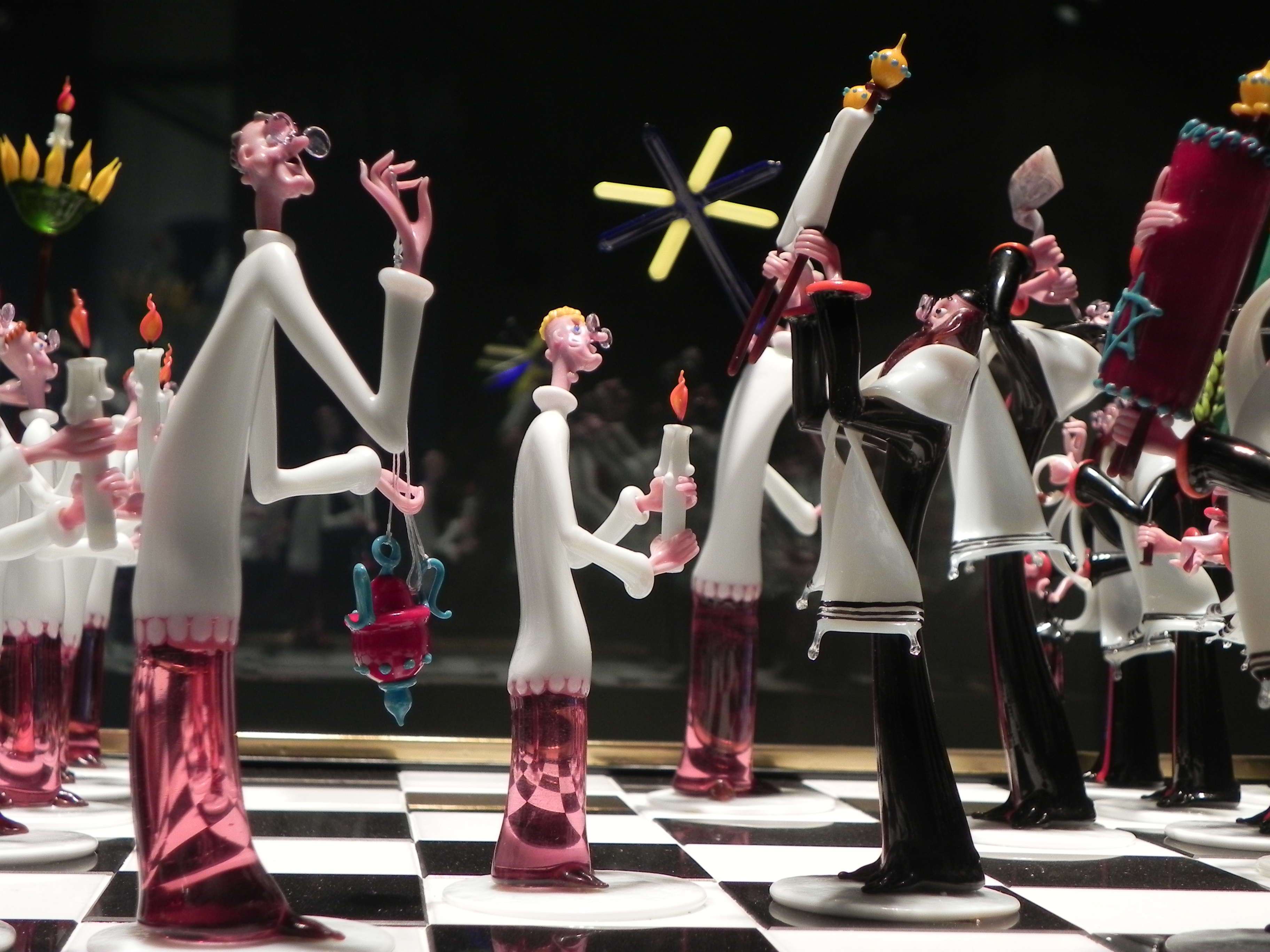
Near the end of the display is a piece by Gianni Toso, done around 1981. Entitled “Chess Set,” the glass sculpture features Roman Catholic pieces facing off against Jewish rabbinic pieces. The sculpture is intended to be comic as the expressions and the postures of the figures clearly indicate. Each piece bears some symbol of their faith: thuribles, lulavs, crosiers and Torah scrolls face off against one another, each side wearing unmistakable looks of superiority on their faces. Countless hours obviously went into the fabrication of such an intricate piece, and as with most art, it contains a serious message.

Toso's Chess Set

The figures here may be Jewish and Christian, but they could really be any religious traditions. The concept of putting them into a chess match is an inspired commentary on the constant struggle for superiority among religious traditions. In a world of differing religious outlooks, and where such outlooks are taken with deadly seriousness, no one is willing to relinquish religious superiority. The aggressors are difficult to discern since, as in life, any true believer must be a kind of missionary.

Toso's face-off

The medium of an artwork also makes a statement about its subject. Glass is a difficult medium to manipulate. Since it often must be very hot, the artist is familiar with the burns that accompany such intense heat. Glass produces a superior shine as an artistic medium, but it is also very fragile. Like the conflict presented on this chessboard, the religions behind it bear the limitations of the medium: they shine at times, yet they can also cause severe burns. And above all, they are fragile.


Reverend Sanders?

According to the Associated Press yesterday, Yenitza Colichon was sentenced to 18 months’ probation for child neglect and cruelty. The charges stemmed from a 2007 religious ceremony in which her seven-year-old daughter was made to watch a chicken sacrifice in New Jersey, and the girl was fed the animal’s heart. The practice is part of the Palo Mayombe religion of central Africa. This whole incident highlights the vital question of when religion crosses the line into child neglect. Many of us bear scars—some psychological, some physical—from our religious upbringings. It has been concluded by psychologists that children do not possess the level of abstraction necessary to deal with religious concepts until they are about the age of twelve. Parents, often fearful of eternal consequences should their children depart the one, true faith (whatever that is), begin religious instruction early, often passing their children off to others who are in no real sense an expert in the religion itself.

The United States embraces, on paper, the concept of freedom of religion. Rightly, it seems, the strong arm of the state will step in when a child is endangered or neglected. The unanswered question is at what point does this neglect or endangerment occur? Authorities turn a blind eye if the faith is time-honored, and, especially, if it is of European/American extraction. Typically of the monotheistic variety. What is standard practice for other religions, as this case demonstrates, may be called into question. Sacrifice is also at the heart of the Judeo-Christian tradition. Sublimated into different forms for both political and theological reasons, those of us in that tradition have abstracted sacrifice to bloodless words on a page. When we see red, child neglect and cruelty are cited.

Religions frequently make extreme claims over the lives of their adherents. Most religions relax such claims for children, but others continue ancient practice that is tacitly condoned. Sometimes those permissible rites cause real physical pain and scars. If under the hand of a moyel, okay; if scarification in African tradition, not okay. Religions denigrating personal achievements of the young, setting them onto a path of failure, okay; religions ritually killing animals, as even the Bible demands, not okay. Without making any judgment on specific religious outlooks, the reality of lingering effects remains. Are the terrors of Christian nightmares inspired by tales of Hell any less cruel than watching a domesticated animal die? Is eating a chicken heart any less unusual that fish on Fridays? Is being unfamiliar with a religion grounds for dismissing its authenticity or claim for equality? Some of us find animal sacrifice distasteful, but if we proclaim a tidy sacrifice each Sunday, and share it with our children, that particular rite/right is protected by law.

What would (wiki-commons) chickens do?


Educating Religion

The delicate dance engaged in by “church and state,” despite its apparent grace, includes many awkward stumbles and gaffs. Nowhere is this more apparent than in higher education at state-sponsored schools. I teach in two large state universities and the spring semester is winding to its accustomed close in both. The religious calendar of Judaism and Christianity, however, is just winding up. Based on a lunar calculation, the date of Passover is a moveable feast that takes Easter along with it. A late holiday season complicates the end of the semester when many students are held captive by religious leaders insisting that they cannot attend class during this most sacred of seasons. I’ve had many students missing class this week with final exams just around the corner. The students are, however, the innocent victims.

Religions are generally famous for unwillingness to compromise. I have both Jewish and Christian students who attend class despite the holidays while others find the requirements of enforced celebration more pressing. I do not pretend to have an equitable answer for this dilemma, I simply feel myself being squeezed between two colossal forces: the demands of the academy and the requirements of the faiths. Even state universities recognize the liberty of conscience and regulate excused absences for religious holidays. The information missed, however, cannot be easily acquired so close to the end of term.

This jumble of conflicting demands is particularly evident in a Religion Department. Teaching a subject that many – including not a few deans – assume is How to be Religious 101, a lowly instructor is beset with the weight of ecclesiastical and rabbinic decree while trying to educate the young about their own backgrounds. And if grades are not stellar due to missed lectures, it is the teacher who must be blamed. No great wonder, I suppose. We see shifting blame as a repeating pattern among our political and business leaders as well. It is always somebody else’s fault. Oblivious, “church and state” continue their waltz and gather their funds while a few toes get stepped on as the first full moon after the vernal equinox exerts its firm pull on all believers.

In the light of darkness


Shake Your Booty?

The Roman Catholic Church has been making headlines again. Yesterday’s newspaper afforded two headlines to the great mother church – or maybe I should say “pleasant parent church.” The first story regards the Pope’s new book, Jesus of Nazareth-Part II, due for release next week. In it the Teutonic Vater exonerates the Jewish people for the death of Jesus. The embarrassing mastodon in the room, however, is why the church ever blamed the Jews in the first place. From the beginning Christian theology declared Jesus’ death part of God’s master plan. It also provided a convenient excuse for centuries of hate crimes that continue to this day. Believers, however, are quick to justify God’s actions, even when the Bible tentatively raises its own objections. In my prophet’s course, many students had trouble accepting the fact that the story of Micaiah ben-Imlah in 1 Kings 22 indicates that God sanctions lies in the mouths of prophets for a larger divine purpose. Perhaps we should also look for Micaiah ben-Imlah-Part I on the bookstore shelves soon.

The second article, already making its rounds on the Internet, concerns a new translation of the Bible. Shaking the traditional word “booty” from its vaunted position, the Ash Wednesday Bible calls it “spoils of war.” I was pleased to see my personal friend Bishop Sklba interviewed as part of the release publicity. As he rightly notes, “English is a living language,” to which some have subtly added, “and a dying art.” The article rehearses the sophomoric tittering at funny-sounding verses that has plagued the church ever since the laity have been educated. Gelding the Bible is a small price to pay for sanctity.

Regardless of efforts on the part of the religious, the Bible remains an often bawdy text set in the context of a sexist and supersessionist world. It is the world in which the Roman Catholic Church came of age. As we start to see the first, faint blooms of a distant equality beginning to push through a vast leaf-litter of decomposing, brown tradition, the theology and foundational document of the church require some window-dressing. In this world of aggressive, bully governors and oh-so-self-righteous politicians, it is encouraging to see a massive religious organization bashfully blushing and suggesting that shoving others may not be the best method of getting your own way. Could it be that the church still has some valuable lessons to teach the world?

Oh, uh, sorry about that...


Flaming Chariots

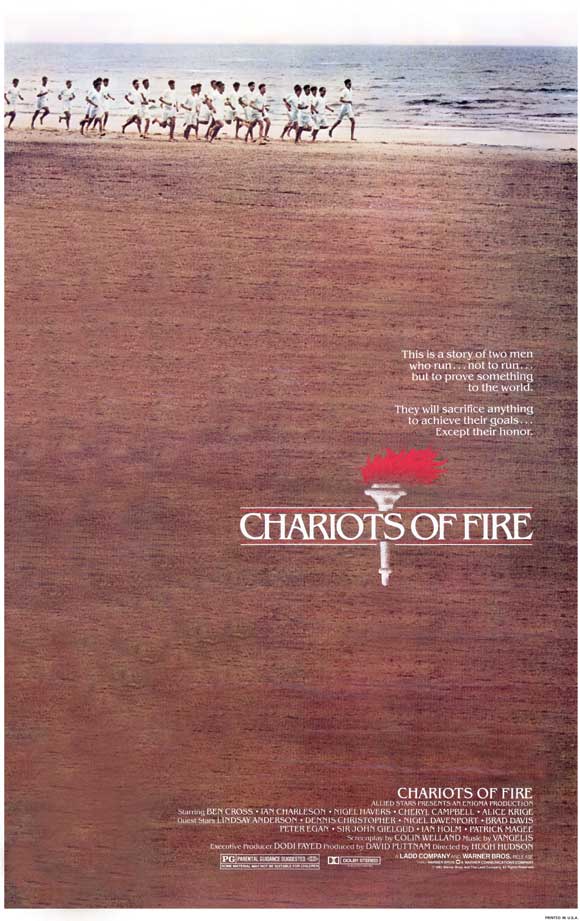
Religion is a demanding taskmaster, often completely at odds with the lifestyles of even its most staunch practitioners. Having spent my entire lifetime trying to understand it, I marvel at its imperiousness. In a story reminiscent of the unlikely hit film of 1981, Chariots of Fire, a recent Verizon human interest story highlights how religion sometimes impedes people, particularly children, from achieving what they may believe God put them here for. The story focuses on aspiring gymnast Amalya Knapp, yet to see 10, who has been prevented from full competition potential because of observing the Sabbath. As the article points out, this is not an issue limited to Orthodox Judaism, since “She isn’t the only young athlete faced with reconciling her passion for sports with religious obligation. Experts say the issue arises in all faiths, in nearly every sport, and at all levels of competition.” In one of the great ironies of human psychological development, we have engineered religions to prevent us from reaching our full potential.

In a way that few can appreciate today, the Sabbath rest was originally an unexpected gift. Ancient people had no concept of a weekend, a harrowing thought for most frantic people today who live their lives for the brief respite from insanity that the weekend offers. The recognition that a mandatory day off might actually improve the human condition was as prescient as it was radical. Time off to improve productivity? Today we know it to be true. But the more a religion gives its adherents, the more it seeks to take away. The God who gives you that free time wants to take it back. It is not really your time after all. “I believe God made me for a purpose, but he also made me fast. And when I run I feel His pleasure.” So says Eric Liddell in Chariots of Fire. He will also refuse to feel his pleasure on the Sabbath.

Religions disagree on the fine details of why the divine put us here. They are united in the belief that such a reason exists, but the terms of the contract differ widely. For reasons that the divine alone can comprehend, many human activities are subject to heavenly hegemony. The classical Greeks called it hubris when a mere mortal excelled to a point that embarrassed the gods. In response a human who wanted the most out of life knew not to show the gods what you are truly made of. For even the kindest of gods are jealous of divinity. And as all religions repeatedly demonstrate, despite divine demands for us mortals to share, gods are in no way obligated by their own rules.


Virtual Religion

Rabbi and author A. James Rudin, in an op-ed piece in Sunday’s New Jersey Star-Ledger, tolls the warning bells for traditional brick-and-mortar religion in the western world. We live in a virtual world where nearly any need may be met through the Internet. You may satisfy your hunger by ordering out online, and consult a virtual nurse online later when you don’t feel so good. Holiday shopping is a breeze without having to do anything more than tap out a wishlist on your keyboard and then click your mouse. Why should spirituality be any different? Rudin points out that many classics of western religion used to be confined in research libraries, but are now freely available online. Any number of self-appointed doyens of spirituality offer the truth in electronic form. What need have the faithful of starting the car on a cold morning, facing bitter winds and blowing snow, to march into a half-deserted house of worship when God is only a few keystrokes away?

There can be no doubt that the Internet has changed views of religion. Exposure to exotic or unfamiliar practices and beliefs is common. American religion has often been compared to a marketplace, and the best place for comparison shopping is online. This is not, however, cause for alarm. Ancient religions, including the early Judaism that will give birth to Christianity, accommodated other belief systems they encountered. There is no pristine form of religion that preserves the exact original recipe. The change took place more slowly in ancient times, but take place it did. Judaism, for example, moved from a basic, colorless Sheol to a fully populated Hell in Christianity, complete with lakes of burning sulfur and trident-wielding demons. These views were not indigenous to Judaism, but after rubbing shoulders with the Magi, such ideas eventually worked their way in.

All that the Internet has done is speed up the process. Without the web, people took longer to encounter and learn about different religions. Some of us took university degrees to figure out as much as we could. Now it requires little effort and minimal time. Like most e-commerce, if you don’t like what you’ve bought somebody else is offering something similar just a server away. What web-culture has done is to hold up a mirror to our bizarre shopping attitude towards religion. We can see in fast-forward what appeared smooth and organic in real-time. Religions change and the methods of selecting religions change as well. My observation is that clergy who take courses in web-casting will be at the front of the class until the next technological revolution comes along.