
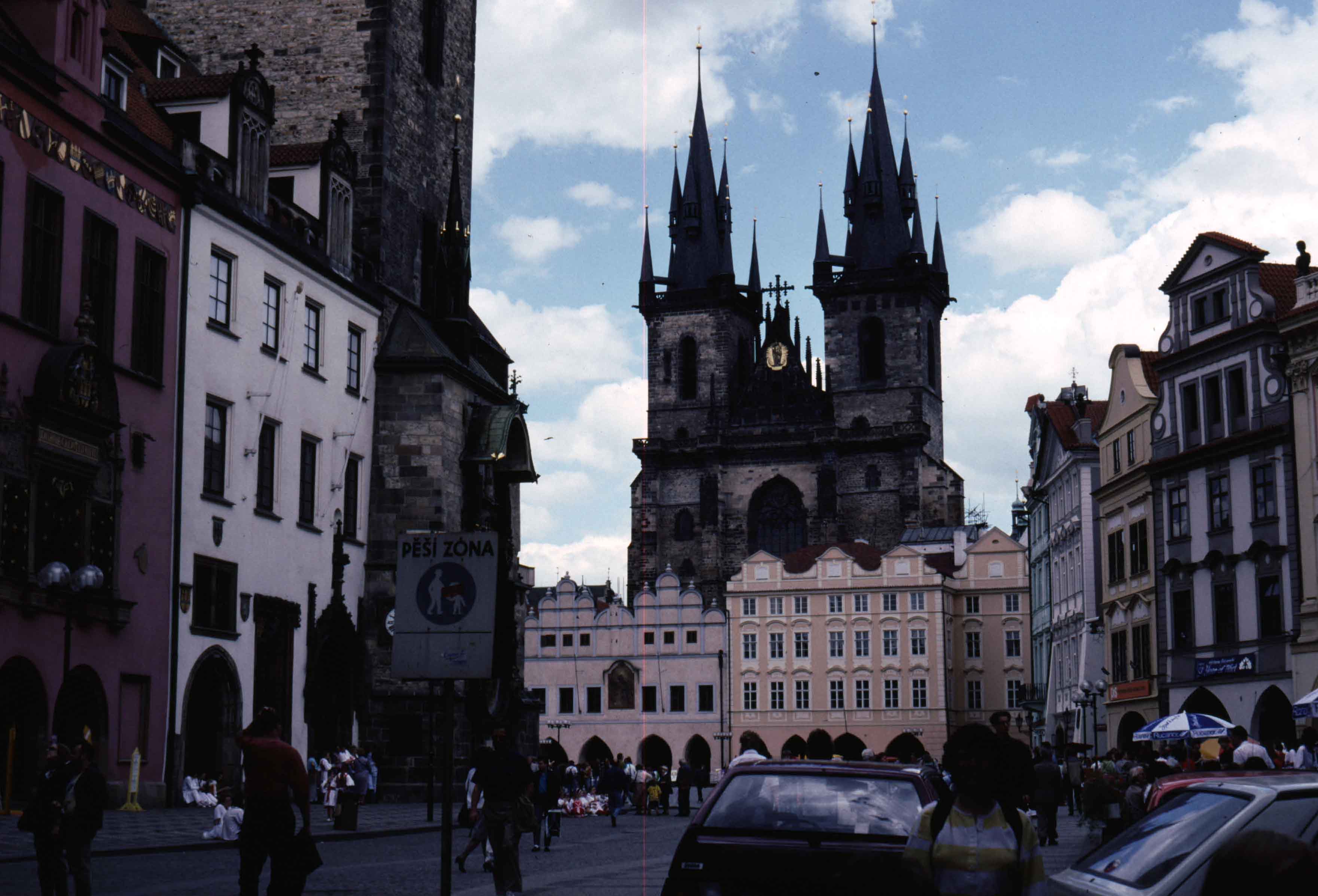
 “The play’s the thing. Wherein I’ll catch the conscience of the king,” quoth Hamlet. Shortly after the Velvet Revolution, my wife and I were shown about Prague by a friend who’d grown up in Communist ruled Czechoslovakia. As we watched the changing of the guard, he told us how Václav Havel, the final president of Czechoslovakia, had been a playwright and appreciated the need for pageantry in such civil ceremonies. I remember being impressed with what this playwright had accomplished while America had just survived being ruled by a lackluster comedic actor whose major contribution had been the myth of trickle-down economics. Havel was at one point selected as ranking high among the world’s top hundred intellectuals. Somehow Bedtime for Bonzo just didn’t seem to be worth bragging over.
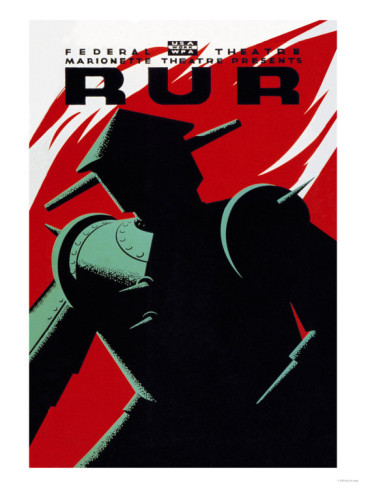
Within another year or two, Czechoslovakia would dissolve, but the world would remain impressed by the Czech playwright. Karel Čapek was another Czech author and playwright of considerable import. Čapek, “public enemy number two” of the invading Nazis, died before the National Socialists could reach him. His brother died in Bergen-Belsen. Čapek is the author of the play R.U.R., or Rossum’s Universal Robots. Indeed, he coined the term “robot,” around which this play revolves. Over the holidays I finally had a chance to read R.U.R., and I was immediately struck by how prominent the meme of God appeared, and also how prescient Čapek was. Like his contemporary Franz Kafka, Čapek had an unsullied vision of human propensities. Not having seen a production of R.U.R., or knowing how it would play out, I was nearly buried under the layers of meaning that such a brief piece could convey. Harry Domin, the general manager of R.U.R., supplies the world with robots for the easement of human labor. These robots eventually acquire souls, through human tampering, but also rely on humans for their reproduction. All of humanity, save a sole survivor kept alive to make new robots, is destroyed. Alquist, the last man alive, realizes when one robot will lay down its life for its mate, they have become a new Adam and Eve, and humanity’s existence is truly at an end.
Although I’ve read about robots since I was a child, I didn’t know about R.U.R. until my daughter joined her high school robotics club. Robots have, in many ways, dominated my life since. Although Čapek’s play is funny in parts, it is dystopian and profoundly troubling. Our robots have evolved since the period of World War I, just after which the play was written, but our moral sensibilities have not kept pace. Helena, the eventual wife of Domin, feels that robots should be given a soul. At first they feel no pain, mental or physical. Once they acquire these, however, they begin their inexorable march to the elimination of humankind. Reading of how technocrats believe that our true function is now to service the robots who do much of our work today, while unemployment just won’t release its grip on the flesh, my thoughts go back to Karel Čapek, Václav Havel, and William Shakespeare. The playwrights create, but the actors just ape.
 Steve A. Wiggins