Who’s Counting?

While joking around recently with my daughter, I started counting to ten in Spanish.  I’ve never studied the language, but I can stumble through academic articles in it with a dictionary.  In a senior moment I forgot that “ten” was “diez.”  We had a laugh about it and got back to life.  The next day while doing my sit-ups, I was counting in German, as is my habit.  (The push-ups get counted in English, thank you.)  It struck me that “dreizehn” is where the “teens” start, and I wondered if this was because of some base-six counting.  I decided to check Spanish to see if the pattern holds.  Those of you who know Spanish know that it doesn’t.   In English, which follows German, our teens begin at “thirt” (third).  

Numbers have always fascinated me.  Math not so much.  While I find the base-ten system natural, there is something to be said for base-six.  I’m not sure if that’s where German “zwölfe” comes from, but it does give us our “twelve.”  But those teens are always difficult, aren’t they?  In human life we hit sexual maturity with all of its complications.  Do we project those onto our numbers?  Do other animals do the same?  We now know that some animals have at least the concept of absolute numbers down.  Some birds know exactly how many eggs are in their nests, and bees know what “zero” means.  Their lives tend to be shorter than ours.  Do their ideas of numbers reflect that?
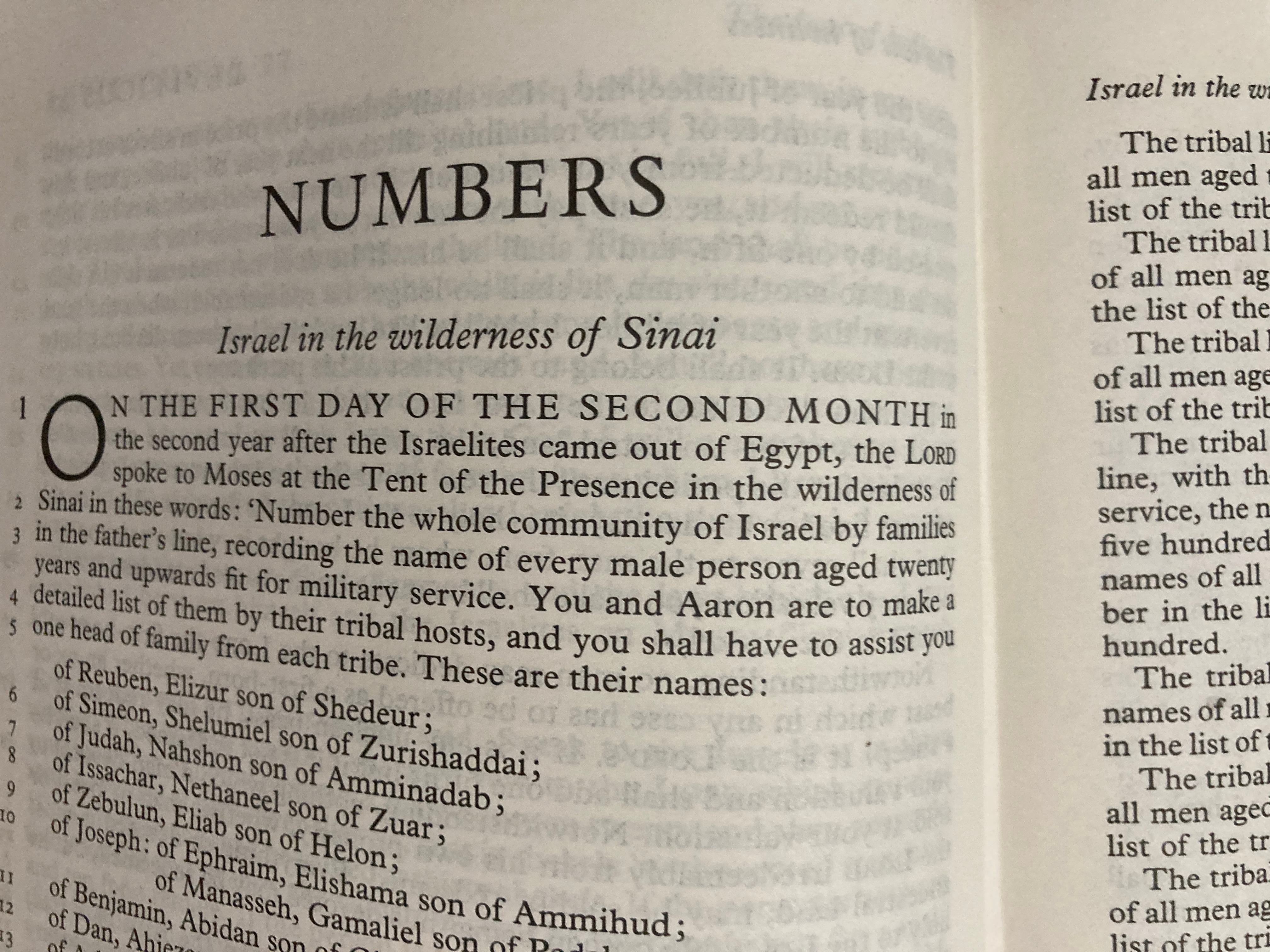
As human beings we know that that good old base-ten number 100 is kind of a life goal.  We know that 100 is “old age,” but we know that it isn’t exactly unusual for a person to live that long.  Of course “ninety” is compatible with either base-six or base-ten, and is a more reasonable goal.  Numbers are used for marking.  They’re so basic to our everyday life that, unless you’re a mathematician, accountant, or scientist, we hardly think about them at all.  Civilization began, however, with gods and numbers.  Kings wanted to know how many people they controlled (some things never change).  In the Bible God punishes David for trying to find out.  There’s even a book called Numbers.  The Mesopotamians used a base-six system that gave us the 360-degree circle.  We still use it even though a 1000-degree circle would give us much greater precision.  I could muse about numbers and counting systems all day, but it’s time to go do some sit-ups, in German.


Learning English

English is a difficult language to learn.  Growing up monolingual, I was able to pick up German, Greek, and Hebrew (and other semitic languages) without too much trouble, through intensive schooling.  I have to wonder if those learning English as a foreign language don’t have a much more difficult task.  The other day I was looking at a document in Icelandic (don’t ask), and marveling how I simply couldn’t penetrate it, although it is Indo-European.  Then I sat down to read an article in English.  The topic was of interest to me but it was clear that the content wasn’t written by native speakers.  Indeed, it turns out the authors were from an Indonesia university.  The journal was published by an Indonesian press.  It’s peer reviewed, but those who run it aren’t native English speakers.

Interestingly enough, although the article wasn’t in the field in which I was technically trained, I was able to follow what the authors were saying.  Partially it was because of my familiarity with the topic, which I’d read about before, but partially it was that you can read English without the direct and indirect articles that are our usual guideposts, and with the wrong verb tenses and declensions.  It is possible.  You wouldn’t want this, I suspect, if you were building a rocket carrying people into space, but it isn’t that much different from trying to read the instructions that come with most devices that are manufactured in nations where English is a foreign—very foreign—form of communication.  I admire their pluck.  I still recall enough German that I can get through some documents without generating more gray hairs, but I wouldn’t dare try to write to someone in it.  Nein.

Languages are fascinating elements of human culture.  Although there was no literal tower of Babel to create them, our species, in isolated areas, learned a variety of different ways to communicate verbally.  It’s only with travel that these isolated groups met and generally they try to talk, unless they simply kill strangers on sight.  We want to understand one another.  We all know that our language learning skills are at their peak during our very youngest years.  Brains get ossified into using one language to think and as you age it’s harder to pick up new ones.  Still, we have that old isolationist tendency hardwired as well.  Us versus them.  And if we can’t understand we quickly distrust.  Language study is probably one of the best ways to ensure peace.  If we can’t do that, at least we can try to read our language through the eyes of someone who’s made the effort, even if it’s difficult for us.


Two Thoughts

I recently read that efforts are underway, by some parties, to teach Arabic to Israelis. My limited experience of Israel led me to believe that most people were already bilingual, judging by the roadsigns. Like our progressive neighbor to the north, I supposed people were expected to know both languages passably well. Having forgotten more languages than I care to remember, I am a believer in language education. There’s no better way to get to know how people think than learning their language. In my hometown, which was small and not especially prosperous, there was only one language taught in schools. I suppose that was “practical” since we had no hispanic population and not even one ethnic restaurant.

Israel, in the modern sense, is a state formed where other people (Palestinians) had been living. I wonder if the conflict might’ve been somewhat ameliorated had the new neighbors spoken the same language as the residents. Thinking over the long and sad history of colonialism, I suspect that many of the world’s woes would have been less deleterious if those invading stopped to learn to speak to the locals. What would it have been like if, instead of taking their land and forcing them to assimilate, early American colonists learned to speak Indian languages? What if local schools were required to have been bilingual with the local nations? I can’t help but believe that things would’ve turned out much better for everyone involved. I can’t listen to the rhetoric of the right supremacists without seeking a safe place to throw up. Nobody is better than anybody else by virtue of their race. As they might say in Canada, “vive la différence!”

I’m not naive enough to believe that simply learning languages would solve the Arab-Israeli conflict. Nor do I think it would’ve stopped European imperialists with too much gold on their minds from taking the land that belonged to Native Americans. I do think that if people took the time to learn what their neighbors were saying, in their own words, we be less inclined to suggest that our program is the only way. Or to build walls. Or shoot unarmed citizens. We’ve lost the interest in learning to talk to one another. Language is more than just a bunch of words. Let the linguists argue about syntax. The rest of us might benefit simply from learning to listen, and to understand.

img_2969


Gray New World

A few months back I purchased a book entitled One Thousand Languages by Peter Austin. Not a “reading book,” this is more of a reference manual to the often bewildering profusion of languages in the world. Having dabbled in the study of about a dozen languages over the course of my academic career, I was interested in seeing what tongues are being spoken in places I’ve only dreamed about. After introducing a plethora of different communication systems, the book dedicates a significant section to endangered and extinct languages. There is a sadness about a language dying; it marks the end of an important aspect of a culture and a move towards a bland universality.

O say what did you say?

Then a Rutgers student sent me this link. It is a video of Wade Davis lecturing on the topic of the rapid disappearance of minority cultures around the world. Initially Davis begins by telling the students that when they were born (this lecture was delivered in 2003), there were 6000 spoken languages in the world. As of 2003, there were only 3000. The rate of language extinction is (was) about one tongue dying out every two weeks. What makes this degeneration so unfortunate, as Davis explains, is that many are dying unnatural deaths. Cultures are obliterated because of exploitation. More powerful members of nations (artificial constructs, all!) ensure compliance by encouraging uniform languages and monochromatic cultures. It is culturocide.

I would encourage my readers to view this video; it is 20 minutes well spent. A major component of these dying cultures is religion, naturally. Davis makes very important observations about this aspect of cultural non-diversity as well. And I can’t help adding that one of the phenomena he addresses is how zombies are made! Quite apart from my fascination with the monstrous aspect of religions, Davis’ cautions are essential to recognizing the plight of the once diverse human cultural domain. You won’t regret seeing this – it is nutritious food for thought.