Three Thoughts

If it weren’t for friends sending me little nuggets they find on the internet, I might be uninformed about much of the weird and wonderful world unfolding around me. With hours not spent at work being laid out on spartan public transit, I don’t have much time for surfing. So it was that I watched this video of St. Patrick trying to explain the Trinity to a couple of normal Irish blokes. Of course it’s funny, but as I watched it, a thought occurred to me. I used to think what a waste it was for learned minds to sit around arguing the fine points of theology. The Trinity is a prime example—three is one but not really one. Form, substance, essence, accidents or effects? What is it that makes them distinct yet not? It is, of course, a logical impossibility. Yet hearing words like modalism and arianism made me realize that these were highly sophisticated concepts. They were developed in Late Antiquity in a world with quite a different frame than our own. Atheism probably existed then, but it was very rare. What we might call naturalism did not exist. Some kind of deity or force was obvious behind the natural world.

To be sure, some thinkers had already suggested that the earth was round and that laws of mathematical precision governed aspects of nature. The frame of the human mind, at the point when engineers can construct pyramids and ziggurats, had already reached the point of science. What do you do with science when gods can’t be dismissed from the picture? Naturally, you turn your science on the gods. Although many today would argue that if God exists, the deity is a being (or concept) outside the realm of science. Science deals with the material world, not with supernatural possibilities. Dividing a single deity into three persons without making yourself a polytheist is a real mental puzzle. The concept of the Trinity isn’t biblical, although the basic ideas are derived from the Bible. It is a purely theological construction to explain how Jesus could be God and yet die. Well, it’s more complicated than that.

One of the great joys of the angry atheists is to point out the obvious frippery of theological discourse. How many angels can dance on the head of a pin? Why would anyone waste their time on such nonsense? Yet, the thinking behind early theology was exquisitely rational and highly developed. One might almost say “scientific.” The people of antiquity were not stupid. Our mental picture of the Middle Ages is often of unwashed louts chasing witches and hiding from dragons. Their society, however, was advanced by the standards of hunter-gatherers. The technology of the day may not have reached down to the level of the everyday worker, but human thought, ever restless, was working its way toward a scientific revolution. And God tagged along. Even Sir Isaac Newton gave a nod in that direction. While theological arguments may have outlived their usefulness in a society such as ours, they did represent, in their day, the best of rational thought. And in their own way, likely contributed to the birth of what we know as science.
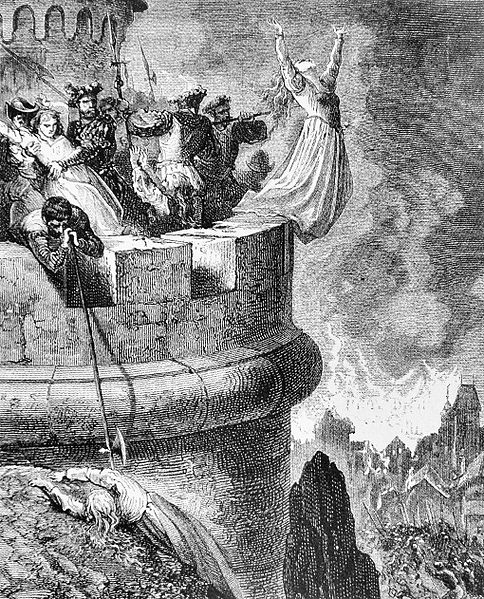
The fate of heretics
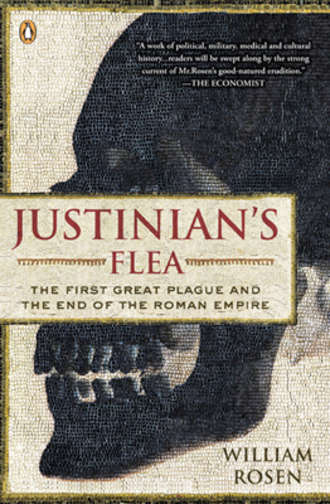
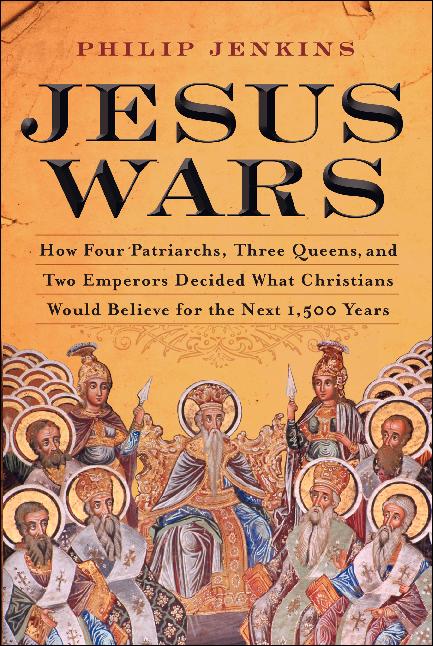
The fate of heretics


Flea the Obvious

In one of my personal ironies of history, the period of ancient times that I find least interesting is the one I’ve been reading most about. Part of that is based on my lack of coherence when it comes to selecting reading material. I take recommendations seriously, so when a friend suggested Justinian’s Flea by William Rosen, I figured I’d better read it. I had fairly recently read Philip Jenkins’ Jesus Wars, about the nearly unbelievable shenanigans of post-apostolic Christendom, and so I felt up to taking on the Plague. Justinian’s Flea is about the fall of the Roman Empire. At Gorgias Press, where Justinian’s former prostitute wife Theodora was subjected to revisionist history that made her a lifelong saint, I learned to discount most of what went on during this time period. I was, it seems, a bit too hasty. Justinian and Theodora’s reign is quite interesting, and it is, as intimated, largely because of ecclesiastical politics.

Rosen begins his study by laying out the background to Justinian’s imperial days in Constantinople. In describing the disputes between what specialists now call various Christianities (formerly true believers versus heretics), Rosen notes that Christians had particular disdain for Gnostics, largely based on interpretations of what Jesus’ death might mean. At one point he writes, “Monotheistic religions are famously intolerant of apostasy, even when they disagree about what constitutes it.” Here he hit the flea on the head. “I doesn’t know what it be, but I’m ag’in it.” This attitude of religions has long been the motivation behind massive campaigns of bloodshed and intolerance. Often in the name of religions that claim peace and tolerance as the highest goods. So it was in the early church; heretics were routinely martyred for their “wrong” belief.

Not to throw in a spoiler, but the first great wave of the Plague does nearly draw an end to the ailing Roman Empire. Justinian’s expansions were mere band-aids trying to hold together a Frankenstein’s monster of many nationalities. So riding home on the bus I was surprised first of all that the driver engaged a passenger in conversation (generally frowned upon) and second of all, that he ranted for many miles about politics. It isn’t very comforting in the stressful traffic around New York City to hear your bus driver cry out, “the Roman Empire collapsed—maybe it’s time America did as well!” The prospects of getting home seldom looked dimmer. And I had just been reading about that very empire’s last days. I try to stay away from predictions because I dislike being proven wrong—the end of the story hasn’t been written yet. Rosen, however, has given us a great cautionary tale; if the humble flea can help bring down the world’s mightiest empire—one ruled by a leader overwhelmingly concerned with religion—maybe it’s time to canvass what the infidels like to take in their coffee.


Fighting Jesus

Jesus Wars, by Philip Jenkins, accomplished something no other book has ever done for me—it actually made the doctrinal debates of Late Antiquity interesting. An historian of religion with wide interests, Jenkins produces fascinating books on what might appear to be esoteric aspects of religious life. I remember yawning through theology classes where we learned of crusty, if utterly convicted, monks and bishops arguing over single prepositions in their efforts to define exactly who Jesus might have been. When Jenkins turns his attention to this dusty, unwashed phase of Christianity’s gamy early years, new avenues on regulated belief structures open the way to understanding just how little most believers know of their own traditions. On its way to feel-good evangelicalism, Christianity frequently paused along the way to brutally murder some of its own for disagreeing about whether Jesus shared the same essence as his dad.

Today many Christians are taught by their clergy that their faith differs little from that of the earliest Christians. All who are taught this should be compelled to read Jesus Wars in order to get a grip on what really happened. From the very beginning Christianity was deeply divided about who was truly a follower of Christ and who was not. Even within a generation of the death of Jesus his various groups of followers could find little that they all agreed upon. As Jenkins demonstrates, over the next few centuries that sad history was worked out with extreme cruelty and cudgels and swords. The side with strongest force of arms got to decide on doctrine. Nor did matters improve with the Protestant Reformation. Many Reformers lapsed into what would have found them tied to a stake for heresy, had they been fortunate enough to have been born in the early centuries of “the Christian Era.”

The one figure that seems to have been lost during the Jesus Wars was Jesus of Nazareth. Instead, human constructions of who Jesus might have been became the source of great suffering. Bishops beating bishops to death, saints having women murdered, monks forming an unwashed militia—it’s all here along with the debate over how many angels might dance on the head of a pin. Jenkins does an excellent job of demonstrating that what is now known as “orthodox” Christianity was often a matter of political accident. In the case of Theodosius II, the future of Christianity literally rode on the horse that stumbled, tossing the emperor to his death. No doubt, there will be those of one or another brand of Christianity who will see the divine will behind the ultimate outcome. That outcome, however, will always insist that all others are wrong. For those seeking a bit of balance, Jenkins will make enlightening reading. For others it may give the lie to doctrines made what they are by mere mortals. In any case, the words attributed to Jesus about loving your neighbors and enemies will nowhere be found amid the debates of who he might have really been.