Blog Reading

I’ve been at this blog for about seventeen years now.  During those years of daily posts, WordPress still has trouble recognizing me.  I try not to take this personally, but when people I know (and follow) post on WordPress I don’t always get notifications.  When I want to comment on said posts, I have to sign in.  Sometimes twice.  All of which is to say that a recent post on a friend’s blog made me thoughtful.  I met Jeff Hora through my wife, so I’ve known about him for going on forty years now.  We’ve become friends in our own right, mostly online.  I want to reflect on one of Jeff’s recent posts, “Solid Ambiguity.”  Before I do, however, a brief lament.  I used to read a number of blogs daily, including that of the recently mentioned Dan McClellan.  I had a whole set of blog buddies.  Then blogs began to decline in popularity and, more to the point, I took uber-capitalist jobs in New York City, robbing me of time.  Now I only read them when I get email notices.

Okay, so solid ambiguity.  The basic idea is that we like to grasp onto the things we can count on.  Things that don’t change.  That’s the “solid” part.  At the same time we need to be aware that change is endemic to life.  In fact, the post mentions Buddhism.  Like Shakers, Buddhists have been part (long past) of my religious training.  I specialized in “western religions,” but I’ve recently been reflecting quite a lot on the fact that in East Asian thought, especially, change is the only thing that’s permanent.  I know I’ve posted about this before, but that was probably years ago as well.  We know that things constantly change.  In the few brief minutes it would take you to read this post, you have changed.  So has the world around you.

We want solidity most of the time.  A house we can reliably come back to.  People we love to always be there.  Keep the possessions we worked so hard to earn.  None of this is permanent.  We know that at some level.  For many of us it’s deeply troubling.  I’m no expert in Buddhism, but I do know that one of its basic tenets is not being attached to things as they are.  Life is full of ambiguity.  We don’t tend to like it, really, as Jeff points out.  But we do need to learn to live with it.  One of the changes with which I have to cope is the loss of time for reading friends’ blogs.  It’s good to be reminded that it is a rewarding experience when I finally do it.  Now, if only I had more time…


Equal Women

It’s been so busy this year that Mother’s Day crept up on me.  We have a lot of spring birthdays in our extended family, and what with the weird weather this year and unexpected household expenses, it just kept slipping my mind.  I like to commemorate the day on this blog because I’ve considered myself a feminist for many years.  I’m very distraught that women still aren’t treated as equals to men.  This should’ve been a no-brainer over a century ago.  (Having an historian’s outlook, I realize that in the days when women tended to die young, in childbirth, it was difficult for many to rise to positions of social prominence.  Once we got to the stage that most women survived the experience, and then to the point that economics drove us to two-income families, the male-superiority charade should’ve been dropped.)  The fact is none of us would be here without our mothers.  Father’s day has never been a big deal for me, but Mother’s Day is important.

I did manage to remember to get my wife a card in advance, but this year the day itself kept slipping my mind.  Ironically, my wife and I had watched a biopic of Mother Ann Lee last night—I’ll post on that tomorrow—and it was only as I was preparing to write about it for today’s post that I thought, “Wait.  It’s Mother’s Day.”  (We do have plans for the day; I’m not a complete barbarian.)  My excuse is that we were set off yesterday by an early encounter with a brusque and condescending Verizon employee who would not help set up a new phone purchased elsewhere.  I hadn’t slept well the night before and it rained all day, none of which made for a productive Saturday.  The movie (tomorrow’s post) was longer than anticipated, keeping me up late.  Movies, strangely enough, are now starting to really influence my dreams.

My dream for today, however, is that women’s equality will become a reality rather than something we just keep talking about.  There can be little doubt that we’d be better off with a woman president than with the alternative.  A woman has traveled further from the earth than many billions of men have.  My doctor and dentist are both women.  They can do anything men in their professions can.  They are university presidents and CEOs.  Pilots, both civilian and military.  They are religious leaders.  And many of them do the job on top of being mothers.  I consider it a personal failing that it was only as I was about to post about Mother Ann Lee (tomorrow) that I finally realized today is a very important day.  Let’s make Mother’s Day count!


Million Air

Life is strange.  While I was in Boston for the AAR/SBL Annual Meeting in November, something unusual happened.  For a few days back then this blog was getting a lot of traffic.  I mean, a lot.  For me.  In fact, I posted about when I finally shot past a million hits.  I couldn’t figure out why.  Well, things have settled back to their usual trickle and I figured it was just “one of those things.”  Pleased but not obsessed, I went back to my usual blend of observations about life, dark academia, and horror movies.  Then, and I can’t recollect exactly how I saw it, I noticed that my old blogging buddy Dan McClellan had, about that time given me a shoutout on his social media.  Then I remembered that I’d run into Dan at the conference and we’d had a brief chat.

The pieces began to fit together.  (Thanks, Dan!)  I’ve known a few fairly well-known people over the years.  Most of them are academics, and a few of them clergy.  Occasionally an author who has made a name for him or herself.  Some of them sometimes give me shoutouts but I’d never seen the numbers tick up like they had after this particular one.  I can’t figure out blog stats.  During the early years of this blog I had quite a bit of traffic.  I remember that in 2015 my views plummeted precipitously.  They’ve stayed at that low level ever since.  Until last year.  Now they’re headed back to normal, post 2015-levels.  I’ve tried some other platforms such as YouTube, but they take a lot more time and lead to limited hits.  Some influencers suggest I should try podcasting again.

I do have plans to bring the podcast back.  It takes several hours to make such an entry into internetdom.  I started podcasting when I began this blog (well, actually the blog was started by one of my nieces when a family member suggested I should podcast).  What happened?  I lost my job at Gorgias Press and I had to spend the next five years trying to find full-time employment in a stable environment.  By the time stability returned I figured podcasts were dead because everybody was watching videos.  I may have done a Mark Twain there.  Podcasts are still popular.  When I can get a chunk of time, and a nip of courage, I may rush back into the fray again.  At this point, I had my maybe fifteen days of fame in someone else’s shadow.  Life is strange.


Snowballs in Spring

Things snowball sometimes, even in the spring.  Weekends are among the most sacred of times when you work a 9-2-5.  They do double-duty as recovery time as well as prep time for the coming week to do it all over again.  I’m a proponent of the three-day weekend; life has grown so complicated that two days hardly cover it any more.  So in April I had a Saturday that snowballed.  I awoke vaguely thinking I might have to cut the grass.  It’d actually been dry a few days and the sun was out.  Then things started to get out of hand.  A letter arrived from the IRS.  Now, this is seldom welcome, but although it wasn’t scary it involved having to go back to our tax preparer’s office and, since tax day was just a couple days off, scheduling that was tricky.

Photo by benjamin lehman on Unsplash

Then the power went out.  Under a clear blue sky.  Being the middle of the day, we couldn’t tell if neighbors were affected or not.  After leaving a message with PPL, I walked to a local store about a block away and they had power.  The owner and I chatted a little, then I went home to await the PPL call or visit.  Since the power was out I was keeping a close eye on my phone’s battery level.  It was our only means of communication with the outside world.  Meanwhile, all of what we’d planned to do that Saturday had to be put on hold.  The house was quiet with no fridge hum or any other sound.  Suddenly I heard a kind of airplane buzz, but it seemed to be coming from inside.  I followed my ears to the kitchen where a big old bumblebee was trying to get outside.  I grabbed one of our ubiquitous peanut butter jars and waited for it to land.  The phone rang.  PPL said everything was fine on their end and we had to call an electrician.  It was now 4 p.m. on a Saturday, I was being buzzed by a bee, and I had to find an emergency electrician with my phone charge dropping.

I called a company I’d used before.  After explaining everything they decided they no longer serviced our area.  I called a second 24/7 electrician.  They could get someone out to us on Friday.  This was Saturday.  My wife took the jar from my hand and went after the bee.  The third company, which I will gladly use again, said they could get someone out by 9 p.m., at the latest.  By now the entire afternoon was gone.  My wife let the bee go outdoors and when we came back into the kitchen she said, “Isn’t that the fridge?”  It was humming.  Lights were out elsewhere so I made my fifth trip to the breaker box in the basement, using a flashlight, and tripped all the switches again.  Power was back on.  The electricians were good about canceling but suggested a follow up visit, just to check things out.  The grass didn’t get cut.  It was a snowball in April.


Dreamers

Dreams are strange things.  I’m talking literal dreams—what your mind comes up with when sleeping.  Some dreams come out remarkably clumsily, like they were made DIY instead of by a professional.  Not to brag, but most of my dreams feel like they have professional production values.  They’re hard to tell from waking reality except that the rules in the dream world are quite different.  I’ve always struggled with nightmares, but they’re well made.  The other night I had what seemed to me amateurish dreams.  Even in my sleep I remember thinking that they were low-budget.  Normally I dream better than that.  And I woke up not really feeling ready for work.  They should give you “bad dream days” to take off.  Bad dreams can really put you out of sorts and can distort your thinking until the next sleep period comes around.

Recently I was talking dreams with one of my brothers.  When you’re a kid you naturally talk about dreams with your siblings.  At least we did.  I hadn’t realized this brother kept a dream journal.  I’ve had other people recommend doing that.  Like many people I have trouble remembering my dreams.  Often I do for a few moments after waking, but I don’t put on a light for fear of waking my wife and also I have to dash to the restroom and after that they’re gone.  But impressions of those amateur dreams stayed with me for a while.  The feeling of disappointment.  That I could’ve had something better to see me through the night.

Some of the more quality dreams survive long enough to get written into my fiction that doesn’t get published.  Some people experiment with lucid dreaming, where you invoke your waking consciousness to interfere with the untethered unconscious.  Other dreams are pure, elated fantasy.  And we still really don’t understand them.  When asleep those thoughts are just as real as the more mundane ones that get you through the working day.  And they can influence, sometimes powerfully, how well you navigate that 9-2-5 world.  Ideally you spend as much time sleeping as you do working.  They should perhaps balance each other out.  In my experience anyway, neither is really predictable.  If I had it all to do over again, I sometimes think I’d have been a psychologist (really, it was the medical part that put me off) where I could study dreams.  At least then I wouldn’t have to worry about having bargain basement dreams, would I?  It’s a strange thought.


Just Handle It

It happened again.  A few days ago I loaded my blog post and forgot to click “publish.”  The reason for this is probably silly.  Although I get out of bed between 2 and 4 a.m., I’m afraid that if I post that early other notices will get on top of anything I share and the post will be overlooked.  Well, more overlooked than my posts already are.  So I wait until 6 a.m. to click.  And some days, particularly on weekends, I’ll have the post loaded but I’ll get distracted and will forget.  I discover it the next morning, stare at it in confusion for a while and then think, “I forgot to post this.”  I have this conversation with one of my brothers, near my age, who insists he needs a handler.  You forget to do things.  Most of the time I’m pretty good at remembering—this blog is the center-point of my online existence, and I post every day.  If I don’t forget.

Weekends are very busy.  Almost as busy as work days with their shorted human hours.  And last week was particularly intense.  Two unexpected house repairs that required financing.  Two birthdays.  And grass that loved the high summer weather we had in April.  (Our neighbor is trying to sell his house and I want to try to attract a new neighbor who appreciates those who make an effort.)  As soon as I stepped outside, however, I was overwhelmed.  During the week of summer weather I’d lost the long-term battle I’ve been waging against ivy that claims both fence and garage.  And sapling trees that somehow thrive in the shaded north end of the garage that hardly ever see the sun.  And I’m trying to teach, manually, a vine how to grow up a pergola that receives too much love from carpenter bees.  Why can’t it learn from the ivy just over there?  You get the picture.  (Right now it is just 29 degrees outside.)

By the time I came back inside, I was exhausted and forgot that I hadn’t clicked “publish.”  These days it gets light around six, and on work days I get delayed by jogging.  Still, I know the click before I start work for the day.  Weekends are the danger zone.  I could use a handler.  Or maybe I should just accept the 24/7 reality of the internet and publish as soon as I load the post.  Does it make any difference?  I don’t know.  Please direct all questions to my handler.


Intensity

It was the biggest excuse for breaking up with me.  “You’re too intense.”  I lost track of the number of times college coeds told me that.  At the same time, the same adjective was whispered in awe when applied to professors in class.  You wanted intense professors, but not intense boyfriends.  Was “intense” bad or good?  I don’t deny being intense.  Some of us are just that way.  In personal relationships I’ve often managed to keep it under control.  It was one of the reasons, however, that I was such a good professor.  Students seem to have responded well, even if academia had no permanent home for me.  Thus, dark academia.  Which tends to be intense.  When I throw all my energy at something, it can become intense.  But it’s also true that I’m on the receiving end of it.  My mental mapping, especially in the fallow times, means that I must try to make sense of it all.

Some periods in life are intense.  I’m sure that’s true for everybody.  Or most people.  A concentration of events when time itself seems to have collapsed on top of you and you still have a 9-2-5 for five long days before you can start to deal with the residue.   So far, since the end of November many months ago, I’ve been in an intense zone.  So much is happening that I have trouble keeping up.  Unlike a dating relationship, I can’t beg off with intensity as an excuse.  A big part of it has been the calendar.  Thanksgiving fell late and January with its cold felt like it would last forever.  Both Trump and AI simmered in the background.  And, of course, 9-2-5.

Two major snowstorms were separated by only a few weeks.  As the second was tuning up, a death in the family.  The third in three years.  A novel was finished.  As was a nonfiction draft.  Two orders from Amazon went awry.  Who has time for returns?  Because of the storms, things became double-booked.  Preparations for the 2026 Lehigh Valley Book Festival.  With my expensive books.  I really didn’t think they’d select me as a participant, but was committed.  Or should be.  My wife’s 9-2-5 also hit an intense period.  We had to deal with two major household repairs simultaneously.  An unexpected auto repair.  I checked another website (No Kill Switch) to help define intensity.  What he has to say makes a lot of sense, but the question remains.  Is intensity good or bad?  It does seem to be the opposite of boredom, when you get time to deal with things, after work.  


Red Thread

Theseus would never have survived the labyrinth without the help of Ariadne.  After escaping the minotaur, the two eloped and, according to some versions of the myth, Theseus abandoned Ariadne on the isle of Naxos.  This story has been told and retold countless times, and even served as a source of inspiration for the movie Inception.  Back when I was thrashing about dark academia, trying to make a living as an adjunct professor at Rutgers and Montclair State, I taught classical mythology at the latter.  These were in the days of PowerPoint lectures, and I knew a few things about doing them: slides shouldn’t be overly wordy, and they should have images.  People are visual learners.  During my three semesters at Montclair, I developed my PowerPoints peppered with images found online.  I recently remembered one of Ariadne on Naxos, and I really wanted to find it.

My Oshkosh slides were burned onto CDs, but now tech has moved beyond that and I have no readers for burned CDs.  My hopes of finding the name of the artist in the credits on the slide have not been fulfilled.  I turned to the all-wise internet.  Image search after image search brings up nothing close to that particular picture.  I thought it was a painting, but it might’ve been a pastel or colored pencil drawing (it was from a relatively contemporary artist).  I simply can’t find it.  I remember the subject, and the image, but neither its formal title nor its artist’s name.  The information exists, but on unreadable discs.  On those same discs rest the sermons I preached at Nashotah House.  I sometimes think of them and would like to look at them again, to refresh my memory.  I can’t, however, access them, although they are on discs in the closet just behind my back.

Not the image I was looking for (image: Bacchus and Ariadne. Guido Reni).

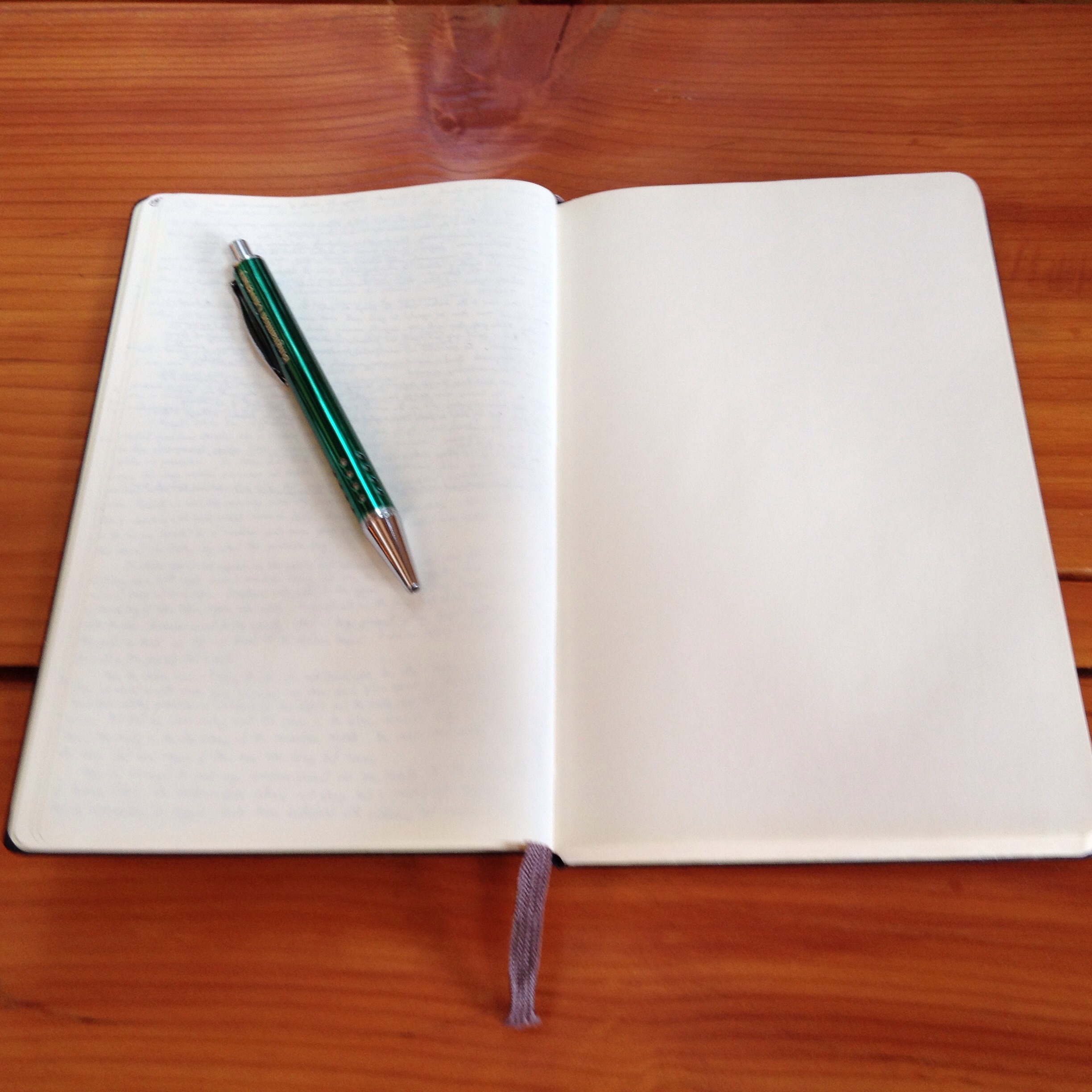
We let technology drive our lives.  It comes with costs.  I recently talked to a young person who was buying a nice journal and some writing implements to use in it.  They told me that although they’d grown up with computers, and the internet, they wanted the very human experience of writing by hand.  My default for taking notes is still by hand.  If only I had done that when adjunct teaching…. I remember well how frantic those days were.  I was teaching up to eleven classes in one year (a typical professor has three or four), driving between two campuses.  Eating in my car.  I didn’t really have much of a chance to note individual artworks in a notebook, figuring I’d be pining to remember them many years later.  I could use Ariadne to help me out of this labyrinth.  I know right where she is, but the isle of Naxos is inaccessible.


Second Friday the 13th

It’s a measure of how regimented my life has become.  The 9-2-5 workday is ruled by the calendar in a way teaching wasn’t.  But on this, the second Friday the 13th of 2026 I figured I’d reveal something that only repetitive calendar watching taught me.  It’s so simple many children probably know it, but it is something that being a drone taught me.  Ready?  Unless it’s a leap year, the dates in March are the same as they are in February.  Mathematically (and I don’t think that way) this makes perfect sense.  February’s 28 days are evenly divisible by seven, something that isn’t true of either 30 or 31.  That means in three years out of four, March begins on the same day of the month that February does.  So if February has a Friday the 13th, so does March.  

Photo credit: Andreas F. Borchert, Wikicommons

I’ve confessed to being interested in holidays and significant dates.  Last month we had Friday the 13th before St. Valentine’s Day on the 14th, and the following Monday, the 16th, was Presidents Day.  A special long weekend.  This kind of syzygy always catches my attention.  I knew even then, however, that Friday the 13th would recur in March.  The only extenuation, in this case, is that St. Patrick’s Day is on Tuesday.  Now, I have some Irish ancestry and Tuesday always vexes me a bit.  Well, the coming Tuesday, I mean.  Green isn’t really my color.  I have a green sweater that doesn’t really fit anymore, but I try to wear it just about every year.  (I’ve had it since high school.  I can still fit into my college clothes—those that I still have, but alas, nothing green.)  I keep clothes until they literally wear out.  I can’t donate them because they’re rags by the time I’m done wearing them.  I grew up poor and that shows.

So here I am on Friday the 13th wondering if I should buy something green to wear on Tuesday.  You see, I take holidays seriously.  One of my unpublished books was about holidays.  I ended up using some of it in The Wicker Man, but May Day is still a ways off at this point.  Friday the 13th isn’t really a holiday, except for horror fans.  I’ve only seen the first two movies in the franchise—slashers have never been my favorites.  So this is just another Friday at work for me.  It feels sort of like the movie Groundhog Day.  The calendar just keeps telling me it’s a work day.  But at least on Tuesday I’ll be wearing green.  And if I decide to act on my impulse, contrary to my usual practice, and spend money on a sweater instead of books, maybe it’ll even be something new.


Lap Dog

Recently my laptop had to be in the shop a couple of days when a component went bad.  This became a period of discovery for me.  My laptop is my constant companion.  I’m not a big phone user and I have no other devices.  Suddenly I had to live without something I’d come to rely upon.  It was, in a way, a grieving process.  I’ve grown accustomed to being able to check in on the internet when a thought occurs to me.  Flip open the laptop and look.  Or, if I want to watch a movie, streaming it.  Even if it’s a matter of my wife and I wanting to see a “television” series for an evening’s entertainment after work, it has to be done through my laptop.  (No other devices will connect to our television, which is, unfortunately, beginning to show signs of requiring replacement.)  Just ten years ago this wouldn’t have been such an issue.

Getting the time to take the laptop in required advance planning.  This blog, for instance, is dependent on my laptop.  I can’t tap things out with my thumbs on my phone—I don’t text—and my phone isn’t that new either.  I had to pre-load several blog posts before the laptop went away and figure out how to launch (or “drop,” as the terminology goes) them from my phone.  I’m not sure of my neurological diagnosis, but I am a creature of strong habit.  That’s how I get books written while working a 9-2-5 job.  I’m used to waking up, firing up the laptop, and writing for the first hour or so of each day.  I had to figure some other way to do this, without wearing my thumbs down to nubs.  This blog is a daily obsession.

And then there was the emotional part.  The day I dropped the laptop off—it had to be a weekend because, well, work—I was despondent both before and afterward.  Listless, I couldn’t start a new project or even continue work on any because I’d already backed up my hard drive and would risk losing any changes made.  (I don’t trust the cloud.)  Then I thought, how did I ever survive in the before time?  I only became a laptop junkie this millennium, and the majority of my life was in the last one.  I recognize the warning signs of addiction.  During this period I decided to unplug as much as possible and read more print books.  Perhaps that’s the most sane thing I’ve done in quite a long time.


Life’s Work

Here’s the thing: religion (or philosophy) is my life’s work.  By that I mean that I can’t just casually encounter an important idea that impacts larger life and just let it go without wrestling with it first.  As a professor that was expected.  As a paid seeker of the truth, you dare not ignore new information.  When I found myself unemployed with a doctorate in religious studies, the only jobs I could find were in publishing.  Now, publishing is a business.  And since I was a religion editor (still am), that meant that I had (have) to encounter new and potentially life-changing ideas and simply let them lie.  I assess whether they might make a good book, but I’m not supposed to ponder them deeply and incorporate them into my outlook on life.  Problem is, I can’t not do that.  It’s an occupational hazard.

Some presses, I understand, won’t hire an editor with a doctorate in the area s/he covers.  I think I can see why.  It’s maybe a little too easy to get overly engaged.  I work with other editors with doctorates in their areas.  I don’t know if they have the same troubles I do or not.  The fact is, other than religion/philosophy there aren’t many other fields that qualify as dealing with ultimate questions.  History, for example, may be fascinating, but it’s not generally going to change your outlook on life, the universe, and everything.  And so I find ideas that I need to keep track of since they might have the actual truth.  But that’s not what I’m paid to do.  I sometimes wonder what would’ve happened had I been successful in becoming clergy.  They too are paid to wrestle, but they are expected to always end up on the side of the organization.

There are people cut out for a very specific job.  No matter what else I do, I think about ideas I encounter.  Especially the big ones.  In the academy this was applauded.  Elsewhere, not so much.  The possibility of ending up in the job you’re made for isn’t a sure thing.  It seems we value economics more than dreams.  Or than systems that help people fit in with their natural inclinations.  Then again, should I really be thinking about things like this when work is about to start?  I should be getting my head in the game, shouldn’t I?  But here’s the thing: religion (or philosophy) is my life’s work.


Unexpected Thoughts

The unexpected changes things.  We in the western world live under the false assumption of permanence.  We build something and it remains.  Well, any homeowner knows that constant maintenance is required, but still.  Then something unexpected happens and everything changes.  And it can be in the middle of a work week.  A death can lead to quick decisions and changes of a usual course of actions.  I wrote some funereal thoughts earlier, but a hastily planned drive all the way across Pennsylvania was organized just as a bomb cyclone hit our area.  We were thankfully spared feet of snow, but I had to deal with shoveling before driving early the next day.  After the funeral, a kind family member had invited us to her home, which we’d never visited before.  My wife and I drove there the night of the funeral.  The next day we had to cross the state of Pennsylvania again.  And then back to work on Thursday.

Something has fundamentally changed in my life, but still work expects the same Steve who was somewhat unexpectedly out of the office on Tuesday and Wednesday.  Thursday nothing has fundamentally changed at work, but in my life.  Even my usual morning routine feels off as thoughts constantly wander back to the intense previous two days.  And Monday’s stressful weather.  How the weekend before all plans had to be cancelled to, as the song goes, “let it snow.”  My mind, which operates largely on a routine schedule, has been shaken.  Jarred.  And yet, work persists.  Readjusting on a Thursday is difficult.  It’s as if I’d forgotten how things were usually done.  How did I use to sleep?  How did I use to drink so much water?  How did I jog before sunrise?  It was all routine last Friday.

Last Friday.  It was a work day, but I could jog.  The snow had melted.  We knew the drive was coming, but the weather painted a huge question mark over it.  It seems, this year, just when that illusory normalcy has once again been established, winter rudely intrudes.  Some Good Samaritan plowed all the sidewalks on our block on Monday, relieving a bit of the pressure.  But not the anxiety.  February in Pennsylvania is anything but predictable.  It is the poster child of change.  Back home on Thursday I was remembering how to jog on the streets—my usual trail still hasn’t melted—wishing this winter would finally end.  I reached our house where I noticed something where the snow had melted while we were gone.  The daffodils I transplanted last year were beginning to push through the soil.


Funerals

Attending the funeral of a teen is a somber experience.  I can’t even begin to imagine what tempests the parents are facing.  After having given my condolences last night, I became reflective.  My thoughts went back to my teenage years.  First of all, there was that disturbing song, “Seasons in the Sun.”  The Terry Jacks rendition was popular during my teen years and it haunted me even then.  Perhaps more influential in my own life was Alice Cooper’s album Welcome to My Nightmare.  And the context.  I was a somewhat sickly child.  Raised in the Fundamentalist camp, I thought about dying quite a lot.  I became comfortable with the idea.  In seventh grade I missed a lot of school, having come down with the flu, then chicken pox, then a flu relapse.  And yet another bout.  Lying at home, feeling sick, having had pneumonia as a kid, I’d listen to Cooper repeatedly and read the Bible.

One of the lines from that concept album that stood out to me was one of the spoken interludes.  “I don’t want to see you die, but if that’s the way that God has planned you…”  God has planned you.  There was a fatalism there that in the context gave me a strange sort of hope.  I listened to it over and over again.  Our teenage years are when we’re just starting to get a sense of what our lives might be.  Most of the time our expectations don’t match reality, and sometimes reality is simply outside of our hands, such as a with an incurable disease.  Back to “Seasons in the Sun.”  I found myself without the words I felt I needed to console the parents.  I realize my view is the odd one out.

Early in my own life, I found myself of a philosophical bent.  I wanted to know what the meaning of life was.  I guess I was looking for instructions.  Probably my senior year in high school I discovered existentialism.  I identified with that school, especially after learning that Søren Kierkegaard was a Christian existentialist.  That seemed to mean it was okay.  Existentialists believe “existence precedes essence”—we make our own meaning.  Life has been a lesson in that as I studied and worked in religion, which should be some consolation, for over half a century.  The skies are silent regarding the meaning we attribute to our lives.  The song on Welcome to My Nightmare continues, “You’ve only lived a minute of your life.”  And those words come back to me now.


Individualisms

As an individual that stands out in the herd, metaphorically (standing out  is always dangerous, I know), I don’t tend to follow trends.  Blending in isn’t my strong suit.  A current, or recent trend, was to be seen carrying a disposable coffee cup when in public.  At least for a while there, everybody was doing it.  Walking down the street, going grocery shopping, at the mall.  It was almost like a fashion statement.  Anybody who was somebody had a cup of warm liquid in their hand.  Perhaps in my case economics and personal choice made the decision not to do this.  Economically, a five-dollar cup of coffee is out of my range; I’m not a hedge-fund manager.  I haven’t gone out for coffee in some years because of the personal choice aspect of it: I gave up caffeine.  This was several years ago.  I didn’t like being addicted to daily coffee, so I stopped, cold turkey.  But I still like the taste of coffee—that was hard earned.

These days the personal water bottle industry must be a good one to be into.  I recently visited friends and I noticed everyone had their personal water bottle.  I tend to leave mine at home.  Yes, I have one for the basic reason that running downstairs to refill a glass with water multiple times a day would mean that I’d miss an awful lot of work.  I drink quite a bit of water in a day.  About a gallon when I’m not traveling.  In my regimented life, I have a water bottle that I fill four times a day.  I know its capacity and, trying to stay healthy, I drink it down whether I feel like it or not.  I tend to leave it at home, however, as I mentioned.  At this gathering of friends (which was at somebody’s house) everyone who didn’t live there had their personal water bottle.  I was just using a glass from the kitchen.

There seems to be a trend of being seen with your water bottle.  I recently had to buy a new one because I’d been using an old stainless steel bottle well over a decade old.  It’d been put in the freezer with water in it before a hike and the bottom had, naturally enough, convexed to the pressure.  Being the thrifty sort, I pulled out a hammer and rendered it unlikely to tip over again.  It worked for years, but had become unstable again. Since it sits next to a computer all day, I couldn’t risk it.  The first thing I discovered is that water bottles meeting my exact specs were very expensive.  It’s a trend.  So at our friends’ house one of them offered to buy me a cup of coffee.  We live in a day when you can get a decaf latte with oat milk, so I indulged in an old habit.  As we walked down the chilly street, coffee cups in hand, I realized that I’m just like everybody else.


Free Parking

Okay, so I don’t live on my phone.  I use it rarely.  I don’t text.  I don’t watch videos on my phone.  I don’t use it for listening to music.  One place, however, that I’m more or less forced to use it is travel.  Parking is one of the biggest offenders.  I was okay with ParkMobile.  I downloaded the app and began to use it.  It seemed that everywhere around the Lehigh Valley had agreed that this app was pretty nifty and that was the way to go.  Then other apps began to compete.  I had a presentation at the Easton Book Festival back in October.  At a meeting of local writers, I learned that one of the two parking garages in Easton had switched to Park Smarter.  So I downloaded the app so that I could park and do my presentation.  So downloading and registering for a new app.

Photo by Sven Mieke on Unsplash

Then I had to travel for business.  This involved crossing state lines and parking.  The parking garage in which I was to park had changed its “how to park and pay” website just about a week before I left.  I went to the new page and found out that they now use NexPass for parking.  Another app to download.  Another registration to fill out.  I hoped I’d be able to login once I got there.  Even with the familiar—and in my mind original—ParkMobile, that’d sometimes be a problem.  I’d get to the parking lot and my phone seemed to forget how to login.  It asked for my password, which was obscure and unique and forgotten, written down somewhere at home.  So I sat in my car, with an unreliable two bars, and reset my password, which involved checking my email and entering an authentication code they’d texted me.  All to park for an hour.

I’m glad not to have to walk around with a pocket full of change all the time, but all this tech only opens the door for scammers.  Already some of them use stickers that they place over legit QR codes on parking signs.  You scan the false code, enter your credit card number and voila!  You’ve been scammed!  Doesn’t it seem better to have one system that we all agree to use?  Or maybe at most, two?  Whose signs are regularly checked and maintained.  I know that there was a fourth parking app at one time because I had to use one whose name I can’t remember, once upon a time.  For those of us who don’t live on our phones, maybe they should reserve an exit lane for those paying with dimes.