Unwritten

It has been clear to me for some time now that I won’t live long enough to finish all the books I’m writing in my head.  A good number of them have a head start on my hard disc, but as Morpheus says, “Time is always against us.”  The largest culprit in the 9-2-5 job.  Eight hours is a huge amount of time to devote each day, no matter how you slice it.  Since eight hours are required for sleep, or trying to sleep, that means work is half of each day’s waking hours.  The other half includes things like making meals, washing clothes, family time, paying bills, running the vacuum, exercising because you sit in front of a screen all day, and, of course, yard work.  Plants don’t have the same constraints that humans do and can get to the business of growing larger 24/7, as long as the weather cooperates.

Some days I grow reflective about this.  My daughter often asks why I don’t draw or paint more.  I love doing both.  The answer is time.  Even weekends are eaten up with shopping for the food you need to get through the week, and yes, the yard was bigger than I realized, and the house needed more repair work than anticipated.  You see, writing well requires a lot of practice.  And even more reading.  Any successful writer (which I am not yet) will tell you that reading is essential.  I do read a lot.  A friend recently sent me an article about a writer whose heirs calculated he’d read at least 4,000 books.  I know that I’ve read about 1,200 since 2013.  I also know that I can’t count them all before that time.  I went through our living room shelves and counted 500 I’d read there, and that’s only one room.  

Ironically, as a professor reading time is limited.  Unless you have a research only post.  I read a lot as a kid and a ton as a student.  When I started teaching I had less time, except on semester breaks and I tried to read as many books as possible during those interludes.  Then the 9-2-5 began.  My current pace of reading began when trying to live as an adjunct between Rutgers and Montclair State.  Montclair was a 70-mile drive, so between classes I started reading voraciously.  Ironically, the commute to my 9-2-5 spurred me to start writing books again.  By then I was practically fifty.  Since my nonfiction books take about five years to write, well, the math’s not in my favor.  Time to stop my musing, because the 9-2-5 begins shortly.


Nostalgic Shadows

Nostalgia is a funny thing.  Although it can strike at any age, somehow after the half-century mark it’s particularly easy to get swept into it.  As I written about many, many times, I was drawn into the Marilyn Ross Dark Shadows novels as a tween.  In my mid-to-late forties, when the internet made it possible, I started to collect all the volumes from 1 through 32.  It took several years.  I had to find them via BookFinder.com and our level of income didn’t support buying more than one every few months.  Then in 2022, having difficulty locating the last of the original series, I found a seller on eBay offering up the whole set.  The price for that set was less than the least expensive final volume I could find.  I did what any nostalgic guy would do.

We don’t really buy antiques, but I’d been looking for an office desk (this was before the scam).  I’d been using a craft table for a desk for years and it seemed that I really needed something with a better organizational range.  This led me to stop into a local antique shop.  They ended up not having much furniture, but they did have aisles of nostalgia.  A few weeks later when it was too hot and humid to be outdoors, I revisited the shop.  This time, relieved of the burden of seeking a desk, I was able to browse at leisure.  It’s like going to a museum but not having to pay admission.  I turned a corner and I saw something I’d never seen before.  A collection of Marilyn Ross Dark Shadows books.

It wasn’t a full set, but I had, prior to finishing my own collection, never seen more than one or two together in any single place.  As a child I’d buy them at Goodwill.  As an adult, on BookFinder.  All those years in-between, I always looked for them when visiting used bookstores.  I visit said shops whenever possible.  In decades of looking I’d only found one in the wild once or twice, and always by its lonesome.  This was a completely new experience for me.  It was also quite odd to be seeing them and not having any need to buy them.  I have a full set.  The nostalgia was almost overpowering.  I couldn’t help but think of how even a few years ago I’d been pawing through to see if there were any I hadn’t yet found.  All for reliving a bit of my childhood.


Secrets

It’s a mystery.  All parents do it and even when you’re a parent yourself you’re surprised to find your parents doing it to you.  Keeping secrets, that is.  Parents have their secret lives that they don’t tell their children, and when we’re given a glimpse into that life sometimes we’re shocked.  My mother kept a diary.  Not religiously, and not for much of her life.  I inherited one volume, and I’m afraid to read it.  I tend to be an honest guy.  I try to answer my daughter’s questions with complete openness.  There are, however, some things I won’t talk about.  My secrets.  And despite the fact that I reveal something of myself daily on this blog, I do have many parts of my life that remain unrevealed.  Those of us who write sometimes don’t want everything we put down to be read.  Or maybe we do.

I used to keep a diary.  It was partially to remind me but also, in part, to explain myself.  It’s quite personal and I lost maybe two or three volumes of it years ago.  I stopped keeping it after I got married.  I guess I figured a Ph.D. and publication record would do the job for me.  Probably those missing volumes were with stuff left at home that Mom unwittingly threw away, like our old baseball cards from the early seventies.  Some of my stuff got damaged by water, foreshadowing what’d happen when we moved.  Perhaps they were thrown away then.  They had secrets, I’m sure.  Our private lives are a mystery to others.  That’s one reason that I try to be kind whenever possible.  We don’t know the burdens that others carry.  Why add to them by a sharp reply?  Even typing this, I’m not sure it will end up on the blog or not.  Other pieces haven’t.  Secrets.

Photo by Yogesh Pedamkar on Unsplash

Some intelligent animals try to hide things.  Corvids, for example, look around to see who else is there before hiding food.  I once saw a doe giving birth.  She was in a secluded glen in the early morning and I just happened to be jogging quietly by.  I’ve started multiple autobiographies.  I’m not sure anyone has an interest in reading them, but I have hope.  Despite my secrets, most of which I keep out of the autobiographical musings, I know I have a story to tell.  That’s why I keep at this blog, day after day, year after year.  It brings no money and has only a few followers, but it’s a chance to tell my story.  Even if I keep the secrets closely guarded.


One of Those Days

I recently lived a day directed by David Lynch.  Or at least it felt like it.  While I’m not at liberty to discuss the details, I can say it was a surreal experience that left me questioning everything.  Ever have one of those days?  It happened smack in the middle of work, forcing me to take an emergency personal day, if there is such a thing.  I’ve self-identified as an existentialist for many, many years—that may be changing in the light of Frankl—and the part I most identified with was the absurd.  It became clear to me, starting at least in seminary, how absurd my life was.  Strange things happen to me.  Always have.  I had a weird childhood and it hasn’t become any more normal since then.  Even so, some days are brought to you by David Lynch.

When I proposed to my wife, I told her that I couldn’t promise her much (I was functionally unemployed at the time, but applying for Ph.D. Programs) but that our life together would be interesting.  I doubt she would argue the point now, some 36 years later.  Even in a life defined by the odd—let’s use the existentialist word—absurd, some days stand out.  Days when, as Bruce Springsteen might say, you’re toppled over by “things you don’t even see coming.”  This particular day it was the direct consequence of the internet, our electronic metaverse, to borrow a term from Neal Stephenson.  The older I get the more I wonder if the blessing of constant connectedness is more a curse in disguise.  For thousands of years society got along without it.  Yet, as with most devils, there are definite advantages to dancing.

The next morning I saw a great horned owl while out jogging.  I know owls are difficult to spot and I’ve read enough about screen memories to make me wonder if something truly cosmic was going down.  I’d only seen one great horned owl before, and that was while jogging at Nashotah House.  I have been pondering my David Lynch day.  It actually grew into several days in which I felt completely out of control of my own life.  And the pneumonia vaccine didn’t help, donating a restless night and fuzzy head.  Some people, it seems, are magnets for the odd.  We don’t ask for it—it simply happens to us and we have to figure out how to respond.  Recognizing the absurdity may be a good start, right, Mr. Lynch?

Image credit: Alan Light, under the Creative Commons Attribution 2.0 Generic license, via Wikimedia Commons

An Explanation

Those of you who read daily might’ve noticed Friday, Saturday, and Sunday went by with no posts.  You may also remember I recently wrote about Job months.  There are also Job years.  This is an embarrassing and vulnerable thing to write, but my wife and I have been scammed for almost all of the money we had.  My computer had to be scrubbed (thus the silence of Job) and the last three days have been filled with filing incident reports, trying to remember what’s on autopay, and visiting the police and banks, making endless phone calls.  I have been a little distracted.  As my regular readers know, writing is therapy for me and I beg your indulgence as this blog, which has been pretty much daily for over fifteen years, might become a bit more sporadic.

I’m never been a great fan of the capitalistic system, but born into it, I have a general idea how it works.  One of the most difficult parts for me is when I think, “We’ll just…” and then realizing that we no longer have the financial safety net to do what ever “just” might’ve been.  This is not a welcome thing at 63.  I grew up poor, so I know what this feels like.  Retirement I don’t know what feels like, and it’s pretty clear that I never will now.  My books don’t sell well enough to provide more than an occasional book purchase of my own now and again.  That, of course, has been curtailed.

I do not understand the criminal mind.  I cannot comprehend how someone would knowingly target those of us who are aging and try to take everything we have.  At least one of the scammers was a young man.  My hope for him is that he may grow old and may, through some miracle, come to regret what he has spent his young life doing to complete strangers and try to help others instead.  I have my doubts that this will happen.  In any case, I know I have a couple of regular readers and I owe you an explanation.  Posts may become more regular again—I sincerely hope they will.  I do have some written in reserve.  But please know, as you read them, that they came from a different time and place.

Photo by K. Mitch Hodge on Unsplash

Seeking Meaning

Many people over the years have encouraged me to read Viktor E. Frankl’s Man’s Search for Meaning.  I admit to being put off by the unintentionally sexist title (I do remember the days when “man” was generic regarding gender, following the German usage from which it derives).  I finally got around to it and I’m glad I did.  I know that there has been some controversy around it but I found many of Frankl’s observations freeing.  The first part of the edition I read narrates his experience living in concentration camps during Germany’s mad phase.  Such things aren’t easy to read, but they are important, showing what happens when people are devalued by those in power.  It also proves a place for finding meaning in suffering.  The second part of the book introduces logotherapy, the school that Frankl devised.  It’s based on the idea that one’s search for meaning is essential for psychological well being.

Some of us grapple with the question of meaning constantly.  Why are we here?  What should we be doing?  Is there a purpose behind it?  Religions often attempt to answer these kinds of questions, as do various philosophical schools.  Nobody has the definitive, overarching answer, and Frankl doesn’t try to offer one.  There is a bit of existentialism in logotherapy, but the basic idea seems sound to me.  Seeking meaning helps you to carry on.  Frankl also considered finding meaning in suffering, which seems to be a noble goal, if quite difficult to achieve.  Most human lives involve suffering and it is often the biggest problem with which theodicy has to deal.  Finding meaning in it, if that’s what life hands you, seems to be reasonable.  His discussion of paradoxical intention was quite interesting.

My edition of the book has an introduction by Gordon Allport.  That name took me back to my college days when the Harvard professor’s equally problematic title, The Individual and His Religion was required reading.  Despite the pronoun, that was an influential book for me (unfortunately ruined in the flood after we first moved to this house).  I noticed that Frankl cited Allport’s book in his own.  I sometimes think I ought to replace Allport’s book, but I’m not sure that I’d be reading it again any time soon.  Besides, my lost edition had my own annotations in it.  A small measure of personal suffering and loss.  I am glad to have finally read Frankl’s work.  I certainly learned a lot from doing so.  Discovering that there is a psychological school based on finding meaning exists was news to me.  And it just makes sense.


Hello September

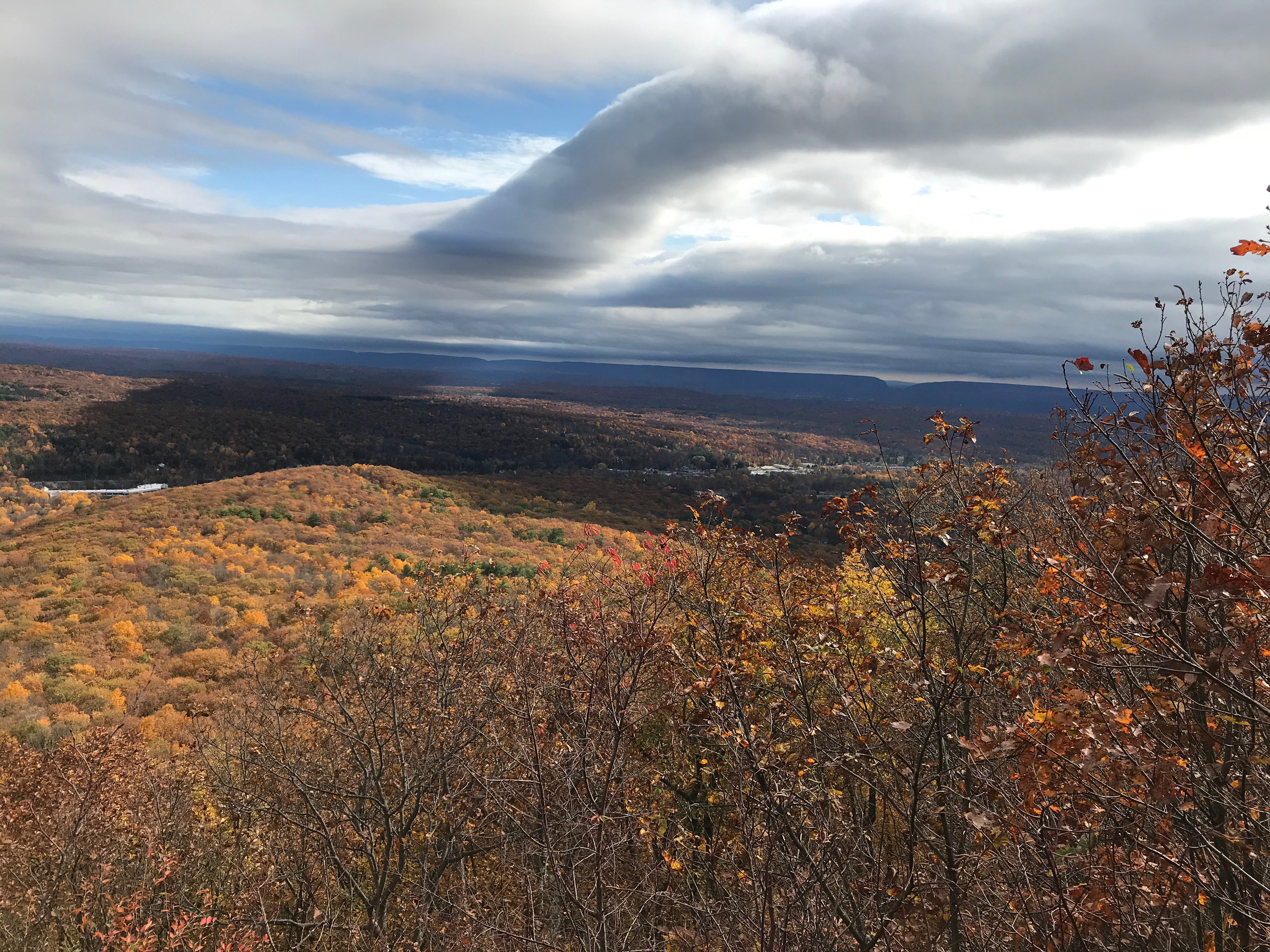
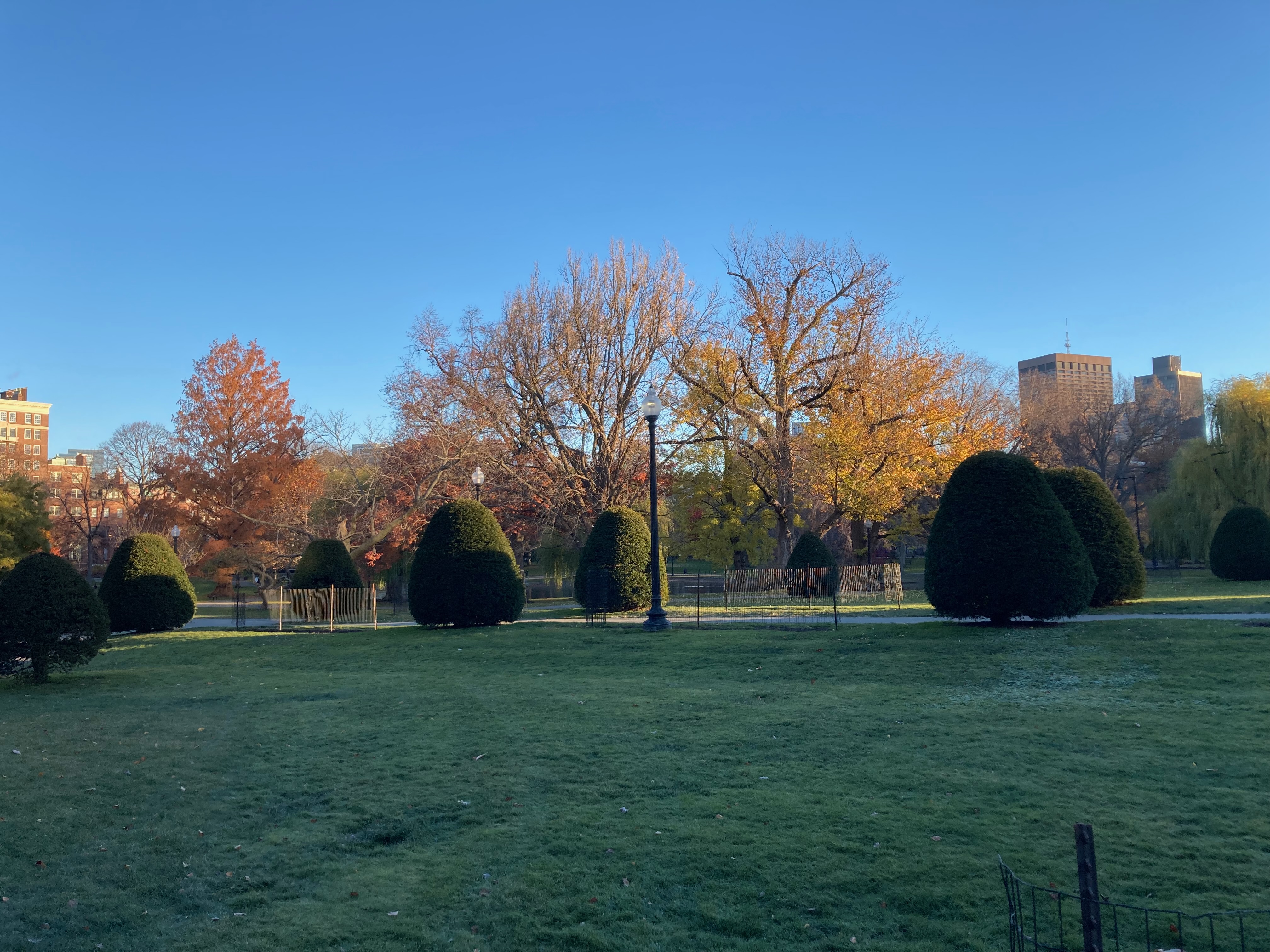
Labor Day is as early as it can possibly be this year and as late as it can possibly be next year.  We live in a time of extremes. In any case, it’s our hello to September and our goodbye to summer.  Since I still think of weather quite a bit, I’m reflecting on how most of the month of August around here has felt like autumn.  A month that I normally think of as consisting of hot dog days as summer reinforces its grip has been one of chilly mornings requiring long-sleeved jogging togs, and even fingerless gloves indoors for a morning or two.  July was hot and rainy.  The kind of hot that saps your strength and energy.  August felt like relief after that, but now we greet September, wondering what might lie ahead.  Many of the trees around here have already started to change, which looked a little odd when it was only August.

A couple weeks ago

Autumn has always been my favorite season, as it is for many people.  It is poignant, however.  Summer has its endless lawn mowing, but trades that off with not requiring a jacket to be outdoors and plenty of sunshine.  More than that, even traditional capitalistic businesses tend to slow down a bit in the summer, if for no other reason, because many employees take vacation time and everything has to put on the brakes a little.  Because we work at breakneck pace for the remainder of the year, this more relaxed season is a welcome respite.  We know, as nights grow cooler and longer, that it is time to put that away for another year.  It’s a season of transitions which is what makes it so melancholy.  Work starts to feel more serious after Labor Day, but the holidays are at least within grasp.  Halloween is really the next on the list.

I sometimes wonder if I’ll ever be able to retire, and if I do, if these day off holidays will be so important to me.  I’ve been interested in studying holidays pretty much all of my professional life.  Never really a fan of the capitalistic ethos, after being thrown into that world I quickly learned to look at holidays as stepping stones to get me through the year.  The first four months are rough.  They do have holidays sprinkled here and there, but March and April and most of May are holiday free zones.  That’s one reason the more relaxed fit summer is welcome.  The pace picks up again tomorrow, but for today, at least, we have one last ounce of summer to live.


Job Months

I’m sure you’ve had them too.  Job-like months when everything seems to happen all at once.  Your bank account grows anemic, making Quicken feel more like quicksand.  Our most recent started when the roof leaked yet again during heavy storms—I sure am glad climate change isn’t real!  Can you imagine how it’d be if we had extreme weather?  This house dates from the late nineteenth century and presumably, if such super-soakers had always been common, well, the roof would’ve been replaced down to the joists.  In any case, in our fourth call to the roofers over seven years, we faced yet another scary bill.  Then the sink began to leak.  Some minor repairs I can do myself, but this house was an either a DIY’s paradise or purgatory.  For us, mainly the latter.  

A couple years back there was a leak from the upstairs toilet tank.  Now, I’ve replaced the guts of a toilet more than once.  I bought the parts and went to work.  It was then that I discovered a previous owner had purchased a fancy-brand toilet for which toilet guts couldn’t be purchased (well, maybe from Japan or China, by slow boat).  You’ll probably agree that without an outhouse, a working toilet is more or less a necessity.  I watched YouTube and my wife and I went to Lowe’s and bought a new toilet.  I’m sure angels were laughing watching the two of use wrestle this metric-ton porcelain throne up the stairs (and demons laughed as we got the old one down).  Installing it looked straightforward.  When it started to leak, the plumber—we’re on a first-name basis now—came over.  He pointed out the faulty mounting pipe and asked if I’d installed it.  It was from the previous owner with high-class taste in toilets.  He turned to his companion and said, “This is why we’ll never go out of business.”

So a twenty-dollar toilet gut replacement turned into a $600 full toilet replacement.  This was in my mind when I had my head under the sink.  We seem to have stopped the water getting in from above, at least for the moment, but now it was clear that the base cabinet under the sink was going to need to be replaced as well.  I called Doug and he said he’d slot me in as quickly as he could.  I’m pretty sure Job didn’t have indoor plumbing.  He probably had to repair his own roof a time or two, though.  Only in his case, it happened just before God made a bet with Satan.  So the story goes.


Remembering to Forget

I think I’ve discussed memory before.  I forget.  Anyway, I recently ran across Ebbinghaus’ Forgetting Curve.  Now, I’ve long known that when you reach my age (let’s just say closer to a century than to 1), your short-term memory tends to suffer.  I value my memories, so I try to refresh what’s important frequently.  In any case, Ebbinghaus’ curve isn’t, as far as I can tell, age specific.  It’s primarily an adult problem, but it also resonates with any of us who had to study hard to recall things in school.   The forgetting curve suggests that within one hour of learning new information, 42% is forgotten.  Within 24 hours, 67% is gone.  This is why teachers “drill” students.  Hopefully you’ll remember things like the multiplication table until well into retirement age because you had to repeat it until it stuck.  Where you put the car keys, however, is in that 42%.

I’m a creature of habit.  One of the reasons is that I fear forgetting where something important might be.  The other day it was my wallet.  In these remote working days you don’t need to put on fully equipped pants every day.  Pajama bottoms work fine for Zoom meetings and if you don’t have to go anywhere, why fuss with the wallet, cell phone, pocket tissues-laden pants?  You can put your phone on the desk next to a box of tissues.  The wallet gets left in its usual pocket.  One day I pulled on the pants I last wore and as I was headed to the car noticed my wallet was gone.  Fighting Ebbinghaus, I tried to remember where I’d last used my wallet.  We’d gone to a restaurant the previous weekend that seemed the most likely culprit.  It could’ve fallen out in the car, or maybe down a crack in an overstuffed chair.  I couldn’t find it anywhere, swearing to myself I was going to buy one of those wallet chains if I ever found it again.

(I did eventually find it, in the bathroom.  Apparently this has happened to others as well.)  In this instance, my memory was not to blame.  It had been right in the pocket where I last remembered putting it.  But other things do slip.  Think about the most recent book you read.  How much of it do you remember?  That’s the part that scares me.  I spend lots of time reading, and more than half is gone a day after it’s read.  Unless it’s reinforced.  The solution, I guess, is to read even more.  Maybe about Ebbinghaus’ Forgetting Curve.


Mexican Philosophy

Once upon a time, I applied for a teaching post at Syracuse University.  (Actually, twice upon a time, but that’s a longer story.)  I was able to gather that one reason I failed to merit an interview was that the religion department prided itself on its dedication to continental philosophy.  Lacking imagination, I couldn’t see how that might apply to teaching Hebrew Bible but then again, I don’t know much.  I’m starting off with than anecdote because it is in keeping with the spirit of Carlos Alberto Sánchez’s excellent Blooming in the Ruins: How Mexican Philosophy Can Guide Us toward the Good LifeI recently wrote about how reading philosophy is something I enjoy when I can find the time, but what really struck me about this book is that Mexican philosophy is a counter to continental (i.e., European) philosophy and it is much closer to my own outlook.  I’m not in any danger of being offered a new job so it’s safe to say so.

I actually picked up a copy of Sánchez’s book because of a chapter that I’d read.  Much of the work begins with anecdotal accounts, followed on by something original, amplified, and solid (you’ll need to read the book to flesh that out).  Mexican philosophy rejects the idea of universals because each of us is socially located.  What may have seemed universal to European philosophers of the seventeenth through the nineteenth centuries, many of them quite privileged, simply doesn’t apply to a person raised poor in Mexico.  (Or Pennsylvania, for that matter.)  I read the continental philosophers in school, but they had not had my experiences.  My traumas.  And yes, Sánchez emphasizes that trauma is part of the picture.

While I can’t summarize this wonderful little book here, I can recommend it.  If you have an interest in the larger questions, and if you want some philosophy that doesn’t try to impress you with big words and complex grammatical formulations, this may be for you.  Sánchez writes as if he’d be willing to sit down with you and discuss the matters that make life worth talking about.  The chapter that sold me on his book was the one on the Mexican view of death.  It is only one of several that deserve a bit of your time to chew over.  So I was not welcome among those who specialize in continental philosophy.  Maybe I was looking in the wrong place.  Maybe those who are open to homegrown thinkers of sometimes deep thoughts live south of the border.


End of the Story

You know that feeling?  Like when you’re driving in thick fog and you know you should stop but you’re late and you have to keep going?  There comes a moment as you’re driving when you know that it’s going to end, and probably badly.  Yet you keep on going.  Trump has me thinking of the end of the world quite a bit.  I know there are many evangelicals out there praying for it fervently while the rest of us would like a little more time on this beautiful planet.  I’d be lying if I said I didn’t understand this outlook, because I do.  I grew up with it and I’ve never forgotten the sensation it caused.  And then I pondered that we are story-telling, and story-thinking creatures.  Perhaps other animals don’t think this way, but we constantly tell ourselves stories.

A story has a beginning, a middle, and well, eventually, an end.  We all know, at some level, that we’re mortal.  Life will end, and every completed story has an end.  Why not the world?  It’s a strangely haunting idea, the world continuing on without us here to make it interesting.  Plants will grow in any soil they can find, even microscopic cracks in the pavement.  Every year it’s like one day everything is suddenly green where only the day before we could see the sky through the branches.  And animals continue their quests for food, mates, and shelter.  Some live to hide while others strut.  Each has a role to play and if you watch them closely you’ll find yourself narrating their stories.  That rabbit.  That bluejay.  That fox.  They have a beginning, middle, and end.  If they can’t tell it, we can do it for them.  It comes naturally to us.

Long ago I learned how one version of Bible interpretation came up with the end of the world as we know it.  I also learned that this was contrived, just as all interpretations are.  This particular one has landed, like a seed, in the cracks of our mind.  It grows, just like that weed in the pavement.  This story must have an end.  We can imagine it no other way.  Even when we grow up and realize that the story was only one we told to children—children old enough to handle it, of course—we still have this certainty that an end is coming.  Like driving in the fog, we just know it.  Even when we realize that in reality we should be putting on the brakes.


Sad Joy

I sometimes make the mistake of thinking a short book will be a quick read.  Melancholic Joy is a case in point.  Every time I indulge in a book of philosophy I wonder if I missed my true calling.  As my wife is well aware, I’m prone to philosophical musings about the meaning of life although I tend to place myself among the existentialists.  As soon as I saw the title of Brian Treanor’s book it went on my reading list.  It’s short and I thought maybe a week would be enough.  But it wasn’t.  I do hope I can remember much of it.  A word to the wary, the first chapter is very depressing.  Treanor doesn’t sugarcoat the world in his quest on a Life Worth Living.  Those of us who ponder things deeply tend toward melancholy, in my experience.  But stick with it.  There is gold in this book.  Starting with chapter two I was reminded why I took so much philosophy in college.

The world is full of depressing facts.  By the time I was born we’d already devised ways to wipe out the entire human race.  Many, far too many, people live lives of suffering, much of which could be prevented if we didn’t have people like Donald Trump running things.  The political situation is so bad that I’ve disengaged.  Yet still, amid my melancholy, I do feel joy.  You need to parse words carefully here.  Treanor knows that joy and happiness aren’t the same thing.  For those of us predisposed toward melancholy, joy is probably much more common in our lives than happiness.  This book is one that led me to start underlining again.  I do hope to come back to it when my outlook becomes too bleak.  Treanor interacts with both other philosophers and other writers, even some who aren’t always classified as philosophical.  It is a nepenthe.

Some of us think incessantly and can’t help doing so.  It’s a bit difficult to be cheerful if that’s the case.  Melancholic Joy, if I can keep it in mind, may help with that.  There are sections where I had to go back and re-read because my attention had wandered (it happens to us all), but to do so was rewarding.  For anyone who finds many aspects of the world oppressive, and depressing, and who has a philosophical bent, this book is for you.  Just be careful with that first chapter.  Whatever you do, don’t stop there.


Dream Machine

I’ve reached the age where, instead of how well you slept, it’s the nature of my dreams that is more reliable projector of productivity.  You see, after a night of bad dreams I often wake up drained, lacking energy.  Entire days can be cast into this state of lassitude.  The only thing for it is to sleep again and reset.  The next day I can wake up after positive dreams, bursting with ideas and creativity.  New ideas come so fast that I can’t get them down in time.  Dreams. 

My entire life I’ve been subject to nightmares (no, it’s not the movies).  I still wake up scared at least once or twice a week.  More positive dreams have been struggling with these nighttime frights, and when they win, I have a better day.  I know, I know.  I should be in regular therapy.  The problem is time.  I see notes in papers and elsewhere of people younger than me dying.  On a daily basis.  The problem is I’ve got so much that I want to accomplish that I don’t have time to locate, pay for, and drive to see a therapist every week.  (The bad dreams come that frequently, so it stands to reason that weekly appointments should be on the script, right?)

The thing is, there’s no predicting these dreams or their timing.  My wife and I live a life of routine.  I awake early (anywhere from 1 a.m. To 4 a.m. these days) and begin writing and reading.  I jog as soon as it’s light and start work when I get back.  The 9-2-5 insists that you answer emails until 5 p.m., which can make for some very long days, depending.  After that we have dinner while watching some show we missed when it first aired, and then I go to bed.  That’s been the pattern ever since we bought this house nearly seven years ago.  Before that, we didn’t always watch things in the evening, but that doesn’t seem to make a difference in the dreams.

So I get up early and write down my thoughts for this blog, work on the books I happen to be scrawling at the moment (both fiction and non) and anxiously watch for sunrise, that ever shifting foundation.  And then work.  Always work.  But how well I work will depend largely on what was in my subconscious mind before I wake.  I have no idea if this is normal.  Knowing myself, it probably isn’t.  But I’ve reached the age where it at least starts to make sense.


Framing

Have you ever gone into one of those art museums where the frame of a painting is so lavish that you notice it almost more than the art it contains?  It certainly says something about me (or where I shop), that I prefer simple frames.  Those that ideally pick up and emphasize something in the picture.  I recently critiqued a book on this blog because the framing seemed off.  Not a week afterwards I found myself going down an internet rabbit hole (the topic isn’t important) because someone had framed a speech so that it seemed to be reading things one particular way.  With that framing, I watched the speech and was astonished.  Then I sent it to one of my brothers and he pointed out that it could be understood a different way.  At first I was embarrassed and defensive (to myself), but I went back and listened again and realized he was right.  I’d accepted the framing uncritically.

We are incapable of seeing everything.  From the shape of our eyes to the limits on our distance vision, we can only take in so much.  That’s what frames are for.  We put them around paintings, photographs, posters, windows, and mirrors.  The demarcate the limit of something.  This image goes only so far.  Televisions used to do that, although now they seem to take up a wall instead of a framed corner space.  But even so.  Movie screens too.  They provide important context.  We know, looking at that screen, that something limited to that screen will appear.  We know that what’s caught in the picture frame can’t reach beyond it, physically.  (I am excluding some modern art, of course.)  Framing is important.

I am glad for this recent object lesson.  I was letting myself get worked up over something I may have viewed the wrong way because I had been primed to do so.  It involved one of my deepest wishes, so emotion definitely played a part in it.  Critical thinking involves looking at the frame and thinking about it as well as what’s inside.  Those who excel at creating content make you forget the frame is there.  The artist isn’t painting to fill a frame, the frame contains the art.  We all know this on some level, I suspect.  Nevertheless, when someone presents us anything with the interpretation built in, we need to ask ourselves if that interpretation is inherent in the object or is it simply part of the frame.  And if it’s the frame, no matter how fancy, we need to remove it and look from a different angle.


Little Things

Those on anti-clutter campaigns (whose lives I can’t imagine) claim that we have too much stuff.  That may be true, but when you reach a certain age these realia can serve to remind us where we’ve been.  How we’ve become who we are.  We moved to our house in a whirl.  Neither my wife nor I had enough vacation days to take any time off and we had to move 55+ years of stuff over a weekend.  Lately I’ve been going through some of the boxes of little things you keep.  They were generally mixed in with papers I didn’t have time to file, bits of hardware, and a few things I’m not sure why I kept.  In the archaeology of my life, the layer labeled Nashotah House retains a prominent place.  It took many years before I could look at my little Nashotah House things without being overwhelmed by emotion.  Nearly twenty years on, I hope I’m beginning to get over it.

One of the little things I unearthed was a pepper shaker.  One of my students (now sadly departed) had made a label to express her frustration and humor at trying to learn Hebrew as a mature woman.  I’m probably now the age she was then.  This little artifact has been with me through a great number of momentous changes in my life.  It can still bring a little smile, however.  I see it and I remember Judy giving it to me with a laugh.  I probably shared it with the class.  Even now it has two-decade-old pepper in it.  The declutter experts would say it belongs in the dumpster.  They’re wrong.

Nashotah House was the only job on offer following those intense Edinburgh years.  As all of these things recede further and further into the past, they become more valuable.  No matter how small, these objects played a part in what I remember and rubbed me in a way that influenced my shape.  I don’t know what that final shape will be, but I jealously guard my little things, these boxes of years.  They are points of contact between my life and those of others.  I found many other pieces of myself in these miscellaneous boxes.  I know that someday, all things being equal, this stuff will probably end up in some landfill somewhere, waiting for some future archaeologist wondering what realia we kept back in the years when the world went insane.  And if s/he is really brave, they might even try some of the pepper on their future lunch.