Reclaiming the Past

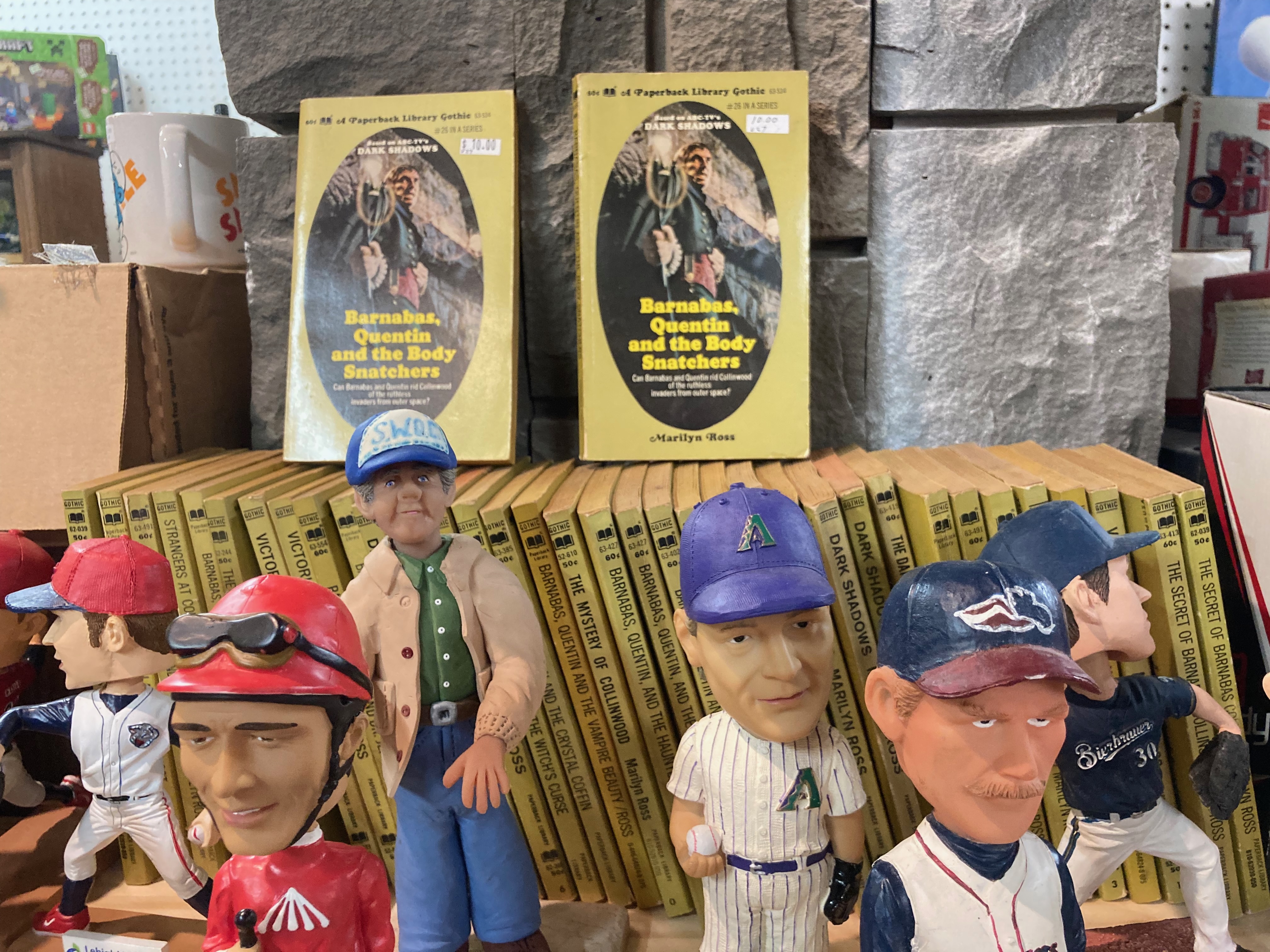
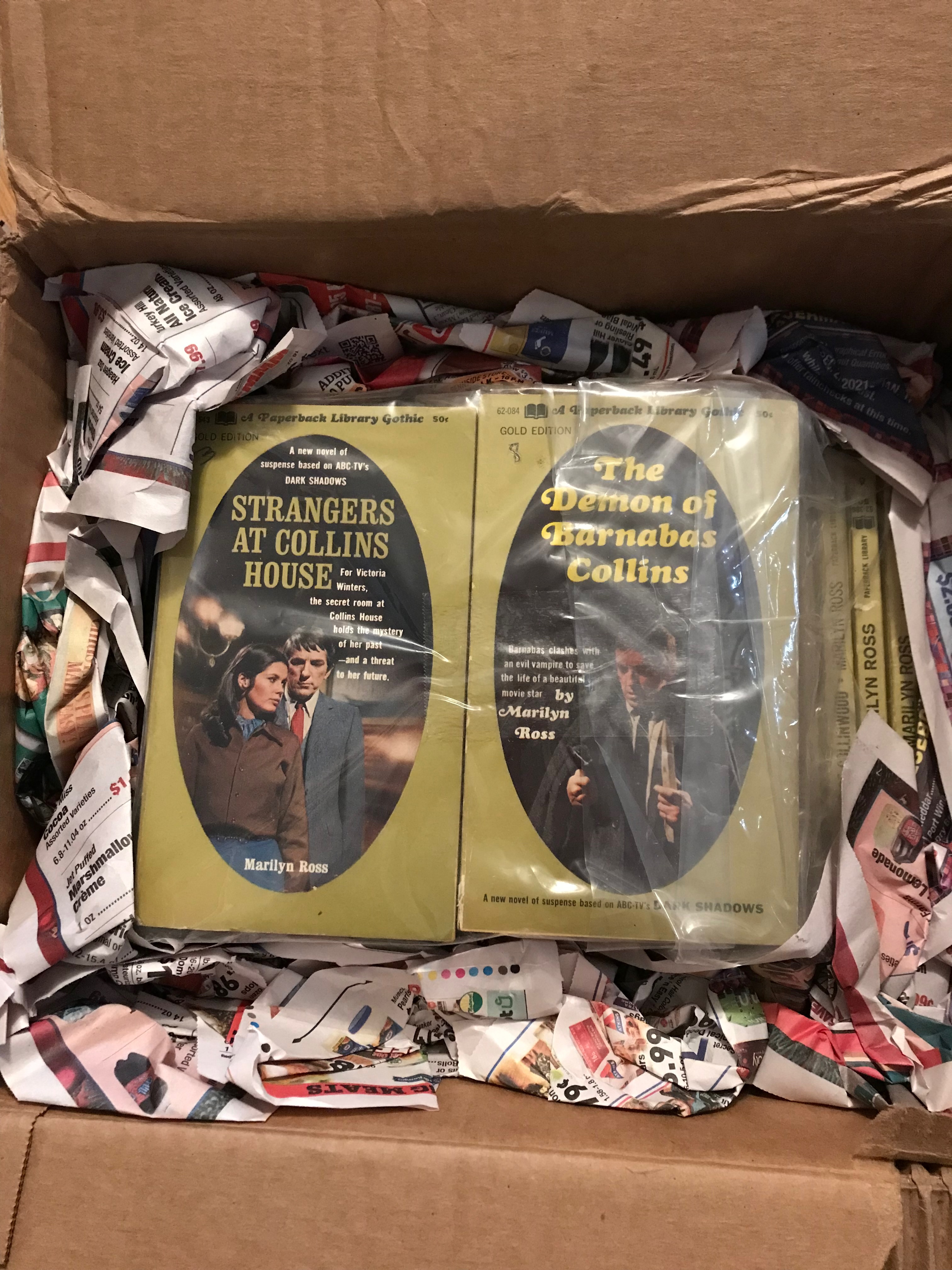
It started after Nashotah House.  That event shook me to my very core.  And I was approaching middle age.  I started taking an interest in my childhood.  I learned some uncomfortable truths that probably help explain the way that I am, but more tangibly, losing that job launched me back to both monster movies and the earnest need to collect books that I’d given up when I went to college to “grow up.”  Fortunately (perhaps) the internet had been invented and it was possible to locate used copies from the seventies.  I’ve written many times about the Dark Shadows books that I began collecting shortly after the incident in Delafield.  But there were others.  Many others.  Often it became a matter of identifying and finding the same edition that I’d had as a child.  (Modern reprints complicate this, but with enough patience the exact book editions can be found, and usually no more expensive than  contemporary bookstore prices.

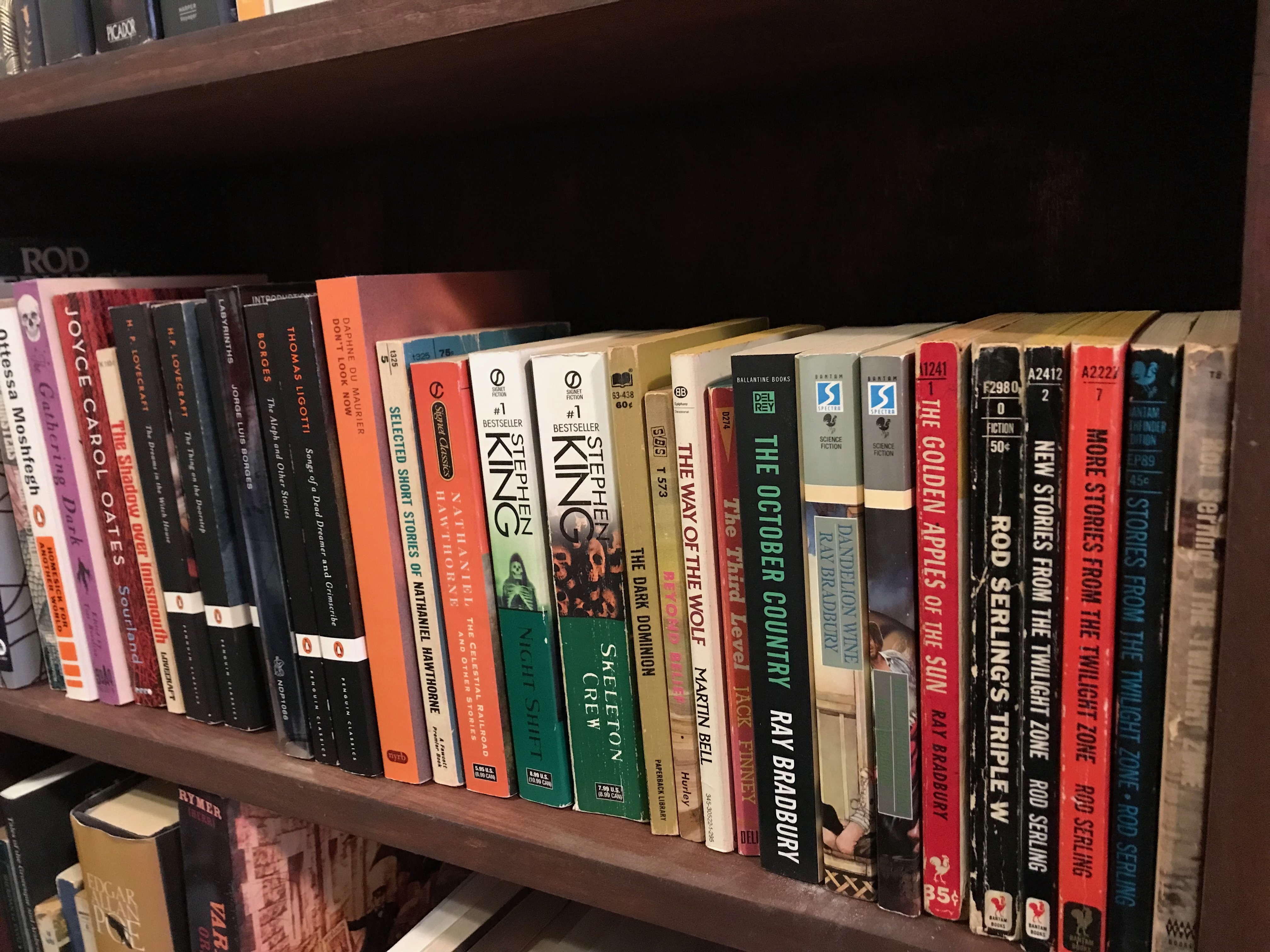
The goal has never been to replace all of my childhood books, but those that evoked a palpable sense of wonder in my young psyche.  This was strange because I was very religious and these books sometimes challenged what my fundamentalist upbringing taught.  Some years back I had to find the exact edition of Erich van Däniken’s Chariots of the Gods? that I had.  The curiosity did not extend to several of his other books from the seventies.  I got rid of these because they caused me to question my faith.  Teenagers.  In any case, I also had a compulsion to replace a book of Twilight Zone adaptations.  The cover of that book still sends me back to Rouseville.  Then I had a hankering to reread Logan’s Run.  It’d been reprinted many times, and the one I had as a kid was itself a reprint.  I needed that exact one.

My wife has been very patient with me.  I’m seeking something here.  I’ve always been haunted by the truth and there is a nagging feeling that I had grasped, only by the very tips of my fingers, a little bit of it before college.  Facing higher education (the first in my family to do so), I felt I needed to “put away childish things.”  The library that sustained me through those difficult Rouseville years was scuttled.  There’s a saying about babies and bathwater.  I’m beginning to think there may be something to it.  There were some very dark incidents in my early childhood, before I learned to read.  I think of them often.  And yet, a sense of wonder remains.  Mostly in the escapism of  old, mass market paperbacks from the seventies.


Mass Market

The mass market paperback.  This may very well be one of the best symbols of my younger years.  One of the largest distributors of mass market paperbacks (Readerlink) has announced that it will no longer distribute them.  It seems that the writing, instead of in readers’ hands, is on the wall.  Mass market paperbacks are the least expensive formats of books to buy.  Publishers have increasingly been tending to push trade size (about 6-by-9 inches)—they can charge more for them.  They don’t fit easily in your pocket, however, and well, they cost more.  Often, as someone who reads in public, I find myself wishing more literary fiction was still produced in mass market form.  Only the best selling authors ever make it down to that size.  I miss being able to stick a book in my pocket.  

The mass market paperback’s story began with railroad books, once innovated by my erstwhile employer, Routledge.  The form we recognize today only really took off in 1935.  When I was growing up, I considered all other formats somehow too big.  My book collection and reading habits began with mass market size.  When we moved to our house a few years back, I repurposed an old dresser as a bookshelf.  The top drawer slots were just tall enough for mass market books.  I discovered that I really didn’t have enough of them to fill that shelf.  Books have grown bigger.  Now, working in publishing I realize profit margins are thin in this industry.  Many publishers need the big sellers to help make up for disappointing sales of other titles.  (You have to have thick skin to be an author, I know from experience.)  They need to stay solvent.

But still, this feels like the end of an era.  Books in this format have been around really only less than a century.  Literacy—reading for pleasure—among the masses hasn’t been around much longer.  Books were expensive and were afforded by the elite, then cheaper forms and formats became available.  The electronic revolution has made much of life more convenient but some of us miss the challenge of having to fold a road map and never really knowing, for sure, where we are.  We’re also the ones who likely have a book in the car.  On the occasions when I don’t, I often regret it.  And one of the ways to encourage people to take books with them is to make them of a size that would sell thousands.  So many, in fact, that they would be given the title “mass market.”


Masses and Markets

The other day I had to go somewhere that I knew would involve a wait.  I’ve always thought of waiting as a theological problem—time is very limited and I don’t have it to squander while dallying about for my turn.  That’s why I take a book.  The problem is that many books I read, I feel, require explanation.  That’s because many of them are the 6-by-9 format preferred by publishers these days.  The idea behind the paperback that fit into your pocket—the “mass market paperback”—was that it was essentially disposable.  Cheap, easily printed in large quantities, it was handy for taking along while on a bus, plane, or submarine.  It didn’t take up too much space.  It was easy to keep private.  I miss the mass market paperback.

The majority of my books—fiction as well as non—are larger than the mass market.  That’s the price you pay for reading books that don’t sell in those quantities.  If your interests aren’t the lowest common denominator, you have to buy a copy that won’t easily slip into a pocket.  And everybody can see what you’re reading.  I work in publishing, so I get it.  The idea is that the book cover is a form of advertisement.  The thing is, reading is generally a private activity.  I post on this blog most of the books I read (but not all!).  I want to support those who write and actually manage to find publishers to advocate their work.  But I’d really like to be able to put the book into my pocket between appointments.  

The waiting room is a kind of torture chamber of daytime television and insipid magazines.  Most of the people in here are looking at their phones anyway.  I have a book with me, and I’m vulnerable with everyone freely able to read my preferences.  I want to explain—“I’m writing a book about demons, you see.  It’s not that I believe all this stuff…” and so on.  It would be so much easier if the book were small enough to be concealed by my hands.  If others want to know what I’ve been reading, they can consult this blog.  Well, the stats show they haven’t been doing that.  They might, however, if my own books had been published in mass market format.  Available in the wire-rack at the drug store or vape-shop.  Then the readers could easily hide their interest by putting it into their pocket.  None would be the wiser.