Pope-ulation

My brother, who art near Philadelphia, recently told me that the City of Brotherly Love began towing cars from the no park zone a week before the Pope’s anticipated arrival. There are those apocalyptic concerns for the commute into New York City this week as well. Papal visits are always big news, but Pope Francis has captured the hearts of many, Catholic, Protestant, and non-Christian alike, because of his obvious and sincere care for people. Mercy, kindness, sympathy, and empathy have long been overlooked in many organized religions, and to have the head of the largest Christian body in the world emphasizing just those things has been a breath of well, spirit. As our world has turned increasingly towards materialism fueled by a rationalism that says this physical world is all there is, a hunger has been growing. People need to be assured that there is some meaning in being people.
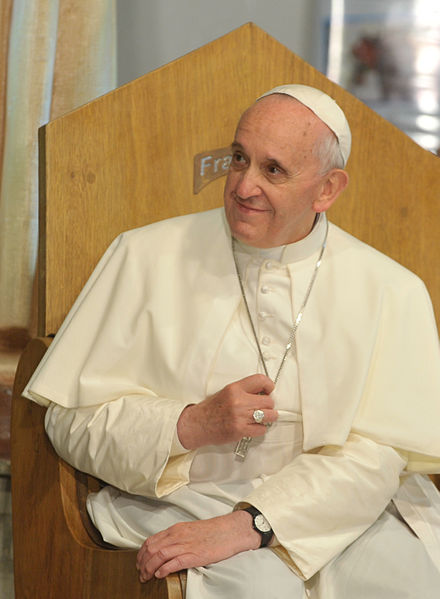
Photo credit: Tomaz Silva/ABr

Photo credit: Tomaz Silva/ABr

Theological purity is all fine and good, but it is only, literally academic. We send our clergy to seminaries to teach them to understand the rational part of faith. Many laity may not realize that a Master of Divinity is a three-year degree because it has to allow time for spiritual development. I was unlike most seminarians, having majored in religious studies. Coming into ministry from all areas of life—science, medicine, politics, business—many seminarians aren’t accustomed to taking school time to get in touch with their souls. It is a foreign concept in a world where we’re daily told we have no souls. Pope Francis is a pontiff with a soul. And the world has noticed.

We need those to whom we can look up. We need heroes not only of the action movie variety, but those of more human dimensions as well. Two of the most populous cities in the country are preparing for a kind of epiphany. America has long been a country of laissez faire ethics. Leave it alone and it will all take care of itself. We can all see through that. The northeast coast is bracing for a different kind of hurricane this season. It will mean traffic headaches, for sure, and no doubt many will be chagrined at all the fuss. Still, I have a difficult time seeing this as anything other than a hopeful sign. Perhaps we have a need for religious heroes still, after all.

Honest to God

“A lot of traditional beliefs are outside people and have grown into rigid things that you can’t touch any more”–these words come from a minister of the Protestant Church of the Netherlands, according to a report yesterday on the BBC. The title of the article, “Dutch rethink Christianity for a doubtful world,” touches on a theme mentioned earlier on this blog about the church in Sweden: clergy often live with their own doubts about God. Showing similar results to the Swedish study, the Protestant Church of the Netherlands hosts one in six clergy who are agnostic or atheist. I would suggest that the specialization of labor–as well as the persuasiveness of science–stand behind this phenomenon. In modern societies far removed from human roots, we really don’t pay much attention to the training others receive to take on their professions. We assume that higher education is doing its task and that professional bodies like the American Bar Association put up tests to deter those who make false claims. Seldom do we reflect that our off-the-farm lifestyle is a very recent human development and that we haven’t really had time to sort out whether all this complicated training ever really works.

Don't rock the boat...

When I was a seminary professor, I saw the dilemma this way: seminaries crave, indeed require academic respectability. Accrediting bodies insist that a substantial portion of faculty hold terminal degrees. Seminaries, however, are run by confessional groups that insist on certain unscientific worldviews and premises. Doctoral students, unless indoctrinated at faux institutions that block scientific evidence, are educated in a worldview that contradicts their religious training on several levels. Seminaries require educated faculty, but education itself undermines traditional beliefs. Some conservative groups have been aware of this dynamic for years and have begun establishing “universities” that intentionally bar subjects that challenge their worldview. In other words, they want clergy with false credentials who are willing to fight for the cause, while still receiving academic accreditation. Few insiders will blow the whistle since the modern church is built on this shaky foundation.

What is being discovered in northern Europe likely pulses beneath the surface of many developed nations (again, with their specialization of labor). After a person spends three years of training beyond college to receive a “Master of Divinity” degree there is high financial motivation to see the process through to the end. The faithful in the pews, far removed from the realities of theological education, expect the same old show. With employment options nearly nil outside the church, smart clergy know the score. It is better to live a life of quiet desperation, mouthing the party line, than to be thrown into that swirling maelstrom of survival called the job market. Organized religions began when people lived on the land, very few people were educated, and priests were left alone to do their job. Education is costly in far more than college tuition bills. As they are learning in the Netherlands, growing up is never easy.


Religious Democracy

An op-ed piece in yesterday’s paper raised some important issues concerning religion and the unfortunate fall of Mark Souder. The article, by E. J. Dionne, pointed out that Souder once said, “To ask me to check my Christian beliefs at the public door is to ask me to expel the Holy Spirit from my life when I serve as a congressman, and that I will not do.” This pointed affirmation of faith is precisely the dilemma of a democratic system that allows for freedom of religion. All religions (those that are serious attempts to deal with the supernatural, in any case) are defined by the conviction that their practices, their beliefs, their ethics, are correct. When a religious individual is elected, or even converted after election, in a democratic system their religion is given power. With their faith they vote on issues that cut across religious boundaries, binding those who do not agree to their personal faith stance by law.

Europe in the Middle Ages is perhaps the most obvious example of what might happen when one religious body (in that case, the Roman Catholic Church) gains excessive political power. Problem is, these days folks don’t agree on which is the right religion. America was not founded as a Christian nation, let alone an evangelical Neo-Con one. It has become, perhaps because of this fact, one of the most actively religious nations in the developed world. As befits a consumer mentality, religions are offered in a marketplace. Within Christianity alone there are aisles and aisles of churches from which to choose. When a public servant is elected and her or his religion dictates their votes, have we not just lost freedom of religion?

Teaching for many years in a seminary is a sure way of becoming aware of the limited training that religious leaders generally receive (if any). The short time they spend being educated does not equip them to think through all the implications of their convictions. They attain the pulpit and the congressional leaders who happen to be in their congregations receive an inchoate theology confused by their three years earning a “Master of Divinity” degree. Not all are equal to the task. Those religious leaders with promise, often because of internal church politics, end up in smaller venues, their voices effectively silenced. Those with the most strident voices reach larger congregations, often without the humility of admitting that the more you learn about theology they less you know. Their congregants, armed with faulty perceptions of their own religion, burst into their congressional chambers full of conviction based on problematic conceptions. It is a very serious dilemma.

Perhaps what is needed is an oath of office for politicians rather like the Hippocratic Oath for physicians. Perhaps they should swear to put their own religious outlooks in check while considering social issues on which their constituents vary widely. Perhaps their integrity in truly representing the population they govern would lessen the impact of their inevitable personal foibles. And naturally, this oath would not be superstitiously sworn with a hand on the Bible.