Remembering to Forget

I think I’ve discussed memory before.  I forget.  Anyway, I recently ran across Ebbinghaus’ Forgetting Curve.  Now, I’ve long known that when you reach my age (let’s just say closer to a century than to 1), your short-term memory tends to suffer.  I value my memories, so I try to refresh what’s important frequently.  In any case, Ebbinghaus’ curve isn’t, as far as I can tell, age specific.  It’s primarily an adult problem, but it also resonates with any of us who had to study hard to recall things in school.   The forgetting curve suggests that within one hour of learning new information, 42% is forgotten.  Within 24 hours, 67% is gone.  This is why teachers “drill” students.  Hopefully you’ll remember things like the multiplication table until well into retirement age because you had to repeat it until it stuck.  Where you put the car keys, however, is in that 42%.

I’m a creature of habit.  One of the reasons is that I fear forgetting where something important might be.  The other day it was my wallet.  In these remote working days you don’t need to put on fully equipped pants every day.  Pajama bottoms work fine for Zoom meetings and if you don’t have to go anywhere, why fuss with the wallet, cell phone, pocket tissues-laden pants?  You can put your phone on the desk next to a box of tissues.  The wallet gets left in its usual pocket.  One day I pulled on the pants I last wore and as I was headed to the car noticed my wallet was gone.  Fighting Ebbinghaus, I tried to remember where I’d last used my wallet.  We’d gone to a restaurant the previous weekend that seemed the most likely culprit.  It could’ve fallen out in the car, or maybe down a crack in an overstuffed chair.  I couldn’t find it anywhere, swearing to myself I was going to buy one of those wallet chains if I ever found it again.
(I did eventually find it, in the bathroom.  Apparently this has happened to others as well.)  In this instance, my memory was not to blame.  It had been right in the pocket where I last remembered putting it.  But other things do slip.  Think about the most recent book you read.  How much of it do you remember?  That’s the part that scares me.  I spend lots of time reading, and more than half is gone a day after it’s read.  Unless it’s reinforced.  The solution, I guess, is to read even more.  Maybe about Ebbinghaus’ Forgetting Curve.

Prior Memory

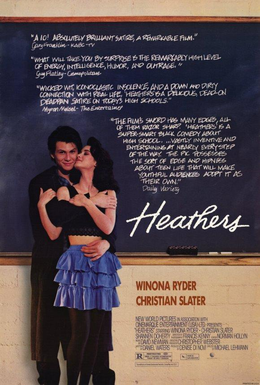
Sometimes I just don’t know where my mind is.  A few months back my wife and I decided to watch Heathers for the first time.  It got a bad rap when it came out but we finally gave in because there were so many cultural references to it that we felt we had to be informed.  Now none of that makes it worth comment.  What does, in what’s left of my mind, is that I was sure I’d written a blog post about it.  I hadn’t.  The thing is, I even thought I remembered some of what I wrote about it.  Uhn-uhn.  Didn’t happen.  So I guess I can trawl my memory and see if I can recollect what I thought I had already said.  Here goes.

The movie is a disturbing and funny look at growing up and its hard lessons.  Everyone said that it glorified suicide, but that wasn’t what I saw.  One person attempts it, and the others are all actually murdered and made to look as if they died by suicide.  Not a lighthearted topic, I know, but the students pretty much all want to live.  J. D. (read into that what you will) is the real criminal.  An outsider with a chip on his shoulder, and who has no problems being (or associating with) a criminal.  Or making others into criminals.  

As with many, perhaps most, adults, I remember the confusion of puberty quite well.  I wanted to be liked in school (I never had many friends) but I was quiet, bookish, and very religious.  Having grown up feeling generally unliked, I found acceptance, for a time, at church.   This movie captures that aspect well—the desire to fit in with a cohort that is particularly hostile (teenagers).

What brought Heathers back to mind after these few months was the fact that some classify it as a dark academia movie.  Dark academia generally has some schooling involved, sometimes directly, sometimes as implied.  There is a natural kind of darkness in high school and into college years.  This is something we may be in danger of losing with universities becoming glorified trade schools.  Not all of life is about finding a job.  The humanities suggest that being human is sometimes enough.  Heathers seems to have aged pretty well, being over thirty at this point.  Some of us took three decades to see it.  And if we feel like we’re losing our minds from time to time, at least now I’ll know I have indeed posted upon this movie.


Little Things

Those on anti-clutter campaigns (whose lives I can’t imagine) claim that we have too much stuff.  That may be true, but when you reach a certain age these realia can serve to remind us where we’ve been.  How we’ve become who we are.  We moved to our house in a whirl.  Neither my wife nor I had enough vacation days to take any time off and we had to move 55+ years of stuff over a weekend.  Lately I’ve been going through some of the boxes of little things you keep.  They were generally mixed in with papers I didn’t have time to file, bits of hardware, and a few things I’m not sure why I kept.  In the archaeology of my life, the layer labeled Nashotah House retains a prominent place.  It took many years before I could look at my little Nashotah House things without being overwhelmed by emotion.  Nearly twenty years on, I hope I’m beginning to get over it.

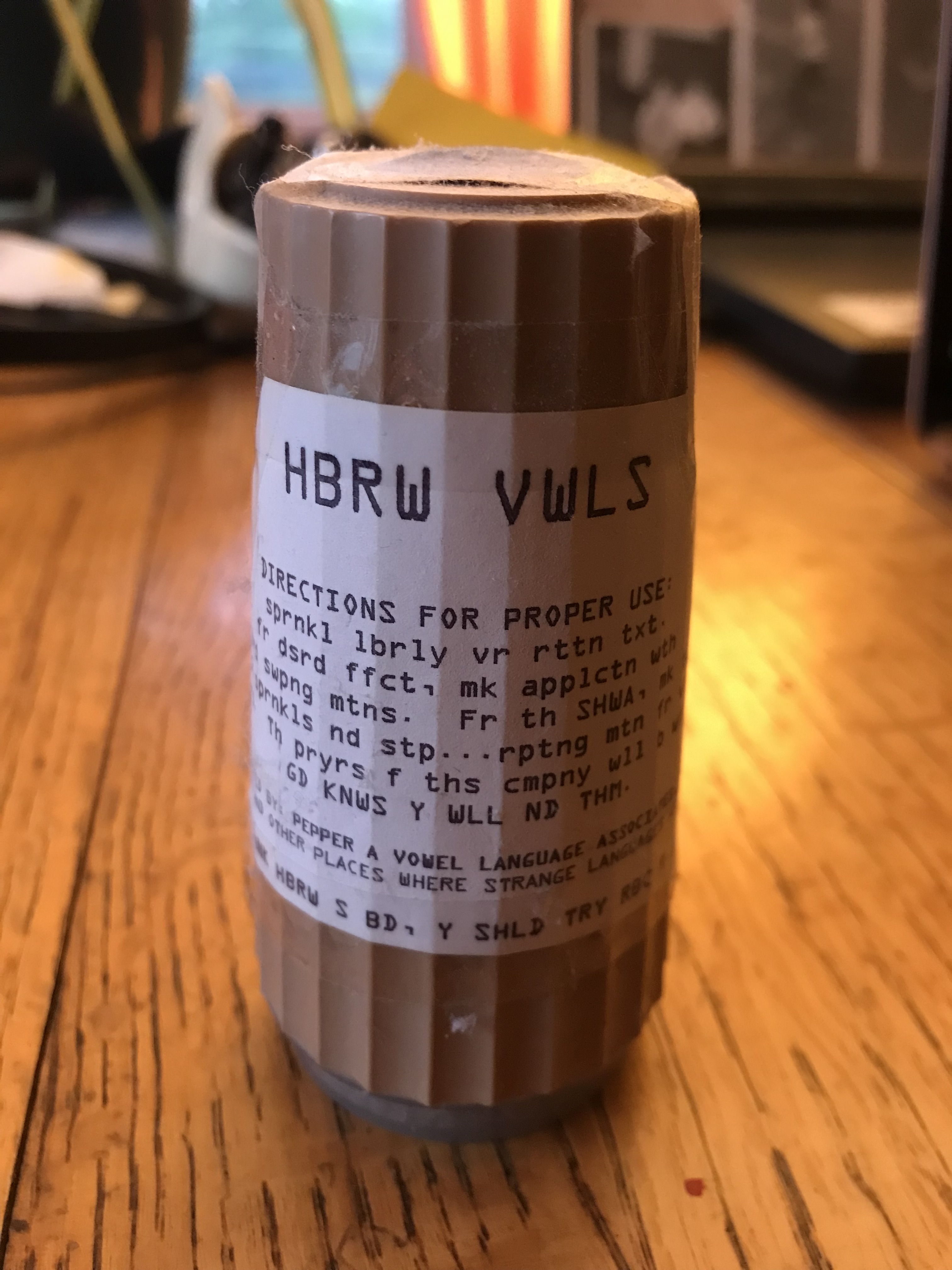
One of the little things I unearthed was a pepper shaker.  One of my students (now sadly departed) had made a label to express her frustration and humor at trying to learn Hebrew as a mature woman.  I’m probably now the age she was then.  This little artifact has been with me through a great number of momentous changes in my life.  It can still bring a little smile, however.  I see it and I remember Judy giving it to me with a laugh.  I probably shared it with the class.  Even now it has two-decade-old pepper in it.  The declutter experts would say it belongs in the dumpster.  They’re wrong.

Nashotah House was the only job on offer following those intense Edinburgh years.  As all of these things recede further and further into the past, they become more valuable.  No matter how small, these objects played a part in what I remember and rubbed me in a way that influenced my shape.  I don’t know what that final shape will be, but I jealously guard my little things, these boxes of years.  They are points of contact between my life and those of others.  I found many other pieces of myself in these miscellaneous boxes.  I know that someday, all things being equal, this stuff will probably end up in some landfill somewhere, waiting for some future archaeologist wondering what realia we kept back in the years when the world went insane.  And if s/he is really brave, they might even try some of the pepper on their future lunch.


Remembering Consciousness

I recently inadvertently read—it happens!—about anesthesia.  I’ve been relatively healthy for most of my adult life and have experienced anesthesia only for dental surgery and colonoscopies.  I’ve actually written about the experience here before: the experience of anesthesia is not like sleep.  You awake like you’ve just been born.  You weren’t, and then suddenly you are.  This always puzzled me because consciousness is something nobody fully understands and there is a wide opinion-spread on what happens to it when your body dies.  (I have opinions, backed by evidence, about this, but that’s for another time.)  What I read about anesthesia made a lot of sense of this conundrum, but it doesn’t answer the question of what consciousness is.  What I learned is this: anesthesiologists often include amnestics (chemicals that make you forget) in their cocktail.  That is, you may be awake, or partially so, during the procedure, but when you become conscious again you can’t remember it.

Now, that may bother some people, but for me it raises very interesting issues.  One is that I had no idea amnestics existed.  (It certainly sheds new light on those who claim alien abduction but who only remember under hypnosis.)  Who knew that even we have the ability to make people forget, chemically?  That, dear reader, is a very scary thought.  Tip your anesthesiologist well!  For me, I don’t mind so much if I can’t remember it, but it does help answer that question of why emerging from anesthesia is not the same as waking up.  Quite unrelated to this reading, I once watched a YouTube video of some prominent YouTubers (yes, that is a full-time job now) undergoing colonoscopies together.  They filmed each other talking during the procedure, often to hilarious results.  The point being, they were not fully asleep.  The blankness I experience after my own colonoscopies is born of being made to forget.

I think I have a pretty good memory.  Like most guys my age, I do forget things more easily—especially when work throws a thousand things at you simultaneously and you’re expected to catch and remember all of them.  Forgetting things really bothers me.  If you haven’t watched Christopher Nolan’s early film Memento, you should.  I think I remember including it in Holy Horror.  In any case, I don’t mind if anesthesiologists determine that it’s better to forget what might’ve happened when the last thing I remember is having been in an extremely compromised position in front of total strangers of both genders.  My accidental reading has solved one mystery for me, but it leaves open that persistent question of what consciousness really is.


The Unpersistence of Memory

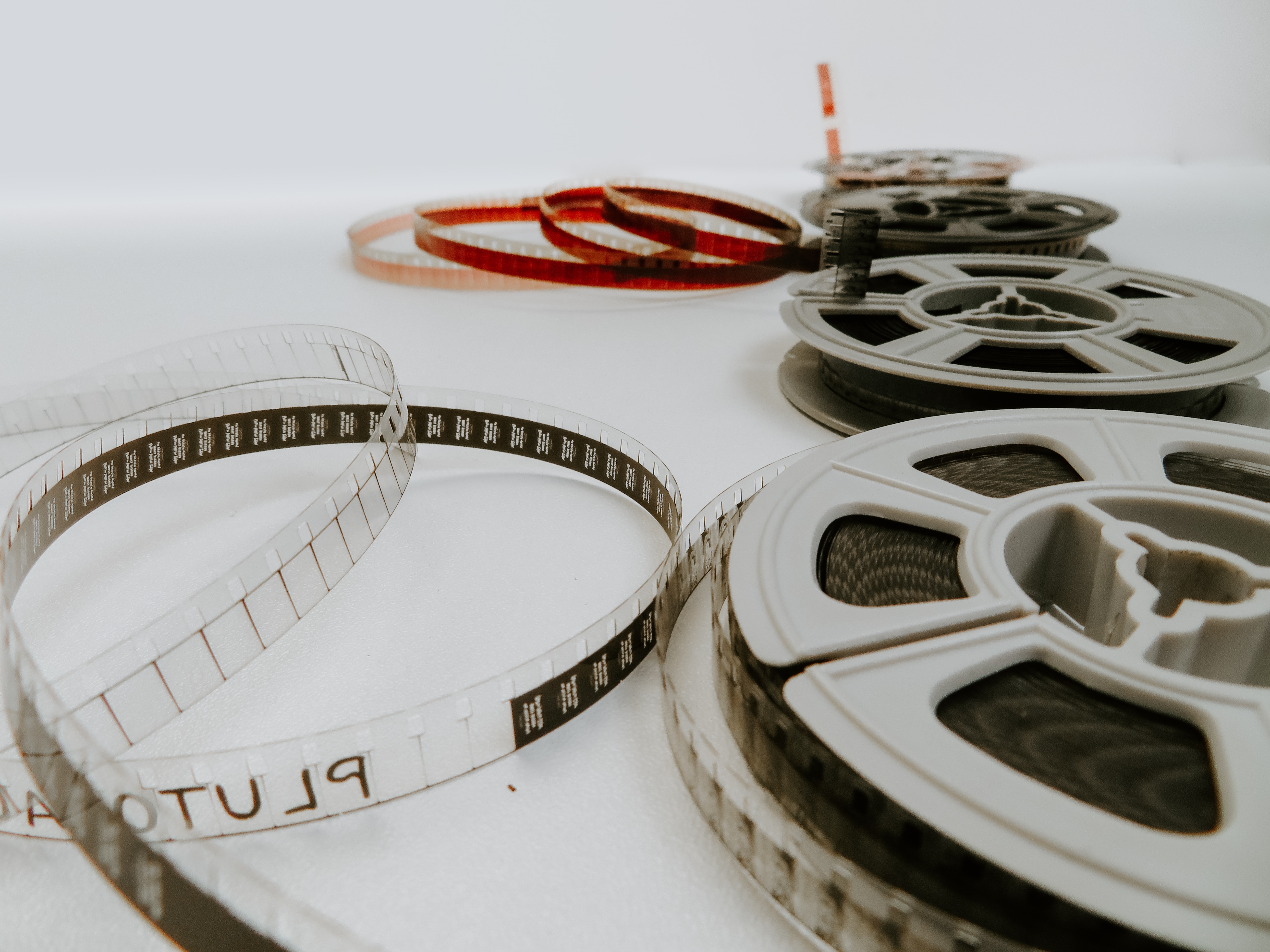
Perhaps this happens to you.  It’s a creepy feeling, regardless.  You’ve heard a lot about a movie and you decide to see it.  Since you’re not rich you decide to wait until it comes to a streaming service to which you already subscribe.  So far I’m sure you’re with me.  One evening, when the timing seems right, you sit down to see it.  You don’t know how it will end, but some scenes look familiar to you.  You nevertheless enjoy it—the jokes are fresh to you and you laugh.  You figure that you must’ve seen the familiar parts in the trailer.  You think the movie is quite good, and your spouse agrees.  Haunted by that uncanny feeling that parts were memories instead of just a trailer, you do some investigating only to learn that you did indeed see it before.  And it was only five years ago.

My memory is still reasonably good, I think.  I can recollect various movies from different ages of my life—including five years ago—but others failed to stick.  I hate to admit it, but this has happened to me more than once.  I’ve watched a movie, written a blog post on it, posted it, only to discover that I’d seen the film before and had even written about it.  Perhaps there’s too much stimulus entering this limited brain I have.  I can’t help but think it has to do with my work schedule; I started having such things happen when I was chained into a 9-2-5 day.  Before that, life seemed much more easily handleable.  As proof I would put forward the fact that my memory for movies, books, etc., before being dismissed from my calling is much better than it is for the years since.  Career malfunctions can have lasting effects.  A therapist once told me I was suffering PTSD.

Of course, I might just be getting older.  Still, it seems that memory works better in some circumstances than in others.  Movies have been an important part of my life, especially since being forced out of academia.  It’s troubling to find myself forgetting them.  As much as I enjoy cinema, I have limited time for watching films, and if one I rewatch wasn’t very good the first time, I’ve just used up a valuable Sunday afternoon when I could be researching my next book.  That’s the human dilemma, I suppose.  I Just can’t get over the idea that it has to do with work.  If it weren’t for that, the next book would be done already.  I’m sure this happens to everyone.  At least those with 9-2-5 jobs, if I remember correctly.

Photo by Denise Jans on Unsplash


Passing Words

I’ve never counted, but it must be dozens.  Maybe a hundred.  And they have very high memory requirements.  Especially for a guy who can’t recall why he walked into a room half the time.  I’m talking passwords.  The commandments go like this:

You can’t use the same password for more than one system/platform/device/account

You can’t tell anyone your password (duh!)

You can’t write it down

You can’t send your password to someone electronically (duh!)

You must logoff your device when it’s unattended

You will be held responsible for anything done under your login

The word of the Lord.

Now, how much more ageist can you get?  I’ve never counted the number of passwords I’ve had to generate for work alone but I can’t remember much without writing things down.  Even the chores after work.  I hear that there are “keychains” you can get that remember your passwords for you.  I suspect you need a password to access your passwords.  Replicate the commandments above.

I know internet security is serious business.  My objection is that you’re not supposed to write any of this down.  I carry a notebook around with me (it has no passwords, so please don’t try to steal it) to keep track of everything from doctors’ orders to how to call the plumber if there’s a leak.  I can’t remember all that stuff.  Some of it is personal information, but with everything you’re expected to keep in memory these days—at the same time we’re unleashing AI on the world—is madness.

A friend pointed out that AI books are written without authors.  If I remember correctly, my response was “AI has great potential, but let’s leave the humanities to humans.”  I hope I’m remembering that correctly, because I thought it clever at the time. I wish I’d written it down.  Those who make the rules about passwords aren’t as close to their expiration date as I am.  My grandmother was born before heavier-than-air flight took place and died after we’d landed on the moon.  Guys my age regale their kids (and some, their grandkids) by telling them telephones used to be attached to walls and you could walk away from technology at will.  Now it follows you.  Listens to you even when you’re not talking to it—our car frequently interjects itself into our conversations.  At least she isn’t asking for a password while I’m driving.  I couldn’t write it down.  Our love affair with technology is also driving.  More often than we suppose.  It’s driving me too… driving me crazy.


Forgotten Books

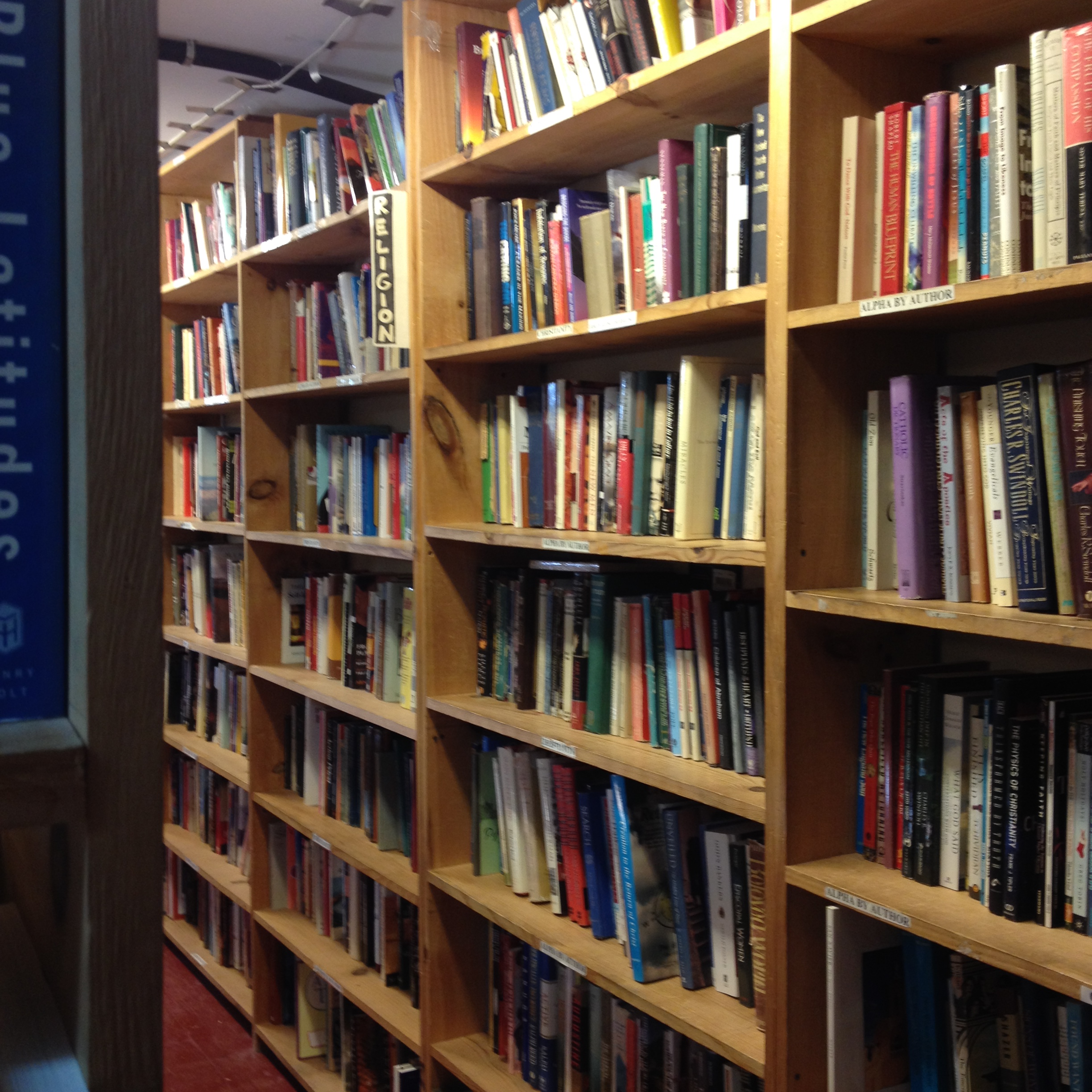
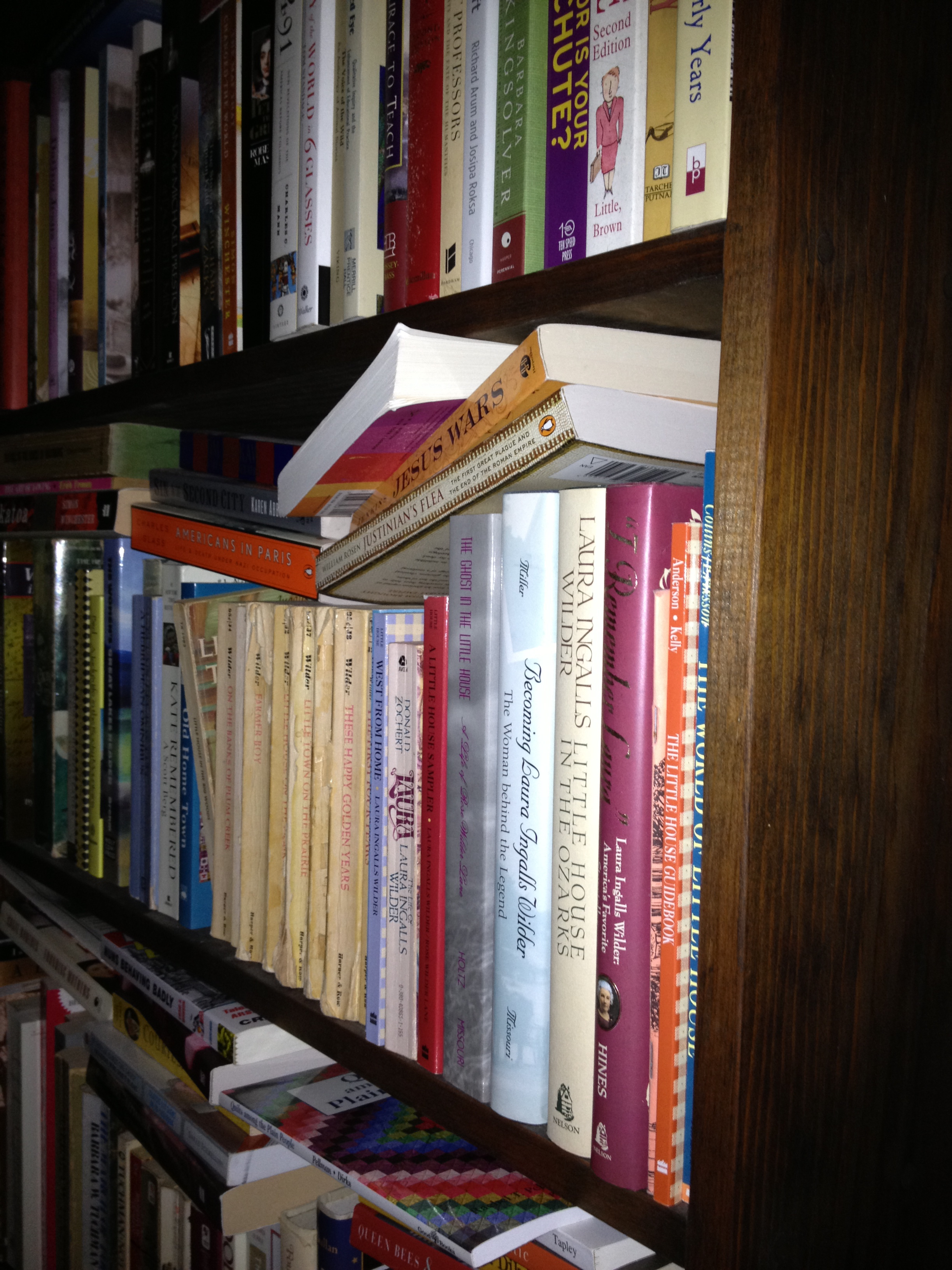
Would you rather never write a book or write a book that’s easily forgotten?  This question springs from a recent exercise of trying (unsuccessfully) to count the books I’ve read.  I mean going through and putting a finger on each one and counting, if I’d read it.  I encountered a surprising number of ordinals that evoked a blank stare—I don’t remember the book at all.   Or I remember having read it, but don’t recall what it was about.  (In one instance, the book was one my wife read, and not me.  That explained a lot!)  This got me thinking about what it takes to write a memorable book.  I’ve always been one to prefer either speculative fiction or the classics.  (I’m aware that “classics” are now being dismantled because they don’t represent all groups.  I’d call them “white men’s classics,” but a surprising number of them were written by women.)  If a book has a speculative element strong enough I will recall having read it.  I like weird stuff.

I’ve read books where parts of them, at least, have stayed with me for half-a-century.  I remember specific things I read as a child (and no, I’m not talking about Barney Beagle—although I do remember that too).  I like to believe that even the bits that are hazy indicate that the book isn’t truly lost, but buried somewhere.  The human mind has an amazing capacity to absorb things.  I’ve read at least three thousand books in my life—I have no idea how many, actually, but Goodreads has me at 1,000 and I started using it in 2013.  I’d been intentionally reading for about forty years already, at that point.  Three of them while working on my doctorate.

I recently (within easy memory) read a Doc Savage novel.  I’d read the entire series, or pretty near, as a junior high schooler.   Anyway, there were well over a hundred of them.  I remembered nothing in my recent re-read beyond Doc’s band of five companions.  The story was completely unfamiliar to me.  One of the more recent books I know I read but couldn’t remember the story at all was a New York Times bestseller.  I guess if I’ve forgotten the author he’ll still be okay on Mars in the future since many others must remember something about it.  I’ll be long gone by then, both on Mars and down here, I’m sure.  I do hope even by then something will remain of all the books I’ve read.


Here and There

There’s nothing like forgetting to make you remember.  Although we could scarcely afford it, we made many budget trips once we moved to New Jersey from Wisconsin.  As a family we used to keep detailed travel logs and we’d type up the results so that we could remember our trips.  For some reason, drifting about after losing a career, I stopped taking such notes.  Fortunately our digital camera time-stamped the photos.  I spent months organizing them only to have the external hard drive on which they were stored fail.  I’m now getting around to piecing together a bit of a chronology.  “Blog” was originally a portmanteau for “web log,” and since I’ve had no instruction on how it should be done, I mix an actual log with mental musings.  I’ve been doing so daily since 2009. Results may vary.

This blog has helped me keep track of travel, but those hazy days after the Nashotah House incident in 2004 up until blogging in 2009 remain undocumented.  Looking at the time stamps on those photos, it’s clear we traveled quite a bit.  Of course, New Jersey is a somewhat of a feast and it’s within easy reach of quite a few fascinating places.  Even a weekend was enough to explore someplace exotic, relatively local.  We used to make literary road trips on Memorial and Labor Day weekends.  Sometimes even later into the season.  Somewhere in that fog we made road trips to Maine, Connecticut, and upstate New York.  And although I grumble about technology sometimes, were it not for those digital timestamps the dates would be lost forever.  Of course, if we’d kept up our travel notebook…

As an historian, looking back comes naturally enough.  Gorgias Press downsized in 2009 and for a couple of years I made a living as an adjunct professor.  Even so, we managed a few trips (some of them mentioned on this blog).  Things must’ve been less expensive then.  Or else having a mortgage changes your perspective (the roofers are coming yet again this summer).  And the pandemic kept us at home for three years.  Whatever the cause, the urge to stretch wings and see new places remains.  Of course, it’s important to recollect where you’ve been.  In the meantime, I’m trying to piece together what happened those first few years in New Jersey.  That’s the historian’s task—putting together the events of the past from bits of evidence.  It’s pretty clear why historians get excited when they have diaries or notebooks from which to work.  We are, after all, the historians of our own lives.


Dangers of Bookmarks

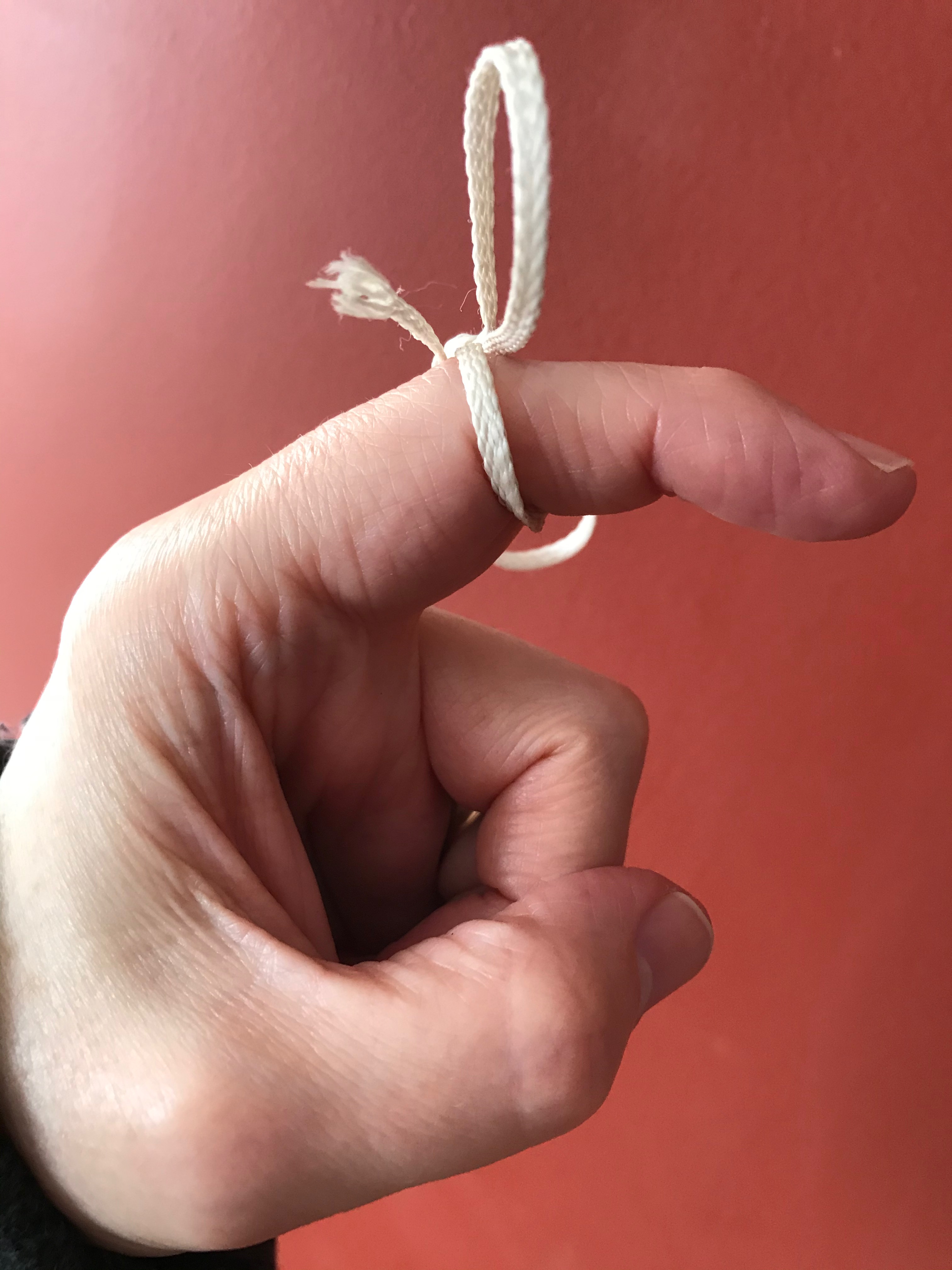
So you’re a busy person and you don’t always have time to act on something immediately.  Or you have to wait until the next billing cycle to afford something.  Daily life comes at you like a Russian missile, so you need to leave reminders around so that you don’t forget.  For me, those reminders often take the form of tabs.  On my browser I leave at least a dozen tabs open to remind me of things—I’ve got to get those cartons ready for mailing to recycle; thanks for reminding me.  I actually look forward to being able to click a tab closed because that means I accomplished something.  There are so many things to do and time is so rare.  Then the inevitable happened.

I was leading a Zoom meeting and I had to keep track of attendance.  Since I was leading I didn’t want to stop in the middle and write a bunch of names down, so I took a screenshot.  My poor laptop got confused and kept the screenshot on top.  Since the screen shot showed all the open windows (it’s not just the browser that’s open, but all the writing projects in the two different programs I use as well, all in various stages of completion), I couldn’t tell how to click out of the screenshot.  I couldn’t see the actual Zoom meeting or if someone was raising her or his hand.  I tried to keep the discussion going while trying to get Zoom back to the front.  I began clicking any window shut that I could.  Finally Zoom reemerged.

After the meeting I had to examine the carnage.  My browser had been closed and when I reopened it, the option to restore all closed tabs from the last session was grayed out.  I would have to rebuild my tabs from memory.  It was because of my overwrought memory that I’d kept those tabs open in the first place!  Before going corporate, when I could take my time and pay attention, I had a very good memory for things like this.  (As a professor I had time to act on things during the day instead of constantly thinking “I’ve got to get back to work.”)  Now too much is happening all the time.  I’m having Zoom meetings after work when I normally get my day to day business done.  So I’ve added a new task to all the others—trying to reconstruct my lost tabs.  Yes, it’s a classic “first world problem.”  At least that’s what I think it’s called—let me open a new tab and check.

A different kind of bookmark

Misremembered

There may be a name for it, but if there is I don’t know it.  Like the more well-known Mandela Effect, it’s a strange memory issue, only it affects the individual.  The Mandela Effect is a collective false memory, often involving the death of someone famous.  Many people—sometime very many—think, for example, that someone famous has died.  The death, or other false memory, is posted in the past and people who don’t know each other all agree that it happened, only it hasn’t.  Instead, what I’m talking about happens to me once in a while and perhaps it happens to others.  Most recently I was listening to The Proclaimers’ song “I’m Gonna Be,” also known as “500 Miles.”  It’s got a catchy chorus and I was thinking it was an oldie, so I looked it up.

First of all, I didn’t know The Proclaimers were a set of twins from Edinburgh.  Second of all, I didn’t know they were (only) my age.  Third of all, I was sure I knew and heard the song from when I was growing up, but it came out in 1988, the year my wife and I moved to Scotland.  I was just stunned by this.  I was sure I’d heard the song, for instance, when I was in college and that it was an oldie even then.  I didn’t and it wasn’t.  In fact, the very year I could’ve first heard it I was busy making plans for an international move, getting married, and starting a doctorate.  This kind of time distortion can be very disorienting, and it says something about memory.

1988

Our lives are the stories we tell about ourselves.  Memory, in an evolutionary way, serves some basic functions such as recalling which other people you can trust, where good food sources are, and where the saber-tooths tend to hang out.  Those with better memories survive longer and procreate more and over time the trait becomes common.  Memory isn’t intended to recall specific dates.  I often wonder if something like the Mandela Effect isn’t behind Trump’s unaccountable popularity.  A kind of memory that refuses to believe the song came out in 1988 although clearly it did.  Believing false memories is the stuff of drama, of course.  That drama can take in whole societies because we misremember that we knew all about propaganda because we learned that in high school, but now we fall for it.  Or it may be a lonely moment when a song comes to mind and we think we’ve known it far longer than we have.


The Persistence of Streaming

I’ve had to start keeping a list.  If I don’t I’ll forget which movies I’ve streamed.  I suspect I’m not alone in this.  Electronic information is vapid and eminently forgettable.  If you go see a movie in a theater, you’re likely to remember it.  Memory of place and occasion aid the memory of plot and effects, I suspect.  To my knowledge I’ve never had anyone ask if I’ve seen a movie that I didn’t remember, if I saw it in a theater.  Streaming—maybe yes, maybe no.  A few weeks back I found myself streaming a film and thinking “this looks awfully familiar.”  The longer I watched the more convinced I was that I’d seen it before.  When it was over I checked.  I had watched it only a few months earlier.

When you buy a DVD or Blu-ray (or even a VHS tape), the physicality of it serves as a reminder.  Unwrapping the package, handling the case, loading it into your player—these are all keys, hooks upon which memories hang.  As I’ve intimated before, movies are, I believe, our modern mythology.  The idea’s not original with me, but think about how movies are often our frame of reference around the water cooler or with friends.  What did you think of Nope?  It’s a safe way to express our beliefs and aspirations.  Even if it’s not great, it’s helpful to be able to remember it when you want to.  Streaming, it seems, often lacks commitment.  Particularly if it’s from a free site.  (I use such only when the media are otherwise unavailable.)  Maybe there’s a reason it’s free.

Streaming asks little by way of investment, financially or psychologically.  It costs time, of course, and perhaps that’s the greatest siphon of all.  If you’re a busy person time is a commodity.  Spending some of it watching a movie—depending on who you are—isn’t simply entertainment.  Mythology gives us meaning.  I suspect that’s why we value those auteurs who break through the noise and manage to stand out in our minds.  Those who know what it is to captivate an audience.  Those who are really invested in their projects.  Like most books I read, the movies I watch come from a list.  I have a reason for watching them, often related to research.  And if you put the time into it, you want to remember it.  For that, I recommend keeping a list. (Have a written a post like this before?)


Remember the Doorway

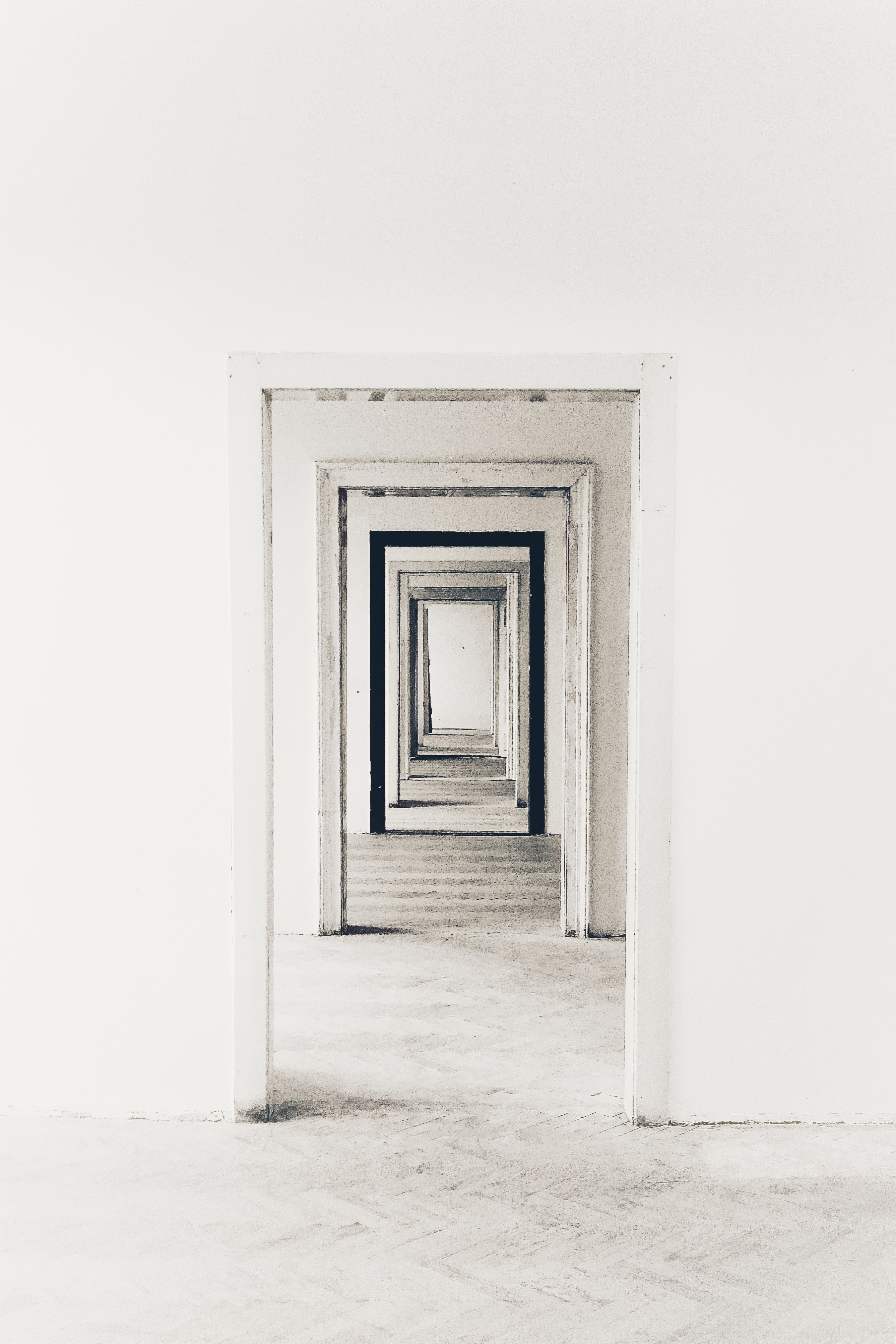
I’m glad it has a name.  And I’m also, relievedly, glad it’s normal.  The Doorway Effect.  I’m sure it’s happened to you.  You walk into a room and immediately forget what you came in for.  I’ve been afraid of some early onset of something because I’ve noticed it more and more, but it turns out that this is a normal brain function.  A recent article by Jessica Estrada explains that our brains are constantly framing.  A large part of that framing has to do with our physical location.  When you step through a doorway that framing changes and some of the residue (what I came in here for) might easily get left in your previous location.  In other words, it seems to be an effect of humans making different rooms for different purposes.  Our thought lingers in the place it was first born.

Photo by Filip Kominik on Unsplash

Our brains are fascinating organs.  Every time I read about how children’s brains form, I wish I’d studied psychology instead of religion.  How we could help our children if we understood what their brains just aren’t capable of doing just yet!  How many spankings could have been avoided if parents understood brain development?  Beating someone doesn’t teach anything.  Instead, we might try to learn how minds use brains.  Young boys can be quite reckless.  One of the reasons?  Their brains haven’t developed enough yet to think through the consequences of their actions.  Yes, they can push limits for other reasons, but their thinking simply doesn’t yet involve adult caution that (hopefully) comes with a developing brain.  One of the real consequences of this, for which I’ll volunteer as a poster child, is religion.

Children’s brains are not developed enough to accept and comprehend religious thinking until they’re about 12.  We’ve known this for many decades now.  And yet, the theology of parents means they try to convince their children of religious truths before their brains are developed enough to sort it out.  Look at Congress and the Supreme Court to see the results of this.  Most people never seriously question their religion.  For many it was instilled in them as children, before their brains could properly process it.  The rest of the country pays for it with laws then enact.  We’ve known about this for decades and have decided that studying religion is a waste of time.  But I digress.  Now I forget what I started to say when I began this post.


Discovering Diaries

When you move, there are always things that get lost.  I wrote about Nietzsche recently, but one of the puzzles from my latest move, now approaching four years ago, was my college diaries.  (I have to be careful not to write dairies, since my spelling could use some attention.)  I used to keep diaries.  I haven’t done so since early in my married life, and even a little before.  While looking for an empty notebook for use at work, I discovered two diaries in the attic.  I’d been looking for them for, it’s safe to say now, years.  I spend quite a bit of time in the attic, so the fact that I didn’t find them in plain sight—a virtual purloined diary—was odd.  But not nearly as odd as what happened next.  

It was still part of our internet-free weekend.  Unable to get online, and having done my morning writing and reading, and with family listening to things in the background (I can’t read or write with background sounds such as music or talking), I picked up one of the diaries.  It was a lesson in the fragility of memory as well as how reading your own words from the past can make the present seem unreal.  It was a veil, if that’s not too Pauline, that came over me.  Who was that young man?  Was my life really that chaotic?  Were friends really that generous?  Did I really know that many people?  Why have specific ones stayed in mind while others who clearly meant so much of me slipped and fallen in my gray matter?

Like encountering a younger version of yourself, reading diaries opens new windows of self-reflection.  I guess I hadn’t remembered myself being as self-reflective as that man in his mid-twenties was.  Perhaps still is.  If you’ve spent any time on this blog you’re probably aware of my tendency to look at things from different angles.  To think things through.  My own brand of neurodiversity is what I think I have to offer.  I try to save my academic stuff for my published writings, but when as many years have passed, I wonder if I will look back on my early posts here and find myself asking who it was that wrote them.  Youth is a time of acquiring new experiences unlike any other.  Having grown up with so very little, the world itself seemed only days old back then.  If memory serves.


Reading Memory

I recently wrote about writing too much (as if such a thing were possible).  After posting that I thought of how much the same can be said of reading.  I like to believe that whatever I’ve read is stored in my brain somewhere, rather like my writing on all those external drives.  I get some hopeful hints of this when a fragment of something read long ago suddenly reappears.  It’s good to know it’s there somewhere.  What brought this to mind is that a book I’m currently reading used a significant term.  Overly confident as I only am when reading, I figured I’d remember where it occurred.  A few days later I’d forgotten.  “No problem,” I thought, “the index.”  Indexes are never perfect and I’m always amazed by what strikes me as being so important failed to make the author’s cut.  So it happened.

This particular book was compactly written, but even so, it was more than sixty pages ago.  It took a few days of skimming, and finally going through line-by-line to find the word again.  It was a capitalized word and I thought mere skimming would be able to pick it out.  No such luck.  Part of the problem, I suppose, is that since I’ve left academia I’ve pretty much stopped writing in books.  I always did it in pencil, but still—there’s something about that pristine page so carefully typeset and laid out.  Well, if I had all the time in the world I could re-read those first sixty pages again, but I don’t have time to read all the books I need to, so I grabbed my old Pentel and began marking the spots I wanted to remember.

When we age it’s recall that suffers.  I tend to think the memories themselves are still there, sometimes distorted, sometimes altered, but present.  Books, after all, can be reread.  If I read something while commuting to Manhattan, there is a good likelihood that some of it was occluded by the worries of work lying ahead, coupled with the anxiety of catching the bus back home at the end of the day.  Not to mention anything that might’ve been happening in real life—that place outside of work that you really care about.  I’m glad for the commute reading; I regularly read over 100 books a year.  You couldn’t take notes while on a New Jersey Transit bus, though.  It’s not possible to read too much, but reading memory, it seems, is a sometimes a scarce resource.


Upgraded at Last

Those who pay close attention to labels may have noticed the tag “Neo-Luddism” appended to some of my blog posts.  Luddites were nineteenth-century protestors against machines because, their thinking went, machines denied people jobs.  I’m not fully in line with this way of thinking, of course, but I do occasionally point out the ironies of how our technological life has become, well, life.  Tech seems to have taken over life itself and some people really like that.  Others of us miss the outdoors and even the “free time” we used to have indoors.  Our computers, phones, iPads, left behind and maybe a physical book cracked open—this seems a dream at times.  I really do enjoy our connected life, for the most part.  It makes this blog possible, for instance.  What I object to is being forced to upgrade.  That should be a decision I make, not one thrust upon me.

Which cloud is it?

This is just one small instance of what I’m talking about: my laptop wants an update.  It has for a couple of months now.  Since it’s in rather constant use I can only devote the time to it on the weekends and the past four weekends have all been used up with other things, including two that had over eight hours of Zoom meetings scheduled.  Now, you see, the update isn’t just a matter of simply updating.  You need to clear space off your computer first.  I like to keep my files and the tech companies want to pressure me into keeping them on “the cloud” so they can charge me for the privilege of accessing the things I created.  Instead I back them up on terabyte drives, sorting as I go.  Photos, formerly iPhotos, take seven or eight clicks to upload and delete for each and every set.  If you snap a lot of pix that translates to hours of time.  It also means when I want to access my files I have to remember where I put the terabyte drive, and then connect it to the computer.  At least I know where my files are.

But do I?  If I were to crack open the drive would I have any means of locating what, on my laptop, looks like memories of family, friends, and places I’ve been?  Are they real at all?  If you’re sympathetic to this existential crisis created by the tech world in which we live, you might understand, in some measure Neo-Luddism.  Of course memory is available for purchase and it will surely last you at least until the next upgrade.