No, uh, It Won’t

Irony comes in all shapes and sizes.  Over the past several decades various fundamentalist groups have built replicas of what they believe to be life-size versions of Noah’s ark.  All of these are approximations because the cubit was never an exact measure.  Nobody knows what gopher wood was.  Most of them ignore the fact that the story of Noah clearly borrows from the more ancient Mesopotamian flood story where the measurements of the ark differ.  In any case, these arks—some containing dinosaurs and others not—are made for convincing people that Genesis is to be taken as history.  While there is some irony in that itself, the larger irony comes in the various proofs that are given that such things really would work to preserve all species since evolution could not have happened.  To work such models have to be seaworthy.

One such ark, according to the BBC, has been detained in Ipswich because it is unseaworthy.  An ark may be useful on dry land for drawing tourists, but would such a large boat work on the open ocean?  All of this brought to mind a Sun Pictures documentary from my younger days.  Giving the ark a makeover, various literalists re conceived the classic design from children’s Bibles to a more boxy, sturdy shape.  This was based on alleged encounters with the ark on Mt. Ararat.  To test this new design, the producers made a scale model and tested it in a pool of water and declared it eminently seaworthy.  Of course, there’s no way to make water molecules shrink to scale to test whether a full-sized ark could actually handle the stresses and strains of a world-wide flood.

Ship building is an ancient art.  Peoples such as the Phoenicians, the neighbors of ancient Israel, achieved some remarkable feats in ocean travel without the benefits of modern technology.  They didn’t have boats large enough to hold every species of animal that exists today, but they sure knew how to get around.  The real issue with literalism is the failure to recognize ancient stories for what they were—stories.  Such tales were told to make a point and the point was often obvious.  The obsession with history is a modern one—indeed, the ancients had no concept of history that matches what our current view is.  Borrowing and adapting a story was standard practice in those days.  Unaware that centuries later some religions would take their words as divine, they told stories that, in the round, just wouldn’t float.
They Call it Civilization

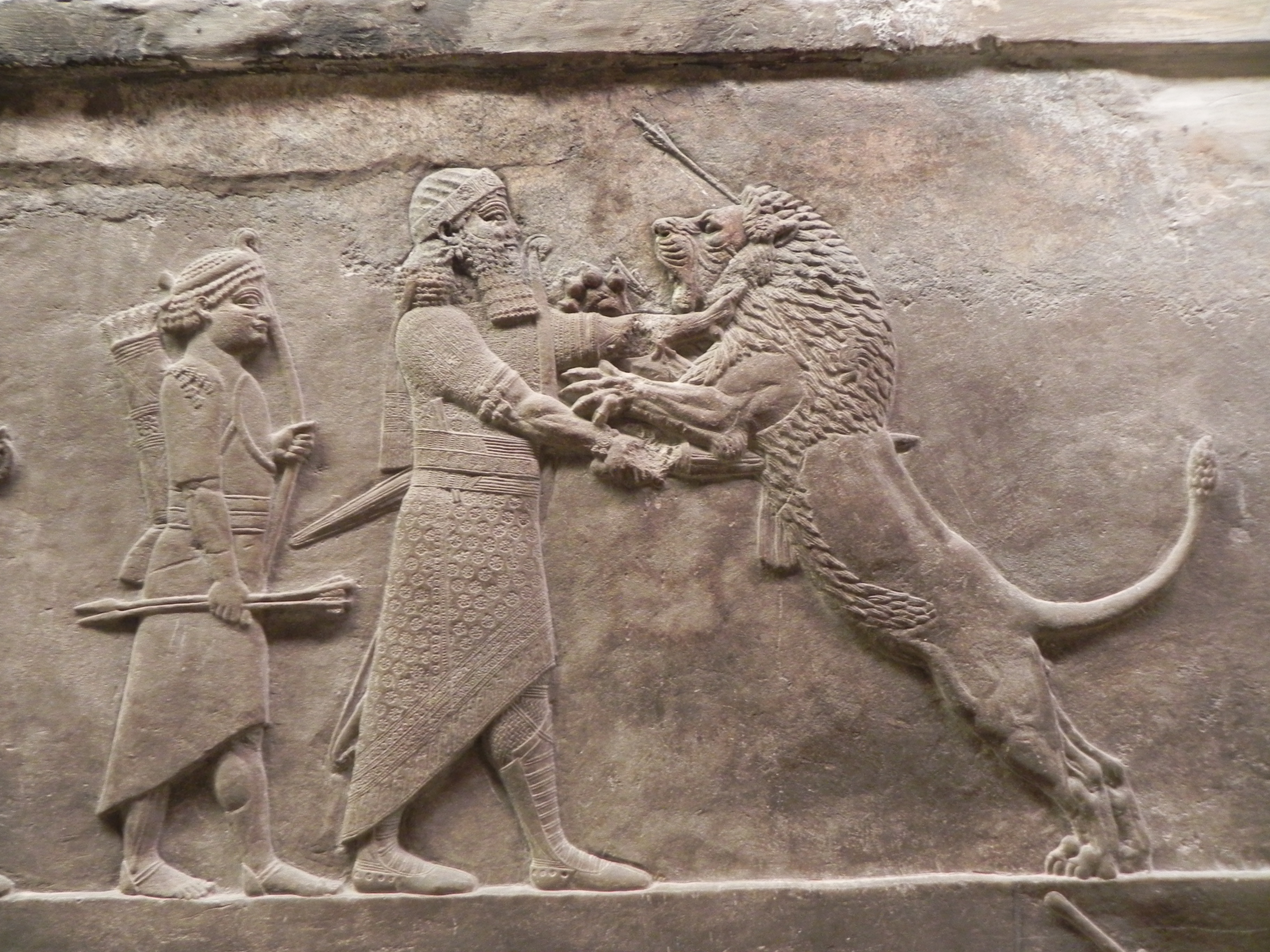
An interesting article about the Assyrians appeared in last week’s Guardian, On Art blog. The piece by Jonathan Jones, describes a piece of ancient Assyrian art on auction that the British Museum is not interested in buying. Having toured the Assyrian galleries a time or two, more’s the pity, but Jones puckishly suggests that the museum may be afraid of the curse inscribed on the piece. We all know of the story of ancient artifacts that come with value-added supernatural attributes—it’s a standard staple of Hollywood horror. Jones knows, however, that the museum isn’t really afraid of a curse, but he does display an interesting attitude toward the Assyrians. You see, the Assyrians were conquerors. They knew how to intimidate potential enemies long before their armies ever set out on the move. The imagery displays powerful men, ripped and ready, killing lions in hand-to-claw combat. Jones rightly points out that some of this is disturbing. What strikes me as interesting is a probably unintended subtext.

DSCN1837

“Assyrian art is certainly awe-inspiring – but perhaps not civilised,” Jones writes. As if civilization necessitates politeness. Perhaps it should, but civilization began in the very region south of ancient Assyria, among the Sumerians who were a culture emulated by later Mesopotamians. There is no doubt that the Mesopotamians gave us many of our beloved Bible stories, in their original, unedited form. They gave us organized religion, writing, and the wheel. Comparing the Assyrians to the Egyptians and Greeks, Jones suggests they were uncivilized. I would beg to differ. The Egyptians and Greeks could also be quite violent. The Assyrian aesthetic was a bit different, to be sure, but there is a raw beauty to it. And I have to wonder why, from our western perspective, what comes out of Iraq seems to hint at something insidious or sinister.

I’ve always been a fan of the Mesopotamians. Since a Ph.D. program only lasts so long (for those of us perpetually struggling to make ends meet), I did not have time to indulge my Assyriological fantasies once I learned of them. I was deep into Ugarit, and although I loved the tales of Asherah and Baal, there was something more ancient, more powerful, lying to the east. I often thought that if I could’ve had more time, my interests would’ve definitely drifted toward the progenitors of civilization. Yes, some of the art-work is deeply troubling, but the Assyrians, indeed, the Babylonians and Sumerians, looked at the world from the viewpoint of cultural creators. Civilization involves violence, no matter how we try to hide it. When I stand in London, taking in those Assyrian reliefs I see an honesty that is carefully hidden by the Egyptians and Greeks. And I think I prefer to know the truth of the situation, curse or not.


Pope Springs Eternal

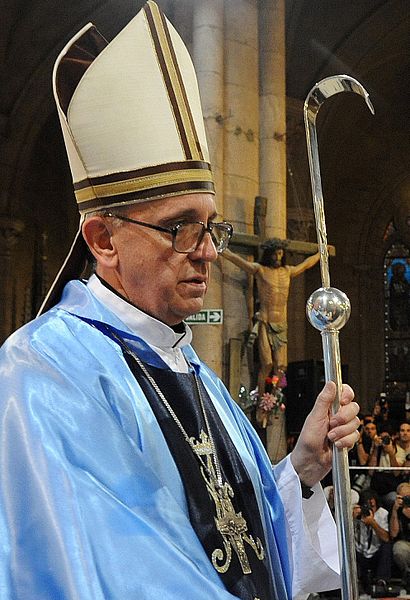
All channels lead to Rome. In a world where Christians lament their public influence, we can’t seem to get enough of the pageantry, the mystery, and the stylish drama of electing a pope. The secrecy is key. If cardinal debates were held in an open forum, by cardinals in business suits, the media would have trouble covering its yawns. In a conclave deep within the classical architecture of Rome, privileged men in expensive gowns meet and whisper in hushed tones until a puff of smoke rises though a sacred chimney and the world either hitches its collective breath or sighs in deep contentment. No wonder the election of a pope is such a big deal for Protestant and Catholic alike.

We would be mistaken, however, to limit such docu-drama to Rome. Religions, from the earliest institutionalization of their practices, used drama and showmanship to add to the draw of the sacred. Ancient Mesopotamians and Egyptians kept statues of deities hidden away in the deepest recesses of temples, and brought them out periodically to great public fanfare. The laity would watch in astonishment as an actual god was paraded among them—the popemobile had yet to be invented—and lapse back into ordinary time as the sacred statue was swallowed once again in the darkness of its great house. Even the aniconic Israelites maintained ceremony and mystery, for they had an invisible god who raised all kinds of questions in the naturally curious human mind.

The papacy is, after all, a recognized authority structure. Some nations recognize the Vatican as a sovereign state, a little bit of the City of God among the Rome of Humanity. For the time being at least, the Roman Catholics outnumber any other branch of Christianity. It is the most successful trader in the marketplace of religious commodities among Christian consumers. Its draw has always been tied closely to a sense of mystery and awe. There is a magic to the mass that the televangelist sermon splashed on the big screen somehow lacks. It is old and arcane. Few believe in its literal transubstantiation, and yet it stands as the outward and visible sign of a deeply occluded reality that takes place behind closed doors. Men in red, debating on the virtues of a new CEO for the vicar of Christ. No wonder all channels are tuned to Rome.

From presidencia.gov.ar, via Wikimedia Commons

From presidencia.gov.ar, via Wikimedia Commons


Flying None?

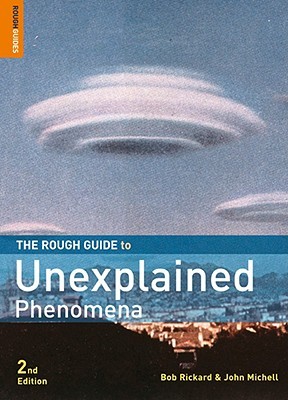
RoughGuidesWhile reading about a saint or two recently, I once again came across the concept of levitation. Long dismissed as overly gullible piety of superstitious pre-moderns, the practice has been relegated to the scratched and damaged basement of religious thought. Or so it would seem. While examining a World Religions textbook at work, I came across a picture of a young person in meditation who was, to all appearances, levitating. The caption simply noted that levitation is a component of some religious practitioners’ discipline and then quietly moved on. No scare quotes or allegedlys to be seen. The publisher of the text was one of the major textbook moguls. Curious, I found a reference to The Rough Guide to Unexplained Phenomena by Bob Rickard and John Michell. This intriguing book, in its second edition, bears the Penguin imprimatur, and therefore should be taken seriously. While I am certain that any number of skeptical readers will declare me hopelessly naive, I found the book full of interesting anomalies, and many of them, as I’ve noted several times on this blog, tied the paranormal to religion.

While I can’t accept everything I read in The Rough Guide, there remain, even after healthy doubt, a number of weird things that persist in our reductionistic world. Strange phenomena do not necessarily validate religion, of course, and many of those “revelations” people claim must be simple pareidolia. These are entertaining, no doubt, but hardly newsworthy. It is rather those phenomena that refuse to play by the rules that raise questions about our demon-haunted world. If even just a handful, or even one of the cases of levitation actually occurred, it would mean some serious rethinking concerning the nature of gravity. Do saints levitate? I’m no saint, so perhaps it’s best not to ask me. If one lies about it, then s/he is hardly a saint.

As uncomfortable as the unexplained may make us, these reports do serve as a reminder that our scientific worldview is, in many ways, still in its infancy. A few years back, sitting in on the lecture of a friend concerning the science of the Mesopotamians, it was clear that rational thought has very early origins in human civilization. At the same time, the Mesopotamians had plenty of room for gods and the supernatural in their worldview as well. Here in our electronic twenty-first century, it might seem that reason will see us through just about any crisis. Even a glance at the headlines reveals we’re not there yet. Some will blame the religious, the “superstitious,” the irrational for our problems. Meanwhile far from the eyes of scientists and authorities of secular power, maybe, just maybe, a religious practitioner may be hovering a few inches off the ground.


Nightmare Behind Holidays

Among the first mythical creatures to go extinct when the early rays of the Enlightenment began to filter through the blinds of superstitious antiquity, were demons. It was recognized that the activities attributed to demonic possession closely resembled epilepsy and psychological illness and that Occam’s Razor would remove any unseen entities with its no-nonsense straight-edge in one deft pass. And yet they remain. Among the ghost hunting crowd, demons have been recategorized from fallen angels to entities that have never been human. Their reality is assumed, and results of investigations, not surprisingly, support that assumption. It was, however, a Dirt Devil advertisement that created a desire to watch The Exorcist now when darkness comes early and the leaves have fallen from the naked branches and a chill has permeated the air.

As I watched the still disturbing film, I realized that I had also watched the Exorcism of Emily Rose and The Last Exorcism within the past few months as well. I am no fan of demon movies; even with no demonic forces out there, inevitably young women are tormented by what ultimately turns out to be a male establishment. My threshold for watching the suffering of others, even if only acted, is minimal. Movie makers—and often horror writers—know and exploit this, bringing us to face the real demons, the shadowy regions of our own minds. The Exorcist is particularly effective in this since it is Fr. Karras’s demon that ultimately wins out. Having never read the novel, I’m not sure whose idea it was to make the demon Pazuzu, but once again the origins of demons does not fit modern media’s expectations.

Pazuzu was a Mesopotamian “demon.” Akkadian doesn’t have a proper word for what the Judeo-Christian tradition would introduce as a fallen angel. Demons were simply a way of explaining profound misfortunes such as droughts, pestilence, or the Bush administration. Eventually such misfortunes became personified and took on the ability to possess a human being. Here is where psychology and neurology have come to banish demons. Part of the terror of The Exorcist is that such scientific explanations are laid flat in the face of real supernatural power. The lessons of over-consumerism, as evidenced in Black Friday eclipsing Thanksgiving for many (the lines were formed in many locations well before midnight, cutting into family time in order to get first crack at the bargains) show the demon more clearly. Holidays are measured in importance by the amount of money spent. Perhaps it is no wonder that Halloween’s demons have lingered through November and even to the end of the year.


The Original Mud-bloods

“Let Nintu mix clay with his flesh and blood.
Let that same god and man be thoroughly mixed in the clay.”

This quote is from the myth of Atrahasis (Benjamin Foster’s translation; my Akkadian’s a bit shaky these days), an early version of the flood story. Although I have a burning itch to write about the flood, I would rather focus on the creation of humanity in this post. Maybe it is because in my unemployed mode it is easy to think of myself as only dirt and blood, but maybe it is because in my evening class we’ve just been talking about creation stories.

One of the benefits of polytheism is the lack of a pressing need to ascribe uniformity to your myths. Ancient peoples who believed in a multiplicity of gods had a wide variety of versions about how the world was created, where people came from, who sent the flood, and so forth. They were not writing about what actually, factually happened — these were myths, for the gods’ sake! Nobody was there to see the creation of humanity, so who’s to say what really happened? One element that is repeated in ancient accounts, however, is the creation of people from dirt.

Perhaps it is because people often treat each other like dirt, frequently with religious motivation, but a more likely explanation is that in ancient times the dead were known to return to soil after they were buried. Logic dictates that if the dead turn to dirt, their living version must have been created from dirt. So far, so good. But dirt isn’t exactly alive. The ancients differed on what animated this soil with a soul.

The Bible presents a lofty account of God breathing air into the soil-man. It is clear that the Hebrew Bible equates breathing to being alive. A person is alive when they first breathe; when they stop breathing, they die. At the same time, blood is an essential component too. This is so much the case that the Bible dictates that “the blood is the life” (Deuteronomy 12.23). For this idea the Israelites were indebted to the Mesopotamians. As seen in the Atrahasis Epic, humans are a mix of clay and the blood of the gods, the original mud-bloods. For all their differing opinions, the ancients realized that in this messy world of dirt and dread, human beings, for all their problems, had a bit of the gods within their very veins.


Assyrian Dreams

All through my formal education I had learned about the Assyrians. My first introduction to them was as the evil empire that destroyed the chosen nation of Israel, inspiring countless myths of the ten lost tribes. Upon further study they appeared in a more positive light — they were one of the great, formative Mesopotamian peoples who had gone through considerable trouble inventing much of our culture for us. They also had a penchant for over-running smaller and weaker nations, but then, everyone has their foibles. When I saw their striking bas-reliefs in the Boston Museum of Fine Arts, and later in the British Museum, I was deeply impressed by their ability to project hostility. Bulging biceps, braided beards, dreadlocks and attitude enough to be the envy of any gangsta, these guys could subdue you with just a solemn nod in your direction.

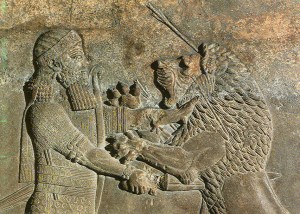
A good day for Assurbanipal, not so good for the lion.

A good day for Assurbanipal, not so good for the lion.

But the Assyrians over-extended themselves. Conquering further and further from the homeland, they couldn’t keep a stony eye from Egypt and Anatolia all the way to Persia. Media (not the paparazzi) eventually tumbled Nineveh and Babylonia stepped in to take on the burden of predominant empire. The United States hadn’t been invented yet, so somebody else had to dominate the Middle East. With the influx of Arameans and the machinations of the Persians, Mesopotamian culture became a cherubic mix of peoples. Assyria ceased to exist as a separate nation, and once the Arabian tribes launched into the region, all genetic bets were off. Racial purity was a dream of the past. So the Assyrians dissipated, joining their neighbors in a happy, amorphous Mesopotamian culture.

In Shamash we trust.

In Shamash we trust.

Then, after procuring a doctorate in Ancient Near Eastern studies, I took a job at Gorgias Press. Suddenly the Assyrians were back! That was one on the other end of the telephone! Visions of dreadlocks and skewered lions came to mind, and in my confusion I asked my colleagues if I’d slept through that lecture. No, it turns out, the Chaldo-Assyrians are a relatively new incarnation. Named Assyrians by nineteenth-century European missionaries, this predominantly Christian people has adopted and tried to assimilate the heritage of the ancient Assyrians. They still exist today, I’m told. Instead of swords and lion hunts, they wear camouflage and hunt with automatic rifles. But their flag hearkens back to their ancient, pre-Christian religion. That flag, their rallying point with high antiquity, bears the emblem of the eight-rayed Assyrian sun. Jesus, meet Shamash. Son versus sun. I guess it is time for me to go back to school again and see if I can get it straight this time.