States Right

Can you name your state insect? State bird? State dinosaur? The concept of united states, perhaps more obvious in Europe where languages differ, is a complex one. In the United States of America we’ve got our culture wars that generally divide along predictable state lines, but each state has a mix of progressives and conservatives, and caricatures may be funny but are hardly accurate. In this jambalaya of divergent ingredients, each state develops its own image in keeping with a couple centuries (for some) of tradition. We even have quarters that show our distinctive features on the reverse side! As one of those whose profession (whatever that is) has moved me across state borders periodically, I know that choice of domicile often depends on what it might offer by way of employment. Although one of my parents was born in New Jersey, I moved here not out of family loyalty but out of desperation to find work. Nearly every day I cross a state border to get to a job, but it feels pretty much the same to me.

Although I’ve lived in these states for nearly half a century (some of my years were spent abroad) I didn’t know that states had a choice of books. I don’t know if every state has a book. It saddened me to hear that New Jersey rejected “Born to Run” as state song since it was about trying to get out, but I don’t know if we have a state book. The Godfather, perhaps? Moby Dick? When NBC announced that Tennessee had its proposal to name the Bible as its state book shot down, I was a bit shocked. What is a state book? Tennessee, which (as a caricature) still takes pride in the Bryan side of the Scopes Monkey Trial, often leads the way, like Davy Crockett, against the untrusted, heathen other. The undiscovered country of modern thought. The Bible can be a comfortable book in that way.

The Bible justifies our prejudices. Written mostly by white men who believed they were specially chosen by God, well, is it any wonder that it bestows a sense of entitlement? Radical in its time, the Bible now stands for status quo ante, ante meaning before women and non-whites won the right to be considered equal. It is a kind of Paleolithic justice. A caveman ethic. What better way to demonstrate that your state, like Indiana, is a special haven of the Almighty? Only here can the truth be found. If you’re looking anywhere this side of 1611 you’ll miss it. We don’t need to know what came before. Protestants, now partnering with conservative Catholics when it fits the political agenda, have always recognized book over state. We the people and all that. I really do wonder, can you name your state dinosaur?
800px-Crystal_palace_iguanodon


Maritime Dreams

MaineEarly in my teaching career, I used to arrive in Milwaukee on a train after midnight. A student from Nashotah House on work-study would pick me up at the train station and drive me the thirty miles to the seminary so that I could teach the next morning. Along the way, depending on the student, conversation ensued. One time I asked the driver why he was interested in what seemed to me an arcane topic (and that’s saying something!). He replied, “Who can ever say why they’re interested in something?” There was some deep wisdom there, I realized. Can any of us say why we’re interested in what we are? I, for example, don’t know why I’m interested in life on the sea. And in the sea. I fell in love with the idea of living on the coast when I was a landlocked child. The ocean came to me only in books, and I never actually saw an ocean until I went to graduate school. The experience confirmed for me that this was where my heart lies. The salt air, the gray waves, the constant call of the pounding surf. Moby Dick immediately became a kind of personal scripture when I first read it. A life near the sea felt right.

I could never really answer the question why. I don’t swim, and besides, the ocean currents I have experienced are really too strong for the placid kind of swimming a lake or pool seems to offer. I don’t own a boat, and I’m a poor pilot when asked to drive one. I’ve been out over the ocean on commercial boats only a couple of times. Still, the imagination is fired by the idea of the ocean. Especially the stormy north Atlantic. As a child Rachel Carson’s The Sea Around Us was one of my favorite books. Just staring at the cover could transport me to places I’d never seen. When landlocked in Wisconsin for several years, I turned to the Great Lakes for consolation. “Those who go down to the sea in ships” Psalm 107 declares, “Who do business on great waters; They have seen the works of the Lord.” Even so those who dream of the sea.

Ironically, for the Psalm, the Israelites were not a seafaring nation. Good harbors are rare on the coast of ancient Israel, and the maritime trade of antiquity was dominated by the neighbors to the north, the Phoenicians. Still, even the psalmist could dream of the sea. It has been said by various commentators, that the sea represents sexuality, or transcendence, or both. It is larger than we are. Indeed, the earth is by far mostly water as opposed to dry land. Life, even according to Genesis, first began in the waters. So I find myself in the midst of winter thinking about the ocean. It has been a long while since I’ve indulged in a day on the coast, even though I’m pretty much daily in a city on the sea. But I can’t experience the ocean so well with so many people around. Besides, there’s work to do. In those moments when my time is my own, however, I still dream of the ocean and the endless possibilities it represents.


Truth Anonymous

SparkMany a student has been spared the reading of primary sources by study guides. This is not a new phenomenon. While still regularly teaching Hebrew Bible, I picked up a copy of Cliff Notes, The Bible, to show students how not to get the picture. To be fair, I was teaching future priests, and, despite my progressive outlook, I believe all Christian clergy ought to have read the Bible at least once. I know enough of Christian history to realize that the emphasis on sacred writ is not as ancient as many Protestants think—before the advent of modern literacy rates, scripture reading (and interpreting) was the business of the church. The laity were to receive it in the form of sermons, and so reading the Bible wasn’t really necessary. With the Reformation, however, the Bible became central and preaching became a matter of intelligent interpretation of the same. Today any Christian minister should have a pretty good grasp of holy writ, believe it or not.

With a touch of puckish optimism, my family gave me a copy of the Spark Notes Old and New Testaments at Christmas. Spark, according to the copyright page, is a division of Barnes and Noble, and, should the cover be believed, today’s most popular study guides. As an erstwhile author of biblical studies material, I was curious about who wrote the notes. Enough of the scholar remains for me to be critical, and one of the first questions always to arise is, who wrote this? The question ought to be even more poignant for Bible readers. One of the most looming of questions is that of authority to interpret. Different branches of Christianity still maintain the proprietary right to be the true guardians of the sole truth. Although perhaps softened somewhat from soaking in the broth of religious-political activism, the Fundamentalist would, in any natural world, distrust the interpretation of a Catholic. And vice-versa. Looking at my Spark Notes, I wonder who it is that is telling me the truth.

Abridgment is a kind of crime for literary connoisseurs. As a child I purchased my books from Goodwill or Salvation Army—the kinds of places to which poverty-level readers have access. Although occasionally drawn to Reader’s Digest editions on purely economical grounds, I studiously avoided abridged works. Who decides what single syllable of Melville should be left out of Moby Dick? All the degrees in the world don’t justify that! The interpreter is just as human as the reader, and this kind of power is too heady for mere mortals to handle. The abridger of the Bible must take heed of Deuteronomy 4.2 and Revelation 22.18-19. There’s a lurking suspicion, nevertheless, that something might be learned from the stripped-down scriptures. It is with some anticipation that I look forward to receiving some anonymous instruction as I seek a Spark of truth.


Medusa on the Rocks

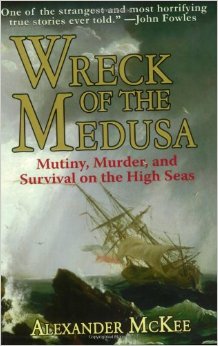
WreckOfTheMedusaShipwrecks possess a compelling resonance that is difficult to explain. I have seldom been on boats, but from my youngest days I’ve been drawn to the coast. While a student in Boston I made weekend trips to Gloucester to be near the place where ships go out to sea, sitting by the quote from Psalm 107 at the base of the famous fisherman statue. Moby Dick has passed under my eyes many times. While at Nashotah House I was frequently tormented with nightmares of sinking ships. Titanic was a huge movie late in those years, and even before watching it, I dreamed of going unceasingly down. In a used bookstore, Alexander McKee’s Wreck of the Medusa recently caught my attention. Although I’d never heard of the Medusa, the name suggested classic themes, and the shipwreck, I knew, would entail suffering and loss and human drama. I knew I had to take it home with me.

The true story of the wreck is tragic in just about every conceivable context. The year was 1816 and aristocracy was still openly practiced. The Medusa, bound for Africa from France, ran aground and, in echoes of what would happen (at least in some instances) a century in the future, the insufficient number of lifeboats were claimed by the wealthy and powerful. The most tragic aspect, however, was the matter of the raft. The masts were felled and a poorly designed raft was hastily constructed (the Medusa was grounded, not sinking). The greatest number of people were herded onto this raft where the water came up to nearly their waists, as the six boats towed the makeshift craft toward shore. At the instigation of the about-to-be-installed governor of Senegal, those towing the raft dropped the line and rowed themselves to safety. The raft, with no means of propulsion, was left adrift where 135 people of the 150 on board slowly died over the next two weeks. The governor and his party made it safely to their destination.

To me, this election week, it seems that I’ve just read a potent parable. We have public officials in place who, like those safely in the boats, cry out “we abandon them” before the masses of those who expect and deserve their protection. Power, it is said, corrupts, and as we witness the constant increase of political power over the sea of humanity taught that their religion favors the party able to quote the Bible the loudest, we sometimes forget that sinking ships may leave very long memories. In another week we will reach the commemoration of the sinking of the Edmund Fitzgerald. The Essex, the Medusa, and countless other tragically doomed ships may easily slip our minds now being propelled at full speed toward the spending frenzy of Christmas. Meanwhile, I urge us all to take a few November moments to consider where this ship is heading, and if there is yet time to change her course.


The Search for Khan

Star_Trek_II_The_Wrath_of_Khan

Continuing with the series, I watched Star Trek II: The Wrath of Khan last night. Since weekends are the only time I have for the media, I also threw in Star Trek III: The Search for Spock. Now, I haven’t seen either of these movies since their theatrical release longer ago than I care to admit, but many of the details, particularly from II, had stayed with me. Clearly The Wrath of Khan is superior in every way, but I hadn’t realized how literate it was until I saw it again. From Tale of Two Cities to Moby Dick to the Bible, the viewer in 1982 was given a sci-fi movie with classics sprinkled through it. I hadn’t read Ahab’s famous words on the dying lips of Khan when I first saw it, but I still realized that they were powerful words nevertheless. The premise of both movies, however, is biblical—the Genesis project, which even gets Spock quoting the Bible, is creatio ex nihilo, well, not exactly ex nihilo, as we do have a Big Bang to start the thing. Throughout the language of creating in six days is juxtaposed to morality, for in order to create, you must destroy.

We all know that Spock dies, citing a utilitarianism that would’ve made John Stuart Mill proud, but in what is really a biblical trope: self-sacrifice. And this leads to speculations of resurrection, always lurking in the background of the biblically minded. But theology (and the acting) turn bad in III. We’re all glad to see Spock alive again, but it turns out that Genesis destroys itself after just a short time, and that “Genesis is a failure.” Where do we turn back from the first page of the Bible? There is no preface here. There is, nevertheless, a temporary garden of Eden on the Genesis planet, and it is a federation-level secret. You just can’t keep anything from the Klingons, however. So the Bible implodes and Kirk’s son sacrifices himself so that Spock might live. Can I get a concordance here?

I’m not a trekkie, but I had noticed from the original series through the original cast movies, the assumption was for a biblically literate audience. That assumption can no longer be presumed, although, if pressed, many people could guess that Genesis is in the Bible. Meanwhile, the flood of Noah is also upon us. Exodus comes next. Movies featuring Leviticus are rare. Even as the cast ages visibly from the young, brash Kirk of the 1960’s to the bespectacled, patrician father with regrets in The Search for Spock, society itself has also aged. Some would say, matured. But we need directors telling us now that the flood story is found in Genesis. The Bible has been on self-defense mode for some time as religion has become equated with fanaticism. And yet, even as resurrection looms, we can’t help but to wonder if better things lie ahead.


High School All Over

“Jungle calls around the corner!”  This shout was followed by hoots, grunts, and squeals as the bus turned, intended to madden the driver of infamous bus 18. My high school bus had a reputation for driving its drivers—driving them to drink, anyway.  Some of the more memorable replacements had unflattering nicknames hurled at them: Wedgehead and Illiterate Bob are two I remember well.  I arrived at school smelling of pot and slightly deaf from the shouting more than once. Then we got a driver who fought back. One day he expelled all the boys from the bus for the remainder of the week. Being a Bible-reading, church-going youth who sat quietly up front, I felt that I didn’t deserve this punitive measure. Still, I felt sorry for the drivers.  And I’d learned a valuable lesson—being responsible for the safe arrival of fifty people is a lot of pressure.

Yesterday I climbed aboard the adult NJ Transit bus 117. Only later did I ominously realize that if the first digit were added to the final digit, you would get bus 18.  Or was it really the Pequod?

Those of us who stumble aboard the bus before 6 am are a docile, sleepy crowd, for the most part.  I open my book, and if someone insists on talking, plug my buds into the white noise app on my phone.  This is how I get my reading done.  Some of the regulars like to argue with the drivers. “You’re too early,” one woman says (although she’s ironically on the bus at the time). Or “Why didn’t you stop for me? I had to chase the bus!” The latter was the complaint yesterday.

For being soporfiric, the early crowd is pretty tightly wound. Daily we spend about 4 hours commuting for 7 hours of work.  We catch the early bus because traffic going into Manhattan meets the dictionary definition of Hell. Well, the complainer chose a tightly wound driver to challenge yesterday.  The complainer wouldn’t let up. I could hear the yelling through my static-filled earbuds.  In a move that would’ve done Illiterate Bob proud, the driver slammed on the brakes right on the highway and pulled over.  He demanded the lady off the bus.  She wouldn’t leave. He got off the bus and called his supervisor for 30 minutes. At the dawn of rush hour. The passengers began to grumble, not least of which was the complainer.  Held hostage, we all knew we were going to be late for work. I put away my book.  I’d been here before. I knew what would come next. I braced myself.  “Jungle calls around the corner!”

In the belly of the whale.

In the belly of the whale.


Shining Meaning

AllThingsShiningWriting with the hopes of eventually being included in the Western Canon, I suspect, is often somewhere in the back of an author’s mind. We want our efforts to be noticed and our voices to be heard. The Western Canon, however, is a very exclusive club, and the members don’t get selected easily or quickly. We value our classics. More amorphous than the biblical canon, the list of books that define western culture is slightly different with every analyst, but the biggies always make the cut. Hubert Dreyfus and Sean Dorrance Kelly see the great classics as a source of meaning in an increasingly secular world. All Things Shining: Reading the Western Classics to Find Meaning in a Secular Age is a fascinating consideration of how the writing we’ve turned to for inspiration has changed over time. Older members—including the Bible—don’t drop off the list, but newer ones are continually added. According to Dreyfus and Kelly the polytheism of Homer shone with possibilities, and monotheism led to necessary changes where the shining shifted to new characters and new stories. It is an intriguing concept.

Reading about writing generates a fire within. Some of the classics All Things Shining discusses are those you’d expect: The Divine Comedy and Moby Dick. Others are more personally meaningful, such as the work of Elizabeth Gilbert or David Foster Wallace. We all have the authors that shine for us. Moby Dick, of course, has been on my personal canon since seminary and the chapter on Melville helps to bring the thesis of this brief book together. We all know the white whale is more than an albino cetacean, and the world has benefitted from that fact ever since Melville put pen to paper.

As enjoyable as All Things Shining is to read, I was left with the impression that meaning itself has become greatly fragmented in the modern world. Without the social glue of religion, we’ve been left to chart our own course through parts of the universe yet unexplored. We select our crew by the books we read, and we decide whether Jesus or Captain Ahab is better able to guide us through such dangerous waters. They both, in their way, captain ships. Since this is an exercise in fragmentation, we don’t know upon which shore this craft will ultimately land. While Dreyfus and Kelly are philosophers, many of us have followed other paths and have come to our amateur ways of finding meaning. Some of our ships never come ashore at all. “One does not have to believe that the Greek gods actually exist in order to gain something deep and important from Homer’s sense of the sacred.” Well said! If only we could learn the lesson to be literary rather than literal, religions would allow for many ships upon this vast ocean. And still we hale each other with the words, “Have ye seen the great white?”


Stonefaced

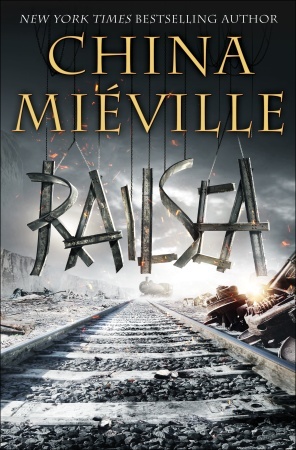
Railsea Imagine, if you will, life on the open sea. Back in the whaling days. Days before enlightenment really took hold. Transpose that thought onto railroads. In a day of huge moles and other underground creatures. Days when no one can imagine where the rails end. That might give you the slightest glimpse of China Miéville’s Railsea. I haven’t read too much of Miéville’s fiction, but I have read enough to know to expect a reality distorting romp through very interesting places. In this take on Herman Melville’s Moby Dick, Miéville takes some noteworthy risks in providing his characters with a native religion. Fiction authors sometimes find religion a constraining topic. Consider Salman Rushdie. More often the restraint appears to be a lack of imagination on the writer’s part—although we can’t define religion very well, we all know what it is and what it’s supposed to look like. Miéville, although in backstory, provides a new religious world where the gods are called Stonefaces and everybody believes in angels, and the explanation of where the railways came from is “theology.” Even our erstwhile Captain Ahab is chasing after her “philosophy” in the form of a giant mole that seems to have taken her arm.

With a sensitivity I’ve rarely found (the fault could well be entirely mine), Miéville utilizes religion, particularly Christianity, to construct an alternate universe. The gospel therefore appears as godsquabble, and to suggest there is anything beyond the sea of rails is literally heresy. Our protagonist Shamus ap Soorap on his voyage of discovery ends up riding to heaven on the rails only to find that there is yet even more beyond. Although religion itself is not central to the story its adjuncts are, creating an entire mythos of life on the railroad. It this world it is clear that wood and trees are related, but no one quite knows how; some suppose an evil god planted false evidence to deceive them. There’s even a healthy dose of the Odyssey thrown in, with the Medes having to pass through a mountain dwelling monster, the siller, and the Kribbis Hole.

But aren’t we really on the ark once more? For surely the bedeviled Pequod was a shadow of the same. In Miéville’s fantasy world, the open ground unpopulated by islands is dangerous. All kinds of innocuous creatures burrow out and will eat the traveler who is not safely ensconced on a train. As if to underscore the Noahic connection, Sham ends up on an actual boat on an actual endless sea. I’m pretty sure Homer never read Genesis, but the parallels between Greek mythology and the Hebrew Bible were long ago recognized by Cyrus Gordon and his colleagues. Miéville continues the tradition. Stranded on an island, Sham tries walking on the rails (read walking on the water and you’ll get the picture) until his faith fades. There are many who declare that religion has outlived its usefulness, but if an author can bring Melville, Homer, and the Bible into an intensely creative story, I think I’ll have to beg to differ.


Alien Religion

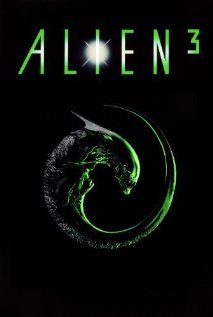
Alien3

Despite my interest in aliens, my viewing of the Alien movies has been tenuous at best. The image of what looked like an egg hatching a green sun over a particularly badly formed waffle always brought the tagline “In space no one can hear you scream,” to my juvenile mind. When the original movie came out in 1979, it seemed too scary for a kid in high school. I first saw Aliens (part 2) when living with a friend after seminary. He explained to me the missing gaps left from never having seen the original, and I was impressed by how Sigourney Weaver pretty much took on the alien queen single-handedly. I was still too young, however, to realize that there’s always room for an alien or its egg to attach itself inside any spaceship or escape pod. You can never really get rid of the things. I finally saw the first installment some ten years later, and it was clear that, as in nearly all series, the first was the best. Ridley Scott’s films take considerable energy to watch. No one seems capable of matching his dark moods and sense of a hopeless future. I left it at this state for another decade, until recently reading that Alien 3 marked the culmination of the “theology” of the series. Over the holiday break I decided to find out if this was true.

Ripley, who can never get a break, finds herself the sole survivor (again) on a prison-colony at what used to be a lead ore refinery deep in space. While the company had abandoned the facility, a group of inmates who had formed a religious order decided to remain. Having grown up in a refinery town, so far I’m on board with the story. Separated from society, from women, and from temptation, the prisoners are a fundamentalist sect that would seem to fit well into the woods of Wisconsin. Ripley threatens their delicate balance of celibacy, and although not a virgin she ends up conceiving an alien in a Madonna-esque way, not even knowing how she became pregnant. When she decides to incinerate herself rather than allow the alien to be born, she falls into the fire in a cruciform dive just to drive the point home. Before her dive into hell, however, Ripley tries to motivate this band of incarcerated monks to fight the alien. When they say the company will save them, she responds, “What makes you think they’re gonna care about a bunch of lifers who found God at the ass-end of space?” Again, echoes of Wisconsin.

Doubtless, my experience of the movies has been skewed by my own experience. Still, Alien 3 holds to a pattern that emerges fairly often in movies with a strong horror theme—religion is the progenitor of terror. The prisoners’ religion is described as “apocalyptic,” and it frequently appears that in movies where a civilization is on the brink of collapse, religion awaits to greet the survivors with open arms on the other side. In the horror genre, this is often a cold, clammy comfort. Although religious elements were largely lacking in the Ridley Scott and James Cameron episodes, I do hear distant echoes of Moby Dick here from the very beginning. The dark alien, like the white whale, is elusive and destructive and does not relinquish its hunt until Captain Ahab, or Lieutenant Ripley, is dead in its grip. And since Alien Resurrection awaits in yet another sequel, like the white whale, the alien never truly goes away.


Shelley, Byron, Trelawny, and Ahab

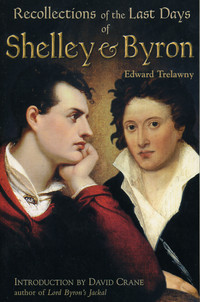
“I took up the word [atheist], as a knight took up a gauntlet, in defiance of injustice. The delusions of Christianity are fatal to genius and originality: they limit thought.” The words come from Percy Bysshe Shelley, according to Edward Trelawny. After visiting the display Shelley’s Ghost at the New York Public Library last week, I was struck by how little I knew of Shelley. I’d read some of his poetry, and had watched the fictional movie Gothic (maybe more times than is really healthy) to get a sense of this candle in the wind, the Romantic poet who died in a shipwreck before reaching 30. Edward Trelawny’s reputation as an historian is somewhat suspect, but he did form friendships with Shelley and Lord Byron and arranged the disposal of their earthly remains. His book, Recollections of the Last Days of Shelley and Byron, while somewhat self-serving, weaves an intriguing account. Among the mementos in the library display are some fragments of Shelley’s skull, taken after his cremation by Trelawny. This erstwhile biographer did prove his mettle by reaching into the pyre and pulling out Shelley’s heart, according to his own account, that eventually returned to Mary Wollstonecraft Shelley, his widow.

Trelawny admired Shelley’s atheism, and even applauded Darwin’s Origin of Species when it appeared. The nineteenth century was setting the stage for a strange Frankenstein’s monster of political and religious backlash against the freedom of the Romantics. Not all of the Romantics, obviously, were atheists, but their works extolled the wonders of nature and a sense of liberty from tyranny that would define them as dreamers and idealists. Lord Byron comes across much less favorably in Trelawny’s account, although their friendship lasted through some difficult times. After the poet’s death, Trelawny claims to have examined his feet, discovering the cause of a lifelong limp. His psychologically astute conclusion is that Byron’s disagreeable personality traits arose from his lifelong anger and anxiety about his birth defect.

Being an ardent admirer of Herman Melville’s Moby-Dick, I have to admit that the elements of anger at the divine for a limp (Captain Ahab forcefully stomps into mind), and the emphasis on ships and shipwrecks (as in Shelley’s death) tie these three literary geniuses together into a knot of suffering and seeking. Religion had consoled many in the nineteenth century, just as it continues to do now in the twenty-first. Among many of those who have endured through their literary works, however, God had slowly disappeared. Not quite as dramatic of a demise as Shelley’s, nor as unforgettable as Captain Ahab’s, but one for which there will be few biographers.


Legislating Reality

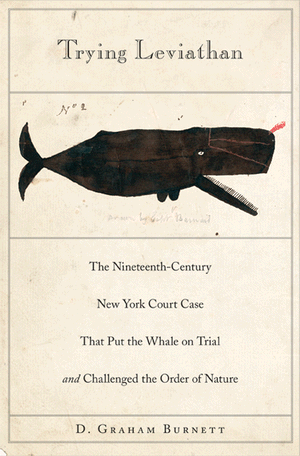
The follies that plague humankind come in an almost cyclical form. As old Ecclesiastes wrote, “there is nothing new under the sun.” I just finished D. Graham Burnett’s Trying Leviathan: The Nineteen-Century New York Court Case That Put the Whale on Trial and Challenged the Order of Nature. Other than the fact that the subtitle accounts for a good portion of the book, this account shows just how little we’ve progressed. At the heart of the book is Maurice v. Judd, a New York case of 1818 in which a whale merchant contested an assessor’s fee on “fish oil” by claiming a whale was not a fish. In “trial of the century” style, star witnesses were called in, bringing science to the docket. It was known, even in these pre-Origin of Species days, that a whale was a mammal, but what soon became clear as Burnett laid out the facts of the case was that the Bible held sway. Genesis divides the classes of nature into beasts, birds, and fish. This simplistic taxonomy was held by many in the nineteenth century to be a sacred statement of fact. If whales lived in the water, they were fish. The fact that they nurse their young, who are born live, and that they share the skeletal template of land creatures and have warm blood, and breathe through lungs, simply did not matter. If Genesis says fish, fish it is.

My mind immediately jumped ahead just over a century to the Scopes Trial. Once again, science was bent over the knee of Genesis and poised for a paddlin’. And the challenges still have not stopped. Call it Intelligent Design, or Answers in Genesis—anything but mythology—and it will keep coming back for more. Already, in 1818, lawyers were arguing that science could be decided in the courtroom. Facts only muddy the issue. If Genesis weren’t enough, Jonah’s “great fish” was called a “whale” in the Gospels, so, QED. There is no debating Bible science. Just to prove the case, we’ll bring it to trial so that twelve people with no science training can decide the issue based on rhetoric. Disciples of dogma. No surprise that the jury found the whale to be a fish. There’s no stopping a true believer.

My wife gave me this book because of my enormous fondness for Moby Dick. In both books the discussion of killing and butchering whales bothers me immensely, but I know that Melville is running after a beast of a metaphor and that whale-boat skimming across the surface of the ocean has lanced a far greater prey than a white whale. The creationists, however, fail to see the beauty of mythic images. Anyone who’s even watched a court drama on television knows that the truth is not what courts seek. Courts seek to convince a jury, whether a person is guilty or not. No matter if it’s a while whale or a white bronco involved. Truth is much more subtle and fragile. Truth can be discerned by facts. But the Bible is a heavy book, and when dropped from a great enough height, can fracture even the laws of nature. Like Ahab, the creationists are never truly gone forever.


Kings and Codes

I readily acquiesce to the suggestion that others are smarter than myself. In a world of overly competitive commerce that has wormed its way into higher education, I have found myself ill-equipped to compete against those who are more clever at working the system. At times I can be decidedly pre-medieval in my perception of fairness. Thus it was a combination of self-denigration and legitimate surprise to find a brief piece in the May edition of Wired magazine on the Code of Hammurabi. In this arena I would have supposed myself to be on firmer ground. The piece by Joel Meares appeared in the Blast from the Past section of the “Humor Issue” of the erudite magazine. The writers at Wired are by default well beyond my ability in the tech scene, but this piece was a consideration of how Hammurabi’s justice still plays its way out in popular culture. Beginning with the 1970’s movie series Death Wish, Hammurabi is given credit for inspiring Hamlet, The Count of Monte-Cristo, Red Dead Redemption, Frankenstein, Moby Dick, and Batman. Holy pedigree, Hammurabi!

Each semester I try to explain to my students why study of the ancient world is still relevant. It may be overly simplified to suggest that Hammurabi directly inspired all these works (the Akkadian language wasn’t really deciphered until the middle of the nineteenth century, CE, long after Shakespeare), but clearly the trajectory had been set long ago. Even before Hammurabi. The earliest known law-codes predate Hammurabi by many centuries and demonstrate that our sense of justice and fair play were being bandied about by the gods long before Hammurabi was a twinkle in Shamash’s eye. If we want others to play nice, the best way to convince them to do so is to lay the dicta in the realm of the gods.

Maybe I can’t figure out where Death Wish and Moby Dick share anything beyond a cursory resemblance to Hammurabi, but it is clear that the Mesopotamians were the first to articulate the idea that the gods set the rules and it is our duty not to upset them. Of course, in our society fair play is frequently sublimated to corruption at various levels. Someone is always willing to bend the rules if the covert payment is enticing enough. After all, doesn’t it look like Hammurabi is placing his fingers to his lips while receiving a kickback from Shamash on the pinnacle of the famous stele bearing the code that now bears his name?

Hammurabi winks at Shamash


Woeful Wisdom

“There is a wisdom that is woe; but there is a woe that is madness. And there is a Catskill eagle in some souls that can alike dive down into the blackest gorges, and soar out of them again and become invisible in the sunny spaces. And even if he for ever flies within the gorge, that gorge is in the mountains; so that even in his lowest swoop the mountain eagle is still higher than other birds upon the plain, even though they soar.” Herman Melville takes the credit for this passage. It is one of the many pericopes that make Moby Dick the greatest book ever written. Those who know me only as a biblical scholar may be surprised to read that, but I invite anyone who has ever instantly fallen in love with 1 Chronicles 1-9 to reply and argue the point.

Although Moby Dick has fallen into the provenance of books that are kept alive only by required high school and undergraduate required reading lists, this novel still comes back to me at many points in my life and fractured career as both a solace and a warning. Melville was clearly a man tormented by his search for meaning. He drew heavily on the Bible for Moby Dick, likening Ishmael to Ecclesiastes at one point, and the whaling haunts of New Bedford to tophets. To appreciate Moby Dick deeply, one must be familiar with the Bible.

Is this the Bible, or what?

Considering the great changes that are taking place in society, I often wonder if we have reached a breaking point. In my university life, I see students absolutely frantic to achieve an A in an easy class, one that would not have broken a sweat in my undergraduate days. Their anxiety is real; grade inflation has forged the B into the new D, or F. Yet these same students know nothing of life apart from the internet. In times like these, I betake myself to the Catskills, and with Melville, turn my eyes upward, seeking madness.


Seaport Mystic

While at Mystic Seaport yesterday epiphanies of America’s religious life lined up to be encountered. The museum owns the Charles W. Morgan, the last surviving American whaler from the nineteenth century. The connection between whaling and religion is, as I’ve posted about before, Herman Melville’s Moby Dick. Whaling was a barbaric, inhumane business – particularly for the whale – but it had all the justification that BP or Exxon still utilize in the destruction of our oceans: the product is in demand and pockets are very nicely lined indeed. Moby Dick is, however, the story of an inaccessible, at times angry god, who leads to death as easily as enlightenment. The Morgan is dry-docked undergoing extensive restoration, yet is still open to the public. Stooped over in the blubber room, imagining the horrors of the place, Melville was my only comfort that something akin to nobility might have come from whaling.

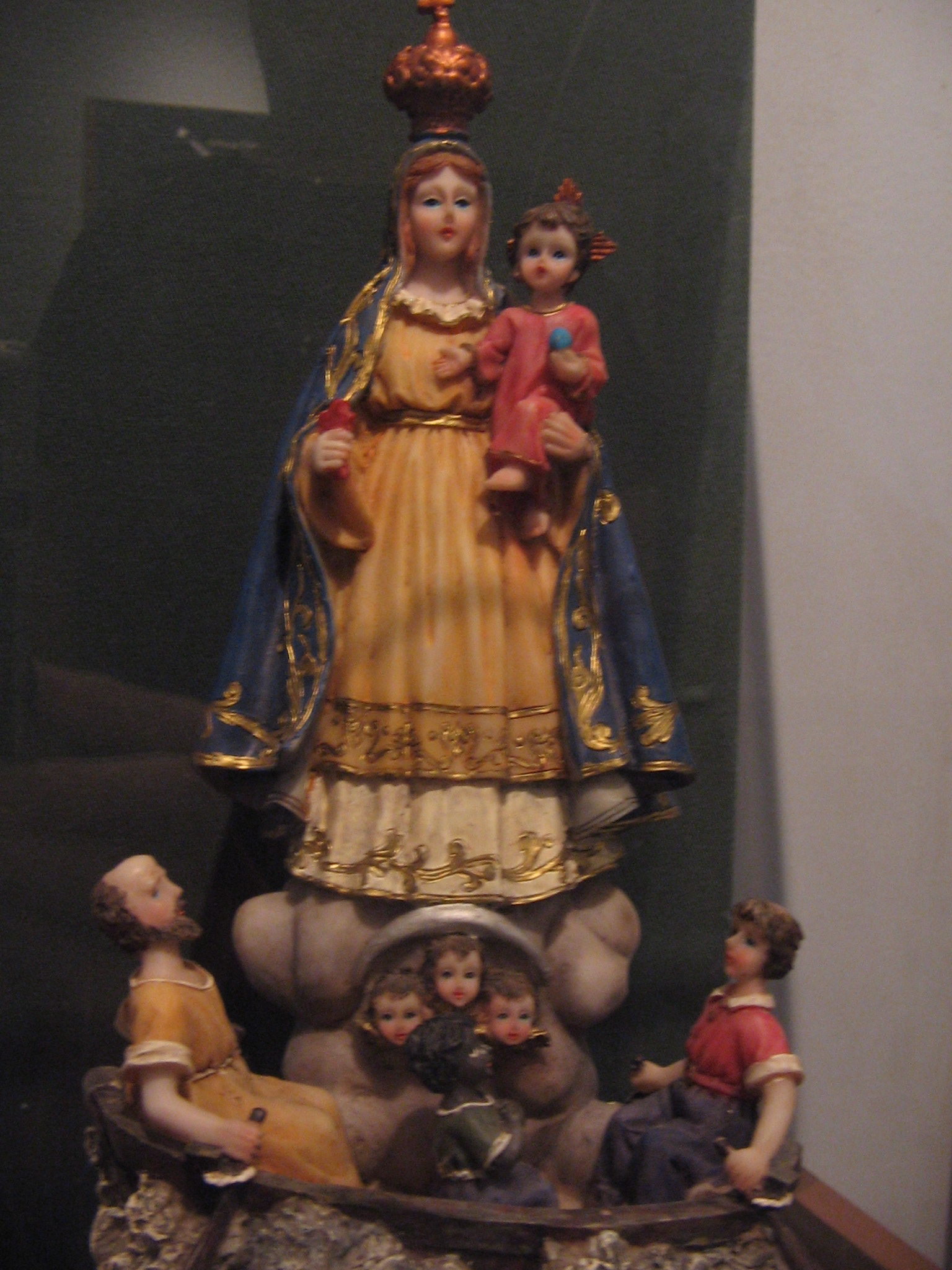
The Seaport also offers an exhibition called “Voyages” – a look at the way the sea has played and continues to play a role in the life of an America that most people associate with a large swath of dry land. The first display tells the story of a family of Cuban immigrants rescued from a tiny fishing boat while trying to get to the United States. A nearby display features Neustra Senora de la Caridad del Cobre. This mythological character is a goddess emerging from the conflation of the Virgin Mary and the African goddess (through the mediation of Santeria) Oshun. The story of the Cuban family associates the origin of this goddess’s concern with seafarers through the chance find of a statue of the Virgin floating at sea near Cuba in 1606. Our Lady of Charity, the Catholic version, is the patron saint of Cuba, and the syncretism of these goddesses has led to a new mythological character on view in Mystic.
Neustra Senora de la Caridad del Cobre

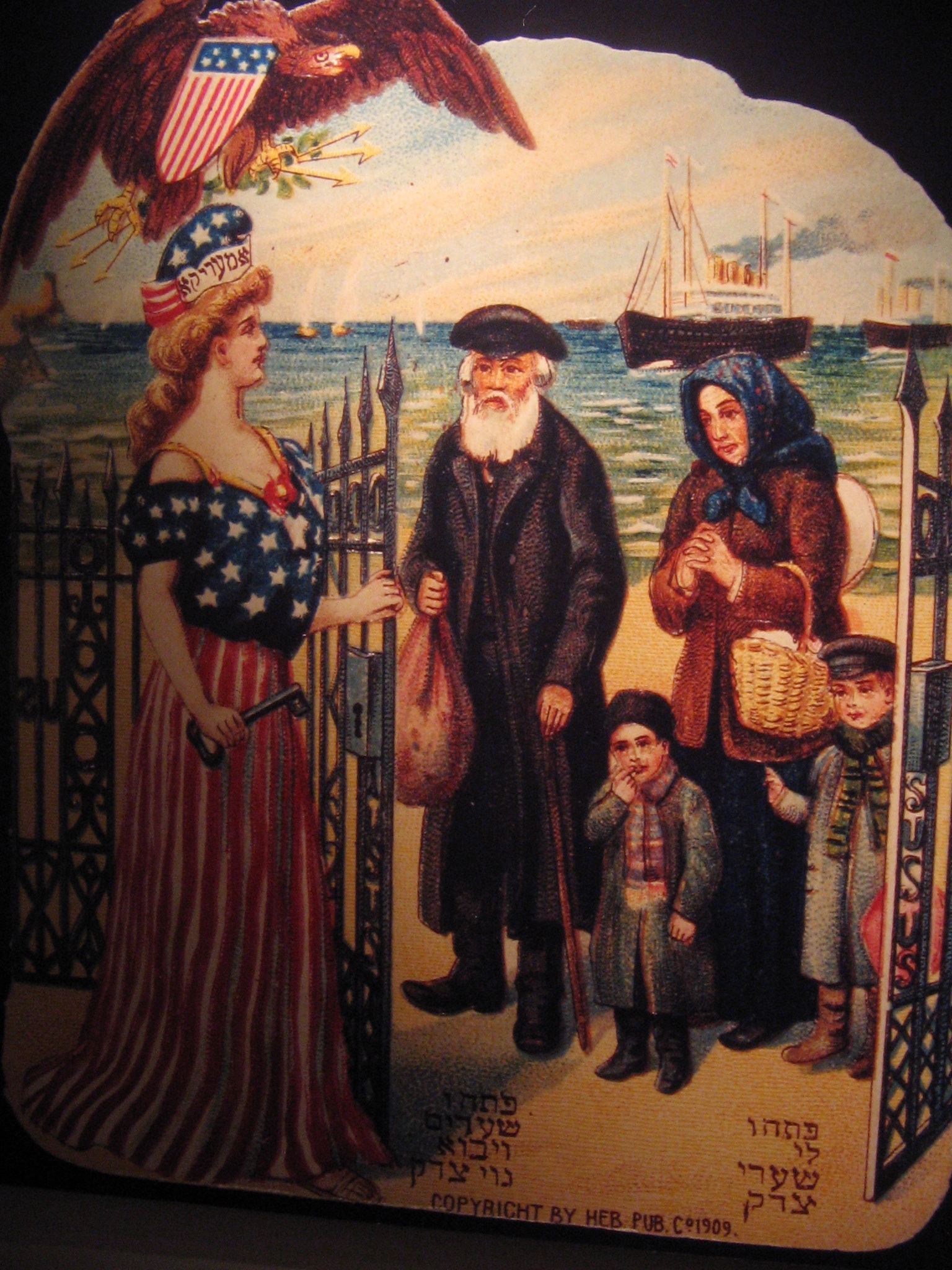
Further along in the same building, in the story of immigration, is the painting shown below. A Jewish family is shown disembarking before a Lady Liberty with “America” written on her crown in Hebrew. The inscription on the sand asks whether the new world has room for the righteous. It is a poignant reminder that acceptance in the United States religious world is often a difficult one. Even today non-Christian religions are viewed with suspicion by many in America. The sea has brought us all together, however, since historically immigration has meant crossing the great waters somehow. One of the gifts of the sea that we are still struggling to grasp is what it means truly to offer freedom of religion to those from far distant outlooks in a world that daily requires less of the gods.


Moby Dickens

One of the perks, or perhaps afflictions, of not having cable is missing the constant stream of current culture daily rushing by. When I hear others discussing the latest chic program I feel helplessly Bronze Age in the cell phone generation. Occasionally, when visiting family members who can afford to be fully wired, I catch glimpses of what the thousands of networks have on offer. During a visit to my mother’s house last year I caught an episode of Whale Wars. This reality program follows the exploits of the Sea Shepherd Conservation Society as crews attempt to foil whalers going about their daily slaughter. The truly disturbing part of the episode I watched was the enmity of the whalers towards these cetacean saviors — let alone their utter disregard for the intelligent creatures in our seas who have the misfortune of not having evolved opposable thumbs. Armed with weapons for disabling, and potentially killing, their species-conscious fellow homo sapiens, the whalers defiantly claim it is their right to destroy these gentle giants.

I confess to having been an advocate of our animal companions since I was a child. I used to contribute regularly to Greenpeace until the non-negotiable bills of adult life routinely began to outstrip my extremely modest income. These great creatures, the largest our planet has ever yielded, are seriously endangered because of the machinations of their only predators — us. Despite the fact that most whale products are not really necessary for economically deprived families, the gruesome harvest continues. Today’s newspaper carried the story of how the Sea Shepherd’s new ship, Ady Gil, was rammed and sheered in two by an angry Japanese whaling crew’s vessel.

In the light of all this, it may seem hypocritical to admit that my favorite novel of all time is Herman Melville’s Moby Dick. I cringe every time I read his descriptions of nineteenth century whaling, but I draw my comfort from knowing that Ahab’s nemesis is not a physical whale but an invisible, silent, immortal deity. As the tortured captain hurls harpoon after harpoon at the implacable god who caused him so much personal harm, no barb can ever kill Moby Dick. The echoes of Melville’s own subterranean cries against cosmic injustice reverberate so clearly through his prose that I simply can not put the book down once I start to read it over again. My heart goes out to the physical whales, however. They are the innocents being hunted by a predator they can’t stop as they are forced by nature to surface for air. In the cetacean version of Moby Dick, which surely must exist in some form of whale consciousness, they too are being relentlessly pursued by unfeeling gods.