Shining Meaning

AllThingsShiningWriting with the hopes of eventually being included in the Western Canon, I suspect, is often somewhere in the back of an author’s mind. We want our efforts to be noticed and our voices to be heard. The Western Canon, however, is a very exclusive club, and the members don’t get selected easily or quickly. We value our classics. More amorphous than the biblical canon, the list of books that define western culture is slightly different with every analyst, but the biggies always make the cut. Hubert Dreyfus and Sean Dorrance Kelly see the great classics as a source of meaning in an increasingly secular world. All Things Shining: Reading the Western Classics to Find Meaning in a Secular Age is a fascinating consideration of how the writing we’ve turned to for inspiration has changed over time. Older members—including the Bible—don’t drop off the list, but newer ones are continually added. According to Dreyfus and Kelly the polytheism of Homer shone with possibilities, and monotheism led to necessary changes where the shining shifted to new characters and new stories. It is an intriguing concept.

Reading about writing generates a fire within. Some of the classics All Things Shining discusses are those you’d expect: The Divine Comedy and Moby Dick. Others are more personally meaningful, such as the work of Elizabeth Gilbert or David Foster Wallace. We all have the authors that shine for us. Moby Dick, of course, has been on my personal canon since seminary and the chapter on Melville helps to bring the thesis of this brief book together. We all know the white whale is more than an albino cetacean, and the world has benefitted from that fact ever since Melville put pen to paper.

As enjoyable as All Things Shining is to read, I was left with the impression that meaning itself has become greatly fragmented in the modern world. Without the social glue of religion, we’ve been left to chart our own course through parts of the universe yet unexplored. We select our crew by the books we read, and we decide whether Jesus or Captain Ahab is better able to guide us through such dangerous waters. They both, in their way, captain ships. Since this is an exercise in fragmentation, we don’t know upon which shore this craft will ultimately land. While Dreyfus and Kelly are philosophers, many of us have followed other paths and have come to our amateur ways of finding meaning. Some of our ships never come ashore at all. “One does not have to believe that the Greek gods actually exist in order to gain something deep and important from Homer’s sense of the sacred.” Well said! If only we could learn the lesson to be literary rather than literal, religions would allow for many ships upon this vast ocean. And still we hale each other with the words, “Have ye seen the great white?”

Dromedary Dilemma

Photo credit: John O'Neill, WikiCommons

Photo credit: John O’Neill, WikiCommons

This past week two friends have pointed me to news articles about camels. In the modern, western imagination camels are biblical animals, pushing their way onto the ark, carrying long-suffering patriarchs across the desert, and squeezing through the eyes of needles. These news stories indicate that camels were actually not introduced into the Levant until about the tenth century B.C.E., i.e., a few centuries too late for poor Father Abraham, whom, according to Genesis, was a noted camel owner. Of course, the reason that this is news is because Fundamentalist groups insist that every word of the Bible is literally true. If it says Abraham had camels, then, by gosh, camels he had—archaeological evidence or no. One story points out the problems for Zionists, for whom claims on the land derive from the mandate to Abraham (and, presumably, his camels). Biblical scholars have long been aware of the complex methods of scripture writing, and no camels are no problem. The bigger issue, I suspect, is that Abraham has been awol for some time as well.

Abraham, as the progenitor of the three major monotheistic religions, bears a tremendous weight on his weary shoulders. It is the weight of history. Or lack thereof. I may be a few years outdated here, but the earliest figure historically attested in the Bible is (or was) Omri, the king of Israel who spawned the notorious Ahab. Prior to that, historical records are pretty silent. Yes, I know the Tel Dan stele mentions “house of David,” but that is like mentioning Willy Wonka’s chocolate factory—it doesn’t make Mr. Wonka any more real (even though you can buy a Wonka bar at some candy stores). That means that, in the jumble of biblical history, everyone in Genesis falls into the questionable historical category. Even if Moses (himself historically dubious), wrote Genesis (and he didn’t), he wouldn’t have known Mr. Abraham personally. He had been long dead. If he’d ever been born. I’m getting worried about his camels.

Religions have often tied themselves to historical claims. Such claims are always tenuous and negotiable. For instance, I watched a movie about Abraham—Lincoln, it was called—where I learned quite a bit that I didn’t know about a very historical Abraham. At the same time, I knew the movie wasn’t history. When we rely on history to cite our superiority (often one of the functions of religion), we had better be willing to take the risks. The first biblical historical figure is a “bad guy” king of a secessionist kingdom, this time in the north. Even once we learn that the storied characters of the Bible may have never trod the earth, we don’t leave them as camel fodder. They are part of the tradition, whether they participated in history or not. I realize, however, for some it would be easier to swallow a camel than to strain out this particular gnat.


The Goddess

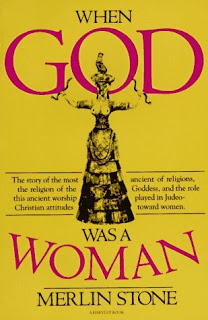
WhenGodWasAWomanMerlin Stone was a sculptor and an artist. I met her only once, a few years back when I was still recognized as an “authority” on ancient goddesses. At one of the many Society of Biblical Literature annual meetings I attended, she came and introduced herself to me, thanking me for my work. Of course I knew who she was—the author of When God Was a Woman, one of the books that was most influential in the revived goddess movement of the 1980s. I have always appreciated those women who have dared to take on the often amorphous patriarchal power structures of society to raise the necessary questions of fairness and justice. Stone was one of those women. Her book, while based on sometimes questionable historiography, nevertheless highlights some of the issues that many male scholars have chosen simply to ignore.

One of the biggest problems faced by authors like Merlin Stone and Marija Gimbutas has been the shifting sands of history. I recently had a deep conversation with a couple of feminist friends of mine where the issue of truth emerged. Truth, as I came to realize, may be a temporary phenomenon. What is true today (the earth is the center of the universe) may not be true tomorrow. It is always contingent. Historians reconstruct a past to which they do not have direct access, and further discoveries will often detail the errors made along the way. When God Was a Woman was originally published in 1978. Some of the historical constructs that Stone uses have since crumbled, but the main point of the book remains firm—women have as real a claim on the divine as do men. (I can’t help but wonder if there is some connection between this and the recent trend towards prominent male thinkers declaring themselves atheists.)

Although I can’t agree with everything Stone wrote, one of her ideas dropped a hook in my brain. In describing the sexuality that apparently attended worship of “the goddess,” she notes how male scholars came to refer, always derisively, to the such religions as “fertility cults.” Turning this phrase about, Stone wonders whether far distant future analysts will look at monotheistic religions that decry sexuality as “sterility cults.” Not that the goddess is all about sex. Religions, however, always weigh in when such spiritually significant activities as sex take place. Men, who are often eager participants, are the ones to construct religions condemning what should be a most obviously sacred human activity.

Merlin Stone may have died just over two years ago, but her book will stand as a yad vashem to half of the human race who have been religiously subjected to the other half. And perhaps there is a goddess out there yet who will bring about liberty and justice for all.


Sacred Sexism

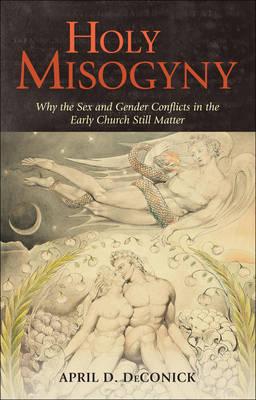
holymisogyny How terrifying to observe religion from the eyes of women! In the monotheistic traditions it begins as early as Genesis 2 and continues unbroken through to the twenty-first century. While the origin of such views seems a mystery, they may be partially understood by reading April DeConick’s Holy Misogyny: Why the Sex and Gender Conflicts in the Early Church Still Matter. Not that anyone fully comprehends the insidious idea that women are somehow less than men, but DeConick offers some insight into the issue. She suggests that sacred misogyny is, like much of life, an embodiment issue. The monotheistic traditions from the beginning have had trouble with women’s bodies. Men can’t control their urges and blame the victim. That is over-simplifying, I know, but the basic gist is about right. What can’t be missed from reading Holy Misogyny is that the idea has embarrassingly deep roots in religious thought.

The Bible starts out pretty fair. Except from the beginning the masculine pronoun is used for God, even though theologians from very early days declared God neither male nor female. How do you believe that an “it” really cares for you? Wants the best for you? Loves you? We are gender embodied. We want to know who it is that’s loving us. Genesis 1, on the human level, has man and woman created together on the same day, at the same time. The essence of their embodiment appears to be divine: “in the image of God created he him, male and female created he them.” “Human” is gendered humanity. But then the apple falls. We turn the page to find that the not yet monotheistic religion of the Bible is already pointing sticky fingers at Eve. I know that I can’t read Tertullian without wanting to hide my face when he castigates women as the source of evil.

Holy Misogyny is a disturbing book. It should be. What it does demonstrate, however, is that a wide variety of opinions and options existed for early Christianity when it came to the perception of women. Some of the Gnostic sects of Christianity came much closer to a kind of equality, but they lost out to an unremittingly masculine “orthodoxy.” The Bible itself, although written in a patriarchal world, is an ambiguous document. At points even Paul seems to indicate the genders are equal in God’s eyes, but then, he (or someone writing in his name) tells women to keep quiet in the church. Ask your husband at home. I’ve talked to a lot of church guys in my time, and Paul, I have to contest you here. Women who want to get proper instruction in matters of the soul—or of the body—would be better off reading DeConick than asking their husbands. We’ve got two millennia of unfortunate history to prove the point.


International Women’s Day

So it’s International Women’s Day, and I’m thinking about what various religions might do to celebrate it. How about equality? True equality. With rare exceptions religions have been spawned and gestated in masculine wombs. Increasing the asperity, monotheism had to, by definition, introduce a single-gendered god to match at least half of the human race’s expectations. No surprise he is a deity with a Y chromosome. For whatever reason, religions nearly always promote male experience as normative and female experience as supportive. If you disagree, well, talk to the man upstairs.

In those few precious moments when I’m allowed the luxury of a daydream, I wonder how differently the world would’ve developed without the mythology of the alpha male god. If god had been conceived as feminine in the beginning, would it have made a difference? Would the rules be more or less stringent? More humane?

Lange-MigrantMother02

Polarities are a funny way to view the world. As evolved, gender-differentiated animals, we easily slip woman and man into that category of natural polarities. Over time, however, it has become clear that reality is more complex than X or O (or I and O, or X and Y—where the male is missing something the female secretly possesses). What if the overall category were simply “human?” As we’ve evolved, we’ve learned to keep many animalistic tendencies in check. Our vast and complex societies, unique only in degree, have demonstrated that it is possible. To judge half of the human race as less able to provide spiritual leadership is an exploitation well past due for extinction. With all eyes on the Vatican over the past couple of weeks, the largest Christian denomination in the world doesn’t seem ready to shift even a nanometer on this one. Mother Mary, pray for us.

In a world where conception was a mystery (which it still is, to a point), women were the sole life givers. Men had the role of sustainers, the help-meets who brought home the meats. Somewhere along the sociological lines the order somehow switched. Might it have been religion itself that led to the subordination of the god-like ability to give life that only women possessed? By attributing the origin of life to a being, generally male, outside the realm of normal reality, religion bestowed a foreign primacy upon the human race. We became the victims of our own longing for transcendence. So celebrate International Women’s Day. If it weren’t for a woman, a goddess in her own right, you wouldn’t be reading this right now.


Mercurial Monotheism

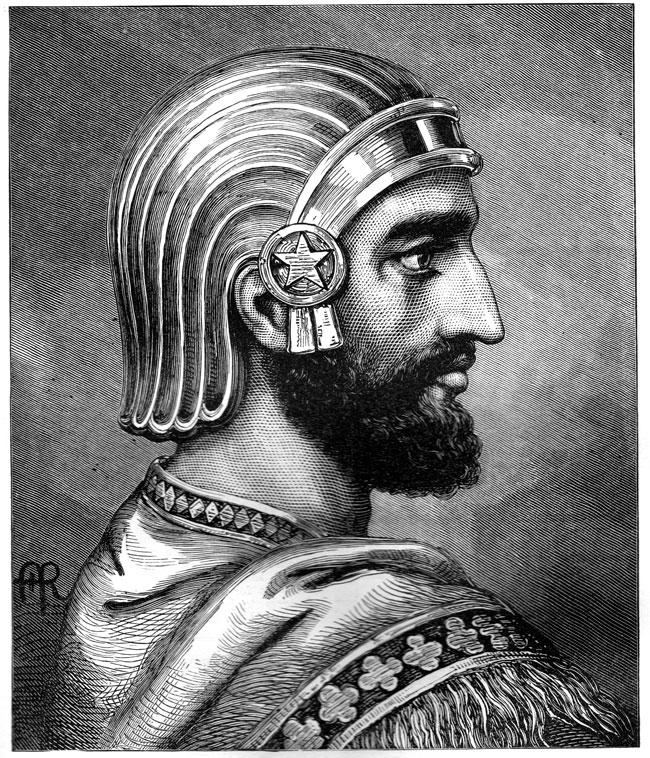
A friend recently asked about Isaiah 45.7, “I form the light, and create darkness: I make peace, and create evil: I the Lord do all these things.” I remember as a college student how professors tended to translate the problem away. Perhaps I was too young to understand the truth of the Italian phrase, “Traduttore, tradittore”—if I may betray myself—“translators are traitors.” I eventually did come to learn that those who’d already decided what the Bible meant could translate troublesome passages according to their biases. In this case the connotations aren’t even necessary to raise hackles, for the denotations do so fine just by themselves. Let’s put Isaiah 45 in context first. This remarkable chapter is an oracle from the beginnings of the Persian period that show Yahweh doing things in unexpected ways. It begins by calling Cyrus the Lord’s anointed—yes, that is the Hebrew word for “messiah”—the people of Judah had been in exile a long while and Cyrus, king of Persia, was their deliverer.

Back then, as even today, some would’ve been scandalized at this turn of phrase. The Judahites were beginning to develop the idea that the messiah would be a mystical deliverer, someone who would free them from the sad lot of being deportees. Some thought the messiah might be a divine figure. Here Yahweh is declaring a non-Jew, a foreign king, as a messiah. You can be sure there was some questioning of the prophet’s words. Second Isaiah, however, throws a well-timed curve in verse 7: God can do this because God creates both good and evil. This is a consequence of emerging monotheism. In a polytheistic world, you could have a plethora of deities. Monotheism, however, quickly runs afoul of the question of evil. If there is one god, where does it come from? Deutero-Isaiah shows Yahweh is capable of surprising things. The verse’s plain sense is blatant. Bald. Obvious. Yahweh creates both good and evil. Otherwise monotheism would be making false claims.

In college professors tried to insist that “evil” here wasn’t that really bad kind of evil, but rather something milder—a filtered cigarette rather than a Cuban cigar. They were prevaricating, however, as I learned when I too took up Greek and Hebrew. Evangelicals like to read monotheism into the Bible from the beginning, but the Bible itself fights against them here. Monotheism, like everything else, evolved. By the time Isaiah 45.7 was being penned, it was necessary to show that Marduk, and Enlil, and Ishtar had nothing to do with Jerusalem’s destruction and the fate of the deportees. No, this was Yahweh’s doing. And there was no apology for it. Monotheism had come, but at the cost of Yahweh’s innocence. According to this part of the Bible, the origin of evil is no mystery—it is the same as the genesis of all good things.

Who's your messiah now?

Who’s your messiah now?


No God for Women

A friend recently asked me to write a post on the feminine image of God. Specifically, she noted that images of God tend to be overwhelmingly male, even today. Having written a book on the goddess Asherah, and being very interested in gender equality issues, I was intrigued by this request. Growing up male it seems natural in our culture to find representations of God as a man. It stands to reason that in a culture more open to feminine experience we should find female images of God. They are, however, still lacking. This combination of improbable facts kick-started some ideas about both religion and culture. To begin at the beginning, although the Bible makes passing references to God as either non-gendered or even female in rare places, clearly the predominant metaphor is masculine. The third-person masculine singular pronoun (i.e., “he”) is almost always used for God, beginning in Genesis 1 and running straight through. The Judeo-Christiani-Muslim deity is decidedly male in his demeanor. All three religions developed in circumstances of male social dominance.

Enter the 60’s (1960’s, that is. C.E.). Women were able to begin expressing their needs without the whole weight of a social McCarthyism bringing down the girth of the government upon them. Instead of finding feminine traits to the god of the Bible, interest in goddess worship revived. Now, serious scholars disagree on just how much a role the goddess played in the development of monotheistic religions. The end result, no matter how you parse it, is pretty masculine. Therefore some women found the goddess to be more conducive to fulfilling their needs. Problem is, there never was, historically, a goddess monotheism. There were always goddesses, plural. Without the unifying force of a single, female deity societies just never fully coalesced around a single, strong image of feminine deity. Some have tried to put Asherah in that role, but she was defined by her husband El and shared the stage with Anat, Shapshu, Ashtart, and a host of other potent females. In a world of two basic genders, monotheism favored the male.

Are there female images of god? Undoubtedly there are. There will be a great deal of difficulty finding them because Christianity very quickly invented the idea of heresy (something Judaism fortunately lacked). This assured that the “orthodox” voice would always be the loudest in the shouting match that we call religion. This situation has had two millennia to ferment and brew. Theologians (mostly male) early on stated that God really has no gender. After all, a male god does imply a lady somewhere in the wings—otherwise human maleness is really superfluous, theologically speaking. Rather than embrace castration, let’s just keep god male, the thinking seems to go. Religions are conservative by nature. They may breed radical free thinkers, but natural selection comes to their rescue by reinforcing the bearded, chastely clothed, divine father. Until society is ready to embrace true equality, however, religion will continue to privilege the big man upstairs.

Monotheism’s bete noir?


Gods Will Be Gods

“And it came to pass, when men began to multiply on the face of the earth, and daughters were born unto them, That the sons of God saw the daughters of men that they were fair; and they took them wives of all which they chose.” Genesis 6 begins with one of the most unusual stories in the entire Bible. And that’s saying something! The sons of God mating with the daughters of men? A couple verses on we hear about giants roaming the earth in those days, presumably the children of this divine-human miscegenation. What is this stuff straight from pagan mythology doing in the pages of Holy Writ? Over the centuries, translators have tried to tidy up the boldly direct language of the King James here, making the sons of God into angels or some lesser beings. It is too hard to accept that sacred scripture admits of polytheism.

Monotheism, it is clear, came to the Israelites somewhat late in their history. The Bible is full of bold clues that other gods exist, and, worse yet, they are sometimes as powerful as Yahweh. In the light of later theological development, translators often bow to popular pressure and clean up the Bible’s language a bit. Fact is, Israelites, like most ancients, lived in a world populated with mythical creatures. Gods galore, monsters, demons, angels, witches, giants—they all haunt the pages of the western world’s sacred book. But that’s not what we expect the Good Book to say. The Hebrew text here is unequivocal, these are the “sons of God” we are talking about. Either that, or worse, “the sons of the gods.” More and more deities.

We can’t be sure why the ancient believed in monsters and giants, but it seems likely that such creatures had explanatory value for their world. Lacking science—paleontology was millennia in the future—they had to explain the huge bones found in the earth. We do know that dinosaur bones had been discovered in the Mediterranean basin in antiquity. These big bones often look human to a non-specialist. Heads are frequently missing. It has been suggested that these give rise to our biblical giants. Yet another response has been the recent trend of fundamentalists with Photoshop skills to post photos of archaeologists actually discovering giants on the Internet. Some of these doctored images are very impressive. It is an effort to save the Bible from the truth. A Bible that requires saving, however, should give even the most fervent believer pause for thought. Isn’t it just easier to suggest the sons of God were typical guys and that little has changed since the world was young?


Divine Checkmate

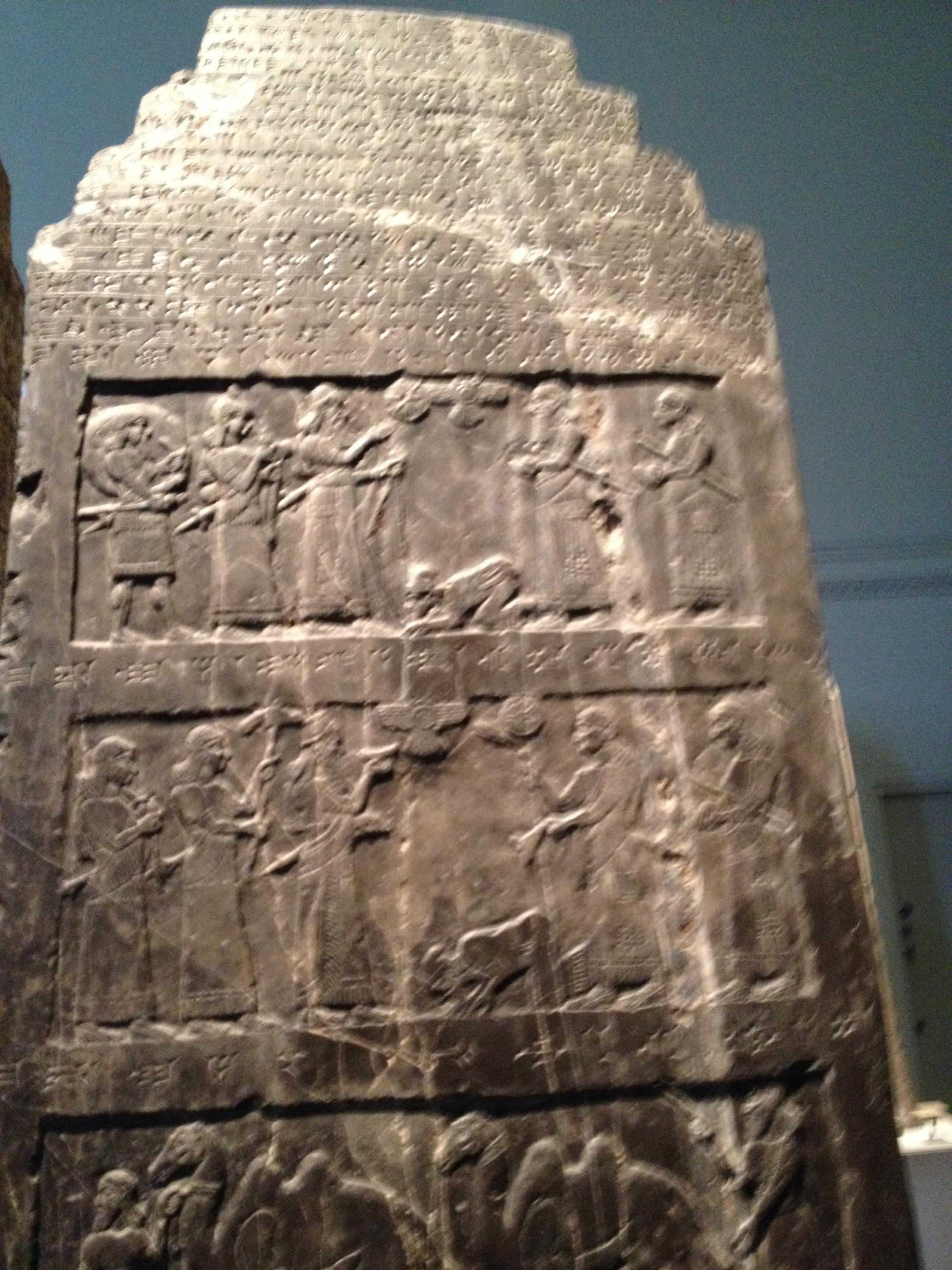
The first time I met Jehu I did not recognize him. When I first visited the British Museum a couple of decades ago I hadn’t had the benefit of teaching students long enough to realize the importance of the Black Obelisk of Shalmaneser III. But then, who really does? The obelisk, one of many artifacts essential to understanding the Bible in its context, contains the only known image of an Israelite king from a contemporaneous period. Jehu is here mistakenly considered the “son of Omri,” but is correctly identified as the king of Israel. He is bowing in tribute to a foreign king, a position in which no monarch likes to find himself. Before leaving the British Museum this time around I made sure to include him on my list of ancient people to meet.

The Bible contains far less history than we are accustomed to think, so when we find a case of convergence where Assyrian and Israelite agree, mostly, it is worth pausing to consider. Assyrian interests can only in the most abstruse way be considered religious; ancient peoples lived in a world where gods were both ubiquitous and largely irrelevant to daily life. Irrelevant in the sense that probably most people only tried to access a god’s pity when a time of trouble arose—priests existed to keep the deities happy on a daily basis. Citizens supported this system with taxes. How reluctantly we can only guess.

We have no reason to suppose that Israelites were more religious than the rest. Eventually, after the Assyrian and Babylonian conquests, they came to see their religion in terms of monotheism. Still, the work of keeping Yahweh happy devolved on the priests, with the backing of the king. The king was God’s representative on earth. In this sense the only surviving image of a king of Israel, showing him bowed before the unflinching might of the Assyrians, becomes an unexpected paradigm. Both kings were pawns of the gods, and at the end of the day one stands regally and the other bows in utter submission.


Why Islam

Radical ideas emerge in the most unlikely of places. In the world of religion the rule is generally to criticize first and then attempt to understand later. This is the burden of revealed religions where the only evidence to test is subjective experience. Lessing offered us the parable of the three rings: God gave humanity three religions (Judaism, Christianity, and Islam) without indicating which one was the correct one. Even before Lessing attempted to provide some kind of resolution to this intractable dilemma, proponents of each of the monotheistic traditions had already made up their minds. The divine buck stops here. Our society places little emphasis on learning about religion. Religion is something we do, not something we have to read about. Given the tremendous motivational force of religious belief, this situation would seem to be a set-up for disaster. Read the headlines and judge for yourself.

I was pleased, therefore, to come across the website WhyIslam.org. Written by Muslims to answer questions by non-Muslims, this non-judgmental, informative website seeks to educate. Despite its rapid growth in the western world, many people are poorly informed about Islam, what it stands for, and how it relates to Judaism and Christianity (especially). The media tends to focus on extreme cases of religious believers; unfortunately they are often the most newsworthy, capturing the limelight in the name of their faith. Whether or not religion was the motivation for an act of terrorism (certainly not limited to Muslim believers), once such an act is perpetrated the religious beliefs of the guilty parties are also suspect. Instead of trying to understand a different religion, the knee-jerk reaction is to fear it. WhyIslam.org is an attempt to counterbalance that fear. Education is the St. George to the dragon of fear. Instead, however, our governments often try to cut back on education and the trench only grows deeper.

If we are to survive the world of competing religions, open conversation is necessary. I’ve been ensconced in institutions where discussion was viewed as compromise and vehement hatred against the foe was considered the only legitimate response. This passed for education. Many seminaries are too busy indoctrinating students in the minutiae of their own tradition to open them to learning about other religions. What are they so afraid of? If a religion is really real, it should never quail in the face of competition. What is the danger in learning about fellow believers? Religions make many assumptions about their own priority—natural enough with regard to core beliefs. If they all encouraged learning about each other, perhaps religious violence would transform into religious education. Islam has much to teach the rest of the world, if the rest of the world would visit sites like WhyIslam.org and be willing to listen.


Hope Soap

I have the distinct good fortune of an occasional sanctuary. I married into a family that owned a share in a remote cabin on a pristine mountain lake. When I can afford it, I make the long journey during the summer and wonder why anyone would ever want to live anywhere else. When I began coming here in the 1980s, the preferred method of bathing was in the cold waters of a meltwater-fed lake. Although I’m extremely sensitive to cold, I’d nevertheless take the plunge and I’d always take my Dr. Bronner’s Magic Soap with me to lessen the environmental impact. My wife and I bought our Dr. Bronner’s at a local health-food store and were pleased not only with its eco-friendliness, but also with the many religious/philosophical sayings printed on the bottle in tiny script. After using Dr. Bronner’s yesterday, I decided to learn a little more of the religion on the bottle.

Dr. Bronner's in its natural environment

Emmanuel Heilbronner emigrated to the United States shortly before the Second World War. His parents were murdered in the Holocaust, but Heilbronner, shortening his name to Bronner, developed a religion that promoted love and peace, making him a popular figure in the hippie movement. He called his philosophy All-One-God-Faith or the Moral ABC and he had tenets of his religion printed on each bottle of his product. The factory he founded remains unmechanized and produces over a million bottles a year. The soap is not animal tested. Ironically, the bottle I used yesterday was purchased back when Dr. Bronner was still alive: visits to the lake are tragically brief and the soap is concentrated and lasts a long time.

Dr. Bronner’s religion is a blend of his father’s Judaism with Christianity and a sprinkling of Islam. Bronner was a promoter of the benefits of monotheism, and his eccentricity may partially be accounted for by the fact that he was treated with shock therapy in an asylum while developing his philosophy at the University of Chicago. Society has a way of trying to silence those who speak with conviction—especially if the conviction doesn’t lock step with those who secretly admire McCarthy. It is fitting, in tribute to this free thinker, to give the final word to Dr. Bronner: “1st: A Human being must teach ‘Love His Enemy’ to help unite all mankind free or that being is not yet Human! Jesus #1. Based on African astronomer Israel’s: ‘Listen Children Eternal Father Eternally One:!’ Exceptions? None!”


My Myth is Bigger

“Do some people still worship those gods?” That is the question my daughter asked on the way home from seeing Thor yesterday. I had to staunch my immediate “no,” and qualify it. Revival movements exist for most ancient religions, although it is difficult to gauge how serious they are. Then I open this morning’s paper and see that conservative Muslims have been attacking Copts (by definition conservative) in Egypt again. Religion foments hatred more effectively than just about any other aspect of culture because it concerns belief. Beliefs must be held with conviction, we are constantly reminded, and conviction means convincing others that you are correct. This is the devolution from mythology to religion.

Mythology is a meaning-seeking system of stories that are true but not factual. The modern religious (and scientific) mind has difficulty accepting something that is true and false at the same time. No one requires convincing that life harbors plenty of difficulties. Even in this softer, technologically sophisticated environment we’ve created for ourselves, disappointments and difficulties abound. Religions often promise paradises that they just can’t deliver, and so true believers often grow frustrated. The myths, however, remind us that struggle is part of existence even for gods. For every Thor there is a Loki. The simplistic nicety of one God padding a harsh world with a comfortable lining simply does not match reality. Mythology has an answer for that, an answer which is more honest than many “sophisticated” religions.

In ancient times it really did not matter what you believed. Gods don’t really care what you think of them as long as you provide what they require. Offer your sacrifices, do your duty, and get on with life. Religion today is a matter of correct mental assent. If in my head I agree that this particular deity is the only one, and I love that deity, all will be well. Funny thing is, even monotheistic religions can’t figure out that if there’s only one God than everybody is worshiping it (him, according to many) already. Better to kill off those who don’t agree, just to make sure. All gods, after all, demand sacrifice.

Even scientists honor the gods: the Thor Delta


Dreams of Equality

Shortly after my wife and I married, over twenty years ago, while living in Scotland we needed cheap entertainment. Growing up one of my chores had been washing the dishes. I continued this calling all through college, working in the dishroom to pay my way through. My wife was pleased with this trait and offered to read to me while I scrubbed away. This was our cheap entertainment, but now, after more than twenty years of the practice, we have read over 100 books together. Last night the book we finished was Martha Ackmann’s The Mercury 13. Most Americans do not realize that during the space race, thirteen women received non-official tests to qualify as astronauts, many of the tests more extreme than those undertaken by the Mercury 7 crew. Because of social prejudices of the 1950s and ‘60s, the women were never given the opportunity to actually achieve space flight.

Apart from the moving account of how these women strove for the stars, this account also chronicles a social prejudice that remains today. Ackmann reveals that during the ‘50s and ‘60s, scientists and physicians had never really taken an interest in women’s physiology. They were, in this McCarthyian era, considered to be an inferior version of males, the dominant social gender. Although the Mercury 13 were accomplished pilots – some with more flight hours than the chosen astronauts – many political and military decision-makers feared that social fabric would fray should women prove as adept as men. It wasn’t until 1983 that an American woman was allowed to enter space.

Here in the 21st century, many religions throughout the world still staunchly hold to the myth of female inferiority. In a monotheistic worldview where non-gendered deities need not apply, one sex will always be somehow less god-like than the other. In a world where men still pay women less, they are reminded daily that God is a white man and that the mythology declares man was created first. Religion is as often used to repress as it is to liberate. The women who sacrificed careers without personal reward to demonstrate that space belongs not only to men deserve our gratitude. And even that old white man, sitting up there beyond the dome that surrounds our flat earth, must be smiling.


Corny Children

Once upon a time, if you wanted to see a movie you had to go to a theater or wait until it ran on television. This is stretching my memory back a long way, so indulge me if I only remember that four channels existed in those days, and you had to wait years for movies to appear at a time when you could actually be home to see them. Fast forward a few years and the VCR was invented. I remember being impressed that you could actually rent movies you’d always wanted to see, within reason. If you watched them too often they wore out. Then the electronic revolution came. This is all by way of excuse for why I’ve only just started to watch movies that came out in my younger years. Children of the Corn, although critically panned, was a financial success in my college days when I started watching horror movies. When I finally watched it yesterday, I realized it was a natural candidate for this blog’s running commentary on horror and religion.

What I had not fully appreciated is that the movie is a cautionary tale centering around a sacrificial cult. While the movie does have its problems, the concept of children taking the religion they hear from adults seriously runs throughout the film. Understanding gods as bloodthirsty demanders of sacrifice is a gruesome staple of all monotheistic religions. Someone’s got to die for the rest to be saved. While Fundamentalists take comfort in the substitutionary atonement of the “once for all” nature of sacrifice, in the film, the children erect crosses and sacrifice adults to “he who walks behind the rows” – a typical Stephen King kind of monster. Monster or not, the children believe he is a god.

Belief is the guy-wire for religion. The reality behind that belief is open to question, otherwise multiple religions would not exist. Children of the Corn confuses the issue by presenting “he who walks behind the rows” as a legitimate supernatural entity, one who is vanquished by a passage from Revelation. The truly disturbing aspect, however, is the complete, unquestioning devotion of the children. When children are raised in intolerant religions today, we are also planting corn that will lead to some unholy reaping in the future. Perhaps the message of the film was more trenchant than most critics were willing to admit back then. Today it is certainly more believable, given many religions’ demonstrations of their destructive powers.


Holy Matrimony

BBC Two is currently airing a series entitled The Bible’s Buried Secrets, unfortunately not yet viewable in the United States. The episode “Did God Have a Wife?” is presented by my colleague Francesca Stavrakopoulou, who did, no doubt, an admirable job. So once again Asherah finds herself in the news. The issue of monotheism is intricately tied up with how gods related to one another in the ancient conceptual world of Israel and its neighbors. Since the gods were modeled on humans, their behaviors could be embarrassingly human as well. Myths of actual divine marriages are rare, and extra-consortial affairs seem to have been pretty common. This aspect survives in the classical Greek world where Zeus’ many trysts are among his most notable deeds.

In a society like ancient Israel where marriage was a regular expectation of all young people who survived to marriageable age, an obvious mystery attends a single god. If Yahweh is male – and the Hebrew Bible seems not to dispute this point – would he not require a spouse as well? The well known Kuntillet Ajrud and Khirbet el-Qom inscriptions appear to suggest that Yahweh had a wife, and if he had the Religious Right should only rejoice since that would seal their definition of marriage forever in this literalist nation. And yet, the Bible remains decidedly mute on this point. In the end, it is interpreted that male is superior to female, again, pleasing certain religio-political factions.

Marriage in a human institution. It is a practice concerning which the Bible is strangely taciturn. In ancient times marriages (unless among the gods) were secular, not sacred ceremonies. Among a human population in danger of dying out through attrition, marriage ensured prolific reproduction. According to Christianity, even God had a kid. In a world that has changed in ways that biblical writers could never have imagined, marriage as a source for an increasing population is more problematic than it is essential. It seems that the jealously guarded definition of marriage is really just another green-eyed monster lurking in the Neo-Con closet. Maybe once Yahweh’s marriage certificate surfaces the issue of what marriage is really about will be discussed rationally.