Machen’s Monstrance

It was a coincidence worthy of a story written by a mystic.  Arthur Machen became famous for his novella The Great God Pan.  Descended from a clergy family, his interests were in supernatural stories, but Pan was considered extreme in his day, which, of course, made it famous.  I have the Oxford World Classics series volume of Machen’s stories and I had only a few minutes, not enough to read Pan.  Flipping through the table of contents, I noticed that the story “Monstrance” was brief.  I decided to read that one.  It’s about a German major-sergeant Karl Heinz, during World War One.  As he is trying, with several others, to set up a machine-gun emplacement unnoticed by the English, a vision he has been seeing leads him to cry out and die.  Through the discovery of his diary, it is learned that he’d committed a war atrocity at a church and the procession with the monstrance became a vision haunting, and ultimately killing him on the battlefield.
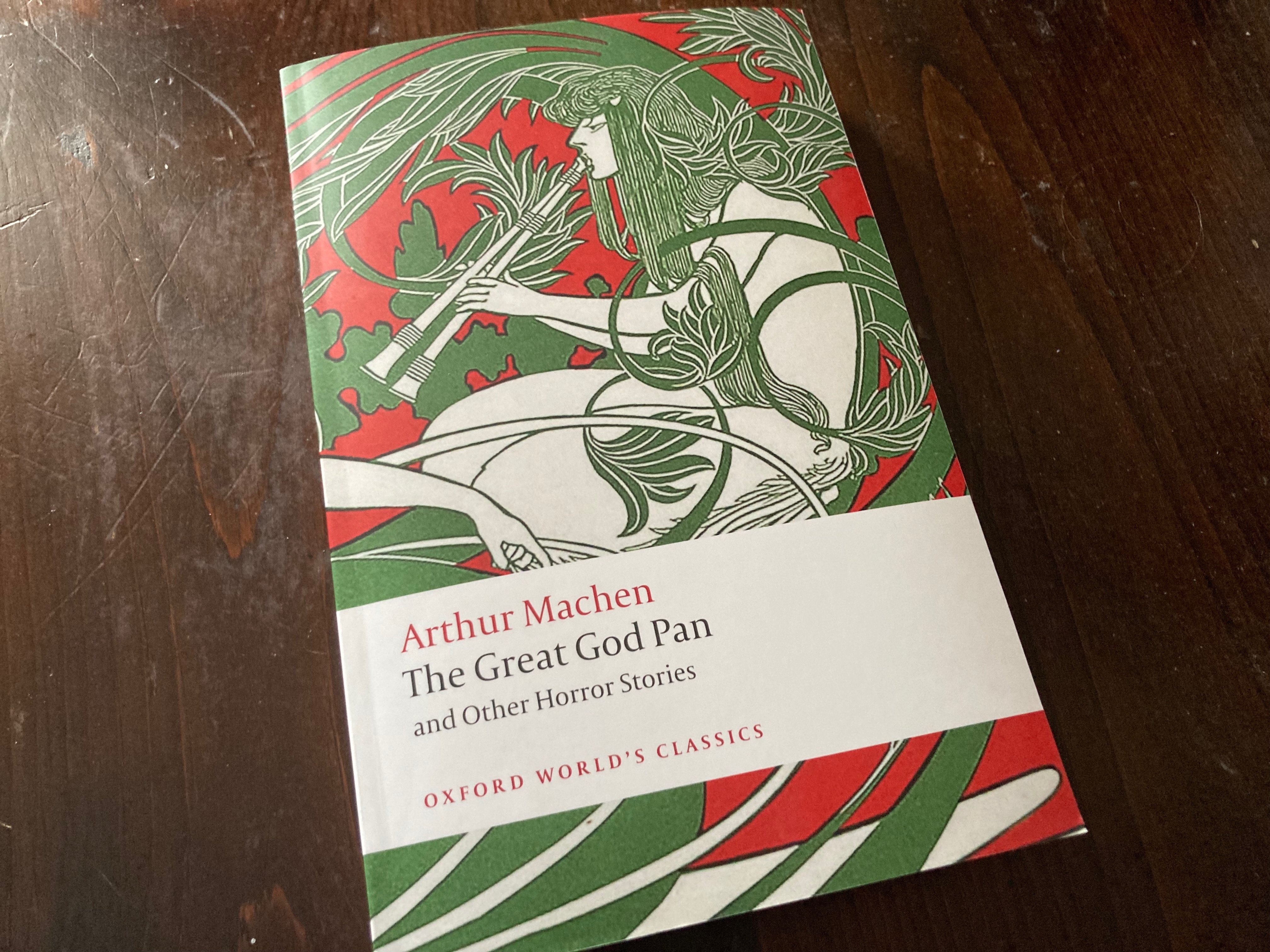
The coincidence grew even more appropriate when, reading about Machen, I learned that his probably second most famous story was “The Bowmen,” which also happened to be short, and which in the Oxford World Classics edition, is printed right before “Monstrance.”  Of course I had to read it also.  The reason I chose “Monstrance” in the first place wasn’t because of its famous neighbor, but because of the religious symbol of the monstrance and because it is brief.  Since I still didn’t have time for The Great God Pan, I was led to his second most well-known story by looking for something short and landing on the story immediately following it.

“The Bowmen” is also a war story in which a miracle occurs.  It led to the rumor that the event, which involves angels fighting for the British forces, actually happened.  It is, however, fiction.  As a result, “The Bowmen” became the second most popular Machen story.  I wouldn’t have read it—at least not any time soon—had it not been for its placement before “Monstrance,” even though the two stories are somewhat similar.  It’s easily imagined that God is fighting on your side, and it should be remembered that often the enemy believes the same thing.  That most futile of human activities, war, certainly spawns stories as so many lives are meaninglessly lost.  There is, however, a mystical element to these tales, in keeping with Machen’s outlook on life.  Not bad for having about 20 minutes to fill.

Scary Monstrances

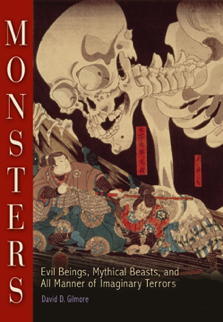
I can’t help myself. I’ve always found monsters fascinating. Now that I’m mostly grown up and am expected to have a modicum of respectability, I try to read academic books on monsters so that I can legitimate what would otherwise be puerile juvenility. David D. Gilmore’s Monsters: Evil Beings, Mythical Beasts, and All Manner of Imaginary Terrors was my latest foray into the forest. As I have come to expect, just pages into the book the first reference to religion emerged. This connection between monsters and religion is not Gilmore’s central theme, but it does recur at several points in the book. I especially enjoyed his discussion of Spain’s Pentecostal dragon. The Tarasque, named after its host town, is a medieval dragon that is still feted to this day in some locations. Considered to be symbolic of the sins of humankind, it accompanies either the holy day of Pentecost or of Corpus Christi. This connection between the church and monsters took me back to my first experience of Corpus Christi.

Raised as solid a protester as a Protestant can be, I had a difficult transition to some aspects of Anglicanism. The ceremonial was great, but some of the popish blandishments I could never quite accept. When a member of Boston’s famed Church of the Advent, the rector asked me to be a torch bearer on Corpus Christi. This involved processing outdoors onto Beacon Hill in full drag (or cassock and surplice, as I’m sure the parsimonious will correct me) to accompany the holy sacrament, carried as it turns out, in a monstrance. The idea that looking at a piece of wafer-thin bread on public display could somehow mediate a divine blessing, I never understood. It felt as much a fairy tale as the dragons of Spain. Monster or monstrance?

Gilmore concludes that monsters are people’s projections of their deepest unresolved issues. He may be right. One of his observations, however, struck me. He suggests monsters predate even gods in the human imagination. I tend to think they entered that gray space at the same time. Our minds have always told us that there were creatures out there to fear. Some of them, we hope, are good. Others are clearly evil. Monsters are difficult to explain in a world created by a benevolent deity. It is perhaps no mistake that Zoroastrians conceived of Angra Mainyu as monstrous. Divinity and diabolism could be fused into one being. There is a profound lesson here, for those able to read. Monsters are among the earliest projections of human imagination. And they remain forever with us.

Angra Mainyu; god or monster?