Not The Sting

Why do we make the decisions we do?  Watch the movies we do?  I have to confess that for me a number of strange factors combine to make for some weird choices.  For example, Invasion of the Bee Girls is difficult to explain apart from compounding oddities.  One is that Amazon Prime auto-suggested it too me (for free).  Yes, I have a history of watching bad movies and this definitely fits that bill.  Fuzzy-headedness during my weekend afternoon slump time probably played into it.  Along with the fact that I’d been researching bees and that brought the movie The Wasp Woman back to mind.  Wasp woman, bee girls?  It’s free and I’m not going to be able to stay awake otherwise.  The movie is about what you’d expect from a low-budget 1970s sci-fi horror film.  It did make me think I should read about movies before I watch them rather than after.

Nevertheless, I’m trying to develop an aesthetic for bad movies.  If you’re a regular reader you’ll know that I have a fascination with Ed Wood and his films.  I even read a book about him and also read a book on why it’s okay to like movies that we tend to label as bad.  No matter how you parse Invasion of the Bee Girls, it’s bad.  The acting, the writing, the plot.  Still, some of us have a taste for films from the seventies—it’s kind of a nostalgia trip since I was really only becoming aware of the odd world of science fiction about then.  Nicholas Meyer, who wrote the initial screenplay wanted his name removed after he saw the changes that’d been made.  That should be telling you something.

Meyer, while not a household name writer, did pen some good detective stories about Sherlock Holmes, and wrote, uncredited, both Star Trek II: The Wrath of Khan and Fatal AttractionInvasion of the Bee Girls has a somewhat salacious plot that fits the Zeitgeist of the seventies of which I was unaware, growing up.  The seventies were my sci-fi high point, it was good escapist material for someone living in a situation less than ideal for day-to-day living.  I watched, for example, Killdozer about that time and thought it was great.  Now that streaming is how we watch, the amorphous internet has a record of what we’ve seen and then recommends products for us based on our record.  I really thought we outgrew being tracked all the time.  Little did any of us know that it was only getting started in high school.  And as long as you have a penny to spend, those who track us will try to figure out how to take it.  You could get stung.


Through the Woods

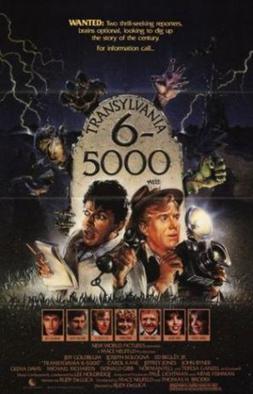
The thing about appreciating bad movies is that it’s difficult to be disappointed.  On a recent weekend I’d watched a horror film that didn’t sit well with me (or maybe it was the last night’s supper), and I decided I needed to see something else.  Something that was free on my streaming service.  I’d read about Transylvania 6-5000 someplace, but I couldn’t remember where.  The list of stars won me over: Jeff Goldblum, Ed Begley Jr., Jeffrey Jones, Geena Davis, Michael Richards—why don’t more people talk about it?  Because even for a comedy it has trouble working.  Well, a horror comedy, to be precise.  Emphasis on the comedy, which tries too hard.  I couldn’t get over the fact that this was a tall guy movie—Goldblum, Begley, Jones, and Richards are all over six feet tall.  Usually other actors literally have to look up to them.

Even though it’s a groaner, it’s not without worth.  It was filmed in what used to be Yugoslavia when it was rare for anything to come from behind the Iron Curtain.  Set in Transylvania, it wasn’t too far off.  (Transylvania is located in Romania, of course.)  Some of the performances aren’t bad, Davis’ vampire nods to Frank-N-Furter in Rocky Horror, and Carol Kane is fun to watch as Lupi.  The male roles are generally the problem.  In case you’re wondering, the plot is that two reporters—Goldblum and Begley—are sent to Transylvania to find a story.  The locals laugh at them, insisting Transylvania’s a modern country with no monsters.

When the classic monsters do appear, they all have rational explanations.  There are riffs off vampires, werewolves, Frankenstein’s monster, swamp monsters, and the mummy.  There’s even a mad scientist.  The problem is the movie really doesn’t give itself over to either comedy or horror.  There are ways to make that combination work.  And, as with C.H.U.D., the title put me off.  I didn’t know until reading about it later that it was also a riff, but from the Glenn Miller song “Pennsylvania 6-5000.”  I’d never heard the song before and was unfamiliar with its title.  Rudy De Luca, the director, had worked with Mel Brooks and perhaps if they’d collaborated on this one the results might’ve been better.  So, it’s a bad movie.  That doesn’t mean it isn’t worth watching.  Movies like this sometimes serve as an homage to the monsters with whom we grew up, and who even met Abbott and Costello in their own lifetimes.  Just be prepared not to take it too seriously and not to laugh too much.


Tall and Slender

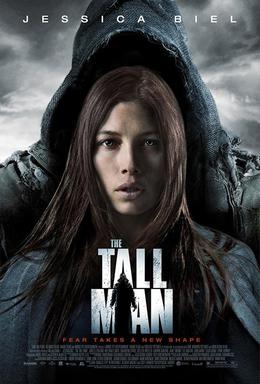
At first I thought she was mistaken.  A friend mentioned, in a litany of horror films, The Tall Man.  I thought she meant The Slender Man.  Then I saw an online post that referenced The Tall Man and I grew curious.  That curiosity almost cost me my lunch.  Not for the reasons you might assume, but because The Tall Man’s one of those movies that seems to think the camera has to be in constant motion.  I have an inner ear condition that makes me extremely susceptible to motion sickness.  It happens even if I watch train cars passing (which is, indeed, one of the images with which the movie starts).  I kept telling myself, give it a few more minutes, maybe they’ll buy a tripod.  I’m glad I stayed with it because it was inspired by the Slender Man urban legend.  Later, The Slender Man was made into a movie, perhaps inspired by The Tall Man.

Although horror, this probably isn’t what you think.  The reason I was glad that I stuck with it is that, although confusing, it has a good message and everything becomes clear at the very end.  Director misdirection is very common, of course, but this one worked on me.  There’ll be spoilers here—so you’re warned.  The common thread behind both Tall and Slender is missing children.  Some mythical or folkloristic creature snatches them away.  There’s no supernatural in this movie.  It revolves around a widowed nurse in a dying town, Cold Rock, Washington.  The children are suffering and the nurse wants them to live a better life.  Here’s a spoiler—read no further unless you want the ending ruined.  I’m serious.  The next paragraph will spill the beans!

Her husband isn’t really dead.  Working together they kidnap working class children and get them to loving, caring, affluent families.  There’s a ton of social commentary in this film.  As the nurse explains, the system is broken.  Too many children are left to suffer and the only way to break the cycle is to break the rules.  The appearance of William B. Davis made me think X-Files, but his role here is a straight-up sheriff.  There is no “Tall Man,” just like there is no Slender Man, but legends do take on lives of their own.  This isn’t one of my favorite movies, but it is better than I was led to believe.  And having a social conscience, while not rare, is always a good thing to see in a horror movie.  If only they could keep the camera still.


Dryad?

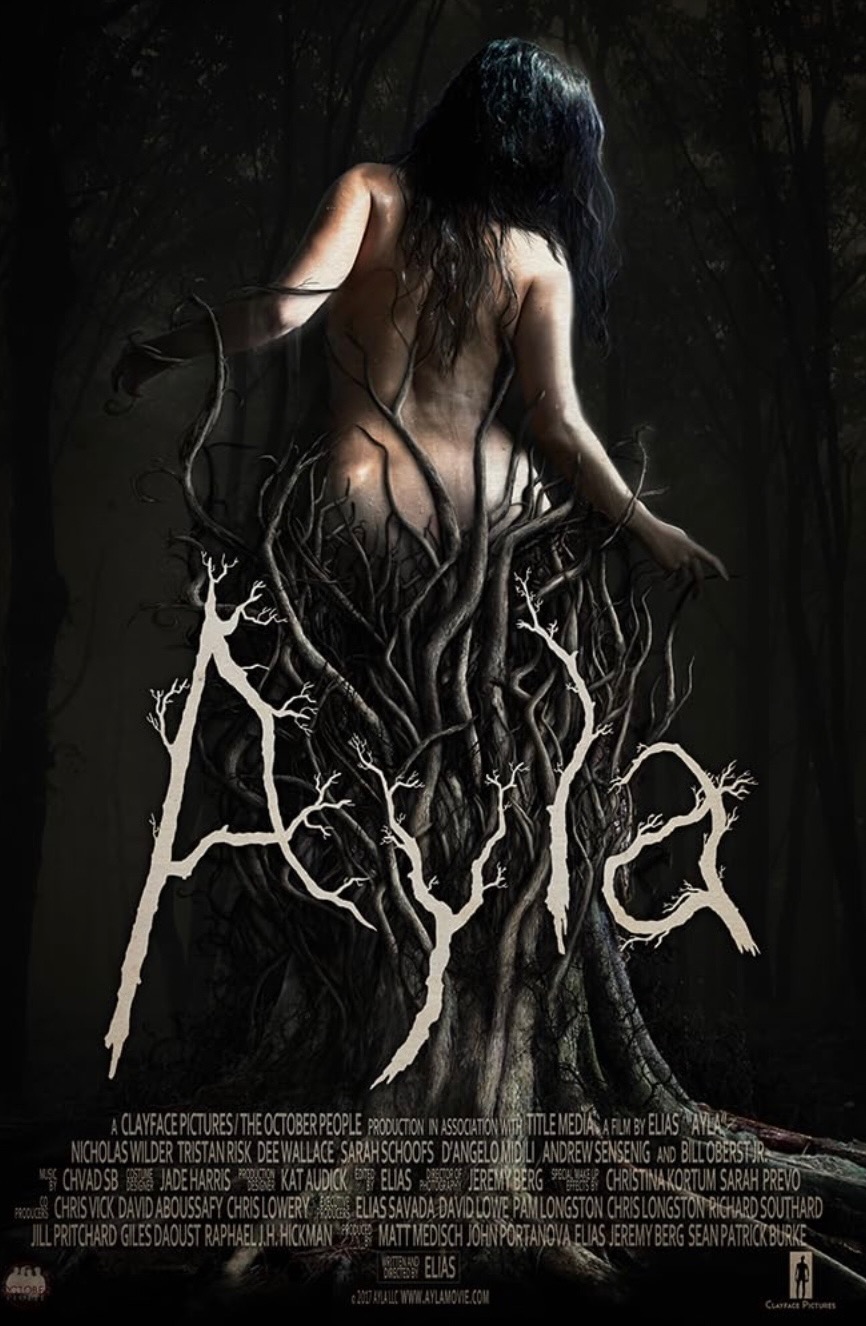
There are so many movies out there.  The prudent horror fan knows not to be nickeled and dimed to death by renting/buying everything available, so you stick with a streaming service and take what they offer.  That’s how I find many of the movies I discuss on this blog.  It’s how I found Ayla.  You won’t find much information on this indie, art-house horror beyond IMDb, and it doesn’t say much.  Although the ratings are low the premise is good and it is beautifully filmed.  It is a little weird, though.  Elton, a mentally disturbed man, has never gotten over the death of his sister when she was four.  He supports himself by working in a bookstore and has a regular girlfriend, Alex, but he hasn’t let his sister go.  Going to a remote, dilapidated house that Alex showed him, he digs under a tree until he finds an adult Ayla.

Ayla’s alive but she doesn’t talk and can’t tolerate solid food.  She seems to be part of the tree where Elton found her.  His brother and mother tell him this woman isn’t his sister.  Alex, who lost a brother when she was a child, doesn’t say whether Ayla’s Elton’s sister or not.  Accepting that this woman now lives with him, she’s just not sure if the dead do come back.  Elton quits his job and tries to move home with his mother, but it doesn’t work out.  While driving at night, Ayla, ahem, distracts him, and his car hits a tree.  Elton understands that Ayla has returned to the tree and begins digging for her, but doesn’t find her.  Alex finds evidence that Elton has begun to turn into whatever it was “Ayla” is.

Apart from being a study of grief—very much like A Ghost Story in that way—Ayla also explores mental illness and incest.  This is done with a high degree of artistry, however.  Those who rate the movie poorly probably haven’t considered metaphors much.  To me, there’s a lot going on in this film.  It’s the kind of movie where you want to talk to somebody about it after it’s over.  Was Ayla really a dryad?  She’s found in a nymph (insect variety) state and quickly transforms to, apparently, Elton’s missing sister.  Meanwhile, his family doesn’t give him the affirmation he requires.  Metaphorically, it seems, like Outpost, to be a movie about dealing with trauma.  Such films are well worth watching and pondering.  And they make me thankful for streaming services that occasionally bring good, if obscure, movies to light.