Alchemy

While reading about alchemy (surprised?  Really?), I found myself learning about Jakob Böhme.  His name was familiar—he’s one of those many people I know vaguely about but having been raised in an uneducated household really knew nothing concerning him.  In any case, Böhme is considered a mystic who began as Lutheran, but who came to trust his own spiritual experience (the latter being more or less the definition of a mystic).  I read about how one day he experienced a vision while staring at sunlight reflected off a pewter dish.  Now, I have had visions but you’ll need to get to know me personally if you want to hear about them.  But at that moment Böhme believed the spiritual structure of the world had been revealed to him.  I couldn’t help but think of what had happened to me at the foot of the Mount of Olives.

It was 1987 and I was a volunteer on the dig at Tel Dor.  Visiting Jerusalem one weekend with friends, we came to the Church of All Nations, built around the traditional garden of Gethsemane.  It was hot and I was feeling tired and I went inside the church to sit.  I spied a purple stained-glass window high overhead with the sun shining through it, in a shadowy alcove.  In an instant of rapture, everything made sense to me.  It was as fleeting as it was shocking and to this day I cannot articulate the certainty I experienced in that one brief moment alone in a church.  It was an assurance that, despite all outward appearances, this does indeed make sense.  This experience has never been precisely replicated in my life, but those who know me know that there is a certain color of glass that, if I see the sun through it, instantly brings me serenity.
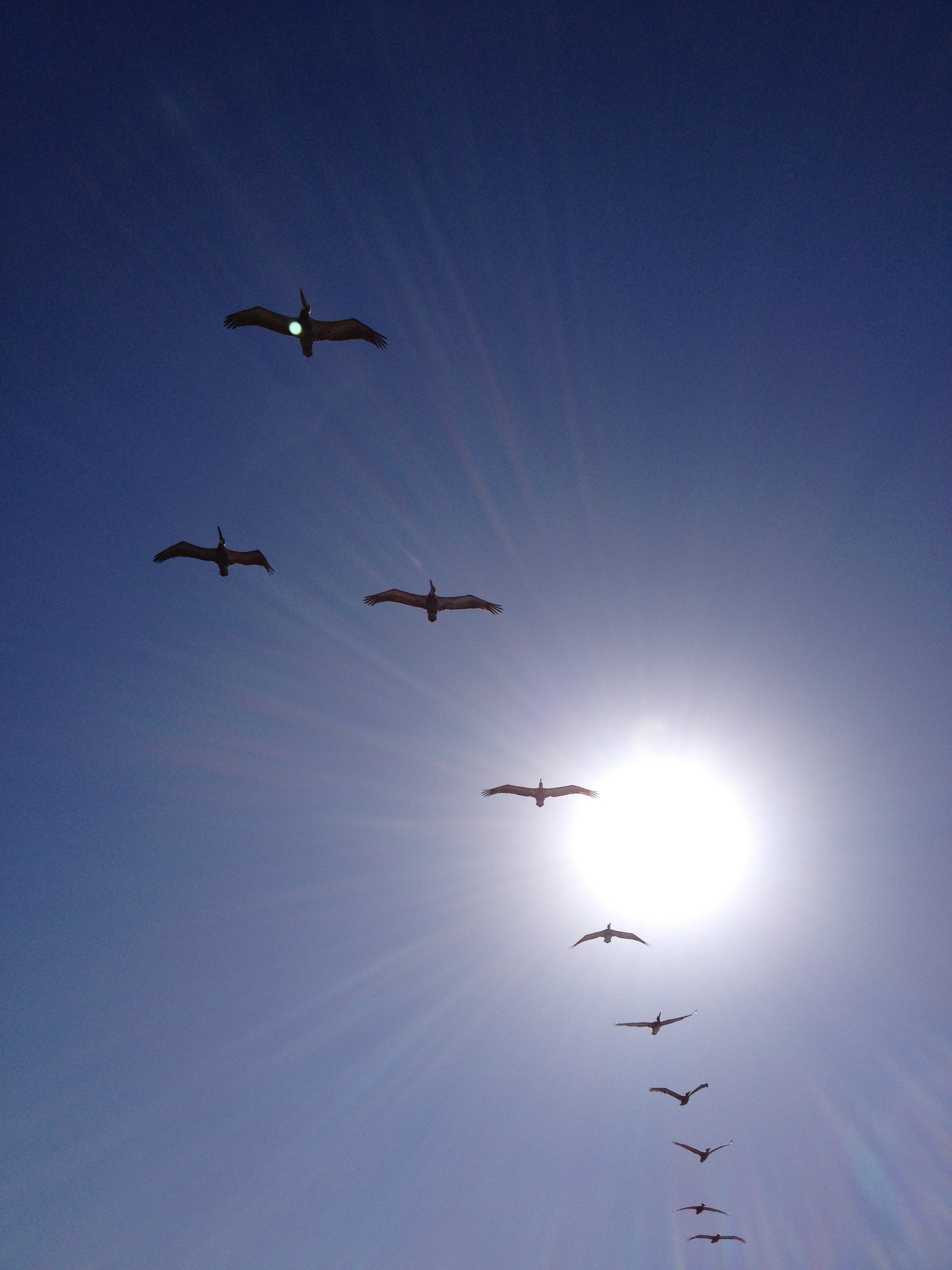
Sunlight can do such things.  One morning while out jogging at Nashotah House, the rising sun struck me directly in the eye.  Immediately stopped running, holding my head against a migraine that had suddenly developed.  I was sick the rest of the day, lying in a dark room with a damp washcloth over my eyes, head splitting apart.  I’ve been cautious with the sun ever since.  Some things are so full of glory that to see them directly is to invite danger.  Yet we’re compelled to look.  I felt that I understood Böhme.  And I know that if the sun is right, and a certain color of glass is at hand, and if I’m brave enough, I can almost get back to that place.

More Than It Seems

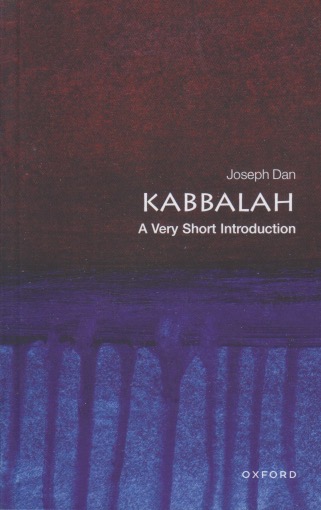
One of the most fascinating mystical concepts is the idea that words and individual letters have some kind of magical power.  This is perhaps illustrated by the way certain words gather an aura of mystery that can be quite unlike their original denotation.  “Kabbalah” is one such word.  The reason I read Joseph Dan’s Kabbalah: A Very Short Introduction is that I’d found myself growing increasingly confused by the usage of the word.  Given that this is me writing, it was a horror movie that got me wondering.  In one of the movies discussed on this blog (happy hunting and viewing!) one character tells another something like, “It’s the Kabbalah.”  This is said in reference to an ancient and mysterious book.  There is not ancient and mysterious book called The Kabbalah.  So what is it?

I’m not going to be able to give a satisfactory answer to that here.  Dan has about 30,000 words to describe it and he admits that’s not really sufficient.  Sometimes I think, if one could make a living doing it, I’d have been content to sit at the feet of rabbis to learn the depths of the many ancient books Judaism has given the world.  I first became aware of some of them in college, majoring in religion.  At each step of my education and career I’ve uncovered more and more.  Reading this little book added yet further examples.  Judaism, and its direct descendant Christianity, were full of books.  They still are.  And books are full of words and perhaps these words have some kind of mystical power.  But wait, the point of this brief tome is to suggest the word itself isn’t just about mysticism.

Kabbalah can refer to many different things, some of them hardly mystical at all.  For the modern usage of the word, which includes Christian as well as Jewish Kabbalah, we have to get to, well, modernity.  The concept stretches far back in Judaism and means basically, “what is received.”  The initial reference is to Moses on Mount Sinai.  Then there’s the oral Torah, codified in Mishnah and Talmud.  And books, so very many books!  The rabbi is one of those permitted to, and sometimes expected to, come to know these ancient texts and their modern applications.  That’s not to suggest Judaism is particularly mystical.  It can be, just as Christianity can be, but isn’t necessarily so.  It’s complicated.  If you’re curious, whether because of a horror movie or not, I can recommend this book.  It’ll give you plenty to think about, and even more to read and learn.


Mystic Thoughts

Those who know me primarily from my writings on horror are perhaps whiplashed when I muse about spiritual matters.  I don’t mean just religion, but spirituality—the two are quite different.  If life had unfolded differently I would likely have ended up as a mystic.  The problem is “rational mystic” is an oxymoron in most minds.  Either you’re one or you’re the other.  To become a proper mystic, in any case, you can’t be bothered with such things as secular work.  Mysticism—direct encounters with the divine—requires development and practice.  You can’t always control when a trance or vision might hit you.  What if it comes during a meeting?  Say your performance and development review at work?  You see the problem.

I seriously considered becoming a monastic as a young man but I had a problem.  I was a Protestant.  Protestantism was based on the idea that Catholic practices, such as monasticism, were wrong by default.  Miracles don’t happen—haven’t done since New Testament times—and God is a biblical literalist.  Why spend valuable church funds, then, on establishing monasteries?  Still, mystical experiences happened to me.  (You’ll have to get to know me personally to find out more about that.)  I talked to my (Protestant) professors.  “You don’t want to become a mystic,” I was told.  “They always have trouble with the church.”  Eventually I became an Episcopalian, a tradition that was more open to mysticism.  It became clear in 2005, however, that the Episcopal Church wanted nothing more to do with me.  Besides, I’m a family man.

Monasteries for married folk is an idea whose time has come.  Monasticism is based on the idea that you need to isolate yourself from the world’s distractions to grow spiritually.  To me, as I noted recently regarding sacraments, the “distraction” of marriage isn’t the problem.  It’s the constant need to earn money.  More and more money.  Monasteries became wealthy because other people were glad to pay money so that someone else could do the spiritual heavy lifting for them.  You can get into Heaven on borrowed virtue.  (Even Protestants believe that.  If you doubt it, get a degree or two in theology and you’ll see.)  So why not provide monasteries for those poor souls that just don’t fit into the capitalistic ideal?  I have the vision that such places would become havens for artists of all stripes.  And that, with the goodwill of society, locations where your needs were met for an exchange of goods—building good spiritual karma for a world where most people are content with trying to get rich—might just work.  It’s an idea whose time has come.  Who’s with me?

Photo by Luís Feliciano on Unsplash

Mystical

I would never have experienced Tibetan singing bowls were it not for a family member’s cancer diagnosis.  Something you quickly learn is that many resources are available to help you cope.  One of those local to this area was/is Tibetan singing bowls.  I had no idea what to expect, but as a lifelong explorer of religion, I had gathered that the session would likely involve ways of thinking more common in East Asian cultures.  I was taken, however, on a spiritual journey.  In a darkened room with twenty-to-thirty cancer survivors, on our backs on the floor, we experienced sound.  Now, my musical training and ability are quite limited.  I could not identify most of the instruments (I kept my eyes closed), apart from the singing bowls which I had heard in other, western religious contexts as well.  I’ve had mystical experiences before, but I don’t know you well enough to tell you all about them.

Photo by Magic Bowls on Unsplash

The first thing I noticed this time was the color blotches in my closed eyes.  Everyone sees those kinds of things, but as the sounds increased the colors began to range outside their usual purple into whites and yellows.  It was almost like a segment from Fantasia.  The colors then began to take shape, some forming into flowers.  I knew my imagining mind had taken hold when images began to appear.  Although it was my usual bedtime by this point, I was fully cognizant of being awake.  There was no real storyline, but I was conscious of losing my sense of individuality and becoming part of the greater whole, which is what being a being on a small planet is all about.  As the sound meditation wound down, I realized that it had been many years since I’d put myself into such an environment.  It took some time to reorient myself.  When we arrived at home I was, paradoxically, too relaxed to fall asleep.

One of my college professors warned me against mysticism.  Mystical experiences are rare, in my life anyway, but unforgettable.  If you live long enough and pay the right kind of attention, however, you can find them.  They leave you with a profound sense of hope.  I’m not about to go off and join a Buddhist monastery, but Thomas Merton reminds us that Buddhism and Christianity are perfectly compatible.  This particular college professor was afraid, I surmise, that spiritual experience might outstrip dogged devotion to a single book.  Mysticism can take you to places that convince you what passes for reality is not all that’s real.  Being with lovely people who’ve had to face cancer is a spiritual experience in its own right.  Why shut out the light inside?


Wild God

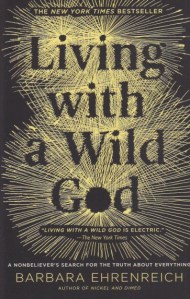
Living with a Wild God, by Barbara Ehrenreich, is one of those books I wanted to put down gently after reading it, for fear that it might explode.  Or maybe it was my head I feared might combust.  Describing it is difficult because it is so wide-ranging.  On the one hand it is an atheist’s view of religion.  On the other hand it is a spiritual biography.  On a third hand it is coming to terms with having had a profound mystical experience.  It is one of those books where, knowing my life has been so very different, yet I feel that Ehrenreich and I have had so much in common that we’d be friends if we ever met.  It is also the work of a woman who is scary smart and whose teenage thoughts were so intense that my own seem puerile by comparison.

But that mystical experience!  I’ve had many of them in my life, but I don’t know you well enough to share them here.  They’ve been recorded in an unfinished book that I may or may not try to publish some day.  (Ehrenreich was smart and took a job as a journalist, which means others assume you know how to write.  Even those of us in publishing have trouble convincing agents and others who hold the keys to non-academic pricing that we understand the craft.)  Mysticism quickly becomes a staid discipline, not at all like the life-directing experiences such encounters themselves actually are.  It’s difficult to explain without sitting down and talking to you.  It’s something academics tend to avoid like Covid-19.

The books that mean most to me are like conversations with an absent author.  Drawn in by an openness, or perhaps by the fact that we’ve lived in a few of the same places over the years, perhaps passed one another unknowingly on the street, you feel that they’ve invited you into their very head.  What you find there has a strange similarity to what is in your own head, while being completely different at the same time.  We should all strive for such honesty in our writing.  In the end Ehrenreich, with a doctorate in science, suggests we need to be open.  That kind of validation is important for those of us who’ve poured our lives into the study of religion.  She was drawn in from atheism, and I have been trying to escape from literalism all my adult life.  We have ended up in places not dissimilar from each other and I’m glad to have met her through this profound book.


Mystic Connections

Those of us who find rationalism a bit too constricting sometimes find solace in mysticism.  My reading of late, which is mostly research for Nightmares with the Bible, frequently touches on mystics of the past.  This isn’t a new fascination.  All the way back in college, as a religion major, I mentioned to one of my professors that I found it appealing.  A frown settled across his academic face.  “Mysticism is dangerous,” he said.  He went on to explain that churches (he was Presbyterian, and I Methodist) had belief systems into which mystics—those who experience the divine directly—didn’t fit.  A direct experience of the divine could cast doubt on church doctrine and nothing, as you might guess, is more important to true believers than dogma.

That discussion at such an impressionable age set me aback.  Here as we enter (for the non-orthodox) the Triduum, or “Great Three Days” the faithful are hoping for some kind of divine experience, I expect.  Many of us will spend two-thirds of it working.  In any case, if nothing mystical happens why do we bother?  Mysticism is equally deplored by science since it suggests something that doesn’t fit into rationalism’s toy box.  A universe where the unexplained—and oh so subjective!—direct experience with naked reality threatens to undo all the neat columns and tidy formulas that describe the entirety of existence.  Conventional churches tend to agree because you never know what God might do if you open that box.

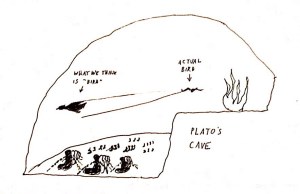
There are religions that welcome mysticism.  They recognize that human-built systems are only approximations—Platonic shadows, if you will, cast upon the cave wall.  Mystics are those who, temporarily unchained, dare to turn around and face the fire directly.  Who knows?  They might even catch a glimpse of the sun itself.  More conventional religions are run like businesses.  You come to a certain building at a certain time.  You perform prescribed actions on cue.  You place your money in this specific receptacle at this specific time.  Leave and forget it all until next week.  Our younger generations don’t find this engaging, just as they see through the lie of the inherent fairness of capitalism.  I can still see the frown of my theology professor.  The old systems are falling apart even as those not too weary after work will head to Maundy Thursday services for a slip of bread and a sip of wine.  The mystic, however, doesn’t know what might happen next.


Zounds Like

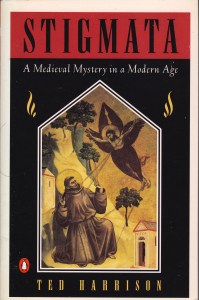
Liberation from the confines of academia allows for the occasional indulgence in taboo subjects. I can’t remember when I first heard of stigmata. I didn’t grow up Catholic, and, like many Protestants, distrusted much of what came from Rome. Still, I was interested in the supernatural. When I learned that people in this modern day and age sometimes developed unexplained wounds corresponding to crucifixion, I was intrigued. Ted Harrison’s book, Stigmata: A Medieval Mystery in a Modern Age, is the first I’ve actually read on the subject. It has some fascinating observations to share. It was some time after seminary that I learned that Francis of Assisi (aka St. Francis) was the first stigmatic. I had admired Francis for turning down wealth to assist the poor and commune with nature—what’s not to like?—but I didn’t realize that he had initiated this rare, but real phenomenon.

Harrison considers the question of why it was only in the 13th century that the stigmata began to occur. They have occurred ever since, in very small numbers, primarily in Italy and primarily among women. But why then? He points out that the church, shortly before this time, began to emphasize the physical suffering of Jesus on the cross. We’re probably all familiar with some of the gruesome images that emerged from the church and its artists at that time. As such images proliferated, people were given a visual focus that directed their devotions. Every great once in a while, this led to stigmata. Why women? As Harrison points out, men with intense spiritual needs could become priests. Women could not. The church would not forbid personal devotion, and if such devotion led to stigmata, well, a person arguably had a direct line to the divine. That was something normally preserved for priests through the Eucharist.

Stigmata have to be understood in the context of mysticism. The more recent cases studied by Harrison include some non-Catholics and some other unexpected candidates for what is, after all, a very intense spiritual experience. What emerges is a thoughtful, one might dare say contemplative, approach to the issue. Some stigmata have been self-inflicted. Some have not. Medical personnel have witnessed and examined these improbable wounds and have not explained them away. Once, during a faculty meeting at the New College of Edinburgh University (I was post-graduate student representative) one faculty member groused after one of my advisors had presented a challenging idea: “you’ve dropped us in a mythological world. I want to get us out.” There it is in a nutshell. Some people can live in a world where stigmata occur. Others have to explain it away. The difference is all in the matter of perspective.


New World Witches

MarWitchOne of the most coveted phenomena in the publishing world is the bad review. Controversy sells a book like nothing else. It wasn’t because of the controversy, however, that I read Alex Mar’s Witches of America. Looking back, I wasn’t even sure of what to expect. Witches can mean many things and there is little one can do, beyond reading the blurbs and summaries (and who has time for that?) to know beforehand what a book’s really about. I like books about witches, so I just read it. I soon found myself engrossed in a spiritual memoir. Perhaps even more than books on witches, I’m drawn to women’s experience of religion. Many such accounts have haunted me over the years, but Mar’s story was different than most I’ve read. Women often write of escaping intolerant, priapic religions of a conservative stripe. Mar may be the first account I’ve read of a spiritual seeking becoming part of modern paganism.

The negative reviews largely focus on what they perceive as a false bill of goods. A woman passing herself off as an authentic seeker just to write a book that violates confidences. As a writer, and as someone who knows authors, I was a little taken aback at this. Those who know writers know they’re disruptive personalities. They look at things differently than most other people do. More than that, their experiences are subjective and must be explained in that vein. Some reviewers claim Mar was just wanting to write a book. Writers know that books write the authors. Spiritual experience is notoriously difficult to capture in words. I’ve read plenty of books about modern witchcraft, including the balanced, academic titles everyone commends. Mar was able, however, to explain the lure far better by taking a personal approach.

There are inherent dangers to sharing your innermost experiences. Other people are involved and honest perceptions will sometimes hurt. A writer finds it difficult to hold back. Spiritual experiences are something complex, multilayered, and scandalous. Often I was told, as an undergraduate at a conservative Christian college, that mystical experiences were to be avoided. They are powerful, frightening, and addictive. I can’t say if Mar violated any confidences, but it seems to me that the portraits she paints of witches are complimentary, and generally feel heartfelt. Then again, Christianity has been analyzed seven ways to Sunday, so it may feel like violation if a religion is still largely secretive. Were it not for the negative reviews, I would’ve never guessed that I’d read anything more shocking than the spiritual memoir that offers other ways of looking at what we think we already know. Oh, and did I mention the book was about witches?


Evolution’s Snapshots

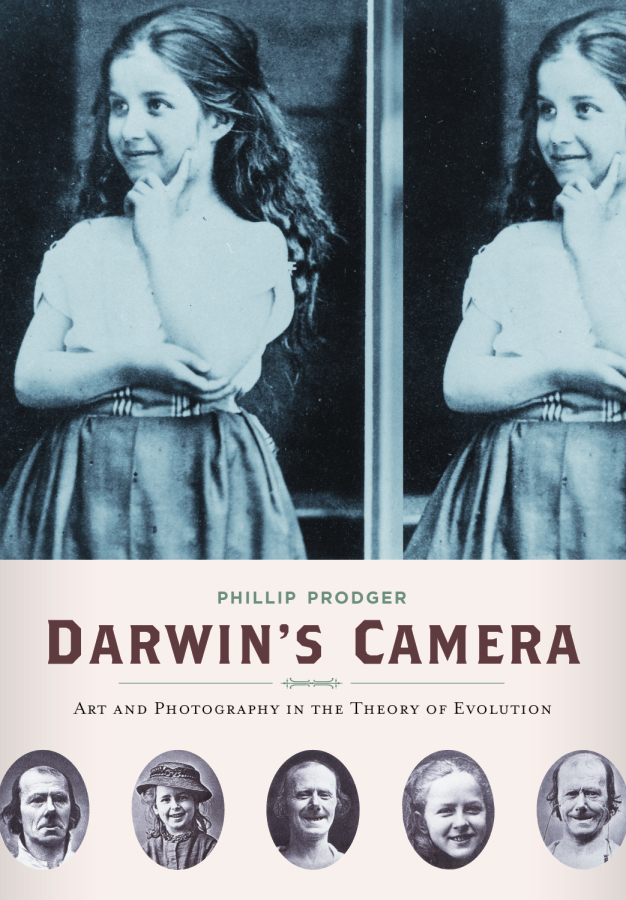
DarwinsCameraIn America’s political climate any book about Darwin takes on a religious cast. As strange as it may seem, an odd equation exists between Darwin, evolution, creation, and the Bible. We forget that Darwin was a retiring man with many interests and a very keen intellect. Erstwhile groomed for the clergy, he lived at a time when much of the world was known really only to the local inhabitants, and observations were still mostly made by the human eye in person. So it was that as photography developed, a new avenue into science opened up. Darwin’s Camera, by Phillip Prodger, is a rare look into, as the subtitle says, Art and Photography in the Theory of Evolution. Darwin wrote several books. Among them was The Expression of the Emotions in Man and Animals. This book was among the first scientific tomes published with photographic evidence to illustrate, if not prove, the points being made. Prodger takes us through the process by which Darwin procured and commissioned his photographs for the book and reveals some deeper truths about his life.

Interestingly, one of the sources of early photos was asylums. There was a belief, apparently, that photographs might be used diagnostically. One of the emotions that was presented to Darwin for his consideration was religious rapture. (Not that I can make any great claims here, but having experienced at least mild versions of such states—whatever their physiological cause—I know that they are powerful.) The observation comes through that religious rapture is difficult to distinguish from insanity, on the face of it. This may sound like an anti-religious slur, but it’s not. Ask around the mystics and you’ll see what I mean. Sanity has its uses, to be sure, but mysticism is all about letting go.

The only real religion in this book comes in the confrontations to Darwin’s evolutionary theory. Prodger does, however, briefly delve into Darwin’s late (and brief) concern about spirit photography. Shortly after cameras were developed, photographic tricks evolved. The Victorians, as we all know, had a very palpable sense of death’s nearness. It is no accident that Spiritualism developed during this time period when a reasonable lifespan was anything but assured. Spirit photographers claimed to capture ghosts of the dead revisiting the living. Darwin, who’d lost a beloved daughter prematurely, knew what grief was. He did not, however, allow it to interfere with his critical thinking. Photographs could be used to prove a point, but they could also be used to make a false claim. Darwin’s success in his book on emotions falls somewhere in the middle. He did have to have some staged shots to illustrate his point. Ever the gentleman, however, Darwin’s decisions were made to enlighten, not to deceive. One wonders whether creationism can even remotely make that same claim.


Campbell’s Swansong

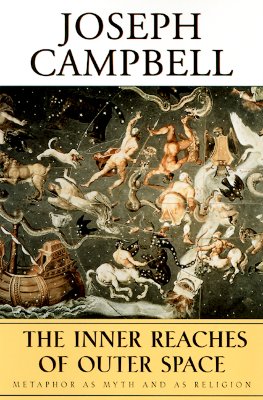
InnerReachesofOuterSpace Joseph Campbell may not be the best reading for the bus. Despite the many signs and placards gently suggesting to passengers both in the Port Authority Bus Terminal, and on the buses themselves, that keeping quiet is courteous, we are a people in love with noise. We are used to annoying electronic beeps, squawks, and farts. People find it difficult to sit more than 20 minutes without talking. I’m trying to read. At the Hunterdon County Library Book Sale I picked up Joseph Campbell’s last book, The Inner Reaches of Outer Space. It requires some concentration. Campbell was a brilliant comparative mythologer. I was reared in the scholarly hermeneutics of doubt, however, especially when it comes to comparing myths from different cultures. Campbell has a great appreciation for Jungian concepts, and soon minor details are blurred and the similarities stand out in stark relief. Still, as I always do with Campbell, I came away with plenty of rich concepts over which to mull.

Campbell, the great inspirer of Star Wars, the original series, was that rare breed of scholar who appreciated without participating. He is recorded as stating he was no mystic, and certainly not any kind of conventional religionist, but he couldn’t get enough of mysticism or mythology. Religion, he implies, is just mythology taken literally. He is, I believe, very close to the truth here. What we know of indigenous peoples today is that they don’t have that sharp and hard line between literal reality and story that marks much of western civilization. We tend to think fact and fiction cannot be of a kind. Looking around, we find no gods, so our choices are not to believe, or to believe too literally. And those who believe literally differently, we tend to want to kill. This is the history of religion in the western world, in a Campbellian nutshell.

Apart from the little gems I located scattered throughout The Inner Reaches of Outer Space, the main theme I found applicable was the driving force of chapter two, Metaphor as Myth and Religion. Metaphor is our way of interacting with a reality we just can’t experience directly. As human beings, we experience the physical world through the mediation of our senses, filtered by our brains. If there is something deeper, more profound than nature, we are even further removed. Our experience of meaning is metaphor. Joseph Campbell may have been a little too swift to spot congruities that are probably best left apart, but he clearly recognized the fact that our religions are not so different from our mythologies, and that both are narrated in the form of metaphor. This is not to devalue them, for metaphor is one of the most potent substances in our chemistry set. Now if only I could find the vial that has the stuff to make people want to keep quiet on the bus, we might all be able to get a bit more reading done.