Unnatural Connections

The last time we moved internet service was just becoming an issue.  When we first came to our Somerville apartment we had dial-up.  Do you believe it?  Shortly after that FIOS came to town and we decided to give it a try, but at a fairly low speed.  We’ve always tried to be responsible with money and I naturally balk at paying for something as intangible and amorphous as “internet connectivity.”  I guess I’m a naive realist after all.  In any case, one of the top priorities in moving to our new place was getting internet set up.  Even before electricity or gas or water.  It has become THE utility.  The place to pay the bills for all the other utilities.  And since I’m now telecommuting, the umbilical cord that connects me to work.

I don’t mean to sound all grandpa-ish on you, but just twelve years ago we struggled for any connection at all.  We had one computer (and one work laptop) and only the desktop had internet access.  Many of the arcane pieces of hardware found in the attic were from attempts to get us onto the net more efficiently.  We even had to draw up a contract for who could use the computer and for how long since all of us wanted that magic window onto the virtual world.  Now, like most households, we have wifi and high speed access.  When we’re not at the computer, we have our smart phones at hand.  The strangest thing about all of this is that now that we’ve got constant connection, our nation has become as polarized as it has ever been.  Perhaps we see a little too much of each other?  Or too little?

The web has connected us to those we like.  Walking down the street it’s rare to find someone not staring at their phone, ignoring all living beings around him or her.  We’ve been able to filter out those we don’t like.  Those who have different points of view.  The net shows us that we aren’t alone, and even those with extreme views can find plenty of compatriots in cyberspace.  There’s a reason we used to be told not to discuss religion or politics.  Now we know everybody else’s business.

There was a time when moving meant going to where the jobs are.  Especially in academia.  Colleges and universities exist in set locations.  In space-time.  Telecommuting isn’t an option (although even that’s happening in some cases now).  Moving these days means weighing your internet access options.  Satellite is just too slow and unreliable.  Who would’ve imagined, for those of us born just after Sputnik went up, that now even space-based connections just aren’t advanced enough?  Cyberspace has become more infinite than outer space.  And I still prefer pencil and paper.

Nothing Unusual

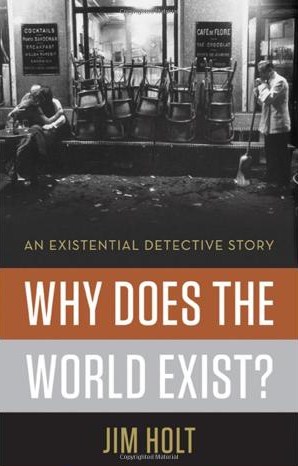
WhyDoestheWorldExist“Is this a world?” Ranger Tom asks seriously, “And if it is, am I in it?” On the lips—or fingertips—of some, this set of questions appears profound. Although I’m not technically a philosopher, I find it impossible to walk by a book with the title Why Does the World Exist? and not pick it up. I am not familiar with Jim Holt’s other work—I engage a little too heavily with books to spend much time with magazines—but the question of the title is one I’ve often pondered. It is right up there with “Why can some people get published and others can’t?” Holt is, however, on a serious quest. Not surprisingly, religion features prominently in the discussion. For the usual existential reasons, including a couple of significant deaths in the family, Holt asks perhaps the most basic of all questions and engages a number of prominent philosophers on the issue. Why is there something rather than nothing? For some in the western world such a question appears a non-starter, because our culture is biblically suffused. Whether we want to admit it or not, our social ocean veritably bobs with the basic belief that God created the world, end of story. We don’t need to ponder it, we just have to accept it. For those who look deeper, however, the answers aren’t that easy.

Holt goes through some serious computation in various forms of logic to try to arrive at a schematic demonstrating that the world is a surprising place. Not trained in such rigorous logic, I was interested to notice how the language occasionally slipped from “world” or “universe” to “reality.” Reality is perhaps the slipperiest concept of them all. Many simply accept their own experience as real, a position known as “naive realism.” Others probe somewhat deeper, seeking to verify reality. How do we know what is really real? It is, however, a different question than the existence of the world. Reality has the distinct ability to haunt with its half-answered questions and surfeit of ambiguity. Every time I wake from a dream I ask myself what is really real.

Once the divine is removed from the equation, why the world is here becomes a much more complex issue. Holt engages the new atheists as well as the neo-orthodox. It turns out that God may not help as much as we generally assume: whence God? Or, in its more childlike version, where did God come from? Once brute fact is ruled out, this becomes a tangled problem indeed. Faced with an endless regression, logic quails. Perhaps, however, we have reached the limits of rationality—even Einsteinian physics breaks down at the Big Bang. No matter what scientists or philosophers may tell us, we will always wonder, “and before that, what?” I put Holt’s book down with a sense that I’d spent a few pleasant hours considering the possibilities, but I still wonder, with Ranger Tom, if this is a world. And if it is, am I in it?


Always Against Us

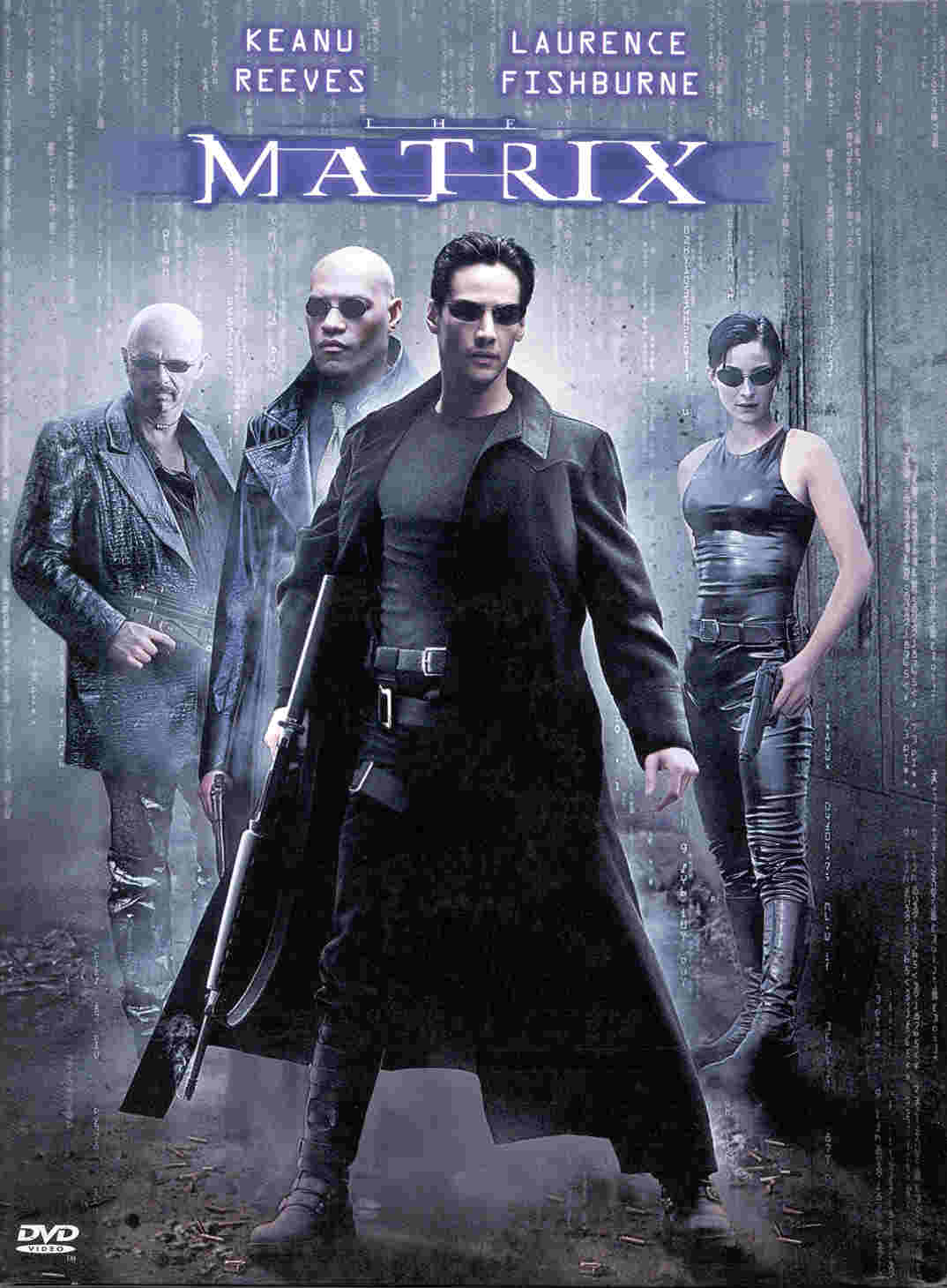
In one of the coolest homework assignments ever, my daughter was supposed to watch The Matrix. Her digital electronics class makes constant reference to the movie, so her teacher decided that in order to “get it,” those who hadn’t seen the movie should watch it. I know the film has many nay-sayers and some of the acting may not attain the highest standards, but it remains among my favorite movies. At Nashotah House, early in the dawning millennium, many students watched the film religiously. One student had it on his laptop and a small knot of his classmates would gather around just about every morning to watch before my class began. I was a bit put off by the claims that it was a “New Testament allegory,” but I have come to realize that without resurrection, the film industry in this country would be dead. American audiences (especially) crave the possibility of coming back. And even though I’m as much a sucker for a good love story as the next guy, that resurrection scene isn’t the highlight of the movie. Not by a long shot.

The Matrix has always been one of my favorites because of the basic premise: what if the world is not real? I’ve been plagued by that question for about as long as I can remember. When, in my first philosophy class, I learned about naïve realism, my worldview shifted. Who’s to say what’s real? And if someone decides to shoot me to shut me up, the lights might go out, but will there be anything left behind? Not that I believe I’m a source of energy for evil robot overlords (I get too easily chilled to believe that), but I often think about the tenuousness of it all. Our reality changes when we fall asleep, and each day we assume that a continuity is the same as the essence of our existence. There’s no way to check it, however, and I’m not entirely convinced. That’s why I like The Matrix so much. Someone else understands my deep fear that none of this is real.

The moment when Neo refuses to leave, but turns to fight Agent Smith, Trinity asks Morpheus what is happening. Morpheus responds, “He’s beginning to believe!” That line always gets me. The idea that something out there actually tips the balance on the side of good creates a longing so deep that it hurts. When I wake up the next morning, however, I see the headlines bring more suffering, more status quo ante-Christ. The last thing I want to see on the front page is Chris Christie’s face first thing in the morning. It can be a very cruel world. In one of Morgan Freeman’s Through the Wormhole episodes, a scientist suggests that a Matrix-like world may match our reality. God, the scientist suggests, may be a programmer and has coded us to live in a virtual world. The tapping of my fingers is just an algorithm. I’m not yet beginning to believe that. But if I ever do I’ll be forced to conclude that our programming deity has either a wicked sense of humor, or is just plain wicked.