Book Ideas

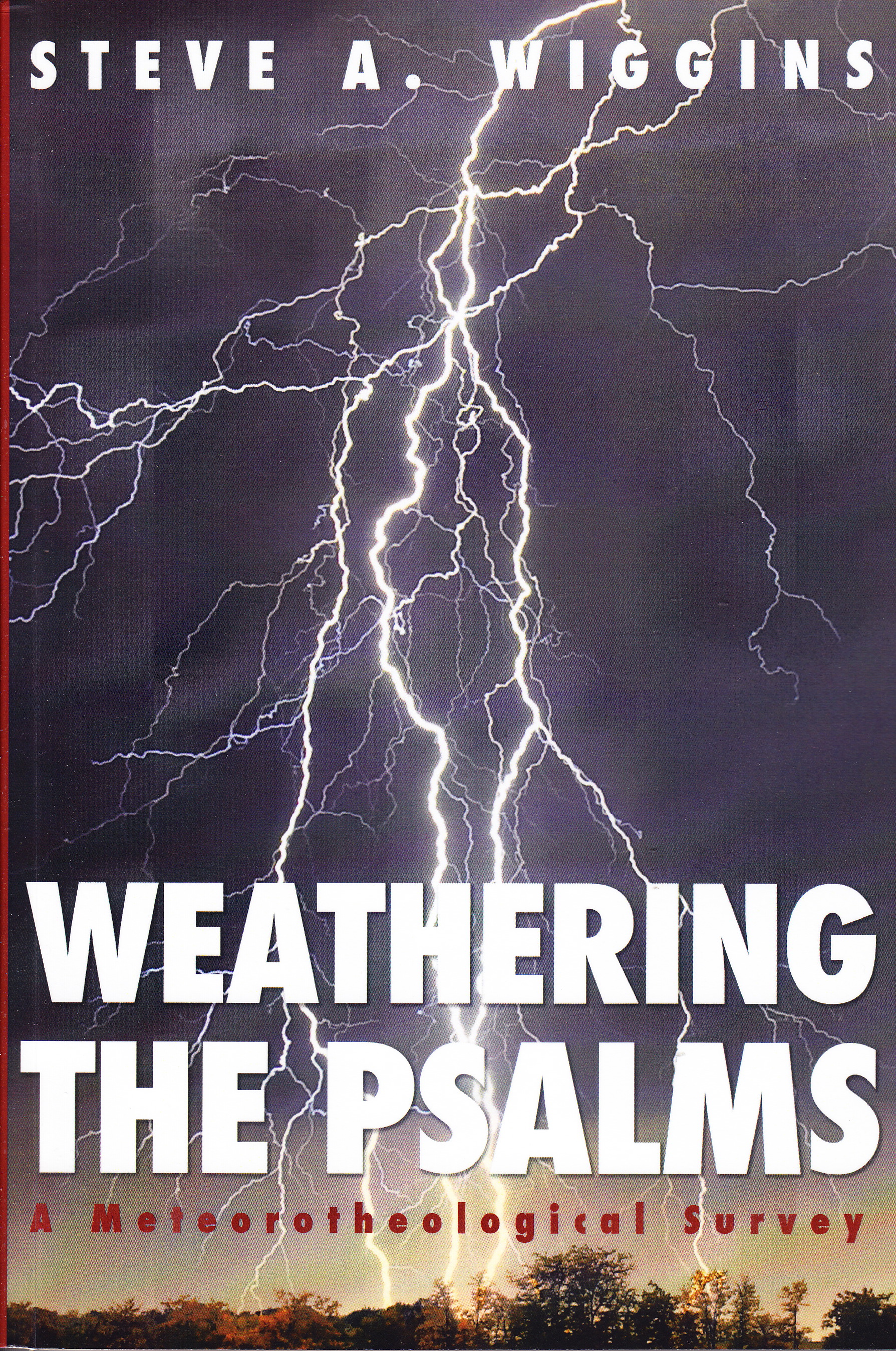
Call it sour grapes. When I was a young scholar, I used to wonder how to develop book ideas. You see, at a young age—twenties or thirties—even a doctorate means your understanding of the world is limited. I’d written a substantial dissertation on Asherah, and I was faced with developing several new courses from scratch at Nashotah House. My mind was focused on the immediate concerns. I did continue my research, however, into ancient Near Eastern deities, with an eye toward writing an account of celestial gods and goddesses. A substantial piece on Shapshu ended up being snatched up by a Festschrift, and colleagues began to tell me that to get hired away from Nashotah I had to write something biblical. Thus Weathering the Psalms was born. The research and writing took a few years because I never had a sabbatical, or reduced teaching load. In fact, administrative duties as registrar and academic dean were added to my remit. Still I scribbled away in the early hours and finished a draft. Then I was cast into the outer darkness.

Publishing was never my first choice of career. I’m more a writer than an editor. In publishing, however, you are not encouraged to write your own content. I can’t help myself. As I rounded the corner from my forties, I had finally read enough material—both relevant and extraneous—to have book ideas. In fact, too many. Held back by the lack of publication, I didn’t know how to channel this energy. One of the benefits of working for publishers is you learn how to come up with a viable book idea. I’ve got a backlog now. I’m currently working on a few books, but one is in the forefront of my mind and eclipses all other projects at the moment. Having watched what sells, I think this one has a real chance. Time to write, alas, barely exists. The writer, you must understand, has to build a platform. Get a fan base. Welcome to my platform.

Daily I receive the first books of young scholars. In this publish or perish—strike that—publish and perish atmosphere, even the mediocre is encouraged by dissertation advisors. Young scholars, maybe thirty, think they have something profound to say. Call it sour grapes, but I’m not getting any younger and I don’t have an institution to support me while I write what should be written. The face looking back at me in the morning has more gray hairs than I remember growing, and has wrinkles that my mind doesn’t recognize. It’s too full of books to write to pause long. The bus is coming soon and I have younger scholars’ careers to build with premiere branding. My own ideas ferment unseen in the basement. What some call sour grapes others call fine wine.

Photo credit: Dragonflyir, Wikimedia Commons

Photo credit: Dragonflyir, Wikimedia Commons


Dis-Connected

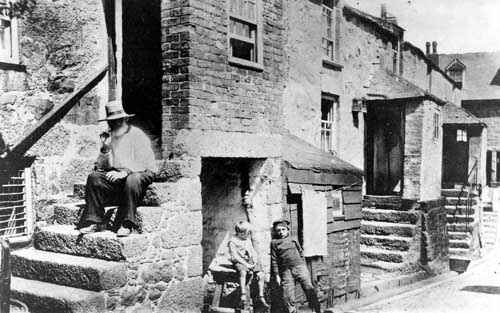
One of the more bemusing academic exercises is the analysis of the working class. Sometimes sociologists or scholars of religion take it upon themselves to present the view of the underprivileged. While they certainly seem to get some aspects right, in truth, they frequently don’t have a clue. Growing up in a working class household is the only way to have the authentic experience. I am one of a few, and I should I say I know many, many academics, who grew up in an authentic blue collar environment. When I read my fellow religionists discussing what it must be like to be underprivileged, I think, why don’t they just ask? Oh yeah. That’s right, I don’t have a teaching position. Why not? I have no connections. I have no connections because a kid who grew up in small town in a poor family doesn’t know to go to Harvard. I applied to transfer to Harvard from Boston University and was accepted. I decided not to go. A guy with connections would’ve known better.

Those of my colleagues with university or seminary posts tell me that the authentic blue collar academic is a hot commodity. In my blue collar frankness, I would equate that statement with what one might find behind the hindquarters of a male bovine. When a rare academic job opens up, the connections circuit begin to whir. Those of us who are unconnected (and I know I’m not the only one) will be passed up for one-year replacement positions as well as non-tenure track positions. They’ll gladly hire us as adjuncts—the blue collar workers of the academic world. I have been an inside candidate before. Although I knew entire departments I was not hired. I guess I don’t know the right people, dang-nabbit. (Imagine a thigh slap in there, in case you want to visualize your narrator.)

Blue collar workers are hard workers. As everyone, friend and foe, knew at Nashotah House, I worked hard. I obey the foreman. It’s a skill I learned before I finished middle school when I took my first blue collar job. Don’t bother telling me the excuses since I’ve heard them all before. We had to hire a (fill in the blank). So-and-so was already in our mind when we advertised the job. Once a seminary trustee complained to me that he had to get up at 4 a.m. to catch his flight. I get up at 4 every day, sometimes earlier. He was also well known for having an expensive, frivolous, and vain collection. He was the rector of a large and very influential parish. No worries; the poor you’ll always have with you, but be careful not to let them join the conversation. They might interfere with your connections.

Tell, don't ask.

Tell, don’t ask.


Coming of the Green

For many years I actively attended to the calendar of saints while at Nashotah House. Although we celebrated Mardi Gras, we never seemed to celebrate St. Patrick, although he does hold a place on March 17. I suppose most people were too busy wearing black to attend to the green. I always, however, donned some verdant vestment for the day, and we usually had leprechaun gifts left behind for my daughter. After leaving Nashotah, I discovered that many universities scheduled spring break around St. Patrick’s Day. This wasn’t because of any love of the Irish or of liturgy, but because campus damage was so bad after the heavy drinking of that day, that many schools decided to let that be somebody else’s problem. St. Patrick isn’t particularly associated with alcohol, but even a quick walk by the bars of New York City demonstrates that the saint has found a home among the inebriated.

Little is known of the historical Patrick. He was associated with Lough Derg, an island of which was said to contain Purgatory. The lake also boasted a sea serpent, which may give some background to the legend associating Patrick with the banishing of snakes from Ireland. The shamrock story is likely apocryphal, but there’s no denying the brilliant green of the Emerald Isle, so the tradition developed of wearing his favorite color to commemorate the day. The traditions of Patrick grew by accretion. The Irish belief in wee folk gave legs to the leprechaun connection and, I’m told, heroic drinking might lead to the seeing of the same. One reason his day might have been downplayed liturgically is that it has become an unlikely cultural holiday. Those of us with some Irish ancestry run into some pretty high numbers.

The myth of St. Patrick is more powerful than his history. This may be a lesson for us even today. The stories we tell of our cultural heroes need not be grounded in fact in order to be meaningful. Over time the religious of many faiths have grown more and more literal to demonstrate their devotion. This is a risky proposition. We know little of the life of Patrick, or even of Jesus and other various religious founders’ lives. Their followers have been free to fill in the blanks for many centuries, building meaningful legends. I have no idea if Patrick of Ireland liked green. He may have found snakes charming. Upon an intemperate evening he may have seen leprechauns dancing about his parlor. It is less the tale that is important than it is what one might choose to learn from it.

StPat


In Praise of Eve

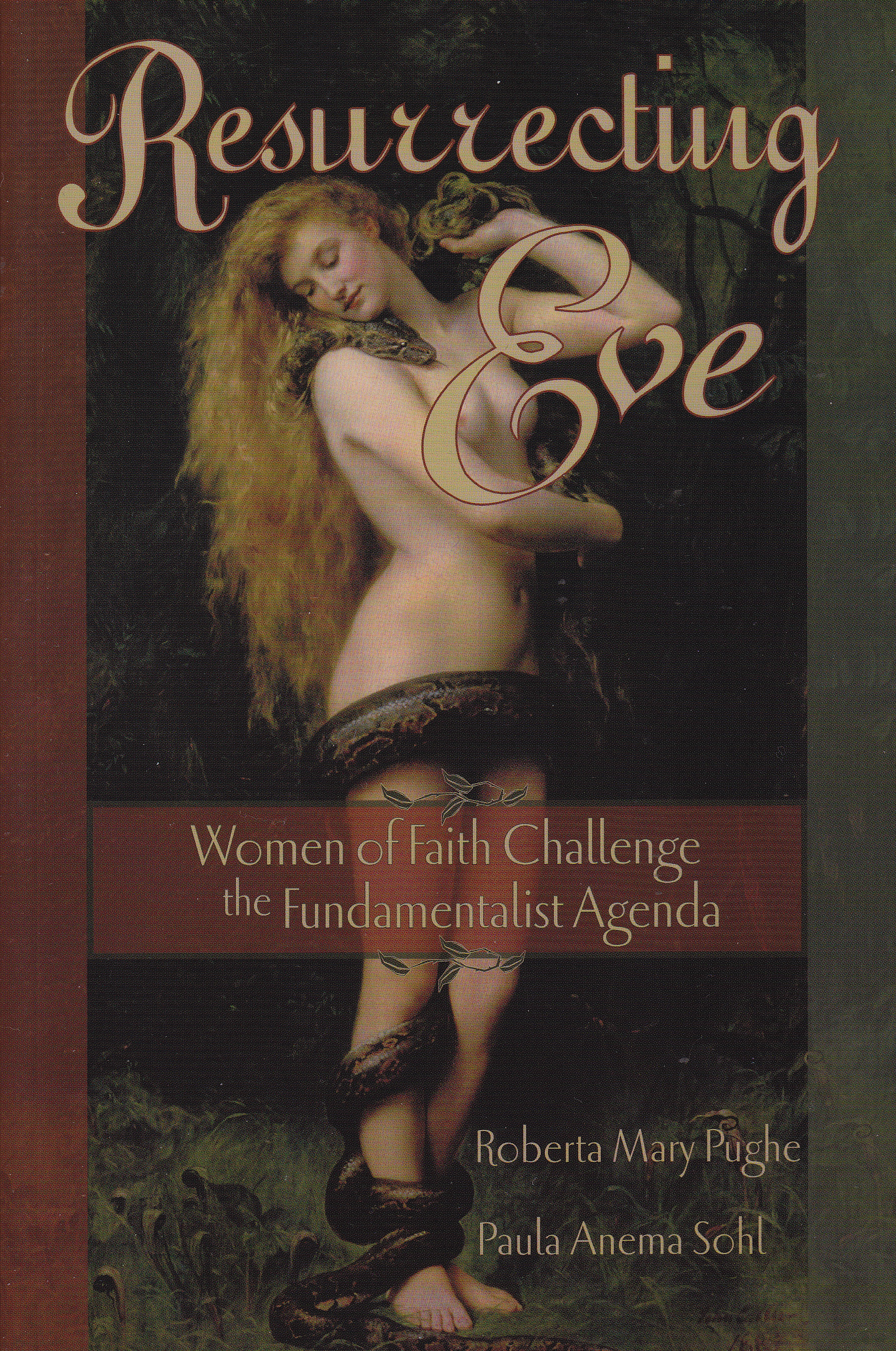
Resurrecting EveI once told some colleagues that reading even basic children’s books as Dick and Jane or The Cat in the Hat was a different experience for girls than it was for boys. Although Dr. Seuss was far more enlightened than much of the standard children’s literature from the era, there’s no doubt that the Cat is an active male, as are Things 1 and 2. The human girl (and her brother) are somewhat more passive, and thus the raring, rollicking action is mostly male. I try to stop frequently and notice how the message is still broadcast too widely that gender stereotypes contain the truth. Back when the American Academy of Religion and the Society of Biblical Literature met in San Francisco, a west-coast publisher, White Cloud Press, showed up. One of their books, Resurrecting Eve: Women of Faith Challenge the Fundamentalist Agenda, seemed appropriate for someone who’d been at Nashotah House as long as I had. Written by a psychologist and a pastor, Roberta Mary Pughe and Paula Anema Sohl, it raises many points that, while not new, again reminded me that men have to take responsibility to learn how women experience the culture that masculinity continues to dominate.

Reading stories of women who’ve suffered at the hands of a hyper-masculine fundamentalist Christianity, it is difficult not to cringe. Young girls molested by ministers in a culture where no one’s voice trumps that of the preacher, have no chance of justice. The mere thought of the few who’ve managed to build the courage to speak out suggests that far more choose to suffer in silence. The abuse isn’t always sexual. Damage to the esteem is rather a specialization of literalist groups, but males get off comparatively easy. Women and girls are provided with a unfair framework from the beginning and they often spend their entire lives conforming to it. These stories, even with the new age-ish kind of framing the book gives, must be told. More importantly, they must be heard.

In a world where our technology is so advanced as to make a Wright brother’s head spin, we still refuse to admit the equality of women. The United States comes nowhere near the top of democracies that have a significant portion of women in government positions of power. We like to think we’re advanced, but we still keep half of our people back from their true potential. We sent a satellite out of our own solar system before a woman president was ever elected. We call ourselves civilized. Of course, Pughe and Sohl are mainly concerned with fundamentalist Christianity. When we look at the demographics of government officials, however, the picture in this regard is not encouraging. Fundamentalism won’t be changed by scholars, for they are easily ignored. It will be changed by everyday men who pick up a book, perhaps because of the seductive painting of a woman on the cover, and realize that there’s far more at stake than cheap thrills and Sports Illustrated swimsuit issues. Treating women equally is merely the first step in becoming truly human.


Biblical Weather

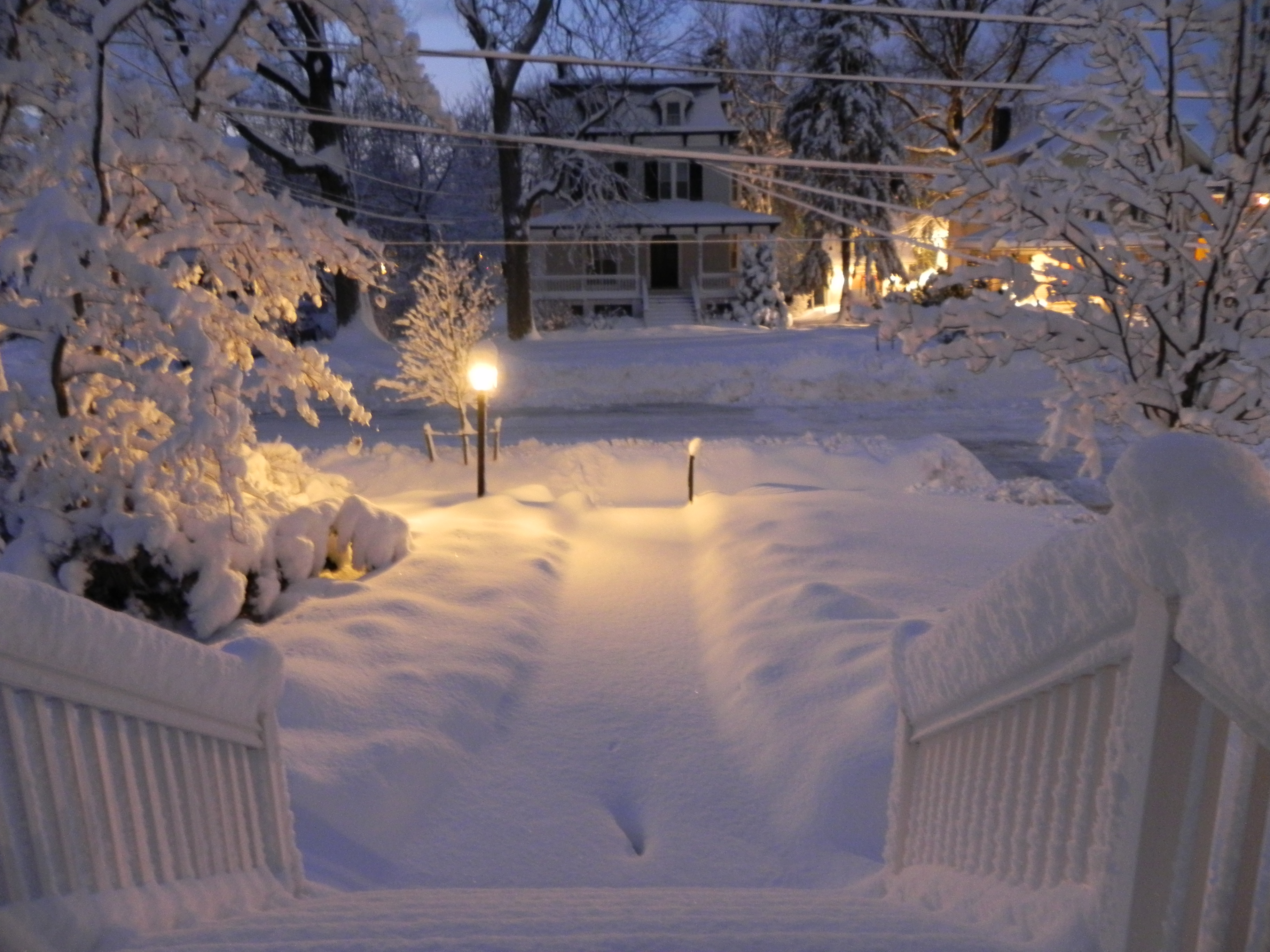
On President’s Day, my wife pointed out an article in the New Jersey Star-Ledger headlined, “‘Biblical’ snowstorms battering New England.” She asked, reasonably enough, “What makes a snowstorm biblical?” Since I have written a book on the weather in the book of Psalms, I might be able to speak to that. First off, yes, there is snow in the Bible. It’s not mentioned often and it is a rarity, but the Israelites knew what snow was. In fact, one of the most difficult Psalm weather references is to snow, in Psalm 68. The man interviewed in the newspaper, however, was not being literal. “Biblical” has come to mean disastrous. I can exegete that a bit more: disastrous because of quantity. Too much of a good thing. Or bad thing. In Boston this year the weather just won’t quit. The topic that really has people talking, however, is the temperature. It has been very chilly. My daughter complained when her university didn’t cancel classes with the air temperature at about 9 below. Her note prompted my thoughts of a day to remember.

When I taught at Nashotah House, the weather did not stop us. Ever. It was a residential facility with both faculty and students living on campus. Everything was within walking distance. My close exposure to the weather was one of the reasons I wrote the book. One Lent, and this must have been in February, we had a quiet day. Quiet days were taken very seriously. On this particular occasion the day was to be used for a meditation in the Milwaukee Cathedral, some 35 miles away. The problem was the air temperature was -42 Fahrenheit. That isn’t wind chill, that’s how cold the air actually was. (For those of you reading in Europe, Fahrenheit and Celsius are the same at -40, then they begin to diverge again.) It did not stop us. We piled into the van and prayed earnestly that we’d get there safely. On the way home we manically recited Evensong from memory. When the wind blew the chill dropped to -70 (my Minnesota friends will believe me here). If ever weather was biblical, that day was.

I do wonder if overusing “biblical,” however, will wear it out. Where do we go after biblical? What is conceptually bigger than God? Anselm would panic. What if next year it’s even worse—how will we describe it? We’ve already used up the apocalypse. We’ve entered into a crisis of superlatives. Nothing is big enough any more. As I look at the early fading light of this President’s Day, the snow is beginning to fall again. When I was a child we had, I seem to recall, a simple word to describe it. We didn’t invoke the Almighty. We didn’t hear the galloping of distant hooves. We didn’t act as if a day out of the office were the end of the world. Our simple word for it was this: winter.

DSCN0099


Love the Sinner

Nashotah House, in the many years I taught there, was very saintocentric. Our daily lives revolved around Saints’ Days, many of whom I’d never heard. Not having grown up Episcopalian, I wasn’t accustomed to all the obscure people recognized as worthy of having their own day. I was, however, surprised to learn that the church did not venerate the two most well-known secular saints: Patrick and Valentine. Perhaps having its origins as an all-male institution, St. Valentine’s Day was considered a dangerous concept to commemorate? But no, he wasn’t even on the calendar of saints in the Book of Common Prayer. While the rest of the world was celebrating love, we were generally getting ready for Lent.

The truest holidays mark the observations of subtle shifts in nature. With our indoor, virtual lives, we’ve lost track of the fascinating rhythms of the natural world. The birds begin to pair off and mate, so the etiology goes, around this time of year. So to baptize that pagan erotic longing, St. Valentine was brought into the picture. So the story claims. Religions have always found love somewhat of a stumbling block. On the one hand, it is the highest ethical good—the greatest moral regard you can have for another person is love. (We try not to tell them that, because it might betray too much, however.) On the other hand, love can lead to physical intimacy and there things get a little dicey. Religions of all descriptions attempt to regulate sexuality. It may be a fearful thing, so perhaps we should put a saint’s face on it. Could act like cold water on the natural fires of biological creatures in February.

St-Valentine-Kneeling-In-Supplication

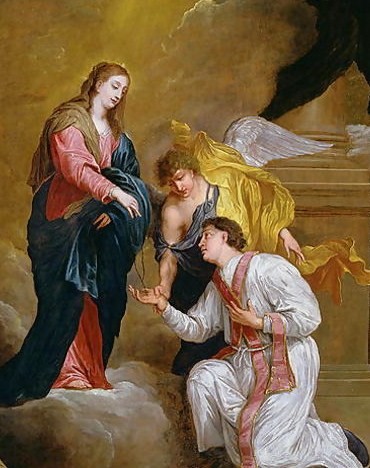
So instead, Valentine’s Day has become a secular holiday. Kids send one another cheap cards indicating their enforced regard for one another. Guys carry flowers awkwardly through the streets of Manhattan. The clerk at the chocolate shop, even several days in advance, sends you out the door by saying “Happy Valentine’s Day.” It’s the secret we all know. Ironically, the church has backed away from Valentine. Perhaps, if our religious institutions took seriously what it means to be human, and promoted love as the highest good rather than political conformity, we would truly have cause to celebrate. But don’t mind me—more likely as not, I’m just gazing out the window, watching for birds and the hope of spring.


Jedi Night

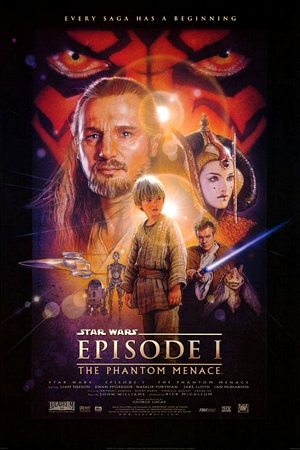
Star_Wars_Phantom_Menace_posterIt all began with that trailer. You know, the teaser for the new Star Wars movie. I was among those many small-town boys crowding into theaters in 1977 to have their small-town minds blown with a Luke Skywalker, somehow just like us, getting to go on a galactic adventure and conquering evil. It was a transformative experience. Later I was to learn that noted Jungian mythologist Joseph Campbell had advised on the story, helping to produce image after archetypal image that spoke to deep levels of viewers’ psyches. Hungrily we watched, as even through some missteps, the franchise grew to trilogy proportions, creating its own cultural memes (has “I am your father” ever been the same since?). Then somehow I missed The Phantom Menace, or episode one. It could be that work at the time (Nashotah House) was an epic struggle in its own right. With a small child and not sure about baby-sitting options, taking a night out to watch the prequel to a story that had already nicely resolved itself felt kind of pointless. We already knew how it ended. But that trailer. Now it seems, the story will continue.

So it was that my wife and I decided to catch up. Over the weekend we watched The Phantom Menace. Of course, I’d seen clips before. I’d also read the reviews that were less than complementary (Joseph Campbell had died in the meantime and George Lucas couldn’t seem to come up with archetypes on his own). I was curious, but not curious enough to rent the video (as people did in those days). So The Phantom Menace, cast from the same die as episode 4, also has a strong religious resonance. The Jedi (and already the religion of Jediism has begun to appear) filled the backstory with near invincibility, and all the aliens seemed somehow comic, yet we are told remarkably little about the Force. Perhaps episode 4 had said enough. When Darth Vader is introduced as a prescient boy, the audience (at least this audience) finds it hard to believe he is the result of a virgin birth. Indeed, Lucas throws us the midi-chlorians as a sop, but we know that when a woman gives birth with no male intervention we’re in messianic territory. And of course, non-Muppet Yoda tells us straight up that he may be the chosen one.

Introducing the Sith, who are the embodiment of the dark side of the force, we are treated to a devil in only a thin disguise. The red and black greasepaint warn us that when he removes his hood he will have horns. Although we’re not shown, I suspect he has cloven feet as well. So through the movie with its gratuitous cameos of creatures we already know from episode 4, we come to an end that is strangely familiar. We’re back where we started. The Jedi favor earth tones over white, however, and the Sith is neither all red nor all black. The evil of the galactic empire seems to be no more than the very real overtaxation of the poor. And yet for all my disappointment, there’s that trailer we all saw in December, and using my own version of the Force, I foresee an attack of clones in my future.


Psalms of Lament

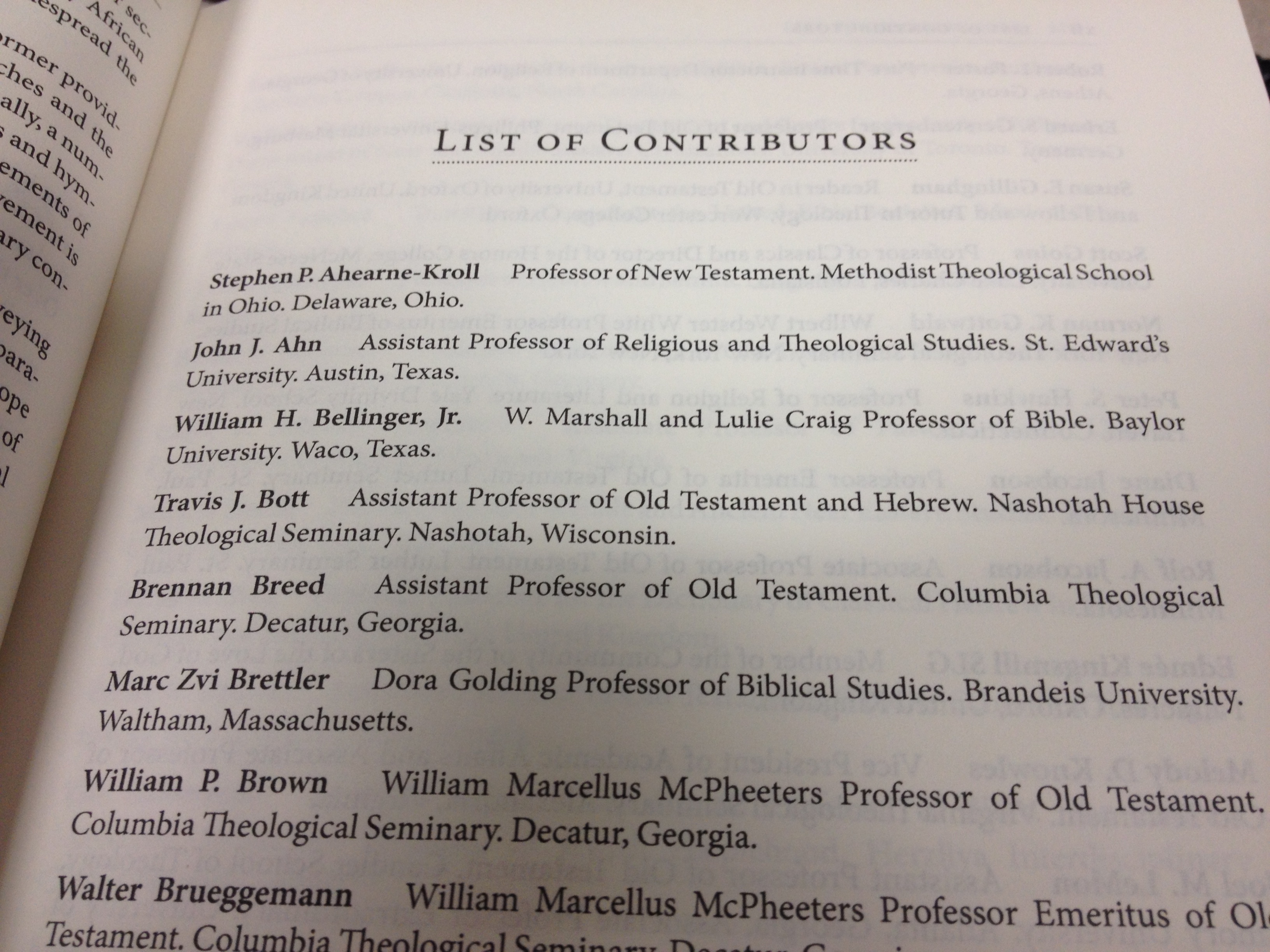
Fate can be decidedly cruel sometimes.  Accidental discoveries can be the most painful of all.  As my regular readers know, I wrote a book on the Psalms (Weathering the Psalms, Wipf & Stock—on sale now!) while teaching at Nashotah House seminary.  I sent the manuscript to Oxford University Press, and it was declined on the basis of one review.  Subsequently, I met the reviewer at a conference reception and he is now working on a book proposal for me.  Such are the ironies of life.  I can let that go with a chuckle of existentialist bonhomie.  The twist of fate comes in through helping a colleague with a question about the Psalms.  I grabbed the nearest book at work that would help, the newly published Oxford Handbook of the Psalms.  I’d glanced through it before, but this time it fell open to the contributor’s page and the words “Nashotah House” fell upon my eye.

IMG_1898
 
During my years at the seminary, I published at least one academic article a year, as well as a book, and I attended and delivered papers at the major professional conference every year.  No one ever approached me about contributing to a Handbook, apart from my advisor and friend Nick Wyatt.  I labored at building an academic career for 14 years in obscurity.  Now, the newly hired replacement (not the faculty member hired to replace me) gets invited to contribute to a major reference work.  I do not know the man.  He may be a perfectly personable chap.  Some of us, however, can work our hardest and never get noticed.  It seems as if the world of scholarship is really just a house of cards. 
 
Perhaps in times of schlock and flaw, such as these, I should turn to Ecclesiastes for comfort, rather than Psalms.  Yes, the Psalms say some pretty challenging things to God—not as challenging as Job or Jeremiah, but still.  Ecclesiastes, however, is the one to calm the intellectual’s soul.  There are those who claim that the Bible no longer has any utility in a post-Christian society.  Wise Qohelet, I’m sure, might just agree, even as he disagrees.  I tried, without benefit of sabbatical, and with additional administrative duties, to make an academic life for myself.  I was, in reality, just shuffling the deck with old Solomon.  We took turns building layer upon layer, he and I, both knowing that our house, like any built on sand, could never stand.  It must be some of that sand in my eyes; otherwise I can’t explain why they are watering so.


Get Me Jesus on the Line

The letter is the greatest casualty of the internet. I sometimes obsess about how little time people put into their emails, often coming across as gruff or short. I always start mine with a greeting and end them with a closing followed by my name. Of course, I’m from an older generation where communication was initiated with respect. Getting an actual letter is now, however, occasion for great wonder. A friend recently mailed me a couple of fascinating articles from the Prescott Journal, a Wisconsin newspaper. Dated to 1868, the articles actually post-date Nashotah House, but still count as when Wisconsin was rather more pioneer than Pioneer territory. Both articles involve what might be termed “scams” today. Newspapers in the nineteenth century were notorious for sometimes perpetrating hoaxes, and at other times falling victim to them. Still, as the only sources we have for some of these delightful tales, it is difficult to check them out beyond the fact of noting that the amazing stories have been subsequently forgotten.

One of the stories was wired in from San Francisco, the article claims. A certain F. Wilson was applying for copyright on a letter he acquired near Iconium, written by Jesus. As my friend noted in her letter, this is perhaps the earliest case of a rock inscribed “turn me over,” promising some kind of reward. Wilson claimed to have found, under a large (implied) rock, a letter written by Jesus. The rock could not be turned, despite reading “Blessed is he that shall turn me over,” even by a group of men. Then, according to folkloristic protocol, a small child turned it unaided. The letter underneath, although written by Jesus, was signed by the angel Gabriel. The letter contained the ten commandments, a note from Jesus answering a missive from King Abrus, an account of Jesus’ miracles, and a description of his person. The story doesn’t tell if the copyright application was successful.

Newspapers were a form of entertainment a couple of centuries ago. Of course, some four decades earlier than this story Joseph Smith had claimed to have found documents to which he was led by the angel Moroni. He published them and, although lynched some 24 years earlier, had nevertheless done pretty well for himself, as his followers would continue to do. Why not cash in on the new religion craze? After all, this was California, and even in the woods of Wisconsin some religious zealots had started an institution that would grow strong enough to displace dreams and livelihoods. What struck me most reading this story was just how little things have changed. Outlandish religious claims are still credulously accepted by the gullible. And the web encompasses the entire world. This story though, must be true, because it came to me in that most magical of forms—an actual letter.

"Don't forget to look for my letter!"

“Don’t forget to look for my letter!”


Maritime Dreams

MaineEarly in my teaching career, I used to arrive in Milwaukee on a train after midnight. A student from Nashotah House on work-study would pick me up at the train station and drive me the thirty miles to the seminary so that I could teach the next morning. Along the way, depending on the student, conversation ensued. One time I asked the driver why he was interested in what seemed to me an arcane topic (and that’s saying something!). He replied, “Who can ever say why they’re interested in something?” There was some deep wisdom there, I realized. Can any of us say why we’re interested in what we are? I, for example, don’t know why I’m interested in life on the sea. And in the sea. I fell in love with the idea of living on the coast when I was a landlocked child. The ocean came to me only in books, and I never actually saw an ocean until I went to graduate school. The experience confirmed for me that this was where my heart lies. The salt air, the gray waves, the constant call of the pounding surf. Moby Dick immediately became a kind of personal scripture when I first read it. A life near the sea felt right.

I could never really answer the question why. I don’t swim, and besides, the ocean currents I have experienced are really too strong for the placid kind of swimming a lake or pool seems to offer. I don’t own a boat, and I’m a poor pilot when asked to drive one. I’ve been out over the ocean on commercial boats only a couple of times. Still, the imagination is fired by the idea of the ocean. Especially the stormy north Atlantic. As a child Rachel Carson’s The Sea Around Us was one of my favorite books. Just staring at the cover could transport me to places I’d never seen. When landlocked in Wisconsin for several years, I turned to the Great Lakes for consolation. “Those who go down to the sea in ships” Psalm 107 declares, “Who do business on great waters; They have seen the works of the Lord.” Even so those who dream of the sea.

Ironically, for the Psalm, the Israelites were not a seafaring nation. Good harbors are rare on the coast of ancient Israel, and the maritime trade of antiquity was dominated by the neighbors to the north, the Phoenicians. Still, even the psalmist could dream of the sea. It has been said by various commentators, that the sea represents sexuality, or transcendence, or both. It is larger than we are. Indeed, the earth is by far mostly water as opposed to dry land. Life, even according to Genesis, first began in the waters. So I find myself in the midst of winter thinking about the ocean. It has been a long while since I’ve indulged in a day on the coast, even though I’m pretty much daily in a city on the sea. But I can’t experience the ocean so well with so many people around. Besides, there’s work to do. In those moments when my time is my own, however, I still dream of the ocean and the endless possibilities it represents.


Weathering the Storm

WeatheringThePsalmsI had almost forgotten the validation of being published. Colleagues sometimes ask me if I’m still working on any books without realizing that employment in publishing, with rare instances, constitutes a conflict of interest. Editors are acquirers of content, not producers thereof. As I’ve been preparing Weathering the Psalms for release on the world, I often consider how differently all this may have turned out, should I have found academic employment after Nashotah House. The day my contract was terminated, I was working on this book. It had recently been declined by Oxford University Press, and the reviewer (whom I had unwittingly met) had informed me that the book wasn’t really salvageable. It was a jumble of data with no narrative thrust. I was working on giving the data a different frame when I was called to the Dean’s office and told to read a legal memo in the presence of a lawyer. Every time I tried to turn back to my book after that, the nightmarish scene replayed in my head. Besides, I had to try to find a job.

It was only when working for what I thought was a stable Routledge that I had the chance to revisit the manuscript. Ironically, it was only after I was no longer in a position to do research that colleagues began to approach me to review submissions for journals, to invite me to write articles, and to express an interest in my research. Of course, it was too late for me to begin full-fledged research again. Despite the internet, scholars require two things I did not (do not) have: access to a university library, and time. Early on in my commuting days I discovered that the quality of the time on the bus did not allow for in-depth research. Too many other passengers have too many other agendas. I can read on the bus, and sometimes academic books, but anyone who’s tried to take notes when crammed into the space usually taken up by a backpack knows the difficulty of writing notes without the use of your arms or hands, over the constant electronic noise of your neighbor’s unsilenced electronic games.

All of which is to say that I’m very pleased to see Weathering the Psalms is out. Like a child untimely born—at the risk of sounding biblical—the book is being printed as I write. Working in publishing I know better than to expect phenomenal sales, still, many of my readers over the years have said they’d buy a copy if it was ever published. If you’re serious about that, take a look at the website of Wipf & Stock and click on the Cascade Books imprint. Finishing this book has, I must admit, awakened a hunger. I have, of course, started to write another. It may be another decade in the making, and, should it ever garner the attention of a publisher, a similar post may come along before I’m too old to think clearly. The ideas are there; the opportunity to express them is not. Still, despite the cruel vagaries of academia, I feel as though I’ve received a small validation, and I am very grateful for the honor. Wipf & Stock offers a service that other academic presses might do well to emulate. It’s not all about the earning potential of a title. Sometimes it’s just a storm.


Darwin Down the Road

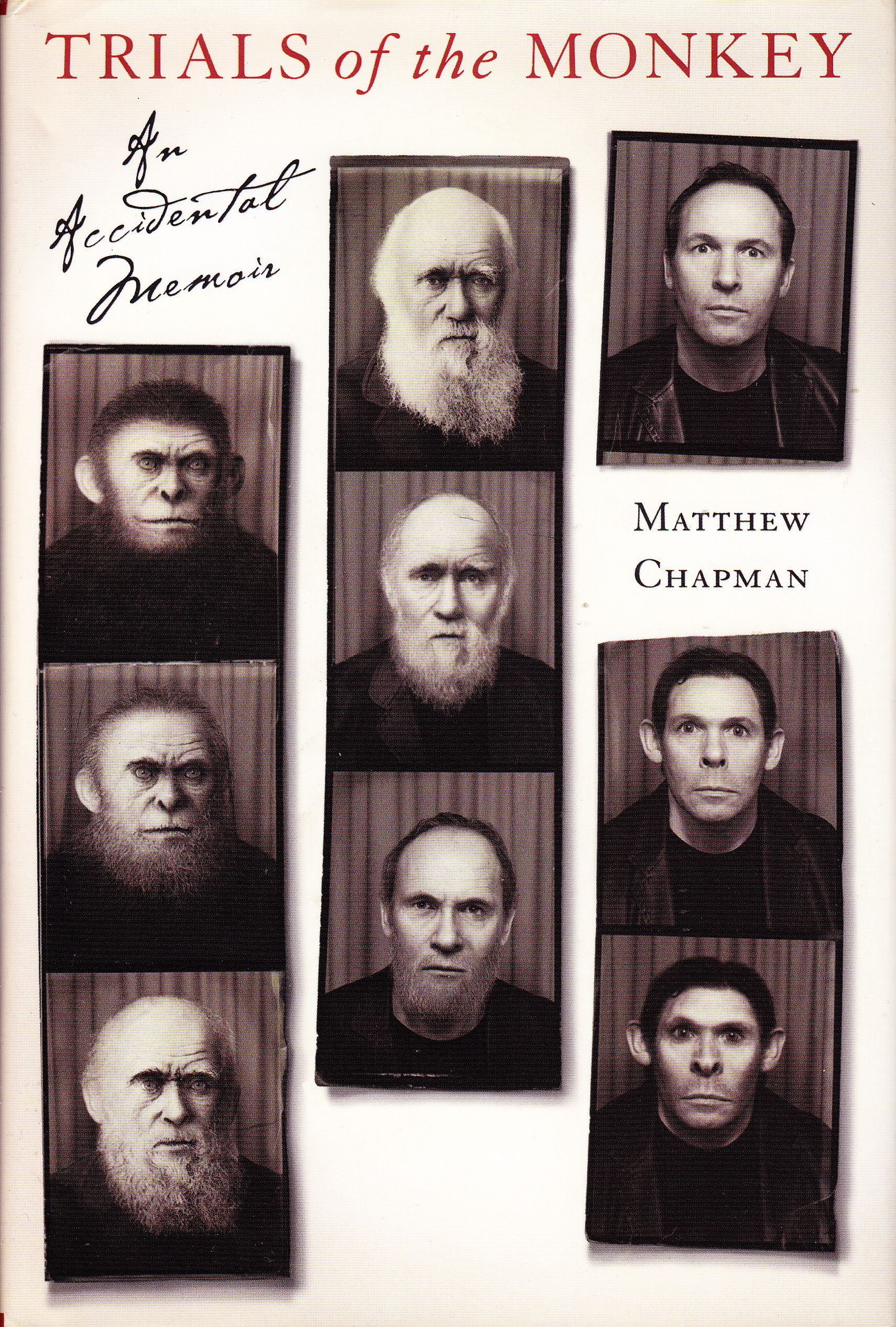
Chapman TrialsThe accidents of birth are the stuff of evolution. When I first heard of Matthew Chapman, direct descendent of Charles Darwin, over a decade ago, I was determined to read his book (then new). Like the accidents of birth, the finding of books at used bookstores is also a kind of evolution, so I picked up Trials of the Monkey: An Accidental Memoir recently and finally read it. Mission accomplished. It had been long enough that I couldn’t recall what the reviews said that made me so eager to read it—I had been developing a course on science and religion at Nashotah House and had been reading about evolution—but I’m glad I got around to it. The book was neither what Chapman nor I had expected. Maybe I’d better explain.

The year 2000, apart from its millennial aspirations, was also the 75th anniversary of the Scopes Monkey Trial. Chapman, a screenwriter from England, decided to go to Dayton, Tennessee to report on the reenactment of the Scopes Trial that was caused, accidentally, by his great-great-grandfather. With acerbic and self-deprecating wit, he narrates how he missed the performance by arriving for the wrong weekend and yet how he’d already begun the book based on it. Instead of reviewing the reenactment, he wove his own life story into those of the people he met on his two trips to Dayton, and left us with an engrossing memoir. Most Europeans, we know, consider American reaction against evolution with some puzzlement. As an Englishman, Chapman shares that curiosity and also, he admits, kind of wanted to make fun of southerners. His encounters, however, forced him to realize just how human all people are.

There’s a healthy dose of exposure to some of the weird ideas of fundamentalism here, but Chapman pulls no punches. The people he met treated him kindly. Some fundamentalists were even likable, even though they could not agree on much. At turns very funny and very sad, this autobiography represents, in its own way, the tensions of any life. The sensual confessions would have made famously squeamish Darwin blush, no doubt, but demonstrate to the reader that a man who can make a lot of money writing movie scripts can be very human as well. And so can the religious. The denizens of Dayton didn’t convince Chapman that their exclusive faith was true. They did, however, open him to the realization that such faith is not as simple as it may seem. A fortnight may have passed since the millennium, but creationism has continued to gain ground. Until more people take Chapman’s cue and actually try to understand those who believe, the trial of the century will continue to go on and on, ever evolving.


Allhallowtide

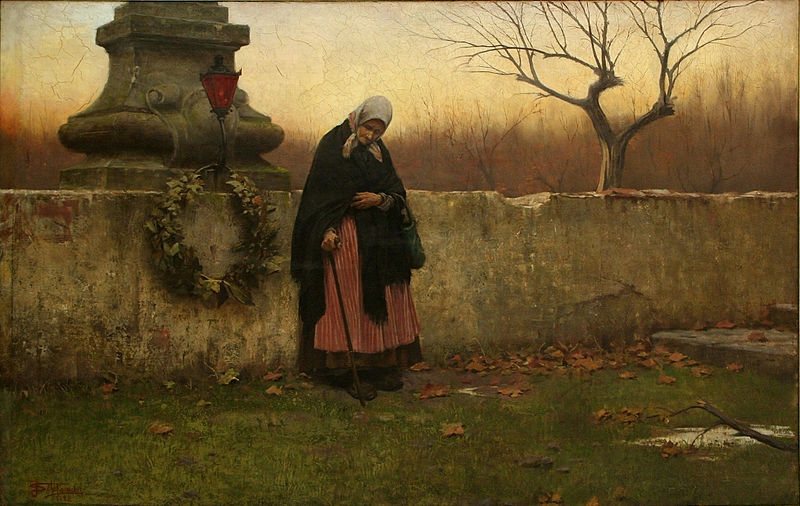
Allhallowtide is a triduum. No, I’m not writing in tongues. Ecclesiastical language can often be foreign to the secular world, and the fact that it’s All Souls’ Day for some has me thinking about feasts that come in threes. I first heard the word “triduum” at Nashotah House. There, of course, the great spring coalition of Maundy Thursday, Good Friday, and Easter made the holy triduum of required marathon chapel attendance. It was not unusual to spend a dozen hours in chapel during that stretch. Always considered less important, but perhaps far more human, was the autumnal triduum of Allhallowtide: All Hallow’s Eve (Halloween), All Hallows (All Saints, or Hallowmas), and All Souls’ Day. In Mexican tradition the three days make up the Day of the Dead. For people who live close to the economic edge of perpetual poverty, that makes perfectly good sense. Even for the liturgically literate, however, parsing the triduum of Allhallowtide takes some effort. We all know Halloween, and the title All Saints is self-explanatory. All Souls’ might require some thought.

All Souls’ commemorates the “faithful departed.” We can’t all be saints. (Well, in some traditions all Christians get to use the title, but alas, in the more Catholic world, no.) What about those who’ve died believing, but not earning a place among Ralph Vaughn Williams’ masterpiece? The ordinary, like us? All Souls’ is our day. Since the macabre is considered puerile, what with its possibilities of ghosties, and ghoulies, and one-eyed beasties, the church has continued to give a polite nod to Halloween (at Nashotah it used to be done up in great style) but doesn’t take it seriously. More evangelical denominations say it’s demonic, but in actuality, historically, it is the opposing triduum to that of the spring. Liturgical life holds an incipient balance for those who don’t take things too literally. Understanding our mythologies covers a multitude of sins.

Perhaps this chilly, rainy Allhallowtide in the northeast has me far from the hot and dry Day of the Dead, but I admire the Mexican acknowledgement that something should be done about those who’ve died never knowing affluence. Somewhere just to the north lies one of the most successful (until recent years) economies in the world. Social fragmentation, violence, and drugs (which draw big money from that self-same northern economy) bring many of our fellow North Americans to their knees at the feet of Santa Muerte. The light is fading fast at this time of year, and the wind is ripping the desiccated leaves from their skeletal branches, preparing us for the long chill that is to come. While work prevents too much investment in the liturgical year, I look with a peculiar longing over this triduum, and this soul, in any case, is grateful for a weekend to contemplate it all.

Jakub_Schikaneder_-_All_Souls'_Day


Autumn Music

It is an experience as old as humanity itself. At least humanity that started to realize that age, as remote as it may seem, will always eventually catch up with you. This past weekend was Family Weekend at my daughter’s college. Since her school does things up right, there were a variety of events on offer, one of which was an a cappella group concert. A cappella has come a long way since my college days, with students able to use their voices to sound like a band, professionally mixed, and full of energy. Somehow, I don’t recall that much energy from when I was a student. In any case, the inevitable group doing “oldies” took the stage an opened with a song from 1987. Wait. What? Since when was a song of which I remember the first release an oldie? The kids did a great cover, and I suspect in their minds it was really an old song. I was only 25 when it was given to the world. Can I really be an oldie? Outside the leaves on the trees were brilliant, as if on cue for the tuition payers to have their heartstrings wrung. Trees become their most alluring as they are about to die.

Songs, however, have a way of becoming part of you. Back when we were young(er) and idealistic, my wife had thought to study music therapy. Nashotah House, however, decided to change the career trajectories of an entire family in the name of orthodoxy. One of the things she learned in her classwork, prior to being sent back to the work-a-day world, was that patients suffering from dementia can often sing a song from their youth, even if they can’t speak a word. Music gets into our brains in a way that language learning doesn’t, and when we hear that song we are, to borrow a phrase from Bob Dylan (which another of the groups sang), forever young. It is a beautiful wish, endlessly covered and recovered. Watching those kids on stage, I recalled being on the cusp of adulthood myself. Everything seemed possible then. Then a world that others constructed imposed its constraints on me. My hair began to grow gray even as the leaves lit up yellow and scarlet and fire orange.

DSCN4928

Religion is the business of those who are old. Even as a religion major in college I was classed among those old before my time. We think of the hereafter on our deathbeds, not when we’re twenty. For those who teach their children to ponder eternity at a young age, however, that portal is never far from view. My fellow students were looking ahead to careers in all kinds of fields that would make their fortunes and reputations. My modest attempt to bring a younger generation to a more mature outlook faltered at the hands of Fundamentalists, and it was music that helped me through that terrible shock. Little do we think that that song we like so much is marking us indelibly as a child of our age. Time will not relent. We will be the ones, like the trees, showing our signs of age as our children show us where the future lies. And the attitude of that song from 1987 will be, for any who truly listen, forever young.


Monster Mash

American MonstersIn one of those ironies of personal history, I never met Linda Godfrey although we lived not far from one another and shared a great many common interests. I’m not sure she would return the sentiment, but while I lived at Nashotah House many odd things happened. Academics can be pretty deep in denial about what they experience, and although I never saw any man-wolves, as I stood outside one night to photograph a comet I felt terribly exposed and in not a little danger. This was on a rural seminary campus. Nashotah was still wooded then, before evangelical shaving of the landscape, and certainly among the most gothic of seminaries I’ve ever seen. Meanwhile Linda Godfrey was researching, just a few miles down the road, weird animal sightings on Bray Road. I began a correspondence with her after we left Wisconsin and I have read all of her books. Local history has always fascinated me, and although I was an accidental Wisconsonite, I nevertheless enjoyed learning about the strangeness of the state I formerly called home.

Godfrey’s latest book, American Monsters: A History of Monster Lore, Legends, and Sightings in America, throws a wider net. We are all in here with the monsters. Blending, as the subtitle suggests, lore and legends with eyewitness accounts, American Monsters can leave the reader a little disoriented, in a good way. We’ve been taught to discount anything that doesn’t match the everyday—what boss wants a worker with a higher vision?—and pretend that such things don’t exist. Weird creatures don’t donate their bodies to science readily, and we are left wondering if something is really peering at us from these October woods. Inside you’ll find stories of flying, swimming, and running monsters. We are safe nowhere. Either from the scientifically undocumented or from those that are purely imaginary. I stand outside in the dark in a smallish town waiting for a bus. What was that sound behind me?

Monsters are only now beginning to gain academic respectability. When I was in graduate school the topic felt so puerile that no respectable Ph.D. candidate would dare suggest such a dissertation to a button-down committee. Now they are beginning to roll off the presses. As part of the religious imagination, monsters are not so easily dismissed. We can assign them to the dark caverns of fantasy and under-stimulated imagination, but they will burst out in their own time and, like gods, demand our devotion. I have no idea whether these cryptids creep, flap, or swish around in our world. People see them all the same. And believing may be seeing. I’m glad for Godfrey’s success at pointing out that our rational world is full of monsters. Hers is a perfect book for days of effacing light and lengthening shadows, all across the country.