Horse Sense

In an article in last month’s Federalist, Tom Nichols lamented the death of expertise. Well, not exactly. Expertise is not so much dead as lost in the wash. In the days of internet reality, it is difficult not to feel an expert after half an hour on Wikipedia and with a glance at a few headlines. What concerns Nichols, however, is that those who have done the hard work of going through educational programs and heavy research to learn materials minutely and intimately, are no longer considered any more qualified to speak the truth about their subject than anyone else. The web is full of self-proclaimed experts, and even I was always a little alarmed at student papers that took online resources at face value (I warned students about us bloggers). We have truly entered democracy—intellectual democracy—and it is scarier than anyone might have imagined.

I’m not a snob. I grew up in a blue collar home and I generally trust blue collar people more than my more educated colleagues. In the working class, at least in my experience, if someone intends to harm you there is usually some warning shot fired across your bow. In the world of business and finance the unseen and surgical strike is carried out with far more finesse. Experts can make brutally efficient killers. It was only after years and thousands of dollars I had not yet earned that I could claim to be an expert on ancient religion. From the first day in the classroom (particularly at Nashotah House) I found myself face-to-face with self-acknowledged experts who put up with my instruction only by dint of ecclesiastical command. Being an expert meant I was to be mistrusted. I was the one who might lead astray. The internet was already out there, but it was only lurking in the background. In religion, expertise had been dead long before Jesus showed up on the scene.

The problem with religion is that nobody can have the whole truth. I used to show my students a photograph of the silhouette of a horse against a sunset/sunrise. You can’t tell which way the horse is facing—toward the camera or away. When I asked them which way the beast faced, some would say away, but most said, predictably, towards them. Then I would reveal that not one of us in the room knew the answer. Religion is like that. The photographer who stood near the horse knows, but the person behind the camera may as well be in heaven for all it helps us. I was an expert because I’d spent years learning arcane languages and looking at texts in as close to the original format as we had available. All I had learned is that no one knows the direction that horse is facing. Tom Nichols is right: we face a crisis of expertise. But for me the only source of truth may be found astride a noble steed.
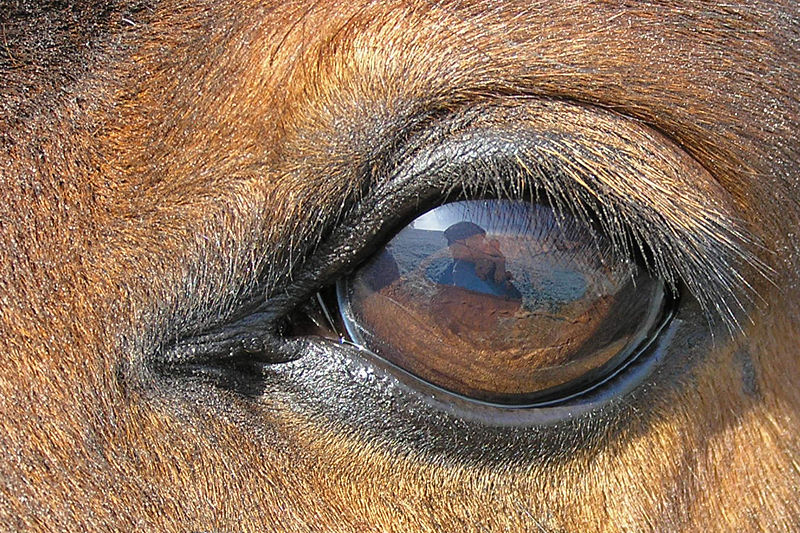
Photo credit: Waugsberg, WikiCommons

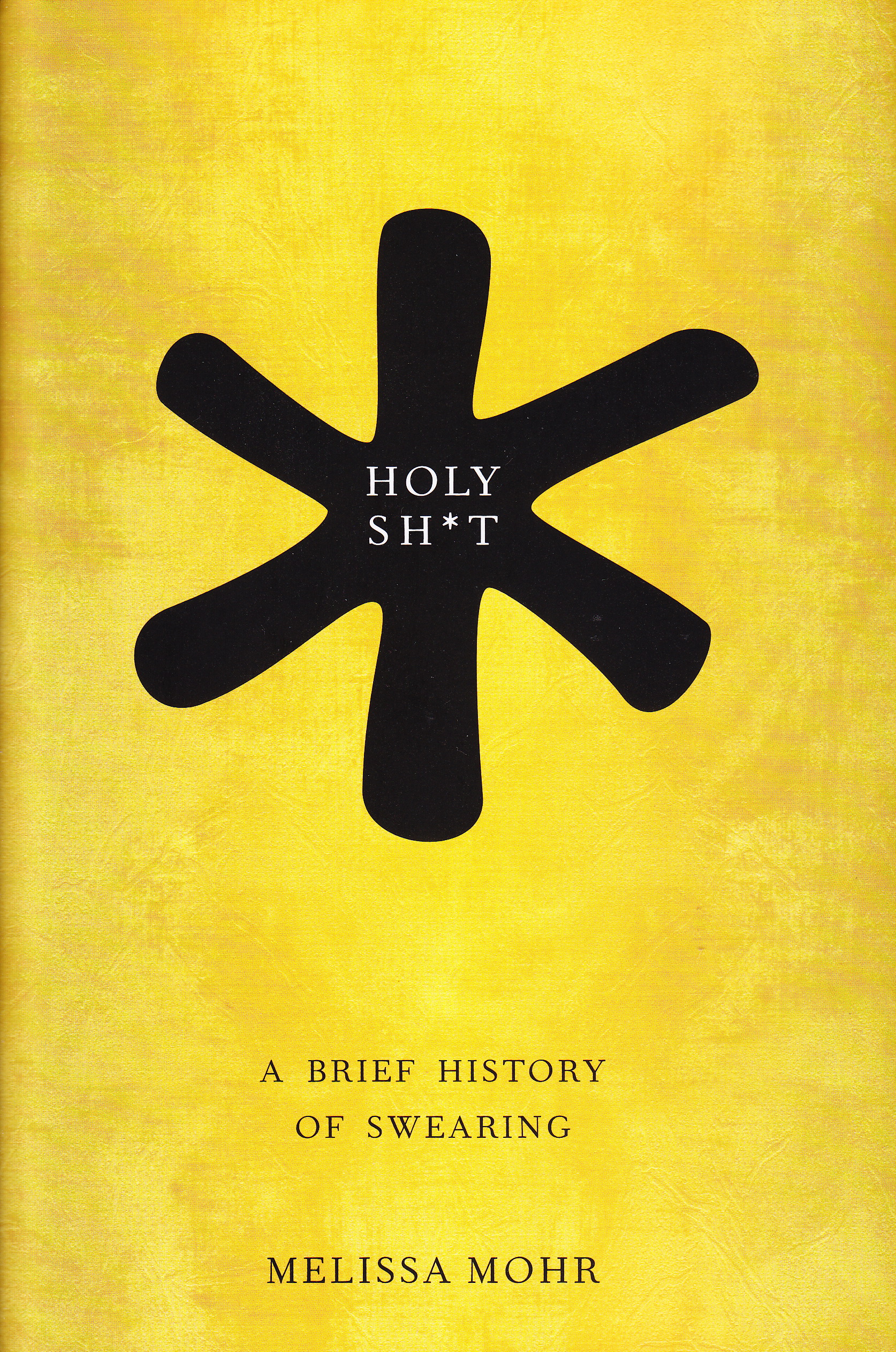
Photo credit: Waugsberg, WikiCommons

TechnoFrazzle

Hebrew can be an obstinate language. And computer software companies can be immature. In a biblically inspired pulling out of the hair and rending of mine cloak, I am trying to submit an old manuscript for publication. You see, I have been a loyal Apple user from the beginning; Moses himself was one of my original teachers. This was back in the day when the processor took up proportionately about 90 percent of the space, and the screen was about the size of, say, an iPad. Monitors were black-and-white then, kids, and you had to save everything on devices called “floppy disks.” In any case, Macs died and Macs resurrected—actually, they never really die, as an attic full of aging, but document-rich Macs attests. Operating systems evolved at a frightening rate, and the document I want to submit was originally written *gasp!* about eight years ago. The Dark Ages. Before OSX. Before Keurig individual serving machines. When fax was still used.

The publisher made a simple request: send us a Word document. The problem, you see, is that Apple no longer runs software based on Microsoft platforms (Bill and Steve, play nice!). That means instead of Word I now use Pages. That’s mostly fine, but then Hebrew can be an obstinate language. It is written backwards. The vowels are above and below the consonants. It has letters that English doesn’t and most English speakers can’t even pronounce. So geeky font-makers came to the rescue and devised clever fonts to fill the gaps. In Word. I convert my old file into Pages so I can open it on a laptop that actually connects to the internet (the laptop on which it was written never could quite manage that) and guess what? Pages can’t display the fonts. I convert them, but like stubborn infidels, they remain the same on my screen. It is like driving through a blizzard with windshield wipers that don’t work. I can’t be sure what a PC reader, using that antique software, Microsoft Word, will see on the screen. I’m not sure what I’m writing.

I remember the rejoicing in heaven the day Apple announced that you could open a PC file in Word on a Mac. My life was easier, except for the fact that I was unfortunately working at Nashotah House—but that is a different story of archaic woes, for I could slip in a floppy disc (consult your dictionary) and share it with a less-sophisticated PC user. Now Mac OSX no longer supports Microsoftware and I can’t read my own fonts. I decide to copy the file onto a flash drive and submit it unchanged. My old laptop scratches its metaphorical head at this strange device I’m inserting into it and tells me this wondrous USB-deity is beyond its capacity to fathom. My Hebrew is stuck in the past. Along with my head, which, as you’ve been given to understand, is now bereft of hair.

In the beginning was Word...

In the beginning was Word…


NC-17

HolySh*tHoly Shit (in the philosophical mention sense, not the use sense), by Melissa Mohr, is a book I had intended to write. I’m glad Dr. Mohr beat me to it, however, since her treatment would be difficult to top. Few ideas are so arresting as the forbidden topics, and Mohr shows us that swearing occupies a compartment of the brain separate from regular speech, and it may even have therapeutic qualities. A Brief History of Swearing, to use the less offensive subtitle, is not an easy book to read in public. Since most of my reading time is spent in densely packed transit vehicles or waiting areas, I always wonder who might be reading over my shoulder. As a short guy that’s always an issue. Nevertheless, Mohr’s book is fun and informative, and I suspect I will read it again for all the information packed into it.

You see, Mohr uses both words of the title in a literal sense. Beginning with the Romans, but then stepping back to the Bible, clearly swearing has religious origins. While the Bible doesn’t prohibit coarse language in any direct sense, it does believe in oaths. Swearing oaths was serious business, and that seriousness led directly to the concept of swearing. Combine that with the idea of cursing (which the ancients also believed effective—ask Saint Peter) and you get the spectrum covered by the concept of “bad words.” (At least up until modern times.) Although I’ve studied religion my whole life, I was surprised how much I had to learn about the more earthy aspects of spoken sacred language.

As Mohr amply demonstrates, what counts as swearing changes with time. Giving the case of the Lindisfarne Gospels, she illustrates how a glossing priest causally dropped the equivalent of a medieval f-bomb right there on the pages of the holy Gospel. It wasn’t considered swearing at that historical moment in time (and besides, a fair amount of it goes on in the Bible). How far we’ve come. I recall one of my Nashotah House students telling me how he had to take a rather freely expressive classmate aside and tell him he was pretty sure that the f-word was an inappropriate adjective to use when referring to the Trinity. But now I see the wisdom of the ages at play. People use their most powerful words for what moves them most deeply. I doubt Mohr had quite that in mind, but if you read her delightful study you can find out what I may be full of after all.


Retire Me This…

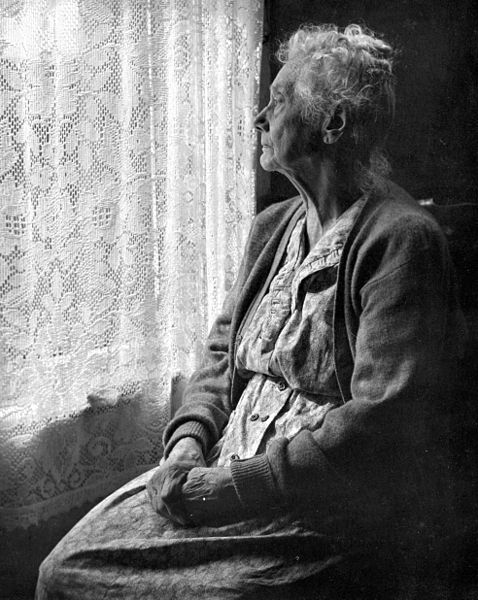
We’re all getting older.  My daily, grudging glimpse in the mirror reminds me that my beard wasn’t always gray, and there was a time *gasp* when no beard grew at all.  One of the realities of the brave new world we inhabit is that career stability has become a myth.  My father, in the brief time I knew him, worked as a house painter.  My stepfather worked in a sewage plant for a small town and drove a snowplow in winter to make ends meet.  These utilitarian jobs seemed never to end.  I made the mistake of going into higher education, not realizing that the risks were much higher and that I would make more money working in a sewage plant than I have ever made in my professional career, PhD in hand.  So it rankles me when I hear professors complaining about being too busy in retirement.  Retirement: what a concept.  When the guy who has custodianship of my minuscule retirement account from Nashotah House, after his gentle awaking from the defibrillator, looks at my records he always informs me, “you’re not well placed for retirement.”  Talking to my big brother we agree—our retirement plan is to die on the job.  So, when someone asks you to write another book, remember maybe it is some guy your own age who is trying not to starve.

As a society we’re aging.  Those who managed not to be fired by Fundamentalists have had a secure, tenure-ridden ride through the occupation that some of the rest of us were denied.  Busy in retirement?  Some of us will never have that privilege.  Funny thing is, it’s not funny.  I sometimes lean back in my editorial chair and realize, if this hadn’t happened to me, I would probably look at it the same way.  I would have published that second, third, and fourth book, and people would actually think my opinion mattered.  I would’ve become a resource to be tapped rather than a dancing monkey who hopes for anything shiny.  Is that another gray hair?

I don’t belittle the hard work of higher education—it’s not an easy profession. But writing books? That’s the fun part! Privilege induces blindness. How rare an opportunity it is to teach! While we as a nation devalue it, in many parts of the world those who shape future minds are revered. Yet elsewhere in the world there are those who are far worse off even than an editor—those for whom life is constant suffering and surviving another day is not reasonably assured. How easily I forget this as I neglect to balance my checkbook for fear of what I might find. We shouldn’t complain when someone asks us to give back, even in retirement. Those of us capable of writing books sometimes lack only the bona fide of a college or university position to do so. Otherwise I might hope to retire as well some day.

"Photo by Chalmers Butterfield"

“Photo by Chalmers Butterfield”


Shipwrecked

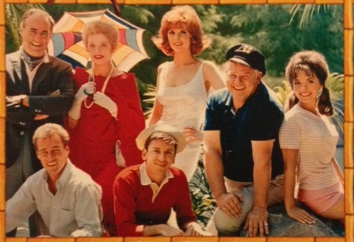
Childhood dies in pieces. There is nothing a young boy desires more than a father to show him how to negotiate life. As Mick Jagger eloquently declared, however, many of us know “you can’t always get what you want.” I did not get to know my father growing up, and so I did what any American did in the 1960s—I looked to television for solutions. Children can be terribly naive, but I had a shortlist of ideal candidates in my head. The one who unwittingly set the direction for my life was shipwrecked on a not-so-grim deserted island. Everyone loved Gilligan because he made them laugh, but the Professor, he seemed the ideal father: rational, mostly kind, and generally unflappable. My earliest career ambition, before I decided that janitor was my true calling, was to be a scientist. This was largely because of the Professor. Religion eventually interfered in my plans, but even as I attended seminary, and then graduate school, the Professor never left me. He had been a kind of father figure to me. I’m sure going to miss Russell Johnson.

TheIsland

I still feel a stab of delight when, watching old Twilight Zone episodes, “the Professor” appears. When I see Johnson in It Came From Outer Space and This Island Earth, it’s a particular island I’m thinking about. An island where, if religion came up, it was treated lightheartedly but even science, for all its clear thinking, never managed to help get the castaways rescued. This island represented my childhood. Innocent, sincere, and strangely funny. Little did I realize at the time that the science Roy Hinkley advocated would become such a fierce enemy to the religious milieu from whose baptismal waters I’d never fully emerge. It sure would’ve helped to have had a father to sort all this out.

Back before Borders (a kind of ersatz father) closed,Tina Louise came to our local to promote her new children’s book. I couldn’t believe I was standing twenty feet from a childhood icon—a movie star, nonetheless. How shocked I was to see her in The Stepford Wives where she talked about sex—that was always in the deep, deep background on the island. Pagan gods exerted real power on Gilligan’s island. As I grew up, religion held me in its powerful grip. With the Professor and the Bible in my head, I went off to become logical, intellectual, cynical. I taught Bible, students called me professor. Then my career was shipwrecked. Is it any wonder that I had that nightmare about being lost at Nashotah House again last night? Sometimes a boy just needs a father to show him the way. Thank you, Professor, for stepping in. You influenced one life in a way that I’m sure you never expected.


Lead Serve

For never having been a Catholic, my life has been strangely tied to the Roman Catholic Church. Like many in my diminishing profession, I was raised in a religious household—in my case non-denominational Protestantism with a strong Fundamentalist streak—and have wandered a bit from my starting point. When my family moved to a small town with just two churches—United Methodist and Roman Catholic—we had no choice which to join. I learned the Methodists were just disgruntled Anglicans, and logic dictated that I would eventually join the Episcopal Church and gain a deep appreciation of Catholicism. My first professional job was teaching at an “Anglo-Catholic” Episcopal Seminary. While there I was interviewed for positions at Roman Catholic schools, and not infrequently brought to campus: the University of St. Thomas in the Twin Cities, Assumption College in Worcester, Massachusetts, Sacred Heart School of Theology just down the road in Hales Corners, Wisconsin. Most of the time I was in the list of finalists when the position would go to a Roman Catholic, “no hard feelings, right?” Long ago the Episcopal Church, ironically, got out of the higher education market.

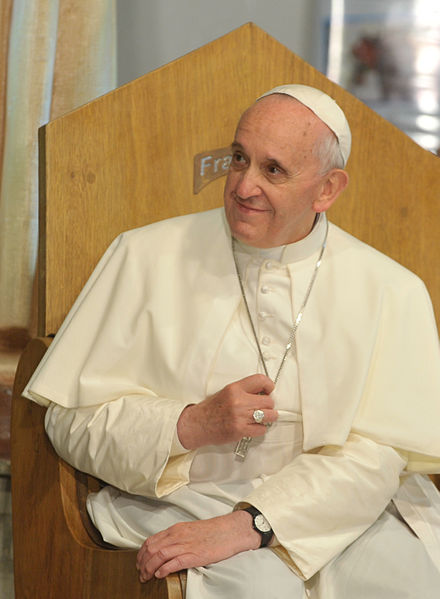
It is with this background that I keep an eye on the Roman Catholic Church. Many friends and colleagues are Catholic and we have far more in common than I have with my Fundamentalist forebears. I frequently find myself in wonder at Pope Francis. Many church leaders have made the news over the past several decades, but few of them for such good. In an article on NBC over the weekend, the Pope called for seminary reform, noting that always toeing the line will turn priests into “little monsters.” I taught at Nashotah House for fourteen years, and I know exactly what he means. I encountered students who could quote Paul about being freed from the law and in the next breath lay down ecclesiastical law with enough force to behead a heathen. The Episcopal Church, which is small but disproportionately powerful, should take the words of the pontiff to heart.

A cold day in...

A cold day in…

Pope Francis noted that seminaries need to keep up with the times. Indeed, the laity of most religious traditions have little trouble accommodating to culture while their faith remains mired in the Middle Ages. In a world robbed of essences and meanings, it is difficult to teach future clergy that the spirit of a faith can be honored in outwardly different ways. The idea that we can just hold on ’til Jesus gets back should’ve been questioned once Islam came to be a major force a few centuries after Christianity settled in. Since that time Christianity has fractured into thousands of sects united by little more than essences. Instead of settling in for the long haul as an empire, the Pope is suggesting that the church settle in as servants. That’s a radical idea. And it is one, if I read my Bible aright, that its founder would be pleased to find in force should he ever decide to return.


Silver and Gold

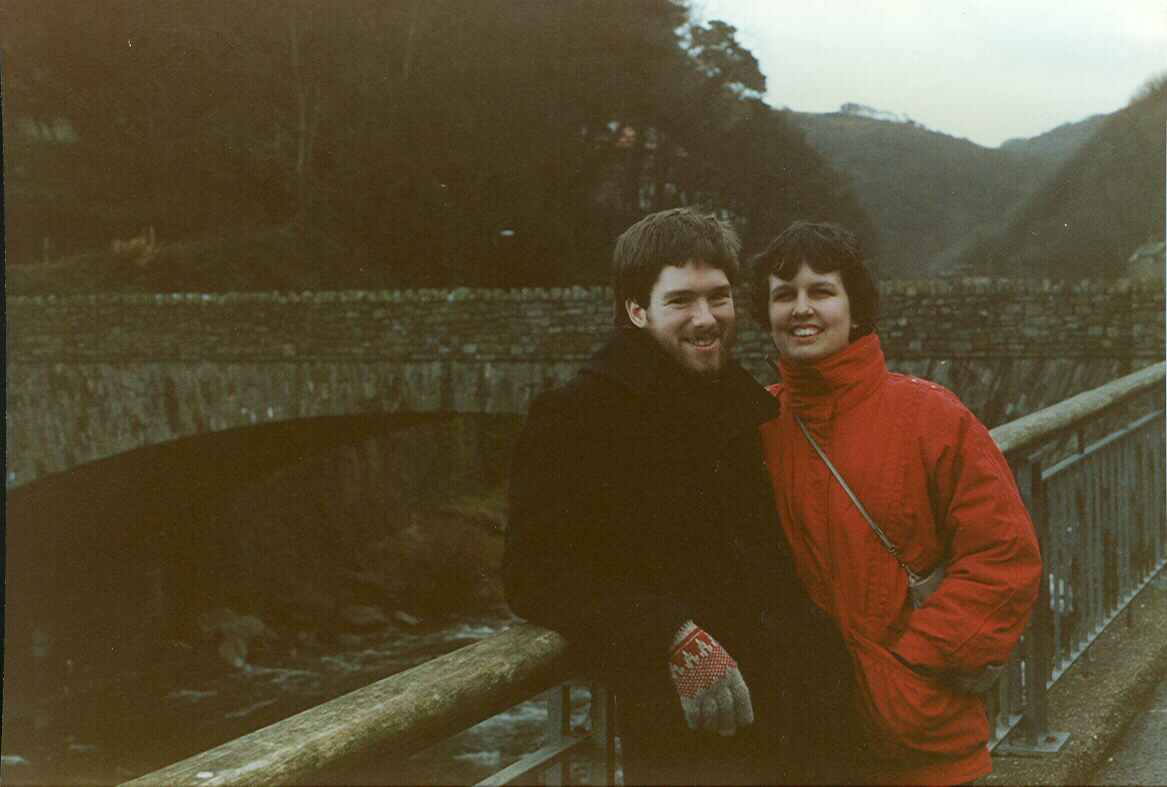
“He has also set eternity in the human heart,” old Ecclesiastes lamented at the end of the most famous passage in his book, noting that it is nevertheless impossible to conceive. We mark the passing of time in centuries. I suppose we like a good round number, but it is also a convenient frame since few of us make it much beyond the century post, so we can keep it in our eye as a reminder of how long we might have left. Life has held more fear for me than death, so I approached and passed my fiftieth birthday without much anxiety. When it comes to others, however, the caviler perspective soon fades. Centuries are important. And so are halves. And so are quarters. At twenty-five the world stretches endlessly before you. But to what have we really committed to twenty-five years? How much have we changed in that time? Today is my twenty-fifth wedding anniversary. The “silver” anniversary they call it. Although I’m not much of a Hallmark kind of guy, the fact that one woman has put up with me for a quarter century continues to amaze me, and we had made plans for a grand celebration. Then Routledge slashed my job. Fortunately, Oxford University Press came to the rescue.

Ah, but with provisional requisites. You see, I had saved a week’s worth of vacation so that I might spend my anniversary at home (or on a little trip) with my wife. Publishers do not get the week between Christmas and New Years’ off. While our academic counterparts are sleeping late and spending time with their families, we’re rising early, commuting into the City, and sending emails that won’t been seen for a few weeks at least. Business rules. Routledge took away my accumulated vacation days, carefully squirreled away during the long year, and since I’m a new hire at Oxford, I haven’t earned any vacation yet. Twenty-five years, and I can’t even give my wife a day. Silver in a world defined by gold. It’s not easy being married to me.

I began work at age 14. With a single exception I have never quit a job. I am a very hard worker and I have never had a performance review that did not say as much. Since Nashotah House set about ending my academic career, I have suffered through three dismissals, all following very positive reviews. You may be forty, forty-five, or fifty, but you are starting over again. Bottom of the pay scale, bottom of vacation days earned. Child in college and eternity in your heart, you have to watch those pennies and be to the office on time. Nobody’s stopping you from going to a nice restaurant (as long as it’s not too expensive), but the bus will drop you off about 7 p.m. and you’d better be asleep two hours after that so that you’re not groggy at work the next day. My old friend, Ecclesiastes, you are wiser than your years. And Kay, thanks for an amazing quarter century. I know of nobody else who would’ve put up with it.

A young couple's anniversary in Wales.

A young couple’s anniversary in Wales.


Believe Eve

While NORAD has already begun to track Santa with DSP (Defense Support Program) satellites, and last-minute shoppers are being bombarded with Christmas carols to cinch out that extra dollar or two, it may be odd to consider the music Sine Nomine by Ralph Vaughan Williams. Better known as the music of the stirring hymn “For All the Saints,” Sine Nomine (“without name”) is some of the most inspiring music of the liturgical year. I remember a friend once leaning over after the hymn and whispering, “hard to believe it was written by an agnostic.” Vaughn Williams was an Anglican agnostic. At this time of year his piece “Hodie: A Christmas Cantana” may be heard in the households of anglophiles around the world. “Hodie” (“this day”) is an anthology of poems set to Vaughn Williams’ music. One of the poems, “The Oxen,” was written by Thomas Hardy. I really never paid much attention to it, until my wife pointed out the words and the liner notes by Alain Frogley on our CD of “Hodie.” Hardy’s poet recalls believing in his youth that oxen kneeling (as oxen do) was a reverential act on Christmas Eve. Now as an adult, the poet writes that if someone should invite him to see the kneeling beasts, “I should go with him in the gloom, hoping it might be so.” Frogley’s notes point out that Thomas Hardy, like Vaughn Williams, held a “complex agnosticism.” It is not the solid rejection of the divine that is all the rage these days, but a difficulty in believing something that is hard to let go. And Santa flies over Russia.

Faith can be a many faceted stone. We keep the myth of Santa Claus alive for our children, thinking it merely harmless fun. Then comes the moment of truth. Some prescient children at that point begin to extrapolate: what else have you been telling me that isn’t real? That the creator of an infinite, but expanding universe took time out of a busy schedule to be born in a cattle stall in Bethlehem two millennia ago? That a government might turn on its children and kill them rather than face a challenge to literal, kingly authority? That emissaries from the Middle East might come with rare and precious gifts? That Santa visits that homeless man I saw curled up on a corner of Seventh Avenue last night under a black umbrella as chilly rain pelted New York City? So much to believe!

Screen Shot 2013-12-24 at 6.59.21 AM

I once held a secure job in an anglophile seminary. The music of Vaughn Williams was often heard to echo through St Mary’s chapel, and many myths were propagated. Standing out under a frigid, clear Wisconsin night, it was almost possible to believe that Santa was up there somewhere, being tracked by North American Aerospace Defense Command. Yes, the oxen would be kneeling on such a night. This morning before dawn, I glanced at NORAD’s page. I saw the words “Secret Santa Files” and my mind flew to NSA. A government that keeps track of our personal emails and private phone calls even holds secret files on fictional characters whose motive nobody ever questions. Truth in advertising indeed. So, on this Christmas Eve, I imagine myself out among the free range cattle and sheep of first century Judea and there I happen upon two shivering artists in the dark, huddled around a campfire while others claim they hear angels singing. Vaughn Williams and Hardy exchange knowing glances, and Herod prepares to roar his decree from his one-percenter throne.


Unusual Thanksgiving

Believe it or not, preaching was once part of my job description. At Nashotah House all faculty were called to the pulpit, ordained or not. Falling into the latter camp, my obligations were generally held down to once a semester. My first homily, focused on the lectionary readings for the day, was about the problems of social inequality. Afterward the senior faculty member came to me in the vestry and said, “It has been a long time since I’ve heard the social gospel preached from that pulpit.” This little incident came to mind as I was reading a CNN Belief Blog story my wife pointed out to me. The article highlights some of the provocative comments by Pope Francis in his recent document Evangelii Gaudium. Francis, in a startlingly refreshing vein, suggests that the church must get back to basics. Human basics. I agree with those who say the church has not gone far enough on gender equality, but the idea that the cut of your surplice demands more divine attention than the homeless and starving has got to go.

At Nashotah House many students who wanted to be Catholic priests but also wanted to be married (the flesh is willing, but the spirit is weak) had Pope cards, rather like baseball cards, in their chapel stalls. This was in the era of the great conservative John Paul II, affectionally known as J2P2 in the theological ‘hood, when men ruled and a congregation might split over the use of a maniple. The gnat-strainers were clogged in those years. Camels fled for their lives. I wonder what these priests now make of the very head of their favorite chauvinistic church stating that even the papacy itself must change. I keep wondering when Pope Francis will have his accident, or unexpected heart attack or stroke. As the Belief Blog makes clear, not all appreciate the challenge to the status quo. There is too much power at stake.

This Thanksgiving, this old Protestant finds himself unaccountably thankful for a Pope that is willing to start turning things in the right direction. It will take decades, if not centuries, before the church can possibly catch up with the realities faced by the vast majority of the powerless, disenfranchised, and the needy. These are uncomfortable realities. When I saw a picture of Pope Francis laying his hands on a badly deformed man during a service in Rome a few weeks back, I could almost believe that someone was taking the message of Jesus to heart. That message was, and is, a radical one. We only have all-male disciples because we can only count to twelve. And we tend to forget that just about all of those guys were working-class slobs. Maybe if we could really be thankful for the gift of people all of this might just come to mean something significant after all.

Photo credit: Tomaz Silva/ABr

Photo credit: Tomaz Silva/ABr


Some Baltimore Lessons

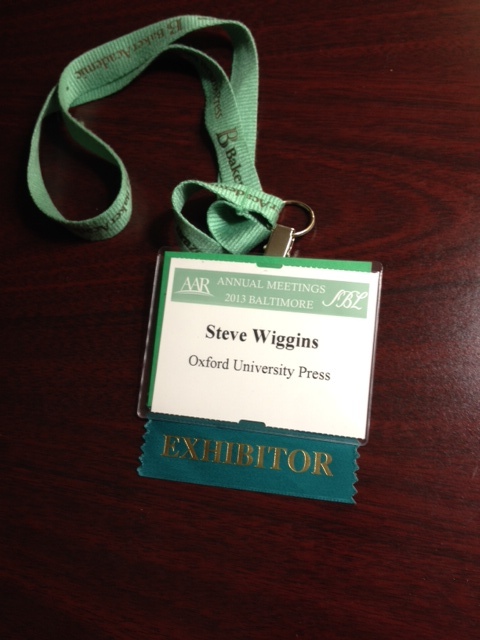
As someone who hovers around the edges, perhaps I’m preoccupied with perceptions. I have been attending the American Academy of Religion and Society of Biblical Literature annual meeting regularly since 1991, with a few years off for bad behavior. Usually it is held in a colorful US city that can afford to have a myriad of religion scholars show up all at the same time. I have noticed, over the years, what a conspicuous lot we are. As I drove into Baltimore, for example, I could tell who the locals were right away. They fit their environment. When I reached the medical area near one of the large hospitals, the people were wearing scrubs and white coats. I could navigate to the convention center by following the bearded, tweeded, and professionally dressed feminine to where the specialists in arcane subjects gather. We rather stand out. The funny thing is, once you get us together, we don’t always have a lot in common.

I used to teach, and as a teacher you run into this strange contradiction of roles where you are expected to keep your expertise up-to-date, to entertain students in the classroom, and to write books and articles in your spare time. I excelled at this and found my niche for a while. The beard I already had, but the look had to be acquired. Tweeds were not difficult to locate in Scotland, and so I returned to the States with the image already down. At Nashotah House, I recall many students complaining about the rules that forbade wearing a “seminarian collar.” Yes, even priests have a guild. A seminarian collar looks like a Roman collar, only it has a dark vertical stripe in the middle to warn the penitant that this is not a full-fledged priest and confessing your darkest deeds might not be a good idea. Don’t buy any wafer’s s/he’s selling. Their complaint was that to learn the role you have to dress the part. The administration at the time had rules against it. Confusing someone for a priest can have serious consequences. (Never mind that on a campus with at most 50 students everyone knew everyone else by name and habit.)

So I sit in my car at the stoplight and watch the academic parade. In this crowd there are people with god-like status in the academy, but whose names would mean nothing in even a highly educated household. The metaphorical Red Sea of scholars in the bookstalls parts at their approach. On the street corner they look lost. To the locals it is obvious that a horde had descended upon the town. Many forget to remove their name tags, announcing to the secular world that there be giants here. But they are shivering giants, as if they might’ve forgotten to pack a coat and the wind sure is chilly for this time of year. I suppose I must look like one of them myself. After all, I’m trying to turn the wrong way on a one-way street again.

Am I that obvious?

Am I that obvious?


Oxford’s Hire

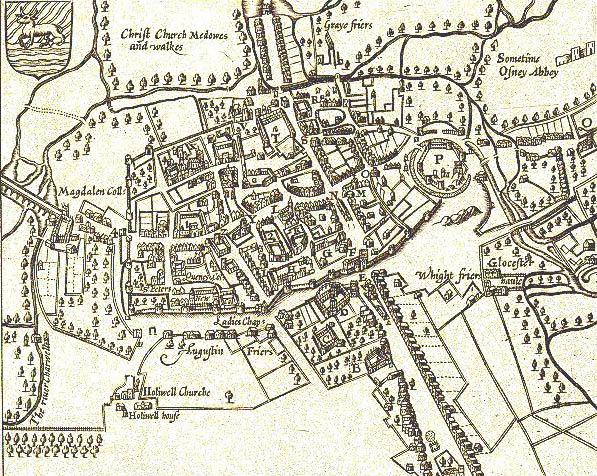
In 1478 the first book printed in Oxford heralded the eventual founding of Oxford University Press. Just two years earlier Vlad III, the Impaler, had been assassinated. In 1478 the Tribunal of the Holy Office of the Inquisition was established in Spain. Just over a century earlier, the Black Death decimated the population of Europe. Things looked a bit dark at that time. Nicolaus Copernicus, however, was five years old in 1478 and the Enlightenment was just around the corner. The printing press had been, well, hot off the press for just a couple of decades at the time. The University of Oxford had been around for nearly four centuries already, making it one of the oldest and most prestigious centers of learning in the world. Oxford University Press early on began the business of printing Bibles and shedding light on a world where things were somewhat dim. Progress often brings misery with it, but the idea that a literate public stood a better chance of improvement bore an optimism that has occasionally been realized, even in free market times. I’m very glad for Oxford University Press.

These are among my thoughts as I prepare for my first day as Associate Editor for Bibles and Biblical Studies at Oxford University Press. It is a heady sensation. Bibles were among OUP’s first printing projects. As part of an increasingly secular society in an increasingly religious world, I’m aware of the power the Bible has had and still has. Love it or hate it, it has shaped this thing we call modern culture in ways both profound and facile. The opportunity to work in this division is sobering. A little unnerving, even.

John_Speed's_map_of_Oxford,_1605.

Ironically, my career has largely been Anglo-oriented. Perhaps it is because those based in England appreciate the solidity of a degree from Edinburgh University, although this is only speculation. Nashotah House was a profoundly anglophile institution, at least once upon a time it was. The founder of Gorgias Press had studied in both Oxford and Cambridge. Routledge is a British-based publishing house. Ironically, British culture is not as prone to Bible-reading as that of the United States. My jobs, which have largely focused on the Bible, have been British-oriented. I try to add it all up but get lost in the midst of the numbers. Call it first day jitters. Twenty-five years ago at this time I was preparing to get married and to move to Scotland. Little did I suspect that a quarter-century later I would be coming back to an ancient university of the United Kingdom again.


Personal Dogma

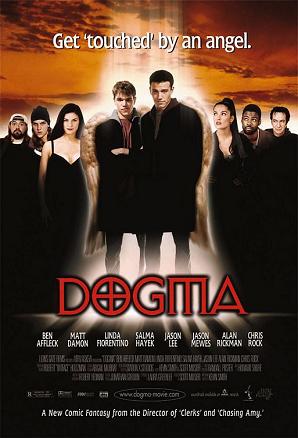
Dogma is a movie that many seminarians discover at some point in their theological education. Smart, funny, and irreverently reverent, the film follows the exploits of a couple of misled angels trying to get back into Heaven and thereby negating all of existence. It is no surprise, given Kevin Smith’s origin myth, that the film opens and closes in New Jersey, but I often ponder the strange coincidence of places in the movie to places I’ve lived since my own seminary career began (and ended, rather like the massacre scene in Red Bank before God cleaned it all up). Nashotah House, where I discovered Dogma, is in Wisconsin. Wisconsin is the state to which Bartleby and Loki, the two angels, have been banished. The means of their escape from this upper-Midwest purgatory is a church in New Jersey. Along their way the angels pass through Illinois and Pittsburgh, before crossing into the very state where God is located throughout the movie (the Garden State, of course!). After having been summarily dismissed from my seminary post in Wisconsin (not for watching Dogma, I’m assured), I too headed for New Jersey. Before that I had lived for a while in Illinois (home of Bethany) and Pittsburgh (home of Moobie). Watching Dogma is in many ways a reflection of a journey that I’ve accidentally undertaken.

YEE.tif

Another kind of dogma seems to be at work in the Eagle Mountain International Church in Newark, Texas. The Associated Press announced that 21 cases of childhood measles had broken out in the church, particularly among the homeschooled and unvaccinated. Fears of inoculating against a pre-medieval faith have led many of those who trust their own knowledge above that of the collective specializations of educators, to put their children at risk for the sake of belief. The belief, perhaps unsurprisingly, is poorly informed. One of the pastors of EMIC (!) has been encouraging vaccination as biblically sanctioned. If not for the sake of your children, for the sake of the scriptures…

Vaccination, in various forms, was developed in both Christian and pagan contexts. The earliest examples come from Asia where the plagues sent by the devil were resisted with human ingenuity. It takes a paranoid twenty-first century, first-world faith to suppose saving our children is some kind of conspiracy. “Let the one without germs,” we can almost hear them say, “throw their tissues away first.” In my Pittsburgh days, I was very much a literalist. How surprised I was to see Lady Aberlin from Mister Roger’s Neighborhood playing an angst-ridden nun, derailed by an exegesis of “The Walrus and the Carpenter” in Dogma. Although the Neighborhood is “anytown” those of us locals knew that Fred Rogers was from Pittsburgh. Lady Betty Aberlin was the niece of King Friday XIII, and only those with no conspiratorial imagination would suggest it is merely coincidence that her cousin is named Kevin. With or without dogma.


Class-less Society

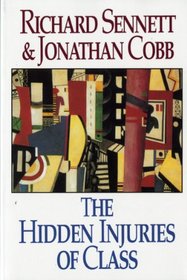
HiddenInjuries Dated, yet still relevant, The Hidden Injuries of Class by Richard Sennett and Jonathan Cobb brings to the limelight that which much of the world wishes to ignore. At least the affluent world. The very concept of “class” has a dangerously tilting effect on human society. That which is “valuable” is only so by common consent, and those who have more of it inevitably raise themselves above those deprived. In a world where food is scarce, bread becomes currency. The trick to any unequal society is declare an arbitrary standard of value that some may horde while others strive to attain it. We are largely content today to work for money we seldom physically see. We are employed at professions assessed by their value to the “owners” of companies who frequently misunderstand that ownership to include the lives of their employees. And that’s just the middle class!

No doubt, living standards for most people have improved in the decades since Sennett and Cobb produced their study, but the base root of the problem still projects out far enough to be tripped over repeatedly—lack of a sense of personal worth. The working poor have always striven for dignity, a sense of worth. I found much in this book that rang true for my personal circumstances. The Hidden Injuries of Class is based on interviews with workers, some of whom “changed classes,” working from blue collar to white collar positions. Validating my experience, the sense of self-worth among those who’d thus advanced did not keep pace with their class expectations. Those of us raised in the working-class world know our place. Yes, we may learn to act like those middle class, and sometimes privileged workers around us, but we know deep down that we came from humble stock. We sit at desks in offices, knowing that we belong behind a broom or holding a shovel. Not a day elapses when I don’t ponder that I’m a drone a little too deep into the hive.

Any society requires those who are willing to do the less-than-desirable jobs. It will take more than reality TV to add dignity to the personal assessment of such workers, however. Although I’m not a TV watcher, the times I view reality programs that highlight the “ordinary people” we come off looking like the unsophisticated rubes of the affluent imagination. Duck hunters may laugh all the way to the bank, but when you’re off camera a different reality, I’m sure, takes hold. We are entertained by the antics of those who don’t know how society folk behave. In my limited experience I went from janitor to academic dean of an Episcopal seminary where Archbishops of Canterbury were not rare visitors. Literal lords of the realm sat at the same dining table that now holds the peanut butter that comprises my lunch each day. I can act polished with the best of them, but I know once they leave I’ll again become the kid who grew up among junk cars and working-class prospects. And I know which is the more authentic life.


Christian Rocks

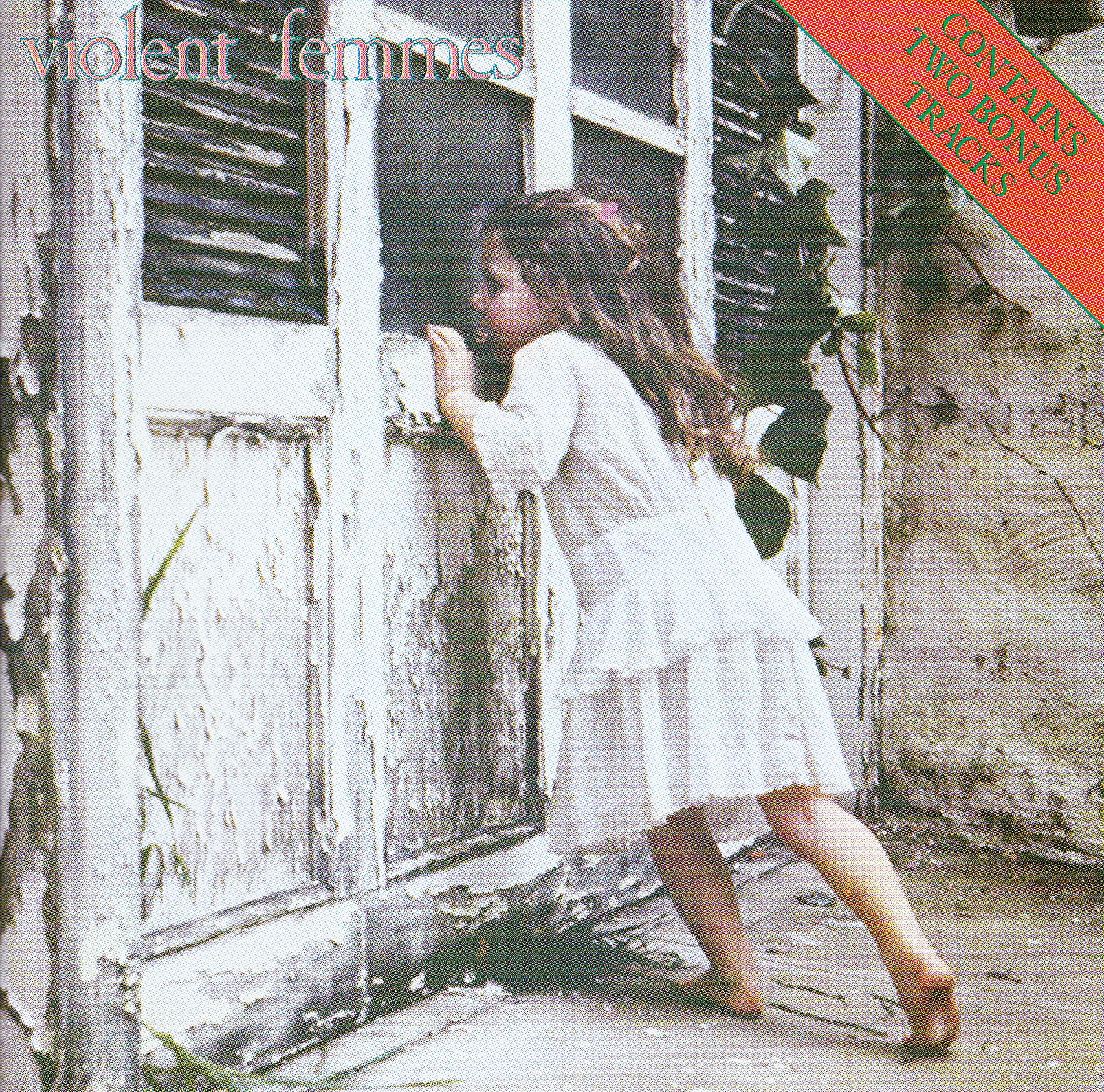
ViolFemsSitting in traffic outside the Lincoln Tunnel, I see that the Violent Femmes are coming to town. The billboard sends my mind spiraling back to college, when the Violent Femmes had released their debut album. Not that I ever listened to it (then), but in the fervently evangelical atmosphere of Grove City College, many students rooted and grubbed for any whiff of esoteric Christianity in a culture on the—pardon the genre-switch—highway to Hell. Rumors abounded that the Femmes were covert Christians, just like another up-and-coming band called U2. Not only the Femmes were violent—reaction to such Christianizing assertions was as well. I remember one of the dorm-mates in my housing group getting into a shouting match that U2 was not a Christian group and slamming his door to sulk, literally for hours. This was important stuff. We were Christians in an underground world.

Of course, some of us knew that Gordon Gano clearly betrayed the influence of Larry Norman in his voicing. And there were rumors and rumors of rumors that the Violent Femmes were coming out with a Christian album, despite the popularity of “Blister in the Sun,” the homage to masturbation that raised the group to stardom. This rumor turned out to be partially true, as Hallowed Ground took on spiritual themes, a little bit country, a little bit soul. There was some tension in the group as Gano’s lyrics began to suggest something more overtly Christian. All of this was going on long before I discovered the Femmes. At Nashotah House I taught a guest lecture on Christian themes in rock music. I researched the Violent Femmes and found that I liked their sound. They made the cut for the lecture.

In a culture as deeply steeped in the Bible as ours, it is difficult to avoid Christian imagery altogether. The Femmes were from Milwaukee (not far from Nashotah House, as the raptor flies), the heartland where beats the pulse of unadulterated religiosity. Even Iron Maiden, after all, had released the platinum album The Number of the Beast. And David Buckna points out in a recent MuseMash post, that even Ozzy Osbourne has some religious aptitude. (I always thought there was more going on in “Iron Man” than meets the ear.) This may all be chalked up to cultural Christianity—there need not be too much conviction here. Those who feel oppressed, however, huddled together in their evangelical college dorms, will always suspect that there is something more beneath the surface that makes even the “Prince of Darkness” the bearer of light.


Bonnie the Brave

As a preemptive warning to my regular readers (am I’m sure you both know who you are), I am off today for a stint in my old haunt of Scotland. Before you get out your congratulations, be advised that this trip is for work. The Society of Biblical Literature, in addition to the big meeting about which I sometimes post, holds an international meeting every year. Since my employers frequently want me out of the office, I am being sent to the fair city of St Andrews in the kingdom of Fife for a week. Although I studied across the Firth of Forth in the wondrous town of Edinburgh, I ventured to St Andrews a time or two during my postgraduate days. By that time anyone in tune with popular culture had seen Chariots of Fire, and it was almost a requirement of credibility to visit the famous beach on the North Sea where the actors iconically ran as the movie began. And as in Chariots of Fire, I’m not sure that wifi access will be readily available. Should I find access, I shall gladly update my blog with my customary observations. If I fall silent, you’ll know why.

Scotland had a tremendous draw for me as I was contemplating where to complete my studies of religion (as if one ever can). Not that I was Presbyterian, and not that I have Scottish ancestry (although Celtic is represented in the Irish stowaway on my father’s side a few generations back)—it was the antiquity that drew me. One of the mysteries, to me, of new religious movements, is how people can believe in a religion that recently began. Should there be a supernatural, I’ve always supposed, and should that supernatural be concerned that humans have the truth, why wait so late in the story to start? It was such thinking that drew me from Methodism to its estranged parent, the Episcopal Church. Among the Episcopalians are many who argue for a continuity with the Catholic tradition, separated, literally, only by a matter of divorce. And Catholics go back to Jesus himself, a member of a religion so old that even the Romans grudgingly respected it (Judaism). I guess I’m guilty of old-school bias.

Kim Traynor's Edinburgh, from Wikicommons

Kim Traynor’s Edinburgh, from Wikicommons

So it was that I came to spend some years among the Presbyterians at Edinburgh University. The Ph.D. that I earned there translated to an unfortunately brief career doing what I’m best at—teaching. My tenure at Nashotah House never offered the opportunity to travel back to Scotland, or even England with its Anglicans. And as I prepare to board a plane across the Atlantic, although strictly for work, I can’t help but to reflect on those years of intensive learning, hoping to do my Scottish alma mater proud. And returning to the States to have my career shipwrecked on the rocks of unforgiving religious dogma. It may be that once I’m back among the heather and thistles, I may cast my laptop aside and try to claim religious asylum in a past that I can only see through rose-coloured glasses.