Life Semesters

Some people have a school calendar in their blood.  For me, that was one of the great appeals of the teaching profession.  I worked a lot during summers—class prep and research take a lot of time and the two go naturally together.  I didn’t mind the ten hour days, and more, during the semester either.  When you’re doing something you love, you become your job.  It was quite a shock when the job counselor at the University of Wisconsin Oshkosh told me that I had to separate myself from my job.  The two were one.  I would sit in that Oshkosh office researching for classes I’d never taught before.  My first year at Nashotah House I was writing 90 pages of class notes per week.  Anxious, but loving it.  There was so much to learn!  But that calendar has some natural breaks.

Academic careers involve sprinting that goes on for about four months straight.  Then you get a break of a month or two before sprinting again.  For those of us with my mental condition, that way of living just fits.  The 9-2-5 job is parsimonious second-pinching.  I’ve talked to other professionals in the field and they say the same thing—when your job involves thinking, there are no such things as fixed hours.  When I’m out on my jog before work and my mind comes up with a solution for that intractable problem that awaits me once I fire up the laptop, I’m working.  It’s just not “on the clock.”  It’s gratis.  Part of the problem is I don’t cotton onto sitting in front of a computer all day. Being “in the office” ironically hurts productivity.  In the teaching world you walk around and talk to people.  Summer days are spent with your nose in a book.  What’s not to like?

Not everyone, I know, is stimulated by that kind of lifestyle.  For me, it just works.  Some years I’m able to carve out a week’s vacation in the summer.  I try to save up enough vacation days, however, to get the week between Christmas and New Year’s off—a mini semester break.  When a person’s mind works in a certain way, finding employment that coincides with it is important.  Many people like the structure of a work day.  It tells you when to sign in and when to knock off.  It tells you when to eat lunch and when to take breaks.  Others prefer alternative work arrangements.  The 9-2-5 has never sat well with me.  It’s because the school calendar is in my blood.


In the Air

It’s a strange but strong connection.  Between Halloween and me, that is.  I’ve always loved the holiday.  I don’t like being scared, however, and gory horror movies aren’t my favorites.  Still, I’m not alone with my fascination.  Lesley Pratt Bannatyne has written a couple of thorough books on the holiday.  Halloween Nation: Behind the Scenes of America’s Fright Night looks at various aspects of Halloween as it’s celebrated in America.  It’s both an imported and exported holiday, of course.  The raw materials came in mostly from Celtic countries—Ireland in particular—and got mixed in with other traditions here before being sent out to the rest of the world as it’s now known.  The thing about Halloween, or any holiday, is that it’s impossible to capture all of it in a book.  Halloween has many associations and a good few of them are explored here. Halloween’s in the air as retail stores know. So let’s take a look.

Bannatyne’s chapters on ghosts, witches, and pumpkins are particularly good.  The pumpkin connection, which is an American innovation, is particularly telling.  It’s been a few years since I’ve carved a jack-o-lantern, but it is one of the fond memories of childhood.  The challenging orange palette that has a wonderful evocative smell and feel.  Bannatyne gives good information about pumpkins and how they’ve become central to the holiday.  Indeed, the symbol that gives Halloween away is the jack-o-lantern.  I found many little gems throughout the book.

Halloween Nation is amply illustrated, in full color, no less.  Bannatyne has a good idea of what Americans do for fun.  Capturing the fulness of the holiday in one book may be impossible, but here you’ll have tours of zombie walks, fan conferences, the Greenwich Village parade, over-the-top haunted house attractions, naked pumpkin runs, and pumpkin beer breweries.  You’ll learn about the history of trick-or-treating and how grown-ups came to embrace what really took off as a day for childish pranks.  Halloween is an expansive occasion.  Holidays also have their own local flavors.  My early memories are of small town celebrations where even poor folk like us could join in the fun.  Nashotah House, for all its problems, did Halloween well when I was there.  To really do it right takes time that seems difficult to come by these days.  It’s just as easy to cue up a horror movie and promise to do better next year.  Still, every year I hope to cut through the jungle of obligations and give the holiday its due.  It’s usually a work day (Tuesday this year), but at least now I’ll be better informed about what I wish I were doing instead.


Seminary Daze

It’s surprisingly easy to throw away an expensive career that once held much promise.  It really involves just a two steps: spend thousands of dollars earning a Ph.D. in religious studies, and take a job in a seminary.  It’s disheartening to watch colleagues going through this as seminaries contract, then close.  I know how it feels personally.  You’re suddenly aware that your years and years of training have made you practically unemployable.  If you do find a job it won’t pay as well.  Chances are you won’t enjoy it either.  Having taught in a seminary will mark you in academia as one of those “uncritical believers,” and, well, nobody wants to touch one of those.  While I would’ve taken a regular seminary job after my doctorate, my wife remembers me lying awake at night asking “Am I cutting off my career if I take a job at Nashotah House?”  The answer: yes.

I’ve been watching colleagues have their worlds torn apart as seminaries try to figure out how to stay open when institutional churches are dying.  Megachurches don’t require a seminary degree to run—natural grifters do it quite well with no advanced education, thank you.  But mainstream churches have been losing members, and therefore financial support, for years now.  And seminaries supply a commodity no longer in demand.  This may have been a trend when I started out back in the eighties.  If so, nobody told me about it.  I walked into this career naive and came out jaded and cynical.  My motives were to help other people.  It’s getting harder and harder to find jobs where you do that any more.  At least while being able to keep body and soul together.

Thing is, it takes years to earn the degrees you need to teach in a seminary. You have to think ahead.  When I started out, trends suggested a huge glut of jobs in the teaching market.  That never panned out, of course, as human predictions seldom do, and the decline in jobs has been pretty steady over the past thirty years.  Back in the eighties seminaries were doing okay.  Growing, even.  I do hope it didn’t have anything to do with me, but I hit this surprisingly fragile market at just the wrong time.  After having been overboard without a life preserver myself, it pains me to watch colleagues facing the same fate themselves.  Religion hasn’t disappeared—it’s simply taken on new forms.  Those forms don’t require seminary. Those of us who followed the rules on how to teach religious studies, however, somehow find ourselves in disposable careers.


Here and There

There’s nothing like forgetting to make you remember.  Although we could scarcely afford it, we made many budget trips once we moved to New Jersey from Wisconsin.  As a family we used to keep detailed travel logs and we’d type up the results so that we could remember our trips.  For some reason, drifting about after losing a career, I stopped taking such notes.  Fortunately our digital camera time-stamped the photos.  I spent months organizing them only to have the external hard drive on which they were stored fail.  I’m now getting around to piecing together a bit of a chronology.  “Blog” was originally a portmanteau for “web log,” and since I’ve had no instruction on how it should be done, I mix an actual log with mental musings.  I’ve been doing so daily since 2009. Results may vary.

This blog has helped me keep track of travel, but those hazy days after the Nashotah House incident in 2004 up until blogging in 2009 remain undocumented.  Looking at the time stamps on those photos, it’s clear we traveled quite a bit.  Of course, New Jersey is a somewhat of a feast and it’s within easy reach of quite a few fascinating places.  Even a weekend was enough to explore someplace exotic, relatively local.  We used to make literary road trips on Memorial and Labor Day weekends.  Sometimes even later into the season.  Somewhere in that fog we made road trips to Maine, Connecticut, and upstate New York.  And although I grumble about technology sometimes, were it not for those digital timestamps the dates would be lost forever.  Of course, if we’d kept up our travel notebook…

As an historian, looking back comes naturally enough.  Gorgias Press downsized in 2009 and for a couple of years I made a living as an adjunct professor.  Even so, we managed a few trips (some of them mentioned on this blog).  Things must’ve been less expensive then.  Or else having a mortgage changes your perspective (the roofers are coming yet again this summer).  And the pandemic kept us at home for three years.  Whatever the cause, the urge to stretch wings and see new places remains.  Of course, it’s important to recollect where you’ve been.  In the meantime, I’m trying to piece together what happened those first few years in New Jersey.  That’s the historian’s task—putting together the events of the past from bits of evidence.  It’s pretty clear why historians get excited when they have diaries or notebooks from which to work.  We are, after all, the historians of our own lives.


Private Therapy

A friend recently introduced me to the YouTube channel, Cinema Therapy.  While I had some vague notions already that cinema therapy was “a thing,” I had never looked into it.  This was so, even while consciously knowing that I use movies that way.  Most of what I’ve seen on the YouTube channel has been about Disney/Pixar movies, especially those that tug at emotions.  These have never been my favorite movies since I have unresolved issues from childhood.  Still I learn a lot from watching their analyses.  It can still be difficult to watch these films, though.  As a family we recently rewatched Finding Nemo.  It struck me pretty hard how growing up without a father figure left me the anxious, quivering mess that I often am.  I prefer movies where I can find a father, no matter how odd the choices may be.

Photo by Denise Jans on Unsplash

In fact, in my own form of cinema therapy, I use horror films.  (Even the YouTube channel parses M. Night Shyamalan.)  Part of this is clearly because such movies take me back to my childhood.  I’m not sure why I found monsters so comforting, but I did.  We had no father and I latched onto the strong men—particularly if they didn’t smoke or drink—that dominated movies  (it was the sixties, after all).  Somehow I felt that this made the world seem alright.  Or a little less scary.   I didn’t understand the biology of parenthood, I just knew that I needed a man in the family.  One who would protect me and show me how to be a man.  Well, that never really happened.  My step-father was verbally abusive and I seemed to be his special target.  I watched horror and listened to Alice Cooper.

Sublimation, in psychology, is where you put difficult feelings aside, acting as if everything’s normal.  I did that for many, many years.  College, seminary, doctoral program, full-time professorate.  Then it all broke down.  After the tragedy at Nashotah House, I found myself watching horror movies again.  It took about a decade of doing that to realize that I could write books about the connection between religion and horror.  With three published (the third about to be, actually), I have a fourth nearly finished.  The writing is therapeutic as well.  I have to wonder, however, if these Pixar movies that are so painful for me to watch are really helping me.  I don’t always feel refreshed afterwards, as I do when I see a good horror movie.  (Bad films are their own kind of therapy.)  I’m an amateur psychologist (no license), with a most intractable client (myself).  My way of dealing with him is to watch horror and call it therapy.


Optimism

On the homepage of my website (of which this blog is a part) is the statement that jaded optimism lurks here.  I’ve been thinking a lot about optimism and hope lately.  Trying to change the way you think is difficult.  Musing with my wife the other day I realized—and this should’ve been obvious—that my optimism became “jaded” when I lost my job at Nashotah House.  You see, our lives have been uncertain since then.  The steady income of an academic job with a retirement plan, a future mapped out (at least a little) with summers free for research and travel, the flexibility to have time to contemplate; all of this fits my neurodivergent way of thinking.  Having suddenly to cope with finding an apartment, finding jobs (not vocations), losing retirement options, all of this has led to a turmoil that has lasted going on two decades now.

I need to challenge my jaded optimism into becoming real.  I keep coming back to Mark 9.24, “Lord, I believe; help thou mine unbelief.”  I’m not a materialist, although academia led me close to it a time or two.  The universe, however, is an untamed place.  We don’t know the trillionth of it, let alone the half.  We’ve figured out a good bit of the physics of this world and think that it applies the same everywhere in this infinite, expanding space-time.  Then we discovered quantum physics and quantum entanglement which looks more like religion than science.  It seems to me that optimism—hope—lies in a combination of what science tells us and what is traditionally called religion tells us.  You may call it “belief,” “intuition,” or “hope.”  Yes, when Pandora’s box was opened, only hope remained.

John William Waterhouse, Pandora (1896), public domain, via Wikimedia commons

There’s a parable in the story of Pandora.  As told by Hesiod, Pandora’s jar contained the gifts of the gods which escaped when Pandora opened it.  Thereby evil entered the world.  Yet one gift of the gods remained for humankind, and that was hope.  Arguably the most valuable gift of them all.  I have been letting my career malfunction at Nashotah House dominate and drive my outlook for far too long.  It will never cease to hurt, I know, but it’s time I learned the meaning of what the Pandora myth teaches us.  Myth, please understand, functions like religion.  It provides insight and guidance.  And the tale of Pandora, especially when things turn unexpectedly frightening, reminds us that hope is the only necessary gift of the gods.


Miracles

“Expect a miracle,” Oral Roberts used to say, “and a miracle is yours today.”  The famed Evangelical probably didn’t have Catholic-variety miracles in mind, although a story on the Catholic News Agency does.  Miracles come in big and small varieties.  In case you’re feeling encrusted in materialism, there are plenty of things science hasn’t yet explained.  It helps to have a little wonder in your quotidian routine.  So what was this miracle?  It took place in Hartford, Connecticut.  Specifically, at St. Thomas in Thomaston.  In case you’re not Catholic, or high church Episcopalian, a brief explanation: after the consecration of the host (communion bread), ordained clergy pass communion wafers to those who come forward to receive them.  Believing in transubstantiation, this is done with a great deal of attention to detail.

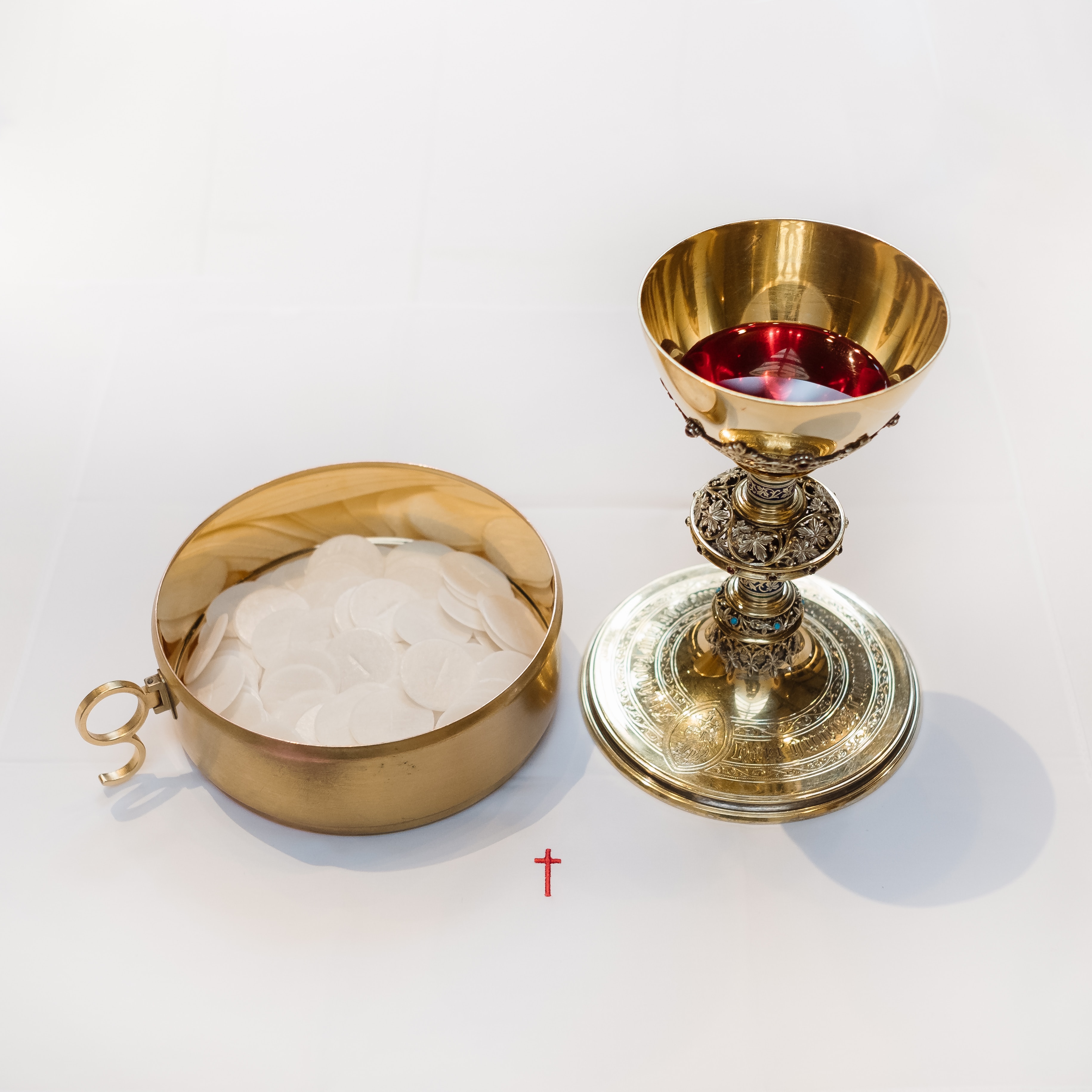
Photo by Josh Applegate on Unsplash

The vessel that holds communion wafers is called a ciborium.  (My years at Nashotah House were good training for this.)   Since consecrated wafers should never be defiled, only a certain amount are consecrated at a time—enough to cover those present for the Eucharist, usually.  Any extras are locked in a tabernacle for future use.  In this miracle, a minister handing out the wafers noticed he was running out.  Believe me, this is something to which clergy pay close attention.  Then suddenly there were more wafers in the ciborium.  A multiplication of loaves, but in much smaller and pre-ordered form.  One child called them, I once heard, “tiny little quesadillas.”  Perhaps a small miracle, but we take what we can get.

A miracle is defined as “an extraordinary and welcome event that is not explicable by natural or scientific laws and is therefore attributed to a divine agency.”  Since we can’t observe all phenomena all the time, they do occur now and again.  What happened in Connecticut?  I don’t know.  No scientist was observing, and no vestment cams were in use.  We have the word of a clergyman with no cause to lie.  Maybe something unusual did happen.  Yet I can hear the evangelicals protesting that if God were to perform a miracle it would have something to do with Donald Trump rather than some popish fetish.  That’s the problem once religions get involved around miracles.  Too much is left to interpretation.  Sometimes I think of the miracle of the sun at Fatima, Portugal.  Or of people miraculously healed from late-stage fatal diseases without medical intervention.  These things happen and when people are pressed for an explanation they tend to turn to the divine.  Perhaps, however, things just aren’t what they appear to be.


Friends and Dreams

The mind is a labyrinth.  Ever since the time change (especially), I’ve been waking with the weirdest dreams.  One involved someone I haven’t really thought about for years.  Someone I knew in college and who was a close friend, but who’s fallen out of touch.  (And who would likely not approve of my evolving outlook on things.)  Why she came out in a dream is a mystery to me.  It does give me hope, however, that all those things I think I’ve “forgotten” are really still in there somewhere.  A friend once told me that it’s not a matter of “remembering” but of “recollecting.”  He claimed that the memories are still there.  Ironically, I can’t recollect who he was, although I think it was someone I knew in college.

My generation’s ambivalent about the internet.  Most of my college friends I simply can’t find online.  I recall one of my best friends saying he would never use a computer.  I suspect he’s had to backslide on that, for work if for nothing else, but he’s not available online at all.  The same goes for people my age at seminary.  Some I occasionally find through church websites, but honestly, most of them have better pension plans than I do and have retired to become invisible.  We children of the sixties are likely the last generation that might be able to make it through life claiming never to have given in to computers.  It took quite a bit of effort to get me over the reluctance.  One of my nieces set up this blog for me nearly 13 years ago, otherwise I’d still be hard to find.

But minds.  Minds can, and do change.  My mind was dead-set against computers in college.  For one class I was required to do one assignment via computer, and I did that task and that task only.  Seminary was accomplished with a typewriter and snail mail.  Even my doctorate, done on a very old-fashioned Mac SE, was purely a feat of word processing.  Nashotah House was wired during my time there, but that was mainly email.  My mind was slowly changing at each step of the way.  I wasn’t becoming a computer lover, but I was realizing that I was learning something new.  Now I can’t get through the day without writing and posting something on this blog and sharing it on Twitter and Facebook.  And checking email—always email—to see if anything important has come in.  And, perchance, someone I had a dream about might actually email me out of the blue.


Silicon or Paper?

Most of us follow blindly through this tech jungle.  We do it, I suppose, because there are rewards for having the world of information and entertainment at your fingertips.  The problem is that the constant upgrades are expensive and as you approach retirement age—even if you can’t afford to retire—you have to keep spending in order to meet your tech needs.  A few years ago I purchased an app because apparently my laptop was running too slowly.  I do tend to have more than one app open at a time, I confess.  Maybe too many.  But apps take up so much operating memory these days that you can either constantly quit and reopen (if you have a mind like mine) or you can upgrade.  And even then you’re not sure of what you’re doing.

I’m old enough, you see, to remember having to load the program you wanted to use via floppy disc when you booted up.  We all assumed the swapping of discs was the price you paid for being able to, say, type a dissertation without using white-out all the time.  Then we started hearing these rumors of an “internet” with “email.”  I found my first (and it turns out, only) full-time professorship via letter.  Delivered by the post office.  A friend wrote to me about the opening and I sent a fateful letter of inquiry to Nashotah House.  The rest, as they say, is history.  I’ve kept much of the paper of those early days.  The movers always complain that I’ve done so, but I’m between worlds.  I was born in a paper world and I don’t trust this electronic one.  That’s why I still buy physical books.  I’ve had too many devices die on me.  And now I keep only one or two apps open at a time, and forget to look at the stuff on the others—I keep them open to remind me.

It is a jungle, this virtual world.  We like to think it’s civilized but what do we really know?  So I deleted the app that pops up telling me that one app open at a time is too taxing for my computer’s memory.  Then I remembered that I pay an annual fee for such annoying reminders.  I had to reinstall and await the notices again.  Yes, some of my files are big.  I write books, and that’s just the way it works.  So I put up with those yappy reminders because, well, it’s better than swapping discs a dozen times just to type a sentence or two when I have time.


Not Over

It’s not over, you know.  Halloween, I mean.  We may have made it through the actual night of trick-or-treating with all of its build-up, but like many holidays from olden times, Halloween was, and still should be, part of a complex of holy days.  People have long believed that something was transitioning at this time of year.  Halloween spun off of its more sacred sibling, All Saints Day.  Before Christianization, Samhain perhaps spanned more than one day.  As a result of relentless capitalism with its parsimonious counting of days off, like pre-conversion Scrooge, has made all holidays one-day events.  Sometimes you need some time to sort out what’s happening and this three-day complex is one of those times.  Día de los Muertos begins today—this holiday’s just getting started.

I’ve frequently suggested to the few who’ll listen that we need to take holidays seriously.  Culturally we tolerate them as days of less productivity.  Who actually gets Halloween off work?  And how many of us work in places where “Happy Halloween” is a regular greeting on the 31st?  I don’t know about you, but in all my Zoom meetings yesterday nobody was wearing a costume.  And yet, at Nashotah House I learned that today is a “day of obligation.”  Attending services isn’t optional (of course, it never was optional at Nashotah).  But this one was really serious.  The Catholic Church moved All Saints Day to November 1 to counter Samhain celebrations encountered in Celtic lands.  People are reluctant to give up their religion, however, and the day before All Hallows allowed for Samhain to retain its identity.  And even today’s not the end of the season.  Tomorrow has traditionally been All Souls Day.  But what company’s going to give you three days off at this time of year? We’re gearing up for Black Friday.

Holidays serve to give structure to the passing of time.  Winter with its privations is on its way.  This autumnal complex of holidays, whether celebrated as Samhain, Día de los Muertos, or Halloween-All Saints-All Souls, reminds us to take a pause and ponder what all of this really means.  And not only ponder, but also celebrate.  Halloween is fun with its costumes and candy and spooky decorations, but it’s more than just that.  It’s a season of existential questions and of preparing for the inevitable cold days ahead.  We ignore such things at our own peril.  There are reasons for holidays, but those who find meaning only in mammon see no reason to offer even one day off, amid a season we most deeply, intensely need.


This Halloween

This year I’ve been making a conscious effort to appreciate autumn.  It’s admittedly difficult when you’re forced to sit in an office, even a home office, for most of the daylight hours five days a week.  (At least I have a window here, which I never had on Madison Avenue.)  Seeing the blue skies and colorful leaves, each individual one of which is a singular work of art, or watching the moody, cloudy skies, I wish for freedom.  Every night before falling asleep, if I can remember to do so, the last word I whisper to myself has been “September,” then “October,” to remind myself of the wonder of this time of year in which I’ve been privileged to live.  Since America is driven by money alone, often in the guise of religion, Halloween is practically over before it begins.  Stores have sold their candy and spooky decorations, now it’s on to the more lucrative Christmas season.

Do we really believe that holidays have any power anymore?  Is Halloween really, perhaps, a time when the veil between worlds is actually thin?  Or have we ceased believing in the other world, the one behind all the money and sham?   Holidays are liminal times.  In an ironic way, it’s my heartfelt appreciation of Halloween that led me to write about The Wicker Man, although it’s set half a year away.  Nashotah House was hardly an ideal place to work, but prior to an administration change, it was the best place I’ve ever lived to celebrate Halloween.  A campus with an in-house cemetery, and surrounded (at the time) by cornfields and woods, was adjunct to really believing.  It was a haunted place.

Out on late nights or early mornings, I often felt it.  Trying to photograph a comet down by the lake by myself, woods on either side, in the total dark.  Or dragging a lawn chair through the trees to the edge of a cornfield at 4 a.m. to try to catch a meteor shower.   Hiding in the graveyard on Halloween night, dressed as a grim reaper to follow the hay wagon of kids that the maintenance director would drive through on that night.  Those memories remain as highlights of my foreshortened teaching career.  Since Harry Potter was in the ascendant, students had taken to calling the seminary “Hogwarts,” and, I was told, I was the master of Ravenclaw.  The leaves, miniature Van Gogh’s each one, are fast falling from the trees.  There’s a decided chill in the air.  Something might, just might, really happen this Halloween.


Old Ghosts

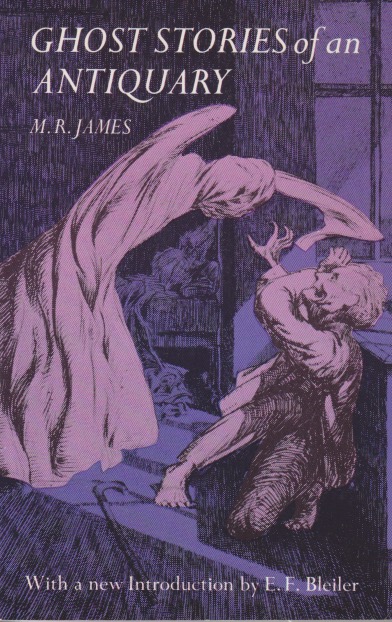
As someone who reads about ghost stories, as well as ghost stories themselves, I’ve long been aware of M. R. James.  His Ghost Stories of an Antiquary is regarded as a classic in the ghost-story genre.  Sometime in the haze, I recollect it was years ago, I found a copy at a used bookstore on the sale rack.  Something I’d been reading about ghost stories lately made me decide to read it through.  Now James was an actual antiquary.  He was also an academic at Cambridge University.  His tales are erudite, generally focusing on some ancient secret that releases ghosts, or sometimes monsters, after the individual who discovers the antiquity.  The stories are varied and inventive, but not really scary to the modern reader.  They assume a different world.  One in which antiquaries were monied individuals—often university men—who have both servants and leisure time, rarities today.

I found myself constantly asking while reading, how could they get so much time off?  How did they access such amenities that they could even get to the places where the ghosts were?  James’ world is both textual and biblical.  It’s assumed the reader knows the western canon as it stood at the turn of the nineteenth century.  The Latin, thankfully, is translated.  James, it is said, was a reluctant ghost-story writer.  A university employed medievalist, he had academic publications to mind as well.  Nevertheless he managed to publish five ghost-story collections.  Clearly the idea seemed to have had at least some appeal to him.

The aspect I find most compelling here is that an academic could admit to such an avocation.  While it’s becoming more common these days among the tenured, I always felt like I was walking the eggshell-laden pathway to academic respectability.  I was, after all, at a small, haunted seminary that few outside the Anglican communion knew about.  It was risky to admit being drawn to anything speculative.  Come to think of it, although I read novels while I was there I don’t recall reading many, if any ghost stories.  It was scary enough to be about on campus at night, particularly if you were going to the shore of the small lake to try to photograph a comet alone.  There were woods punctuated by very little light.  On campus ghost stories were fine—the librarian even showed me a photograph of a ghost in the archives—but off-campus such things could never be discussed.  I was an antiquary without any ghost stories. James showed the way.


Teaching Tradition

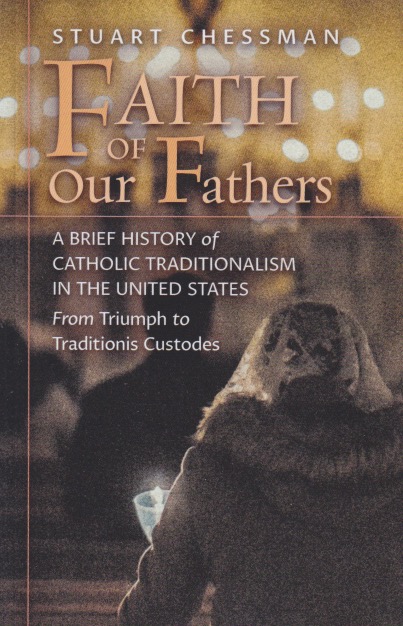
There’s a dilemma.  Many thinking religious conservatives end up arguing against “secular” education and yet wish to make themselves out as rational, and reasonable.  The truth is that underlying their position is the belief that the truth was revealed long ago and nothing has changed since then.  They want educated individuals to agree with this so quite often they establish their own institutions to turn out “experts” who haven’t been challenged in their positions.  This became clear to me yet again when reading Faith of Our Fathers by Stuart Chessman.  Subtitled A Brief History of Catholic Traditionalism in the United States from Triumph to Traditionis Custodes, I was expecting a history.  Instead it is more of a screed, or jeremiad, arguing that the Catholic Church is trying to destroy traditionalism.  What I was looking for, I guess, was a “secular” history.

I’m interested in traditionalism.  I taught, after all, for well over a decade at Nashotah House.  What I learned there I also sensed in this book.  There’s a certain naiveté associated with such theological thinking.  (Political conservatism is much more insidious.)  Small groups tend to think the larger organization has it in for them.  In reality, the larger church (in both these cases) has much more pragmatic things on its collective mind.  The narrow focus of traditionalists, however, interprets everything in the light of—in this case—rejecting the liturgical reforms of Vatican II.  Having the mass in Latin is more important (as is clear here) than coming up with an effective way of dealing with Covid-19.  Traditionalists are proud that they met more frequently during the height of the epidemic.

This kind of thinking is important to understand.  For Roman Catholicism, as a hierarchical organization, the projection of unity is very important.  Anyone involved in the upper levels of any administration knows that money—even for churches, especially for churches—is a major concern.  Reputation influences cash flow, so reputation has to be guarded at all costs.  No organization can appear to be caught up in medievalism in a capitalistic twenty-first century.  I had hoped this little book would contain an actual history of the movement, looking at socio-economic, political, and religious causes and their ramifications.  In other words, why people do things.  Believe me, I understand the draw of traditionalism.  Although it was in English my first Episcopal high mass threw me into a multi-year odyssey to a place (Nashotah House) where I learned what was really going on.  It’s not all about smells and bells.  Not by a long shot. 


A Bird’s Life

Among the early signs of spring are birds.  Cold and silent, winter mornings have their own form of beauty, but hearing the birds is cause for hope.  The bird world looks cheerful and peaceable but it is a competitive and often harsh place.  My office window looks out onto a porch roof and a stand of trees across the street.  Electric wires constitute a part of the scene as well, giving birds plenty of places to alight and negotiate their bird business.  Like humans, birds are vulnerable, particularly when they’re young.  While teaching at Nashotah House, walking home from chapel one morning after a thunderstorm, I found a baby bird, not yet fully fledged, dying on the sidewalk.  I glanced up and couldn’t see any nests.  I’m not much of climber anyway.  Not knowing what to do I scooped it up and took it home where I could put it in a box.

I didn’t have an early class that day so I called a wildlife rescue center.  Being the days before the internet took over, this was a matter of looking it up in the yellow pages.  We piled the family in the car and drove it down.  They’d told me to keep it warm and try to comfort it.  My daughter held it.  Once we got there they said they weren’t sure if it would survive.  It was weak and chilled, but they would do what they could to revive it.  For several days we all worried about that hatchling.  I thought it might’ve been a finch because of the beak, but otherwise we knew little about it.  Several weeks later the rescue center called.  Our rescue was ready to be released—did we want to do it?

They handed us a brown grocery bag that weighed next to nothing.  “Open it when you’re outside near where you found it,” they said.  Back on campus we opened the bag and our foundling flew off so fast we could barely see it.  Adult birds, confident and socialized, seem more sure of themselves.  They perch out in the open even though hawks scan the area, and even the occasional eagle.  They go about their bird business with a confidence I sometimes envy.  They don’t worry about a 925.  They know what nature’s about.  They may have survived a near-fatal childhood.  They may have pushed siblings out of the nest to have thrived.  They peck and flap at each other in their efforts to mate.  And, above all, they carry spring on their wings.


Just Curious

I’m constantly reminded of the dangers of it.  Interdisciplinarity, I mean.  We all know the cliched image of the myopic professor unable to function in the world because he (and it’s normally a he) has spent all his time on one subject.  Such people do exist, and they are generally institutionalized.  (What else can society do with them?)  More recently, however, the emphasis in higher education has been on interdisciplinary pursuits.  Many modern doctorates span two areas and many modern professors show themselves as adept at activities beyond their “day jobs.”  It is difficult, however, to be an expert in more than one thing.  In my own case, I had interdisciplinarity thrust upon me.  I’m therefore constantly being reminded of how tricky it can be.

While hot on the trail of a new angle recently, I found what I thought was the only book on a subject.  (All these years and am I still so naive?)  I started reading only to discover that the topic had been explored many times before by scholars, beginning in the decade I was born.  Clearly, if I wish to speak intelligently on this topic I should go back and start at the beginning.  So it is with interdisciplinary work.  Ironically, the book I was reading was itself interdisciplinary, demonstrating that old Ecclesiastes was right all along.  

My own research journey has been one of restlessness.  Others have seen this more clearly than I have.  Once at the Nashotah House bookstore I had a discussion the the manager about rocks.  This particular woman was certainly smart enough to have been on the faculty, and she saw things those of us that were didn’t.  I concluded by saying I didn’t know why I’d been so taken by geology to which she replied, “If it wasn’t geology it would be something else.  You’re curious.”  She knew me better than I did.  My curiosity about geology was deep and intense.  (It still is.)  I realized suddenly, it seems, that I knew too little about the very ground upon which I walked all day.  What could be more basic than rock?

On my desk

If anyone bothers to look at my full list of publications it quickly becomes clear that geology is absent.  I never became an expert, but I still read about it and pick up interesting rocks.  A small piece of rose quartz with a fresh fracture face stopped me in my tracks one very cold morning recently.  I’m sure plenty has been written on the subject.  The safest thing, however, is to become an expert on one thing.  Safest, but dullest.