With Your Measure

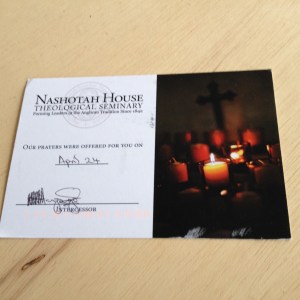
“With what measure ye mete,” someone once said, “it shall be measured to you again.” I certainly hope that’s true, but empirical verification seems to be lacking. I’m looking at, with the full armor of irony, a postcard from Nashotah House. Those of you who’ve long read my posts (I know who both of you are!) will know my history with said sacred institution. No, it’s not with me that they stay in touch, but my wife. You see, she’s one of those women who kept her maiden name, so in the eyes of many at the sacerdotal school we were probably never properly married. They certainly never came out to wave goodbye. Anyway, this past year they’ve begun corresponding with my spouse. I can’t remember—did I ever teach there for a decade and a half? So what are these sweet nothings they’re sending?

The card in front of me informs me that they’ve been praying for my spouse. Don’t get me wrong—she’s married to me and she needs all the help she can get—I never begrudge anyone’s prayers. I also can’t help exegeting a bit. Occupational hazard. One of my students once told me “don’t exit Jesus from your exegesis.” And they tell me I have no practical experience in the real world! So I’m looking at this prayer card wondering whose autograph it is. A man wants to know who’s praying for his wife. More than that, it appears that the name was scribbled out and written again. Did someone pray for those in the outer darkness by mistake? Heaven forfend! Alas, for my meting days seem to be about done. I must have a measuring tape around here somewhere.

That same guy whom I’ve quoted above also said, “pray for them which despitefully use you,” which I suppose might be some good advice. I understand that one-percenters and their ilk couldn’t be where they are despite using you. You just can’t help it—if something is inconvenient, you can simply toss it away. Build a tower to the heavens—what can be more biblical than that? See, words are endlessly flexible. They can be twisted and turned and made to say whatever you want them to mean. And should it ever come to meting cups, there are some recipes that might call for more than a wafer and a sip of wine. This is probably all obscure, but I’m trying to read by candlelight, and this text seems to say “when thou doest thine alms, do not sound a trumpet before thee” and “when thou prayest, enter into thy closet, and when thou hast shut thy door, pray to thy Father which is in secret.” But how will anybody send you money if you don’t let them know?

IMG_2767


Palms and Psalms

At Nashotah House, where I spent many years of my career, it was often felt that the weather during Holy Week was, in the best of circumstances, appropriate. With spring just around the corner, however—the date of Easter is based on the Vernal Equinox, after all—a number of surprises came. Particularly in Wisconsin. The ideal scenario would look something like this: sunny then partly cloudy on Palm Sunday; it was a a joyful day for a parade, but clouds make for nice foreshadowing. Nobody really commented on the weather for Monday through Wednesday, and Thursday—Maundy Thursday—was largely spent inside the chapel. Good Friday, however, should be rainy. Saturday gloomy. And, of course, Easter Sunday should be a perfect, sunny spring day. It seldom, if ever, worked out that way. The weather is not beholden to liturgical celebrations. The same holds true for New Jersey. At least the snow has been removed from the forecast today, only to come in the night.

It was at Nashotah House that I wrote Weathering the Psalms. Being a lexically driven book, it was never intended to be a commentary on global warming. It should have been, in retrospect. Already by then we were nearing the point at which, even if greenhouse gas emissions were stopped, runaway melting of the polar ice would continue apace and the weather would grow more and more unpredictable because of human action. Human action of everyone except the industrialists, of course, since they don’t believe in global warming. We cling to our palms and shout “Hallelujah” while the sea level’s rising and our weather grows increasingly erratic. We have a theology with which the weather disagrees.

IMG_2721

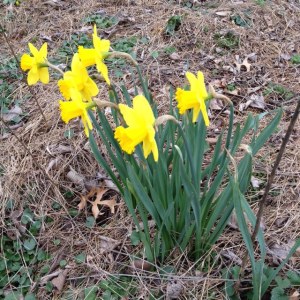
The liturgical year is, like its Jewish predecessor, cyclical. Some have suggested that holidays were invented to remind the laity of when it was safe to plant again. Of course, the climate in the “Middle East” is quite different than that of northern Europe and the United States where the Bible seems to have its proper setting. As I was walking yesterday, I enjoyed the daffodils that I always associate with Easter. When I returned home I saw snow in the forecast. Leap year, Daylight Saving Time, and my general level of sleepiness conspired to cause me to overlook that today is the Vernal Equinox. I look for the snow, grasp my palm, and think of spring.


Silent Light

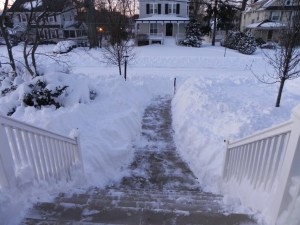
One of the first things I notice during and after a snowstorm is the silence. Part of it, I suspect, is the dampening effect the blanket of snow has on ambient sounds, but another part of it is the lack of usual frenetic human activity. Here in New Jersey it often feels like being in a perpetual motion machine. People are always going some place. Movement is constant and even if I have to head to the airport at 3 a.m. there is other traffic on the road. We are all too busy. Snow has the power to make one stop and reflect.

We live on a fairly busy street since we’re just a couple blocks from the county hospital. Further along our street in the other direction are the county jail and social services offices. People are going by constantly. When yesterday’s snow began, the traffic died down. For once people seemed to take forecasters seriously—driving would be dangerous, and the snow would keep coming well into the night. By mid-afternoon we had more snow in my town that I’d ever seen at a single time during my decade in New Jersey. It was as if winter came in a single day. But it was quiet. Very occasionally a snow plow would rumble by, but most of the day our busy street was deserted. A few kids ventured out, but not many since this was a blizzard (the definition of which is that wind is strong enough to lift snow off the ground and make it airborne again). The silence was almost disorienting. It was like living at Nashotah House once again.

DSCN6193

Silence has long been understood to be a spiritual virtue. Both eastern and western religious traditions recognize the value of listening. The noise may be internal or external, but it is nearly constant. Taking time to try to shut it out, if only for a few minutes a day, can be a spiritual exercise. A snowstorm can help to quiet the constant reminders that we have to do this or that, or that we have to be here or there. During a snowstorm we only have to be where we are, and we only have to do what we’re doing. Soon enough the roads will be cleared and the traffic will begin again. Until it does, however, it is worth exploring what the silence has to offer.


Episcopal Pity

Call me naive. Really, I won’t mind. I’ll readily admit that I was raised in a conservative household that held a fundamentalist view of Christianity. But even though I grew and matured and eventually joined the Episcopal Church, I have always held consistency as one of the basic building blocks of any religious outlook. What’s fair for you ought to be fair for me. When I read that the Episcopal Church has been suspended, like the bad boy of the Anglican Communion, my mind went back to the consistency issue. The Anglican Communion, like many Christian bodies, is marked by strong membership from “conservative” constituencies. This was clearly felt while I was on the faculty of Nashotah House. As a conservative institution, we received many visits from diocesan leaders from more “traditional” cultures. They always expressed concern with America’s sinful, “liberal” culture. We should be more biblical, they opined. They didn’t, however, mind us paying the bill.

Book_of_Common_Prayer_1760

The Episcopal Church is being kept after school because of its approval of homosexual marriage. This is a social justice issue that has the backing of many major Christian denominations. Cultures in the developing world, however, see it as sinful and claim marriage is one man, one woman. Well, most of the time. I’m no anthropologist, but I do pay attention to what people say. While at Nashotah House we had a student from Kenya. He was already a priest, but he was there to get some basic training. Naturally enough, his biblical understanding was quite literal. Once I asked him about his life back home. He had a wife, it turns out, and kids. They couldn’t be with him in Wisconsin, so I asked how they lived when he wasn’t there to support them. He told me his brother took her as wife while he was away. His brother was already married, but in his culture it was traditionally for brothers to act as husbands in the absence of the latter. He gave me to believe that “husband” was used in every conceivable sense of the word. He was, of course, against same-sex marriage.

Levirate marriage (a brother “taking over” a wife) is arguably biblical. The problem is that the Bible states the first brother must be dead for levirate marriage to take effect. My point is not to condemn the “traditional” marriage arrangements of the visiting priest’s culture, but to try to get some consistency here. There are a wide variety of “marriage” practices recognized in traditional cultures. They have two things in common: women are subservient to men and their needs, and males mate with females. Beyond that, variety, as the traditional saying goes, is the spice of life. There used to be another traditional saying about the inappropriateness of peering into other people’s bedrooms. So the naughty Episcopal Church has been sent to a corner with a dunce mitre on its head. Meanwhile the other boys, typical of those in middle school, sit around and talk about the girls they’d like to have. It’s tradition we uphold, after all.


Private Miracles

Despite rumors to the contrary, the Roman Catholic Church is skeptical of miracles. Quick to point out pareidolia where it occurs, looking like the Blessed Virgin in a tree stump or highway underpass, this is no credulous organization. Everyday miracles, doctrinal ones, of course are accepted. Transubstantiation is a quotidian miracle as the mass is no mere ritual. Flashier miracles—even some very impressive ones—are treated with suspicion and the rigor of Scotland Yard. When one of my regular readers pointed out the bleeding communion host in Kearns, Utah, I knew I had to check it out. As is to be expected in such cases, the Catholic Church does not disappoint. Some are calling it a miracle, but those who are do not speak for the Diocese.

Keeping in mind that my source for the story is Fox (Fox news seems more interested than most in this incident), apparently what happened is that a parishioner returned a host to the priest during communion. The priest put the host in a glass of water to dissolve it, but instead it began to “bleed.” Church officials were called in to investigate. There are several things odd here, although I’m no inquisitor, that make me wonder about the veracity of the story. First: Fox news. There are other outlets as well, so I’ll let that go at the moment. When a person was given a wafer at Nashotah House and for whatever reason turned it back in, the celebrant simply ate it. Priests, by definition believers in miracles, need not worry about germs. Protecting the host from desecration was the main thing. Putting it in a glass of water? I suppose that’s acceptable in some places, but even an Episcopalian would be shocked. And why was the host returned? Surely it wasn’t defective.

The Eucharist is the central rite of the liturgical churches, and it isn’t taken lightly. Although it is a miracle-laced event, it is expected that the transformation will follow the prescribed rite. I sometimes ponder what priests would do in the face of a genuine, unexplainable wonder. The side of the believer that yearns for validation would surely want to put it on Fox news for all the world to see. The private side would want to let it happen without any need to say anything about it. Keep it a private miracle. In a year when Starbucks red is a sign of an impending war, I wonder if a bleeding host is the most apt way to get the attention of the unfaithful when a simple cup of coffee will do.

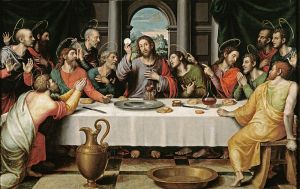
800px-Última_Cena_-_Juan_de_Juanes


Scholarly Synchronicity

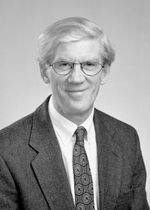
Simon Parker STH Professor April 2, 1999 PORTRAIT

Simon Parker
STH Professor
April 2, 1999
PORTRAIT

One of the great ironies in my life is having been basically ignored while I was employed in higher education only to have people make overtures to me once I no longer had the resources to undertake the task. I’ve been asked to peer review articles, and write articles and contribute to books. I even had a series editor try to get me to write a monograph. Thing is, I don’t have regular access to a library, and I spend eleven hours a day either at work or getting to and from work. When am I going to find time to write a well-researched book or article? Well, I’ve been working on my Society of Biblical Literature article since May and it should be ready by November. If it weren’t based on pop culture, I could never have managed it under present circumstances. Still, when a colleague asked me to contribute to Simon Parker’s Festschrift I couldn’t say no. Although I didn’t take classes with Simon, he was Academic Dean when I was at Boston University School of Theology. Although I didn’t know it at the time, we shared an interest in Ugaritic studies, and we exchanged articles and ideas via letter when I was in Edinburgh. We became friends. Simon died suddenly the year I lost my job at Nashotah House.

Since that time I’ve written over a couple thousand blog posts, and read a few hundred books, but that’s not the same as academic research. I’ve been worried about what I might contribute to do honor to a scholar and a gentleman. Then I tried looking at some old files from two laptops ago. Of course the new laptop can’t open them (that’s why Scrivener is a lifesaver). I pulled out a paper that I wrote the year I lost my job. I never did finish it, but it was well underway when my confidence began to crumble. After translating it to the new decade, I opened it only to find the first footnote dedicating it to Simon Parker. I stopped, stunned. That can’t be right. When I wrote this I knew nothing of a Festschrift. Then it hit me. I had originally written the article just after I learned of Simon’s untimely death. Do I still believe in signs?

So now I have a base from which to start. I have only a couple months to bang it into shape, and I also have to finish my SBL article. While at Nashotah House I produced an article a year and a second book (published only last year), i.e., the “academic standard.” Nobody invited me to contribute. Now that I have no time, people are finally interested in what I might have to say. Not interested enough, of course, to offer me an academic position, but it does look like the publication record might continue after all. It won’t be what it could have been had I had a library, but I am nevertheless honored. One of the accolades that academics covet is having colleagues care enough to write something for you. I guess that’s been on my mind for a decade in the case of Simon Parker. I only hope that I can do him proud from where I am.


Spirit of Nature

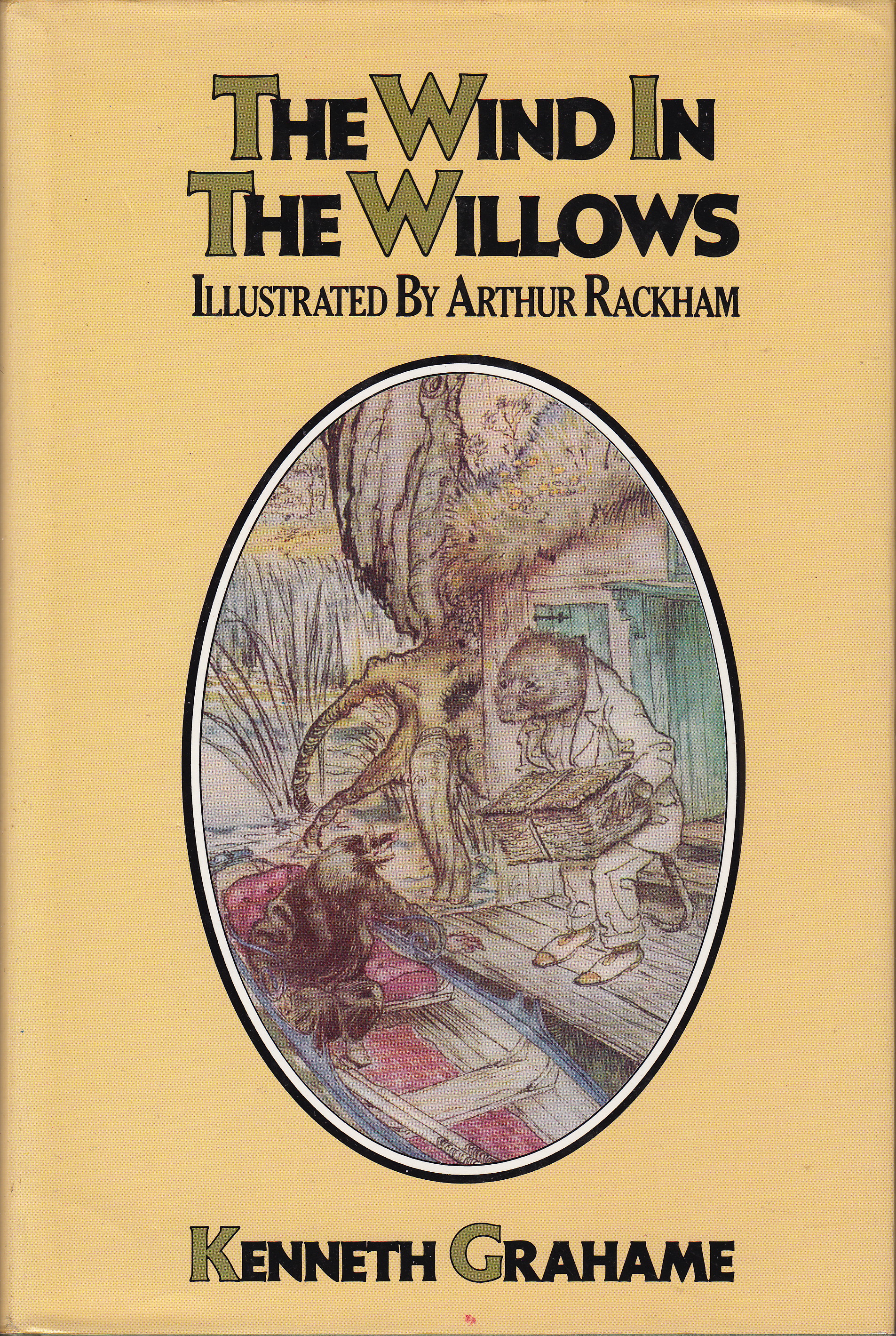
WindInWillowsThe Wind in the Willows, Kenneth Grahame’s children’s classic, was a book I first read during my doctoral studies. In the UK professors are likely to be able to cite A. A. Milne and the fictional bits of C. S. Lewis as well as the current academic stars. Of course I’m over-generalizing. In my experience, however, I met many wonderfully rounded professors and I tried, during my too-brief stint in academia, to emulate them. My wife recently read The Wind in the Willows to our college-aged daughter and me. As I’ve mentioned before, we’ve had an accord for all our married life that I will wash dishes if she will read to me, and we have read well over a hundred books this way, from children’s titles to scholarly tomes. From my perspective, listening to a book read adds a layer of meaning to the text. The cadences, the intonations, and the editorial remarks all lend texture to the experience. I had quite forgotten, as it has been years since I’ve read the book myself, about the mysterious theophany in chapter 7, “The Piper at the Gates of Dawn.”

In a passage that is almost overwritten for today’s youth, Rat and Mole, in search of Otter’s lost son, encounter Him out on the river. The language is reverent, and languid. The two animals come upon a horned deity who is not named, and fall in worship. The fact that he has pan-pipes makes Pan an obvious candidate, but the description also reminds me on this autumnal equinox of Cernunnos, the horned god. The spirit of nature. I feel myself trapped in a world of cubicles and drywall and money. Who wouldn’t fall at the feet of even a pagan deity offering release from such shackles? We have allowed ourselves to be trapped here. We have bought into the system that enslaves us. “There is nothing—absolutely nothing—half so much worth doing than simply messing about in boats.” Rat is my preacher; I am his acolyte.

Nature reminds us that we are evolved creatures and that civilization comes at a great cost. I never feel so alive as when I’m walking in the woods. I don’t pretend that I could survive alone, but having a position that requires growing heavier at a desk day-by-day feels out of sync with what I grew these feet to do and these eyes to see. Manhattan is a wonder, to be sure, but it too comes at great cost. Nashotah House was not a problem-free place, by any stretch, but it was in the woods. The trails on and near campus could restore a soul in the way chapel could never nearly approximate. So it seems appropriate to slip The Wind in the Willows onto my bookshelf next to my Bible, and to slip outdoors for one last untrammeled moment of summer before autumn begins.


The Climate of Belief

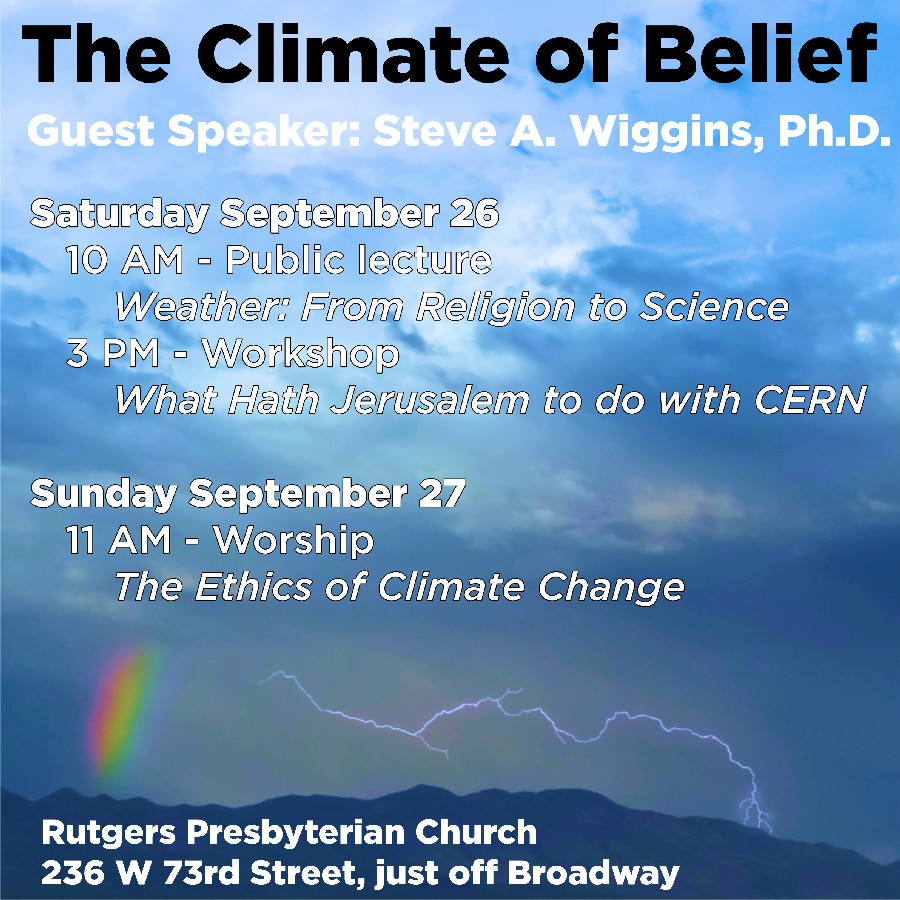
As I’ve noted before, in our culture where an individual voice is hard to hear, those without institutional affiliation are generally considered self-promoting hacks. That’s really too bad, given that so many highly educated people end up in menial positions—our society’s “greatest resources” squandered away behind a counter or sequestered in a cubicle. So it was my great honor to be asked to present Rutgers Presbyterian Church’s Autumn Guest Lecture this year in Manhattan. When I taught at Nashotah House invitations to speak came frequently, even though it was a small school. I even once received an invitation to talk when I was an adjunct at Rutgers University. Since “going corporate,” it seems, I have nothing to say. It really is wonderful to be asked to speak again. Practicing my talk brings back many fond memories. Lecturing is in my blood. The Pastor asked me to come after my book, Weathering the Psalms, was published. Never intended as a best-seller, it has quietly sat on the sidelines, like its author.

weather wiggins ii sml

I suppose a bit of shameless self-promotion might be in order, but of course, I will feel ashamed for pointing out, when it’s all over. If you happen to be in New York City this coming Saturday and Sunday, so will I. Rutgers Presbyterian is located on the upper west side, not far from Lincoln Center and the Museum of Natural History. I’m always glad for an audience. See? Now I feel bad for having said so. My theme over the weekend will be “The Climate of Belief.” In addition to the weather, we’ll be talking about religion and science. Two worldviews that seem to be in constant conflict are not really the bitter enemies they seem to be. I won’t give away any spoilers since then you’d have no reason to come to my New York debut.

Further along, I am scheduled to give a paper at the Society of Biblical Literature annual meeting in the Society for Comparative Research on Iconic and Performative Texts (SCRIPT) session on sensing scripture. My talk on that occasion will be on how the Bible is presented as an iconic book in the first season of Sleepy Hollow. Be sure to mark your November calendars now! It’s not too often that a person with no institution willing to back him gets to speak twice in a year. Someone who’s in a position to hire professors once told me that with so many candidates out there, you have to wait until you fall in love with one. Being a Don Juan, whether in amore or academia, has never been my strong suit. Still, if Elijah is to be believed, even an unamplified voice may carry. I’ll utter my “yop” for those who wish to listen.


Weathering Academia

Come the end of September, I’m scheduled to give a talk at Rutgers Presbyterian Church in New York City. I’m personally very flattered by this because, as it has become clear to me, an academic without a post is mute. I’ve seen colleagues who teach at schools I’ve never heard of consulted by the media—and there is obviously more to it than this—because they have teaching positions. Those of us who used to be professors apparently forgot everything when we take jobs out of necessity. That’s why I’m so flattered. My talk will be on the larger issues behind my book, Weathering the Psalms. I never expected this book to be a bestseller. I knew that it was, in some sense, incomplete. Academic books are the kinds of things you write when you have an academic post. When your day is not programmed with “enter this data, follow up on that book, and when you have time, get other people to write books.” People, of course, with university posts. The rest of us know not whereof we speak.

It’s funny. Back when I was teaching, even if it was only at Nashotah House, I used to be asked to give little talks all the time. It was rare for a year to pass without someone asking me to lead a seminar or share what I’d learned with some august body. That tapered off once I became an adjunct, although a Presbyterian Church in Princeton once invited me to speak because I was teaching at Rutgers (the university). And as I prepare my talk in my free time, I wonder about a society so tied up with name prestige that someone who has something interesting to say is just a crackpot unless a college or university or seminary or think-tank hires them. There are many of us—hundreds, if not thousands—who know as much as our university colleagues about a topic. An individual doesn’t have a name big enough to flash around, so we don’t get asked to share. Keep your hand down and your head down on the desk, please.

IMG_2416

In any case, it has been good for me to come back to the weather and think through some of the larger implications. I’d just had the book declined by a big name academic press when Nashotah House terminated my position. For many years I couldn’t look at the manuscript since it seemed a symbol of my failure. No, the book isn’t everything that it could be, but there is some good information there. The larger implications are actually of some importance here. The weather is studied both by science and by religion. Both understand aspects of it that the other misses. I’m looking forward to exploring this with the good folks of Rutgers Presbyterian who were kind enough to invite a guy with nothing more than a book and an obscure name to come and talk about something that most academic colleagues just don’t notice.


Clerk and Dagger

Photo credit: Luis García (Zaqarbal),, Wikimedia Commons

Photo credit: Luis García (Zaqarbal),, Wikimedia Commons

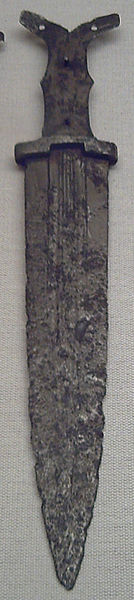
Recently I had the sad duty to list a contributor to a volume as deceased. The standard means of doing so in typography is with a symbol called a dagger (†). When I was young, I thought this was intended to be a cross, but it became clear, as I looked more closely, it wasn’t that at all. The origins of typographic marks go back to the classical Greeks. Used to mark dubious places in manuscripts, the asterisk was to show places where something had to be added to the text while the dagger was used to show deletion. Well, it wasn’t a dagger then. The earliest form was called an obelus and it could be a plain line, but was often shown with the symbol we now painfully associate with long division: ÷. This odd sign was said to represent a dart, a spit, or the sharp end of a javelin. Since things were to be cut out of the manuscript, a sharp instrument would be ideal. Early textual criticism, then, gave us symbols that have now been commandeered by math.

These signed evolved with time. By the Middle Ages the asterisk and the dagger could be used to indicate a pause when reciting Psalms. (Those of us at Nashotah House in the 1990s know all about pauses when reciting Psalms.) Medieval scribes marked up manuscripts religiously. Eventually the asterisk came to be associated with footnotes—a function that it still has, mostly in non-academic texts. The dagger was used for a footnote if an asterisk had already been used on that page. Beyond that, the double-dagger came into play. The function and the form of the obelus had now evolved solidly into the dagger form. The obelus continued on in math, at one time to mean subtraction, but finally settling down to represent division. Appropriate, given its graphic origins.

The dagger and asterisk were the earliest signs of textual criticism. Literalists today still don’t understand the concept, since all ancient documents of the Bible are copies of copies of copies. Nevertheless, how did a sign indicating a spit upon which an animal was roasted come to represent the dearly departed? Since asterisk and dagger often work as a pair, the most obvious way that this worked out was in representing the birth and death years of a person. An asterisk before the name meant “born in,” while a dagger in the same position meant “died in.” As a kind of typographical shorthand, then, a dagger after a name meant the person had died. Although it sounds dramatic and not a little violent, it is really only death by textual criticism. That, I suspect, is something most biblical scholars especially will be able to comprehend.


Excavating Religion

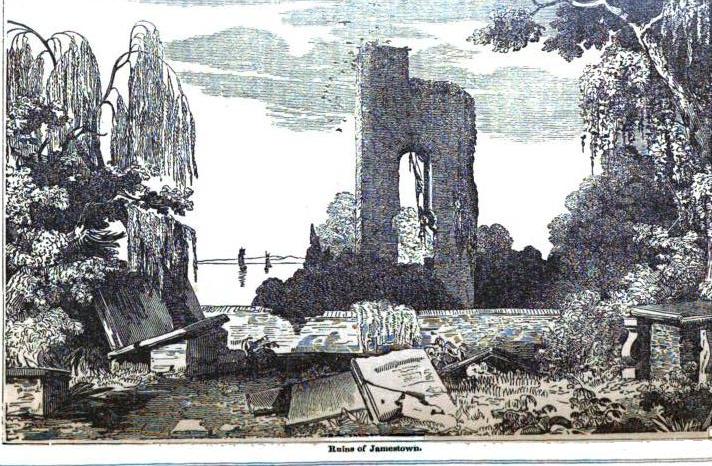
Jamestown, Virginia has the distinction of being the first British American colony to have survived. I’ve only been to Jamestown once, and that was about two or three years before the site was scheduled to celebrate its four-hundredth anniversary. William Shakespeare was still alive back in the home country. The King James Bible was not yet available. It was a gray day when we drove to the site and there were no other people around. Without a guide there was not much really to see—just a sense of being in touch with history by standing where the first English would eventually remake the land in their own image. Even the pilgrims tried to reach Virginia, but missed and landed in Massachusetts instead. Jamestown, however, lays a claim no other site can make.

A recent BBC article describes four graves lately found at the site. Located in the church, those buried were men of status. One of them was Reverend Robert Hunt, a clergyman of the Church of England and the first Anglican minister in North America. Interestingly, the BBC story points out, the Church of England was only half a century old at the time. Having spent many years among the Episcopalians at Nashotah House, I learned a great deal of the church’s history. The fact that the Episcopalians made it to America so shortly after their establishment is something I never heard emphasized. Concerned that the Catholic Church, under Spain, was collecting so much territory, the C of E wanted to stake a claim in the New World early on. Partially because of their persistence, we speak English even today. Church and empire were hand-in-glove in those days, and both the church in Spain and in England were state sponsored. Having God on your side can be pretty handy when you want to claim something that really doesn’t belong to you.

The reverend was buried west, facing the people he served, and, according to the article, this helped initially identify him as clergy. The church, in the service of the government, supported the conquest of new lands. The implicit belief that God was on the side of the strong has never really gone away. Mega-churches measure their spiritual assets in terms of fiscal influence. There are those today who believe that the Almighty wants the righteous to be rich, of course, at the cost of the wicked. Jamestown may have, at least partially, set the tone for a new nation that wanted to take more land than it needed. Land that others had occupied, and indeed, still lived upon. Only with the backing of a deity could such claims be made. The biggest god, after all, wins the day. Jamestown tells us more than we might suppose about what we’ve become as a nation. The early years are often the most formative of all.

Jamestown_Virginia_ruin


Ethics for Rent

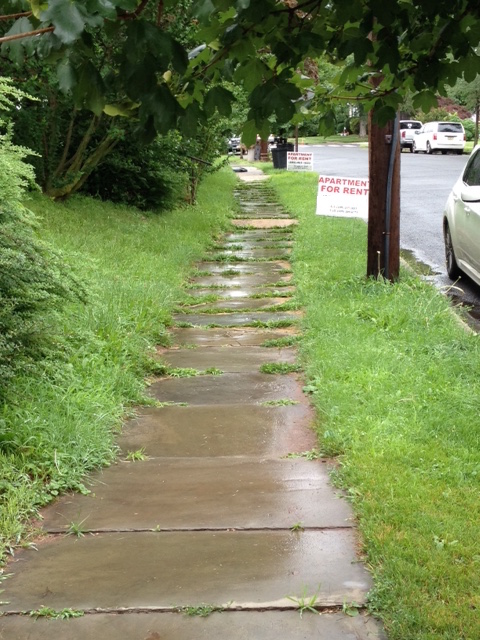
Ironically, the Bible is the basis for the western preoccupation with land ownership. What with commandments against stealing and coveting, the Israelites had a sense of being promised a land by God. It was their land and no human motivation—including imperial conquest—could trump the divine will. In the western world, so heavily influenced by the Bible, the concept of private property is itself considered sacred. If enough land to sustain yourself is good, even more land than you need must be better. That’s logic. Land-grabs by the powerful are nothing new. In America (land stolen from the original owners) no better symbol of affluence exists than property ownership. Like many things biblical, this is often a myth. Although I’m a white, Anglo-Saxon, straight, Protestant, I grew up among renters. My family couldn’t afford a house. When my mother remarried, my step-father owned his house and it was in such bad shape that as soon as he moved out to a rental property, it was immediately razed. On my own, I’ve always been a renter because I couldn’t ever afford to be anything else.

After Nashotah House, my wife and I considered buying. Wisconsin, apart from having no jobs, seemed like a nice place to settle. We researched. Your mortgage payments should be no more than 30 percent of your income, we learned. Living in suspended animation since those days, we’ve rented in a variety of places and the 30 percent figure has also turned out to be a myth. Affordable housing, in the United States, is set at that benchmark. A recent news byte in the Christian Century notes that in not one of the fifty united States is it possible to rent a one-bedroom apartment on 30 percent of minimum wage. 49 hours of work a week would be necessary to meet that benchmark in South Dakota, the state with most affordable housing. I know professors of Bible who own summer houses. That’s in addition to their regular houses. Meanwhile, many who would like to own something much more modest can’t afford even that.

The biblical worldview is an idealistic one. Recognizing that greed is inseparable from human will (even among a chosen people) the hope was that the poor would be taken care of by those who had more than their share. As the statistically inclined like to say, the numbers don’t lie. Housing, one of the most basic of all human needs, is exploitatively expensive. Many renters can never break out of the cycle of paying too much in rent so as not to be able to save up enough to make a down-payment on a place of their own. Yet prices go up while raises don’t keep pace with inflation. It’s all about ownership. Laws are in place to protect those who take (“legally”) for themselves. The rest pay into the system at three times a tithe. And even this, the numbers say, isn’t nearly enough.

Rent


Theological Cemeteries

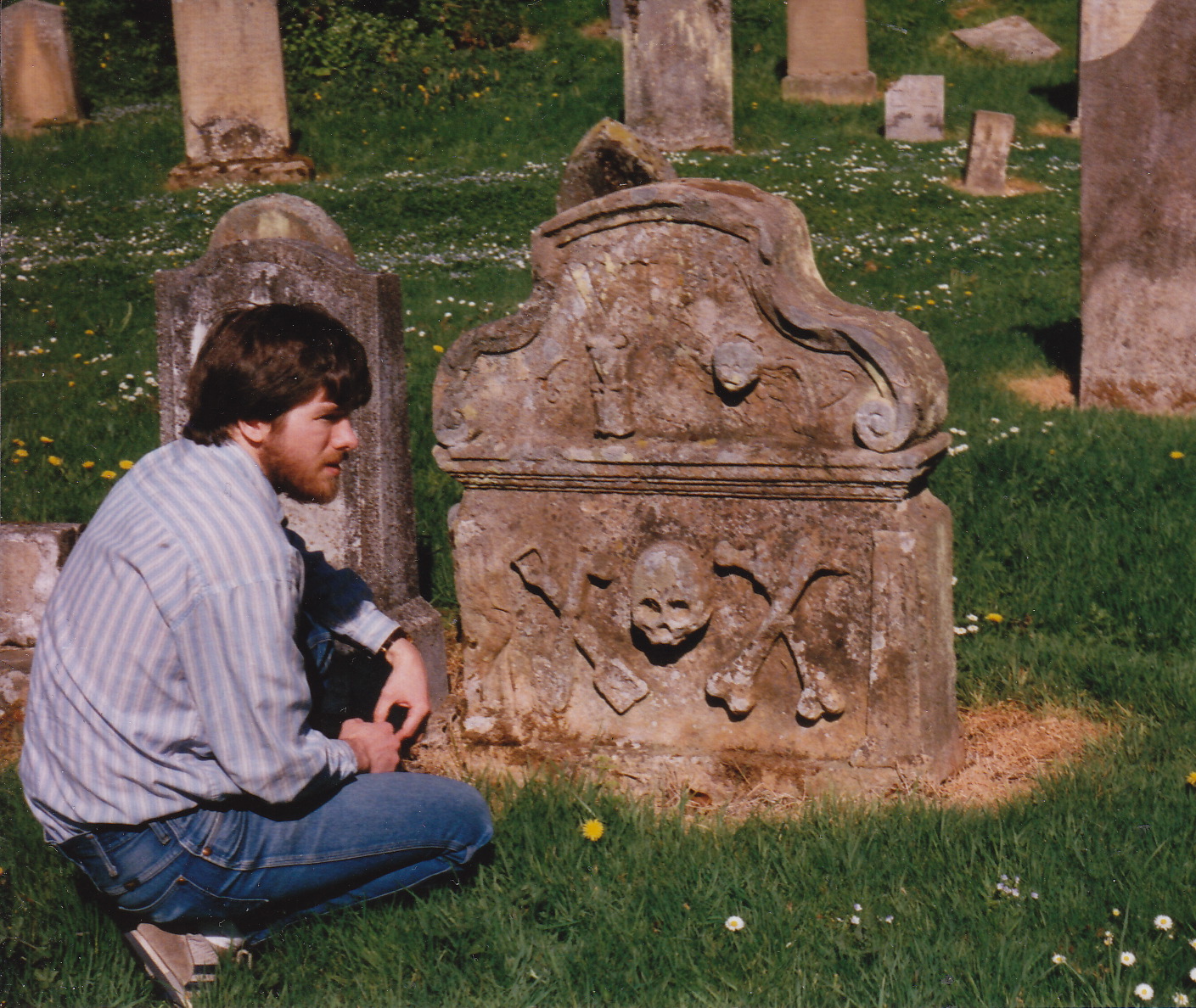
There is a plague upon this nation.  When in one week, let alone one day, I hear about two colleagues being let go from their academic posts for not meeting conservative theological standards, I believe it is time for higher education to take a good solid look at what it claims to do.  Thomas Jay Oord, one of whose books I supported and saw through publication at Routledge, was dismissed from Northwest Nazarene University after, according to early reports, being considered for a heresy trial.  Almost simultaneously Daniel Kirk, whom I don’t know, was let go from Fuller Seminary, apparently following questions of his belief in traditional marriage.  Having been dismissed myself into an academic morass that has never passed for a satisfying career, I feel a sense of moral outrage here.  No doubt, I am more liberal than either Oord or Kirk, but this is not the way educated adults treat one another.  In fact, it is heinous.
 
While still teaching at Nashotah House, before I crossed some invisible line in the doctrinal sand, I often wondered about this.  Conservative schools want the credibility of professors with bona fide doctorates, and then wonder why they can’t get educated people just to nod their heads at all the right places.  Education should make people think.  It should make us all question our assumptions.  Any faith that can’t examine itself seriously and come back to thrive is no faith at all.  I know all too well how difficult it is to get along with a doctorate in a socially unacceptable field where the higher education economy is far worse than that of our own national economy that keeps limping along.  It is a crime to fire our brightest and best.
 
The unholy roll call could go on and on.  A few years ago it was my colleague Christopher Rollston who fell under the axe.  Although I’ve not met him, I understand the same thing happened to Peter Enns.  These two recovered, at least as far as finding a position goes.  Those of us who were successfully cast into the outer darkness—and I know I’m not the only one—have watched ourselves disappear from relevance as the academic world chugs blithely along.  We are a nation that elects public officials on the basis of their supposed religious outlook while at the same time hamstringing efforts to educate ourselves about religion. I have a question for the administrators who feel they are defending the faith by taking someone’s livelihood: when is the last time you thought about your faith? Really thought? If your God can’t think then it’s not just those of us who are liberal that are destined for Hell.

ScottishSemetery


God on the Brain

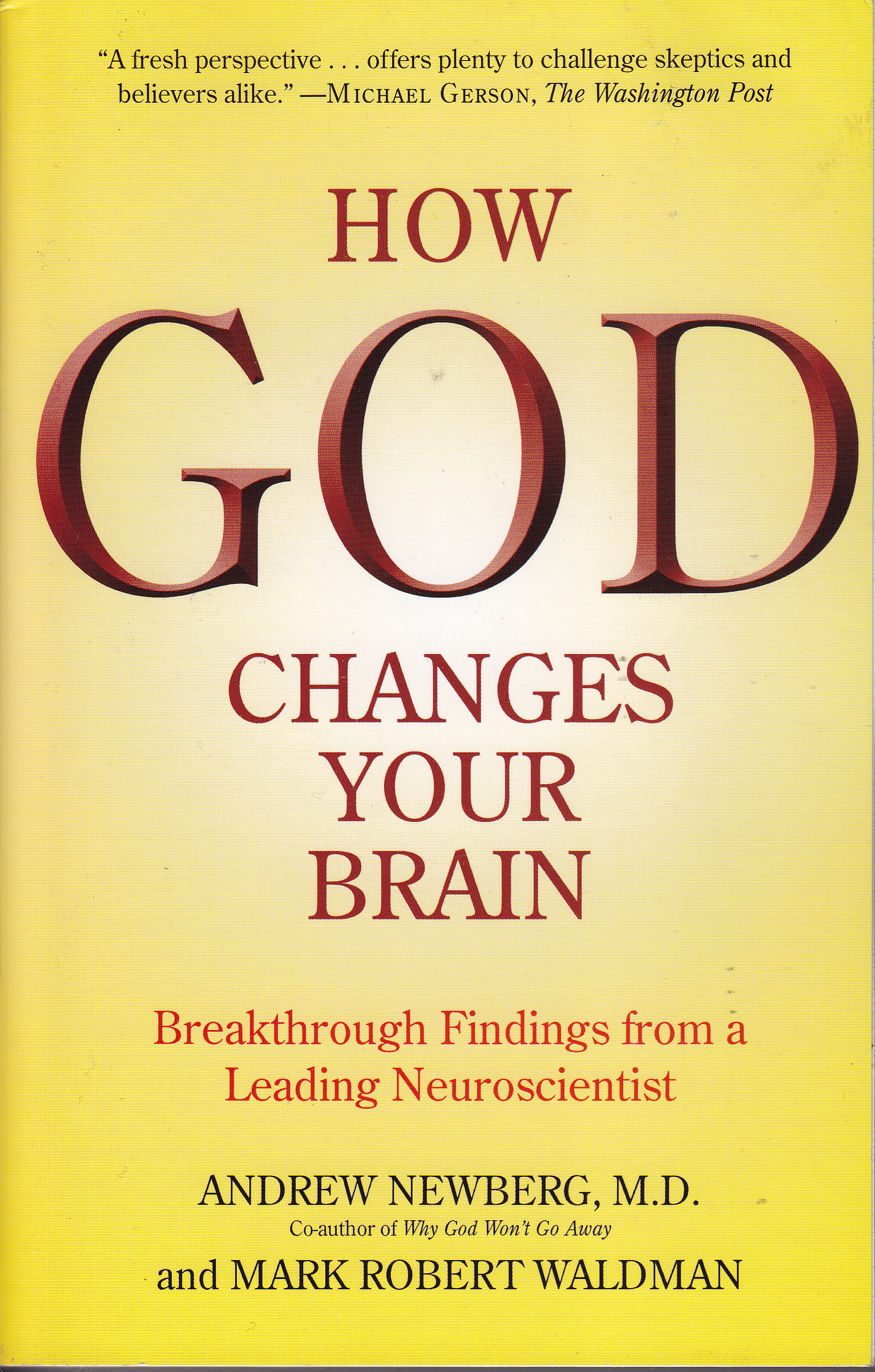
HowGodChangesBrainThose of us with scientifically oriented minds, but with affinity for the less quantifiable aspects of life, tend toward academic study of the humanities. It is not unusual for someone with a background in the hard sciences to dismiss such “softer” fields as less rigorous at best, or, at worst, a sheer waste of time. Many people in the humanities cower under this cloud of being considered somehow inferior for not being able to put numbers to everything. I suspect that’s why I find neuroscience so fascinating. While still teaching at Nashotah House, I would prompt students to think that whatever decisions they made about ancient texts, those decisions were mediated, in a very real way, by their brains. We don’t understand brains completely, but I’m amazed at what we have discovered so far. Years ago I read the book, Why God Won’t Go Away. It was an eye-opening study of what brain mapping reveals during states of religious inspiration, or at least, intense meditation or prayer. We can, to an extent, see inside someone’s head while they are communing with the other.

I recently became aware of the new book by Andrew Newberg (lead author on Why God Won’t Go Away) and Mark Robert Waldman, How God Changes Your Brain: Breakthrough Findings from a Leading Neuroscientist. I was a bit nervous at first, since I couldn’t recall how reductionistic Newberg was in his initial book on the subject. Neuroscientists sometimes perceive the world as being, in a sense, as all in our heads. I was pleased to see that Newberg and Waldman recognize that the “God question” is an open one. They address it right up front. I was drawn to the book because of one of their conclusions that had leaked into the footnote of something else I’d been reading: the brain changes as soon as it is introduced to the concept of God. Brain wiring is continually changing, but the takeaway here is that as soon as we introduce our children to the God concept, their brains will not unlearn it. It stays with us for life. Changing concepts about God is therefore quite difficult. Few even try.

This book, however, doesn’t see this as necessarily negative. In fact, the authors challenge the horsemen of atheism in that all studies seem to indicate that religion is actually good for you. Particularly meditation. In a world that is increasingly run on stress (just ask any business-person) this is an important reminder that prayer, or meditation, can actually heal some of the brain damage caused by life in a stressful environment. The nice thing about this is that the empirical evidence seems to be pretty strong. Our brains seem to be telling us to relax, step back, and not take all of this so seriously. Those are layman’s terms, of course, filtered through my brain. Even reading this book made me feel much more relaxed. It reminded me why, for much of my life, monastic living has seemed so very appealing. Instead, I live in the secular world with its many rewards and stresses. If I learned anything from this wonderful little book, I will be spending a bit more quiet time each day, and won’t be feeling guilty about it at all.


Science v. Evil

Can we eliminate evil? More than a question of metaphysics, this is also the title of an episode of the third season of Through the Wormhole. I’ve noted before that this particular season has been delving more profoundly into areas once reserved for religious thought. Evil is perhaps the most religious of topics, as distinguishing good from evil is at the heart of many religious traditions. Fast forward from the founding of your favorite religion to today. In order to answer the question of whether or not we can eliminate evil, we turn to neuroscience rather than any sacred book. Looking at brain scans, the scientists of Through the Wormhole have isolated areas that indicate who might be a sociopath—a convenient measure of evil—and also who might be less empathetic than whom. Perhaps drugs could be developed to inhibit sociopathic behavior and tendencies. As always, these episodes leave me somewhat distressed.

800px-Planisphæri_cœleste

Losing my long-term position in higher education “without cause” threw me into mental turmoil. Never one to use medications for a long term, I was shattered when my doctor suggested anti-depressants. Would this chemical, designed to “correct” my brain chemistry change who I was? The morning the treatment began, I hesitated to take the first pill, staring long at it and wondering if the person I’d been would be lost forever. I hated being on the prescription. Worse, it was a medication that you couldn’t simply stop. The drop in anti-depressants could bring me dangerously low. Although my employment situation hasn’t radically improved since then, I eventually weaned myself from the prescription. Looking back now, I see that time as an interlude in who I was, depression and all. Mine was, thankfully, a mild case. It has, nevertheless, left me wondering about the nature of evil.

Extremely empathetic, I have never had sociopathic tendencies. I care for insects and amphibians, as well as my fellow humans. I react to the emotions of others. Yet, like all people, I suspect, I know that I’ve got my own personal evils with which to struggle. I wonder if it is a matter of degree. Religions often suggest that the solution to evil is repentance and taking the decision to live a new life. What if one’s brain, however, prevents that? Would the administration of a drug amount to a kind of salvation? And what of those theologies based on concepts of human depravity—can neuroscience prove them wrong? When the moral questions are raised, the physical solutions offer answers. Can we ever reconcile belief and biology? The jury may never come back with a verdict on that one.