Silicon or Paper?

Most of us follow blindly through this tech jungle.  We do it, I suppose, because there are rewards for having the world of information and entertainment at your fingertips.  The problem is that the constant upgrades are expensive and as you approach retirement age—even if you can’t afford to retire—you have to keep spending in order to meet your tech needs.  A few years ago I purchased an app because apparently my laptop was running too slowly.  I do tend to have more than one app open at a time, I confess.  Maybe too many.  But apps take up so much operating memory these days that you can either constantly quit and reopen (if you have a mind like mine) or you can upgrade.  And even then you’re not sure of what you’re doing.

I’m old enough, you see, to remember having to load the program you wanted to use via floppy disc when you booted up.  We all assumed the swapping of discs was the price you paid for being able to, say, type a dissertation without using white-out all the time.  Then we started hearing these rumors of an “internet” with “email.”  I found my first (and it turns out, only) full-time professorship via letter.  Delivered by the post office.  A friend wrote to me about the opening and I sent a fateful letter of inquiry to Nashotah House.  The rest, as they say, is history.  I’ve kept much of the paper of those early days.  The movers always complain that I’ve done so, but I’m between worlds.  I was born in a paper world and I don’t trust this electronic one.  That’s why I still buy physical books.  I’ve had too many devices die on me.  And now I keep only one or two apps open at a time, and forget to look at the stuff on the others—I keep them open to remind me.

It is a jungle, this virtual world.  We like to think it’s civilized but what do we really know?  So I deleted the app that pops up telling me that one app open at a time is too taxing for my computer’s memory.  Then I remembered that I pay an annual fee for such annoying reminders.  I had to reinstall and await the notices again.  Yes, some of my files are big.  I write books, and that’s just the way it works.  So I put up with those yappy reminders because, well, it’s better than swapping discs a dozen times just to type a sentence or two when I have time.


Foresight

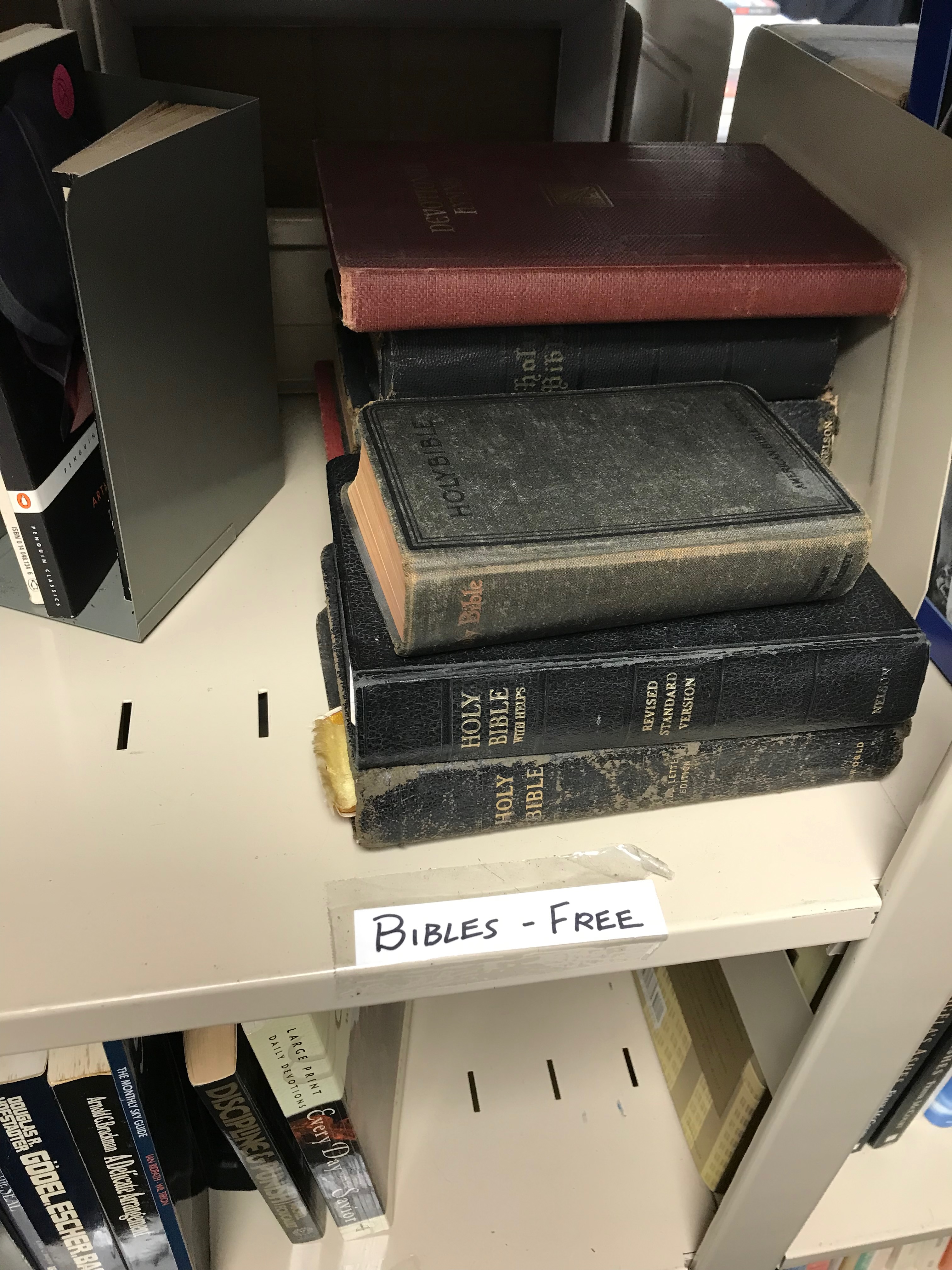
God wasn’t thinking of search engine optimization (SEO) when he was writing the Bible.  First of all, he doesn’t seem to have considered that all the nice, short names he used would soon become the most common in the western world.  And he didn’t give all the characters last names.  Job is particularly egregious because you could be searching for employment and not a complaining old man (you can always find one of the latter here!).  Perhaps he wasn’t aware at the time just how popular his book would become so that just about everything in it appears on some twenty-million webpages and you need some distinctive keywords for SEO.  And this unfortunate high profile has also led to knock-on search problems.

I quite often have to search for bits of the Good Book together.  “Pentateuch” isn’t so bad because it’s a bigger word that most people don’t use every day.  But what about “historical books”?  It’s two words and search engines begin scouring the web for pages that have both words.  And there are plenty of historical books outside the Bible.  Writings?  Poetry?  Even Gospels is used all over the place.  I had to find something about the Catholic Epistles the other day.  My search engine found plenty of places with both words, but not linked together.  (I know the quotation mark trick, but bear with me here as I’m trying to make a point that will perhaps lead to divine intervention.)  I tried again with Pastoral Epistles but the same problem arose.  This is the burden of being so important that everyone copies you.

It’s the price of success.  God surely must’ve foreseen that.  The problem is that Holy Writ predates the internet by so many centuries.  Those who’ve determined how searching works have redefined our lives—have given us new commandments.  Thou shalt not put commas in titles, for example.  Thou shalt use distinctive keywords.  Pity the fool who must find information on a biblical character with only one name.  Perhaps that name is John.  Or David.  Or Mary.  Sure, you can add qualifiers but they’re all common words as well.  The Good Book is a victim of its own success.  And for containing all the prophecy that it does it is truly amazing that not even the creator of the universe didn’t see this coming.  We live in a world driven by tech and although the Bible had a direct role leading to that world, you wouldn’t know it by your standard Google search.


Scraps of Paper

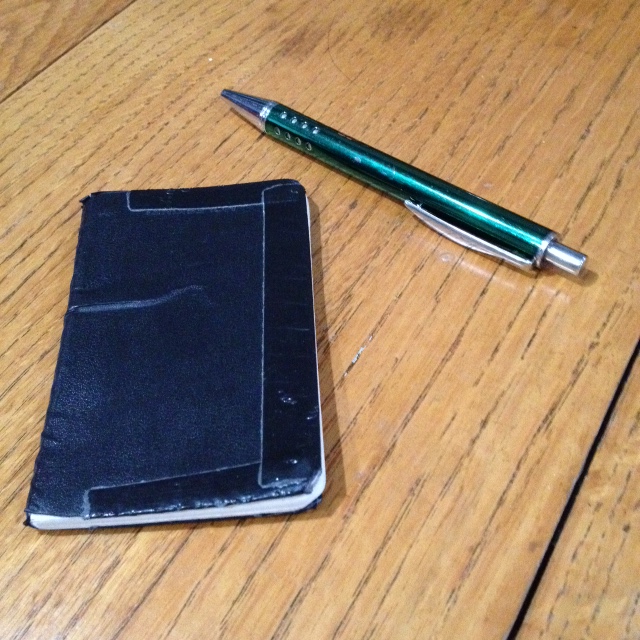
My wife is a saint.  She doesn’t throw away the little scraps of paper on which I write notes to myself.  They’re everywhere.  And this even though I carry around a notebook to capture ideas.  Sometimes I left it in the pocket of another pair of pants, or on the bedside table.  And I need to write something down.  Soon the scrap is filled with vital info (at the time) and eventually gets mislaid.  When it’s found I need to go over it line by line to see if something remains crucial or if it was just prosaic (get oil change, set up eye doctor appointment, etc.).  You see, ideas can strike at any time.  I keep a commonplace book inside the door in case they do when I’m out jogging.  I now keep a separate notebook on the bedside table in case something occurs as I’m falling asleep.  And, of course, I keep my little zibaldone with me (when I’m wearing the right pants).

Those who believe electronics will save us suggest putting everything in a notes app.  The problem is that I have several.  I do most of my initial writing in Scrivener.  When it’s time to share either with a publisher or a colleague, I convert it to Pages, and then to Word.  But my devices also have Notes, which I can see synced on my phone.  That makes it handy for shopping lists and such.  Then there’s also Text Edit, which I use for rtf documents.  Where an idea gets saved depends on which app I’m using at the moment.  More scraps of paper, virtually.  I need to write it down so I remember what’s where.

All of this led to a rather embarrassing situation the other day.  As usual, I’m at work on another book.  Since writing about horror isn’t something I was trained to do, I have to do quite a bit of bibliography building along the way.  This is the kind of thing you learn in higher education, so no worries.  The thing is I had started a bibliography in one app and began writing the book in another.  I’d very nearly finished a draft of the book when I just happened to scroll through the folder where my former bibliography was kept.  I was stunned to learn I’d already done this work since I didn’t remember recording this at all.  I suppose the solution would be to record all my thoughts.  But that would be too dangerous.  And besides, when would I have time to review them all?  I guess I still prefer scraps of paper, even if they’re sometimes electronic.


Virtually Taxed

Nobody ever explained it to me.  DVDs, with no moving parts, can still go bad.  Having amassed a library of them over the years, and storing them the recommended way, I nevertheless come across several that have “damaged” areas—like a skip in a record—that confuses readers to the point that the movie simply isn’t enjoyable to watch.  The other day my wife had a hankering to watch one of those movies.  I checked our two streaming services and it was only available for rent, or “purchase.”  I still can’t wrap my head around buying something that doesn’t exist with money that’s purely electronic.  And people don’t believe in the spiritual world!  Well, I bit the bullet and clicked to “buy” the movie—perpetual access is what we call it in the biz.  We watched and all was well with the world.

The next day when I went to file away the receipt, which came in the form of an email, I noticed that we’d been virtually taxed for this virtual purchase.  It never occurred to me before that when you’re buying electrons configured in a certain way, that this is a taxable event.  And your tax is based on the state in which you live.  If you’re in a place with no state tax—New Hampshire, I’m looking at you—these electronic purchases will save you some money.  The funny thing about this is the system works only because we believe in it.  The skeptic who says “What, exactly, did I just purchase?” raises a valid question.  Despite current trends, I don’t mind a bit of clutter.  I can always find the physical object I’m looking for.  It’s the electronic ones that give me trouble.

Our world is becoming less and less substantial.  More and more virtual.  Some of us prefer the corporeal sensations of the hunter-gatherer world.  Feet on actual ground, hands on actual book.  Or DVD.  Whatever.  The cloud, with its taxes, strikes me as distinctly odd.  Politicians can virtually live in a state—Dr. Oz wasn’t, and isn’t, a resident of Pennsylvania—so can I virtually move to New Hampshire and not pay taxes on my electronic purchases?  I’ve always wanted to live in New England, but my jobs have never allowed it.  There’s something about this physical universe, and house prices being what they are I can’t see a move anytime soon.  To deal with this reality I guess I’ll stay where I’m physically located and just watch a movie.

Photo by Olga DeLawrence on Unsplash

Dangers of Bookmarks

So you’re a busy person and you don’t always have time to act on something immediately.  Or you have to wait until the next billing cycle to afford something.  Daily life comes at you like a Russian missile, so you need to leave reminders around so that you don’t forget.  For me, those reminders often take the form of tabs.  On my browser I leave at least a dozen tabs open to remind me of things—I’ve got to get those cartons ready for mailing to recycle; thanks for reminding me.  I actually look forward to being able to click a tab closed because that means I accomplished something.  There are so many things to do and time is so rare.  Then the inevitable happened.

I was leading a Zoom meeting and I had to keep track of attendance.  Since I was leading I didn’t want to stop in the middle and write a bunch of names down, so I took a screenshot.  My poor laptop got confused and kept the screenshot on top.  Since the screen shot showed all the open windows (it’s not just the browser that’s open, but all the writing projects in the two different programs I use as well, all in various stages of completion), I couldn’t tell how to click out of the screenshot.  I couldn’t see the actual Zoom meeting or if someone was raising her or his hand.  I tried to keep the discussion going while trying to get Zoom back to the front.  I began clicking any window shut that I could.  Finally Zoom reemerged.

After the meeting I had to examine the carnage.  My browser had been closed and when I reopened it, the option to restore all closed tabs from the last session was grayed out.  I would have to rebuild my tabs from memory.  It was because of my overwrought memory that I’d kept those tabs open in the first place!  Before going corporate, when I could take my time and pay attention, I had a very good memory for things like this.  (As a professor I had time to act on things during the day instead of constantly thinking “I’ve got to get back to work.”)  Now too much is happening all the time.  I’m having Zoom meetings after work when I normally get my day to day business done.  So I’ve added a new task to all the others—trying to reconstruct my lost tabs.  Yes, it’s a classic “first world problem.”  At least that’s what I think it’s called—let me open a new tab and check.

A different kind of bookmark

Complications

That string of ten digits becomes your personal identity.  It’s conveyed by a pocket-sized device that’s so expensive you have to pay for it in installments.  And it’s not a one-time expense.  For a monthly fee that would’ve sent our parents calling on AT&T we carry a compact computer with us at all times and call it a phone because it responds to those ten digits.  The trend is to replace them every two or three years as more and more features become available, many of which, one suspects, are never used.  So, with a notice from our carrier that the card in one of our devices would no longer work at the end of this year, having reached the end of its life, we found ourselves in one of the countless phone stores around the country.

I mused as we waited—buying a replacement phone took two hours out of a Saturday, and that didn’t count driving time—at how complicated life has become.  One of our cars, purchased in 2003, also needs replacing.  My wife and I have to coordinate a day off work to buy one.  It pretty much took a whole day the last time we bought a car.  It’s complicated.  Credit checks, titles, registration, insurance.  And oh so much money.  You can’t, however, live without a car.  Not if you don’t reside in a major city.  You need to get to the grocery store, to doctor’s appointments, the hardware store—and the telephone store.  Many of these places exist in their own carefully zoned commercial habitats and since they have the necessities of life, you need to go to them.  Meanwhile, the internet offers to send them to you.

Ads now tell me you can buy your car online and some smiling stranger will drop it off right at your house.  It’s just that easy!  What they don’t say is all the work that must, I’m assuming, be done in advance.  The insurance, the financing, title transfer, trade in, let alone nothing of the test drive.  Now you have to figure all that out in advance.  Let’s face it—nothing is easy.  If you’re reading this you’re doing it on a highly sophisticated device that may have cost you quite a bit of money.  If it’s a phone it bears your personal ten digits that can be used to reach you at all times and in all places and that, in fact, knows where you are at all times.  Even if you’re out for a virtual test drive.


Eclipsed

Shooting the moon.  It’s such a simple thing.  Or it should be.  I don’t go out of my way to see lunar eclipses, but I had a front row seat to yesterday’s [I forgot to post this yesterday and nobody apparently noticed…].  I could see the full moon out my office window, and I’m already well awake and into my personal work before 5:00 a.m.  When it was time I went into the chilly morning air and tried to shoot the moon with my phone.  It’s pitiful to watch technology struggle.  The poor camera is programmed to average the incoming light and although the moon was the only source of light in the frame, it kept blurring it up, thinking, in its Artificial Intelligence way, “this guy is freezing his fingers off to take a blurred image of the semi-darkness.  Yes, that’s what he’s trying to do.”  

Frustrated, I went back inside for our digital camera.  It wasn’t charged up and it would take quite some time to do so.  Back outside I tried snapping photos as the phone tried to decide what I wanted.  Yes, it focused the moon beautifully, for a half second, then decided for the fuzzy look.  I had to try to shoot before it had its say.  Now this wouldn’t have been a problem if my old Pentax K-1000 had some 400 ASI film in it.  But it doesn’t, alas.  And so I had to settle for what passes for AI appreciation of the beauty of the moon.

Artificial Intelligence can’t understand the concept of beauty, partially because it differs between individuals.  Many of us think the moon lovely, that beacon of hope in an ichor sky.  But why?  How do we explain this in zeros and ones?  Do we trust programmers’ sense of beauty?  Will it define everyone else’s?  No, I don’t want the ambient light averaged out.  The fact that my phone camera zoomed in to sharp focus before ultimately deciding against it shows that it wasn’t a mechanical incapability.  Sure, there may be instructions for photographing in the dark, but they’re not obvious standing out here and my freezing fingers can’t quite manipulate the screen with the nimbleness of the well warmed.  There were definite benefits to having manual control over the photographic process.  Of course, now that closet full of prints and slides awaits that mythic some day when I’ll have time to digitize them all.  Why do I get the feeling that the moon isn’t the only thing being eclipsed?


Data Protection

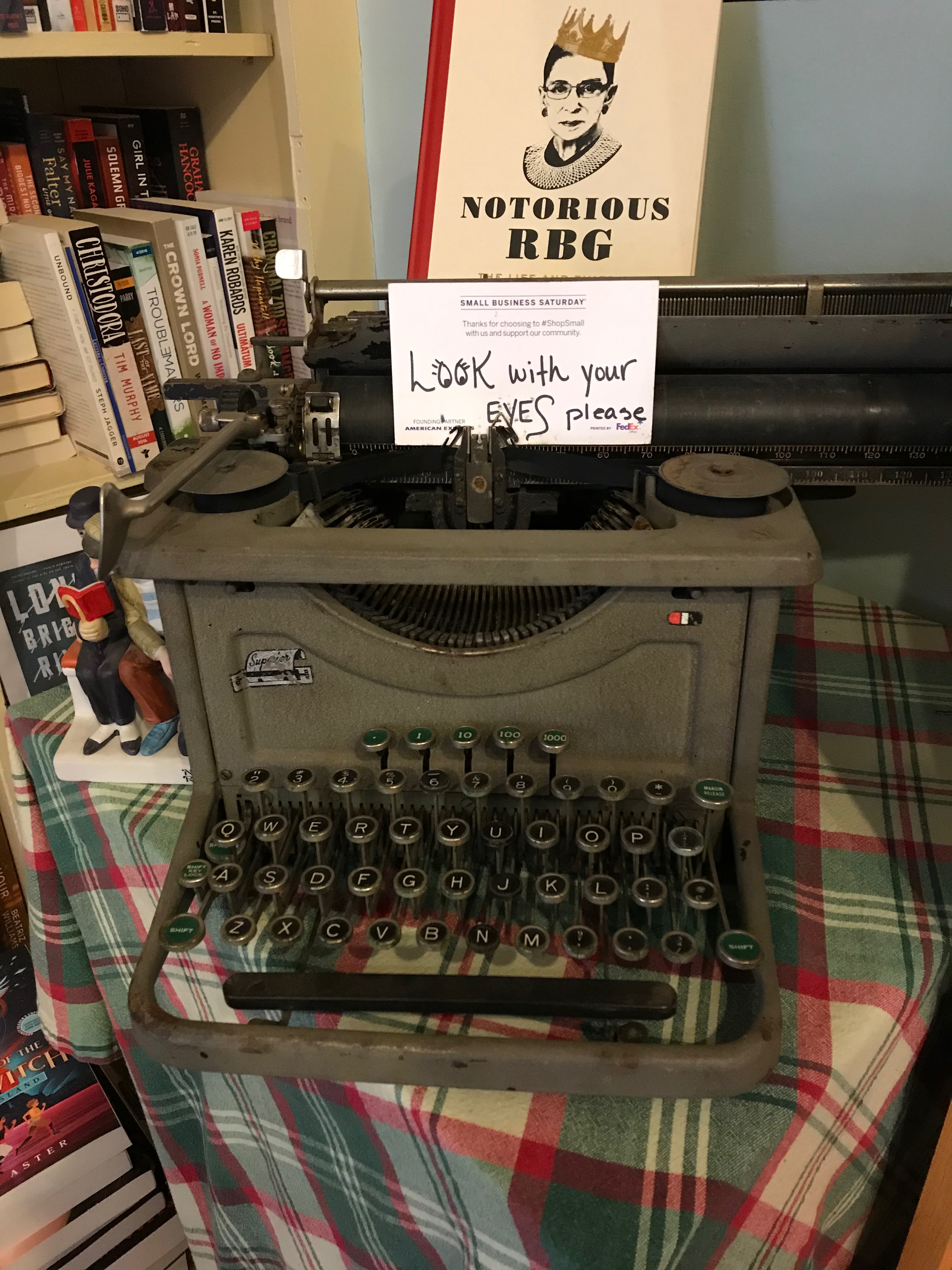
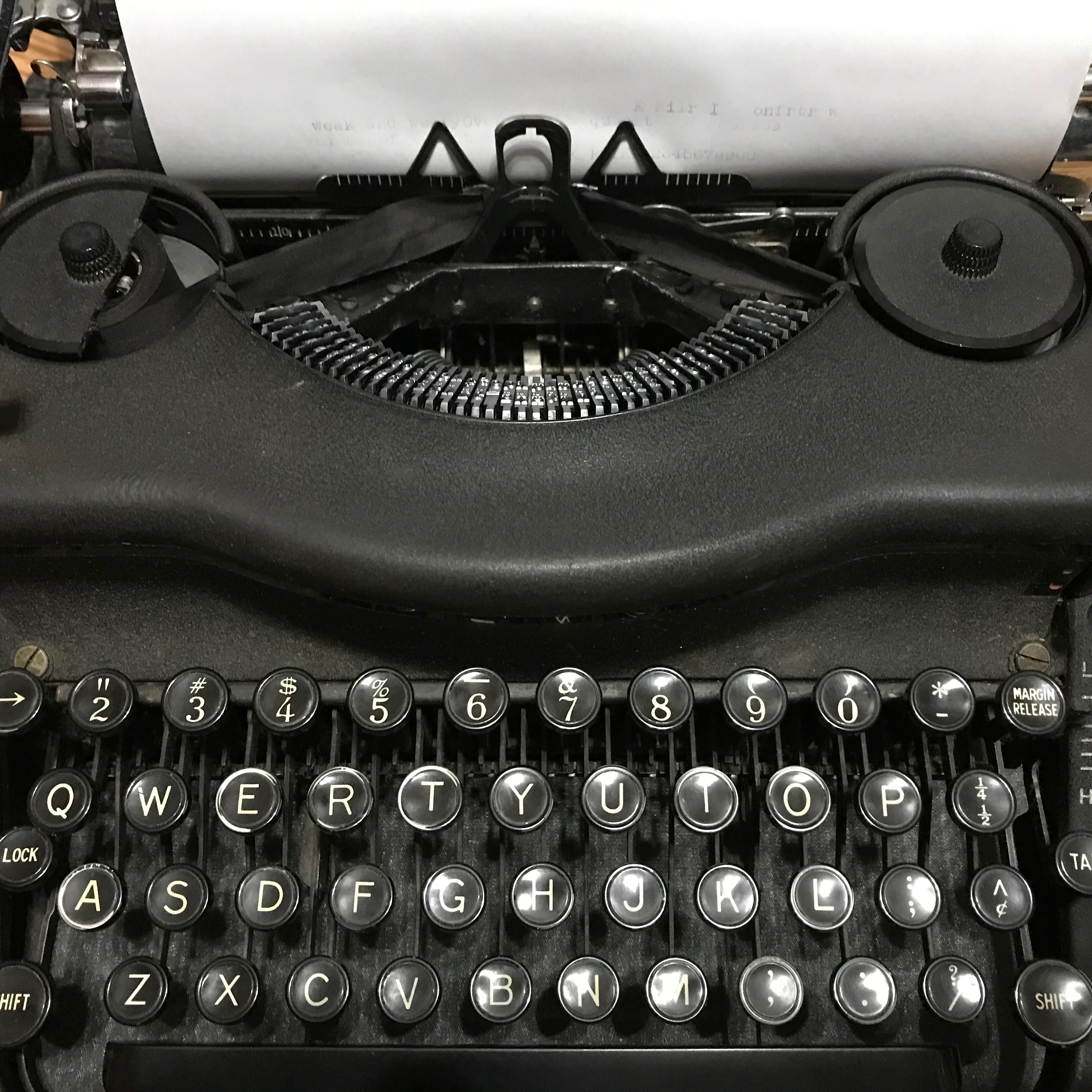
I learned to type on an actual typewriter.  For many—likely the majority—of those my age or older, that was the case.  Schools in the seventies, perhaps anticipating the computer revolution, emphasized that both boys and girls should learn typing. At least my school did.  Those were the heady days of electric typewriters that smacked the paper with a satisfying thwack at the slightest touch on the keys.  In circumstances whose details I simply can’t remember, my mother bought me an old, manual typewriter at a garage sale or something.  One thing is certain—it didn’t cost much.  It worked, however, and I typed away writing stories and plays and even attempted letters to editors.  I’d been writing long before that, of course.  Some of my early fiction was in pencil on school tablet paper and I think I still might have a few survivors from that era in the attic.

The image of the noisy newsroom full of clacking typewriters still conveys a kind of power.  Writers in those days, if they were prominent enough, could bang away at the keyboard, jerk the results out, put them in an envelope and be assured of publication.  Everything seems more difficult these days.  Computers have made writers of so many people that it’s difficult to get noticed.  More important, however, is the fact that print preserved data.  Newspaper was cheap, so perhaps the newsroom isn’t the best example.  Kept dry and in climate-controlled environments such as libraries, books keep a very long time.  Longer than the life of the author, or so it is hoped.

Data backup is now a constant concern.  A couple years back, an unfortunate bump on my own terabyte drive led to a quite expensive data recovery bill with some information lost forever.  Throughout the process I kept thinking, if all of this were printed out at least I’d be able to access it.  So true.  The vinyl market demonstrates that not everyone is willing to put up with the artificiality of electronic media.  Those who promote it tend to shy away from discussing its fragility.  Even now when I have a story published I print it out so that if the data becomes corrupted it can at least be retyped.  My most recent double-backup took an entire Saturday to accomplish.  Who knows what memory-intensive software lies behind each keystroke?  I look at the humble typewriter and tell myself that certain plateaus were perhaps more stable than the majestic mountains with their landslides and crevasses.  And I always found that clacking noise soothing, as ideas were preserved in solid form.


Reading Algorithm

I appreciate help.  I really do.  It’s easy to feel overwhelmed in this world and others offering to help out are welcome.  But you do have to wonder about algorithms.  They seem to lack human sympathy.  And perhaps the ability to count.  Every year I enter the Goodreads Reading Challenge.  I would read without it, of course, but having that extra pressure doesn’t hurt.  Because of my convoluted mental makeup, I try to get things I have to do done early.  That means I want to finish my reading challenge before I have to.  In my commuting days I read about 100 books per year.  When I stopped commuting I had to bring that number down by about half—frankly, I don’t know where the time went, but I do spend more awake time with my family, which is good.

So I’ve settled on setting my Goodreads goals at about 50-60 books per year.  I often exceed it, depending on how many big books, or ponderous academic tomes I read.  Lately I’ve set the goal at 55, which is just over a book a week.  That seems doable to me.  This year I achieved that goal in September, but that doesn’t stop me from reading, nosiree!  I’m currently somewhere near the 60 book mark and I’ll keep going.  Now the help I was referring to is this: Goodreads typically sends an encouraging email in October suggesting how to meet your goal.  My message showed, via tracker, that I’d already met my goal, but telling me I could still meet it with these suggested books.

The books suggested are fine, I’m sure.  And that this message was sent via some formula that I have no hope of being able to comprehend, I’m also sure.  An algorithm, however, doesn’t feel for you.  I’m relieved to have the goal behind me and to continue pressing on regardless.  I could use some help in getting the lawn mowed, should an algorithm like to apply.  I particularly resent having to do so while wearing a jacket and stocking cap.  It’s time for the grass to be settling down for its year-end nap, isn’t it?  Or maybe an algorithm could do my job for me.  I guess that’s not funny, because that fate has befallen many humans, I suppose.  Maybe the solution is simply to read more.  That’s not a bad thing, but I don’t need an algorithm to get me to do it.


Opinion Piece

There comes a time, I hope, when the opinion of someone with over four-and-a-half decades of intensive reading experience, might matter.  I say this because I’m constantly struck by those whose opinions actually count, and how little they often are to be considered experts.  For example, I watch YouTubers young enough to be my children treated as experts.  A little probing sometimes shows that their qualifications are the ability to get people to look at them.  Click that like and share button.  If enough people do like and share, you can be an expert.  Or take opinion columns in newspapers.  I notice the headlines for some of these in the New York Times.  They are opinions only, and yet the prestige of one of the great American newspapers stands behind them.  These are opinions worth listening to.

The popularity contest is an old and venerable tradition.  I wasn’t popular in school and wasn’t voted “most likely to” anything.  Meanwhile, those chosen as the likely leaders and novelists and beauty-pageant stars generally don’t get too far along that road.  As Bruce Springsteen sagely noted, those “Glory Days” pretty much all end up back in high school.  But as Bowling for Soup observes, “High School Never Ends.”  We like to look at the confident, the well-adjusted, the narcissists.  Their sense of entitlement carries over into hoi polloi.  The quiet and self-reflective sometimes get noticed, particularly after they’re gone.  The Thomas Mertons and Thich Nhat Hanhs.  The household names, however, are those who loudly claim they should be heard.  Just because they think they should.

Another part of this complex equation is finding a subject that interests people.  In my case, I know lots of people are interested in horror, but I also know that there are many experts out there.  Ironically, I still have people ask me about ancient West Asian religions—this is a field where you need to be immersed to stay on top of what’s going on.  The books and articles you have to keep reading are dense and heavily footnoted.  The articles are located in journals not always easily found.  Don’t get me wrong—I still miss it.  Ironically, now that I can’t keep up people are starting to ask my opinions on it.  Perhaps the same will happen with horror and monsters, but long after I’m able to respond effectively.  Experts on social media learn to monetize their interests so they can spend full-time at it.  And that does, in fact, make them experts in the very specific field of being an expert.

Photo by Markus Winkler on Unsplash

Yelp Me

Do you remember the Yellow Pages?  Or even phonebooks, for that matter?  (Or wall phones?)  They certainly weren’t perfect, but they tended to be updated yearly (at a great cost in trees).  That meant that they tended to be almost up-to-date.  You’d find the business you sought, and call them to ask for their hours, or directions.  Now we rely on the internet, of course, and the number of businesses that you can find has exploded.  And they open and close with bewildering rapidity.  It took me a couple years of googling to figure out that Yelp was a rebranding of the Yellow Pages.  I also feel sorry for any company that has to try to keep up with the current status of things.  It does seem, though, that Yelp could use some help.

Although it might seem impossible, many businesses still exist without websites.  And if you’re looking for a type of business in a specific city or town, you need to know, first of all, what’s there and what’s not.  The big boxes are never a problem, of course.  When I travel to a new location, however, I want to know what bookstores I’m likely to find.  I’ve done this a number of times recently.  Type in a city name and “bookstore.”  (In the case of Reading, the city name didn’t help at all.)  Yelp helpfully shows up at the top but it lists many establishments that have closed.  Even some of those that are open are virtual and don’t have a store you can wander around.  More than once I’ve come to a place only to discover there’s no longer anybody home.

Independent bookstores have been doing pretty well through the pandemic.  Many people have rediscovered reading.  Since they are seldom crowded, they feel like safe spaces during Covid.  And chances are that people who hang out in bookstores have been vaccinated and will likely be wearing a mask.  The problem is finding such places.  I have to say that Pennsylvania seems to have a healthy population of bookstores.  There are several in the Lehigh Valley and I’ve been pleased with the treasures I’ve discovered elsewhere as well.  Finding them hasn’t always been easy.  One of my favorite used bookstores here in the Valley folded during the pandemic.  Fortunately there are others.  Google maps sometimes work better than Yelp, but nothing beats getting out and exploring on your feet, except sitting at home later and reading what you’ve found.


Myth of Ownership

“Luddite” doesn’t really describe me.  I don’t have a problem with technology, but I often object to how its used.  Let me give an example or two.  You spend your hard-earned money on a device—smart phone, for instance, and/or a laptop computer.  These you use for your personal email, which you’re not allowed to check at work, and for paying bills and buying new stuff.  So far, so good.  But once these devices become ubiquitous enough, others presume the right to use them.  Never mind that you’re paying for the internet plan and your likely unreasonable monthly fees for using that phone.  Employers, for instance, concerned about their own security, require you to use your personal phone for some kind of authentication app to protect their assets.  Hmm, and who is paying for the data use on that phone?  And the wifi that makes it work?

Or consider a volunteer organization that’s taken over by a technocrat.  Suddenly you have to set up Dropbox on your laptop (with its attendant frequent emails asking you to upgrade until he seated on a white horse comes through the skies).  You can’t participate without access to the Dropbox.  Or maybe they want you to join Slack.  The problem, it seems to me, isn’t that we don’t have enough way to communicate.  No, the problem is we don’t communicate well with what we do have.  Terse messages may be understandable for smoke signals or telegrams, but a greeting, body, and closing aren’t too much to ask for an email.  I don’t text largely because too many misunderstandings occur from the brevity, and not infrequently, from auto-correct.

I use technology daily.  For about a dozen years now I’ve been posting daily right here on this very internet.  A have a neglected Twitter account and I glimpse Facebook for, literally, about two minutes per day.  I can be reached on LinkedIn (and no, I don’t have any jobs to offer), Instagram, and yes, even Slack.  We’re all available to each other constantly, but communication breaks down when we don’t communicate clearly.  A writer I greatly respect once told me emojis are cheating.  I tend not to use them, but they may help the terse text go down a little more smoothly.  We are all challenged for time.  There’s so much to do and we’re not getting any younger.  But I was born in an era in which if you use somebody else’s stuff you ask nicely first and said “thank you” after.  Especially if they’re paying for you to use it.

Who owns whom?

Standard Maintenance

Something disturbing happened the other day.  My laptop started requiring constant plugging in.  I figured the battery was starting to go—it is several years old now.  Since time is the ultimate commodity in short supply, I made a weekend appointment with a genius at the local Apple store, which really isn’t that local.  I drove out on a rainy Saturday afternoon to get the battery replaced.  That’s not the disturbing part.  Neither is the fact that so many people were flocking around in an Apple store without wearing masks (although that does count as disturbing in it’s own right).  As I sat there watching the giant projection of devices I should consider buying, my daughter mentioned to me how like a dystopia it was: being subjected to advertising aimed at purchasing something you’re in to have repaired.  That wasn’t really the disturbing part, either.

No, what was disturbing occurred when our genius told me I would need to leave my laptop there for three-to-five days for it to be repaired.  I use my laptop daily and extensively each day.  I have no spare and I post daily on this blog.  (Those times when a post doesn’t appear it’s because I think I’ve hit the “publish” button but I haven’t.  That happened to me again recently and I only discovered days later that WordPress was listing it as a draft.  Sure enough, I’d gotten so busy I’d not click “publish”—which happens, ironically, mostly on weekends.)  I was hit with panic.  Could I live for three days, up to a week, without my laptop?  No email.  No blog.  No ubiquitous Zoom meetings outside of work?

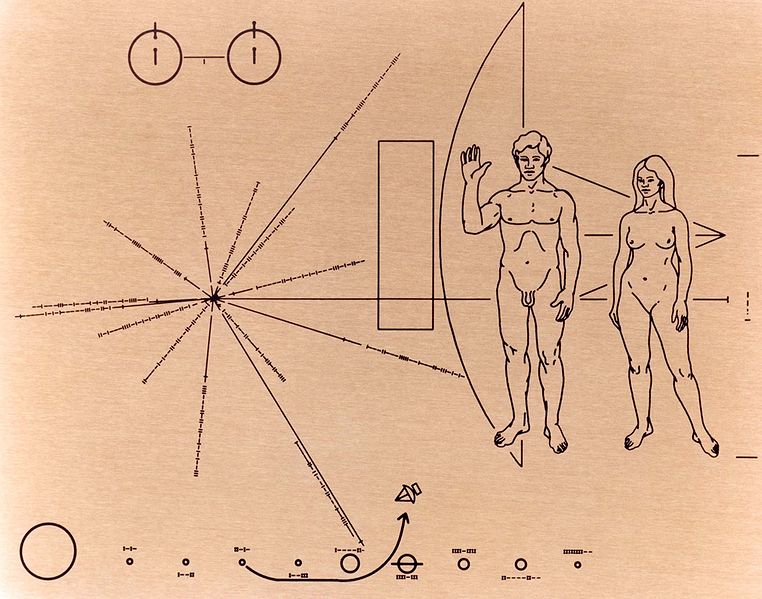
Even before the pandemic the internet had become my lifeline to the larger world.  And the thing is I’m sending my thoughts out like a Pioneer probe to that outer space of the web, not sure if anyone will intersect with it and understand the gold-plated plaque within.  At least I hope it’s gold-plated.  I’ve been blogging here since 2009, at least one laptop ago (or perhaps two).  I’ve posted over 4,500 times.  What would happen if the earth went through the tail of a comet and wiped out all this electronic data?  Would there be anything left at all?  That’s the part I found disturbing.  My ambivalence about technology doesn’t mean I’m not addicted to it.  I was spared an immediate crisis since the genius at the bar told me the battery (being such an old model) was out of stock and would take a few days to arrive.  Meanwhile I could continue to live in my virtual world as normal.


In Praise of Paper Maps

One of the tricks, I’ve mentioned before, for getting around accessing books I can’t afford, is the used book market.  Now Amazon is probably just about as bad for small business as Walmart is, but it does seem to have its logistics down.  (Most of the time, anyway.  Early in the fall I ordered some horror movie DVDs.  One of them was out of stock and Amazon eventually sent me a notice that it was lost in shipping.  Would I like another, at no extra charge?  Shipped to the same address?  Of course I said “Yes!”  But they shipped it to my mother instead.  Most of us are probably embarrassed about what we watch and don’t want our mothers to know.  In any case, she had it forwarded on and I received it a mere two months after ordering it.)  They also let you track it.

If, however, you buy used books from Amazon, you may need to go with a separate vendor’s shipping.  (I tend to use BookFinder.com, but lately it’s been routing me back to Amazon.)  So it was I ordered something with a projected delivery date of October 25–29.  Not too bad.  It’s not like I need it for a book I’m writing or anything.  I was cheered, then, when on October 14 it was tracked to Secaucus, New Jersey.  I used to go through Secaucus every day on the bus.  Twice.  Surely I would have my cheap source before the 25th!  But my package likes Secaucus, apparently.  Once it got there every day the USPS tracking system assured me it hadn’t moved at all.  “You signed up for delivery on October 25–29 didn’t you?  Well, you’ll get it then.  Perhaps.”  Wouldn’t it be nice if shipping had the option of “Your package is pretty close, do you want to collect it yourself?”  Then on the 22nd I learned it was in Glendale Heights, Illinois.  It arrived on the 25th.

Why do I write these things?  (This isn’t the first time, young man!)  It’s because I think they’re funny.  To me, a society that has lost its heart to technology has to be ready for some laughs now and again.  (Some of my critics think I’m complaining; I guess I need more irony in my diet.)  Life during a pandemic has become one of having stuff shipped.  From last year’s toilet paper from China to my current academic book that’s just too expensive to buy new, I sit with my ear cocked for the Amazon footstep on my front porch.  And occasionally getting into my car to drive to a distant post office just because, well, it’s easier for me to find them than for them to find me.


Quest for Quest

The Quest for the Wicker Man is a rarity.  Not only is it very difficult to locate and very expensive if you do find it, it’s also a collection of essays where each one is worth reading.  I’d read some of it before, but since I’m writing a book on the movie I thought I ought to sit down and go through it cover to virtual cover.  I had to settle for a Kindle version—please bring this back in print!—and was reminded yet again why a paper book is so much more satisfactory as a reading experience.  You see, I’m a flipper (not the dolphin kind).  I like to flip back and forth while I’m reading.  Clicking and swiping (both of which, coincidentally, dolphins do) isn’t satisfying.  And if you underline in a Kindle everybody else can see it.  I prefer the privacy of a print book.

In any case, if you’re interested in probing a bit into The Wicker Man you’ll find quite a lot of information here.  (Available on Kindle for a reasonable price, if not a comfy reading experience.)  Many aspects of the film are covered here.  One thing I won’t be discussing in my book is the music.  Firstly, I’m not qualified to do so, and secondly, it is done well here.  Essays also discuss religion (which I will discuss in my book), paganism (ditto), and many other aspects.  This is a book of conference proceedings—a boon for fans, but bust for most publishers.  It’s also a boon for those who like marking up used books to the tune of 64 cents per page (the lowest price on Amazon).  

Some of us believe a page is an ontological entity.  Once narrative writing began those responsible for clay tablets soon settled on a size that is, well, handy.  You can hold it easily.  That concept translated to the codex, or “book” as we know it.  Scrolls were cumbersome, but books offered many advantages.  For hundreds of years they were the standard-bearers of accessible knowledge.  I miss page numbers when reading an ebook.  I don’t want to know the percentage of screens I’ve swiped.  I want to know how many pages I’ve read, what page I’m on, and how many pages there are to go.  (The best of electronic books preserve that information.)  The book was not a form that required improvement.  Well, at least that digression kept me from giving up too much information about my book.  If you want to read it, when it comes out, I recommend the print form.