Considering the Time

Does anybody else find the name “Office 365” ominous?  Perhaps I’ve been reading too much about Orwell, but the idea that work is waiting for you every single day of the year is worrisome.  The way people unthinkingly buy into technology is a way of being used.  Like Cassandra, however, I get the feeling I’m just talking to myself.  365 could simply mean it’s always available.  For me, however, the PC is symbolic of corporate America.  And corporate America wants everything thing you have, at least if it can be liquidated.  That includes your time.  Now that the weather’s improving I spend beautiful days sitting at a desk behind a screen.  Before I know it that beautiful day’s gone for good and I’ve not stepped outside once.  I’ve been 365ing.

An organization I know has a dysfunction.  It keeps trying to plaster on technological bandages to solve its problems.  Such bandages only pull the wounds open again when they’re yanked off.  It’s the latest thing, the new communication technology that “everyone will use.”  Only it never is.  It’s just one more app that I’ll have to learn and yet another way to invade my private time.  Time I might otherwise spend outdoors.  Look!  The sun is shining!  All day long the birds and bees fly by my windows, celebrating.  I’m sitting here scratching my head.  Yammer or Slack?  And who comes up with these stupid names?  And are they available 24/7?  Do they even take into account that human beings have to sleep?

Studies now show that people my age who routinely get less than six hours sleep a night have a greater risk of developing dementia in their seventies.  Yet Office 365 will be waiting even for them.  Those whose retirement funds were never as secure as they hoped or thought they were face a future at the Office.  It will be there, always waiting.  Like Winston my time comes at a cost.  It’s the chill, early hours of the day.  Even as I work on my personal writing (which is not even done in Word, thank you very much), I know that the Office—which now includes Teams and even holds my calendar in its icy electronic fingers—is waiting.  Perhaps, if it’s a weekend, I’ll be able to stave it off a bit.  Even if I can, however, it will be waiting 24/7, 365.  Only time outside those parameters can be called one’s own.

Artificial Priorities

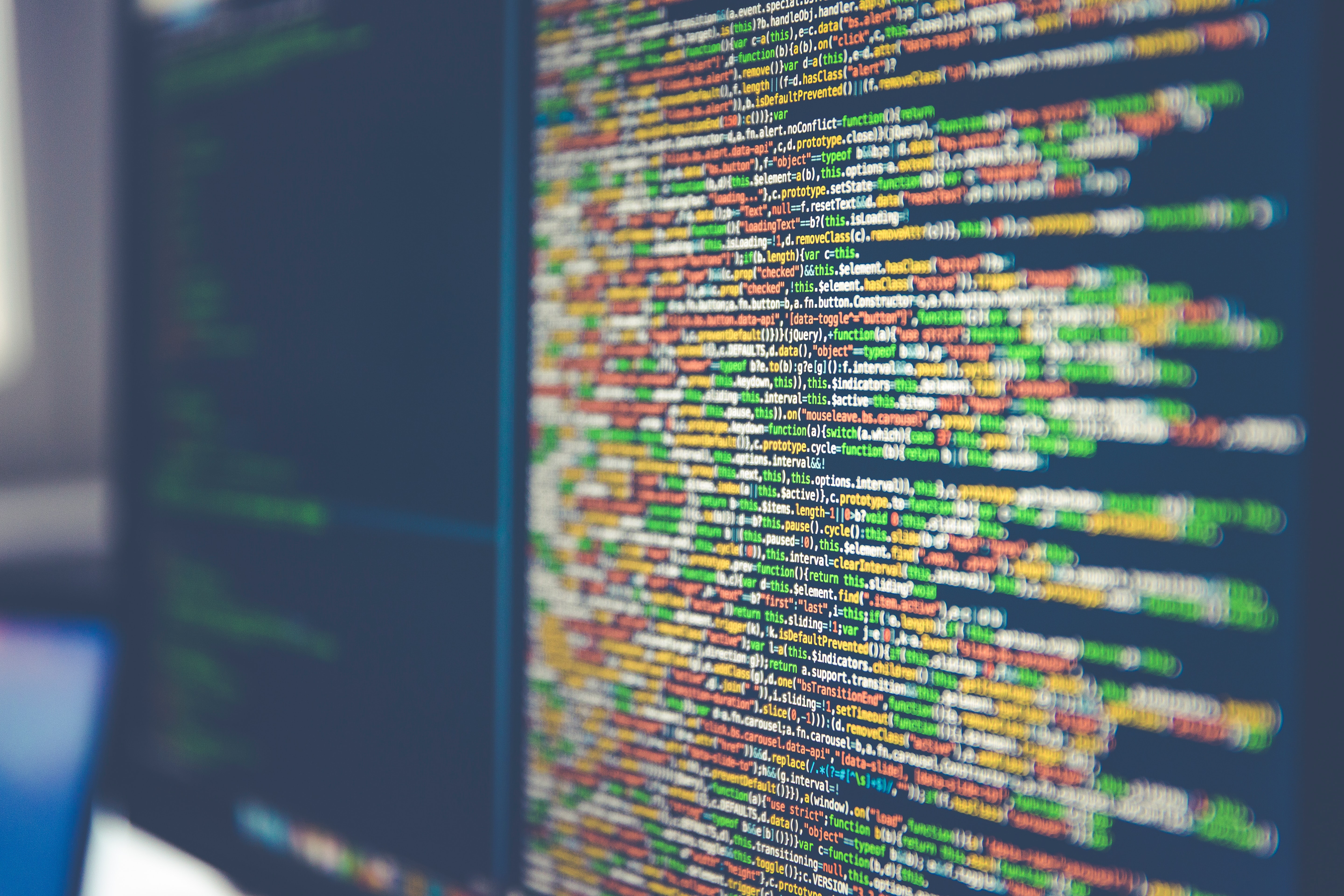
Maybe it has happened to you.  Or perhaps it only affects ultra-early risers.  I’ll be in the middle of typing a blog post when a notice appears on my computer screen that my laptop will be shutting down in a few seconds for an upgrade.  Now, if you’re caught up in the strengthening chain of thinking that develops while you’re writing, you may take a little while to react to this new information.  If you don’t respond quickly enough, your computer simply quits and it will be several minutes—sometimes an hour or more—before you can pick up where you were interrupted, mid-sentence.  Long ago I decided that automatic updates were something I had to do.  Too many websites couldn’t run things properly with old systems.  It’s just that I wish artificial intelligence were a little more, well, intelligent.

Photo by Markus Spiske on Unsplash

I keep odd hours.  I already know that.  I’ve been trying for years to learn to sleep past the long-distance commuting hour of three a.m.  Some days I’m successful, but most days I’m not.  That means that I write these posts when computer programers assume everyone is asleep.  Doesn’t it notice that I’m typing even as it sends its ominous message?  Is there no way for automatic updates—which send you warnings the day before—can do their work at, say, midnight or one a.m., when I’m never using my computer?  Ah, but the rest of the world prefers to stay up late!  I need the uninterrupted time when few of us are stirring to come up with my creative writing, whether fictional or nonal.  So I have to tell my electronic conscience to be patient.  It can restart at ten p.m. when I’m asleep.

Wouldn’t it be easy enough to set active hours for your personal devices?  After all, they pretty much know where we are all the time.  They know the websites we visit and are able to target product advertising to try to get us to buy.  They data-mine constantly.  How is it that my laptop doesn’t know, after many years of this, that I’m always working at the same time every day?  Is there no way to convince it that yes, some people do not follow everyone else’s schedule?  What about individual service?  You know what brands I like.  You sell my information to the highest bidder.  You remember every website onto which I’ve strayed, sometimes by a poorly aimed click.  I could point out more, but I see that my computer has decided now is the time to resta


The Cost of Content

Those who don’t read this blog (you, my friend, are in a rarified crowd) aren’t aware of my antipathy to tech for tech’s sake.  Many people mindlessly go after the latest technology without stopping to think of the consequences.  I was reluctant to get a cell phone.  Not a decade ago I got along fine without one.  When I finally succumbed, I found I didn’t use it much.  I still don’t.  Nevertheless, many have charged ahead.  It’s not the first time I’ve been let behind.  I recently wrote about an organization I joined that unilaterally decided to make all members sign up for Slack.  “It’s better than email,” they said.  What they didn’t say is that it doesn’t replace email.  In fact, what it does is gives you yet another communication medium you have to constantly check.  Why?

Not that long ago—a year or two perhaps—it was recommended that you ask people what their preferred form of communication was.  Phone call?  Text?  Email?  Well, my cell phone plan charges by the call and text so please don’t use that.  My preference, since about the last century, has been email.  I check it regularly and I respond as long as emails don’t get buried by others on top of them.  What did my organization do?  Went to Slack.  How long, I ask, will it be before advertisers and others figure out how to do the Slack stack?  How long before a new technology (giddy giggle) comes along and we all have to do that instead?  I’ve lost track of the number of software packages and apps I’ve had to learn for work.  Several dozens at least.  What suffers?  The content does.

Now I get three or four, or nine or ten Slack notifications a day, through my email. (My computer has no room for a nw app.)  It has compounded the premature burial issue I’ve got.  That email that arrived just yesterday is now on page two.  When will I have time to navigate to it?  I guess I’ve been slacking off.  So now I check my email to see if there’s another system that I have to check to find out someone wants to contact me.  I miss the days when humanity drove communication instead of technology doing it.  Learning some new system isn’t always the solution to complex problems.  Or at least we can find out the preferences of the individual before making them learn (and probably eventually forget) a new communication system.  It seems to me that we should be spending actual time on the content of the communication itself instead of playing with new toys.


Clippings

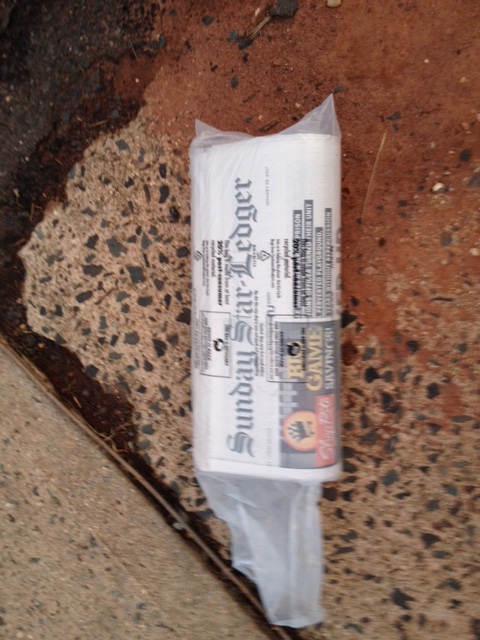
Weren’t newspaper clippings more fun than bookmarks?  For one thing, bookmarks are hidden away in your browser where they proliferate like bunnies in April.  Clippings were always limited in number, to the level of your interest.  Or physical storage capacity.  I once decided to organize all my bookmarks into “folders.”  I’m still not finished and some websites don’t seem to fit any category.  Still, the exercise is an eye-opening one.  I’ve been on thousands of webpages, hundreds of which I want to remember.  With newspaper clippings, there were a limited supply and they felt—let’s face it—real.  These words and images were printed on tangible paper.  Kept in a file (or in old movies, tacked to a bulletin board that inevitably contained clues), they were visible reminders of something that caught your attention.

I’ve seen movies made where research is being done on the internet.  They involve people who know they have to go beyond the top page of a Google search.  They may even go to the third page or further!  Such thrills.  Compare that to a scene where someone pulls open a desk drawer and finds a clipping.  Isn’t there real drama there?  No doubt the internet has made finding information easier.  It has also proliferated it so that we no longer have time to read it all.  I recall reading how Isaac Asimov read the entire encyclopedia when he grew up.  Who could read all of Wikipedia?  It changes every single day.  The clipping file, depending on the papers and magazines to which you had access, might be pretty slim but it helped to inform opinions and outlooks.  There were occasional hoaxes but nobody worried about fake news back then.  After all, reputations still meant something in those days.

There was a real thrill, growing up in a small town, to being mentioned in the newspaper.  In my case it was generally about being in the Cub Scouts, or, interestingly, being baptized in a river.  (This was a small town.)  Ironically I didn’t have a clipping of the baptism story; I found it online.  The Franklin News-Herald wasn’t a large circulation broadsheet, but it was paper closest to where the incident took place.  Perhaps it struck a locals as odd seeing a bunch of people wading into the river fully clothed, even though it was 1970.  It’s an event I remember well.  But most of my clippings have flowed away over time, like those sins that were washed downstream that day.  I must remember to bookmark that site.


Slacking Off

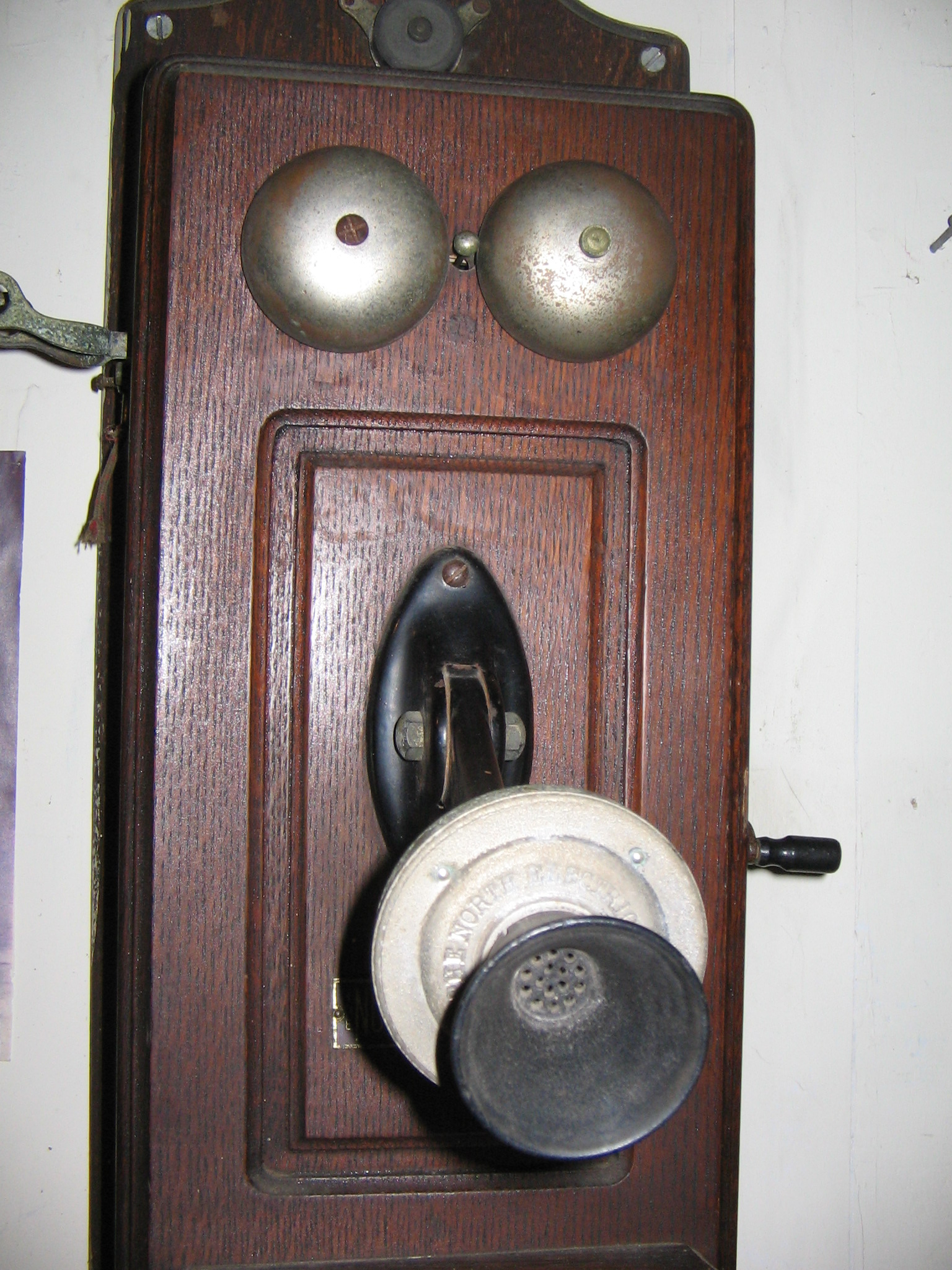
The other day someone on a committee on which I serve suggested we might eliminate the problem of buried emails by using Slack to communicate.  The problem, it seems to me, is that we have too many ways to communicate and yet lack the means to do so well.  For me email is indicative of the problem.  Email was devised—and I remember its beginnings well—as a means of swift communication.  The only real options before that were writing an actual letter (which I miss) or telephoning.  At that time you might have a cordless phone that you could carry from one room to another but you probably did not.  The phone was relegated to a place on a wall or table and, although I appreciate knowing things quickly, the fact is we got along in those days.  Junk mail was evident at a glance.  You sorted it and life went on.

Now email has taken over life.  I simply can’t keep up with it.  Some time ago Google offered a trifurcated email experience: primary, social, and promotional.  Their algorithms aren’t perfect (numbers seldom are) but I can often ignore large swaths of the promotional page.  That saves time.  Most of the social is dominated by people I don’t know wanting to connect on LinkedIn, or someone mentioning something I should pay attention to on Facebook.  Or perhaps something going on in the neighborhood on Nextdoor.  Primary deserves its name, but I can’t keep up with even that.  You see, I have a full-time job.  It largely consists of reading emails.  If I get a personal email in the morning, chances are it will be buried on the second page by the time the day’s out.  It may never been seen again.  I don’t need another new way to communicate.

The pandemic has introduced the new malady of Zoom exhaustion.  It isn’t unusual for my entire weekend to be taken up with Zoom.  If I don’t have a good part of a Saturday to sort my emails into files things I promised I’d do begin to slip.  I don’t see that email—the one that serves as a reminder to this addled brain of mine.  If I order something on Amazon I have to follow up on an email asking me to rate the service.  And then, if it’s not sold directly by Amazon, a vendor fishing for a compliment.  That after getting an email to confirm my order and another to tell me it’s been shipped.  No, please don’t subject me to Slack.  Or better yet, send me an email about it.  I’ll get to it eventually, as long as it stays on the first page.


Too Fast

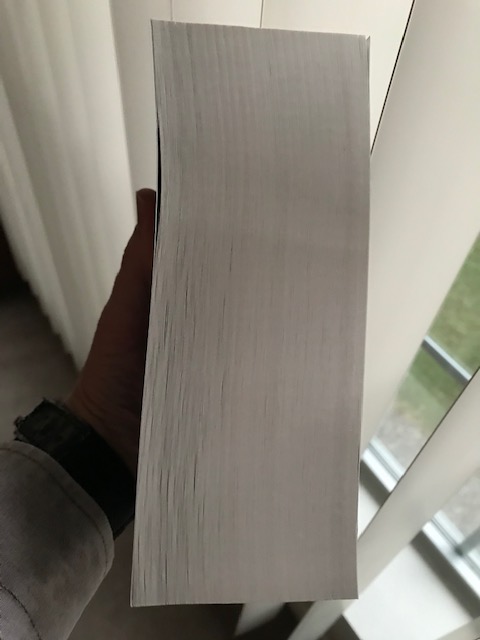
In the Easy Reader book Hooray for Henry (available on Amazon for $768.57; that’s $12.60 per page), our eponymous protagonist Henry can’t win any of the events at the picnic games.  One of the refrains as he participates in the races is “faster, faster—too fast” (I may have got the punctuation wrong, but then I haven’t read the book for at least a couple of decades and I can’t afford a new one).  That story seems to have become a symbol for those of us mired in technology.  The rate of change is, as in Henry’s experience, too fast.  The other day I noticed an annoying warning on my laptop that claims I’m low on memory and that I have to close some applications.  What with all that tech requires of us these days I probably do have too many things open at once.  It pops up, however, when I have even just one application open.

A web search revealed this is probably a virus (something that used to be rare on Macs, but that was back in the day when things moved a little slower).  The steps for removing it were technical and appeared to be extremely time-consuming.  What I don’t have is time.  And it’s not just my rare time off work that’s too full.  On the job we’re constantly having to learn new software.  It doesn’t really matter what your line of work is, if it involves sitting behind a computer we’re constantly being told to learn new applications while trying to find time to do the jobs we’re paid to do.  There’s no question of which is the tail and which is the dog here.  With an economy driven largely by tech, because that’s where all the jobs are, you risk everything if you don’t upgrade (about every two weeks at present).

I’ve been writing a long time.  Decades.  Some of my earlier pieces are no longer openable because the software with which I wrote them has been upgraded to the point that it can’t read its own earlier writing.  To the prolific this presents a real problem.  I have, literally, thousands of pieces of writing.  I can’t upgrade every single one each time a new release comes out.  The older ones, it seems, are lost forever.  I used to print out every post on this blog.  Given that there are now even thousands of them, I eventually gave up.  I know that they will inevitably disappear into the fog some day.  For writers who’ve been discovered after their deaths this would be a Bradburian fate.  Or perhaps a Serlingesque twist.  The world realizes a writer had something important to say, but her or his writing can no longer be read because the tech is outdated.  Faster, faster—too fast.


In Praise of Brevity

I recently read an article in praise of short books.  Marina van Zuylen, whose response led to the article by Steven Weiland, praises not only brevity, but also print.  There is a difference between reading an actual book and reading something on a screen, even if an actual book of it exists somewhere.  I don’t buy the argument that books are clutter.  Books are my life, and if you start tossing them out you might as well start chopping bits off my body.  But it’s her thoughts on short books that really caught my attention.  Not that there’s anything wrong with long books.  Good ones are like getting lost in a pleasant mind-forest.  But I miss short books and the sense of accomplishment they engender.

Maybe like me you see a book online and get excited.  You really want to read it and then you click on its landing page and learn it’s over 300 pages long.  Or 400.  Or more.  You stop to think; do I really want to invest that much time on a single book?  As van Zuylen explains, some tenure committees don’t take short books seriously.  They want heft.  This blog should stand as proof that anyone can multiply words.  There are well over a million words on this blog alone.  As a book this blog would be about 3,650 pages.  Without footnotes.  But it’s not a book, and that’s the point.  Your time is valuable.  You’re choosing to spend a little of it with me (Thank you!).  I keep my posts around 400 words.  A five-minute read.  And I like books that I can finish in a week or two, along with my full-time job and other life responsibilities.

The electronic revolution—as good as it’s been—distorts things.  Even the very definition of “book” is up for grabs.  My mind always goes back to the scriptoria with weak-eyed monks rubbing aching backs as they laboriously copied books out by hand.  Today we don’t even wait for the paperback, but download it instantly.  How is this the same?  And yet we have less time than ever.  That’s why I enjoy short books.  Some of the most impactful (oh, that word!) books I’ve read have been brief.  As Pascal long ago noted, it’s more difficult to write a short piece than a long one.  So I join Dr. van Zuylen in her praise of the short book.  Long may they live!

At least it’s real…


Look, New…

You may’ve noticed a new look to my website.  That isn’t intentional.  I woke up Friday only to learn that Word Press (which used to be friendly to individual bloggers) decided to change at least one of the few templates they allow paying customers to use (if I upgrade even more to “business class” I have lots more options).  One of those templates happened to be the one I’d labored over, sacrificing an entire weekend about a year ago to get it just how I liked it.  Now, I’m a Neo-Luddite.  Behind the scenes my daughter and one of my nieces have helped me with technical aspects of this blog from the very beginning.  Several years ago I reached capacity for the free service, where, understandably, templates are limited.  Now I pay for both the domain name and the privilege of hosting it on Word Press.  But they like to limit privileges to try to force you to upgrade.  What would Amos say?

A few weeks back my iPhone began to lose its charge at an alarming rate.  I’d unplug it, and, doing nothing but occasionally checking for non-existent texts, it would be red-lining a couple hours later.  I feared I might need to get it serviced.  This went on for several weeks.  It occurred to me that Christmas was approaching and Apple has been known to slow down devices in order to encourage you to buy a new one.  Upgrade!  Everybody’s doing it!  Well, I don’t make enough money to constantly upgrade, so I kept my phone plugged in all the time when I was home (which, during a pandemic, is pretty much all the time).  Then, a few days after Christmas, when it was clear I wasn’t buying a new one, the battery began to hold its charge again.

The tech industry has us in a strangle-hold.  As soon as you purchase that first laptop, tablet, phone, or smart-watch, you’re an indentured servant to upgrades.  So I went to Word Press’s template library and tried to find something that didn’t look too bad with the images and “feel” I’m going for here.  Almost as if they’d chosen an algorithm that made available only a handful of templates that worked worst with what I’m trying to do on this website, I found their selection extremely limited.  If I upgrade to “business class” (which I will need to do when the capacity for my “service level” (not cheap) is full) I will have a plethora of choices.  Until they add a new service level above that, that is.  Then I’ll need to upgrade yet again to unlock all the neat features they “offer.”  Thanks, Word Press.  I’ve been with you over ten years now and I have to ask, is that the way you treat a longterm, paying friend?

Remember this?


Internet Nowhere

So I wake up early.  I’ve been trying for years now to learn to sleep in a bit.  Somehow my body got to thinking the outrageous commute schedule to New York City was normal and I can’t convince it otherwise.  That means my most productive time comes before others awake.  It also seems to be the time favored by internet service providers to take their systems offline for a while.  You see, like any system the internet needs down time.  I slept in until 3:30 this morning and awoke to find internet access unavailable.  I use it during my writing, looking up answers to questions which both my fiction and non raise.  When the internet’s out there’s little I can do, but I’m already awake.  Society prefers conformists, but some of us maybe hear a different beat on our march.

The fact is we expect constant connectivity.  Many of us pay a significant monthly amount to ensure that we have it, but this is no guarantee.  Calling your local service provider at 4 a.m. on a Saturday (I’ve done this) is like dealing with IT at work: they really have no clue what’s wrong but they can talk technical to you, if that makes you feel good.  After all, it’s in the middle of the night.  So I try to decide on something else to do.  Reading works.  Books, however, often lead me to want to look something up.  But the internet’s down, at least around here.  We are utterly beholden to the tech industry that can (and does) wink out from time to time.  When the robot uprising occurs we just need to wait for the service maintenance hour.

I reboot my router.  It’s the first course of action when the internet’s out.  I think I’ll check out a personal hotspot, but to do that I need the internet.  It’s a great, constant feedback loop.  I suspect I’m not the only early riser who faces the internet dearth in the wee hours.  I know I’m overpaying because my data (whatever that is) plan on my phone always shows a monthly surplus.  When it comes to the techies, you just nod your head and pay your bill.  I do wonder what’s happening in the wider world.  Without the net you feel especially isolated in pandemic times.  It’s Saturday morning and the internet’s unavailable.  Back in my teaching days I know just what I’d be doing.  Instead I’m waiting for technology to catch up.


The End of Snow Days

It’s a chilling thought.  An article in the New York Times said it, but we were all thinking it.  Snow days may well have become another victim of Covid-19.  No, it’s not snowing yet (but give climate change a chance!), but New York City schools have figured out that if students can learn from home then one of the truly treasured memories of our youth may no longer be necessary.  In fact, snow days ended for me when I began working remotely.  My supervisor had suggested, even before that, that I take my company laptop home daily, in case of inclement weather.  The idea of awaking, wonder-eyed, at the world covered in white—that cozy feeling of knowing you had no obligations for the day but to enjoy the pristine world out your window—is a thing of the past.

Technology has changed our lives, and some of it is even for the better.  It hasn’t made work easier for some of us, but has made it longer.  We used to talk about kids and their continuous partial attention, but now work is always at home with you and that time signature on your email says something about your work habits.  As the days are now shorter than the nights, as they will be for six more months, finding the time to do what you must outdoors (it may be cooler, but lawns still insist on growing) is always a bit more of a challenge.  And when the snow does fall you’ll still have to shovel the walk.  All time has become company time for a truly linked-in world.

The real victim here, it seems to me, is childhood.  Snow days were a reminder that no matter how strict, how Calvinistic our administrators wanted to be, the weather could still give us a smile now and then.  A legitimate excuse not to have to go to school and, if parents couldn’t get you to daycare, a day off for everyone.  The strict number of limited holidays allotted by HR had limited power in those days.  Although we all know that well-rested, happy workers tend to do better jobs than those who are constantly stressed out and who have trouble sleeping, we’ve now got the means to make the sameness of pandemic life the ennui of everyday life, in saecula saeculorum.  Thanks, internet.  At least now we work where we have a window and can look out on nature and can see what we’re missing.


Eureka?

It’s weird to feel yourself becoming a curmudgeon.  Especially when it’s about technology.  Someone asked me the other day if I could send an audio file of something I’d recorded.  I stopped doing podcasts because I lost track of the server that had been hosting the files.  My “inbox was full” or some such nonsense—they’re just electrons, folks.  I’m already paying for the space to host this blog and one thing I know about audio files is they take up lots of space.  My laptop reminds me of that every time it wants to update.  Well, I recorded the requested audio file and wanted to send it along.  I couldn’t find it.  Now, I’m one of those people who started using Apple computers because they were intuitive.  You could easily guess, or reason out, where things were.  It’s not that way anymore.

I had to do a web search (use Ecosia!  They plant trees for your searches!) for where Macs store your audio recordings so that I could send it.  Buried deeply in a directory that has a nondescript name that you’d never possibly guess (it’s as if someone were to assign you Concluding Unscientific Postscript during a game of book-title charades), the helpful site said, you’ll find it.  It’s in your “Library.”  Well sir, Mac had decided that you no longer needed to navigate your way to your Library and that directory was hidden.  Another Ecosia search—more trees—and I learned that you could do a special preference tweaking (it only took four or five steps) so that your computer would display your own Library and you could find your renamed file that you’d created.

Back in the day (here’s the curmudgeon part) when you had to swap discs—floppies—and the computer had the memory capacity of a Republican senator, you knew which disc had your files.  To access them, you simply inserted the disc.  Later they were stored on the hard drive itself and the directory told you right where you’d find them.  Now who knows where your created content is stored—out there on a cloud somewhere, I hear.  That doesn’t help when a friend asks you to send a file.  I had no idea where it even was.  It’s job security for the tech sector, to be sure.  At least it helped me to plant some trees along the way.  Back in the day we used to say you can lose sight of the forest for the trees.  It works, it seems, the other way around as well.


Upgraded at Last

Those who pay close attention to labels may have noticed the tag “Neo-Luddism” appended to some of my blog posts.  Luddites were nineteenth-century protestors against machines because, their thinking went, machines denied people jobs.  I’m not fully in line with this way of thinking, of course, but I do occasionally point out the ironies of how our technological life has become, well, life.  Tech seems to have taken over life itself and some people really like that.  Others of us miss the outdoors and even the “free time” we used to have indoors.  Our computers, phones, iPads, left behind and maybe a physical book cracked open—this seems a dream at times.  I really do enjoy our connected life, for the most part.  It makes this blog possible, for instance.  What I object to is being forced to upgrade.  That should be a decision I make, not one thrust upon me.

Which cloud is it?

This is just one small instance of what I’m talking about: my laptop wants an update.  It has for a couple of months now.  Since it’s in rather constant use I can only devote the time to it on the weekends and the past four weekends have all been used up with other things, including two that had over eight hours of Zoom meetings scheduled.  Now, you see, the update isn’t just a matter of simply updating.  You need to clear space off your computer first.  I like to keep my files and the tech companies want to pressure me into keeping them on “the cloud” so they can charge me for the privilege of accessing the things I created.  Instead I back them up on terabyte drives, sorting as I go.  Photos, formerly iPhotos, take seven or eight clicks to upload and delete for each and every set.  If you snap a lot of pix that translates to hours of time.  It also means when I want to access my files I have to remember where I put the terabyte drive, and then connect it to the computer.  At least I know where my files are.

But do I?  If I were to crack open the drive would I have any means of locating what, on my laptop, looks like memories of family, friends, and places I’ve been?  Are they real at all?  If you’re sympathetic to this existential crisis created by the tech world in which we live, you might understand, in some measure Neo-Luddism.  Of course memory is available for purchase and it will surely last you at least until the next upgrade.


Zoom Game

Perhaps you’ve notice it too.  The technology blame-game, I mean.  Although it’s grown more acute since the pandemic, it has been around for as long as the tech disparity has existed.  A typical scenario goes like this: someone (often of a more senior generation) encounters a techical problem communicating with someone else (often of a more recent generation) and asks them what the problem is with their (the younger person’s technology).  I sent you the message, the narrative goes, there must be something wrong with your tech if you didn’t receive it.  Believe me, I understand how bewildering this can be.  We’ve sold seniors (one of which I am rapidly becoming) on the idea that this little device in your hand can do anything.  When it doesn’t work, it must be somebody else’s fault.  The young, however, often have the latest tech and fastest speeds and broadest bandwidth, so the problem is probably on the sending end.

I run into this quite a bit since I run a small program for some local folks that involves weekly Zoom meetings.  I’m no Zoom maven.  My wife trained me in it and I can do passably well at running a meeting.  Many of those older than me, however, often have problems.  They wonder what is wrong with my broadcasting rather than their receiving.  I’m not sure how to say ever so gently that we pay (through the nose) for high-speed connectivity.  We have to since I work from home as a matter of course.  Now my wife also works from home and the two of us use our bandwidth all day long with multiple simultaneous meetings without any issues.  The tech here seems good.  We have no way of checking the tech on the end of those who are having connectivity issues.

I’m not setting myself up as any kind of tech prophet.  If you read my blog you know that I am deeply ambivalent about this whole thing.  I’ve been thinking a lot about overpromising recently and I wonder if that’s not a major part of the problem.  Technology will not solve all of our problems.  The fact that you need a regular source of electricity for it to run shows its inherent weakness.  It is a tool like any other, and if the tool is bladed to be useful it must have a dull part onto which one might hold.  Our Zoom society is bound to have issues.  Once we can see each other face-to-face again, all we’ll have to worry about is whether the laptop will communicate with the projector, or if the microphone is on the fritz this morning.  So it always has been.


Hebrew Class

It is utterly remarkable that in this year of the Common Era 2020 that even in Unicode you can’t write Hebrew in Microsoft Word without gymnastics.  The task at work was a fairly simple one: proofread the Hebrew in a typeset manuscript ready for the printer.  This means the manuscript is a PDF at this point and to get Hebrew to appear in a comment bubble you need to copy it from Word and paste it in.  But wait!  Word only has some Hebrew letters in its Symbols menu.  Try getting a yod to appear.  I looked up a Unicode chart, copied and pasted the Unicode unique identifier and Word gave me a capital P.  Not a jot or tittle to be found.  So, to get the yod I had to fetch my personal Mac and use the language menu and type the word out.  Copy.  Paste in an email from my personal account to my work account.  Wait.  Open work email message.  Copy again.  Paste again.

Using this method, a task that would take me maybe twenty minutes stretched into hours.  There was simply no way to get Microsoft Word to display a full Hebrew alphabet shy of changing the language on the computer.  And since I don’t read Modern Hebrew I had a feeling that would lead to disaster.  Part of the problem is that programmers thought it would be smart to make Unicode Hebrew automatically appear right to left.  This has been the bane of many of us since the earliest word processors tried to replicate the language.  We grew used to typing it in backwards.  Now you never know which letter is going to disappear if you hit delete—it doesn’t help that it can act differently on a Mac than on your standard business-issue PC.  Not only that, but when you paste it the receiving document often automatically reverses word order.  Can I get a pen and paper over here?

I sometimes jokingly lament the hold that technology has on us.  In some instances the joking takes on a serious tone, I know.  I do wonder about having techies drive where we’re going.  It’s one thing to make it possible to print Hebrew letters in electronic form, but it is quite another to read them and have a sense of what they’re saying.  And those of us challenged by the whole right-left orientation and a cursor blinking on one side of a word but having its effect on the other wonder if it’s worth the effort.  There’s a reason ancient people wrote in clay, it seems. 


In the Clouds

So I’m looking for a photo.  An electronic one, of course.  And since my camera, or phone, or whatever it is, automatically names them for the benefits of machines, I don’t know what it’s called.  When I want to search for it I have to scroll and scan through hundreds of images.  It’s the price we pay for letting technology run things.  Okay, so it’s made life easier; I’m down with that.  Still, I would like to know where my info is.  I learned to find files by navigating to them, something computers taught me how to do.  But computers move things around while we sleep.   

Now that Covid-19 has moved in to stay, we all use meeting software to stay in touch.  Most of us use Zoom so businesses naturally prefer Microsoft Teams.  I don’t know the details of Teams so I watch a video tutorial.  The Microsoft official (well-paid enough to dress casual) is explaining that you can attach things in Teams, something that we’ve all had to learn how to do in email school.  He says that those sharing in your chat don’t know where the actual document is.  “Who needs to know?” (I’m paraphrasing here), he says.  “Nobody needs to know where it is.”  This is my fear—my personal files need to be where I can find them, not on some sleepy server halfway around the world.  Just the other day the internet went out here.  Just for a little while, but those were panicked minutes nonetheless.  I don’t want my files bumping around in a cloud when I need to know how to navigate to them.  What if the server goes down right when I need them?   I don’t trust clouds.  Zeus raped Io in the form of a cloud, remember.

Bordone, Zeus and Io; a picture I did find!

I’d feel better about all this if those of us pen-and-paper types were involved in the discussion.  Nothing says “ephemera” like documents made of electrons.  Maybe I need to spend more time with religions of east Asia where the idea of lack of permanence is key.  Knowing where to find important things, however, has been a hallmark of Euro-American thought.  And if your very own personal documents are being kept where you don’t even need to know where, how can you sleep at night?  Some of us are kept awake still wondering where that thing we can find since we’ve moved might be.  I get the spooky feeling that technology is training us.  For what nobody can guess.  As for me, I’ll get in line once I find that photo that I didn’t even name.