The Day After

I don’t mean to be insensitive. Sometimes I get so busy that I don’t even look at the date for days at a time. This can’t be good, but I was surprised when the anniversary of 9/11 caught me completely unawares this year. That’s the kind of summer it’s been. Not acknowledging 9/11 to New Yorkers is like making ethnic jokes—it’s inherently offensive. The City is always subdued on this date of infamy. Coming the same week as Labor Day this year, I think my timing was just off. In my family, September was always the month of birthdays. My present to my brother of the 12th was late in 2001. I wanted to find something old. Something solid. Something time-honored. I wanted a sense of stability to return to a chaotic world. Being an inveterate fossil collector, I went to a local rock shop and bought him a fossilized cepholapod shell. It wasn’t much, but it was a message and a metaphor.

Today, being a birthday and a day after, feels a little like an apology to me. At the time of 9/11 I knew a few colleagues teaching in New York, but in 2001 I’d not really known the city. I’d visited a few times. I was still employed, although my personal career trauma was, unknown to me, already underway. And looking at the state of the world some fourteen years later, I wonder how much better things are. We haven’t suddenly improved, and as a nation we seem more deeply divided than ever. Candidates who resemble their caractitures more than actual people frighten me. The rhetoric is a sermon of doom. Have we all forgotten how that morning felt?

Television reception was poor, or it may have been the tears falling from my eyes as I watched, at the safe distance of Wisconsin. We’d just sent our daughter off on the school bus and now wanted her back home. I called my brother in Pittsburgh in a panic. The news had said a plane had crashed in southern Pennsylvania somewhere. It seemed the the possibilities of horror were endless that day. And yet. I awoke yesterday fretting over work. My mourning routine was harried and frantic. I didn’t even know what day it was. I glanced a paper headline on the way to work and realized that I’d overslept a tragedy. Some scars never heal. Those wounds cut by religion are the deepest. So we find ourselves on the nexus of a tragedy, a birthday, and a new year. How we respond is entirely up to us.

Time2Remember


Weathering Academia

Come the end of September, I’m scheduled to give a talk at Rutgers Presbyterian Church in New York City. I’m personally very flattered by this because, as it has become clear to me, an academic without a post is mute. I’ve seen colleagues who teach at schools I’ve never heard of consulted by the media—and there is obviously more to it than this—because they have teaching positions. Those of us who used to be professors apparently forgot everything when we take jobs out of necessity. That’s why I’m so flattered. My talk will be on the larger issues behind my book, Weathering the Psalms. I never expected this book to be a bestseller. I knew that it was, in some sense, incomplete. Academic books are the kinds of things you write when you have an academic post. When your day is not programmed with “enter this data, follow up on that book, and when you have time, get other people to write books.” People, of course, with university posts. The rest of us know not whereof we speak.

It’s funny. Back when I was teaching, even if it was only at Nashotah House, I used to be asked to give little talks all the time. It was rare for a year to pass without someone asking me to lead a seminar or share what I’d learned with some august body. That tapered off once I became an adjunct, although a Presbyterian Church in Princeton once invited me to speak because I was teaching at Rutgers (the university). And as I prepare my talk in my free time, I wonder about a society so tied up with name prestige that someone who has something interesting to say is just a crackpot unless a college or university or seminary or think-tank hires them. There are many of us—hundreds, if not thousands—who know as much as our university colleagues about a topic. An individual doesn’t have a name big enough to flash around, so we don’t get asked to share. Keep your hand down and your head down on the desk, please.

IMG_2416

In any case, it has been good for me to come back to the weather and think through some of the larger implications. I’d just had the book declined by a big name academic press when Nashotah House terminated my position. For many years I couldn’t look at the manuscript since it seemed a symbol of my failure. No, the book isn’t everything that it could be, but there is some good information there. The larger implications are actually of some importance here. The weather is studied both by science and by religion. Both understand aspects of it that the other misses. I’m looking forward to exploring this with the good folks of Rutgers Presbyterian who were kind enough to invite a guy with nothing more than a book and an obscure name to come and talk about something that most academic colleagues just don’t notice.


Ever on a Monday

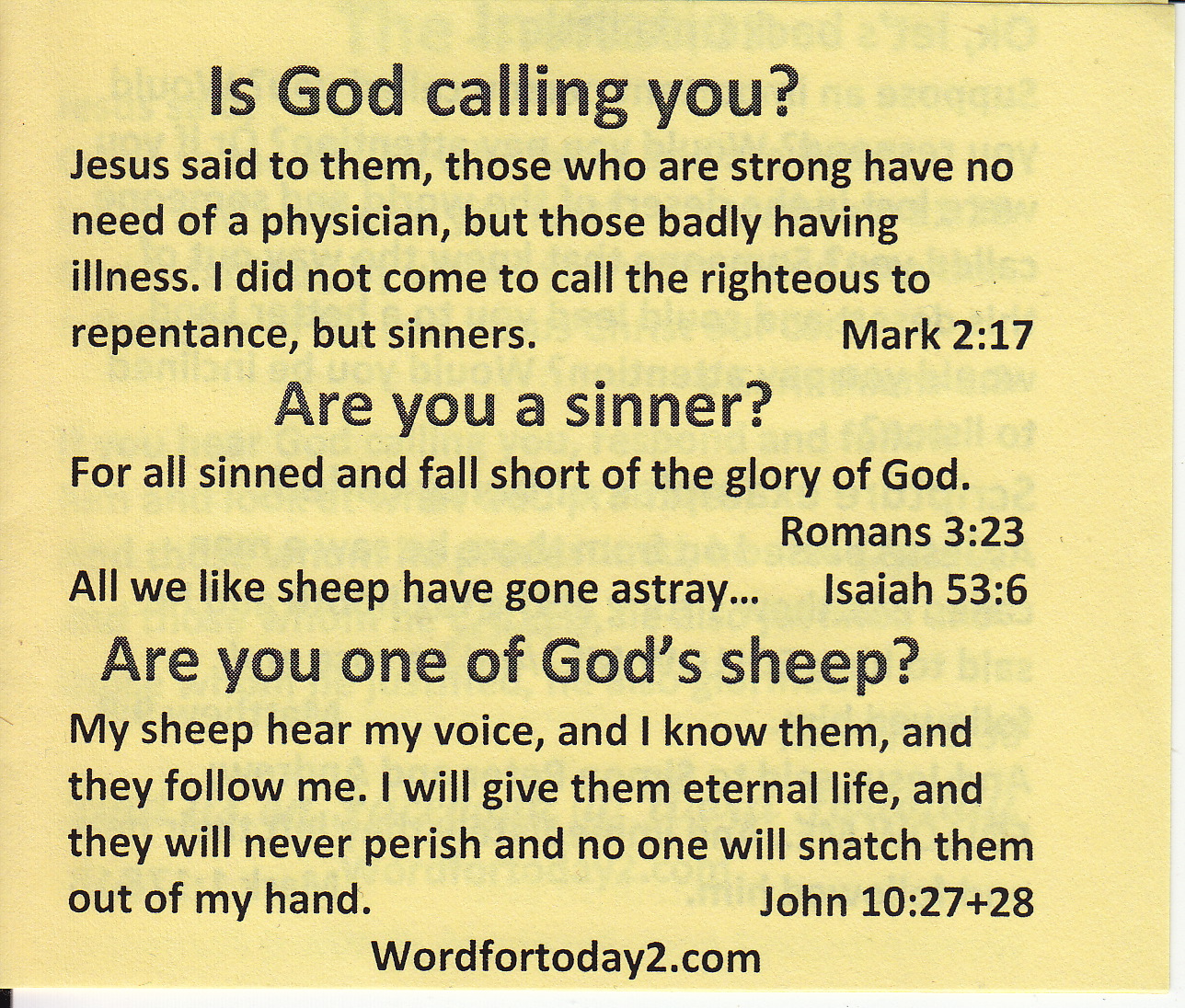
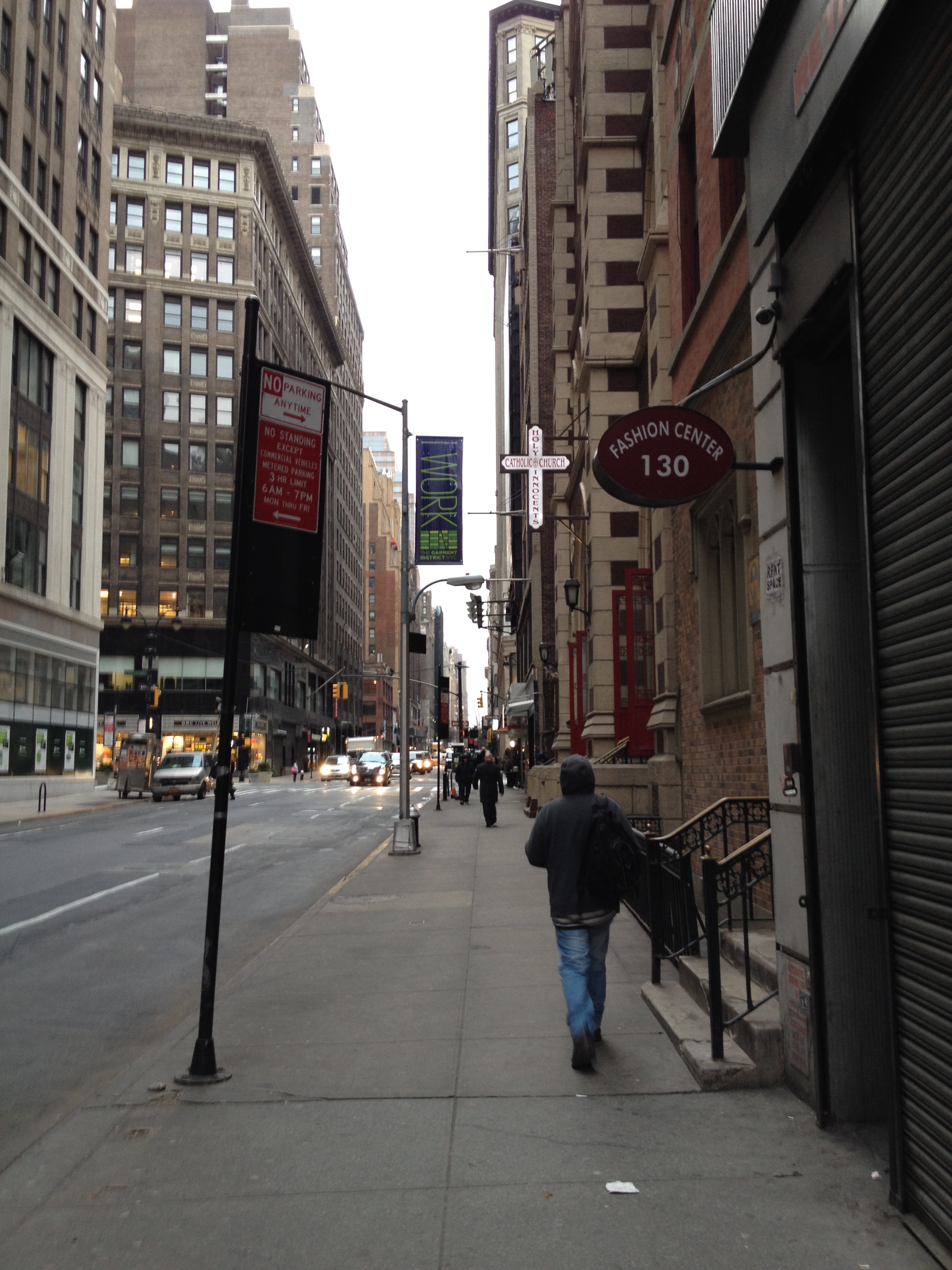
No matter how early you go to bed on Sunday night, Monday morning comes too early.  The only thing that makes my long, penitential commute survivable is the book that will take me away for an hour or more on the way to the city.  At the Port Authority Bus Terminal it’s pretty obvious that people are in no hurry to get to work as they shuffle along at a speed that says, “I’m taking the subway, so why rush?”  The subway doesn’t go near where I’m headed and it is a small hike in the concrete forest.  Actually, parts of Midtown smell more like a zoo on a Monday morning.  I try to get through as quickly as possible.  So when I guy steps in front of me I try to dodge around to catch the light across 8th Avenue.  He doesn’t move, but hands me a slip of paper and recites, “I believe in Jesus Christ.”  First thing on a Monday morning.  He got out of bed to tell frustrated commuters his personal credo.  I stuff the yellow paper in my pocket and try to avoid kamikaze taxis all the way across town.

Word4Today_0002
 
I’m always curious about those who brave the crowds of New Babylon with the news that they have the truth. I pull the paper from my pocket.  I decided to check out the website on the cheap tract.  It seems that the Church of Bible Understanding (it seemed to be all in small caps) has formed a splinter group and is wondering why, despite the grace of God, it isn’t growing like in New Testament times.  I did notice that I was visitor 2429, according to their web counter.  There seemed to be a lot of complicated history to wade through and this was a Monday morning, after all.  The main point seems to be that you don’t need all this churchy stuff, but just belief in Jesus.  Over this, it seems, churches split.
 
I have to wonder about the constantly splintering composition of the Christian tradition.  Recent scholarship suggests that there was no unity at the very beginning.  According to the Bible even Peter and Paul didn’t always agree.  Although there may have been a very roughly unified church under Constantine, the outer-lying reaches started developing ideas that didn’t always sit well with Rome.  And this was well before the Reformation.  Since Luther’s theses, the number seems to have grown exponentially.  Well, maybe not exponentially, but I am concerned for the spiritual well being of my fellow hive animals on this island made of schist.  It might be easier, though, if we agreed to disagree.  Nobody has the truth that will convince all others.  And for evangelization purposes, getting in somebody’s way on a Monday morning may not be the best proselytizing technique.


Law of Rule

Anyone who believes in the rule of law has never been on a broken down NYC commuter bus. There’s a rare kind of tension among the early morning commuter crowd. To put this in context I should say that I awake at 4 a.m. to catch the first us through town, five days a week. I’m usually somewhere between four and six on the passenger count, but if lots of people need to be in New York before sun-up, I may be as far down as 10. I select my seat with care. I tend to sit two seats behind the driver. I prefer the right-hand side of the bus, but there’s a regular who sits there and, I’m given to understand, she’s been doing this for over a decade. So I sit left. It’s never a good portent when I end up having to go four or more rows back. You see, the buses usually unload in a fairly orderly way, the front rows get out first, and each row takes its turn. Since too early is never early enough to be at work, I sit near the front because in the back you can lose precious minutes waiting for those who are sleeping to rouse themselves enough to find their feet and stumble off. If it sounds like I’m overthinking this, it’s because I’ve been awake since before four and how you start your day sets the tone. Where’d I put my coffee? Arriving at the office frantic and sweating isn’t the best way to impress anyone.

There’s a kind of comfort at being at the end of the line of service. Of course, the commute home means you’re on the bus longer than people who can afford to live closer to the City. First on, last off. Although I easily fall prey to motion sickness, I have taught myself to read on the bus. An hour in and two hours out are goodly amounts of time to really get into a book. I hate to waste time.

IMG_2304

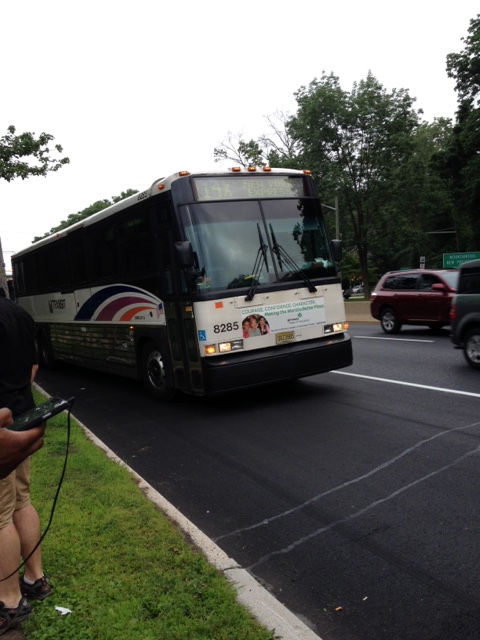
You can smell a bus breaking down. I always hope the driver doesn’t catch a whiff, because s/he’ll call the control center and lawyers will dictate that the bus be stopped. By definition, you’ll be late to work that day. So when I smelled something burning, I hoped I was the only one. Luck has never been my strong suit. The driver pulled over and announced, in a soft voice, that we’d have to wait for the next bus. That means I could’ve slept in for ten more minutes.

The next bus is an “express”—that is local compared to my bus. The driver said, “Just stay in your seats, and I’ll call you.” Of course, people started to get off to form a line, despite the captain’s words. In a universal display of self-importance, those who just got on immediately hurry to get off first. They’ll be first in line to get seats on the next bus. Those who obey the driver are penalized. When it became clear that I could hear crickets chirping on the bus, I decided to put away my book and join the line. After quite a wait, the local came. That would get us to the City in time for work tomorrow. Several minutes later the express came. Those at the back of the line behind me hurried over. By the time I’d gotten there, still trying to honor the most ancient of queuing honor codes—the line—all the seats were taken. Those in the front of the line, now the back, headed over to take first place again, since they had expected the rescue bus to pull in front of our smoking wreck instead of behind, where it did. They weren’t shy about elbowing their unrighteous way to the front when the next bus came. I’d been on the abandoned bus since before 6 a.m. I made the third bus. The guy in my row on the adopted bus tried hard not to make room for a new passenger next to him. I was headed to New York where, I know, all the rules are off.


High Places, NJ

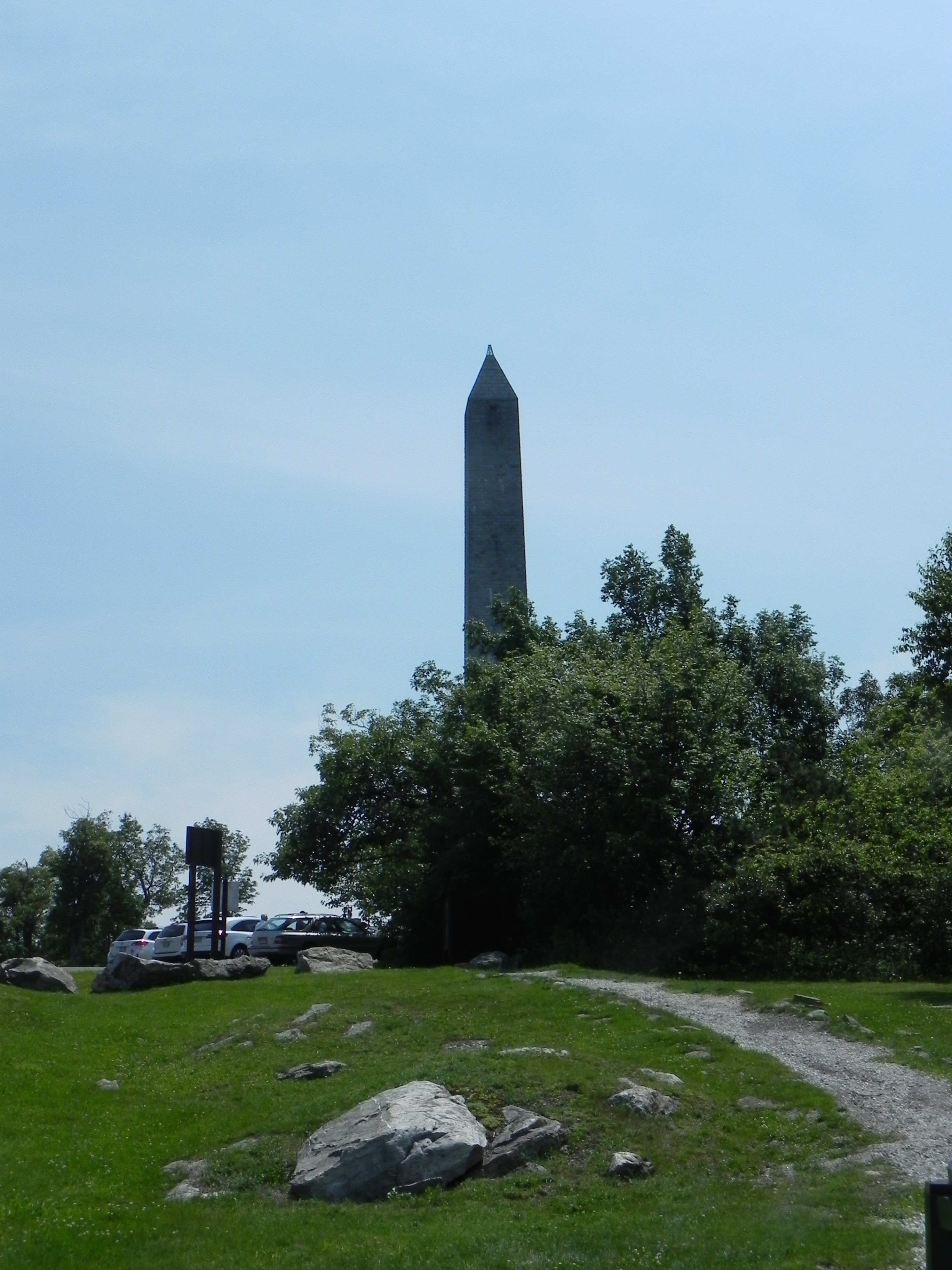
The “high place,” in the Hebrew Bible, was a source of constant vexation to the “orthodox.” Scholars have long puzzled over what was meant by the term, the assumption early on being that they were geographically the highest points around. Although that interpretation no longer holds the sway that it once did, the concept of the high place has remained. I suspect that’s because there’s something mystical about being at the highest point around. July 3 was a rare holiday for everyone in the family, so this year we headed to High Point State Park. High Point is the geographical highest point in the state of New Jersey, up near the New York border. It’s not as high as the mountains you might see in the western part of the country, but at the top there is a panorama that gives unbroken visibility in 360 degrees. Except for the tower.

DSCN5093

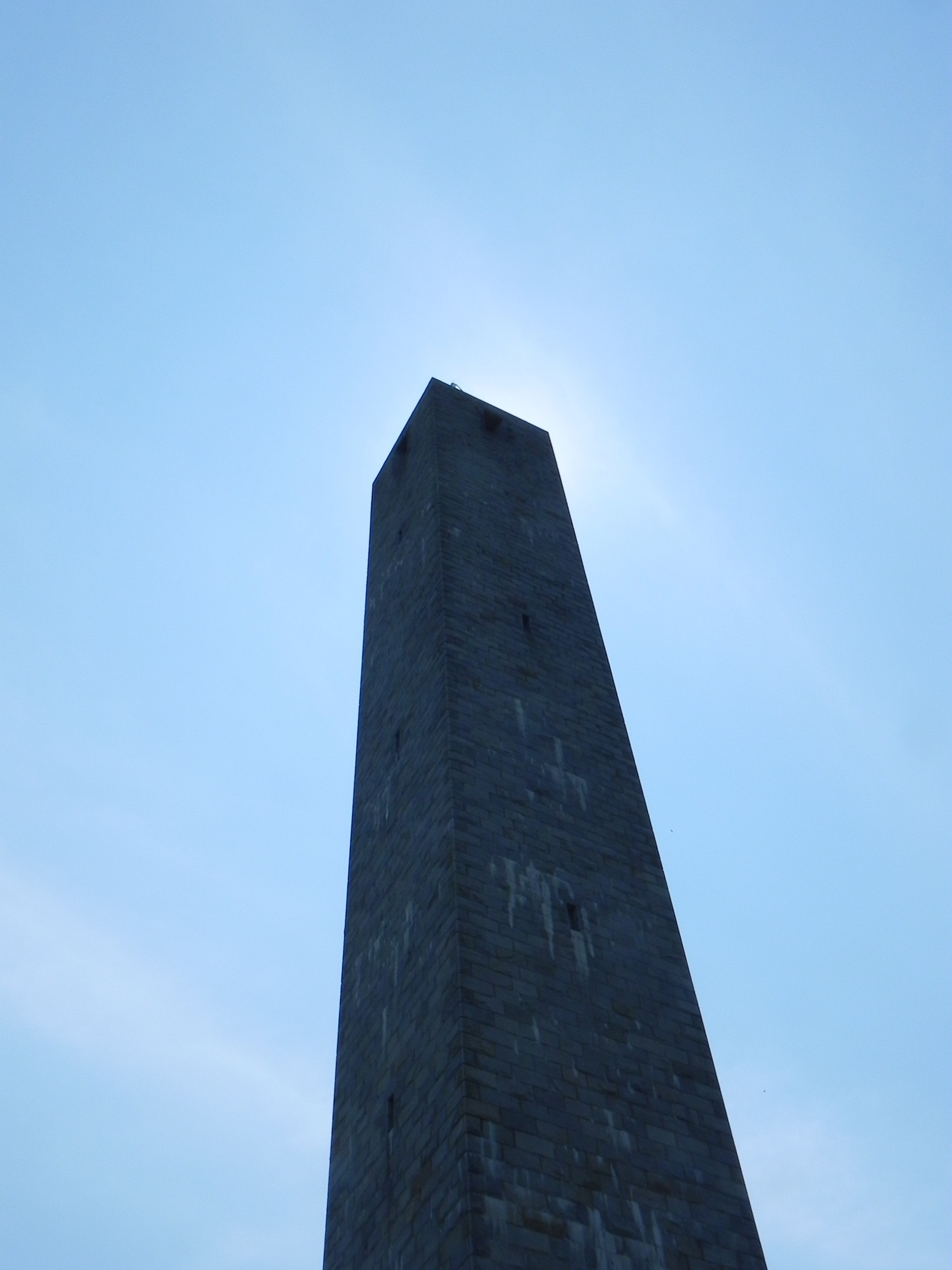
Towers are just as biblical as high places. They are very human and always contain at least a small element of hubris. Nature may have said thus far and no further, but we can go higher. And those of us with the inexorable will to climb, must go up. The view from the top isn’t very good since the windows are steamy and the mildew makes you a little leery of getting too close, but the climb is intensive, even for those used to stairs. Nevertheless, a kind of light-headed giddiness attends standing at a point higher than which you cannot go. I pulled out my altimeter to discover we were 1690 feet above sea level. In New Jersey you can’t get any higher. Were there angels up here? How close to Heaven were we? Towers are irresistible as the mythical builders of mythical Babel knew. And although we couldn’t see Manhattan from here, I knew that just across the river taller towers stand.

DSCN5109

One World Trade Center stands at a symbolic 1776 feet, higher than we were at the moment. It was, after all, the requisite holiday to celebrate independence that brought us here in the first place. The vistas that we could see, however, were relatively undeveloped, a rarity for the state of New Jersey. If we had the time, we might have been able to get out into nature itself instead of these structures that humans build to mask the fact of our own limitations. Maybe that’s what high places were all about in the first place. Every day I walk past the Empire State Building on my way to work. I can see it if I find an office with windows. Over my head up here, on the very top of New Jersey, I see a bird soaring. I think of Melville, and Ahab, and Manhattan. Slowly I begin my walk down to lower places.

DSCN5099


Remember the Alamo

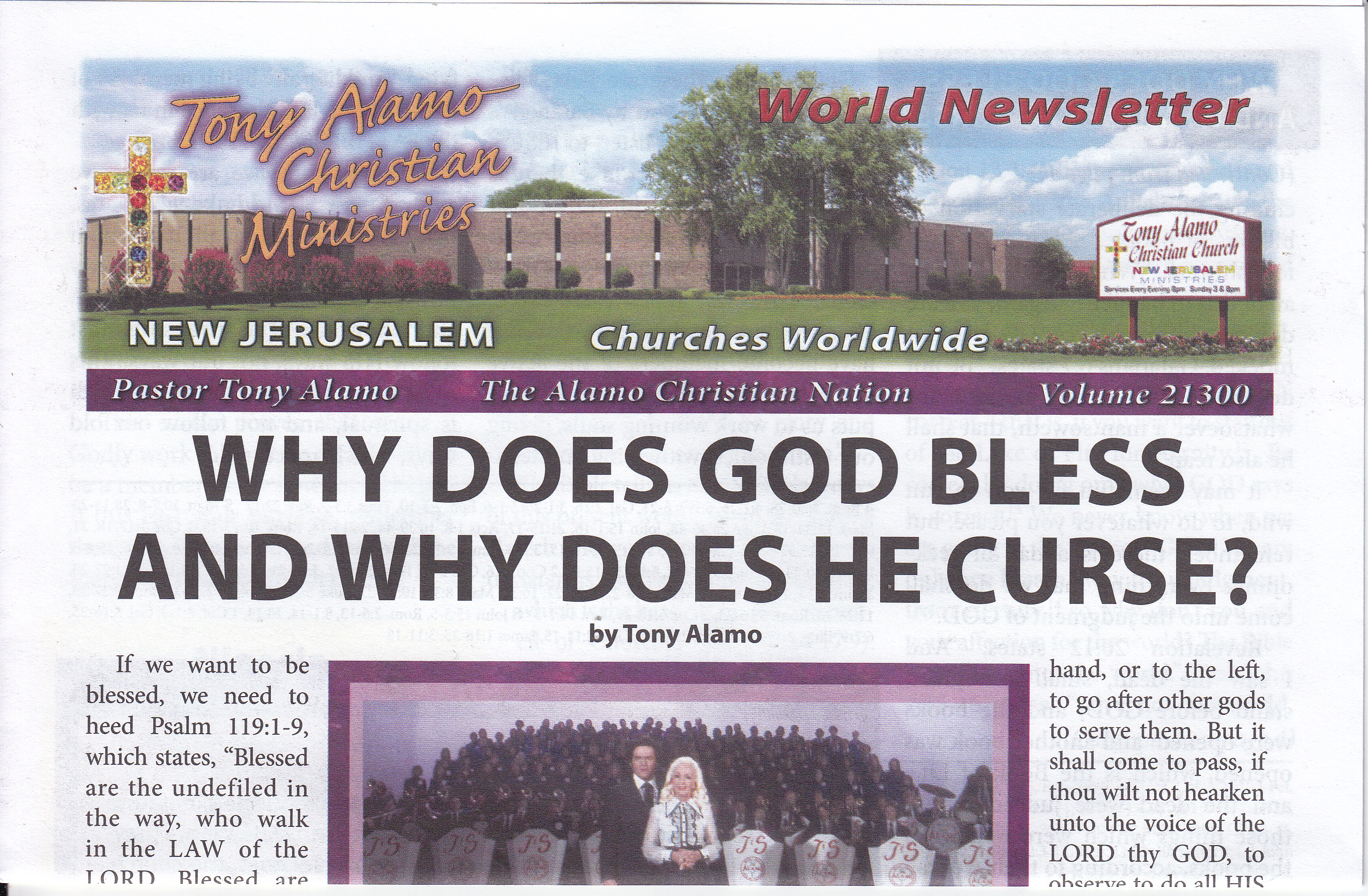
Midtown Manhattan is awash in litter, particularly on a Monday morning, or first thing after a holiday. I generally arrive in the city shortly after 7 a.m., before the detritus is swept away. Frequently I see, among the discarded food wrappers and cigarette butts, copies of Tony Alamo’s World Newsletter. You can get a pristine copy if you take the subway. An abstemious young man will gladly hand one to you with a smile. The articles are accusatory and unsophisticated examples of prooftexting of the worst kind. Even I know better than to use “you” all the time, implying that “I” am better. The following is typical: “It may seem fun to you to run wild, to do whatever you please, but remember…” Not that Tony Alamo would ever run wild, doing whatever he pleased.

I was curious about the movement. Ironically, Tony Alamo, according to Wikipedia, was convicted as a child sex offender in 2009. It is a pattern as familiar as it is unfortunate. Those who rail loudly against certain behaviors often find themselves practitioners of the same. Perhaps the most surprising aspect of this phenomenon is that it never seems to change, as if the learning curve is just too steep to climb. In the case of evangelists, it may be that treating the Bible as a magical book—mashing all verses together out of context, cherry-picking the one that best seems to fit the sin of the day, creates an impossible standard to follow. The Bible both indicates that you should love your parents and hate them. What it might mean depends on context. Those who snatch a verse from here and a verse from there are practicing the old form of treating the Bible like a book of spells. It can be done, of course, since it has one author (God) and mix-and-match is as good a method as any. What if God was having a bad day?

WorldNewletter

The lead article I was handed last time on the subway confirms this: “Why Does God Bless and Why Does He Curse?” the pastor wonders. The answer to the latter question, which I have eagerly sought all my life, is finally made plain. What seems to be God’s curse is your own darn fault. You deserve worse, since you are such awful sinners. Pardon me, I seem to have slipped into the second person, based on the vernacular I have been reading. Classic blaming the victim. One can hardly be surprised when evangelists resort to this inexpensive explanation—theodicy has historically been one of the most difficult problems faced by those who declare God all-powerful and all-good. The 6 train squeals into the station. As the doors clinch shut behind me, I see passengers eagerly reading the newsletter. There are those who might give more reasoned answers to life’s pressing questions, but they can’t afford to hire young proteges to stand in a dank subway station to hand out their wisdom. It has to be found by chance, like litter on the streets of the city.


Chain Gang

When I first joined LinkedIn, the notes about adding connections you didn’t actually know were pretty dire.  People could trash you behind your back, ruining career opportunities.  It turns out that I don’t really need any help ruining career opportunities, so after a couple of years on the social network I started adding people if they had a legitimate reason for wanting to know me: they were academics, they were religion specialists, they were in the book business.  I still wonder why investment bankers and others who must have better things to do with their time bother to ask me to connect.  It’s not like I have anything to offer beyond adding a number to their 500+ connections.  It stokes my perpetually low self-esteem to think that maybe 500 people would like to be connected to me, at least electronically. Low risk friendship—I’m not going to bad-mouth anyone.
 
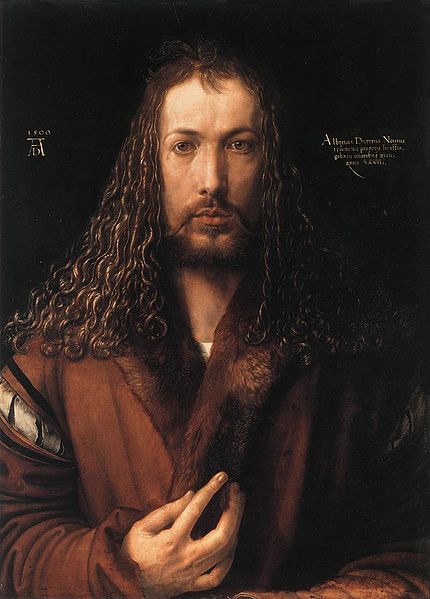
LinkedIn, like most social networks in this highly visual age, offers the opportunity to post a picture.  I don’t have many pictures of myself, and even fewer that I like.  Still, I picked a selfie I snapped in Herald Square after an overnight flight from Phoenix to New York.  I was meeting someone in town and I look a little worse for wear, I suppose, since I can’t sleep on planes.  Nevertheless, there’s enough of my character there to give people the idea of who they’re linking up with.  The other day I was scrolling through suggested people with whom I might want to link.  A surprising number of people blur their pictures, so they look like just about everything did after that flight from Phoenix.  Then there are those who select an image that is meant to be funny, or whimsical.  I was surprised when I saw Jesus’ face above the name of a priest.

430px-Durer_selfporitrait
 
Don’t get me wrong; I’ve got enough theological sophistication to know that many clergy wish people to “see Jesus” when they look at them.  To set Jesus as your personal image, however, seems a bit presumptuous.  Of course, I may be missing something.  Perhaps Jesus sent a connection request to this priest, with the offer to use his likeness.  Still, I find it ironic to suppose that anyone would consider themselves worthy to use the image of their deity as their own.  Growing up, I was taught that people shouldn’t name their kids “Jesus” (we knew no Hispanics in our small town), but then I learned that “Jesus” is just the Greek form of “Joshua” and I realized there were an awful lot of Angelos in trouble too.  Don’t mind my rambling.  It’s probably just sour grapes.  I haven’t received any invites from any deities on LinkedIn, so I’m feeling rather like any guy who has only 500+ connections.


Biblical Art

Although the United States is a religious nation, according to all polls, not many Americans know about the American Bible Society. This organization, based in New York City, has been vastly influential in the history of the nation. Even more influential, however, has been the Bible itself. It pervades every aspect of life in America, whether acknowledged or not. It is an integral part of the fabric out of which the nation is cut. I used to ask my Rutgers students: if there were some unseen force that impacted your life every day in ways that you couldn’t imagine, wouldn’t you like to know about it? Of course they would! But our society has very little tolerance for actually learning about the Bible. As a story in the New York Times states, the American Bible Society had to sell its historical Manhattan property recently. I visited the site on my first trip to New York as a seminary student. Here amid the towering secular concerns of money and greed, was a building dedicated to Sacred Writ.

IMG_1272

The New York Times piece, however, is pointing to the fact that the selling of the building has led to the closing of the Museum of Biblical Art. As Randy Kennedy makes clear in his piece, the Museum was (technically will have been) dedicated to showing the impact of the Bible in secular contexts. The American Bible Society is an evangelistic organization. They arrange for the distribution of Bibles not for secular reasons, but for good, old fashioned conversion of the heathen. This set the Museum a little bit at odds with its host. The Museum, critically acclaimed according to Kennedy, is (was) generally secular in outlook. It recognized that the Bible has influenced us in ways far less than obvious, pervading into our artistic sensibilities.

Although I’ve worked in Manhattan for about four years now, I never had occasion to nip into the Museum of Biblical Art on a lunch break. (Lunch break? What’s that? Money takes no breaks.) This is unfortunate. It seems that the message I had been trying to pass along to my temporary charges was being openly displayed here for New York society to see. Little do people realize, I suspect, that the principles of capitalism—the very system that transfuses the lifeblood into the city—developed out of biblical outlooks on private property. Not that the Bible itself is capitalistic, but it gave a society the basis to develop a form of thought that is, honestly, quite foreign to the biblical outlooks themselves. And ironically, the American Bible Society will continue, even though its intent may be less in keeping the spirit of the very book whose impact the Museum attempted to display.


A Night at Culture

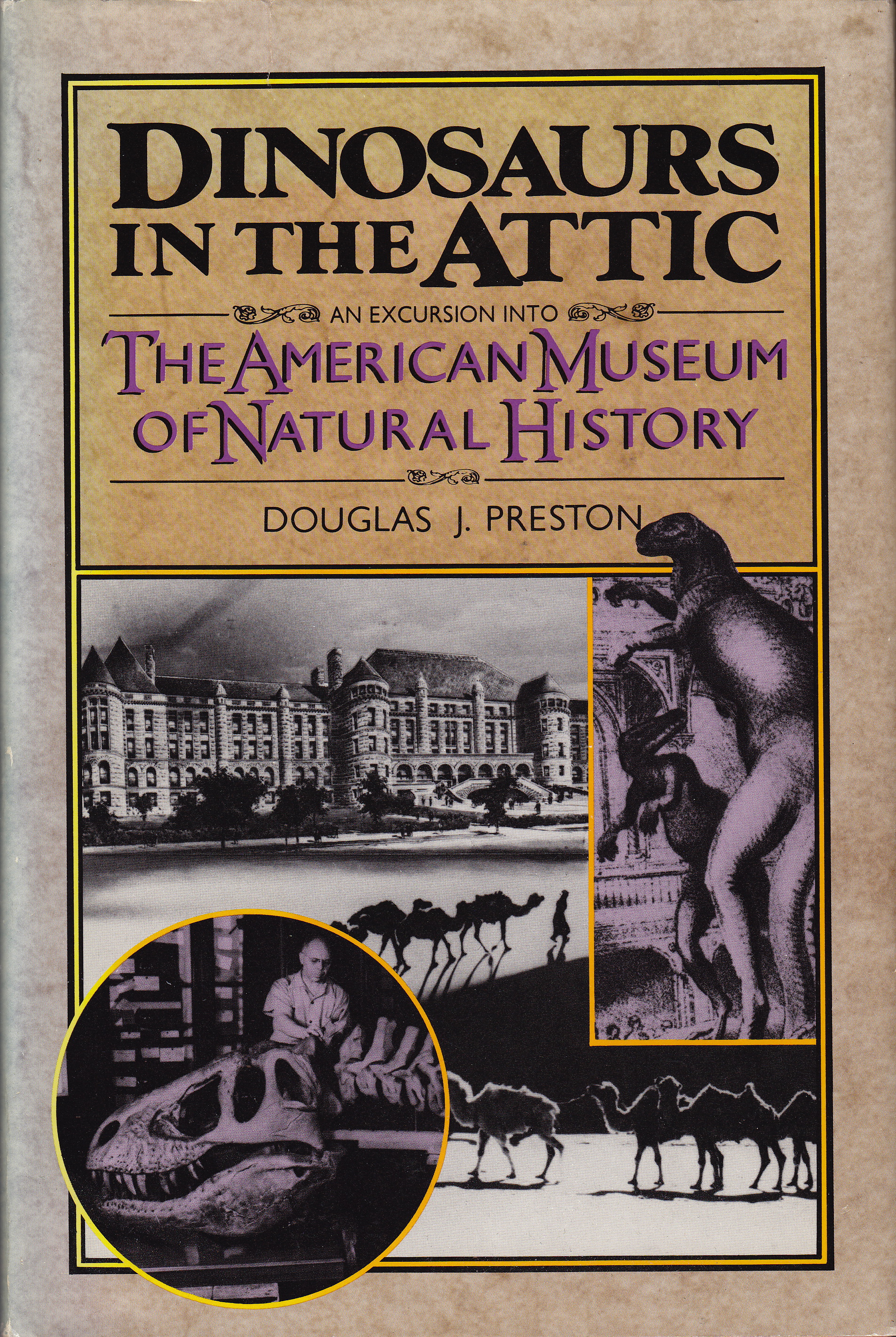
AmericanMuseumOne of the undisputed benefits of living in the greater New York City metropolitan area is the potential for culture. I know that culture exists everywhere, and that is precisely one of the points behind Douglas J. Preston’s Dinosaurs in the Attic. I picked this up at a used book sale because of my love of dinosaurs, but the subtitle provides more of a description: An Excursion into the American Museum of Natural History. Just when the first Night at the Museum movie came out, the American Museum of Natural History offered a program of nights to sleep in the museum, geared toward children. A generous family member bought us tickets and we got to sleep in the oceanarium under the giant whale dangling from the ceiling. We were allowed to explore galleries by flashlight, including the most famous collection of dinosaurs in the world. Who wouldn’t want to read about the backstory of such a museum after such an event?

As might be expected, with roots in the late nineteenth century, it was a different world in which this museum was conceived and built. Rare animals were shot to be part of exhibits, artifacts were acquired and shipped across national borders, and even world-class bird collections were bought to help an indiscrete baron avoid the humiliation of having an affair revealed by a blackmailer. Still, the religious element was clear. One of the founders for the museum, Albert Bickmore, went off in search of artifacts with his Bible tucked under his arm. Exotic places and peoples were still allowed to be called exotic, and the museum eventually became famous enough to star in a movie.

What struck me the most about this fascinating story, however, is when Preston points out that the most fragile, and valuable possession of the museum are the myths. Early ethnographers visited peoples that, even then it was already too clear would become extinct (culturally), and recorded their religious stories. This, and not the thundering Tyrannosaurus Rex, was the true purpose of the museum. Museums are about people. What we discover, what we make, and how we impact our planet. Myths, religious stories, are some of the most unique and delicate pieces of information that we can leave behind. Even materialists have beliefs. We all believe in something. Although nobody goes to a Night at the Museum to read dusty old stories, it is a source of comfort that they are there. Many of the cultures have indeed died out. Were it not for the foresight of those who could see where globalization would eventually lead, they would have been forever lost. And a world without myth is not a world worth living in.


Lazarus, Come Forth

The red-cast face staring down from the giant LCD billboard this side of the Lincoln Tunnel has my attention. Having become an unwitting fan of horror movies, the genre was clear from the creepy, black-eyed gaze that found me even in mass transit. The Lazarus Effect, it said. I stored the information away knowing that it would be a movie I’d have to rent and watch alone—I don’t know many other true fans, and I don’t like going to a theater by myself. Then I started thinking about Lazarus. The man raised from the dead, according to the Gospels. When I was a child I always confused this Lazarus with the one from the parable of the rich man and Lazarus. I’d never known anybody with that name, and to find it twice in the same book must imply, at some level, that they were the same guy, right? I mean, they’re both dead. So my juvenile thinking went. In the parable Lazarus, whose wounds are licked by dogs, is taken into the comfort of heaven when he dies. The rich man, it turns out, isn’t so lucky.

769px-Bonnat01

This was a bitter cold day. Dressed like I was headed to McMurdo Station rather than central Midtown, I tried to keep my head down as the wind howled through the channels constructed by excess wealth. I am always distressed to see the homeless out and about on such days. I’ve got on more layers than an onion on steroids, and I’m still chilled through. What must it be like to face such weather threadbare? There, on Madison Avenue I saw a dog being taken for a walk. He had on a warm sweater and fancy purple slippers to keep his canine feet from touching the cold ground. That dog was better dressed against the cold than some of the people I’d passed. I thought of the dog licking the sores of Lazarus. “Father Abraham, have mercy on me,” the rich man cried.

“Son, remember that thou in thy lifetime receivedst thy good things, and likewise Lazarus evil things: but now he is comforted, and thou art tormented.” The words are almost as harsh as this wind. We’ve become a society that will spend more readily on our pets than on our compatriots. Dogs, at least the breed I saw on the street, have evolved to grow thick coats. I’ve seen pictures of huskies running across the snow like their wolfen ancestors. Indeed, the wolves, where we’ve not hunted them to extinction, still manage in the winter. But then, there’s the Lazarus Effect. I’m feeling guilty thinking about putting out the money to rent it, several months down the road. There’s a real life Lazarus who could use any spare change right now. And the well-heeled dogs, I’m sure, would be made to turn up their noses from even getting near enough to lick his wounds.


Harpy New Year

A grueling early morning commute is seldom enhanced by complaining. I suspect most of us would rather not be here, crowded next to strangers on a barely adequate bus, going to jobs we may or may not find fulfilling. We put up with it, I think, because the ways of making a living have been effaced for those of the late boomer generation, but we’re a practical lot. Besides, it is a new year—why not start things off optimistically? Hanging around the Port Authority Bus Terminal as much as I do, you hear things. Our regular dispatcher and some drivers can be heard, sotto voce, saying that nobody wants to take my regular route. It’s a long route in heavy traffic, and I have the greatest respect and sympathy for the drivers. These are women and men with more fortitude than Job. Most of the time. I wonder why no one cares for an express run with so few stops?

The first day back after the holidays, however, the first commute of the new year: One of the regulars missed the bus and had to drive to a stop further along the route and berated the driver for being early. Given that some of us had been standing in the cold and were thankful for relief a few minutes ahead of schedule, and also for the opportunity to get to work a little early, the complaint seemed self-serving. Besides, this customer has made us all late for work before by complaining until a driver, like an exasperated parent, pulls the bus over. And once she starts complaining, she can’t stop. When a second customer joined in, I thought to myself, “Happy New Year.” Things were starting out well.

Yesterday, for the second morning commute of the year, our usual complainer noticed an unclaimed bag at the beginning of the route and, seeing something, said something. The driver radioed it in. Halfway to the city, she pulled the bus over, announcing she’d been instructed to wait for someone to come get the bag. We didn’t know, until he arrived, that he was from the bomb squad. Still, this didn’t stop the complaining sisters from starting on the driver again. When the bomb squad arrived, they looked on with interest as someone’s gym bag was opened with nothing more threatening than smelly socks inside. Then they started griping again. At that point I realized that New Year is indeed a religious holiday. Each new day is an unopened present. And some people will complain, even when left with an unexpected gift.

IMG_0542


Behind the Exodus

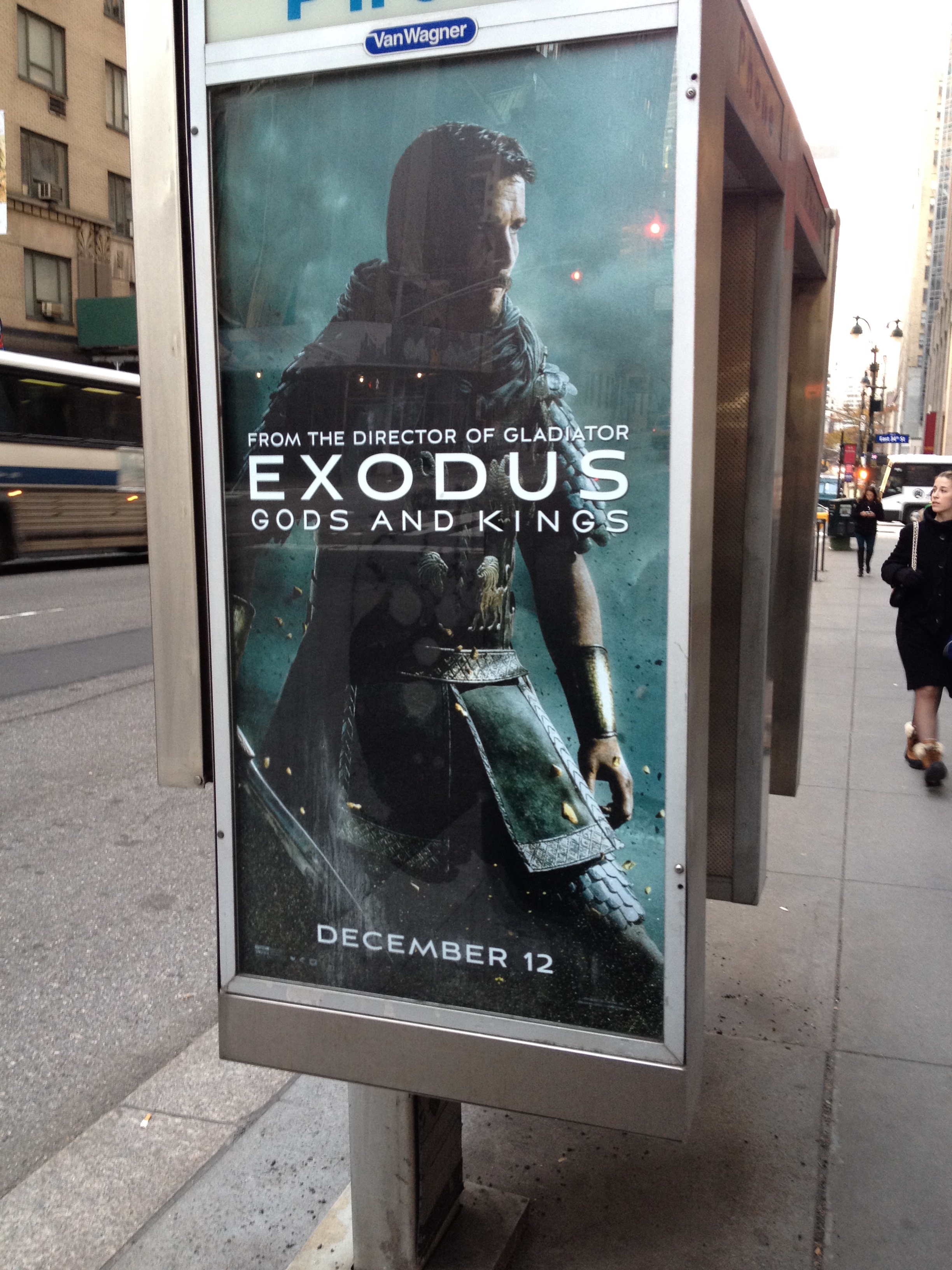
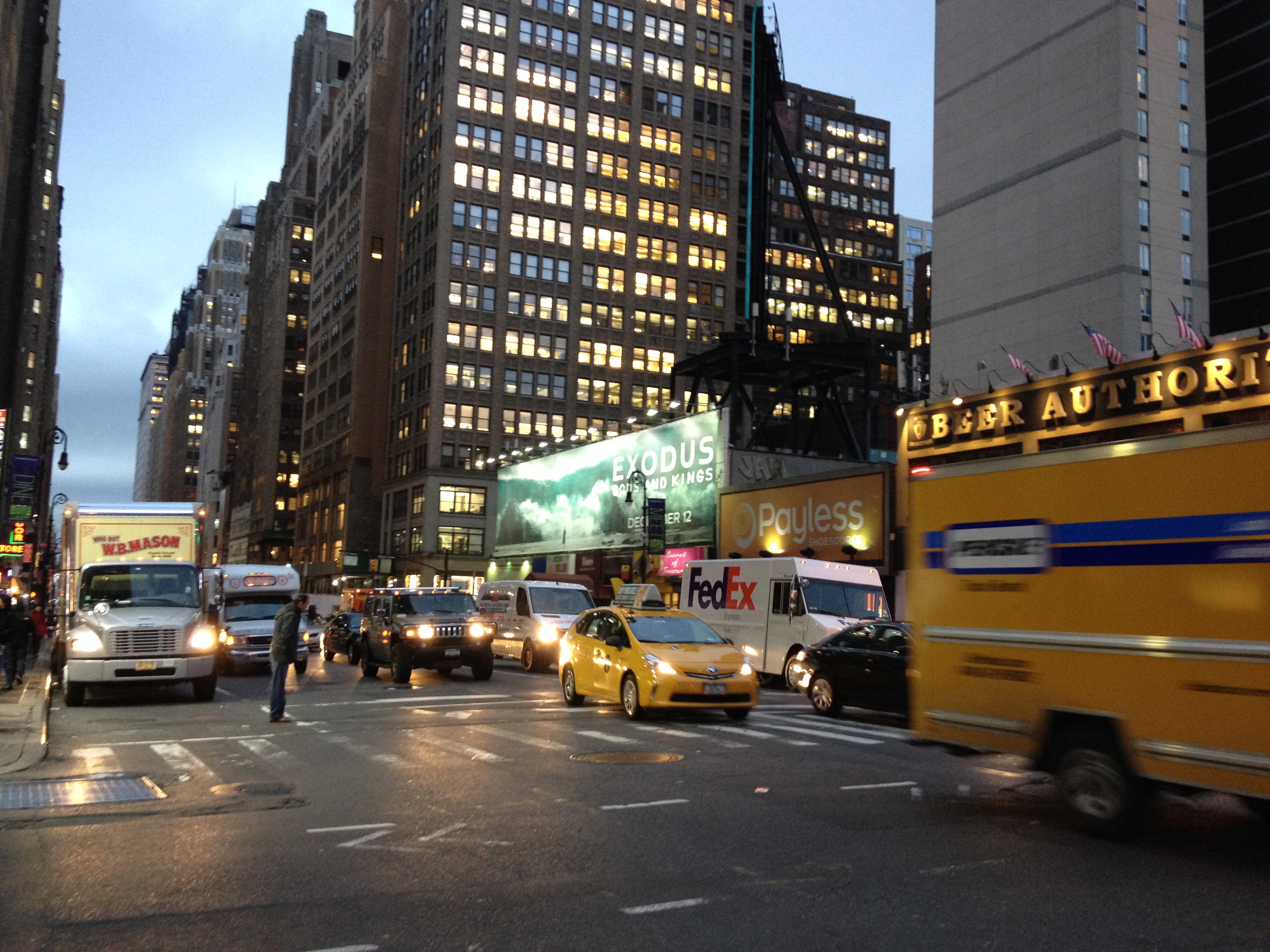
Over this past week two of my friends/colleagues were quoted in major media outlets about Exodus: Gods and Kings. Being merely a blogger with nearly two decades of teaching Hebrew Bible means, naturally, that I have nothing valuable to say. Nevertheless, I would meekly venture to make my own observations and cast them out there into the world-wide web and see what happens. I haven’t seen the movie since it only opens tomorrow. I already know it is only loosely based on the Bible. Still, I wonder at the talking heads who constantly declare the Bible to be irrelevant to a throughly modern world. Okay, so I realize that this is about money, but Manhattan is often seen to be one of the more sophisticated cultural landmarks in the country. This summer I couldn’t walk more than a book or two without being inundated with Noah posters. Now I am finding the same with Exodus paraphernalia. If we try to put the Bible away, it seems, it will come to find us.

IMG_1843

The Bible, relevant or not, is full of great baseline stories. Even in a secular society we can see the appeal of Noah and his menagerie to young children who are so fascinated with animals. We decorate youngsters’ sleepwear and toys with elephants and lions and giraffes (interestingly not mentioning that these are primarily African animals) aboard an ark with an unfailingly cheerful Noah. Now we have another classic—the great liberation story (also set in Africa) of a people held in bondage being released by divine command. We are a post-Christian society, according to the pundits, so who this divine one is remains an open question. The idea that one people is kept oppressed by another people, however, is presented as unequivocally wrong. Moses rides out on a horse, weapons in hand. Are we not focusing on the larger point yet?

IMG_1848

This latest love affair with the Bible as a source of great cinematography will not last forever. It will surely ebb away until only a few old blog posts might remain to remind us there was a time when Holy Writ inspired screen writers and directors. Nevertheless, the Bible bides its time. Back in the days when I used to teach Hebrew Bible Hollywood didn’t do too much to help out. Students had to slog through pages of picture-less Bibles to get the gist of the what God had in mind. The results may not be the same from those comfy seats in movie theaters, but a future generation will come to see Charlton Heston as a white man who loved guns being overcome by a newer generation of producers and directors who know there is a larger story here. Of course, I’m only a blogger with no credentials. Still I know what I see on the streets of the city.


Revisiting Jericho

I don’t get out from the office much. As those who commute to New York City will readily tell you, there is a constant anxiety about getting to and from the city that keeps you in the office (cubicle) as long as possible. Just yesterday my bus broke down on halfway there. I seldom take lunch away from my desk, and even more rarely get out to see what’s actually in Manhattan. Besides work. Earlier this week I wrote a post about the Berlin Wall. Wanting a picture that wasn’t somebody else’s work, I decided to visit the famous slab of the wall in Paley Park. Like many parks in Midtown, this is a mere pocket in the shadow of a high-rise, but a large slab of the Berlin Wall had been there for years, drawing tour guides and history buffs alike. It is only 19 blocks from my office. I’m a fast walker, and I made it all the way catching only three red lights. Since the anniversary of the wall’s Jericho moment had been twenty-five years and a day before, I expected crowds. Instead, no Berlin Wall was to be found. Businessmen smoking away their lives and lunch hours, but no oppressive wall. I double-checked my location. Triple-checked, with GPS. Then I walked 19 blocks back.

Photo credit: Gaurav1146, WikiMedia Commons

Photo credit: Gaurav1146, WikiMedia Commons

Visiting the comments on one of the wall’s websites, I saw that it had been, perhaps unintentionally symbolically, removed. After standing in this pocket park for nearly a quarter of a century, the slab had been absconded mere weeks before the anniversary when I, and given the number of cameras I saw, not I alone, had gone to see and to reflect. Where does one put the Berlin Wall? There was another piece, I read, at the United Nations gardens. You only had to pay 18 dollars to get in. Although it is close to my old office at Routledge, it is a lengthy walk from where I now find myself. Once I arrived home I searched for answers. The wall had been removed for restoration. A wall that had been sufficient to divide a city, scrawled with graffiti, apparently, required restoration. On the long walk back, I considered my similarly ill-fated trip a couple years back to find the closed Gotham Book Mart. Like the wall, have I become useless history?

My Germanic ancestors came to America nearly two centuries ago, and although I never knew that side of the family well, I suspect it was for economic, not religious reasons. It is sometimes easy to think, given all the rhetoric, that Europeans came here to be part of a Christian free-for-all. No doubt, some did. Many others, however, had more mundane motivation. A strong Protestant work ethic that somehow seems genetic, and a belief that somewhere else is better, will help you get along. So I’m told. So the tale goes in the book of Joshua. Israelites, wanting to cross the water to a new home, blowing their trumpets and raising a shout. Yes, the Berlin Wall did come down. Like the fallen wall of Jericho, it’s nowhere to be seen.


Theological Cemetery

Implosion is a word frequently associated with demolition. Implosions are episodes where buildings collapse in upon themselves, in theory, harming no one on the outside. In 1992, as a starry-eyed, fresh Ph.D., I was hired by one of the then eleven Episcopal seminaries in the United States. Each had been around so long as to acquire a feel of almost biblical antiquity—something their governance models appear to reflect. Just over two decades later, the mythically wealthy Episcopal Church is watching its seminary structure implode. It’s not for want of funds, but from lack of will. With shrinking demand for clergy, some had to merge to maintain even their historic names. Others are effacing by degrees. The Nashotah House I was asked to leave was not the Nashotah House where I began my academic career.

General_Theological_Seminary_1890_crop

Within hours of hearing rumors of a mass firing of the faculty of the General Seminary—The General Seminary!—I received confirmations both personal and from the Huffington Post. Eight faculty who had concerns over the Dean committed the (in the Anglican world) unpardonable sin of requesting a meeting with the board of trustees. At Nashotah, I served two stints as a faculty representative to the board of trustees and my nightmares have taken on a different quality since. In the Episcopal system the Dean is also President. Not a whiff of democracy taints these hallowed halls. They claim the title Very Reverend, no matter how appropriate, and some, if they’ve ever read Acton, did it for instruction. There must be incredible power knowing that higher education is in crisis and that faculty with legitimate complaints are only setting themselves up for protracted purgatories of joblessness, should they question you. Trustees don’t want to be bothered with the “formation” that is happening within. O Captain! My Captain!

I am heartsick. This is how Christians treat their most highly educated and dedicated—no one takes a job at a seminary without knowing the risk it poses to a career. A more protracted dismissal of faculty, including yours truly, took place in Wisconsin almost a decade ago. I knew those who lost their jobs—fine scholars and decent human beings—as apocopated visions of a fictional future flashed before the credulous eyes of true believers. Where do discarded seminary faculty go? Back into the arms of Judas? I could not. I admire those wounded healers who returned to the cure of souls. We started, did we not?, with the best of intentions. The church, it seems, forgets that even faculty are human beings. “Enlighten,” the collect for education reads, “those who teach and those who learn, that, rejoicing in the knowledge of your truth, they may worship you and serve you from generation to generation.” Or, barring that, speak the truth, and lose their vocations.


Our Pigeons, Ourselves

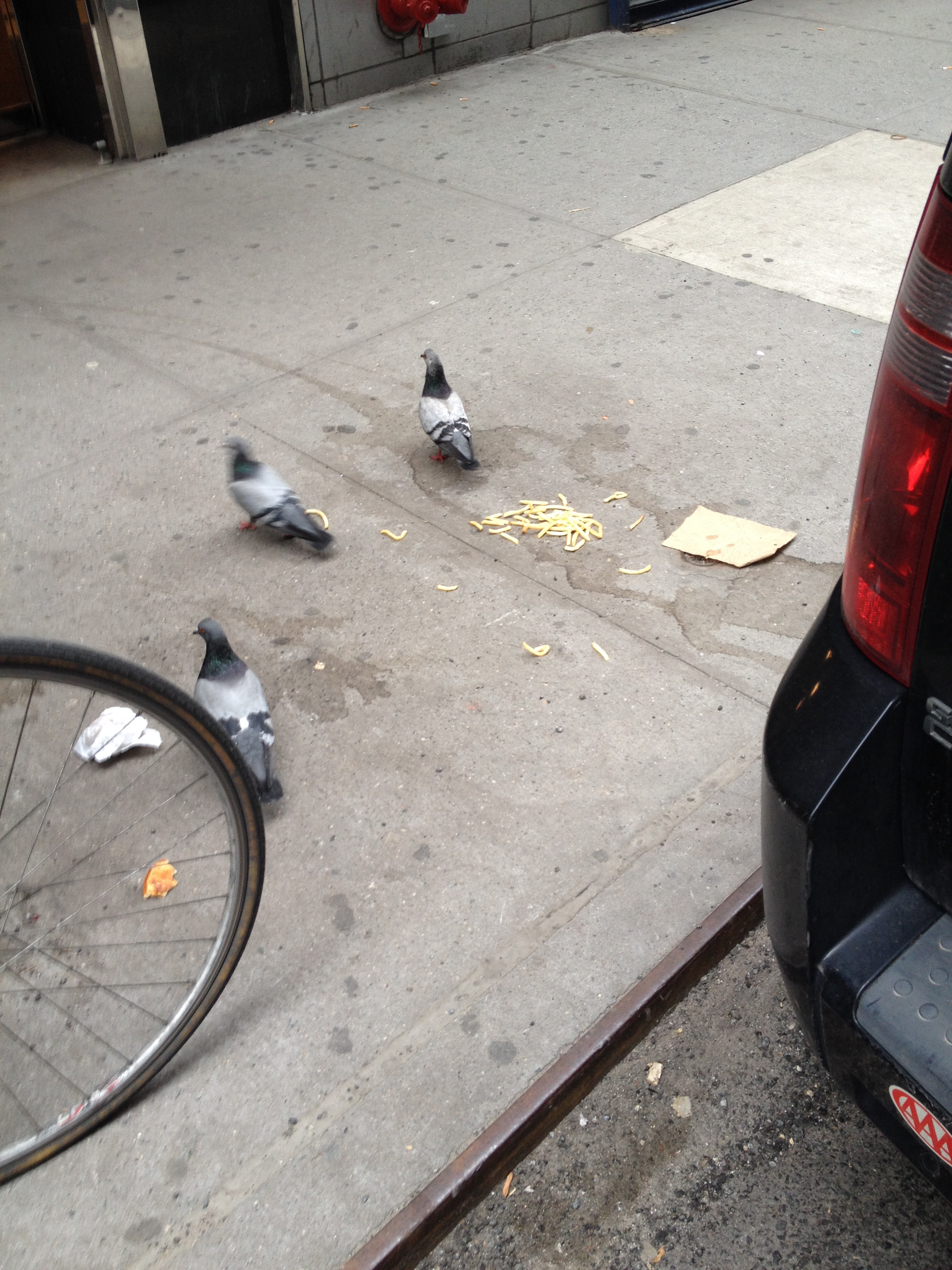
You don’t have to be in New York City long to begin to see yourself as an expert on pigeons. The ubiquitous avians are ruthlessly castigated as “flying rats” and “filthy birds,” primarily because they like people food and poop everywhere. I have it on the authority of Gomi and Stinchecum that everybody poops. From what I’ve seen walking through the city early on the morning after a holiday, not everyone is discriminate about where—and I’m not talking only about the pigeons. Still, I can’t help thinking that pigeons are unfairly maligned. They are pretty birds, when examined individually. They have iridescent throat feathers and a pleasing, portly gait—almost jaunty. They manage well, despite hardships. Often I see one hobbling about missing a foot or otherwise physically challenged, and yet ebullient in their pullastrine way.

IMG_1287

Yesterday as the NJ Transit behemoth in which I was riding rounded the helix into the Port Authority Bus Terminal, I saw two depressed pigeons. Unlike the jolly bobbing and pecking they usually seem to enjoy, this pair was simply standing. On the ground before them was a dead pigeon. Now I don’t know the backstory here, but the two standing around didn’t look like murderers to me. It seemed that they’d come upon a fallen comrade and were, in their own way, offering respects. In the ongoing debate separating ourselves from other animals, I often wonder if we have by-passed many of the basics. I do know that many animals find dead of their own species distressing. This is well documented. Why not pigeons?

Pigeons—related to doves, which, according to some religious traditions have sacred qualities, eh, Mary?—are seldom classed as the brightest of birds. I’ve written about the intelligence of corvids before, but pigeons have uniquely adapted themselves to our polluting ways. I grew up in a small town where pigeons weren’t especially abundant. They gather in large numbers where many people congregate and drop their litter. And, based on my recent experience, contemplate the mysteries of death. Peregrine falcons lurk overhead, doling out death at over 200 miles an hour. All the pigeons want to do, it seems to me, is to get a free lunch in an uncertain world where those whose presence has conjured them despise them. Unlike their sacred cousins, they are, like us, utterly pedestrian. Maybe they too appreciate the simple value of life.