What’s a Sukkot?

It’s not every day you see a lulav and etrog, even in Manhattan. You can tell life’s too busy when you miss that it’s sukkot. Not that I’m Jewish, but I have been invited to sukkot a time or two by a friend, and it was always a fun, relaxed occasion. A festive little booth in the back yard, sweet wine and cookies. Running the rat race in New York City it is sometimes easy to forget. On my hurried footrace to some place or another, I noticed a group of Orthodox Jews standing along East 42nd Street with lulav and etrogs in hand. So distracted was I that I only vaguely wondered, “why are they holding those at this time of year?” Several blocks later, entering the Port Authority Bus Terminal I saw a man just standing as the crowds parted around him like the Red Sea. In his hands lulav and etrog. Finally it dawned on me: sukkot. It is fall, the time of year when I used to be able to enjoy the bounty of nature and the good-natured holidays. A time before when.

800px-EtrogC

The Hebrew Bible prescribes a set of three pilgrimage holidays: sukkot, shavuot (pentecost to the Greek, or Christian), and passover. Of the three, all associated with the exodus from Egypt in some traditional way, sukkot is the most lighthearted. The command to live in booths is said to be a reminder of the dwelling in tents during the wilderness wandering. Anthropologically speaking, it probably goes back to an ancient tradition of living in huts during the harvest when you don’t always have time to go home and tuck yourself comfortably in every night. Combines hadn’t been invented, and harvesters had to work long hours to ensure that the crop was gathered in. Eventually it became a celebratory occasion. Nice of Moses to allow a bit of festivity here.

Back while at a certain seminary in Wisconsin, a local Jewish friend used to invite my Hebrew Bible class to sukkot. Numbers were small, and invariably wary—were they going to be proselytized by the other? No, but they were invited to shake the lulav and etrog, sip a little wine, and chat about Leonard Cohen. A bit of a cultural exchange in the midst of prolonged indoctrination. I often wonder if my friend continued the tradition after I was asked to leave. The Christian school never made any reciprocal invitations, of course. Ecumenism is often a one-way street. So I stopped a moment at smiled at the stranger in the bus station, solemnly holding lulav and etrog aloft. Life is a bit too busy when we can’t even take a moment to consider all the things we take for granted every day.
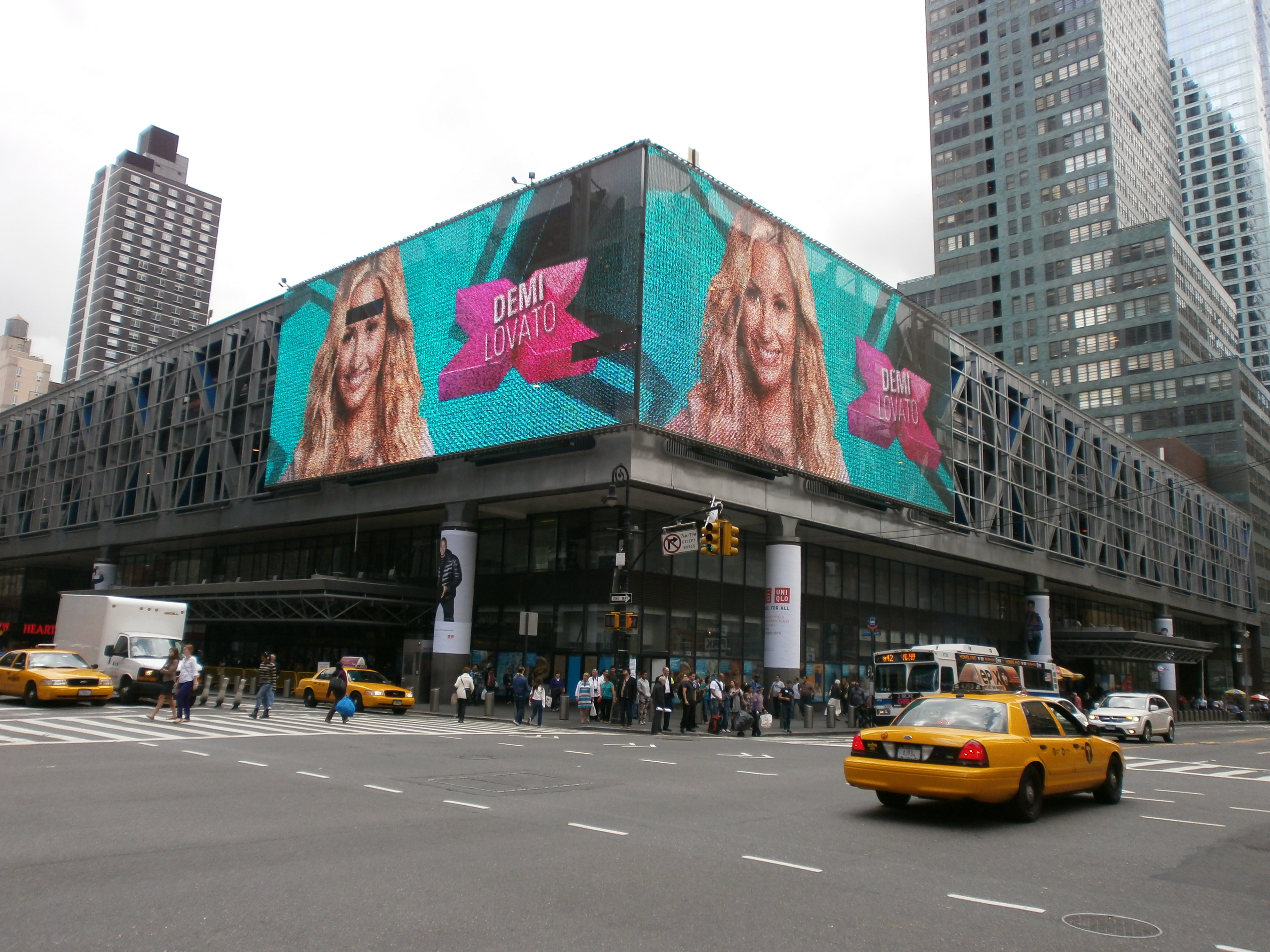
Have a Blessed Day

“Last stop: New York Port Authority. Have a blessed day.” This secular blessing is sometimes appreciated after the harrowing commute to Manhattan, but I often wonder about its origins. Bus drivers are among the most under-appreciated of employees, I reflected on Labor Day. They are routinely blamed for matters beyond their control: accidents that snarl traffic for hours, mechanical problems, highway construction. Often I only reach the Port Authority Bus Terminal on time two days a week. I always say “thank you” to the driver while exiting, however. I’m very glad it’s not me behind the wheel.

Photo credit: Hudconja

Photo credit: Hudconja

A few months back, however, I noticed that a few of the drivers, while announcing the terminal stop, will add “Have a blessed day.” Last week I sat back further than usual, and heard an interesting exchange as I awaited my turn to exit. The driver had wished us a blessed day (whether we wanted one or not), and several of the passengers, upon disembarking, said back, “Have a blessed day.” I’m sure the driver appreciates it. As a lifelong student of religion, however, I found it fascinating. New York City is a great place to observe religious developments. “Have a blessed day” is innocuous in its lack of specificity. Who is doing the blessing here? At the behest of what intermediary? The driver has literal street cred by making it to the Port Authority unscathed. S/he has the power to bless and to curse. Those of us helpless as passengers are at their mercy. If the driver doesn’t drive, we can’t serve the god Mammon.

I always thought “Have a blessed day” was like an after-sneeze blessing. It is unusual for the sneezer to panegyrize their blesser by wishing good fortune back. Most often they are too busy blowing their noses. Here on the bus the driver might be Muslim (it is clear that some are), Christian, or Hindu. Some are likely among the most deserving of atheists. A blessing laid is a blessing played, however, and many are the passengers who are now returning the favor. We don’t know which deity is being invoked; it may be that it is simply the force that is with us. As we climb off that bus into a city that crushes a human soul as easily as a cockroach, we all could benefit from a blessed day. And I wonder on my way to work whether I’ve just witnessed a new religion being conceived.


Back to the Future

When I leave work, I’m in a rush. It would seem that Third Avenue and Eighth Avenue shouldn’t be that far apart, but you can’t see from one to the other. I’m a pretty fast walker, and I’ve negotiated city crowds since my graduate student days. If you get caught at a light on one of Midtown’s avenues, you get into a cascading series of minute-long delays and you could miss your bus. Since I do this nearly every day, I know the lights are on timers, and getting through one light may make all the difference in having to wait another half-hour in the Port Authority Terminal for a missed bus. So when the woman held out her hand in front of me, I was ready to pull a dodge, but then I saw the tarot card printed on the slip of paper she held toward me. I took it at nearly a run with an acknowledging nod of thanks. New York has any number of psychic readers, and I’ve noticed that different ones advertise in different street corners in town. Unlike the competition, this psychic doesn’t announce who s/he is (I always assume “she” but the chit doesn’t say). “Clairvoyant Consultant” is the only identity, along with a street address. “Gifted European Spiritual Psychic” also occurs. I will get a five dollar discount if I go in. Tempting.

Clairvoyant

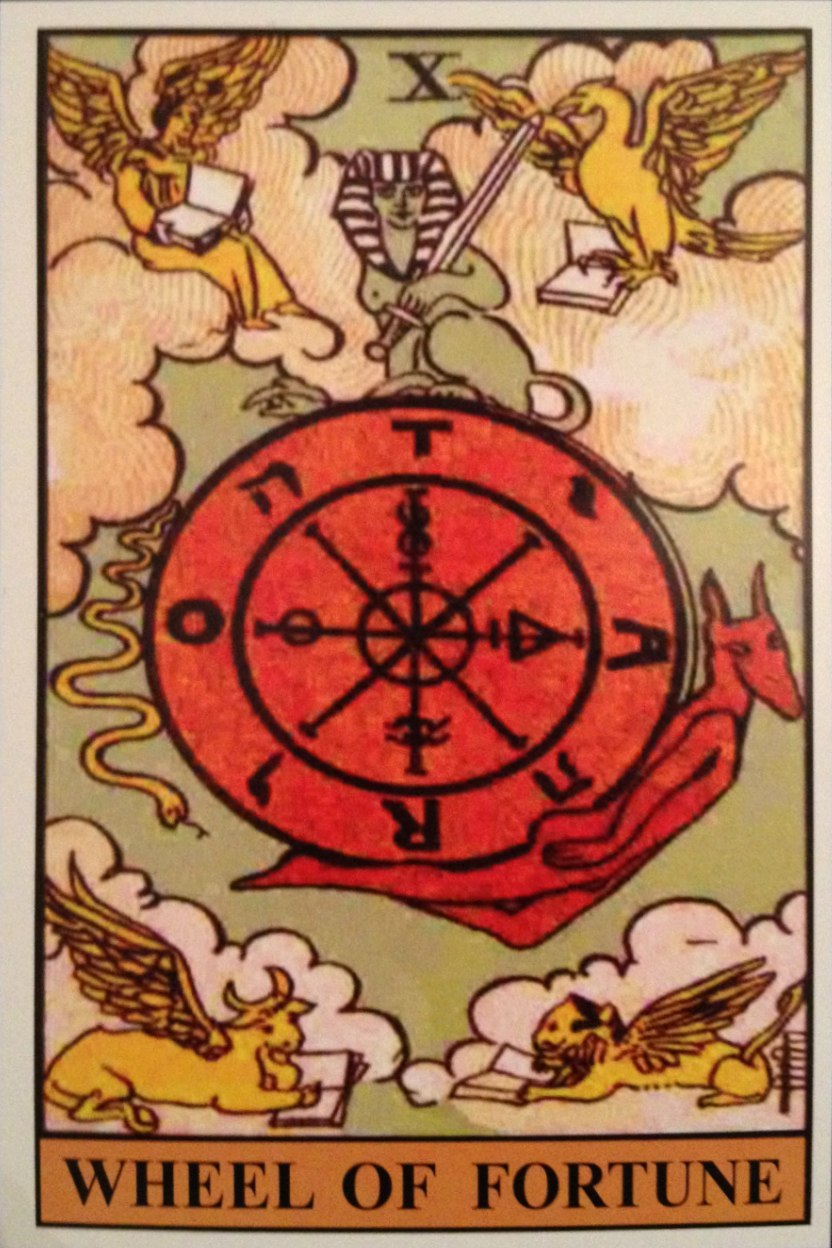
On the bus I noticed something about the colorful print of the tarot card. I’ve never in my life touched a real tarot card. I’m not really superstitious, but why take chances? The Bible can be pretty harsh about such things. This card says, “Wheel of Fortune.” The wheel, with its runic (and Hebraic) symbols, is surrounded by clouds. On each of the clouds in the four corners is—and this caught me off guard—an iconic symbol of each of the evangelists. Matthew’s winged man is in the upper left, and Luke’s winged ox in the lower left. Mark’s winged lion is in the lower right and John’s eagle claims the upper right. On the wheel itself rest a sphinx, a la Oedipus, a serpent (a la Eden?), and what appears to be a recumbent devil. Clearly clairvoyants see some value in traditional religious symbols.

New York is quite a religious city, for all its secular trappings. Not all of the religions are traditional—many, in fact, would start a literalist’s blood on its way to a low simmer. It is a city of seekers. The wheel of fortune may be a more apt symbol than I realized. The earlier bus gets caught in traffic today, and at one of the common stops I see the later bus whizzing by, and I know that it will arrive at my home stop long before I will. Of course, I had no way of foreseeing that. Each day as a commuter is another spin of that wheel of fortune. It is not a surprise New York is such a religious city. Your fate is never really in your own hands. But this flyer is, and it entitles me to five dollars off a peek into the great unknown. I think maybe I got this card about two decades too late.


Treasure Hunting

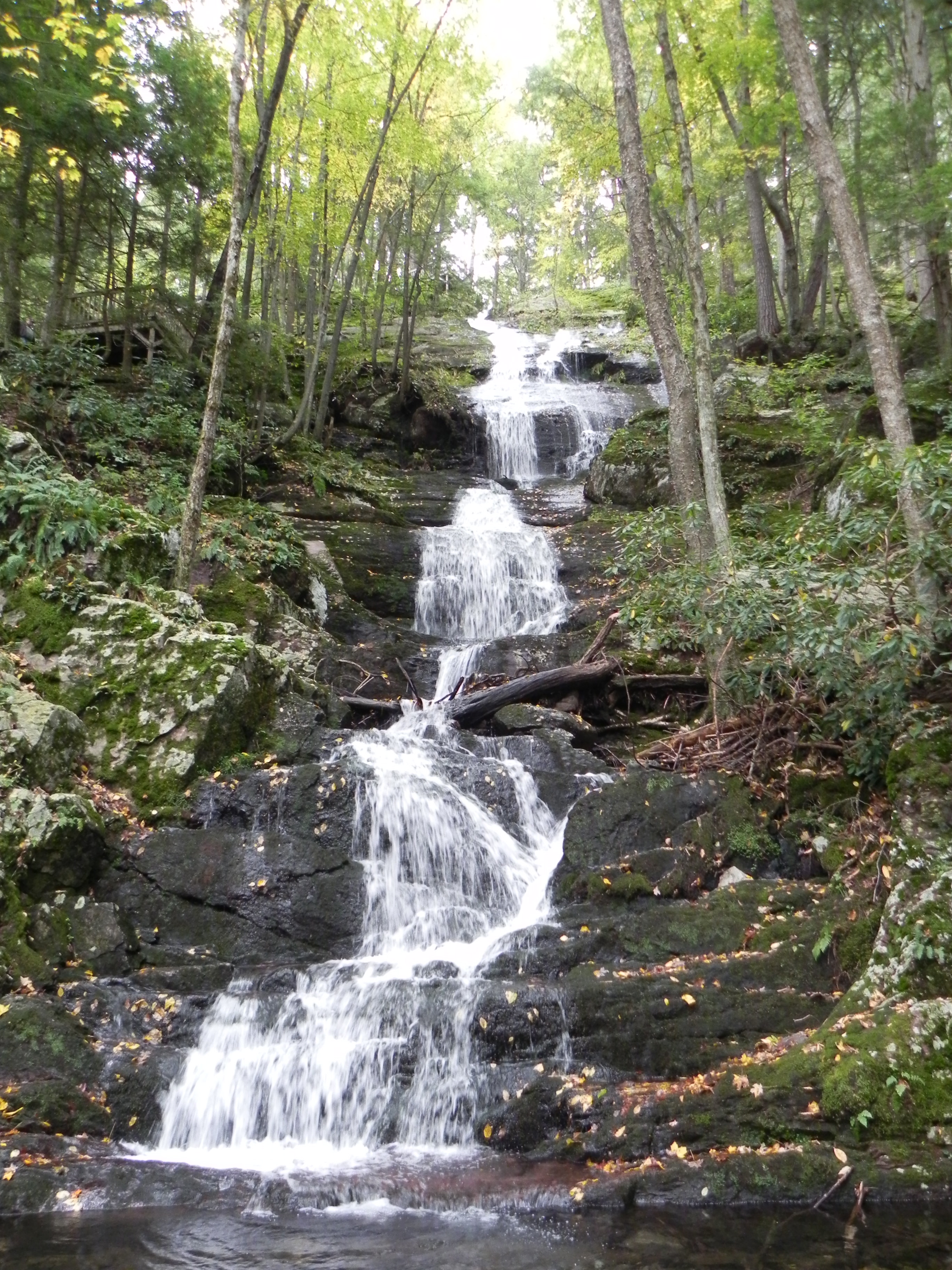
It is raining in Midtown. On my lunch hour I’m in a deserted public square down on my knees with an umbrella over my head. My free hand is reaching under a piece of outdoor furniture feeling for something. At least this one is not located in the private regions of a metallic stag. What in the world am I doing here?

One of my sometime passions is Geocaching. Many years ago we started this as a family activity but with schedules changing and families being forced apart by work and school, I’ve taken to caching alone. For those not familiar with Geocaching, you many not be aware that in millions of places around the world tiny containers are hidden from view. There is likely one not too far from you. They are listed on different websites, but Geocaching.com is the main source. You set up a free account, get ahold of a GPS device and go looking. Some of the containers have goodies for the kids, while others are very, very small and your only reward is signing your name and logging the find online. As a family we found nearly 400 caches over the years. Since I spend my days in Manhattan I’ve been urban caching. Urban caches are very small and stealth must be used because those who don’t know about Geocaching who find the containers often take them, not realizing that they have a purpose. So that’s why I’m on my knees in the rain in the middle of New York City.

I raise Geocaching as a topic because of a recent article on NBC about Scouting. Girl and Boy Scouts often know about Geocaching. This is similar to what used to be called (probably still is) orienteering—learning how to find your way around. The NBC story, however, focuses on a different kind of finding your way around. Over the past several years, non-faith-based alternatives to the Scouts have been enjoying some measure of success. Not that Girl or Boy Scouts are explicitly Christian, but they did emerge from that social context. The article specifically cites the Spiral Scouts, a Wiccan-based group, as well as several secular, and even some overtly faith-based alternatives. Yes, it looks like many groups, regardless of religion, want to get kids used to the great outdoors.

DSCN2484

Some might fear that alternative movements signal a rend in the social fabric. I think the social fabric ought to be more like a quilt. If sewn properly, a quilt is just as functional as whole cloth, but much more interesting to look at. Girls, boys, gays, straights, Christians, Pagans, Jews, Buddhists, Muslims, Hindus—what is wrong with that? I think that after being out in the rain, I might just curl up under a quilt when I get home, and I’ll be thankful for all the diversity I see comforting me under the gray skies.


Am I Famous Yet?

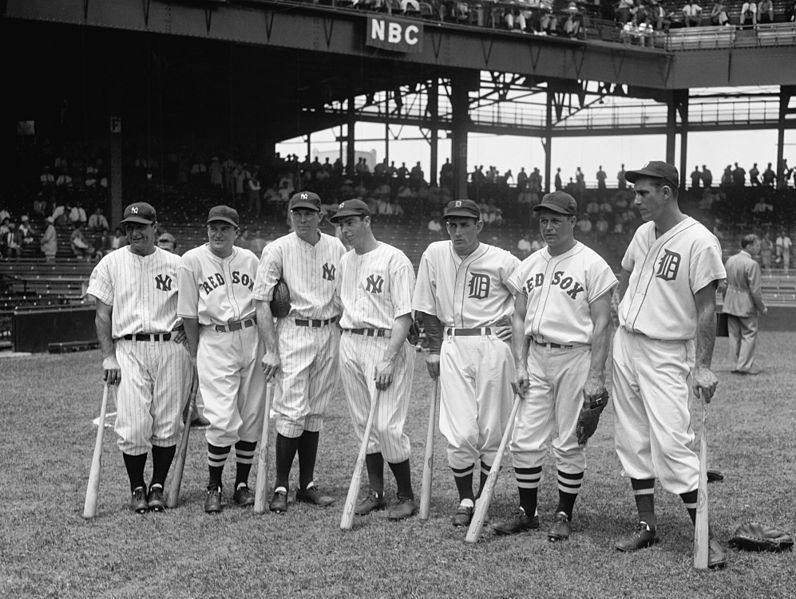
Sweat is running down my back and my chest.  The sun beating down on my head feels like a hammer of the gods.  East 42nd Street is clad with a wide, red carpet and drivers are honking in a way that assures you that they are seriously irritated.  I step out into Second Avenue when the little white person appears on the crosswalk sign; it is 93 degrees and I’m due back at work.  A motorcade stops me as three tour buses cascade by, and an NYPD officer waves mere pedestrians back to the baking pavement to wait another rotation of the lights.  Helicopters high overhead fail to stir this heavy, hot air.  Hazily I wonder if the president is in town, or royalty of some kind.  It’s clear that the plebeians are of less importance this afternoon in New York City.  Then I spy a banner-the All-Star Game.  I’m being broasted on this street corner for a bunch of baseball players, not one of whom I can name.  This is such a facile way to learn your place.

Chance often enters my thoughts.  There are those who become rich and famous because they are driven to it, but they happened to be in the right syzygy of circumstances to take advantage of that opportunity.  There are some who would say that attaining greatness is an act of God, and others who claim it is only fate, or luck.  The fact is, the only reason some people are more special than the rest of us is that they were offered an opportunity that opened a gate.  I’m not suggesting that hard work’s not involved, but hard word alone doesn’t suffice.  You need to have a leg up to get to ride in that air-conditioned luxury bus down Second Avenue while your fellow citizens, and not a few seriously sweating fans, step aside for you.

I’m sure it’s just sour grapes. Like most little boys I really enjoyed playing baseball. I never considered it a job, though. We were far too pedestrian in my neighborhood for that kind of thought. My goal was to be a janitor. It was only when I reached beyond this calling appropriate to my state that I ran into difficulties. The marionette dancing at the end of the strings of puppet-masters who had better opportunities than I. Sour grapes and hellish city streets—what wine will ferment from this alchemy? There go the All-Stars. In many parts of the world, as in my head, their names are unknown. Today, however, one of the busiest streets in Midtown Manhattan is stopped just for them. We’re all in the same oven, but some are in air-conditioned coaches while others are melting on the sidewalks. The red carpet is not for the likes of us.

1937_all_stars_crop_FINAL2


Oklahoma

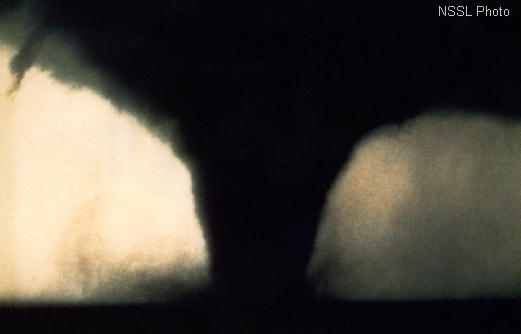
The tragedy outside Oklahoma City transcends petty human differences. Tornadoes, no matter how we dress them up, look like the wrath of God incarnate. The fifteen years I spent in the Midwest were filled with literal nightmares of tornadoes and even a few hours spent cowering in the basement. Such phenomena remind us that we are quite small in the face of nature, and the news reports are full of religious sentiment as people want assurance that God hasn’t abandoned them. Nature doesn’t favor humans over anything else that happens to be in the way of whirling 200 mile-per-hour winds. Even one’s belief might get blown away. Yet it doesn’t.

Although a tornado hit New York City last year, my terror of the storm evaporated when we moved back east. In the Midwest, although there were hills, I felt so exposed under the open expanse of the heavens. In the utterly flat part of central Illinois, I recall some truly awe-inspiring storms. The sky was so ubiquitous and overpowering, and you could see clouds towering thousands of feet over your head, throbbing with constant lightning. It was then I began having the idea for my book on weather terminology and the book of Psalms. Humans helpless in the face of nature. This is the raw material of religion. Like children we pray to God to make it go away. Storms do not obey prayers.

TornadoBlack

By their very nature tornadoes are capricious. We like to believe the good are spared and the evil punished, but as schools are destroyed and children killed we have to face the cruelty of nature. What happened in Oklahoma was a random act of nature, as much as hurricanes Andrew, Katrina, and Sandy were. We can’t help, however, any more than the people of the Bible, supposing that God must somehow be behind the weather. We may influence it, as global warming has repeatedly demonstrated, but seldom for good. And when we look for the divine in the fierce winds, we will end up facing tragedy.


Buy Their Fruits

A lot of things get thrust at you in Midtown Manhattan. Many of them are religious. As I was out on my lunch break, a Buddhist monk walked up to me on Second Avenue. He thrust out a pretty token that looked like those skinny cards that used to come in with Sugar Daddies. I get a lot of things held out at me, and since I can imagine how dispiriting it must be to have people ignore you all day long, I have taught myself to take their chit as a matter of reflex. The monk looked pleased. We were outside 815, the headquarters of the Episcopal Church in the United States. I reached out my hand and he said “Buddha peace.” That was nicer than most of what I’d heard from the people who worked inside the church to which I’d dedicated years of my life. Without a beat my Buddhist friend continued, “temple donation.” I had to wave him off with a smile. Religions, no matter how placid, are out to earn a buck.

In the neighborhood of my office lurks a psychic named Sharon. I wouldn’t know Sharon if I ran into her, but I suppose the reverse wouldn’t be true. Actually, I have no way of knowing if she’s really psychic or not. She has guys. These guys hang out on the four corners of my block and hand out fliers for Sharon’s psychic readings. The guys with the leaflets aren’t psychic, I take it, because a walk around the block, on which I recognize each and every one of them, always lands me back in the office with a pocket full of psi. I see that Sharon is a third generation psychic and that she is adept at foreseeing negative energy. I would advise her not to walk past 815. If I bring in my slips of paper I get five dollars off a reading. I don’t know how much Sharon charges, but I do know that I don’t need anyone to foresee negativity in my life. I’ve got a hard enough time dealing with it when I don’t see it. And I save five bucks each time.

I sometimes wonder, as I walk past 815 Second Avenue, if anyone in there knows how badly one of their faithful was hurt by priests and bishops who had the blessing of the church. No one from the central office ever consoled or tried to comfort a person whose career had just been lifted off the rails and flung off the cliff by the machinations of some of their own. Even now those who go in and out the doors as I stand there have no idea what was done to a lonely guy on the street. In the name of the church. I think of the hollow sound of coin ringing in the coffers. I think of Judas trying to return his thirty pieces of silver. I think of money lenders’ tables being overturned. I think of Buddha peace. One hand holds out a medallion for me. The other is palm up, waiting for a return on the sacred investment.

you shall know them

you shall know them


OMG, MOMA!

New York City can wear you out, spiritually. I suppose that’s why so many people go there, to face the challenge. Thanks to Target, Friday evenings the Museum of Modern Art gives out free tickets for its world-class collection. We knew that Vincent van Gogh’s The Starry Night was there, and had planned on seeing it sometime. Well, Friday of spring break offered an opportunity, so last night, with several hundred, maybe a few thousand, others, we made our way to MOMA. We arrived around 5 p.m. and found the line literally around the block. It wasn’t as cold as it had been, so we braved the hour to wait our turn. Yes, it was worth it. As my wife noted, it was very good to see so many people wanting to see art. Manhattan offers many, many other diversions for a Friday night, but hundreds opted for art. I had long anticipated this. Since my school days I’d seen replications of many of the paintings in the museum, and it was inspiring to be packed in so close with so many people wanting to be close to art. Hoping, somehow, to commune with the emotion in us all seeking such profound expression.

IMG_0602

It was a little difficult to commune, however, with so many other religious seekers. This is a religious experience, to touch the soul of another. Standing inches away from The Starry Night, I could almost feel the desperate, longing hands of van Gogh stroking out a manic sky, surreal and ethereal. I could almost hear the echo of his spirit. Were it not for the many crowding next to the painting to be photographed with it. Fellow spiritual seekers, I hope. Van Gogh was a troubled soul, as we all know. How many artists take their own lives after reaching out to touch what so few of us even dare. A sadness so profound as he climbed down that mountain. The starry night is the photograph of a suffering soul.

IMG_0614

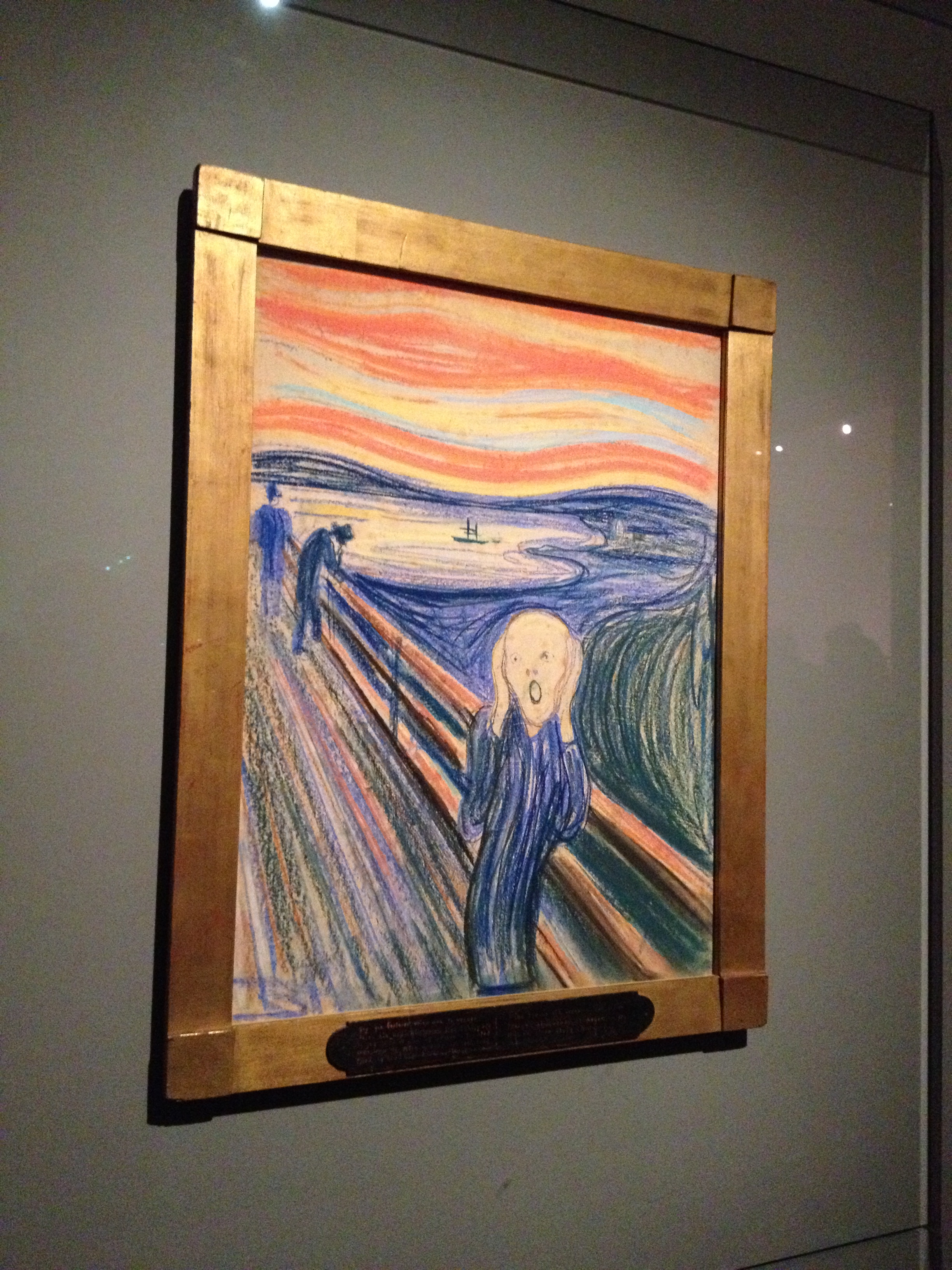
Then there was Edvard Munch’s classic, The Scream. On a limited engagement at MOMA, facing, just across the hall, van Gogh’s Starry Night. Was there ever such depth of soul in such close proximity? It was there that I began to question the faith that I had hoped impelled the countless masses yearning to observe free. MOMA allows photographs, and cameras, cell phones, and iPads were ubiquitous. To reach The Scream was to endure a crunch of strangers’ bodies pressing you forward, cell phones held aloft, illicit flashes popping, worried looking docents. I was anticipating another spiritual moment when I heard a woman say that she had to get close for a picture. “This is going to be my status!” she cried. So this is modern spiritually, the life splayed on Facebook, bragging about bagging Munch. Yes, Edvard, I am screaming too.

IMG_0610


Good, Friday

Riding public transit sometimes turns into a religious experience. Various bus drivers will wish passengers a “blessed day” as they pull into the Port Authority Bus Terminal—not that I can blame them, after the traffic they face daily, for taking a spiritual breather. Lately, though, I have been wished a happy Easter by the driver. Ironically, I must note, because people of many faith traditions ride the bus. Not all are Easter riders. Just yesterday a Rastafari stood before me in line. I’m regularly joined by Hindus, Jews, and maybe even a Mormon or two (who can tell?). Holy Week in New York is a surreal experience. I chatted with some co-workers where the topic changed effortlessly from their experiences of Passover to others’ experiences of Easter. Religion is alive and well in the Big Apple, but it is mostly an afterthought to the real business of making money. That’s what we’re all here for, after all.

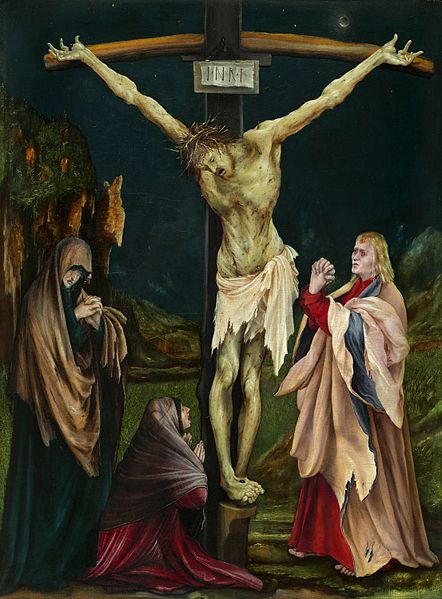
Money, according to the good book, is inimical to the lifestyle of faith. I must have a little too much faith, I guess, since I have so precious little money. Nothing throws that into such sharp relief as looming tuition bills. You see, I tried “to fight the good fight” only to learn that there’s no way to win it without playing by the entrepreneur’s rules. Filling out the FAFSA over the smoldering ruins of my “earning years” was a distinctly sobering experience. I went into higher education because I believed in it—there’s that pesky faith again. The things you believe in, however, have a way of turning on you. I suppose that’s an appropriate reflection for Good Friday.

It’s hard to be an idealist in a world where people say, “you just need someone to give you a chance,” and then turn their backs on you. So as I’m walking across town, thinking about my blessed day, I notice that we’re all in this together. Except some of us. In the idealist world, those who want it the most sometimes win it. Those who play by the rules. I had no Harvard aspirations, just a reasonable job in a little college would suit me fine. A place to think that doesn’t have wheels and aluminum sides and seat forty-nine other lost souls. But for those who have less, even the little they have will be taken from them. That’s biblical too. Higher education is one of the greatest gifts we can give our children, but it easily joins hands with Judas Iscariot. It is Good Friday, according to some. Others just call it a blessed day.

Mathis_Gothart_Grünewald_007


Implausible Deniability

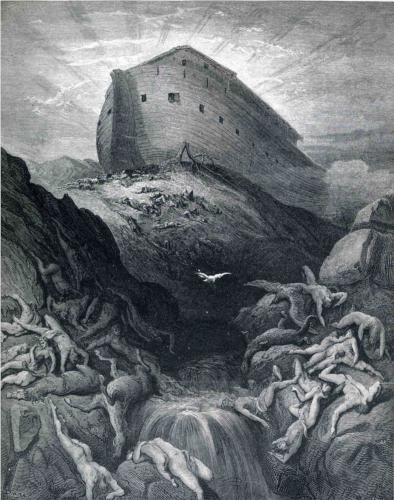
Sandy gave us a little taste of dampness under the gunnel. You see, people live by the water because it beckons to us. That was actually Rachel Carson’s idea, but nevertheless, we do find ourselves drawn to the sea around us. Historically our great cities grew in the littoral because communication across the big water was, prior to jet travel and trans-oceanic cables, the best way to stay in touch. Have a business meeting in London, but live in New York? No problem. We can get you there in two-to-three weeks. And the ship sets sail. Since that day we’ve become more electronic. Those of us who experienced Sandy near New York City know that one of the biggest problems was that salt water and electrified trains don’t mix. Of course, conservative lobbies have insisted that Congress and the White House keep their eyes firmly shut about the possibility that a more unstoppable flood is coming. We may not need an ark, but we’re going to have to take some steps back.

A story on the Weather Channel shows the “smoking gun” of global warming. Oh wait, that’s just a myth. Industrialists tell us so. But what a devastating myth! The Gulf Stream waters of yore have kept the climate mild in northern latitudes. While in Scotland we spent a wonderful weekend with some friends on the Island of Arran in the Hebrides. Palm trees growing in Scotland? Yes! The warm Gulf Stream means that much of the British Isles remains relatively temperate despite their latitude. The Gulf Stream, due to climate change, is slowing. In less than a century, climatologists now predict, the oceans will rise three feet. Looks like I’ll need to wear my gaiters to work. We’ve known for about half of my life that we’ve been changing our environment. And not for the better. Those who are too wealthy stand to lose a little so we do what we can to protect them, the poor dears. The rest of us had better learn to swim.

We don’t worry when the people of some Indonesian island point out that their entire world may submerge. Put a little ocean water in the subway and, well, that’s an entirely other story. How are the peons to get to work? Let them wear hip-boots. Word from the top one percent is that there is no global warming. If the Gulf Stream is slowing down it’s because it’s lazy. What a moocher! Suppose it will be wanting a health plan next. That’s the problem with the weather—it changes like, uh, the weather. Unlike the minds of some people that are already made up and never change, no matter what the facts. When the one-percenters start speaking, I’m glad I’m wearing my hip-boots after all.

Where can I get me one of those?

Where can I get me one of those?


Hardsell and Gospel

When I find myself a considerable distance from my point of egress sometimes I have to take the subway to escape New York. Don’t get me wrong—I love New York, but Monday through Friday it is a place to work, not to play. Getting home is serious business. To get to the Port Authority Bus Terminal from the subway, one venue is a long underground passage. When I take this corridor, I find that it is often a favorite place for street evangelists during inclement weather; apparently the gospel goes underground when the weather turns nasty. So as I recently padded along that tunnel, I noticed an interesting conflict in worldviews. There were a series of street preachers, the central one with Bible in hand, and several others handing out tracts. If I’d had time I’d have listened to the preachers a bit; one was riffing with street language and intonation, and another was fluently flashing between English and Spanish. I took one of his tracts.

HanselGretel

The contrasting worldview was the posters repeatedly displayed in a long line along the wall—Hansel and Gretel: Witch Hunters. The movie is due for release next week. One of the modern remakes of fairy tales in the horror/action genre, this might be a fun ride, but the idea of secular forces taking on monsters clashed with the old fashioned gospel I was hearing with my ears. Or did it? Witch-hunting is not exactly PC in the days of religious pluralism when Wicca is becoming as normal a religion as the Anabaptists. Anyone who listens to most modern day witches knows that they are not evil, so I wonder how the movie plans on setting up the “evil” that our eponymous brother and sister have to conquer. I might just have to go to the theater alone to find out.

Tract

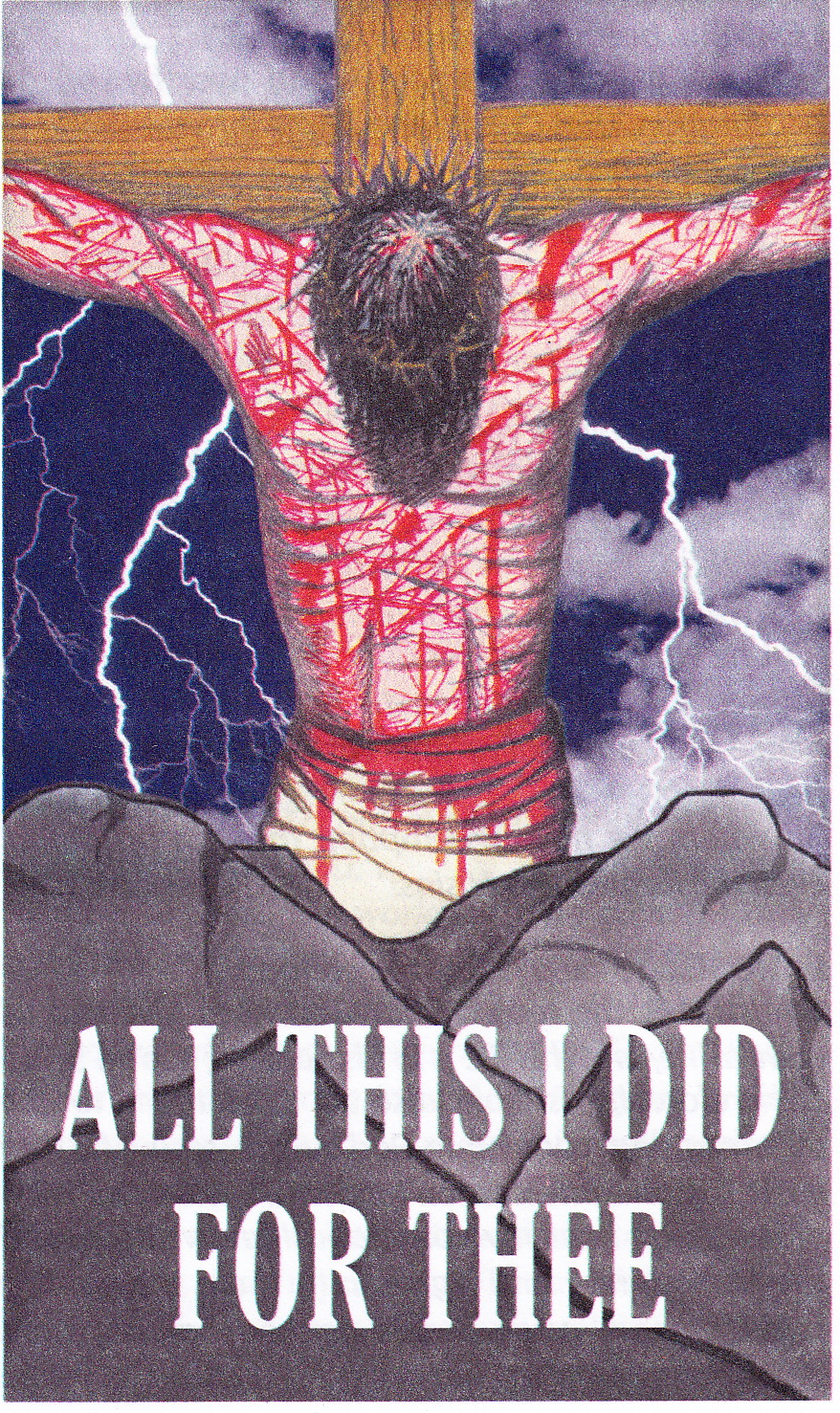
But is this really so different from our earnest street preachers below the ground? They are railing against the evil in the world, and if you follow their tracts, there is clearly no shyness about blood and torture here. The movie is rated PG-13, but what about the slip of paper I hold in my hand that shows a much bloodied Jesus hanging on a cross? Whether it’s with fancy crossbows or just plain crosses, the goal is to overcome evil. The real question is how to define it. Some, I suppose, would consider this movie a kind of evil; Gretel’s tight-fitting uniform is a little low-cut for taking on the forces of darkness, I should think. But the real evil is treating other people as enemies. And that even goes for street evangelists. If only they would admit the same for the wider world, maybe all this blood wouldn’t be necessary.


2014

IMG_0542

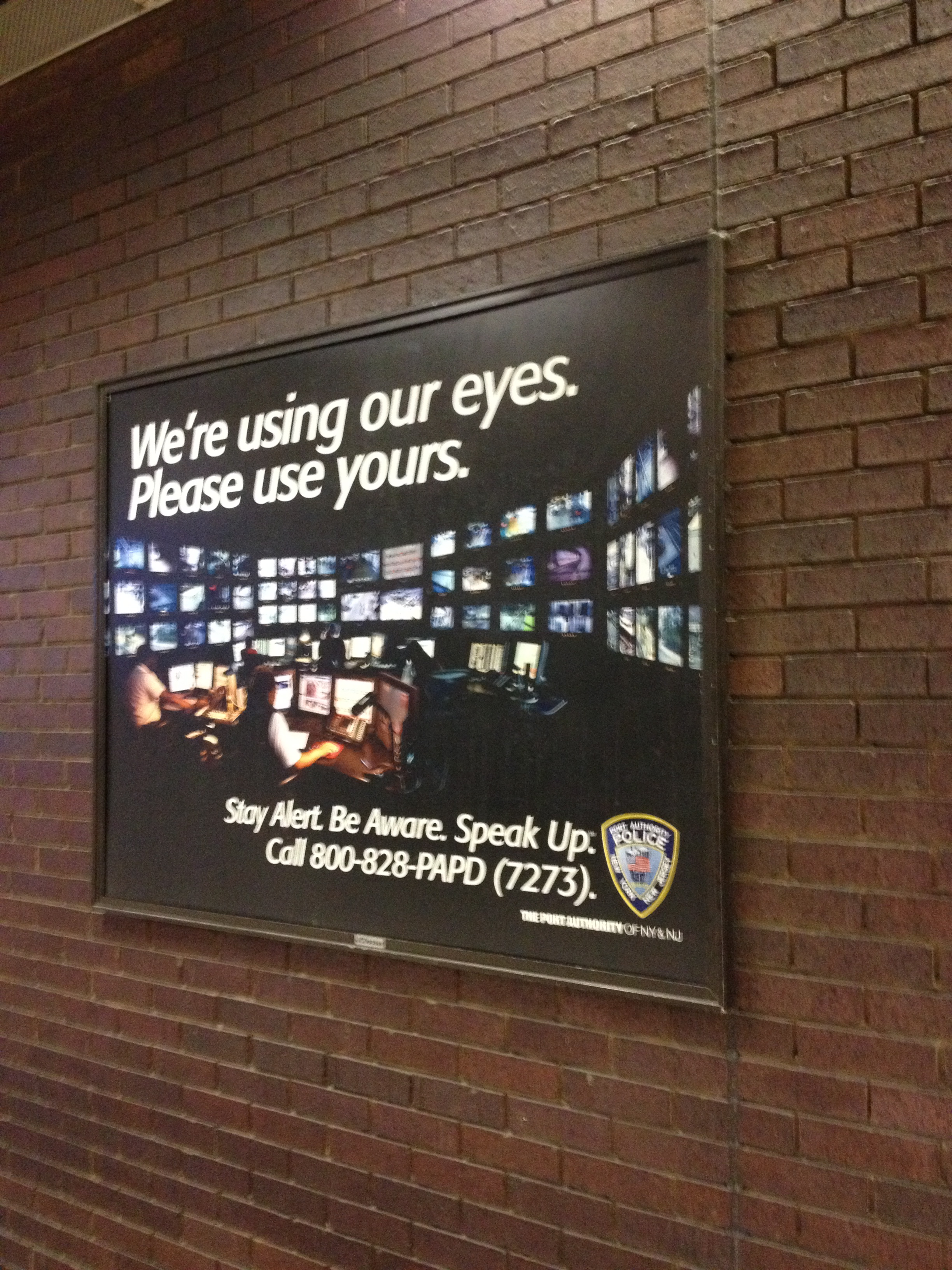
New York City, in a public place—I dare not say where—I see this sign. A certain Orwellian chill shivers my mind as I think back to 1984. Posters everywhere; you are being watched. If you see something, say something. NYPD Security Camera in Area. We have let our fear drive us into the arms of Big Brother. The problem with principle is that it requires a fair amount of spine. Who can stand in the face of possible, if remote, terrorist attack? Is it not the large, amorphous, faceless government that we, along with millions of strangers, have elected? I’ve read about their behavior; I’m not sure I want them watching me.

We have let fear define us. How far we have come from FDR’s admonition that the only thing we have to fear is freedom itself. Don’t get me wrong—I don’t approve of terrorists or any other cowards. If our response, however, is to cower in the many corners of our crowded cities while our own military patrols the parameter, well, the last place I recall like that was my visit to Jerusalem just months before the First Intifada. Even the bus drivers wore pistols. The heat from that burning car beside the road was worse than anything the Judaean Wilderness could throw at you. And still they long for peace.

Differing political and social outlooks need not come to blows. I’ll admit to being a shameless idealist if you’ll lay down your guns. Even if you won’t. It seems to me that we’ve forged ourselves a chain that reinforces outmoded associations. We can create the most intelligent weapons imaginable, but we can’t figure out how to cut a simple chain. Yes, I eye each jet flying a little too low with suspicion, and sometimes I walk a little too swiftly through the crowds at Times Square. I’d like to pretend I’m free, but ever since I read 1984—and it was close to that time—I’ve noticed that Big Brother looms taller than any tower in a world where inequality persists.


Biblical New Brunswick

One of the true sadnesses of my life is that New Brunswick’s biggest institution, Rutgers University, couldn’t find a full-time place for a dreamer like me. Ever hopeful, I taught there for four years, counting on a miracle. Although I’ve got many good memories of my time at Rutgers, one of the side-benefits was getting to know New Brunswick a little bit. Probably not topping too many vacation must-see lists, New Brunswick, New Jersey nestles in the shadow of New York City and its train station is a place I’ve spent a bit of time. Last night I had occasion to stop in to get my bus pass so that I can start off the new year by going to work. As I climbed the stairs to the ticket window, I heard a street preacher holding forth. There he was, a young man, open Bible in hand, explaining to a mostly disinterested commuter crowd why they needed salvation. (If their experience on New Jersey Transit has been anything like mine, believe me, they already know.) Many of those in the waiting room are the homeless trying to get out of the cold for a while. New Brunswick has never struck me as a particularly religious town, although many of my students in my Rutgers days brought their religion to university with them. I didn’t have time for another conversion last night, however, as my family had another purpose for being in town.

A friend had kindly given my family tickets to Joseph and the Amazing Technicolor Dreamcoat at the State Theater. Although put on by Plays-in-the-Park of Middlesex County, being in the shadow of New York City sets a very high bar for public performances. The show was excellent and energetic and I couldn’t help connecting the dots on how the Bible had played into the evening. Andrew Lloyd Webber long ago realized that even a very secular Britain had a hunger for biblical stories. Although I am biased, given my failed choice of profession, the story of Joseph is one of the great tales of all time. Although likely half the audience couldn’t say that the story occurs in Genesis, the rags-to-riches plot of betrayal and forgiveness is so deeply embedded in human dreams that even assigning it to the wrong testament would make no difference. As Lloyd Webber knows, we all want our dreams to come true. Joseph, certainly a flawed hero, does finally see himself as the second most powerful man in the fictional world of Moses’ Egypt. It’s difficult not to root for the guy.

Outside the temperature hasn’t managed to reach 40 degrees today. A few blocks away at the train station, some of those being force-fed the Gospel were almost certainly refugees from the cold. I’ve seen this every time I have to catch a train in Newark as well. The homeless know that at least they won’t freeze in the depot, even if they are chased off the seats by security. Moving from Joseph to James a moment, we hear “And one of you say unto them, Depart in peace, be ye warmed and filled; notwithstanding ye give them not those things which are needful to the body; what doth it profit?” In other words, if you are offering the homeless words only, you’re not getting the point of the gospel at all. The homeless would benefit more from having a dream come true, I’m certain, than from having a message of salvation before being turned out to the cold for the night. The real salvation in New Brunswick is being offered at the State Theater tonight, but you do need a ticket to get inside.

Any dream will do

Any dream will do


Umbrella Apocalypse

Broken ribs and twisted, tortured limbs hanging useless under a leaden sky. It was a scene of carnage. I knew the world was supposed to end yesterday, but I didn’t believe I would experience it, but the evidence was indisputable. It was the apocalypse. For umbrellas. Winter storm Draco had melted by the time he reached the East Coast. I awoke to the apartment shuddering in the wind, and I could hear the rain pelting the windows. I had one more day to go to work before two things: the end of the year and the end of the world. And I would be relying on New Jersey Transit. The very thought makes me want to cower in the closet. My bus stop has no shelter—it’s just an exposed street corner, not far enough away to justify a drive. I stood in the rain, faithful umbrella held like a shield in the blast of Draco’s breath. The bus, of course, was nearly half an hour late. I stumbled up the stairs, glasses dripping, and decided that today, only today, I would take the subway across Manhattan. After all, the world was ending.

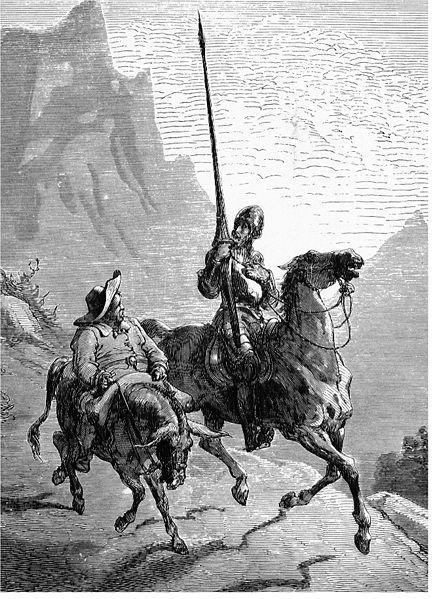
The lines from the Port Authority to the bowels of the subway are like those old documentaries of massive lemming migrations off a cliff. My turn. The card reader said “Card Already Expired.” Metrocards don’t expire; you charge them up and recharge them when they’re empty. I still had money on my account, but with other lemmings close behind, and rush-hour grade lines at the recharging machines, I decided to fight the dragon on the streets. It was with a certain Cervantesque tilting at the wind that I made my way across West 41st Street, umbrella forced into a tiny cone by Manhattan’s famous wind tunnels. Twice I was blown off the curb. Then at 5th Avenue the wind defied both the laws of physics and the agreed conventions of meteorology and slammed me from north and south simultaneously, my umbrella bucking in my hands like a terrified stallion. It sustained two broken ribs, metal twisted in opposite directions, flesh flapping uselessly. By the time I reached Grand Central, it couldn’t close, so I dumped my companion into a garbage can with other umbrellas and went on alone.

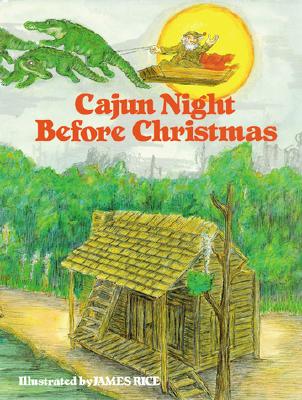
When I got to the office I discovered my hat was missing. While it would be more dramatic to say that a stocking cap blew right off my head, the truth is that it must’ve fallen out of my coat pocket. I was wet, buffeted, and without two items with which I began the day. The sky was still black as I looked out on the scene of the final battle from The Avengers movie. It had been an apocalypse all right, for the umbrellas. Chicago may be the Windy City, but New York is the Umbrella Killer. When I made it home as early as 6 p.m., I knew the world had ended for certain. I read the Cajun Night Before Christmas and went to bed, thinking of all those poor, dismembered umbrellas. Today is the day after the end of the world, and I am huddled here waiting for the dawn.

Don Quixote rides out of Manhattan yesterday with Sancho Panza wondering at his denuded umbrella.

Don Quixote rides out of Manhattan yesterday with Sancho Panza wondering at his denuded umbrella.


Southern Comfort

CajunNightOnce upon a time, long before Hurricane Katrina, the American Academy of Religion and Society of Biblical Literature held their annual meeting in New Orleans. It must’ve been an incongruous sight: the Big Easy filled with right proper professional religionists discoursing eruditely. While there, my family purchased the Cajun Night Before Christmas, by Trosclair. A cute knock-off of Clement Moore’s “A Visit from Santa Claus” (‘Twas the Night Before Christmas), the story unfolds of a fur-bedecked Santa visiting a destitute, but grateful family on the bayou. Each year I try to reach deep in my southern roots to find an accent that accommodates the poem, and read the story the week before the holiday comes. A number of factors have suggested that perhaps this year Christmas might catch many people on a more subdued level. Crushing poverty is a reality, guns are too readily available, and the one percent don’t get close enough to humanity to contract the common cold. Even the effects of Katrina have refused to dissipate completely. Her sister Sandy visited the Big Apple, and things still aren’t quite right.

Big Apples and Big Easies may seem to have little in common, apart from how much money is available to assist in hurricane recovery. They both also participate in Christmas, being havens of Catholicity. Yet after the hurricanes some in New York and New Jersey were without power several days, but parts of Louisiana were simply abandoned. The will to help the disadvantaged seems to have improved since 2005. Considering changes at the top, this isn’t necessarily a surprise. Nevertheless, tragedy throws into sharp relief what we consider human decency. Too bad it takes a disaster to make us more human.

What sticks with me about the Cajun Night Before Christmas, apart from the flying alligators, is the profound hopefulness that the poem conveys. Those with so little take so little to improve their lot. Yet those with too much insist it is their right not to be taxed at all. Those who live in a shack don’t expect much from Santa. They have learned through the disappointment of experience that double standards are endemic in life and while some are unbelievably rich, the poor are happy with just the smiles of children. Ironically, Santa is the great equalizer here. While the children of the wealthy may expect and receive more, the children of the humble are also allowed a portion of hope. As I remember New Orleans, in the palmy days before Katrina, it was a city that knew Mardi Gras was far more humane than Lent, and that even a city marked my radical inequities (let those with eyes to see read) could come to a joyous accord when sins are about to be atoned. And even if he has to commandeer alligators, Santa will visit the poorest children the night before the holy days.