Summerween

Okay, so why didn’t anybody tell me?  Well, I suppose it’s because few people know me.  But still, I had to find out about Summerween from the New York Times.  Folks, I don’t spend a lot of time online.  I work long days and I read books and mow the lawn.  I just don’t have time.  I wasn’t aware that Summerween was happening.  Interestingly, the idea got started from Gravity Falls, an animated television show based on Twin Peaks and The X-Files.  I actually watched this show because a couple of young friends, who spend a lot of time online, started showing it to me.  I didn’t remember, however, that in one episode the population of Gravity Falls decides to celebrate a second Halloween in the summer.  And now internet influencers (I’m more of an unfluencer) are popularizing the holiday.  

The need for spooky holidays is encouraging to me.  I’ve long been exploring the spirituality of the unexpected, and Summerween has the possibility of contributing to it.  According to the New York Times article there’s no set date for the celebration.  It’s more of a party aesthetic, but, the story notes, Michaels, the arts and crafts chain, has already caught on and is stocking scary summer decorations.  I have long opined (and fifteen years is a lot of daily posting—nearly five-and-a-half thousand of them) that people are afraid.  That’s why they run after unlikely political leaders and seek shelter beneath the wings of the Almighty.  Horror movies, and Halloween, simply bring this out into the open.  And what’s wrong with having a little fun with it along the way?

By the by, if you haven’t checked out Gravity Falls, you don’t know what you’re missing.  It’s a Disney production and it’s aimed at a younger crowd.  That’s one of the disconnects I experience here: Halloween is something younger people love.  At work I can’t count the number of people who’ve said (not to me directly, since few speak to me that way) that Halloween is their favorite holiday.  I guess you wouldn’t expect to find a kindred spirit among old guys who edit biblical studies, of all people.  I venture to guess that any of them would be surprised to learn that someone of my vintage even knows what Gravity Falls or Summerween is.  Well, they’d have been right about the latter, had it not been for an article yesterday in the Gray Lady.  And what a more adult way to find something out might there be?

Copyright: Disney. Summerween trickster, Gravity Falls

Saint Material

Miracles don’t often make the New York Times.  The Gray Lady was reluctant to release stories about verified UFO cases, for crying out loud.  But the story about a twenty-first century saint made me pause.  Well, Carlo Acutis isn’t technically a saint yet (at least he wasn’t at the time of the story), but you can’t become a saint without miracles.  Miracles are difficult situations for which to set up a control group.  Often they involve human beings and we really don’t understand ourselves well enough to say what might be supernatural from time to time.  All we know, at least from the “educated” establishment, is that materialism accounts for everything so miracles don’t happen.  QED.  That’s why I found the account of Carlo Acutis so interesting.  A story about a young person dying from leukemia is always sad, but this report doesn’t end there.

In his brief life, Acutis tried to bring good into the world via the internet.  In this shadowy realm where trolls and hatred thrive, here was a young man trying to spread positive things through this collective of anybody who can afford connectivity.  That does make a remarkable news story in and of itself, but that miracle.  Two, in fact.  Catholic practice is not to assign sainthood without out two very carefully studied miracles.  The Vatican has been involved with science for many decades.  The idea of the Big Bang, after all, derived from Georges Lemaître, a Catholic priest and physicist.  Controls are set up for miracles, and the church even used to use Devil’s advocates to try to disprove miracles in such cases.  Skepticism was an essential part of the process.  In its own way this is the scientific study of miracles.

The miracle that may put Acutis over the top, according to the Times, is a spontaneous remission of a brain hemorrhage after a prayer was made to the young man.  Such things happen and doctors can’t explain them.  We as human beings have no way to determine what actually causes such unconventional healings—miracles—often deemed impossible by medical science.  A saint is as good an explanation as any other.  What’s fascinating here is that this miraculous recovery in all likelihood would’ve been overlooked by the New York Times, had it not been for this pending sainthood case.  Such cases as this aren’t everyday occurrences, but they reflect realities that modern people may be very slow to acknowledge.  They still do happen, whether they make the papers or not.  Perhaps our world would be a bit better if they did get reported a little more often.


Squeaky Clean?

A New York Times story, apart from the expected misunderstanding of actual Evangelicals, made me sad.  The article points out that, especially since 2016, “Evangelicals” have taken to soft-core porn, cussing, drinking, and premarital sex.  In other words, Trump has given them license to behave like secular folks while still claiming the name “Evangelical.”  Why should this make me sad?  I lament the loss of place for those who grew up, like me, striving for clean living.  It’s an image—a mirage—rather than a reality, of course.  But still, if conviction holds, you can get pretty close to the ideal.  That vision of life has been occluded by a guy who runs for President because he cares only for himself.  Jesus, on the other hand, was all about caring for others.  Going as far as, if the Gospels are to be believed, sacrificing his own life.

Like fiscal conservatives, such legitimate Evangelicals now have no public voice.  One of only two political parties has become identified with an individual rather than ideals—what used to be called a platform.  I have Republican friends.  I grew up identifying as a Republican.  I also grew up as an Evangelical.  I studiously avoided things like bad language, sex, tobacco, and alcohol.  Even at Evangelical Grove City College I was a bit of an outlier for how seriously I took all these things.  Of course, studying history can be dangerous, particularly for ideologues.  Still, “clean living” had its own virtues.  Those who continue to try to live that way are swimming into a rip tide, it seems.  For some Trump seems like the Second Coming, sans the white horse.  And this, above all, is sad.

There are those who claim, often loudly, that religion is bad.  I agree that when a religion tries to force others to obey its standards it can quickly become evil.  Still, the baby should be left behind when the bathwater’s discarded.  Religion has led to much good in the world.  Hospitals, charities, and yes, “clean living.”  These things, along with retirement homes and affordable apartments for low-earners in their autumn years, are necessary to pick up the slack that the government leaves.  It is cause for sadness that the clean living camp has succumbed to Trump-style hypocrisy.  Heck, religion gave us the word “hypocrisy.”  The standards of classical Evangelicalism are often impossibly high.  If we look at current Evangelical leaders we find many, many skeletons in a house with many closets.  And a wagging finger warning the young, “Do as I say, not as I do.”


Personal Psalms

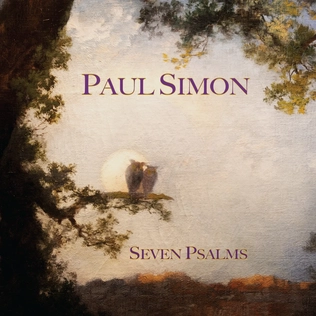
I haven’t heard it yet, but a New York Times article encourages me to.  Paul Simon has joined the ranks of those aging music stars to record albums presaging their deaths.  The article was about Simon’s latest album, Seven Psalms.  And, yes, the religious reference is pretty hard to miss.  Like most kids from the sixties, I grew up hearing Simon and Garfunkel on the radio.  We didn’t have money for albums, but I always liked their songs when I heard them.  After their breakup I really didn’t pay much attention to Simon until Graceland, and since then I’ve listened with half an ear.  You see, I’m wired in such a way that I can’t listen to music while I write.  Or read.  My mind grips one thing at a time.  That means I don’t listen to background music much.

That doesn’t mean I don’t appreciate music.  I do.  Almost religiously so.  On occasion I come back to Simon, with or without Garfunkel.  I posted about his song “Werewolf” some years back.  I eventually listened to that album, and I’m not sure I got it.  Artists are that way.  Some pieces you like, others are just okay.  I am curious about Seven Psalms, though.  I’ve posted about David Bowie’s Blackstar, Leonard Cohen’s You Want It Darker (both discussed in the Times article), and Bruce Springsteen’s Letter to You.  No longer young myself—these guys were young when I was a kid—hearing them reflect on death is powerful, and, if the mood is right, peaceful.  We fear death because it’s unknown.  And also, we all know, deep down, that we’re flawed.

Psalms aren’t necessarily biblical, of course.  Sinead O’Connor’s “Take Me to Church” is a psalm.  So is “Sounds of Silence.”  Artists have been writing psalms for as long as they’ve been writing songs.  The biblical psalms are among the most quoted bits of literature in the western world.  They were likely originally sung as well, but we can only guess what they may have sounded like.  We know that across the world people turn to song to express strong emotion.  I’m not sure what Paul Simon’s Seven Psalms might be, but it seems that thoughts of mortality go naturally enough with emotion.  I don’t write much about music because it’s so deeply personal.  I try to be intellectually honest on this blog, but if you want to talk music you really have to get to know me first.  Then I’ll reveal my psalms.


Modern Work

The entertainment industry has proven itself, time and again, resistant to recessions.  It says something about our lives that we need that outlet no matter what.  The New York Times has been looking at the writers’ and actors’ strike in Hollywood as a piece of what they are calling the “fractured work” puzzle.  Noting how inequality inevitably increases in a capitalistic system, they put the screenwriters into a situation with which I am unfortunately familiar—that of the adjunct professor.  Adjunct professors now make up some three-quarters of the teaching force in higher education.  In case you haven’t had the misfortune yourself, an adjunct gets paid by the course (not very well, by the way) and has no benefits—medical or, often, retirement (some state schools are required to offer the latter, but you’ll never be able to retire on the pittance you receive).  The idea is that work is being broken into smaller chunks so that entrepreneurs can pay less for work done.

Everyone knows such a system isn’t sustainable.  It will crash.  Unless it’s reformed.  Some people have asked me about becoming a copyeditor for a job.  The thing about copyediting is that it’s freelance work.  Publishers generally don’t hire copyeditors full-time.  You can make a living at it, but it’s self-employment.  You need to set aside the money for retirement and health insurance.  As well as taxes.  And you have to work long hours to make it pay off.  I tried it for a year, but I’m a slow reader.  It was clear that I didn’t have the right literary stuff to make such a living, so I had to move into acquisitions instead.  If you know me personally you may find that ironic.

Those of us who’ve always sought a spiritual existence, however defined, often don’t fit into a capitalistic system.  Especially if you question doctrine.  That’s why I became an academic—or at least tried to.  It’s one of the few places where people with my skill set can thrive.  Work often defines who we are.  Usually one of the first questions to arise when you meet someone is “what do you do?”  Specialists often suggest dissociating our selves from our jobs—I suspect that’s more necessary in positions in which a person is unwillingly being taken over by a position that’s not fulfilling on some level.  Wouldn’t it be better, since we’ve opted for fractured work, if we made it something you could do for a career?  The New York Times suggests specializing, but be careful, dear reader, in what you decide to specialize.  The “market” may well dry up on you and striking may not even be an option.


Little Bang

I’ve always been interested in the sky.  At times it feels like I’m in love with it.  Having attended a Sputnik-era high school—a rural high school with an actual planetarium!—I took the offered astronomy course.  Buoyed up by this, I also enrolled in a college astronomy class only to discover that that career track involved far too much math for my humble abilities.  Still, I learned a lot about the nighttime sky.  I’ve also been a lifelong reader of lay science.  I very much appreciate scientists who write so that nonspecialists can understand them.  So it was that I was glad to see a New York Times letter by Adam Frank and Marcelo Gleiser titled “The Story of Our Universe May Be Starting to Unravel.”  I’ve mentioned Gleiser here before because I’ve read a couple of his wonderful books.  But this article was mind-expanding.

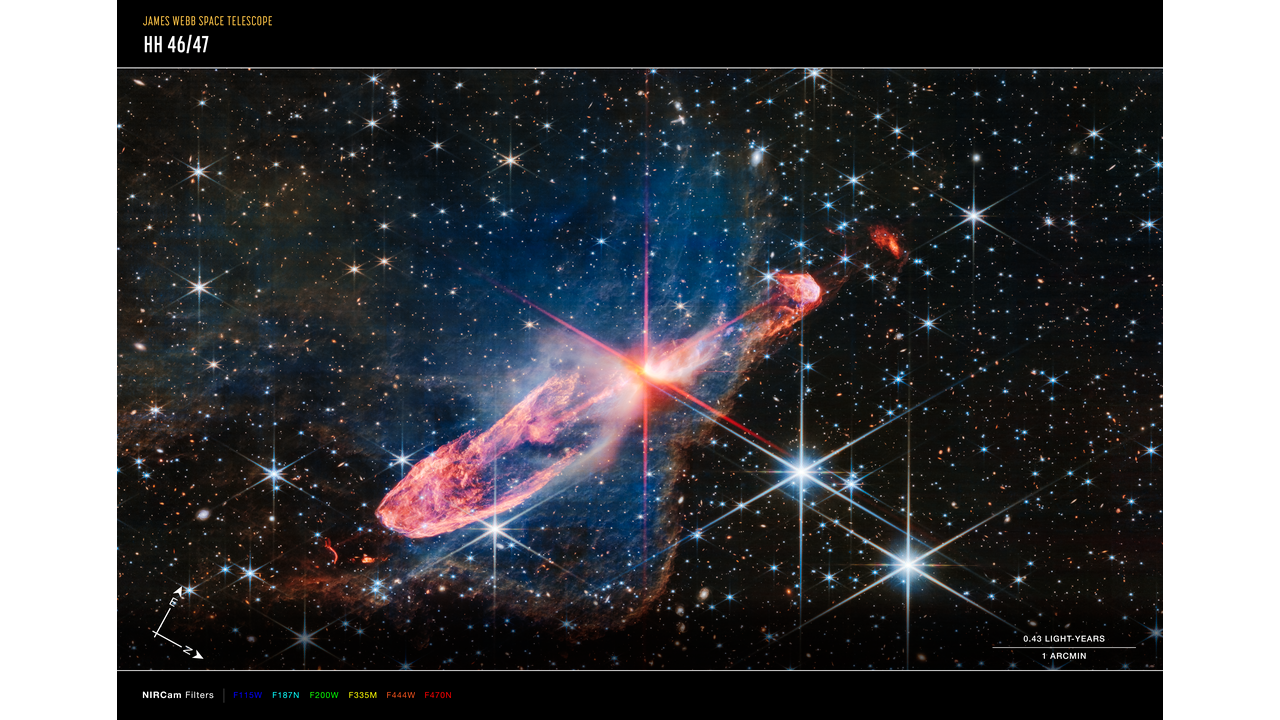
Frank and Gleiser suggest that the Big Bang Theory may, eventually, need to be replaced.  They point out that small inconsistencies have crept into it over the years (keep in mind that it was really only “confirmed” within my lifetime, back in the sixties).  Most of these have been patched up with quilt-work astrophysics, but the James Webb Space Telescope is making some of those past patches strain a bit at the seams.  Fully formed galaxies are being spied too far back in time (for stargazing is looking into the deep past) for the standard model.  They shouldn’t be there, but they are.  The letter interestingly raises the point that the scientific study of quantum physics, as well as that of consciousness, also strain the standard models.  Perhaps it’s time for a rethinking of reality?

Image credit: NASA, public domain

Isn’t this breathtakingly exciting?  To be alive when a major leap of understanding the universe we call home may be discovered?  The authors point out that cosmology and philosophy often have to interact.  Our understanding of the universe is a human understanding, not sacred writ.  The scientific method is built to be falsifiable.  If it’s not, it’s not science.  (This often separates it from some religions which declare themselves unfalsifiable, and therefore likely wrong.)  New scientific discoveries are made daily, of course, but new paradigms only tend to come on the scale of lifetimes, or several generations.  We don’t see them all the time.  I guess it’s heartening to see that the system works.  When science becomes orthodoxy, we run into similar problems that we encounter with religions.  A bit of humility and a ship-load of wonder can go a long, long way.


Good Book Selling

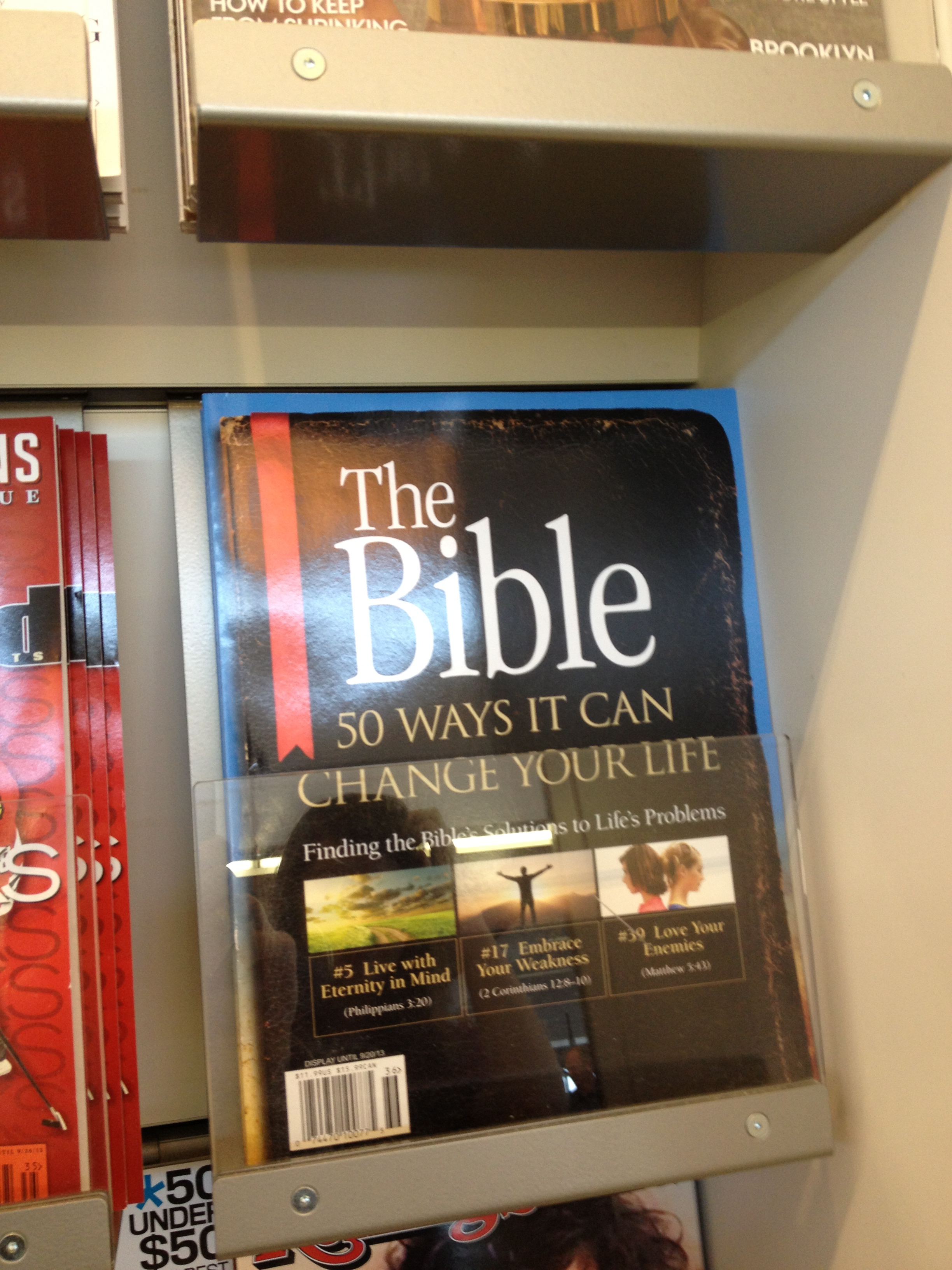
A few weeks back, probably several now actually, the New York Times ran a story about the Bible.  In this age of declining interest in the Good Book such things catch my attention.  Of course, the reason that the story ran was because of the money involved.  Let me explain.  Or at least give the headline: “Oldest Nearly Complete Hebrew Bible Sells for $38.1 Million.”  Money talks, even when it comes to Scripture.  The story was about the auction of the Codex Sassoon, which went to a museum.  Most regular Bible readers aren’t aware of the textual criticism behind their favorite translations—yes, even the good ol’ King James.  You see, no original biblical manuscripts survive.  Not by a long shot.  Every biblical manuscript in the world is a copy of a copy of a copy, etc.  And these copies differ from one another.  Often quite a bit.

Textual criticism is the job of comparing manuscripts and using scientific—yes, scientific—principles to determine which one better reflects what was likely original.  Since we don’t actually have the original we can’t say.  Those who hold views of extreme reverence for one translation or another have to resort to divine guidance of the textual critics to make the case.  For example, they might argue that God inspired the translators of the King James to follow one manuscript rather than another.  The King James was based on manuscripts known at the time (only about six of them) and far older manuscripts—inherently more likely to reflect earlier views and potentially closer to the original—have been discovered since then.  And are still discovered.  That was one of the reasons behind all the fuss over the Dead Sea Scrolls.  They represent some of the earliest biblical manuscripts ever found.

The Bible is an identity-generating book.  In this secular age, the failure of “the educated” to realize this simple fact often leads to underestimation of the importance of religion.  It motivates the largest majority of people in the world.  We should pay attention to it.  It doesn’t make headlines too often, though.  Instead, politicians who pretend they respect the Bible but live lives about as far from its precepts as possible, gather the limelight.  When money gets involved the Bible becomes interesting again.  We think about that thirty-eight-million.  What we might do with that kind of money.  How we might be able to pay somebody to paint that fence that desperately needs it, or better, to help those in desperate need.  The many victims of capitalism.  Where their heart is, there their treasure will be also.


Admit This

I thought about writing a letter to the New York Times, but I know my chances of getting it accepted.  A piece run yesterday in said periodical on elite college admissions policies, which favor the affluent, presented an argument frequently used in defense: high-performing colleges are faced with the problem that the highest achieving students are affluent.  I’m here to call shenanigans on that.  I don’t often state explicitly what my background is here on this blog, knowing as I do that I had white privilege on my side, but this admissions reasoning is elitist to the hilt.  I grew up in a poverty-level household and yet when I reached college it was only to have professor after professor marvel at how well I did in their classes.  My GPA at graduation was 3.85, partially brought down by “freshman orientation” and senior ennui.  After graduating summa cum laude, I graduated seminary magna cum laude.  My doctorate was with a major European research university that didn’t use the cum laude system.

In short, a guy from a non-affluent background can succeed academically.  Professors who think otherwise don’t know what they might be missing.  There is a bias against the poor that assumes that intelligence is bred, not an innate ability.  My academic track-record demonstrates that this bias has no expiration date.  Despite my record of achievement, I was routinely passed over for positions at universities and colleges, many of them elite.  I used to keep my rejection letters but the file was getting pretty heavy to lift.  An academic unknown, I didn’t have connections in “the club” and was asked to check my working-class abilities at the door.  I’ll confess when I see such reasoning as “we can’t afford to take chances on the poor” my blood begins to boil.

Some of the smartest people I know never attended college.  Even as a child I could tell if someone was capable of deep thought or not.  I didn’t know many college-educated people; my social circle was among blue collars.  Clergy were the few exceptions, and not all of them had attended college.  Nevertheless, I could see what admissions committees (I used to serve on one) call “special intelligence.”  I also saw how terribly petty the discussions could be when it came to admissions.  Try as I might, I just can’t feel sorry for those in higher education who feel trapped by their own success.  There are gems located in mountains, even if they tend to be buried under tons of plain rock.  Admission teams admit those most like themselves.  Thus it has always been.  And we are poorer as a society because of it.

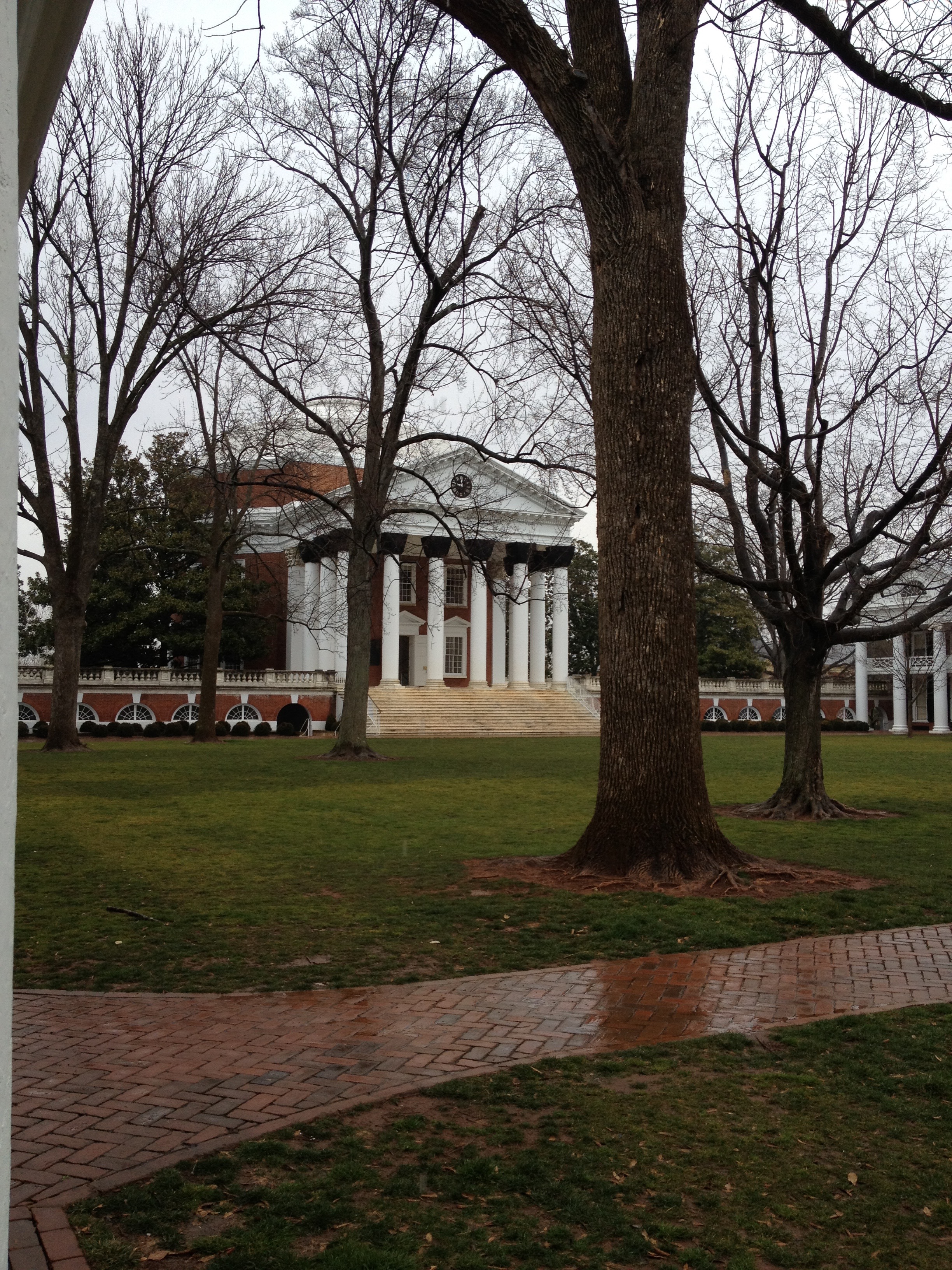
Not singling out UVA!

Parthenogenesis

It’s only a matter of degree, isn’t it?  I mean between reptiles and mammals.  While our common ancestor was quite a bit older than Lucy, we’re still fam, right?  I’m not the only one, I’m sure, who read with interest the New York Times story about the female crocodile who recently gave birth without the help of a male.  It’s called parthenogenesis and, according to the article, it’s not as rare as we might think.  Birds and amphibians do it.  Some fish even change gender under reproductive pressure.  And if you’ve seen Jurassic Park you know the implications might be larger by an order of magnitude or two.  My mind, however, wanders to mammals.  Then primates.  Then humans.  If our distant cladistic cousins can do it, can we?

The key appears to be males leaving females alone long enough.  As Malcolm says, “life will find a way.”  Life amazes me.  While we can’t count on it happening for each individual, life has a way of reemerging when you think it’s gone.  Previous owners of our house neglected a green ash tree growing in a location far too close to the house itself for many years.  Granted, it was on the north side where you seldom have any reason to go, but that tree sent out progeny that I’ve had to try to eradicate for five years now.  As much as I love trees, when they’re growing into the foundations of your house, they’re a bit of a problem.  I snip off the water shoots whenever I find them but they keep coming back.  I’m sad to cut them but I admire their persistence.  Life’s persistence. It’s will to carry on.  It continues even when we think it can’t.  Never forget the water bears!

Just a few days later the Times ran an article about the strong possibility of life on Enceladus, one of Saturn’s moons.  Personally, I wouldn’t be surprised.  I’m absolutely certain there’s life elsewhere.  It makes no sense for it not to be.  Life evolves to a point, it seems, where the “intelligent” variety seems to become arrogant.  I embrace our reptilian and amphibious and piscine cousins.  Even our insect and arthropod family.  Our plants and fungi.  Life is amazing and we seldom stop to ponder just how wonderful and mysterious and resilient it is.  A lonely female crocodile decides to have a family.  Phosphates spewing from an ice-cold moon whirling around a colossal planet that wanted to be a star.  Life!  How can we not be stunned into trying to admire it in its many, many forms?


Kenyan Mourning

We ignore religion at our peril.  I may be a voice crying in the wilderness here, but just because church numbers are declining it doesn’t mean religion still can’t motivate.  And in large numbers.  A New York Times story tells how 179 Kenyans starved themselves to death because their preacher told them they’d meet Jesus that way.  It’s amazing how many demons pose as angels of light, even if well-meaning.  All it takes is to hold up a Bible.  People are religious by nature and they tend to believe what they’re told.  Jonestown and Waco taught us nothing about religion.  Universities continue to hack away at its study, declaring it no longer of importance.  Meanwhile useless deaths still occur because of something that “doesn’t matter.”  Religion is so easily weaponized you’d think the Pentagon might want to get in on the action.

How am I to read without an interpreter?

Our world is increasingly secular but that may not mean what it seems to.  Belief, whether in traditional religions or not, is still belief.  We may believe we know certain things, but knowledge is a lot rarer than we often suppose.  Religion evolved—co-evolved, more accurately—with our species.  We need it, even if its gods have lost their divine luster.  And if we don’t have people who can teach us about it without resorting to mere metrics we may be on our way to perdition.  You see, here in America we tend to be a pretty literalist bunch.  I don’t know what it is about our culture, but we’re uncomfortable with metaphor.  Even so we believe in all kinds of things and then deny that we do.

My mind keeps going back to those Kenyans who, trustfully believing, starved themselves to death.  No doubt the introduction of the Bible, without proper instruction, into their culture, meant that such interpretations would eventually arise.  Perhaps inevitably.  Religious thinking isn’t a bad thing, but taking sacred texts from thousands of years ago as roadmaps for today is.  We so want answers in black and white—we want someone to tell us that life isn’t this complex and that “it’s all really quite simple.”  But it’s not.  Religion does help us get through this complex world.  Even though he was a Transcendentalist, Henry David Thoreau tried the monastic approach.  It works for a while, but if we all did it there’d be untold suffering in the world.  In other words, there’s no easy answer.  There never likely will be.  Until such a time as that, we should be studying religion more, not less.  And trying to make lives better, not worse.


Denver Memories

It may be a strange thing to say (or write, as the case may be) but I was kind of hoping to spend some extra time at the Denver Airport.  When I traveled to Denver for a conference last year, I arrived to a workload (attending AAR/SBL as an editor is all work, not play).  I had no time to hang around the airport.  I knew, however, as a recent New York Times piece states, that the airport has a reputation for the paranormal.  While the Times article focuses on Luis Jimenez’s sculpture “Mustang” to start, it quickly moves on to “conspiracy theories.”  And the parts of the airport passengers never see.  The place has a reputation for being weird.  During construction in recent years, the usually anodyne partitions that block construction from the view of passengers, housed images of aliens, bolstering rumors that Denver, and its airport, have some connection with our extraterrestrial neighbors.

The Times story points out alien graffiti in parts of the Denver Airport where travelers can’t go.  And it also points out that although the fiery red eyes of “Mustang” are to represent Jimenez’s father’s start in the neon business, they give the giant horse a demonic aspect.  The artist died working on the sculpture.  A piece fell during construction, severing an artery.  But the conspiracy theories began earlier.  The southwest has a reputation of being the home of the shapeshifting reptilians that have made it onto mainstream television.  Is it any wonder that Trump stands a possibility of getting the nomination while yet more crimes are actively stacked on his record?

Of course, I was in Denver to work.  I claimed my bag and got a taxi on a snowy southwestern morning.  While there I worked, of course.  It was cold, in any case, back in November, so getting out to see the sights didn’t particularly appeal, especially since it was getting dark by the time the book stalls were closing and I was there alone.  I always want to be on time, and since I’m an early riser, and since Thanksgiving was just a couple days away, I went to the airport three hours before my flight home.  I was thinking I might have some time to do a bit of X-Filing while waiting.  Alas, it was not to be.  The helpful flight attendant put me on an earlier flight and I ended up with a three-hour layover in Chicago.  But I also knew that several “mothman” sightings had taken place at O’Hare over the preceding months.  When you’re a traveler, however, they keep you away from the interesting parts of the airport.


Inventing Chaos

A recent (in my personal interaction with time) article from the New York Times recounts two bad inventions by Thomas Midgley Jr.   Namely, leaded gasoline and the practical use for chlorofluorocarbons.  Besides making me interested in Midgley, the article got me thinking about inventors and inventions.  We never know, in real time, if innovations are good ideas or not.  We have no crystal ball and what seems like a good idea now may prove to be a catastrophe.  I’ve given a couple of talks on the Antikythera mechanism.  If you’re not familiar, it is essentially an analogue computer invented in the first century.  Experts suggest there were likely multiple such devices, but they never caught on and transformed society.  Why?  Nobody saw the practical benefits.

A replica of the Antikythera mechanism

The Antikythera mechanism was made essentially to predict eclipses and track the movement of heavenly bodies.  The fact that such a thing existed within a century of when Jesus of Nazareth lived and died is mind-blowing at first.  Still, it makes a point.  We never know when an invention will take off and change the world.  And we never know if that change will ultimately be good or bad.  There are many who suggest that the invention of agriculture was a mistake.  We eat less healthily than our hunter-gatherer ancestors, and they may have been much happier (in general) than we are.  Still, agriculture (despite creating desk jobs) has its benefits.  We live longer.  We have medical science.  And we can entertain ourselves with clever people on YouTube.  While we sit around too much and eat things that really don’t benefit us, we seem to be doing okay.  We’re living longer, at any rate.

The problem, it seems to me, is when capitalism takes an idea and blows it up into a huge money-making venture.  People just can’t take their eyes off that shiny, shiny gold.  And ideas, when they start making unreasonable demands (a new cellphone every other year?  Really, is that necessary?) tend to lead to the same results as leaded gasoline and chlorofluorocarbons.  If they can be monetized, ideas will push themselves into this unbroken feedback loop we call economy.  Often at the price of ecology.  Inventors are both necessary and dangerous.  Their efforts often make the world more comfortable, more convenient.  They might, however, cause immense harm.  Being a vegan, I’d have a difficult time surviving as a hunter-gatherer.  Gathering is more my style, in any case.  If only I had a way of tracking the movement of heavenly bodies, I might just be content.


The Original

A dozen years ago, I had a novel under contract.  I write my fiction under a pseudonym, of course.  I was thrilled because I had never seen the conceit (in the sense of “concept”) anywhere before.  For once, I was going to be first in line.  But then the editor who’d responded “Loved it!” left the press.  After dithering for about a year, the publisher decided not to publish it.  This was a small, independent press—I wasn’t anticipating it would be a New York Times bestseller.  Then I saw a weekend add in the New York Times—just recently—touting a novel with the exact same concept as mine as “original” and worthy of being read.  Ironically, just the day before I had once again submitted my novel to an independent publisher.  I can’t blame the author, of course, but the system doesn’t work for everyone.

After the killing of my darling, I naturally tried to find another publisher.  I have been trying for twelve years.  I’ve been pushing the idea as original and of general interest.  Editors and agents disagreed about the “of general interest” part.  In fact, I’ve had rejections from nearly 100 literary agents over the years, one of them responding that I was a good writer but they couldn’t see where the story was going.  Maybe I didn’t handle it as well as this new book, with its glittering endorsements, but a guy likes to get credit for his work.  Now if it ever does get published I’ll be considered a copycat.  You see, my main driving force as a writer is originality.  My published stories are unlike others I’ve read and most of them go through multiple rounds of rejection before some editor “gets it.”

The publishing industry, however, is a strange one.  Most publishing houses want work that imitates bestsellers since they’re a known quantity.  Money in the bank (or what banks used to be).  The internet has changed that a bit, but not completely.  It does mean those skilled at such things as self-publishing can sometimes challenge the hegemony of the big five.  It also means a lot of sub-standard fare is out there as well.  I’m a little late establishing a literary reputation it seems.  Although being raised poor does qualify me as “diverse” it’s not in any way visible.  It is obvious if people get to know me because the poverty mentality never goes away.  So my novel has been waiting while the same idea occurred to someone else (not straight white male) and has received notice.  So I follow and hope to learn.


Gift Books

The New York Times recently ran a story suggesting that books are not only the ideal gift, but that this has been the case for a very long time.  The article points out that treasured Roman Saturnalia gifts included scrolls, or the books of the time.  Books are the gift of knowledge—who wouldn’t want that?  Also, I’ve been reading about the fact that money can be any medium of exchange as long as it’s agreed upon.  Why not books?  Being an American, it’s often amazed me how intellectuals are held in such low esteem in this country.  We pay our teachers poorly, we mock those who read “too much” (as if such a thing were possible), and we dismiss what experts of many subjects tell us because we don’t like to admit others might be smarter than we are.

Reading, like arithmetic, doesn’t come naturally to people.  We evolved to survive and reproduce and our brains have that prime directive.  Along the way, however, we learned to communicate effectively and cooperate on large ventures.  These ambitions required wrapping our brains around things like advanced math and learning to interpret squiggles written by somebody else.  Kids, full of energy and needing to play, don’t want to sit down to learn these things.  At least most don’t.  In some parts of the world those who do take naturally to such things are celebrated.  Teachers are venerated.  Learning is revered.  Ironically, in this country where some of the best higher education is available, we want to belittle those who attain it.  We prefer to play with our guns.

Now that the holiday season is upon us, however, I think of reading.  I keep a list of books I would like to have.  It’s well over a hundred titles long.  In a good year I can read sixty or more tomes.  It’s an engine that requires a lot of fuel.  Although in all likelihood I’ll never be able to retire, I keep my books against that time when I fear I might become bored.  Or that my mind might start to slip.  Reading is mental exercise.  In my current writing project, I’ve been discovering new connections almost daily.  Often in unexpected places in books I learned about only in recent months.  I write these words surrounded by books.  There are more in the attic, and more in the next room.  I may not ever have enough money to retire, but if we ever decide that books should be currency—and even if we don’t—I’m wealthy indeed.


Opinion Piece

There comes a time, I hope, when the opinion of someone with over four-and-a-half decades of intensive reading experience, might matter.  I say this because I’m constantly struck by those whose opinions actually count, and how little they often are to be considered experts.  For example, I watch YouTubers young enough to be my children treated as experts.  A little probing sometimes shows that their qualifications are the ability to get people to look at them.  Click that like and share button.  If enough people do like and share, you can be an expert.  Or take opinion columns in newspapers.  I notice the headlines for some of these in the New York Times.  They are opinions only, and yet the prestige of one of the great American newspapers stands behind them.  These are opinions worth listening to.

The popularity contest is an old and venerable tradition.  I wasn’t popular in school and wasn’t voted “most likely to” anything.  Meanwhile, those chosen as the likely leaders and novelists and beauty-pageant stars generally don’t get too far along that road.  As Bruce Springsteen sagely noted, those “Glory Days” pretty much all end up back in high school.  But as Bowling for Soup observes, “High School Never Ends.”  We like to look at the confident, the well-adjusted, the narcissists.  Their sense of entitlement carries over into hoi polloi.  The quiet and self-reflective sometimes get noticed, particularly after they’re gone.  The Thomas Mertons and Thich Nhat Hanhs.  The household names, however, are those who loudly claim they should be heard.  Just because they think they should.

Another part of this complex equation is finding a subject that interests people.  In my case, I know lots of people are interested in horror, but I also know that there are many experts out there.  Ironically, I still have people ask me about ancient West Asian religions—this is a field where you need to be immersed to stay on top of what’s going on.  The books and articles you have to keep reading are dense and heavily footnoted.  The articles are located in journals not always easily found.  Don’t get me wrong—I still miss it.  Ironically, now that I can’t keep up people are starting to ask my opinions on it.  Perhaps the same will happen with horror and monsters, but long after I’m able to respond effectively.  Experts on social media learn to monetize their interests so they can spend full-time at it.  And that does, in fact, make them experts in the very specific field of being an expert.

Photo by Markus Winkler on Unsplash