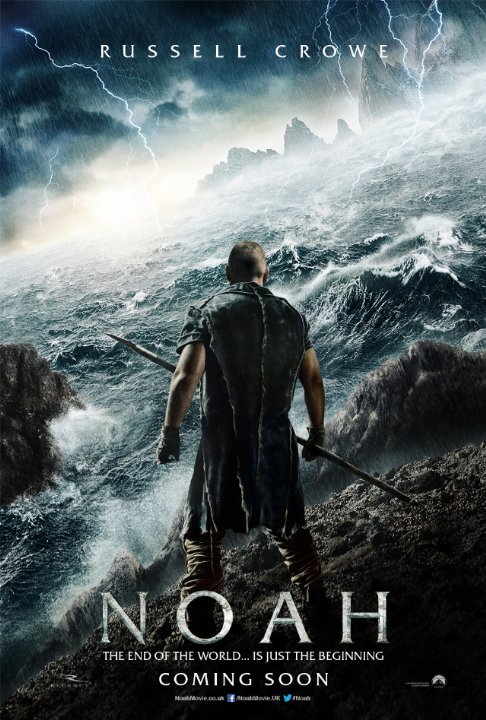
Clash of the Watchers

NoahMovie

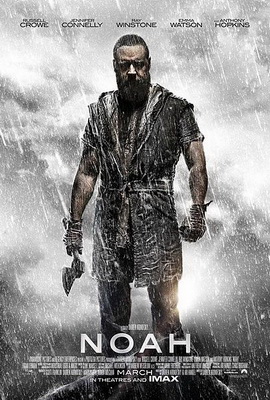
I don’t know about you, but I think I got gypped with my Bible. I have just come out of Noah where I saw amazing sights and a seriously troubled Noah to whom God refuses to say a single word. Controversy still swirls around the web concerning the movie, but I honestly have to say that it was more like Clash of the Titans (2010) than anything else. Except a thin part of the plot—and a few character names—that were borrowed from the Bible, this could have been Herodotus rather than Moses. I don’t recall finding any exploding lava angels in Genesis 1-11, and magic rocks that seem to fit better into a Mormon worldview than a biblical one. Gopher-wood trees grow incredibly fast, and Noah sure fights very well for being a six-hundred year-old man. So why all the fuss? This is a movie folks, not scripture. For the price of the ticket you can buy yourself a new Bible and read the entire story in fifteen minutes (it’s just over two chapters long). If it’s an action movie you’re looking for, I thought The Avengers was better.

What struck me most about the movie, apart from the watchers, which were admittedly an improvement on Holy Writ, was the subtext of evangelicalism. Noah, when he decides to build the ark appears suddenly with an evangelically approved haircut. He also had grown decided misanthropic, insisting that the ark is only for the animals’ sake, and that he only allows Shem to have a wife because he thinks she is barren. When he considers finding wives for Ham and Japheth, there is a huge meat for sex kind of deal going on in Tubal-Cain’s city that disgusts Noah so much that his vegetarian righteousness declares that all people will die off once the ark runs aground. And, of course, he will have to kill his granddaughters. This is a dark and tormented Noah who drinks to forget his problems in a world where God only speaks in cryptic dreams and one gets the sense that Noah is very Republican in his lack of compassion. Take out the whole human race while you’ve got the chance.

The movie is filled with mixed messages. Noah certainly doesn’t appear to live up to his name (“comfort,” by simple translation), and although the supernatural is everywhere, a compassionate deity is utterly lacking. Species die off when Tubal-Cain gets hungry. And the very sign of blessing is the skin shed by the serpent that led to the fall. What are we supposed to learn from this? A vague, Avatar-esque “the planet is good” message does give me a little hope, but seeing Noah poising a knife above an infant’s head only because she’s female makes me a bit squeamish. Noah obeys simply for obedience’s sake and people are mere stains on an otherwise ideal world. Before the fall Adam and Eve veritably glowed. Adam stoops to pick up the serpent’s skin while Eve engineers the fall of all. The special effects are good, but the story, it seems to me, is all wet. That’s the gospel truth.

No Noah

Noah2014Poster

I haven’t seen Noah yet; the timing didn’t work out this past weekend. Besides, you don’t always get to see what you want. Nevertheless, the critics are already having a go at it, and the movie is gathering such attention because it is of biblical proportions. Or more properly, of biblical origins. One commentary in The Guardian suggests that, since knowledge hasn’t moved since Aristotle, that gods really have no place in movies. I have to wonder about that. Sure, the wealthy and powerful seldom have a need for gods, being the captains of their own destinies. Until it comes time to face the flood that all mortals face, and even the rich have to acknowledge that no ark is big enough to take it with them. Who wouldn’t want to have a little divine intervention then? Indeed, God strikes me as the almost perfect antagonist. Before you begin to hurl your stones this direction, think of the book of Job, underrepresented at the box office, but about as honest as they come. We, like Noah, are not in control of this vessel.

To quote Tom Shone, in his review, “[God] has no desire, no needs, no social life, no private life, no self-exploratory intellectual life to speak of.” Of course, the biblical view is quite different. God in the Hebrew Bible is not omnipotent. In fact, he (and he is generally male) comes across as quite lonely. He has anger issues, to be sure, but he is a troubled character rather like a Disney Hercules who doesn’t know how to control his power. Add him to the mix with willful, self-satisfied human beings and it sounds like an afternoon at the movies to me. Perhaps film makers don’t present God with weaknesses—that would be the worst of heresies—but it is also perhaps the most biblical of heresies.

Going back to Aristotle, perhaps it is not that gods should be left out of drama, but that human ideas of God are what writers call a Mary Sue. A Mary Sue is a perfect character with no flaws, the kind of person we first learn to write, since we believe people—and gods—are only good or evil. Then we begin to discover shades of gray. More than just fifty. Characters are complex and experience conflicting wants and wishes. Thus, as Shone notes, God wants people to procreate, but then wants to destroy them. Afterwards he is upset at what he has done. What could be more human than that? The perfect god who knows no struggles, and who never has to fight for what he wants, would be a boring deity indeed. That’s not the divinity skulking around Genesis, however. I’ll have to reserve judgment on Noah’s god until I get to the theater. It seems to me, at this point, that a wee touch of evil makes for deities that are closer to those we experience in our own workaday lives.


Jesus of Hollywood

What hath Hollywood to do with Boston? Not enough, apparently. In this week’s Time magazine, an article entitled “Films Are His Flock” by Josh Sanburn revisits the ark. Actually, it throws the doors open a little wider—it looks at Hollywood’s effort to woo the religious. Ironically, although universities all across the country offer courses in religion in popular culture and the Bible in popular media, they are constantly trying to rid themselves of the detritus known as biblical scholars. High brow is in, while Hollywood makes no secret of its love to the common people. For Americans the common person is religious, or at least doesn’t block out religion like the educated crowd does. And they come with pockets lined. Religious movies, if marketed well, can be phenomenal successes. In my four years teaching at a secular state university, my Bible classes were filled to capacity each semester. Still, Rutgers coyly refused to hire me full-time. “There’s no interest,” they seemed to say. “Nobody reads the Bible.”

Meanwhile, according to the article, Jonathan Bock, founder of Grace Hill Media, a marketing firm that sells the Bible to Hollywood, knows a good thing when he sees it. Noah is about to come splashing into theaters. Son of God has already incarnated. Exodus is yet to come. And those are only the movies that are explicitly religious. I had no trouble pointing out to my long-suffering January term classes that religion plays a role in many movies, most of them explicitly secular. Those in Hollywood know that religious themes—the Bible even—resonate with the general public. Having grown up in, or maybe even below, John Q. Public, I have always known that the Bible makes good movies. Doubt it? Ask E.T. As he appeared risen, ascended, and glorified, the stranger from above wearing a white shroud and backlit with a nimbus, many of us squirmed in our seats for we had seen a clever representation of our Lord.

Perhaps it is resistance to the McCarthyism of the 1950s that so many intellectuals associate with religion, but academics just can’t seem to understand that this is important. The Bible business is a multi-million dollar industry, and yet, universities would prefer to ignore the implications. Meanwhile in Hollywood, they’re trying to make sure they get the blend just right. Theatrics and theology. You’ve got to be careful whom you choose to offend. The Last Temptation of Christ, based on a novel written by a devout Nikos Kazantzakis, just didn’t perform as a Scorsese movie. It is the job of people like Jonathan Bock to figure out why. And it isn’t hard to see that it’s a buyers market on America’s left coast. Indeed, without a hint of cynicism the Bible will bring in a flood. But that’s just academic. Or it should be.

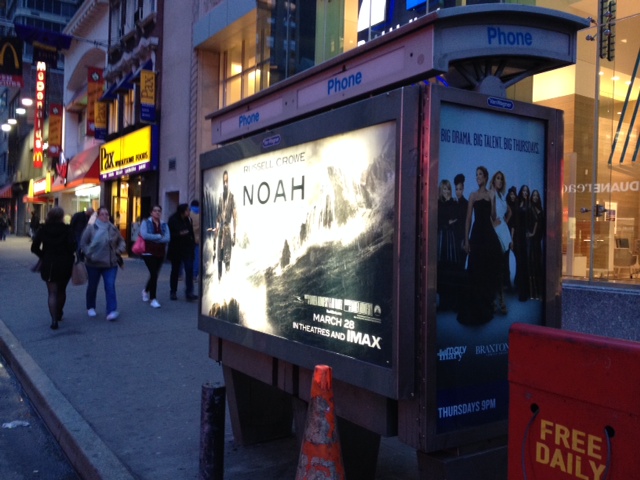
Noah looks down over Times Square

Noah looks down over Times Square


Flood of Fancy

Years ago I was approached to write a book about Noah. There was still some hope at that time that I might find a university job and that my words would have more credibility than just any old internet hack. At the time I’d read just about every book about Noah that had been written—and there weren’t that many. Biblical scholars, beyond tying the story to its obvious Mesopotamian sources, have long relegated the tale to the nursery school of biblical drama. Sure, it’s a great story, but what serious scholar takes an interest in a great story? Well, I outlived my academic job and it looks like Noah is going to have the last laugh. We’re told that the Pope has been tweeted about the movie by Russell Crowe and that several Islamic nations have already banned it. According to Today Darren Aronofsky, the director, is more interested in getting non-believers into the theater than trying to please the faithful. Well, let’s face it. A movie based strictly on the Bible would have to be pretty preachy.

The bigger draw seems to be this: our society is simultaneously deemed secular and religious. Americans go to church. They also respond to surveys that they believe in God, the Devil, Heaven, and Hell. They also act as if none of this were true. Business practices tend to be anything but caring, and we show no concerted effort to make sure basic healthcare is offered to all our citizens, let alone the millions who are daily suffering and dying elsewhere in the world. We don’t want to reduce our emissions as a real flood—a literal flood—is on the rise on a global scale. Maybe we’re waiting for a biblical-scale miracle to save us. Noah’s face stares out at you all across Midtown. Judgment is upon us.

NoahMovie

Action films draw male viewers. Religious movies draw females. Aronofsky and Crowe have the winning combination. No gender-bias for a secular-religious nation that has enough loose change to spend a weekend at the movies. The biggest complaint is that it isn’t the Bible. I have to admit I’m kind of enjoying the hype, despite the fact that I never received the chance to write that Noah book that was next on my agenda. If I had, now it might have enjoyed the sales that Irving Finkel’s The Ark Before Noah—scheduled for release three days before the movie—surely will. Timing has never been my strong suit. Of course, money can be its own sort of flood, and many more drown in it than in the literal waters of a secular-religious society. According to Genesis a raven was released to fly about looking for land. The Crowe might have been a better choice since movies, as we all know, improve upon the book.


Backyard Archaeology

Among safe topics for discussion among strangers and casual acquaintances, the weather tops the list. It affects each and every one of us continually, and there’s nothing we can do about it. The ideal neutral subject. In fact, however, the weather is highly freighted with religious thinking, deeply sublimated. If you listen closely, you will hear it. Well, this year, at least in the northeast of the United States, winter has been the topic. We still have snow on the ground in New Jersey, and it has been here continually since January. The thaw has begun, however, and when I went to fetch the paper I noticed a newly melted item on the lawn—an archaic newspaper. Obviously the paper-deliverer missed the front steps that day, and by the time I stepped outside it had already been buried. Curious, I brought it inside to get a first-hand look at the past. It was the Monday, February 3 paper. The day after the Super Bowl. Apparently nothing much else was happening in the world a month ago. I don’t even know who played in the game.

IMG_1237

Religion and sports have a long pedigree. One of the first books I signed up at Routledge was on religion and sports in American culture. Routledge decided to sack me before the book was published, so I haven’t had the opportunity to see it yet. Nevertheless, it is clear that the meaning once provided by the strong arm of the Lord is now covered by the stronger arm of the athlete. I’ve watched in fascination as reporters question the players after the game, panning for bits of wisdom as if they might actually get us up off the couch and lead us to a few minutes of physical glory. Instead cliches trickle out: “we saw what needed to be done and did it.” “I took it to the next level.” “First of all, I want to thank Jesus.” Each one like a nugget of pure gold. I still don’t even know who was playing.

On my kitchen table, however, sits a soggy newspaper with the answers to that. The news is old news. And damp. We’ve had an entire Olympics since then, and war seems to be breaking out in the Crimea. Wait a minute, what century is this again? It seems that no matter how old the news is, it still isn’t old enough. One of the oldest news flashes received by humankind, if the Mesopotamians are to be believed, is that there is a huge flood coming. I turn on my browser and lo, a flood indeed! Noah will be released later this month. Posters began to appear in Manhattan as soon as the Super Bowl cleared out. Move on to the next big thing. And, unbeknownst to me, a newspaper laid buried beneath the snow, containing all the information I needed to know. I’m still wondering how that flood turned out.


No, Uh

Noah2014Poster

“Give me any two pages of the Bible and I’ll give you a picture.” The words belong to Cecil B. DeMille, according to Stephen Whitty’s weekend write-up about Bible movies in the New Jersey Star-Ledger. The story was inspired by a trio of big-budget Bible films—Son of God, Noah, and Exodus—set to be released this year. While Mel Gibson put me off of Jesus movies, perhaps forever, I’ve been planning to see Noah ever since my wife first pointed the poster out to me in a local theater lobby last month. The flood story has always spoken to me, lasting well beyond the nursery years with all the fluffy animals aboard the ark. One of the points that Whitty is making, however, is that Hollywood knows something the New Atheists do not—there’s big money in religion. People will pay to see it on the big screen. The Bible still speaks to a secular nation.

Noah’s story has been dramatized many times over in the entertainment media. It is often a theme in popular fiction, although well hidden, and reemerges in the occasional search for the lost ark documentaries or Veggie Tales shorts. There’s something timeless about the world-wide flood. For me it seems to go back to the thrill of the impossible. Those first eleven chapters of Genesis teem with the surreal world of lifespans centuries long, primordial gardens full of good food, gods intermarrying with humans, and waters that cover any number of sins. There’s a robust, adventurous air to such stories—they push on the boundaries of human experience and burst beyond them. It doesn’t matter whether Noah’s ark is round, boxy, or extraterrestrial—the flood’s the thing. It appeals to imagination like less mundane disasters simply can’t.

I don’t go to the movies to learn about the Bible. I can do that right at home with a single outlay for a relatively cheap book that can be read over and over again. No, it is these early days of the Bible that give rise to the prepositional phrase “of biblical proportions,” that the movies show so well. I’m not sure that I’ll be able to make the transition from Batman to Moses when Exodus comes out later this year, but next month I do plan to let the waters of the largest event in earth’s fictive history wash over me with all its CGI glory. Seeing is not always believing, but the flood is one of the most powerful stories ever told. Who can resist the calling of deep unto deep? Be warned, the entire theater will be in the splash zone.


Bedrock

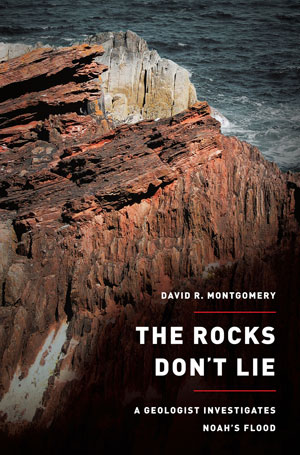
Sadly it is a rare occasion to read a truly stupendous book. There are lots of wonderful books in the libraries of the world, great and small. When I read a tome that brings two of my favorite subjects together in a genteel cotillion, subjects which are generally portrayed as aiming heavy weapons at each other from deeply sunk trenches, it deserves the epithet of stupendous. David R. Montgomery’s The Rocks Don’t Lie: A Geologist Investigates Noah’s Flood is one of those books. By page 8 I was thinking that Montgomery was someone with whom I’d feel comfortable raising a glass and sharing a story. He is a rare, serious scientist who considers that maybe religious stories have something to tell us about being human. The book, as the subtitle indicates, is about the Noah myth. Geology is the science that has taken the brunt of (the relatively new religion of) Creationism’s umbrage. Still, like a rational scientist, Montgomery doesn’t get mad or fly off into hyperbolic denunciations. He takes his rock hammer and taps until the flood myth crumbles.

Unlike many sober writers on the subject, Montgomery considers the possibility that folklore may in fact give clues to science. Those cultures that have flood stories, he patiently explains, probably has reasons to tell such myths. In this one book we are taken on guided tours of the Grand Canyon, bits of the Himalayas, “ancient” Mesopotamia, the scablands of eastern Washington, and even the Creation Museum in Petersburg, Kentucky. At each station, we learn a bit about floods and rocks and fantasies. Although not a biblical scholar, Montgomery obviously did his homework and gives a fresh view of how Christians went from non-literalists in the first centuries of the church, through the scientific revolution, only to become literalists in the geologically very recent twentieth century. Creationism has nothing to do with real floods and quite a lot to do with personal insecurities.

It must be easy for scientists to trumpet bravado throughout the infinite universe. The scientific method is our best testable explanation for the physical world. Montgomery resists that temptation, realizing that religion does count for something after all. Religion evolved for a reason. Maybe it isn’t scientific, but it helps people to make sense of their world. Instead of characterizing religion and science as combatants in a war, Montgomery likens the opposition to a dance where the partners sometimes step on each other’s toes. I read his book dreaming my geological dreams, lost in deep time, and thinking that the world is maybe even more wondrous than miracles could ever convey. And we have occasional floods, and floods sometimes give us reasons for going on. There’s perhaps something religious about that.


Bretz v. Noah

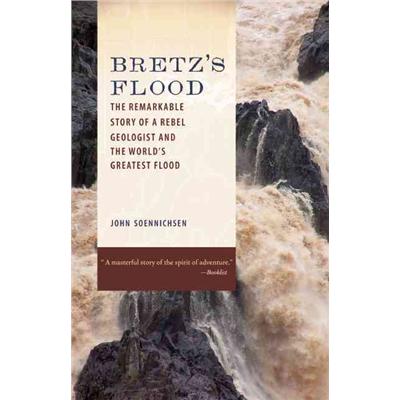
Until I met my wife I’d never been west of the Mississippi. Or even Ohio for that matter. Together we’ve traveled, in a fashion broken by years, from coast-to-coast and even overseas. Nothing in my life had prepared me for seeing the American West. No, I’ve not seen cowboys, but the landforms are so different from the weathered, ancient Appalachians among which I grew up. Eastern Washington is a fascinating landscape and with my occasional flirting with geology, I recently read John Soennichsen’s Bretz’s Flood: The Remarkable Story of a Rebel Geologist and the World’s Greatest Flood. Within the last couple of years I’d read about Glacial Lake Missoula, a juggernaut of an ice age lake that had flooded parts of Idaho and Washington thousands of years ago when its ice dam gave way. J Harlen Bretz was a turn-of-the-(previous)-century geologist who defied convention and insisted that the evidence of eastern Washington proved that a massive flood washed over the area, giving distinct shape to the region that empties into the Columbia River basin. For much of his career he was ridiculed by other geologists. The reason? The Bible.

Geology was the science that gave Darwin the idea for his evolutionary theory. The factor that had been missing from science, before geology, was time. The 6000-year-old earth just wasn’t old enough to account for the slow changes required for one species to morph into another. As scientists came to realize that billions of years were available, it became clear that change occurred even more slowly than the GOP is happy with. For geologists, anything that happened quickly was anathema. As Bretz’s Flood makes clear, a sudden flood sounded far too much like old Noah to be science. Catastrophism had been cleanly rejected by geologists because even if the evidence supported it, it looked like a return to mythology and superstition. Interestingly Bretz began his academic life among the Methodists of Albion College, and continued to quote the Bible to his last days. He was, however, an atheist.

The Bible has shaped our culture more thoroughly than Noah’s putative flood has shaped geology. I’ve read many geological studies over the years and any that are written for non-specialists never mention great floods without at least a nod to Noah. In fact, as Soennichsen points out, Bretz has ironically become a hero of Creationists who see the Missoula flood as Noah’s event. A large portion of Bretz’s career, however, was dogged by geologists duty-bound to deny a sudden flood just because the Bible tells us so. Sudden events are smeared with the residue of the divine.

J Harlen Bretz is hardly a household name, but his career is a microcosm of American culture. Glacial Lake Missoula did exist, as geologists now accept, and long before Noah was a twinkle in Moses’ eye. When the dam burst, the fable did fall, and down came the ark, Noah and all.


Problematizing Noah

As I continue to Tweet the Bible, I’ve been working through the story of Noah. Considering the number of children’s items imprinted with the friendly, smiling Noah and Mrs., and the cute, predatory animals they’re taking aboard their private yacht, the utter belligerence of the story is frequently lost. There is one seriously peeved God behind this. “And it repented the Lord that he had made man on the earth, and it grieved him at his heart,” Genesis 6.6 states. And it only gets worse from there: “I will destroy man whom I have created from the face of the earth… for it repenteth me that I have made them.” Indeed, the wrath of God is emphasized more than the wickedness of the humans that have spawned it. No matter what is done, it seems, God will still be in a rage.

The truly striking aspect of this account comes, however, when Noah is instructed on whom to save. “Thou shalt come into the ark, thou, and thy sons, and thy wife,” verse 18 dictates. Men first. Now, we cannot judge a product of the past against standards of the present day, but it is quite clear why many women find the biblical text less-than-friendly. Even the animals are explicitly paired from the start do not receive the radical disjointing that the women receive from the men. If the purpose is to procure a new generation, arguably pregnant women could have done that with the men treading water above the remains of Eden. If survival is the point of the story, as the saying goes, ladies first.

The flood story is a complex account of a deity with anger management issues and a preference for the company of men. Although theologians may say with a wink that God has no gender, clearly the Bible begs to differ.

Humans and animals alike are victims of the divine wrath, and even though humanity survives the flood can the relationship with deity ever be the same again? How do humans face a creator turned destroyer, knowing that they will never really please him again? The weight of such divine displeasure is surely greater than all that water pressing our ancient cousins into fossils on the primeval sea bed. I think back to all the children’s toys with the happy little animals and a smiling Noah and I know they resemble the biblical version only in the most fleeting of fashions. Yet the myth lives on.

What shape is your ark?


Twin Towers

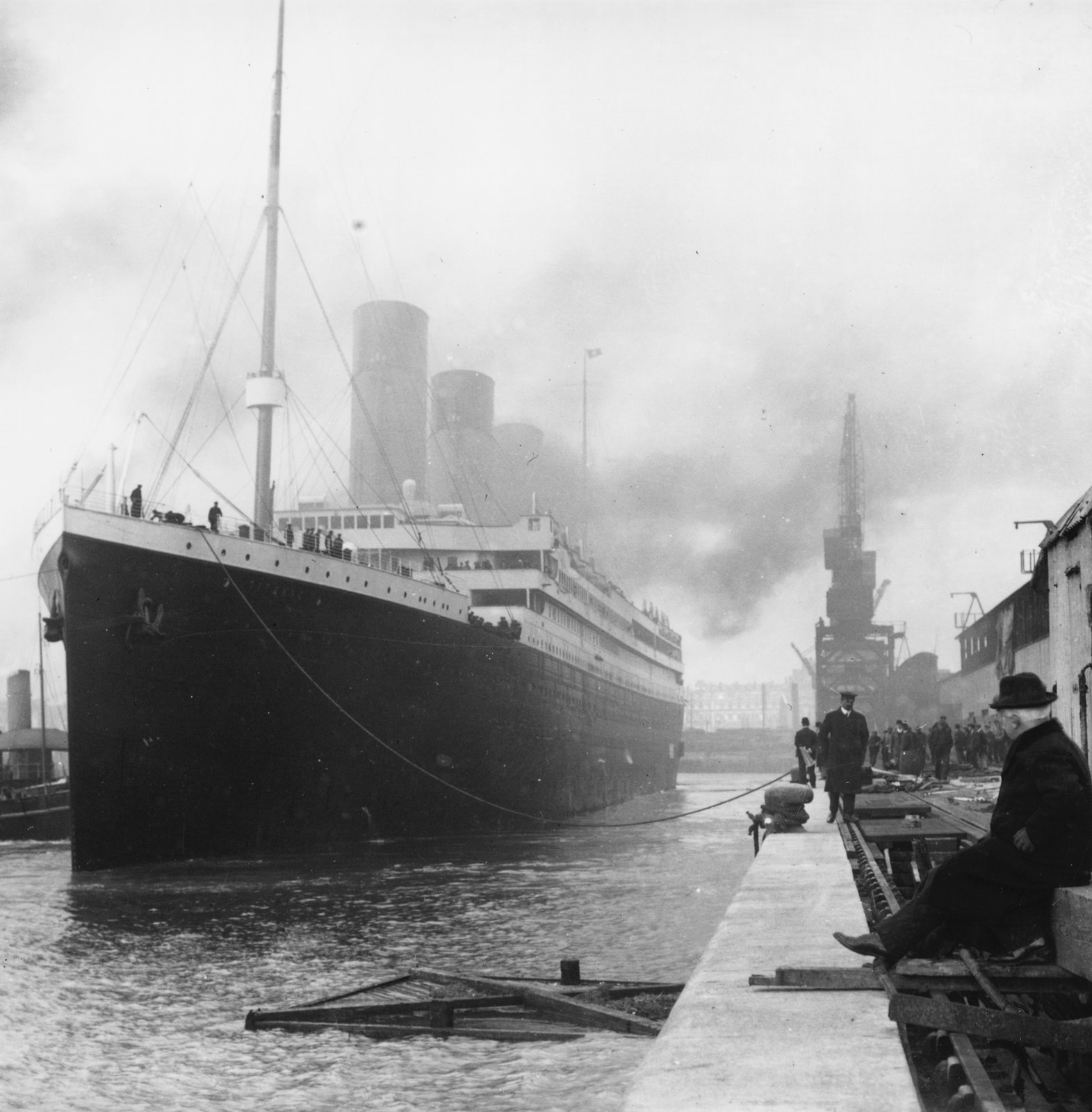
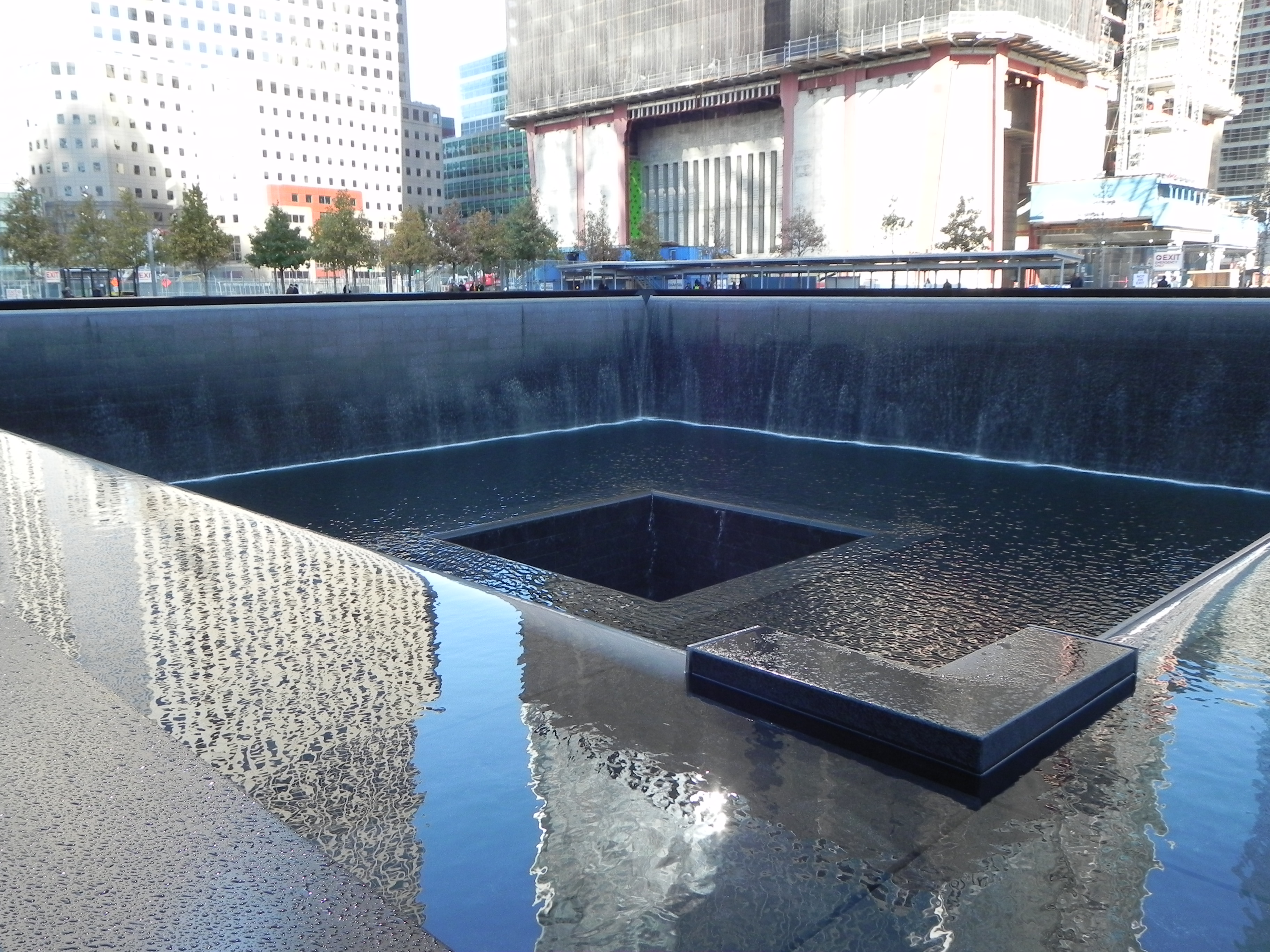
The newly opened World Trade Center memorial in Manhattan is truly a solemn place. Staring into the seemingly endless holes into which the water forever pours, one feels the emptiness of loss like a thousand graveyards. Like watching the Titanic sink from a lifeboat. In the chilly late October morning hundreds were huddled about, looking at those reflecting pools with an undefined sadness in their eyes and a sense of frustration in their souls. So much loss. And for what? The American way of life has its towering foibles as well as its nobility. The protesters of Occupy Wall Street are mere blocks away in Zuccotti Park, reminding the nation that we have forgotten the principles of human decency even while we honor the fallen dead. It seems an appropriate epitaph for All Hallows Eve—a peaceful park where hundreds died just blocks from where hundreds camp in the cold. It is not too late to stop this ship from striking the iceberg.

Ground Zero

The symbol of peace, given to us by the Bible, is the olive branch. Actually the olive branch comes from the story of the flood; it is less a sign of peace than it is a sign that some of us have survived the wrath of God. Read into that what you will. The olive branch only comes after all but eight people pay the ultimate sacrifice. It is peace on the terms of a vengeful deity. Near the center of the memorial, one tree stands out. It is not an olive tree. After the devastating attacks of 9/11, workers found a living Calleri pear tree among the rubble. The scorched and battered plant was taken to a nursery where it recovered. It stands now in the midst of the peaceful reflecting pools, bearing not olives, but pears. The tree was saved by human effort, a symbol of peace, survival, and endurance.

A different kind of tower

I spoke with one of the protestors in Occupy Wall Street, and gave him encouragement. I suffered unemployment for long years when the weight of the flood crushed me to my own ocean floor. Loss and more loss. I was moved to tears in the World Trade Center memorial. The decision not to build again on the site where the Twin Towers stood is a symbolic statement to those who believe that evil triumphs in the end. The god of those who destroy others in the name of their faith is the god who destroys innocent and guilty alike in worldwide floods. This is a god who offers people with no knowledge tempting fruit that they are not permitted to eat. Nowhere in the Bible does it state the species of the tree of knowledge. Is there anyone left innocent enough to tell? Artists like to use an apple, an idea based on the similarity between the Latin words for evil and apple. I believe that loss of innocence was the price of maturity, and I believe the tree of knowledge might just have been a Calleri pear.

Peace


Floods and Fairytales

Never mind that the Bible gives only a cursory description of “Noah’s ark.” Never mind that the story in Genesis is clearly derivative from Mesopotamian originals such as the epics of Ziusudra, Atrahasis, and Gilgamesh (the Utnapishtim version). Never mind that all species of animals cannot survive within a single, extremely limited biosphere without evolving afterward into the diversity that the world currently hosts, even counting extinctions. Never mind that not enough water exists (with apologies to Kevin Costner) to cover all landforms without every mountain being pounded flat and stacked neatly on top of the ocean floor. In short, never mind reality—people will continue to build replicas of Noah’s ark. As a literary trope the ark has proved invaluable; many of my posts demonstrate how it appears and reappears in books and movies as a symbol of human irresponsibility. And yet, in order to demonstrate the veracity of an ancient myth, we continue to build fundamentalist arks.

Yesterday my wife pointed me to a msnbc story of an ark being built—and sailed—in the Netherlands. Certainly those in the “low countries” have global warming to deal with more immediately that those on higher (geologically, not morally, speaking) ground, and the engineer of this particular ark does not strike the viewer as a rabid literalist (he is a little too unkempt for that, and his shirt is not white and he wears no tie). John Huibers, however, worries about a more localized flood in the Netherlands. The ark may be overkill since polar bears, koala bears and panda bears are rare in Amsterdam, at least when one is not medicated. Arks, however, make great tourist attractions.

In Hong Kong the Kwok brothers built an ark replica in 2009. Greenpeace has one in Istanbul. A Christian theme-park featuring a full-size ark is under development in Kentucky, and just two years ago I drove past a roadside ark being built in Maryland. Most of these arks, interestingly, follow the design in the Sun Pictures’ production In Search of Noah’s Ark rather than the more traditional, mythic design in my children’s Bible. It is a natural human tendency to mistake form for substance. The story of Noah is a cautionary tale that has taken on daunting real-life implications in our treatment of our planet. Water is the signature of life, but for us land-dwellers too much is not a good thing. Thankfully, should a flood come, there will soon be enough arks around the world that would-be Noahs may find themselves in a buyers’ market.

Still my favorite ark


Literary Floods

Oryx and Crake ends with a cliffhanger. I read the book at the suggestion of a friend and found a dystopia that simply continues along present trends. Naturally I had to read the second part, Margaret Atwood’s The Year of the Flood. I had picked up this book first, not realizing that there was a previous novel, because I supposed the eponymous flood to be that of Noah. I was not disappointed on that score. In keeping with her strong biblical awareness, Atwood has given readers the creation in Oryx and Crake, and the deluge in The Year of the Flood. Set in the same forlorn future, those who survive the pandemic described in the first book seek to survive in a world where most of the people are gone. Many of the survivors, as we learn in the second installment, are former members of an alternative religion, God’s Gardeners. This quasi-cult, led by Adams and Eves, prepares for the waterless flood (pandemic) by caching Ararats—supply stores—around the broken-down city they inhabit. As in Genesis these Noahs and Mrs. Noahs are replications of Adam and Eve.

Not only is Atwood an engaging author, she supports the green causes advocated by her books. This is a more honest form of religion than most sharply chiseled theologies that do nothing to improve the lot of a suffering world. Academic religionists like to tell us exactly what God is like while shrugging shoulders over the destruction of everything he putatively made. In Atwood’s world, those who believe in God express it through care of their planet. As always, however, they are the modest voices easily drowned out by the unconscionable greed of the powerful. In the words of John Dickinson from the musical 1776, “Don’t forget that most men with nothing would rather protect the possibility of becoming rich than face the reality of being poor.” Rare is the person willing to take the higher road and set aside his or her own wants for the benefit of others.

Ethics, at one time, meant seriously considering the implications of what we do. With the morals of our “leaders” it is pretty difficult to hold to that illusion any longer. Yesterday I sat through another round of ethics training and learned nothing that I hadn’t learned in Sunday School as a child. Be nice to others, don’t use them for your own advantage, help those who need assistance. It really isn’t that hard. Newt Gingrich with his highly unethical treatment of his ex-wife, Anthony Weiner’s peccadilloes, Sarah Palin’s revisionist reality—these scarcely inspire confidence. The flood is upon us. I think I might rather live in a world the Margaret Atwood would envision, as long as she was there too, to show us how to survive.


Noah Trumps Geology

Back in the days when I was still young enough to dream, but old enough not to change anything, I wanted to become a geologist. I was near the end of my teaching stint at Nashotah House at the time, and my life-long interest in fossils fired up like a liquid oxygen barbeque. My interest began in paleontology, since I’ve always loved dinosaurs, and grew to encompass all kinds of rocks and minerals. Geology promotes a literal groundedness that few other areas of study can rival – it embraces the stuff of the earth itself. Moving halfway across the continent with boxes full of rocks, however, dampens the rock-hounding ardor a bit. I still read about geology: it is the discipline that pounded the final, resounding nail into the coffin of the six-day creation myth. While still living in Wisconsin my family used to drive out to the mountainous north of Idaho across, among others, the vast state of Montana. It was geology in motion.

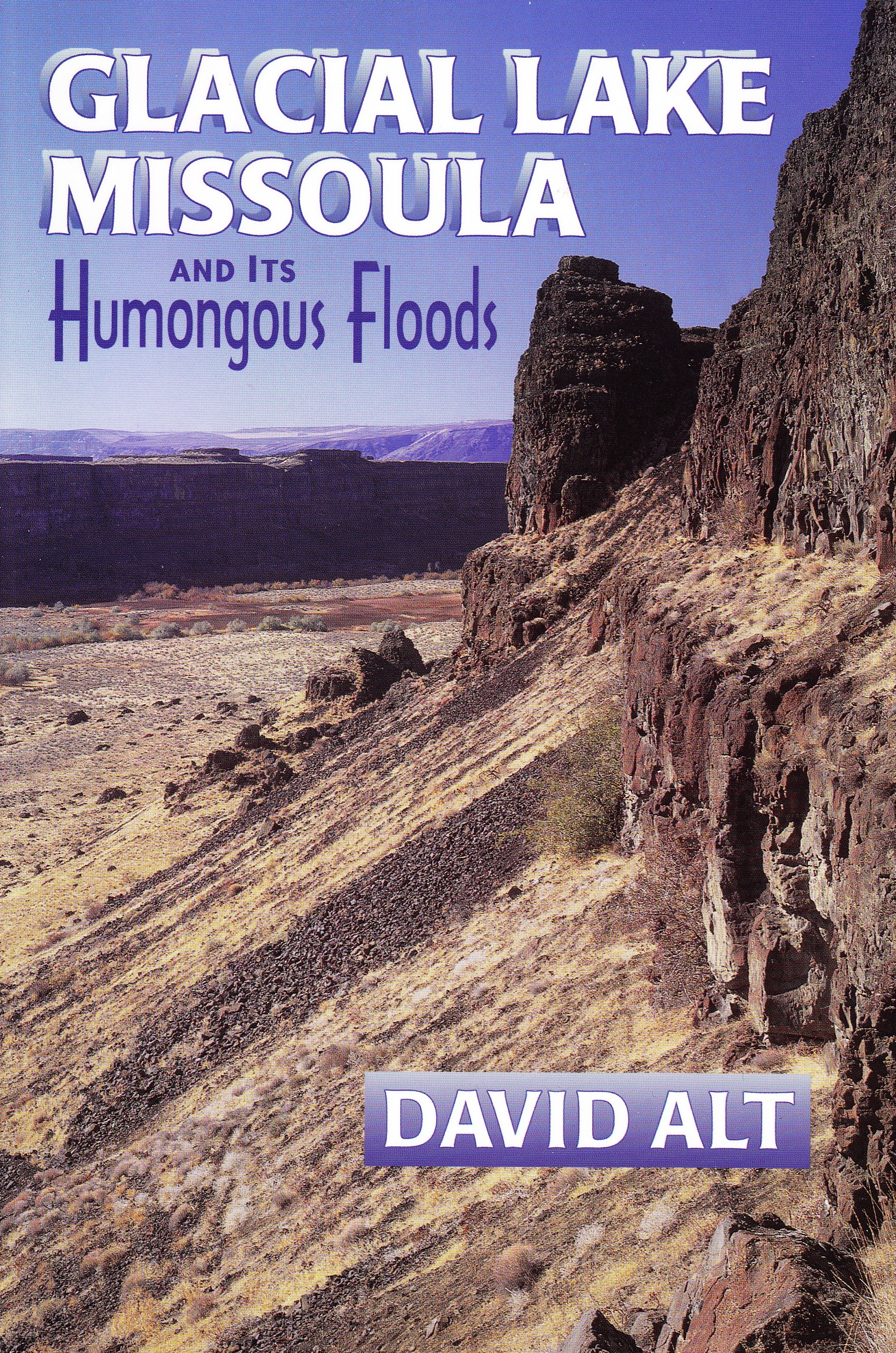
My in-laws soon learned of my geology bug, and I was pleasantly surprised with a book on the great flood two Christmases ago. Not the great flood of Noah, but that of J Harden Bretz. David Alt’s Glacial Lake Missoula and Its Humongous Floods provides an introduction to a series of great catastrophic floods in the western United States. Not that anyone remembers them; the last of the deluges drained into the Pacific about 13,000 years ago. What connects these floods to this blog is the reception history of this idea. When geologist J Harden Bretz discovered the unmistakable evidence for the floods in the landscape of Montana, Idaho, and Washington, geologists refused to accept it. The reason? Catastrophism was unacceptable to geologists of the turn of the twentieth century. Although Alt does not come right out and say it, clearly one reason that uniformitarianism prevailed was because of Noah’s flood.

Ironically, geologists had been forced into a conceptual stalemate because of a biblical myth. The story of Noah’s flood had been (still is, by some) used to explain everything from the Grand Canyon to the extinction of our beloved dinosaurs. In response, geologists posited a long, slow, gradual process behind the sculpting of the earth’s surface. By the day of Bretz, nothing moved fast in geology, not even floods. It required many decades for the science to recover from the stigma of biblical catastrophism. Today geologists largely acknowledge that at several points during the Ice Ages (yes, they did happen!), an ice dam flooded what would now be recognized as Missoula, Montana, under a gigantic lake. That lake burst its ice dam repeatedly and gushed down toward the Columbia River and out into the ocean long, long ago. Long before the putative Noahic flood of some 4000 years ago. The landscape it left behind is impressive to both geologists and biblical scholars. And the story of this flood’s rediscovery demonstrates once again the continuing influence of Noah on otherwise rational minds.


What Would Noah Do?

Unfortunately, religion and politics do mix. A story on POLITICO.com announced on Wednesday that the House Energy and Commerce Committee chair hopeful, Rep. John Shimkus has declared Genesis on the side of conservatives. Stating that the Noah myth (not his exact words) promises God won’t flood the earth again, Shimkus claims we have nothing to fear from global warming. In a twist that makes some of his fellow conservatives squirm, Shimkus admits global warming is a reality but suggests that we really don’t need to worry about it because “the Bible tells me so.” Time for Shimkus to go back to Sunday School.

Part of the problem lies in the concept of Bible itself. The Hebrew Bible isn’t too much of a self-referential work, claiming to be pure words of divine gold. Paul, on the other hand, found the Hebrew Bible useful to cite against enemies, and his admirer who wrote letters to Timothy in his name took the idea even further. For all that, the Bible wasn’t finally settled on for a couple more centuries. Once the concept took hold, however, the world could never be the same. A book written by humans had become direct revelation from the word of God himself. The Bible makes few such lofty boasts about itself, but its less conscientious followers are not nearly so shy. As I demonstrate repeatedly in my classes, the Bible has become a magic book.

Politicians now feel comfortable claiming God as their ally because “he said so.” Without having ever critically engaged Scripture, or even having read it in its original languages, those in positions of public trust know enough to flaunt it. And it always scores points with Americans. Liberals fear the ramifications of using the Bible while Neo-Cons charge bravely ahead to places Noah himself would fear to go. Maybe it’s time to put the Bible back in the schools. Only this time it should be taught by people who realize that the Enlightenment has taken place and that we can’t rely on magic to save us from dangerous situations we ourselves have created.

The lesson from the Cretaceous Period


Dark Night of the Ark

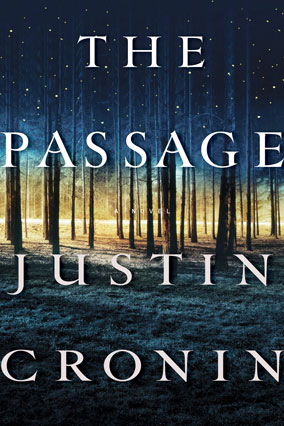
Vampires continue to be the rage of the age. My own interest began back in the days of Bram Stoker, Bela Lugosi, and Barnabas Collins. Stoker’s Dracula is one of the earliest novels I remember reading. Dark Shadows was a regular, gloomy fixture of 1960s daytime programming, and black-and-white vampire movies were often available on Saturday afternoons on commercial television. I have not kept pace with the current fetishism surrounding our toothy friends, but I did read Justin Cronin’s new novel, The Passage. I didn’t know the book featured New Age viral vampires, but they do make for a compelling story.

What particularly captured my attention in Cronin’s work, however, was the crossover between religious and monstrous themes. I have mentioned this connection previously, so I was glad to see confirmation that religion still features in monster stories. The religious element comes in the form of a virus developed by the military to create super-soldiers (a theme X-File affectionados might find familiar) that ultimately goes awry. The result is a girl who is part of a project named Noah; she lives the tremendous lifespan of the biblical hero without the debilitating effects of old age. She is also the ark by means of which humanity might survive the ordeal. The novel is apocalyptic and yet vaguely hopeful. It is also very difficult to lay aside for too many minutes at a time.

The tie-in of Noah and vampires is a novel one. The point of comparison is longevity – those who imbibe the blood of others do not age and wither as mere mortals do. Noah’s survival is a matter of grace (or science in the case of the novel). The last mortal to breech the two-and-a-quarter century mark (thank you, Terah), Noah is symbolic of those who stand out as examples of righteousness in a wicked world. It was refreshing to see the theme so creatively rendered by Cronin. The biblical flood is a kind of prepocalypse, a foreshadowing of what might recur if evil prevails. The Passage has left me strangely sentimental for both vampires and ark-builders alike.