Defining God

What, exactly, is a god?  Our viewpoint, which is largely based on the culture that grew out of the Bible, may not encompass all the possibilities.  I remember reading, as a child, that God—the only true god, of course—was omniscience, omnipotent, and omnipresent.  These three omnis sure impressed me as a kid.  Since I read this in the back matter of a Bible I knew it had to be true.  And since there was only one, all false gods weren’t gods at all.  Divinity had to be defined in the same way as the biblical God.  More advanced study over the years led to the realization that gods weren’t necessarily immortal, and that the Good Book itself didn’t present God as omniscient (he has to ask people things), omnipotent (he can’t make Israel be faithful), or omnipresent (just ask any Psalmist).  So the question of definition arises.

There are cultures, it turns out, where people are gods.  At least some form of divinity.  Clearly we don’t create physical universes, but like the biblical God we’re larger and more powerful than some other creatures, and we often impose our will upon them.  Some people believe themselves to be deities.  Others suggest we have a spark of divinity in ourselves and that each person participates in the divine.  The fact is we have no way to measure this is a laboratory.  Defining deity is a matter that must be left to “theologians,” but that won’t prevent the average lay person from deciding for her or himself.  Nobody really reserves the right to decide definitively when it comes to gods.
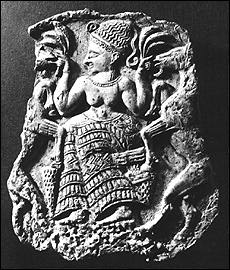
Many cultures have included people, often in leadership roles, who were declared gods either during or after their earthly lives.  Who’s to say they’re wrong?  Science is no help here as the supernatural is outside its current remit.  It can only measure empirically.  The intangible is a whole other universe.  Deciding what a deity actually is may be an impossibility.  Those of us reared in monotheistic traditions suppose that a single, personal, divinity stands behind all of this.  Notwithstanding Xenophanes’ horses, our gods tend to be human at least in form.  In collegiate discussions, one conservative roommate would clap his hands over his ears if we began talking about God in non-anthropomorphic terms.  One of my friends likened God to a “cosmic aerosol” (this really sent my roommate over the edge).  What do we really know about gods?  Without a scientific method to help, it remains an open question.


Mouse Trap

The other day a friend asked me about theodicy.  Not in so many words, of course, but the question was distinctly familiar: why would an all-good, all-powerful deity let good people suffer?  My response, hurried as it had to be, coming as it did on a work day, was that this was the classic question that had led to the dismissal of much belief among those raised in the Christian tradition.  It is, if you will, the Achilles heel of the non-biblical unofficial trinity of omnipotence, omniscience, and omnipresence.  The answer typically given is that people have only a limited view and, given that we can’t see the whole picture we’re in no position to judge a being who can.  That got me thinking about the whole picture itself, and whether there is such a thing already in place.

As a young person learning to think theologically, I had to spend hours discussing with peers and teachers what this might mean.  Time, they would assure us, does not affect God.  The Almighty stands (metaphorically) outside of time and therefore understands how all of this will come out.  And the final result will be good.  The orthodox would then chime in that an eternal Hell was necessary to punish sins that, in comparison, lasted only a short time, comparatively.  This would raise the question of justice again, and whether or not we were all marionettes in a puppet-show that really excluded free will.  You see, the other answer to the question of theodicy is that if humans have free will a deity can’t force us to do good.  Humans, they reason are responsible for making the good suffer.

With the weather turning cooler, we caught a mouse the other day.  Decades ago I opted for a humane trap since it seems unspeakably arrogant of me to kill another sentient being who’s simply trying to find food and stay warm.  From the perspective of that mouse, I must seem terrifying.  I’ve caught it in a metal trap.  I’m a hundred times its size.  It has no idea what I’m thinking.  When I catch mice I try to talk to them reassuringly.  It’s got to be disorienting to find yourself going from “o wow, peanut butter!” to “I can’t get out.”  If that mouse is thinking of a higher power I know that I can’t see much of the larger picture.  My view is local, compared to that of larger intellects than mine.  Still, I don’t want that mouse to suffer for being what it is.  I didn’t create it, but I do want to set it free to let it find its place in both space and time.