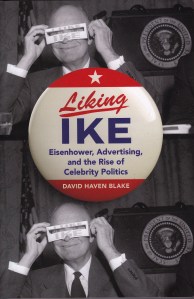
Media May I?

“Television today plays too great a part in our national life for us to allow it to fall into misuse by unprincipled hucksters. We must demonstrate at the polls tomorrow that we will not be treated like suckers at a nation-wide Republican carnival.” The words aren’t mine. Nor are they of this decade. Orson Welles (not the actual source) was reputedly speaking for Adlai Stevenson in the 1956 campaign against Dwight D. Eisenhower. There is a larger context, of course. That context, with a changed cast of characters, reaches right up to this minute and is explored in David Haven Blake’s Liking Ike: Eisenhower, Advertising, and the Rise of Celebrity Politics. In the 1950s Eisenhower disliked and distrusted television as a serious political tool. As Blake traces the story, however, his televised likability led to key components in the elections of John F. Kennedy and the once Democratic Ronald Reagan. Americans, swept off their feet by media advertising, ceased to elect the better candidate, starting over half a century ago.

Don’t get me wrong—Blake is no conspiracy theorist. His book was published before the otherwise inexplicable election of Donald Trump. It is a disturbing thesis to contemplate. The progression is impossible to miss. Eisenhower permitted Madison Avenue ad men to commodify him, reluctantly. John F. Kennedy embraced the media. He was, however, a career politician. Richard M. Nixon tried to play the game, and did so sufficiently to win. Meanwhile, Ronald Reagan, a Democrat inebriated by the money and power of big business, was a B-movie actor cum politician. He won elections like any high school popularity contest. The course was laid. Elections would be won or lost on superficial appeal. No longer would education, intelligence, and the good of the nation be primary in the minds of the electorate. We would vote the way the media decided we would vote.

Blake’s book, as stated, was written before Trump. Many noted last year, although the media was against him, it handed him the election. Front and center in headline after headline, in retrospect how could the election have gone otherwise? His narrow victory (and downright landslide loss in the popular vote) required every bit of energy on the side of reason to combat. Reason, however, is hardly a worthy opponent to media. We want an entertainer, not a leader. After all, that’s what television’s for. Even now the Tweeting’s on the wall. We mainline our news and wonder why things are the way they are.

The Wars of the Worlds

Just as it is appropriate for news sources to carry religious stories without ridicule in weekend editions, October is the month when strange things might be reported with a degree of seriousness. I have often noted in the past that “paranormal” (think X-Files) phenomena are closely related to religion. Since our ruling paradigm is one of belittling the intellects of those willing to consider evidence beyond the accepted, news stories featuring the unexplained do so with a generous helping of scorn. I was amazed, then, when my wife sent me a story on the BBC News Magazine from the World Service Sport section. (Which is near enough to paranormal, as sports fail to interest me in the least bit.) A story by Richard Padula is entitled “The day UFOs stopped play.” Near this date in 1954 in Florence, Italy, a soccer game stopped as UFOs appeared above the stadium. Former World Cup players stared upward instead of at the ball. The event was documented and never explained. I kept waiting for the jowl-waggling punchline. It never came. Here was a news story from a reputable source taking something strange at face value.

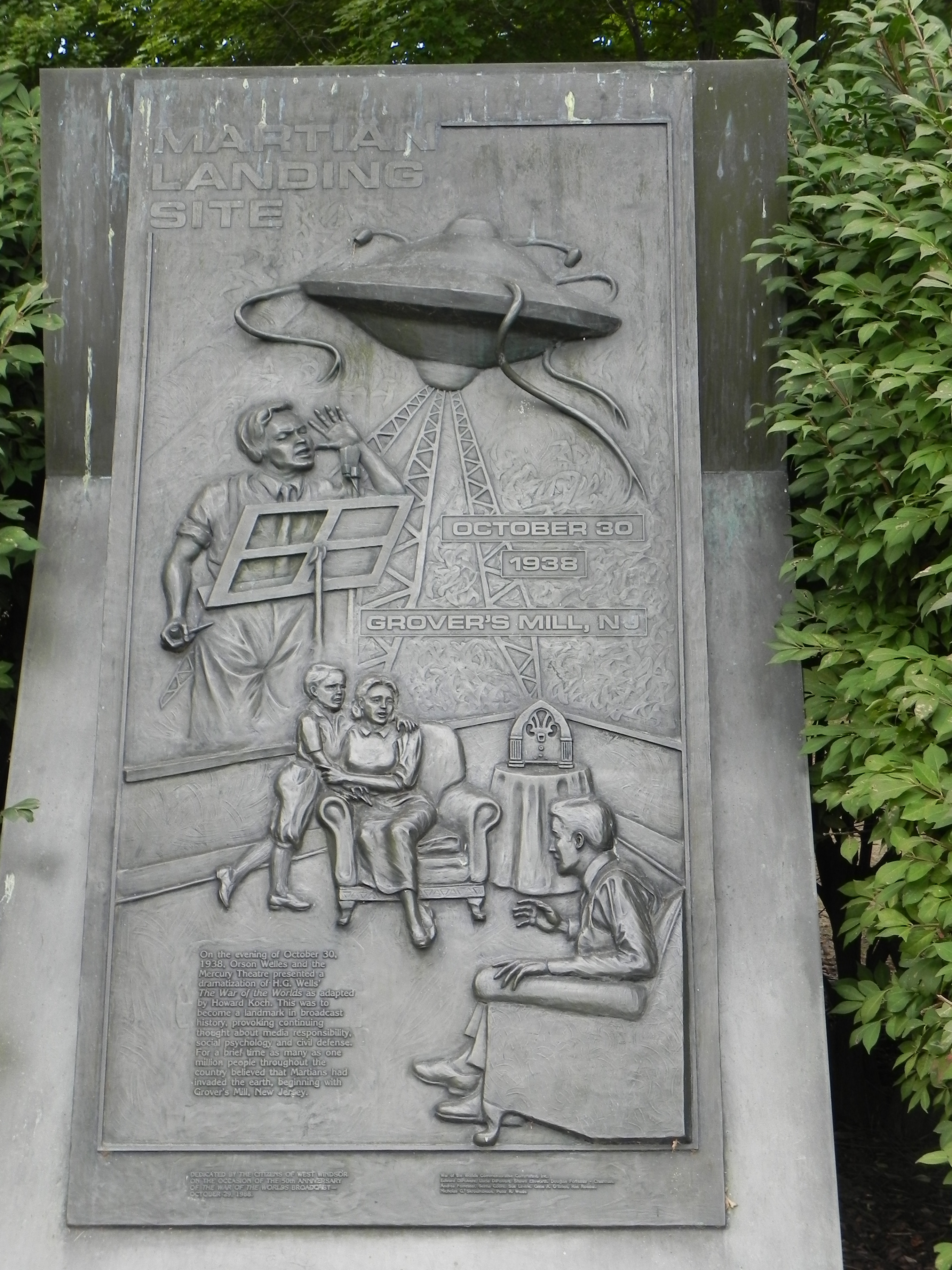
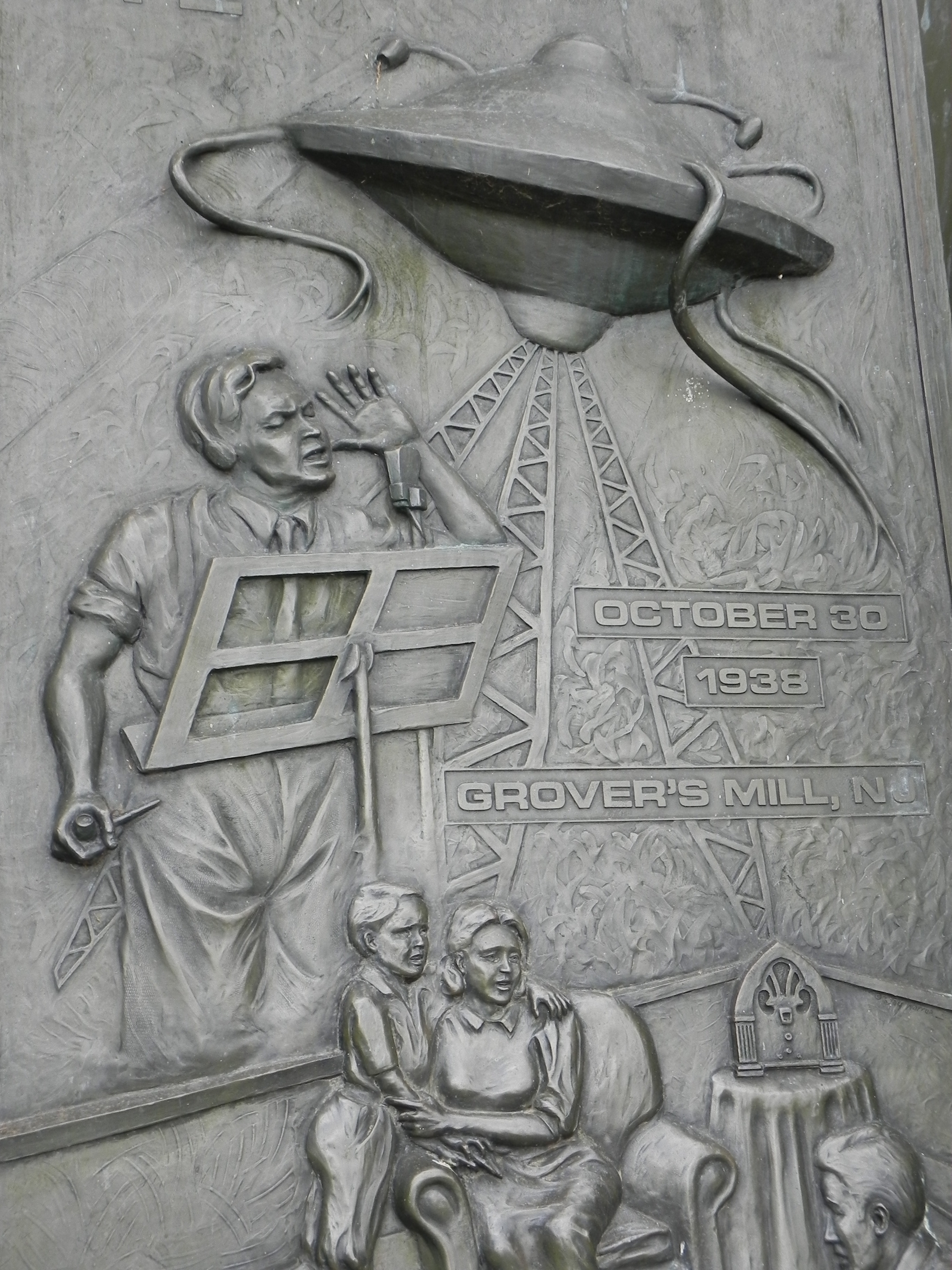
Paranormal activities and religious experiences are in the same category when it comes to a materialistic universe. They can’t exist and so the superior mind must laugh them off, stating they are an illusion, hallucination, or hoax. They still happen, nonetheless. Some world governments are beginning to announce to their citizens that they recognize unexplained arial phenomena exist and—truly astounding for government rulers—they have no explanation. Something weird is going on. It was on Halloween Eve in 1938 that Grover’s Mill, New Jersey, was invaded, according to an Orson Welles radio play. Since the inexplicable panic that came following that broadcast, extraterrestrial visitors have been laughed off the serious news page into the comic section. News stories have never taken it seriously since.

DSCN4237

A sports writer, casting about for an interesting story, might well focus on an event of such Fortean dimensions. Some highly respected people present at that game were interviewed with utter seriousness and traces of physical evidence were even gathered. A substance whimsically called “angel hair” was found all over the city, and despite the chemical signature, was declared to be the webs of a massive spider invasion (who needs aliens to be scared?) by many scientists who didn’t witness it. Laugh and the world laughs with you. The BBC doesn’t seem to be laughing in this story. Tomorrow is Halloween, when many improbable things seem possible, if only for a short time. Weather balloons, swamp gas, and Venus notwithstanding, sometimes people of normal intellect turn their eyes to the sky and wonder.


World War 1.2

75 years ago today Orson Welles presented a radio drama version of The War of the Worlds. Perhaps it was the looming fear of the Second World War in a society that hadn’t yet overcome the trauma of the First, or perhaps too few people had read H. G. Wells’ novel, but the result was surprisingly catastrophic. Panic arose as listeners supposed that the invasion was real—the broadcast, although announced as a radio drama, followed a news bulletin format that overrode the rational faculties of many. This episode would influence government decisions about what to reveal to the public for years. And, naturally, it all began in New Jersey. Unlike the novel, the radio broadcast set the invasion, initially, in Grover’s Mill, New Jersey. This tiny town is difficult to locate even today, falling as it does between the busy north-south roadways that run through the central part of the state.

DSCN4241

The Hindenburg disaster had taken place the previous year in Lakehurst, New Jersey. Welles, impressed by the radio coverage of that celestial fear, used those broadcasts as models for his play. A few weeks ago I ventured to Grover’s Mill to let my imagination roam free for a while. A great deal of history may have been determined by that broadcast and the public reaction. We are ready to believe that danger lurks above. The First World War began to make early use of the airplane as a weapon. The sky, previously, had been obtainable only with the slowly moving balloon. Only eleven years earlier Charles Lindbergh had crossed the Atlantic by plane for the first time. The Second World War would see air combat as a major component of victory, also for the first time. My mother grew up in New Jersey, watching planes searching for German U-boats off the shore. The skies were not so friendly then.

DSCN4239

As I stood in Grover’s Mill, I recollected an unpublished book I once wrote about the weather in the book of Psalms. The thesis, somewhat loosely, suggested that for the average person the sky reflects the mood of the divine. Dramatic clouds still look angry, even when God is removed from the equation. The Reagan era gave us all new things to fear raining down on us from the skies. September 11, 2001, brought the skies crashing to the earth again. Invasion from above is an apt way to add a chill to Halloween, for it takes the prerogative of the deity and makes it either human or alien. At least most people who believe in God think he’s on their side. When the Wright brothers took their heavier-than-air craft briefly to the skies in 1903, The War of the Worlds had only been on the market for five years. The coming decades would drive God from the skies and we would come to learn that what falls from above would no longer have our best interests at heart.