The Power of Magic

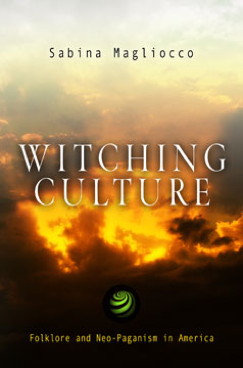
Open-minded academics are somewhat hard to find much of the time. This stands to reason when jobs are already rare and having a reputation for thinking outside the box frequently equals thinking outside the academy. I am always pleased, therefore, to find unconventional works by credentialed authors. I just finished reading Sabina Magliocco’s Witching Culture: Folklore and Neo-Paganism in America. Magliocco takes head on the dilemma that non-empirically verified experiences sometimes do happen. Of course, Paganism accepts that as a matter of course, and Magliocco notes that many Pagans hold advanced degrees in the sciences and some even have university posts. Experiences have a way of defying the rules. Most of us have had a bizarre coincidence or uncanny occurrence or two transpire in our lives. We are trained, via our scientific worldview, to shake our heads and try to dismiss it. Magliocco pauses to wonder if we’re perhaps being too hasty.

Sabina Magliocco is an anthropologist with a legitimate doctorate and a university post. Witching Culture is largely an analytical study of Paganism, but it also allows for the possibility that experiential knowledge might complement academic knowledge. This remains a debated issue among specialists: who can really know a phenomenon objectively? Many argue that empirical data reveal the truth of the matter, but truth remains a slippery concept. At the opposite debating table sit the smaller coterie that argue that you can’t study magic until you’ve experienced it firsthand. The debate does not divide along even lines and this is reflected in society at large. We accept the utility of science, but many still pray for divine intervention. Specialists in religion fear to take sides—after all, jobs are hard to find and increasingly harder to keep.

Fully aware that the modern Pagan movement is a revival movement following the hiatus of Christendom in Europe, Magliocco nevertheless admits to being a practitioner. Fascinating her readers with first-hand accounts of mystical experiences, she draws back to try to analyze what has just happened. And she tells us so. Years ago, as part of a seminary assignment, I attended an Al-Anon meeting as an observer. I am, however, the adult child of an alcoholic and when the circle came around to me I confessed to being both an observer and a person seeking healing. It was a difficult place to be, so I respect what Sabina Magliocco is offering us here. Anthropologists increasingly doubt the possibility of pure objectivity, and even physicist Werner Heisenberg realized that to observe is to be part of the experiment. And so are we all.



Disputed Parentage

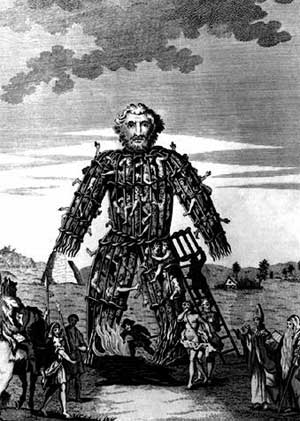
What has Athens to do with Jerusalem, Tertullian famously asked. Much, seems to be the rhetorical answer. Today, August 1, is Lammas. It is said to commemorate the wheat harvest and Lammas is taken to be derived from Anglo-Saxon hlaf-mass, or “loaf-mass.” Beneath this apparent Christian celebration is the pagan festival of Lughnasadh. I’ve posted on Lugh before, but holy days are often seasonal, and it is time to consider Lammas again. Lammas is the last of the cross-quarter days that divide the European pagan year. Some communities bake bread to celebrate it, sometimes in the shape of a person (those of you who’ve seen the original Wicker Man know what I mean).

Christianity was born a persecuted religion that grew to be a persecutor. Deeply rooted pre-Christian traditions were eradicated or sublimated in the growth of Christendom. The modern pagan movement may not have an unbroken line of tradition, but it is a tradition that has ancient antecedents. What Christianity could not conquer it assimilated. Much of what became Christianity derived from Judaism. Much of Judaism had its origins in folk religions of ancient Western Asia. In its European context, Christianity adopted the heathen traditions that fit within the pattern of Christian thought. Agricultural celebrations quite frequently matched events in the imperial religion. Or, if no so events existed, new traditions were invented. It is quite plain that that is why we celebrate Christmas in December.

Why is it that Christianity has so vociferously disavowed its lowly parentage? Being a chthonian religion should be no mark of shame. What is wrong with different but equal? Many people fear and despise those who declare themselves pagan, but paganism is a religion like any other, concerned with morality, justice, and living in accord with the power “out there.” So as August wends its way into the calendar, and the earth begins its inevitable tip towards lengthening nights and the cooling of the days, we might do well to consider Lammas. Whether from the Christian angle of Saint Peter in Chains or from the Pagan angle of Lughnasadh, Lammas is a time to eat bread and reflect, two of the most human of activities. And perhaps with thought will come tolerance.


Symbolic Confusion

While on a drive through New England, we were discussing Islam with our daughter. Now I’m no expert on Islam, but I have covered it in a few classes. It has had a presence in America for a couple of centuries at least, probably first arriving with slaves from Africa. As we drove into Springfield, Massachusetts, I saw four slender towers rising into the sky off the highway and said, “Look, it’s a mosque,” supposing the towers to be minarets. When we drew closer, it was clear that these were really just the decorated finials of a quite secular bridge. Embarrassed at my mistake, my family was kind enough to console me with the suggestion that the four towers from that angle did look like the accoutrements of a mosque. (Earlier in the day I had seen my first Sikh temple in Connecticut, so the mistake might be at least slightly justified.) My wife mentioned how misidentified symbolism could be confusing. This spurred me to consider how symbolism frequently becomes a stand-in for reality.

I’ve been reading about witches lately. Like many legendary fears, witches can be interpreted in many ways. They have their origins in the belief that nature may be manipulated by will over a distance and had been feared for the effectiveness of their powerful spells. After the tragic witch-hunts of the Middle Ages ran their horrible course, witches came to be seen as the result of overactive imaginations and rampant superstition. The modern Pagan movement has revitalized the witch in a somewhat safer environment, and has applied various symbols to it. Thor’s hammer, the ankh, and the pentacle are considered the symbols of modern witches by various covens and practitioners. While passing by a department store on East 43rd Street, I noticed apparel decorated with pentacles—the symbolism adopted by some witches.

This reminded me of a fracas that erupted some years back when a fashion designer incorporated the ornate letters of the Arabic script into the design of a sleek dress that left less to the imagination than a traditional burka. The designer expressed surprise when Muslims objected to words from the Quran being used to decorate immodestly covered women’s bodies. In both these scenarios symbolism has demonstrated its power for being what philosophers call the Ding an sich, the thing itself. Symbols are often that way, bridging as they do the worlds of religious thought and secular existence. I wonder how much we as a society would gain from letting bridges be symbols that participate in the reality they represent.


Cherry Pie

It is one of those days when it is too hot to move. The heat is the kind that gives you a headache, and the Internet beckons. Thus I came across Cherry Hill Seminary. Having been a seminary professor in a previous life, I’m always interested in the craft. This particular seminary, however, is unlike any other. Advertising itself as “the first and only graduate-level education for Pagan ministry in the world,” Cherry Hill offers pastoral education for those who identify themselves as Pagan. I find the concept fascinating. In an age where the standard offerings of the religious marketplace are experiencing their own kind of recession, the alternatives seem to be flourishing.

Just last night I was explaining to my class how the difference between the religious and the pagan is simply a matter of perspective. Used pejoratively “pagan” means any non-Christian, generally. “Infidels,” “heathens,” or “godless fill-in-the-blanks”—religions crave the handy moniker to make those who are different into “the other.” It is easier to detest a person with a label. Cherry Hill Seminary, however, offers a respectful view towards religious education. The school, which offers its program online, has the goal of educational accreditation. From some of the seminaries I’ve experienced, the bar should not be too high. My only concern is that the uniqueness of this program might fade into the background against some of the weirdness that ATS accredits among the mainstream schools.

Starting at least as early as the Bible, religions have looked upon each other as dogs straying into a bigger dog’s yard. Each one wishes to be the strongest one, the most respected and applauded. Why should paganism be excluded? Requiring a bachelor’s degree for admission, Cherry Hill offers courses in Text, Tradition & Interpretation; Nature, Deity & Inspiration; Pagan Pastoral Counseling; Public Ministry & Expression; and Pagan Advocacy & Leadership. Some of these offerings sound more informative than various seminary classes I suffered through. And on days when it’s hot like this, fantasies come easily. It is not too hard to imagine, especially based on my own experience, being treated more humanely by a pagan than by one who claims my own religious heritage.

When the cherry tree blossoms...


Wicker or Wicked?

While I continued officially unemployed I keep to a strict regimen of not watching television except on the weekends. Since we don’t have cable or even a digital conversion box, my viewing is limited to grainy VHS tapes or DVDs. Many of them I’ve watched over and over. Last night I picked out one of perennial favorites, The Wicker Man (1973, of course!) for late-night viewing. Although classified as a horror film, the only terror comes at the very end in a scene that I always find difficult to watch. What keeps me coming back to this film is its unrelenting criticism of religious hypocrisy. (That and the longing evoked by the footage of a Scotland I left many years ago.)

Briefly told, a Highland police sergeant, Neil Howie, is lured to a fictional Summerisle in a mouse-and-cat game where he ends up the victim of a neo-pagan cult. The stunned Christian constable cannot believe the superstition evident on the island could still exist in modern Britannia, leading to one of the highlights of the film. Questioning Lord Summerisle, played by a striking Christopher Lee, Howie accuses him of paganism. “A heathen, conceivably,” Summerisle concedes in a tight shot, “but not, I hope, an unenlightened one.” Howie is shown growing increasingly rude and unsympathetic, forging a makeshift cross to lay over a Druidic burial. He threatens Lord Summerisle with being investigated by the authorities of the Christian nation under whose aegis he falls. The tensions between religions grow until the final scene.

The constant interplay between control and conviction raises again and again what the true nature of religion is. Summerisle reveals that the neo-paganism began as an expedient way to encourage the locals in growing new strains of crops. The images of palm trees in the Hebrides may seem unwarranted, but having strolled among them on the Isle of Arran nature itself belies the orthodoxies of convention. Does religion rule by force of law, depth of conviction, or pure expediency? The makers of the film were wise enough to leave that to the viewer to decide. No wonder that on many a bleary-eyed weekend night, ousted from my once stable career by the overtly religious, I choose to watch, yet again, The Wicker Man.