Not Schrödinger’s

It’s quite a dilemma.  It’s Schrödinger’s cat without the box.  Well, it’s a dead cat in my yard.  It’s not my cat and I only know about it because the next-door neighbor saw it while out mowing.  (It’s on the thin strip between our houses and we seldom make our way over there.)  Death is always a problem.  I don’t want to bury it since it looks like it was a pet.  Said neighbor is the only one I know around here but I know some pets have tracers/implants to help owners know if something happens.  So I tried calling the local animal control companies.  They don’t deal with cats.  There is a county service, in the next town over, but we’re across the border in a county that doesn’t deal with cats or dogs.  The DOT won’t get involved unless they’re on the street.  The local municipality also handles them only on the street or sidewalk.

Now, I own a shovel and I’m not afraid of hard work.  I am a bit squeamish, though.  I’ve handled half-squirrels from some hawk with eyes bigger than its stomach.  I also have to take care of dead birds and squirrels that get into the garage.  This is a bit bigger than I’m used to.  I’m not even entirely sure if it’s a cat, really.  Once an opossum got into our compost bin and the fur looks like it could be an opossum.  It doesn’t smell bad, though, and possums don’t have the most pleasant bouquet even when they’re alive.  The flies seem to like it okay, however.  The space between our houses would be challenging for the turkey vultures I see around daily.  They must be mad with frustration circling up there.  If it’s somebody’s pet I’m sure they’d like to know, but it’s looking like I’ll be digging—but you’re supposed to call Angie first, right?  In case of buried cables?

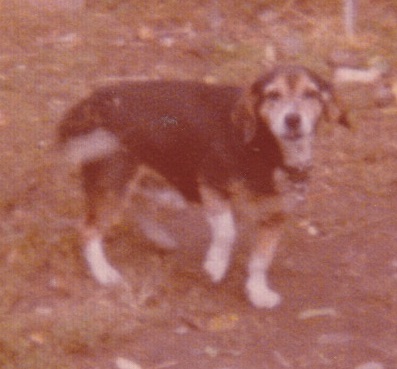
Death is entirely natural.  Ironically, I live two blocks from a pet crematorium.  I wonder if they make house calls?  Then again, it wouldn’t be cheap.  We expose ourselves to loss when we bring pets into our families.  My own beloved childhood beagle was hit by a car.  Meanwhile, I know that we shall all meet on that beautiful shore, by and by, and when we do I hope someone recognizes their cat from this side of the vale of tears.  Or at least outside of Schrödinger’s box.
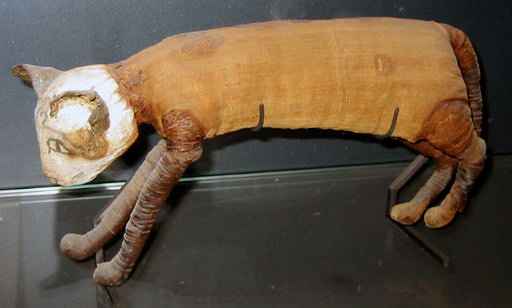
Image credit: Greudin, public domain, via Wikimedia Commons

Pet Theory

We don’t have any pets.  At least not beyond the spider near the sink that I don’t have the heart to release outdoors in winter temps.  But I have had.  I think the reasons our pets mean so much to us is that they’re like people in so many ways, but nonjudgmental.  They accept us with all our quirks and despite occasional—generally unintentional—neglect.  A recent family text chain about the sad occasion of having to put a dog down got me musing about my history of pets.  We get remarkably attached to them.  Growing up we had dogs, cats, birds, turtles, guinea pigs, fish, and we tried a short-lived attempt at hamsters.  My wife grew up with a cat but became allergic after leaving home, so we had to avoid furry pets when my daughter was young.

We had fish, hermit crabs, and a bird.  The bird, a parakeet named Archie (short for Archaeopteryx), was with us at a difficult time.  Things weren’t going well at Nashotah House, but I had no idea that I was in the cross-hairs.  Archie was a suspicious bird.  We tried to get him to talk (mostly “nevermore”) but he wouldn’t.  I tried to get him to perch on my finger—my Mom could get birds to do it—but he only ever bit me.  Still, he was part of the family.  When the seminary axe fell, he moved to two different apartments with us, remaining solitary but stolid in tumultuous times.  In the second apartment he stopped singing.  My daughter thought something was wrong, but we knew from a previous trip to the vet that we couldn’t afford another.  I was unemployed and my wife had to look for a better-paying job.  Then I found Archie dead.  That day is still, all these years later, very difficult for me to think about.  How we cried.  How we snuck back onto land owned by the seminary to bury him in the woods.  How empty our small apartment felt.

Emotions are difficult things, but they’re what bind us together as humans.  We all know loss and sadness.  Many of us have poignant memories of pets who, although we supposed we’d outlive them always thought they’d be there at least another day.  Is there anything that brings us more together?  We think anyone who doesn’t shed a tear at Old Yeller is somehow not really human.  Certainly less human than our adopted animal family members.  How wonderful not to be judged by someone who knows us perhaps better than we know ourselves.


For the Love of Dog

All I have to do is say “Old Yellar,” and everyone will know the feeling.  Everyone of a certain age, I should add, who’s owned a canine.  The love of dog.  From where I pass my days I can see out the window into the neighbors’ back yards for four houses over.  They all have dogs.  Big dogs, mostly.  They also have fenced in backyards.  One of the things I haven’t seen too much in our neighborhood is dog walking.  People let their dogs out to frolic, and do their, ahem, other outdoor activities in the yard.  Once a day some member of the family, either with the basic plastic bag or with the specialized, long-handled brush and scooper, slowly surveys the yard to remove any offensive matter so the space may be used for human activities.  It’s a level of care that most would shudder to provide for their own species.

Wolves were the earliest domesticated animals.  In those hunter-gatherer days either they or humans—the jury’s out on which—realized the advantages of working together.  Kind of like we were fated to be partners.  Besides, unless the dog turns on us, there’s no question of who’s the master here, and everyone likes to be the boss.  When I catch a glimpse of one of the neighborhood pets being scolded, or praised, it’s clear they share emotions with us.  The bond is deep.  I often wonder about this—they recognize the tone of voice, something that takes humans a while to learn.  I grew up with dogs and I found out that even if you insult them in a friendly, encouraging tone of voice they’ll love you for it.  Dogs are just that way.

Our first real dog—the one that ended up staying with us his whole life, was a beagle pup we got at a farm.  Dogs like to be with others.  Unlike humans, they don’t have to pretend.  (Although they can do that too, as when they growl at you during a game of tug-o-war.)  Then we leave home and go to our places of business, where capitalism reigns.  We treat other humans coldly, clinically.  “It’s only business,” we’ll parrot, especially if we feel bad about doing what the boss tells us.  That’s the way we treat our own species when money’s involved.  And we’ll sit at our desks, daydreaming of our dog at home that will be so glad to see us when we walk through that door.  And we’ll gladly clean up after our pets what we find obscene even to write in human language.  It kind of makes me wonder when I glance out the window while at work.


Dog Gone Rapture

With the world about to end tomorrow, a friend pointed me to a story of a savvy entrepreneur. The idea is so obvious that I’m completely jealous I didn’t think of it myself. Among the Fundamentalist camp it is widely acknowledged that animals don’t have souls. They do, however, make wonderful companions nevertheless. When their good Christian owners are raptured to the skies, Rover is consigned to a cruel death by starvation if his soulless biological form is left inside. Poor soulless, sinless Rover! Reason (such as any theological thought can be called “reason”) and emotion clash. Bart Centre comes to the rescue. His company will break into the now abandoned private property that God had blessed you with, and rescue your pet. For a reasonable fee. As an atheist, Centre is pretty sure he won’t be going anywhere.

At notable—and even some rather forgettable—points in human history, people have guessed that it is all about to end. This is a strange belief when parsed apart from its original context. Ancient mythical thought tended to be holistic. We humans, with our own cycle of births and deaths, have trouble imagining anything that doesn’t follow the same pattern. All things must have beginnings and ends. Zoroastrianism began as a persecuted sect among the Old Persian religious realm. Persecuted sects tend to want an end to the suffering, and so it is no surprise that Zoroastrians gave us the end of the world. When Judaism was under the severe predation of Antiochus IV Epiphanes, it too looked for a radical change. Christianity under Nero and Domitian looked for a triumphant culmination of a universal purpose. And no end came. Instead, under Constantine Christianity gained a privileged position. With only periodic outbreaks, concern for the end of all things was pacified.

Today with the ease of lifestyle among most American Christians, it is surprising to see such antipathy toward the world. In the words of the Metatron, “Was Wisconsin really that bad?” Or maybe I have read it wrong. Perhaps this is the final culmination of the Prosperity Gospel: Christians have got it so good that the only way to better their lot is to end it all? Religions have always demonstrated their acquisitiveness either in terms of souls or currency. When you’re on top of that world, what direction is there to go but out? But you can’t take it with you, including your soulless friends. Perhaps that’s the real lesson in all of this: humans struggle to mix reason and emotion into one psyche, despite their diverse evolutionary paths to consciousness. We may readily accept the mythical but still wonder who will take Rover for his walk.

Cafe Press's take on the issue


More Biblical Cats

In the Bible there are no cats. This silence is odd since cats have been associated with humans for over 9,000 years. Large felines, of course, appear in the Bible; lions and leopards prowl sacred writ, but nary a housecat. In a world of subsistence farmers, the concept of a “pet” is also absent — an animal as part of the household is yet another mouth to feed. The closest we get to biblical pets is in Nathan’s parable to David about Bathsheba. Here the “pet” is a lamb — a potential source of wool and almost certainly a funeral involving roasting and possibly mint sauce.

The Israelite view on animals is difficult to assess fully. Clean and unclean classifications seem to relate to predatory behavior and “fitness” for an environment. As a notorious but useful predator, cats could have been somewhat of a religious embarrassment. Having tamed feral cats, I know that the key is to make repeated offerings to a cat (by the way, this is the advice of Old Deuteronomy in Cats). Being quite self-sufficient, cats can find what they need without human, or divine intervention, thank you. Perhaps feline behavior resembles that of the gods a little too much for people inclined towards henotheism?

In the beginning was the cat

In the beginning was the cat


The problem with predators is no one knows what they’ve been eating. Predation involves bloodshed and blood pollutes. Look at what the cat dragged in! Biblical cats are victims of argumentum ex silentio — we can never know why they don’t merit a mention. As carnivores they are necessarily unclean. By the Middle Ages, for reasons still unclear, the church and superstition rendered cats as the familiars of witches. Ironically the associated killing of cats likely helped to spread the Black Death because of the removal of the flea-bearing rodents natural predators. In most ancient cultures cats are credited with supernatural powers. Since the Bible strictly guards this privilege, perhaps cats stepped just a little too close to divine prerogatives to merit a mention in the Good Book.