The Neighborhood

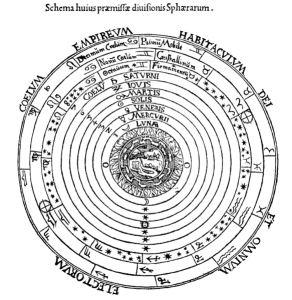
583px-Ptolemaicsystem-small

Let me send out a warm welcome to the neighborhood, I think. Not that I officially represent Earth—or anything for that matter. I’m just friendly, I guess. Now that astronomers have strong evidence that the nearest star to our own, Proxima Centauri, likely has a planet, it’s not premature to head over with a casserole. It’s not every day that a new solar system is discovered. We don’t know for sure that the planet’s there, but chances are pretty good. In reading about this discovery I learned that the orthodoxy has changed since I took astronomy in college. It seems now standard wisdom teaches that most stars likely have a least one planet. I can’t even count the stars—I usually start to trail off after I get to about ten—so I can’t imagine the number of potential planets out there. And where there are planets, there are gods.

Let me rephrase that. If there are billions and billions of planets it is very likely that there’s life out there. I know I’m racing ahead of the evidence here, but let me have my fun. If there’s life, there’s a chance, a glimmer of a chance at least, that given enough life we’ll find consciousness. I’ve always thought it was a touch arrogant on our part to assume we were the only ones out here. Perhaps it’s because the stakes are so, ahem, astronomically high we seem to be afraid to admit the possibility. We don’t really want to be alone in this cold, vast, universe after dark. Enter the gods. Conscious beings—even arrogant ones—have no trouble supposing that there is an even greater presence out there. I suspect this isn’t an earth-bound bias. I should hope that conscious life looks toward the stars with wonder, and even after they discover that there’s no lid on their planet they might still ponder what else might be out there.

Let’s suppose there are other creatures out there with other gods. When the meeting takes place we’ll need to have that discussion. You know the one I mean. We’ll need to ask whose deity is really real. Is it yours or is it ours? Hopefully we’ll enter into this with an open mind. I suspect it will depend on who’s in the White House, and all the other big houses, at the time. There are certainly those who claim their own almighty brooks no rivals. If it turns out that we can’t agree, I hope it doesn’t come to blows. There will always be other planets to explore, and maybe even new orthodoxies to accept. It’s an infinite universe, after all.


Foiled Again

Few things travel as well as curses. Or so it seems in a news report from Serbia. Archaeologists in Kostolac, according to The Guardian, have excavated skeletons nearly two millennia old. That’s not news, since people have been dying as long as there have been people. What makes the find extraordinary are the gold and silver metal foils that have been found at the gravesite. Inscribed in Aramaic with Greek letters, these tiny missives were rolled and placed in lead tubes to be buried with the dead. Although translations of the inscriptions aren’t given, the fact that they contain the names of demons would suggest these might be curses against anyone seeking to disturb the tombs. Such devices go all the way back to the Pharaohs, and perhaps earlier. Nobody likes to have their sleep disturbed.

Serbia, for those unfamiliar with geography, isn’t exactly next door to ancient Aram. The burials and inscriptions seem to fall into the Roman Period, however, a time of cultural diversity. When cultures come into contact—in the case of Rome and prior empires, through conquest—new ideas spread rapidly. And sometimes old ideas. The Romans, in general, didn’t like competing religions. Then again, their idea of religion was somewhat different than ours. Ancient belief systems were more or less run by the state. They served to support political ends—at least they were upfront about it. Your offerings and prayers were to be given in support of the king, or emperor, and beyond that nobody really cared. Unless, of course, you were making curses.

Curses, it was believed, really worked. Even today in cultures where belief in curses persists people tend to be physically susceptible to them. We don’t want others to wish us ill. Perhaps that’s the most surprising thing about politics today. Our society has taken a decided turn towards the more secular. Candidates for political office, even if they personally believe nothing, can still cast curses on those who are different. They can claim support of their “faith” to do so as well. Words, in ancient times, were performative. They meant something. Curses were taken seriously because if someone were serious enough to say it, they probably meant it. They could be written down and preserved beyond death. Today, however, words are a cheap commodity. You can use them to attain your personal ends and discard them once they’ve outlasted their usefulness. Perhaps we do have something to learn from the past after all.

Copper scroll from Qumran, replica. Not a curse, just an illustration.

Copper scroll from Qumran, replica. Not a curse, just an illustration.


Forgive Us Our Tabs

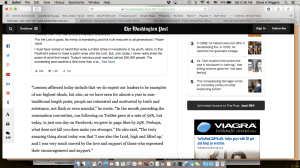
Forgiveness is somewhat of a specialization among the crowd courted by the new GOP. Although it is forgiveness that goes only one way, at least it’s a start. Think back to Bill Clinton making his non-inhalation declaration followed by W who could not hide from his drug-fueled Yale days. Televangelists who admit, in tears, that they had an affair stand a fair prognosis for at least a limited recovery. The religious right loves a repentant sinner. I suspect it will be the trump card in the deck, come this fall. A host of sins can be banished under this incredibly effective rubric. This past week Mike Webb, Republican hopeful for Virginia’s Congress, having lost his party’s bid decided to run as an independent. No forgiveness required. What’s right is right. During his announcement of his decision, however, he posted a screenshot on Facebook without checking his tabs. As the Washington Post article by Justin Wm. Moyer reveals, some of those tabs included porn sites. In a move no Democrat could’ve made, the conservative candidate thanked God for his mistake and his likes increased by 25 percent.

Technology is a kind of big brother. By their tabs you will know them. Our browser histories reveal who we really are. Browser histories, however, may be cleared. And those who know how to manipulate the forgiveness card can make no mistakes. After all the Gospels declare that you must forgive the repentant 490 times (taken literally), which leaves a comfortable margin to get elected. A little bit of time with the Good Book can do wonders for your campaign. The problem is, it only works with the GOP. If he admitted to inhaling, you can be sure that the War on Drugs would’ve crashed down on the White House. Dems have to keep squeaky-clean records because forgiveness doesn’t apply to that crowd.

Screen Shot 2016-05-21 at 5.38.11 AM

One of the ironies, apart from the Viagra ad on the page telling this story, is that such incidents reveal a basic misunderstanding on the part of the electorate. No tenet is more easily finessed than forgiveness. Who’d hit a dog who’s rolled over on his back, exposing his vulnerability, admitting that he’s just eaten what you left on the counter for your dinner? Apologies can be accepted for some of the most outlandish sins. They’re cheap to make but reap rich rewards. As a former evangelical I know this may sound terribly cynical. All I can say is I’m sorry, please forgive me. And don’t look too closely at my tabs.


Prophets Paid

Photo credit: Cephas, Wikimedia Commons

Photo credit: Cephas, Wikimedia Commons

Prognostication used to be the remit of oversized rodents and individuals we’d now classify as mad. And news used to be stories about things that had already happened. Past tense things. I don’t read any daily newspapers—a personality flaw, I know—but I do read stories that are sent my way, even if it takes some time. One of the things I’ve noticed, particularly in this election year, is the amount of prediction that passes as news. Future tense reporting. And the future is very tense.

Always one to assume that others know more than I do, I consider the opinions of experts as more valid than my own. After all, they are paid for what they think. Nobody spends good money on amateur opinion, which is one of the cheapest resources available in the civilized world. So when I read the headlines about what to expect this fall I see that the prophets and anti-prophets are lined up along party lines and, if democracy holds up, we’ll find out which group is which, come November. This makes me wonder what life would’ve been like under biblical prophets. No, their job was not primarily foretelling—future prediction was a small percentage of their job description—but they occasionally made political predictions when the boss told them to. Some people think they were primarily concerned with a future political figure, even if Messiah isn’t exactly an elected position. Hoi polloi must have been in a state of high anxiety. Who’s right? We know that for every prophet, according to the laws of rhetoric, there must be an anti-prophet. If a message is coming from on high we don’t know from whom.

Long ago media moguls learned that anxiety sells papers. Or news broadcasts. Sales boom after disasters. Extra! Extra! Read all about it! I’ve seen it in movies and televisions shows, so I know it must be true. As if real life events don’t generate enough trauma, we speculate about a future that tends towards the bleak. What’s a polis to do? The dilemma hasn’t changed in the millennia since we’ve outgrown prophecy—there’s no way to know who’s right. It’s all speculation. As for me, I wonder what the local groundhog thinks. And while we’re at it, could we get a bit nicer weather for a while? I thought the prophecy was April showers bring May flowers, not the other way around. But then again, my opinion is a decidedly amateur one.


The Devil, You Know

I’m the first to admit that I’m behind the times. Too much of my free time is spent reading weird news or going to used book sales to keep abreast of what’s happening in the adult world. If it weren’t for my wife sending me news stories via the internet, I would still be wondering why Gorbachev isn’t helping to hunt down Osama Bin Laden. Since I’m captive to a religious worldview, I was interrupted in my calculations by the news that Ted Cruz is, allegedly, Lucifer. My research had me on the trail of Santa, since the simple transposition of two letters would give us the title of the Zoroastrian prosecuting attorney. And, I figured, it was fairly safe to out St. Nick when Christmas is still eight months away. Hopefully I’ll still find something in my stocking come December. I kind of figured that when we found the real devil he would be a Republican in any case. Even as I write this, Cruz is out of the race. I thought the Devil never gave up.

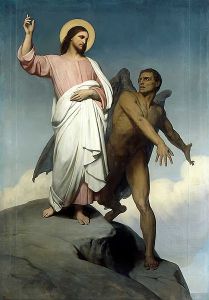
I wonder where else in the civilized world would politics be such a joke. Can you trust the opinion of a man named Boehner? It’s easy to change your name—just ask anyone who came through Ellis Island. They’re laughing at us, folks. Seriously, they are. I don’t get much email, but I’ve had two international missives asking me what’s going on over here. It’s a good thing I don’t know, otherwise I’d have to try to explain. You see, the Bible doesn’t say much about Satan at all. In the Hebrew Bible there is no devil. By scraping together the few references to “the Satan” and morning star, some have said the alleged Ted Cruz of ancient times was clearly in the Bible. Somewhere between the Testaments he showed up. By the time Jesus was old enough to climb temple towers, he was there. In the meantime the Zoroastrians had come down from the North Pole…

Then there’s the fact that when he’s not wearing a conservative suit and announcing a female running mate, the Devil is described as looking like Pan. Goat horns, goat feet, but always the torso of a man. And he’s red, just like the Coca-Cola red of Santa’s suit, and states like Texas. It’s a good thing I don’t read any more conspiracy theories than I already do. You’d probably find me tootling away on my pan-pipes waiting for a bus in the Port Authority. No, there’s a reason I stay away from the real news. It might interrupt my fantasy world. And, I’m afraid, it might actually be more entertaining. And don’t worry about my Christmas—I plan to have an eleventh-hour conversion, just in time to have a chimney installed in my apartment. If I can only be sure I get it done before February.

There's something political going on here...

There’s something political going on here…


States Slights

States, at least the united kind, can have personalities. Some of us move after the diminishing herd of jobs and so end up in places we hadn’t really planned to live. In each state where I’ve made by domicile (six, as of the present), I’ve met people born and bred, down home and with no intention of ever leaving their native land. To such people, I imagine, state symbols may be important. I always felt unjustly proud of Pennsylvania’s Keystone status. I was born there, but neither of my parents and none of my grandparents were. I don’t live there any more myself. I was pleased and just a little surprised to learn that New Jersey has a state dinosaur (the hadrosaurus), discovered right here in the Garden State. This past week, according to an NPR story my wife sent me, Tennessee is trying to garner its own state dinosaur, in the form of the Bible as the State Book. I think it would be a great idea for each state to have an official book, but I would think that it might be a book written by someone from that state.

IMG_1363

Senator Steve Southerland, according to the story, put forward the legislation due to the Bible’s importance in the Volunteer State. The problem is, of course, the Bible is a religious book and that by choosing a religious book you’re getting dangerously close to choosing a state religion. “There used to be a wall here,” you can almost hear the constitutionally minded saying. The Bible is important. Whether we want to acknowledge it or not, no well-informed individual can deny that the United States has had a long and complicated love affair with the Good Book. As I try to show in many of my posts, the Bible still permeates our society in unexpected ways. Nobody’s trying to erase that history, but really, which state is going to select the Rigveda for its own book? Or the Qur’an? The Analects?

States are justly proud of their contributions to the whole. We have state flowers, mammals, trees, and birds. Tennessee’s is the Mockingbird. We have state slogans and mottos. But can any single state claim the Bible more than any other? I have to be just a little suspicious about claims that there’s no religious jingoism at play in suggesting it should be any state’s book. Yes, many Bibles are printed in Tennessee. Many writers have called the state home as well. Wouldn’t the more distinctive contribution come from a book that Tennessee actually had a hand in producing? Bibles, like it or not, can be claimed by all. I can see a tug-o-war coming with Texas, should this state symbol be canonized.


Rainbow Nation

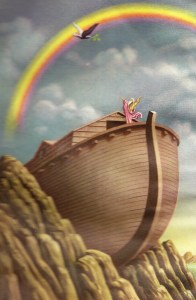
By now I suppose it’s old news that North Carolina has joined the wall of ignominy as the latest state to try to discriminate against gays. It seems our aging leadership just doesn’t get it that a large majority of people in the younger generation just don’t have a problem with accepting homosexuals for who they are. Laws are generally still made by old white men, though. One might be tempted to say “good ole boys.” They may make the claim that this is political, but as one astute editorial in the New Jersey Star-Ledger pointed out, this is about religion. The editorial, which ran on Saturday, notes that studies have shown that when people learn a law sequestered under “religious freedom” is actually discriminatory, the law loses support. The government by the people thing seems to be working backwards. What will it take for elected officials to realize that we are a rainbow nation? And rainbows, according to the Bible, are good.

MyFavoriteNoah

I’m always amazed at these attempts to turn the clock back. It is the season of “spring forward” is it not? Religions that have a problem with homosexuality also have an unscientific understanding of human sexuality as well. Not one person in the Bible had a clear idea of how conception worked. If they didn’t understand the facts of life, how can we expect to learn the life of facts from them? What amazes me most is that such views don’t take the whole picture into account. Intersex individuals—of whom there are many—demonstrate that easy definitions of gender are sure to be wrong. Even tying the concept of gender to sex seems to be misguided. And yet we pass laws the favor a first-century understanding of what it means to be human.

In the end what will change the minds of the corporations will not be their heads or their hearts. The decision will be made by their backsides where their wallets will be growing a bit lighter as corporations decide to take their facilities elsewhere. It’s a sad commentary on our society when justice isn’t enough to strike down a prejudicial law. It takes money to do that. It is a strange world indeed where it take lucre to lead to light.


From Solid to Gas

“Ignorance of the law is no excuse.” I couldn’t believe that the woman at the police station actually used that phrase on me. The only time I’d ever heard it uttered before was on Gilligan’s Island. After all, we were talking about a parking ticket. I’d arrived in Boston, after driving through four states, with a massive headache. I was moving into an apartment in Winthrop, and all the cars along the street were lined up with their left tires along the curb. I simply did what everyone else had done and went to bed to sleep off my debilitating pain. In the morning I had a ticket under my windshield wiper. I explained that I’d just moved to town from another state, I was a student, and that all the other cars were parked the same way. Then she said it.

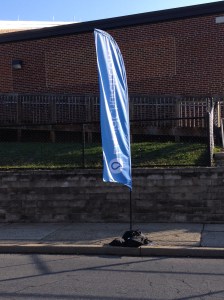
IMG_2625Ignorance, it seems to me, is the only response in the face of laws far more complicated than they need to be. I always thought, for example, that it was against the law for churches to meet in public schools. I’m no lawyer and what with voucher programs and other legislation that has been approved by the Reagan-Bush empire, I’m just not sure any more. So when I drove past the local middle school I was surprised to see banners all over the place proclaiming Liquid Church was meeting there. Liquid Church? They have a slick website (advertised on the banners) and they had guys directing traffic in the local school lot, which was frighteningly full. When had this happened? When had the school which had refused to allow a robotics league, approved the meeting of an evangelical church in the building? I can’t guess about the legality.

One of New Jersey’s fastest growing churches, according to its website, Liquid Church is flashy and trendy. This is God for the twenty-teens. Like businesses these days, it has “core values” as well as beliefs. Those values? Grace wins. Truth is relevant. Church is fun. The beliefs are pretty basic evangelical standards. But what is it doing in my local school? Having attended churches where anything fun smacked of Satan, perhaps I’m just a little bit jealous. Maybe as a guy who tries always to obey the rules, who doesn’t speed, and who actually follows traffic conventions in parking lots, I’m just a little confused. I thought there used to be a wall here. Now there seems to be nothing but rules anyone is free to concoct. I miss Gilligan’s Island.


R’lyeh Reality

It’s always a sign that I’ve been too busy when I lose track of Cthulhu. Few created deities receive the attention of the web like the terror dreamed up by H. P. Lovecraft. The internet has created an environment, like the bottom of the sea, where the old gods may lie dead but dreaming, ready to reawaken. It was with great pleasure that I was pointed to Cthulhu for America. At last, a presidential candidate who is willing to admit that he is merely a myth. His agenda of destruction and domination is not at all hidden. If only real politicians would be so honest!

In a world with millions of diversions, it amazes me that Lovecraft’s nihilistic creation has taken on such popular interest. Perhaps it’s because those of us who grew up with monsters have now reached a dubious sort of adulthood where we are bossed around like children and given only those limited freedoms that capitalism will allow. We can’t go into public places without seeing heavily armed guards in fatigues. We can’t get into work without electronic chips in cards to keep us safe from those of our own nation. We can’t fly without being scanned like a week-old loaf of bread. We can’t even store our own files on our own personal computers any more since some software company would rather charge us for the privilege. At least Cthulhu says what he wants. Orwell may have had his Big Brother, but Cthulhu is an obvious overlord who wants nothing but his own satisfaction.

IMG_1551

Watching the circus of candidates vying for position, I can’t help but think of Rome before the fall. Historians are still debating the causes—lead poisoning may be too easy a way out. Perhaps it is, as Lord Acton declared, the result of power itself. Those who taste it can’t stop eating it until every microscopic crumb is devoured. It’s shameful to watch. I’m embarrassed when Dumb and Dumber sounds intelligent next to the utterances from political talking heads. Cthulhu would have none of it. Although the website is a parody, it, like all myths, is truer than what we often call reality.


Burden of Democracy

Speaking of revisionist history, I see that I’m negligent on updating my Egyptology. In a year when you need an Excel spreadsheet to keep track of the sheer number of GOP presidential wannabes, I had to ask my wife who Ben Carson was. She sent me a story explaining how the league of presidential dreamers believes that the pyramids were ancient Egyptian grain silos. His reason for believing this has nothing to do with archaeology or with history and everything to do with the Bible. Now, other presidents of too recent memory have had strange biblical beliefs as well. And that raises the intractable question of how you run a democracy with religious freedom. Some people like to claim religious belief is a matter of choice, but that is rarely true. At a young age we are programmed to accept what our parents or guardians tell us is true. Studies of the brain suggest that once wired for concepts of how God works, the circuitry is difficult to displace. In a country where most people can’t tell a Seventh-Day Adventist from an eight-hour clock, they may be surprised that a brain scientist might believe the pyramids were built to biblical specifications.

From WikiCommons

From WikiCommons

The Adventists are a literalist sect. And they are not the only ones who believe the pyramids have something to do with Joseph and the biblical famine that set the stage for the exodus. It is an idea I encountered as a child, and I didn’t even have a denomination to call my own. Religious belief can be, and often is, completely separate from rationality. Some very intelligent people are biblical literalists. The real problem is that the Bible doesn’t mention the pyramids at all, but then most Americans know as much about the Bible as they know about Seventh-Day Adventists. If people actually knew how much incentive George W. Bush had to start Armageddon, the turn of the millennium would have been far more tense than it was. And that’s saying something.

In our democracy, we want freedom of religion, but we don’t want to be bothered with the details of what a religion teaches. Like many, I was shocked by the headlines of a potential president grossly misunderstanding history, but as soon as I learned Carson is an Adventist everything clicked into place. I would suggest that it is a moral responsibility in a democracy to learn something about religion. We like to think we can fudge on that part of the homework. If we want the freedom of having anyone capable of becoming president, we need to learn something about a human being’s deepest motivations. No matter how much reporters and skeptics want to laugh and scorn, religion makes many decisions for by far the largest majority of people on the planet. The thought that a democracy can thrive without learning what truly motivates its leaders, I would suggest, is the most naive position of all.


Without Precedent

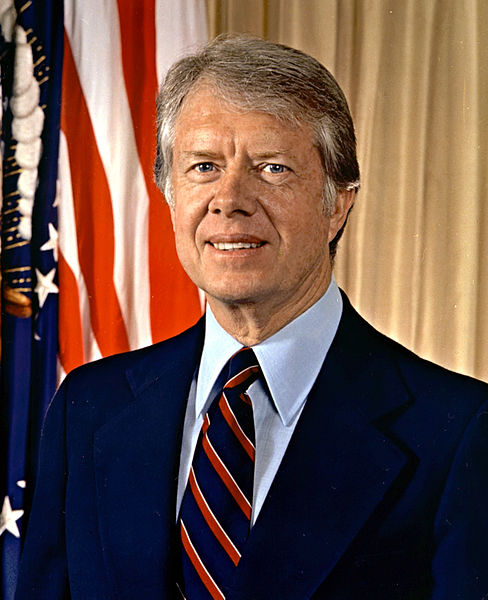
Leonard Pitts Jr. is a national treasure. So many of his Op-Eds make such unwavering good sense that it is difficult to believe he’s not a household name. His recent piece in the Miami Herald concerning Jimmy Carter’s announcement that he has cancer is a case in point. Many reporters would be quick to point to the tragedy since, although the Carter administration is generally undervalued, nobody would ever say that Carter is less than a true gentleman. Pitts, however, takes us deeper. He looks at this understated announcement in terms of faith. Faith, as he points out, in a world where it has taken on an unsavory, if not downright evil, flavor. We do indeed hear about faith that moves mountains, but it is with the power of fully fueled passenger jets. We hear about the faith that builds mega-churches while the homeless and hungry sleep in the city streets. Pitts is quite right, our faith requires a shot in the arm.

JimmyCarterPortrait2

I sometimes wonder how we have come so far down what seems to be obviously the wrong road. Our religion has become a charade and it is used for people to get what they really want rather than to make the world a better place. I always thought true religion was putting others before yourself. Nothing like working in Manhattan to show you how totally off-base such sentiments might be. Jesus can sell books, but his teaching is definitely passé. Yesterday. Old-school (but not in the good way). We have faith in money because immortality, or at least the antidote for mortality, is readily for sale. There’s one born every second. This, we are told, is what gives life meaning.

Of the presidents who’ve retired, we generally hear very little. They sequester themselves and write their memoirs to gain even more money for themselves. Carter has been known to be out there building houses for the poor, living what presidents all say they believe when they ask us to cast our votes in their direction. I’ve always been proud that the first president I ever voted for was Carter. Of course, it was in the beginning of those recent Dark Ages known as the Reagan Administration, and I had voted for the underdog. My faith in the political system has been severely challenged since then. I have seen stolen elections treated as legitimate by those who can’t possibly do too much for themselves. And I remembered my first lowly vote given for a man who, perhaps more than any other, showed Americans their misplaced faith after he had been denied a second term in office. Although Pitts doesn’t say it, I can see it in his pen: the first shall be last, and the last shall be first.


Magic Faith

MakingWe all like to believe we don’t believe in magic. In this day of sophisticated materialism, the idea that unseen forces might work upon the world seems terribly naive and not a little embarrassing. Randall Styers’s Making Magic: Religion, Magic, and Science in the Modern World has been on my reading list for a few years now. Not so much a history of magical thought, Styers offers a history of thought about thought on magic. There are several takeaways from a study like this. One is that magic and science share common ancestors. In fact, some theorists trace the origins of science to magical thought. The height of alchemy was also the period when experimental analysis of the natural world was blossoming. There was a mysterious sense to what we now think of as impassive particles whirling around for no particular reason. Making Magic makes clear that we can’t divorce developed thinking from magical outlooks. In many ways it is difficult to distinguish religion from magic.

Not that Styers advocates magical thought. He does, however, invite us to think about it. Another takeaway from this study is that magic, when described by religious writers, is a foil. Magic is used to show how the unenlightened think about things. Those of us here in the true light would never think such backward thoughts. Indeed, magic, as Styers makes clear, often served as a kind of social control. Lower classes think magic works wonders. The upper classes know that power lies in exploitation. Magic, in other words, can’t be divorced from politics. Those in the know would only encourage magical belief to continue. Invisible forces indeed.

Magic as a regulatory force is indeed the thesis with which Styers is working. The difference between prayer and magic is somewhat effaced when closely examined. Religious belief is seen as benefiting society while magic is for selfish benefits. I do wonder, however, where the modern magical religions, such as some branches of Wicca, would fit into this scheme. They also seek the good of society. Magic need not be selfish. Making Magic is concerned with the analysis of magic by scholars who’ve shown a surprising interest in the topic. It doesn’t really address those of today who, after finding the atomic world strangely vacuous, have turned to magic to re-enchant a world grown dull and dry. Whatever one may say about magic, it still exists, and its believers are among us. Our world with its solemn, feelingless answers could, at times, use a little such conjuring.


O My Stars

I know many conservative religious believers. I also know a lot of nones and atheists. One thing they all have in common is that they want to believe the truth. They want to do what is right. Enter the media. A day of peace and prosperity for all is a slow news day. To keep the pot boiling, differences need to be emphasized and people’s fears and frustrations must be highlighted. Nowhere is this better on display than in party politics. Do people really not get along at all? Are we really so polarized? A friend recently sent me an internet story about the Republican elephant. Honestly, I’ve never paid much attention to the posturing of the GOP since so much of it is obviously show. The coalition, cynical at best, between the evangelical camp and the fiscal conservatives has created a kind of Frankenstein’s monster of the party which began out of an anti-slavery movement and was represented in the politics of Abraham Lincoln. I have trouble seeing him approve of Reaganomics or some of evils that have flowed from it. We are more deeply divided now than we ever were during the Civil War. And better armed too.

Republicanlogo

So, what about the Republican elephant? The stars on the blue top half are upside-down. I’m not sure if this represents a change or not. The problem, of course, is that the upside-down star is a “pentagram” associated with Satanism (which is not what most people think it is). The insinuation is that the symbol was subtly changed to reflect the true values of the party. I don’t know if the stars on the elephant were ever right-side up. As long as I’ve been politically aware, the Republican party has been the one that supports the wealthy while trying to cut the poor and working class from the budget in any way possible in order to build an ever stronger military to protect the plutocracy for which it stands. One nation, under Mammon, with surveillance and distrust for all. Principles, in my opinion, far worse than Satanism.

Ironically, in this media fueled division of the nation, conservatives know and hate Satanism. In fact, seeing a pentagram pattern in school bus taillights can send the internet into a tizzy. We’re afraid, but of what we don’t properly know. Must be those liberals with their radical ideas of liberty and justice for all. On the street things haven’t felt like they’re getting better for a very long time. Each year since the overspending Bush decade the economy has found inventive ways to get worse and worse. One thing remains constant—the ultra-wealthy flock to the political party that once stood for freeing of slaves and uniting a deeply divided nation. The best way to keep us together is to keep us afraid. That’s easily done when economists tell us you can’t hope to retire with the medical benefits and living standards of the middle class without at least a million dollars in the bank. Something’s upside-down alright, and it doesn’t take a genius to figure out what.


Rorrim

It was an object of wonder. Handed to me as a child, the Bible inspired a kind of awe reserved for the big events of a young life. Here were the very words of God, in King James English, for me to read, mark, and inwardly digest. Well, at least read. And read I did, as only the fear of Hell is able to motivate an impressionable psyche. When a parish minister saw the trajectory of my life, he suggested exploring the ministry. More Bible reading ensued. With only Halley’s Bible Handbook as a guide, interpretation was largely a matter of what the minister said, and the kind of primitive reason that resides in a teenager’s head. I made it through college as a religion major without ever hearing about Mesopotamia’s influence on the Bible. Once I did hear, in seminary, it was clear to me that to get to the truth, you had to go back beyond the first page. Mesopotamia was only part of the story. The Bible was a book compiled in a region where other religions shared concepts, deities, and stories with the Israelites. While unique in some respects, it turns out the Bible wasn’t as unique as I’d been led to believe.

Mesopotamia, vying with Egypt, was the true cradle of the civilization that gave rise to who we are in the western world. Perhaps in the eastern hemisphere as well. The great cities of Sumer, and later Babylonia and Assyria, yielded cuneiform tablets and other artifacts that insisted we widen our view of antiquity. The heirs of this tradition developed Judaism, Christianity, and Islam. All three monotheistic religions have bred sects that despise this ancient past with its uncomfortable truths, and thus we hear of IS destroying the evidence with abandon. The years of my life spent studying these cultures disappears so quickly under the bulldozer’s blade. For all this, it is IS that is the passing fancy. You can’t destroy the truth. You can damage it, however, to the detriment of everyone.

IMG_0188

Political regimes, and not just in the Middle East, operate with an unbecoming arrogance when they believe in their own self-righteousness. Were it not for those who wondered what these wedges on clay meant, we might still have to reckon (more seriously than we already have to do) with those who insist that it’s the Bible way or the highway. Unfortunately, it often takes disasters such as this wanton destruction of the past to wake the media from its lethargy concerning the cultures that gave our religions birth. There’s so much more to distract. The world can’t make up its mind about the color of a dress, and meanwhile those backed with a justification of true belief destroy that which can never be replaced. Given the rhetoric of political leaders even here, I suspect that our past is no longer safe, no matter where we house the artifacts bearing witness to the truth.


Wag the Tail

Among the most respected of intellectual endeavors is political science. Analysts who read and reason beyond national borders, finding implications in countries many of us have never heard of, they can be an intimidating lot. Experts in economy and psychology, they tell us what the big picture looks like—why we do what we do. And almost universally they disdain religion. We’re talking politics here, why don’t you go sit at the kid’s table? Religion is the stuff and nonsense of make-believe. What politics is about is who has the biggest bombs and bank accounts. Those who impact the world in real ways. And yet.

I would never claim to be up-to-date on current events. I don’t have time to read newspapers and if my friends didn’t send me pertinent articles now and again I might still believe that social justice is more important than the color of an anonymous dress. When no less than an authority than the New York Times speaks, however, I do have to pause a minute or two to consider the implications. Frank Bruni has recently been writing on the Opinion Pages about those ultimate strange bedfellows, religion and politics. I may have got the order wrong, but that’s for political scientists to determine.

Many people don’t consider that religion can be, in some respects, scientifically analyzed. As a deeply divided nation, one factor that even political scientists should note is that yes, religion does count. No matter how naively conceived, people vote with their faith behind that polling curtain. The Republican Party realized this in the 1980s. If you take just one or two religious issues and make them the platform on which you stand, you can garner a disproportionate amount of the conservative evangelical vote. A new study from the Public Religion Research Institute, according to Bruni, demonstrates just how disproportionate the outcome can be. Surveys may not be precise, but less than 20 percent of Americans are white evangelical Protestants. Yet their issues are the ones that make or break elections.

Life has a way of making one cynical. I grew up a white evangelical Protestant. Although my viewpoint has evolved with my education, I can’t shake two of those qualifiers even if I want to. I read political scientists dismissing religion as a bogus topic, mere twaddle to fill the daub of inert minds walled in by primitive thinking. And I read the occasional news story that demonstrates that the facts don’t fit the premise. Do we need to understand religion? Absolutely not, I’m told. But in the end, even the analysts of the political beast will have to realize that tails wag dogs just as surely as raising hackles will make any mammal appear larger than it really is.

Not a tail to be seen...

Not a tail to be seen…