Good, Evil, and Normal

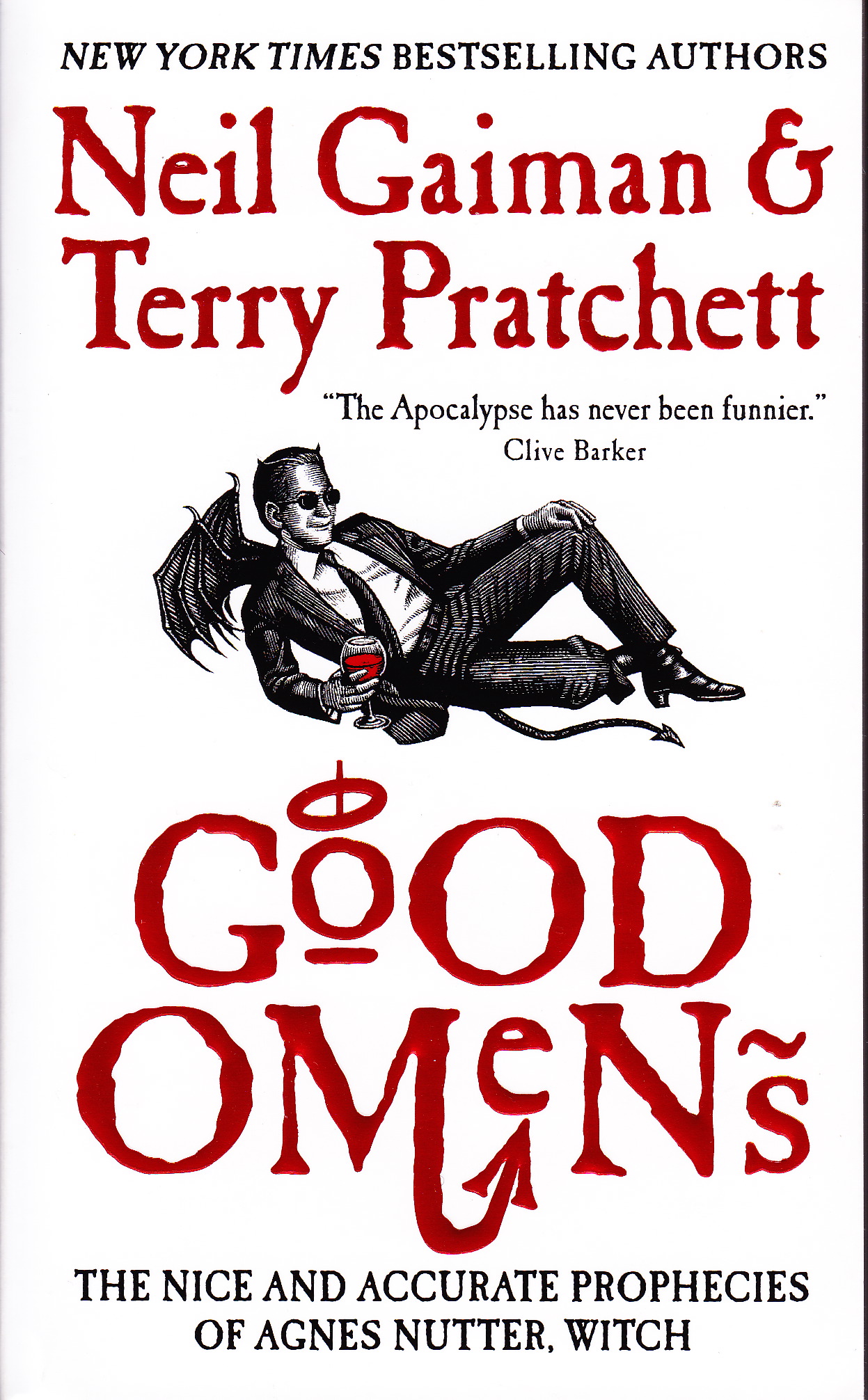
GoodOmensTo date I’ve read a fair number of Neil Gaiman novels. One of my students started me out on American Gods and I pursued his others on my own after that. I was a little unsure about Good Omens, however. I guess I’ve always been dubious about the quality of co-written books. Terry Pratchett, an accomplished novelist in his own right, paired up with Gaiman on this one, and it took the wisdom of another student, albeit recently graduated, to assure me that it was worth the effort. Given that it’s about the apocalypse, or perhaps an apocalypse that doesn’t quite take off, there seemed to be no reason not to give it a try. It is, at the end of the day, a charming book with colorful characters and an Antichrist who gets switched at birth and grows up in a normal household and herein lies the tale.

One of the most common religious themes in novels is the end of the world. The four horsemen of the apocalypse are one of the most striking literary tropes of the first century, if not of all time. The real question about the end of the world, it turns out, is—why can’t it be funny? For those who’ve pondered that, Good Omens is the book for you. It actually does help, however, if you’ve read the Bible. It adds to the cumulative effect. Subtitled The Nice and Accurate Prophecies of Agnes Nutter Witch, the book revolves around the certainty of the written word. Prophecy, however, just as in the book, only achieves verisimilitude in retrospect. The prophets didn’t always get it right, even in the Bible. Human choice often causes a breakdown in divine plans. In Good Omens, you’re pretty sure from the beginning that the world won’t end, but you’re not quite sure how it won’t end. The unfolding of the story eventually addresses how a prophecy can fail.

Free will, those who specialize in theology and philosophy will say, is among the more difficult of phenomena to pin down. Some predestinarians would say it’s all an illusion. We are programmed to do what we do. Ironically, some reductionistic materialists would say the same thing. Each of us, however, trudging through out days of toil and play, feels like we’re making our own decisions. True enough, sometimes circumstances decide for us, but if we were given the choice of good or evil, wouldn’t we approach it the way we approach just about everything else? Along the way, the demon Crowley asks a pointed, poignant question: why would God make people inquisitive and then forbid them some obvious, desirable fruit? Isn’t the conclusion foregone? Any writer today would know the outcome before the first sentence was finished. And so, free will is off and running. I hope that the fact that the world doesn’t end won’t be a spoiler for anyone, because I also hope that others will read Good Omens and learn a great deal about how demons can be good, angels can be naughty, and people will always just be people.

Future Shock

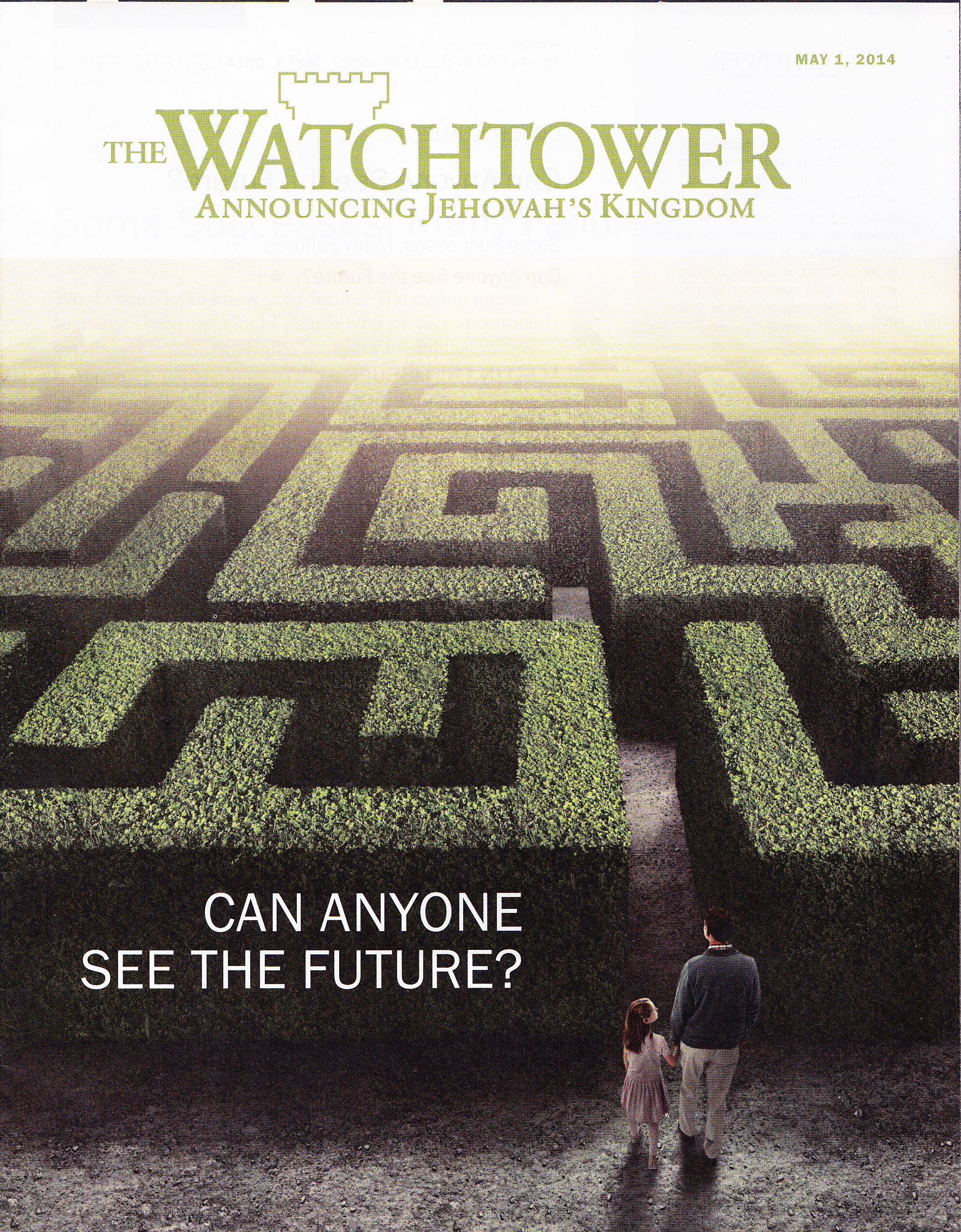
The Jehovah’s Witnesses are nothing if not persistent. Unemployed and huddling fearfully at home during the day a few years back, I answered the door and had a talk with the local missionaries. I explained that I was a biblical scholar and not open to be swayed to new religious sensibilities, but that didn’t stop them from trying to convince me otherwise. They were oh so polite, however, and sending them away seemed like the height of rudeness. The Witnesses have roots in my home territory, and I have a soft spot for religions originating in Pittsburgh. Despite the fact that I’ve had a day job now for about three years, they still routinely stop by and leave tracts behind. One of the most recent ran a headline “Can Anyone See the Future?”

JWatchtower

Of course the story inside quickly turns to prophecy and the age-old, if false, idea that biblical prophets were fortune tellers. Still, the popular conception among the public is just that: prophets see the future. In the Bible prophets are primarily social critics. They cry out against injustice, exploitation, and false religion (!). One thing they don’t do is see the future clearly. Isaiah had to be revised at least three times in the writing. Nevertheless, prophets are engaging figures. They are non-conformists who rail against a system that takes advantage of those who are helpless—not weak, but helpless. Many people are rendered helpless by society. One size can’t possibly fit all. And yet we keep the cover closed on those nattering prophets and pump our money into a capitalist engine that is fueled by human effort and spews the helpless out as exhaust. We could use a good prophet now and again.

The question about seeing the future, however, keeps coming back to me. It might have been a good talent to have some thirty years ago as I was pondering a college major and a career that would take me deep into the Bible. If I could see the future—renting an apartment for an extortionate amount of money for the privilege of living near a city where all my efforts would be poured out to help others make money off religion while asking people with the same degrees I have to write the books that I should be authoring—would I have taken this route? Or would I, as a local boy, have taken the warning of Charles Taze Russell and made my living through haberdashery. Is it any different than balderdashery? Would I have even opened the door? Only a prophet can tell.


Porcine Prognostication

Punxsutawney Phil phled his shadow this morning, leaving many despairing another six weeks of winter, which meteorology seems to dictate anyway. I used to tell my students that Phil is a most peculiar prophet, in that he is, presumably, neither Christian nor Jew, but rather of the rodent religion (whatever that may be). People pretend the little guy has powers beyond those of the average mammal when it comes to predicting vast, chaotic systems. If a groundhog flaps his eyelids in Pennsylvania, prepare for plows and shovels and more thermal underwear. Playing into this annual phenomenon is the provocative persistence of the idea that prophecy is prediction. As much as scholars attempt to expunge the idea that foretelling wasn’t what prophets were ever really about, the populace likely wouldn’t have paid them any attention, had the possibility not presented itself that these preachers knew something the rest of people didn’t.

Prophecy is a strange phenomenon. We claim that we would like to know the future, but I’m not sure that we really would. Knowing that we’ve set ourselves on many tracks that inevitably lead to tears, do we really want to know? After taking my daughter back to college, we sat in a fast-food place to grab a bite on the way home. It had been snowing again, as it will do in the winter, and the television in the corner was blaring on about another apocalyptic band of snow. A bearded and burly Pennsylvanian at the next table turned to me, attracted, I supposed by my own facial hair, and said, “What about this global warming?” I nodded politely, not being very burly myself, but I thought of the fact that global warming does mean more severe winters in some places and warmer conditions in others. It is marked, scientists predict, by erratic weather, not a constant sauna in those regions accustomed to snow.

Although a Pennsylvanian by birth, I have noticed that my ancestral New Jersey does not receive much snow. Until this year. We’ve had the white stuff on the ground for over two weeks in a row. Yes, it snows in winter, but not usually here. I shiver and think of global warming. It is a chilling thought. Punxsutawney Phil may live far enough inland not to have to worry about learning to swim, but the same can’t be said of the inhabitants of most of the major cities of this country. We know it is coming, but we turn a blind eye. Progress in the name of unbridled big business interests brighten a future otherwise a bit more gloomy than we might prefer. Phil ducks back into his burrow and the rest of us clutch our coats a little tighter around us. Prophecy is a mixed blessing indeed. We already know the outcome before the groundhog awakes.

An agnostic groundhog ponders the inevitable (photo credit: I. EIC)

An agnostic groundhog ponders the inevitable (photo credit: I. EIC)


Twist and Shout

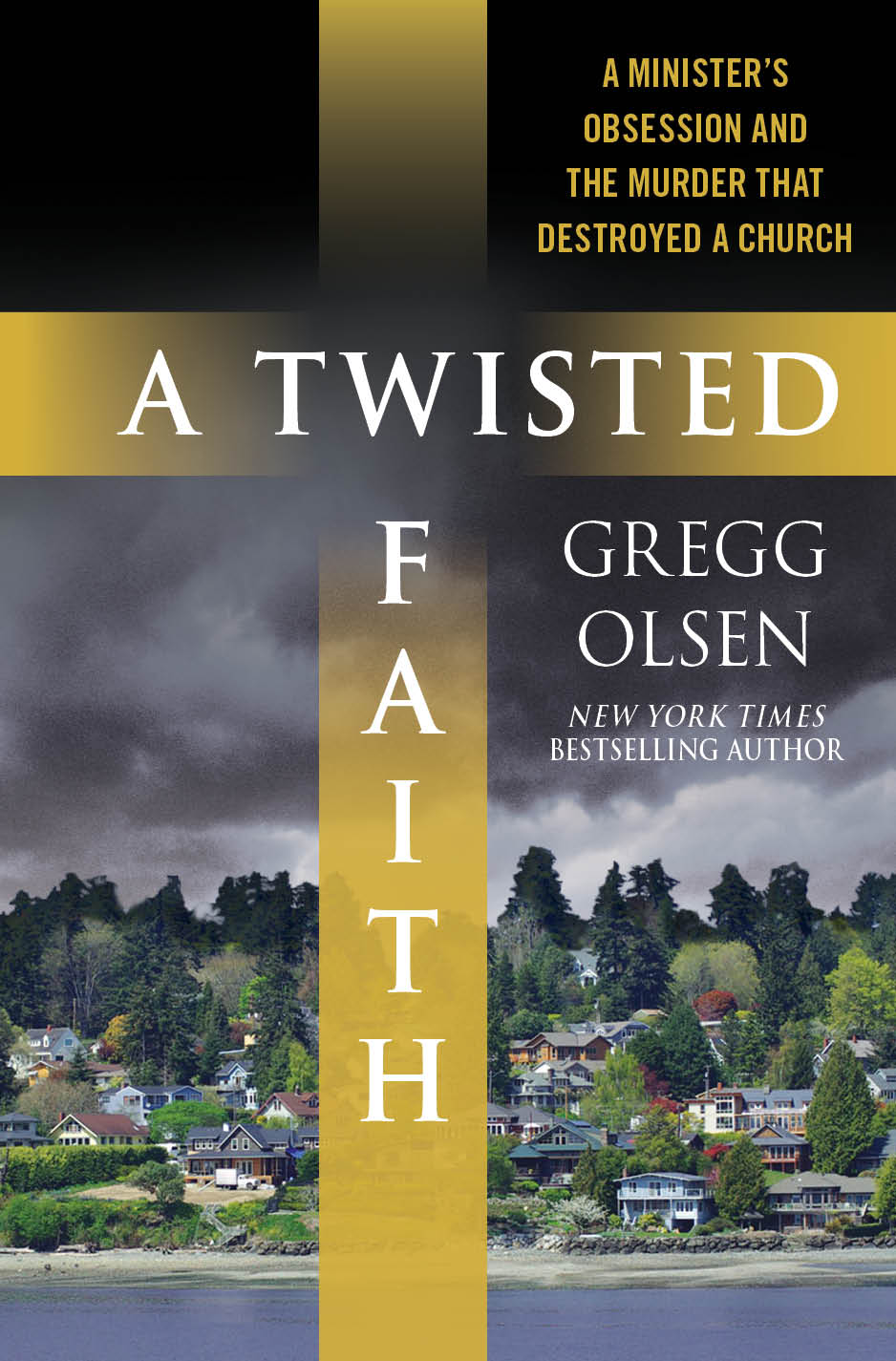
TwistedFaithTrue crime is not really my thing. I find regular life disturbing on a frequent basis, and reading about how someone willfully harmed another only seems to make my prognosis worse. When I saw that Gregg Olsen’s A Twisted Faith: A Minister’s Obsession and the Murder that Destroyed a Church took place in a number of places where various family members live (Poulsbo, Port Orchard, Seattle, Washington) I was drawn in. As the dark story began to unfold, at several points I almost put the book aside—this is a difficult account to read. Christ Community Church on Bremerton Island sounded a little too much like the Community Chapel in which I was reared. The power struggles, the self-righteousness, and the hidden lusts of those who live “clean lives,” all brought back painful memories. Nevertheless, I had to see how this sordid, almost salacious tale played out. Youth minister Nick Hacheney, to cut to the chase, murdered his wife and carried on affairs with at least four women in his church, including his murdered wife’s mother. Based on many personal interviews, Olsen digs deeply into the psychological trauma this one minister inflicted on the women he stalked, and revealed some of the neuroses of conservative religion.

I say “conservative religion” not to pick a fight, but because of the things both the women and men believed. After a conflict over whether to stay with the Assemblies of God denomination, Christ Community Church went independent when a new minister began seeking senior leadership over the congregation. So far that’s normal ecclesiastical politics. What made this so unbelievable is that many of the decisions were based on “prophecies” that self-proclaimed messengers of God presented and that clergy and people took at face value. Even when they blatantly failed to show any accuracy. There was never any questioning whether one received an authentic message or not. Some of these “prophecies” involved the deaths of congregation members, including the murdered Dawn Hacheney. Women with marriages in various states of decay, feeling sorry for the murderer (whom only one of them suspected) eventually gave in to his words “from God” that they were to have sex with him to help him get over his loss. The real pain was seeing the psychological manipulation he applied to his victims, causing them divine guilt if they refused.

In a community that readily accepts claims of direct messages from God, congregants are clearly sheep led to the slaughter. Most Christian denominations have mechanisms in place, no matter how faulty, to test such individual claims. Groups that trust their clergy to be honest all the time fail to calculate human weakness into the equation. It is no surprise at all when staunch, conservative clergy are caught violating their own rules (and congregants). Give them a blank check for signing God’s name to any statement and you’ve got a truly unholy writ. Many churches manage to avoid the most serious pitfalls most of the time. When one fails to discover the wolf in sheep’s wool, as happened on Bremerton Island at the end of the last century, true crime may be the mildest way to describe the results.


Lost Knowledge

While an actual apocalypse for many turkeys ensued on Thursday, Fox News announced that a second reference to the Mayan apocalypse has been “admitted” by Mexican authorities. So I guess the world will end next year after all. And it figures, I just finally got a full-time job. For some reason, for all of our modern technology and scientific knowledge, many people still fear ancient “prophecies.” This remains true after countless failed apocalypses, two of them just this year proposed by Harold Camping in the name of the Almighty. People who trust the science of their cell phones—which, from any trip to the airport or bus station proves, humans are incapable of surviving without—nevertheless fear the “lost knowledge” of the ancients who believed myths were the most parsimonious means of comprehending a cold and uncaring universe. Yes, I’ll trust my entire life, finances, travel plans, social calendar, to a plastic box barely the size of a credit card. But if the Mayans said the world was going to end… these are the Mayans, after all! The Mayans!

Never mind that we know little about this antique people; we have had predicted ends to the universe from disaffected visionaries and disgruntled prophets ever since the Zoroastrians suggested this might not go on forever. And now that two predictions appear to coincide, it looks like its time to sell some stocks, cash in some IRAs and party like it’s 1999. When 2000 came in with its baleful symmetry, as some saw it, with events two millennia earlier, not many were dissuaded from the concept that never emerges. Doesn’t the book of 2 Peter state that the universe is reserved for a fiery destruction? Perhaps the Mayans had access to Holy Writ?

The fact is that most cultures concoct origin myths, stories of beginnings. The way the mind works, it is almost a necessary corollary to construct myths of the end as well. And somehow we trust that arcane knowledge on such matters is more accurate than the scientific scenario that, given the limited longevity of any single species, no humans are likely to be present when old Sol balloons out to be a red giant. Far more spectacular to suggest some ancient sage or savage saw it coming and grow anxious with the waiting. Strangely, many people seem ready to discard all the progress, the monuments, the essence of our humanity for the sake of ancient predictions. 2013 does not seem so far away. Many of us are planning to be here, even if they find an entire library of Mayan predictions. Perhaps the truest prophecy of all is that we, as humans, make our own future no matter what other humans have said in the past.


Witches or Prophets?

Some things never change. My daughter’s English class has finished its Shakespeare unit and this year’s selection was MacBeth. I recall the play from my own high school days, perhaps one of the hidden attractors that eventually drew me to Scotland. Shakespeare’s use of Holinshed’s Chronicles, however, was news to me. Raphael Holinshed was a 16th century chronicler of world history and his work gave Shakespeare the outline of MacBeth. The passage from Holinshed that stood out, concerning the witches, reads: “But afterwards the common opinion was, that these women were either the weird sisters, that is (as ye would say) the goddesses of destinie, or else some nymphs or feiries, indued with knowledge of prophesie by their necromanticall science, bicause euerie thing came to passe as they had spoken” (page 269 of volume 5, Scotland).

Being in the midst of courses on both prophecy and mythology, this passage ties a number of popular concepts together. Clearly the clairvoyance of magical females is simply accepted, and the easy association with classical characters such as the Fates or nymphs is evident. This is a world of mythical literalism. The weird sisters are able to predict the future with their necromancy. In a more nuanced view of prophecy, the concept actually incorporates effective speaking rather than future predicting. If a prophet speaks the words of Yahweh, in the Bible, then those words must of necessity transpire. When the stated events take place, it looks like prediction. Here Holinshed suggests the source of such knowledge for the women was more suspect.

Few of the biblical prophets are female. It is almost as if clandestine knowledge possessed by a woman marked her as a necromancer while a man might legitimately wield esoteric knowledge. This double standard no doubt applied in biblical times, and has lasted in various forms to the present day. The male establishment fears the knowledgeable female. Privilege takes many forms, all of them greedy. In my case I must gladly acknowledge that I would not have learned of Holinshed’s Chronicles if it weren’t for my daughter, and I am pleased for the opportunity to expand my esoteric knowledge.


Beside Metallic Waters


My brother recently pointed out the story of Rev. John Van Sloten, a Canadian pastor who has written a book about how he’s come to see the gospel in the songs of Metallica. Yes, Metallica. Even the members of the 1980’s hard rock band found the association a little surprising. It all came about, it seems, through an open mind. The story is narrated in basic form on the Gibson guitar website. Young parishioners at Van Sloten’s church suggested he should listen to Metallica. Perhaps aware of the principally negative conservative Christian reaction to rock in general and hard rock in particular, the pastor says he ignored the advice. Then the minister was presented with Metallica tickets. A divine mix was in the works.

At the concert the pastor had a revelation: the issues wailed against by the band resonate well with the concerns of Christianity. In fact, some of the band’s concerns sound downright prophetic. The concept of prophecy today often revolves around a prediction of future events (à la Harry Potter). Prophecy in the Hebrew Bible far more often concerns social justice, speaking out against the oppressor. Metal bands, from their inception, were vehicles for protest. Disillusionment against a system that perpetuates unfairness either at a governmental or a cosmic level. When I sat down to listen to the lyrics of Black Sabbath for the first time, I was surprised how biblical many of them were (don’t tell Ozzy).

Many religious folks prejudge heavy metal as “satanic” and evil without even listening to it. I have always been struck by how much these groups frequently draw on bleak biblical images. Today we treat biblical characters as paragons of emulation. The Bible does many of its characters no such disservice. Prophets are to be heard, not emulated. We think of Isaiahs or Jeremiahs as pleasant supper guests who happen to have a divine word inside. In the Bible their actions often lead to recriminations, but their uncomfortable message is sound. I grew up in a tradition that discouraged heavy metal, as if something in the music were inherently evil. I applaud Rev. Van Sloten for approaching one of the formative bands of the genre with an open mind. Truth may be found in some very unlikely places.


Paranormal Prophets

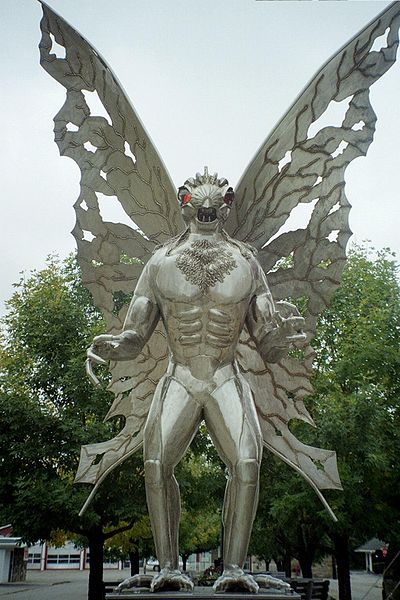
At the suggestion of a friend, I watched The Mothman Prophecies last night. Very loosely an updated version of the collapse of the Silver Bridge in Point Pleasant, West Virginia, the movie both satisfied my monster movie habit and my interest in things biblical. As a monster flick, it was satisfying in maintaining tension, never clearly showing the creature. As a representation of prophecy, it falls into the camp of Nostradamus.

Reports of the “mothman” began in 1966 and continued over the next year. It was reputedly seen near the Silver Bridge, the artery that connects Point Pleasant with Gallipolis, Ohio. After the tragic collapse of the bridge, resulting in nearly 50 deaths, the paranormal prophet was never seen in the area again. While in West Virginia last year, a friend introduced me to a couple from Point Pleasant who stopped into her store. They looked a little embarrassed when the mothman came up in conversation.

Point Pleasant's mothman statue from WikiCommons

Prophecy, in the vernacular, refers to predicting the future. Although some biblical prophets correctly intimate future happenings, mostly the image of prophets in the Bible is that of effective speakers. Prophets are individuals who participate in the reality of the world by adding their powerful words to the mix. If their words regard a future event – fairly rare in the Bible – they affect the outcome because their words have influence in the world. It is a supernatural view of the spoken (or written) word, to be sure, but it is a long cry from predictive ability. It is a matter of perspective.

Interestingly in the movie, Alexander Leek, the specialist on mothmen (apparently there are many), suggests that they see farther because they are higher in the sky than humans. In other words, it is indeed a matter of perspective. Certainly the mothman must go down as one of the oddest cryptids sighted. I give them no credence as prophets, but I will think twice before driving over bridges from now on.


Misappropriated Prophets

There seems to be a can of worms lying open on my desk, released by the comments yesterday’s post engendered. I thank all my readers and commentators. The issue most pointedly thrust among the worms appears to be that of prophecy. Teaching about prophecy constitutes a large part of my meager income. And since prophecy plays a large role in many Evangelical associations not only with the Deepwater Horizon disaster, but also Hurricane Katrina, 9/11 and just about any other major catastrophe, it is worth exposing. In the Bible prophecy is not about predicting the future.

Prophecy was a widespread phenomenon long before Israel appeared on the scene. One of the roles prophets shared in ancient times was the declaration of outcomes to momentous events. Unfortunately that aspect of their duty easily became equated with predicting the future. Its actual milieu, however, was that ancient people believed prophets to be “effective speakers.” When a prediction came true it was not because a prophet could “see the future,” but because the spoken word of the prophet participated in the reality of the world. The belief was that the effective word came from God/a god, and therefore would be true by definition.

Apocalyptic, the familiar literary form of Daniel and Revelation, is not prophecy. Zoroastrianism, the religion of ancient Persia, had influenced many ancient religions, including Judaism. Apocalyptic, like prophecy, has a predictive element. Like prophecy, however, apocalyptic has a different purpose. The books most heavily farmed for future predictions by Evangelicals, Daniel and Revelation, are both thinly veiled accounts of contemporary events of the authors’ own days. Daniel consoles Jews persecuted by Antiochus IV Epiphanes and Revelation consoles Christians persecuted by one of the early Roman emperors (the jury is still out on precisely which one). Neither book predicts the end of the world. Both, however, declare the comeuppance of the arrogant oppressor. It is here, perhaps, that the true relevance of the Bible speaks to the scars human beings inflict on their own planet and on each other.

sic semper tyrannis