Half-Way Through

Here’s a writing phenomenon.  Maybe it only happens to me (I am self-taught), but when I’m writing a book a strange thing happens.  When I’m doing my rewrites, and there are usually several, about halfway through I’ll have an epiphany.  Something I should’ve been doing from the beginning.  Then you’re left standing at a crossroads: should I go back to the beginning again now?  But still need to address a basic rewrite as well as the new approach in the second half, so should I just carry on and then start rewriting from the beginning, catching up with the second half?  That may sound like a trivial question, but I assure you it’s not.  You see, right now I have two books in a complete stage.  “Complete” here means done in draft form.  When I write a book it gets rewritten several times before I consider finding a publisher, but when an important point comes to you halfway through, you’re between worlds.

Now, I work alone.  I am part of a local writers’ group and I’m only now starting to get to know others who’re willing to talk about writing.  I know several writers who don’t talk about it.  They’re still friends, but for me, there are few topics I’d rather discuss.  That’s how I learn.  You see, I have no idea what’s normal.  Do other writers labor over multiple rewrites?  I know some do, but I suspect some don’t.  I know that when I write a short story sometimes the first version seems best to me, but try to get such a thing published.  No, you need to rewrite.  Polish.  Make it shine.  But what if one half is shinier than the other?  This is starting to be a regular occurrence.

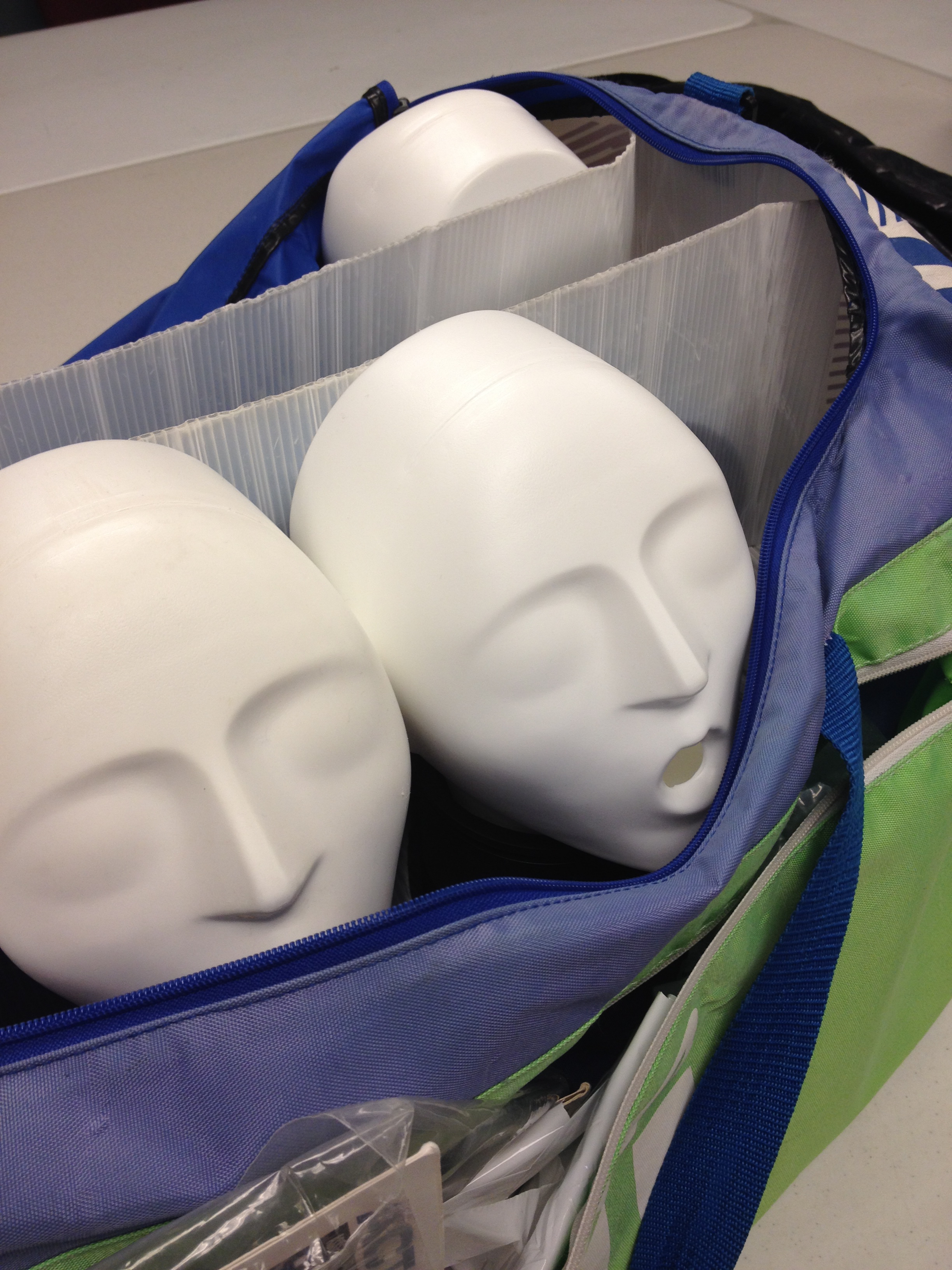
Inspiration is fickle.  That’s something we can all agree on.  But when you’ve been scrawling on a topic for weeks, or months, and then a realization dawns, you’ve just added yourself additional weeks or months of revision.  I’m sure a great deal of it is due to my own psychology.  Another part is due to writing under the constraint of a 9-2-5 job.  There are only so many productive hours in a day, and since mine come early they necessarily end when the work day begins.  I’ve tried writing after work but my brain and body feel like a CPR dummy when work’s through with me.  The next morning I start at it again, but the question is still should I finish this up with my new insight, or should I go back to the beginning?


Reading Habits

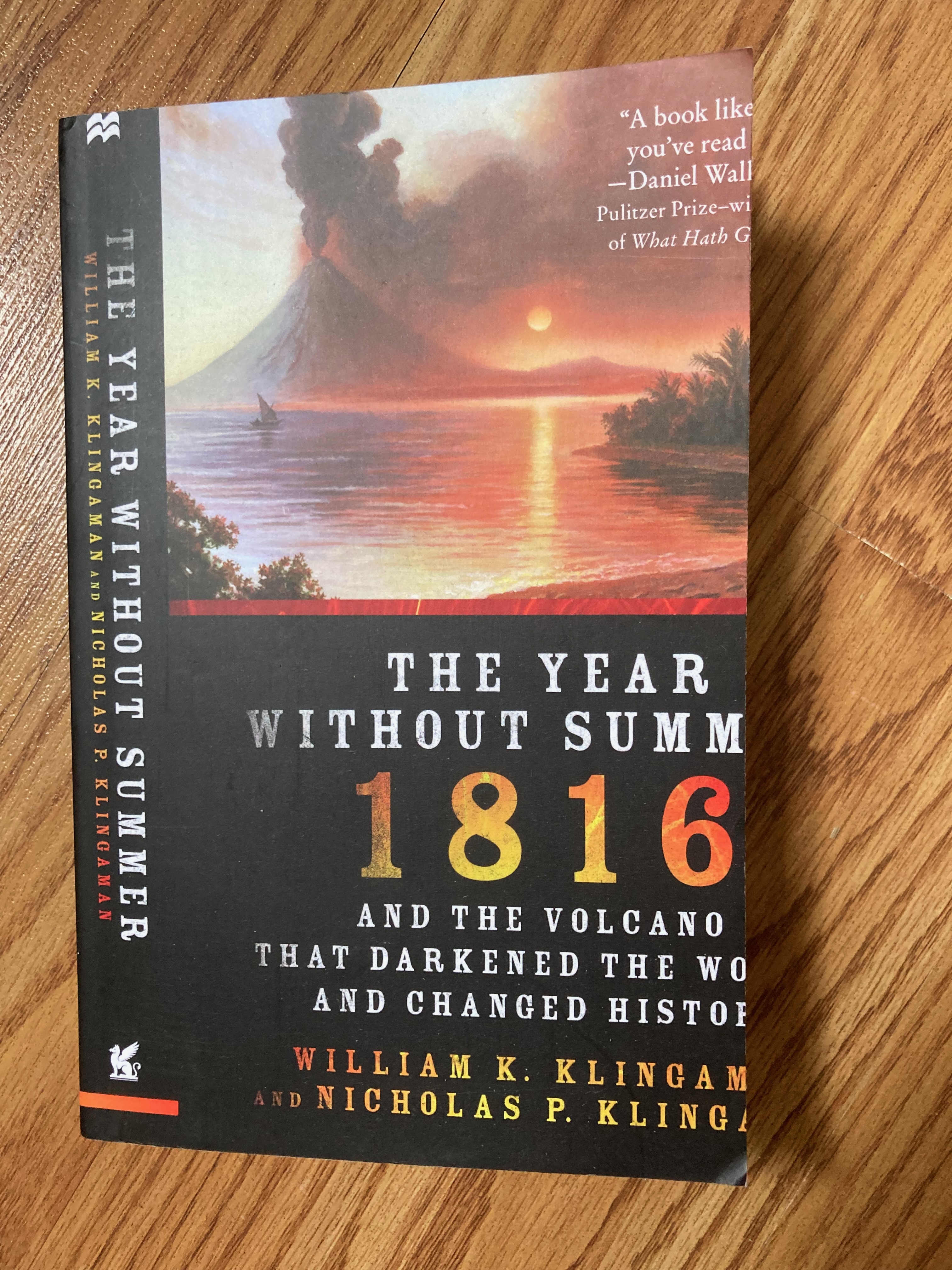
I keep track of my reading on both this blog and Goodreads.  It’s a little easier to follow the numbers on Goodreads, so I tend to use their stats.  One thing I’ve noticed in tracking my pacing this year is that academic books slow me down.  I desperately hope this isn’t endumbification, but I feel the need to consult the experts even as I try to write for a wider audience.  Having been trained as a professional researcher, it’s difficult to let go and just read the popular books—those with the style I need to learn to emulate.  But academic books take so long to get through.  Maybe it’s because they’re consciously designed not to be fast reading.  They take time and have concepts that require thought as your eyes consume the words.  They’re also the language I spoke for a good few decades.

My nonfiction reading pile constantly grows taller and I can’t seem to keep up.  Largely it’s because many of them are academic books.  I’m aware that in the real world, where books sell more than a couple hundred copies, that those who can’t claim “Ph.D.” after their names make the most successful writers.  A few of my colleagues have broken through to mainstream publishing, but they generally have university jobs, and tenure.  They don’t have a 9-2-5 schedule that holds their feet to the fire for the lion’s share of every day.  There are writers, I’m learning, who hold down jobs and write more successful books.  They generally aren’t academics, however.  Normal people with intense interests that they express beautifully in words.  Then they go to work.

I’m trying to break into that world.  I know that the publishers I’ve resorted to have been academic publishers.  They don’t really compete with the trade world, nor do they really even try.  Their’s is a business model adjusted for scale.  When you can’t sell in volume, you need to jack up the price.  But to have something intelligent to say about a subject, you have to read books.  I guess I need to learn to read non-academic non-fiction.  Kind of like I have to drink decaf when I have coffee (rarely) and have them add oat milk to make it a latte.  This is difficult for an old ex-academic like me.  I want to know how writers know what they do.  What are their sources and how deeply did they dig?  As I set my shovel aside I realize that I’ve begun to dig that academic hole yet again.


Being Written

Some books want to be written, no matter what major publishers have to say.  The truth is, being an author is more like being a radio receiver than a transmitter.  Books come to you, begging to be written.  Given our culture, we equate importance with money.  Tomes that earn the most are obviously the most important and erudite.  So the (capitalistic) wisdom goes.  We follow the lucre.  If you read this blog you’ve probably had an experience like this: you find a book that you’ve never heard of that captures your interest.  You read it, transfixed.  When you tell others, nobody seems to have heard of it.  I’d say a number of books I’ve blogged about fall into that category.  The “general reader” follows what the big five publishers suggest they should.  It becomes a feedback loop.

Academic presses—university presses and others that cater to either students or professors as their primary readerships—produce some fascinating books.  Often they’re priced a bit higher than we want to pay.  That’s because they don’t sell at the volume that a big five book does.  The higher the quantity the lower the unit cost, right?  Books that wanted to be written but either price themselves out of sales, or aren’t backed up by a team of marketers and publicists, may be some of the most interesting reading material out there.  You’d never know it, though.  From the point of view of an author, most of my books came begging to me.  I occasionally think of commercial potential because, well, if you’re going to put years of your leisure time into something, you’d like to get at least a little back.  And you’d be glad for feedback, or someone what wanted to ask you about what you’d been begged to write.

Sadly, we have tunnel vision.  It only sees the shining spots crowded with dollar signs.  And since others are willing to pay for it, we have to assume that it’s good.  I’m working on my next set of imploring projects praying to be written.  I can’t handle them all, being gainfully employed helping others who write books that want to be written.  We write them for each other.  I figure that if I’m receiving the signal somebody must be sending it.  And I have a difficult time turning down an idea that pleads with me.  And if someone unexpected picks one of our books up and gives us a like, we show that even receivers can smile.


Professionalism

We’re all tightly packed together here on the internet.  Social media is a fuzzy category and now includes such platforms as LinkedIn, which I think of mainly as a place to hang your shingle while looking for a job.  I chose, many years ago, to make myself available online.  This sometimes leads to a strange familiarity.  It isn’t unusual for me to have an author hopeful to contact me through my personal email or through LinkedIn, especially, to try to push their project.  (Such people have not read this blog deeply.)  One thing acquisitions editors crave most highly is professionalism.  Being accosted on LinkedIn, or in your personal email, is not the way to win an editor’s favor.  Some of us have lives outside of work.  Some of us write books of our own and don’t blast them out to all of our contacts on LinkedIn.  Professionalism.

It’s tough, I know.  You want to promote your book.  (I certainly do.)  It seems strange to say that blogging is old-fashioned, but it is.  (Things change so fast around here.)  But you could start a blog.  Or better yet, a podcast.  Or a YouTube channel.  You can blast all you want through X, Bluesky, Facebook, Tumblr, or Instagram.  I admit to being old fashioned, but LinkedIn is for professional networking, not doing quotidian business.  It may surprise some denizens of this web world that some publishers don’t permit official business through social media.  Email (I know, the dark ages!) is still the medium preferred.  Work email, not personal accounts.  Some authors (believe it or not) still try to snail mail things in.  Publishing is odd in that many people, and I count my younger self among them, suppose you can just do it without learning how it works.  Most editors, I suspect, would be glad to say a word or two about professionalism.

Photo by Ben Rosett on Unsplash

Professionalism is what makes a commute to the office on a crowded NYC subway train possible.  We all know what’s permissible in this crowded situation.  We know to wait until someone checks in at work before asking them about a project we have in mind.  (If you’re friends with an editor that’s different, but you need to get to know us first.)  When I started this blog I was “making a living” as an adjunct professor.  I was hanging out my shingle.  I also started a LinkedIn account.  Then I started writing nonfiction books again.  Since those days I’ve been trying to figure out the best way to promote them.  Professionally done, if at all possible.


Banning Books

For many years I’ve celebrated Banned Books Week by reading a banned book.  What with Republicans wanting only white, hetero, history-denying titles approved, I’m pretty sure that most books I read are banned somewhere.  Banned books, of course, see sales bumps and benefit the publisher and author.  So instead of reading a noted banned book, this year I’ll hang out my shingle here with but shallow hopes that it will be read.  I’m pretty sure, any agents out there, that at least one of my novels would be a banned book.  Maybe all of them.  You see, in my fiction I’m not the mild-mannered, inoffensive person who blogs here everyday for free.  There’s a reason that I keep my pen name secret.  I’m pretty sure that most people who know me would be surprised, if not shocked, by what appears in my fiction.

Writing, you see, is where we express the ideas in our heads.  I may seem to yak about everything on this blog, but in reality, I’m quite guarded.  Many of the horror movies I discuss, for instance, have ideas or scenes that I simply leave unaddressed.  I’m trying not to offend anyone here.  (A friend of mine who does publish fiction mentioned recently that a significant other in her family suggested that her writing wasn’t controversial enough to be picked up by publishers.  I think there could be something to that.)  While my mother was alive, I took special care that she wouldn’t discover any of my fiction.  Now that she’s gone these two years, I still protect her name with my own nom de guerre.  I really don’t want to hurt anybody.  I do, however, need to express myself.

Some of my fiction is horror.  Some is just plain weird.  The novels are well written, I think, and I’m open to editing.  (Agents, I am an editor—I know how this game works!)  As long as we’re stuck in a morass of banning books, why not look at a writer who’s more controversial than you might believe?  I’ve been writing daily for going on half-a-century now.  Think about that.  Think about the sheer number of controversial thoughts one might have in that amount of time!  Add graphomania to the recipe, with just a squeeze of talent and you’ve got banned books to last a lifetime!  I’m not sure any of the books I’m currently reading (five actively, at this point) formally appear on a  banned list.  But if you want to find one that almost certainly will be, well, my shingle’s out there if you care to take a look.

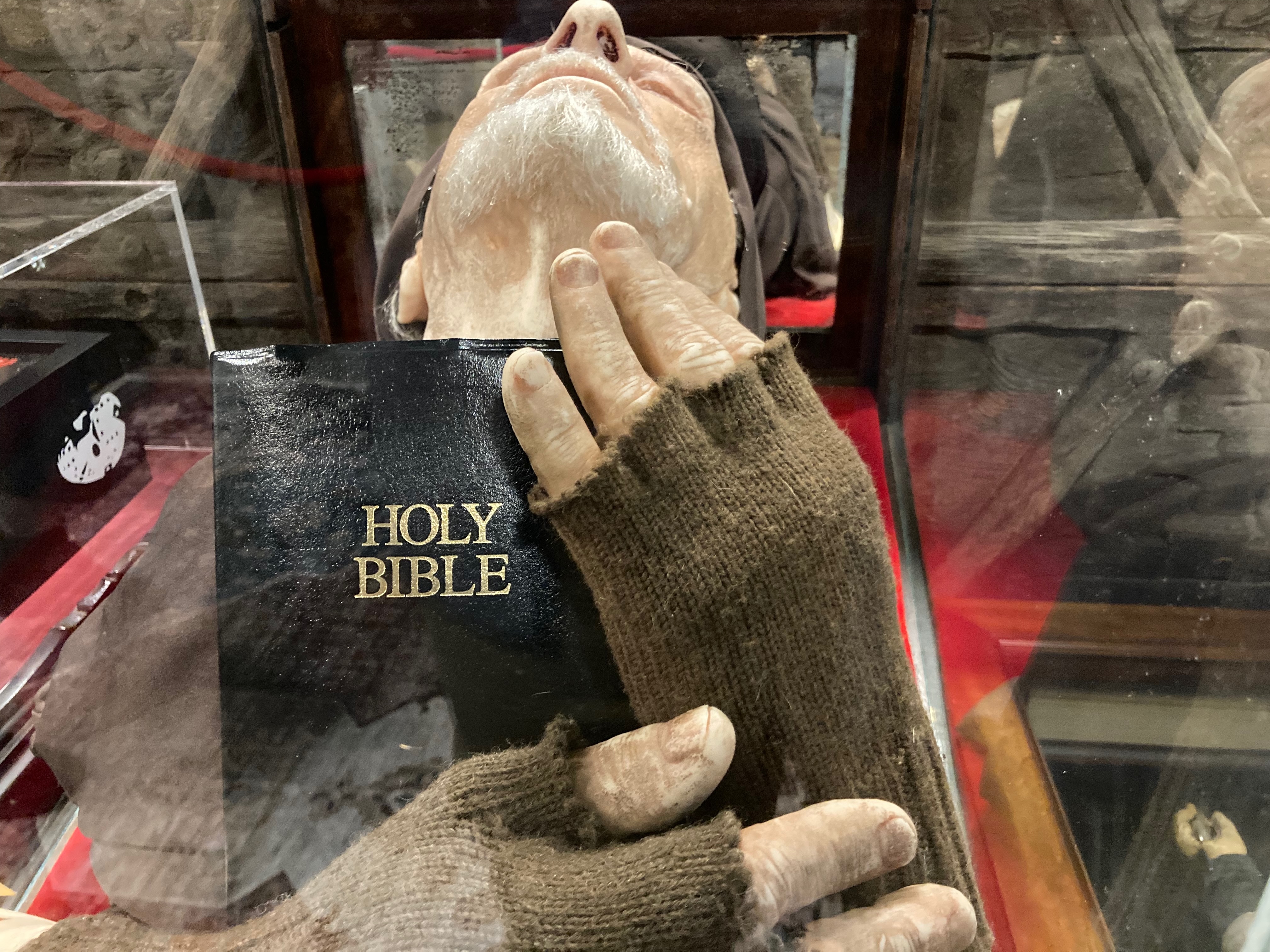
A banned book, in some districts

Fragments Etc.

I’ve never counted, but there’s well over a hundred of them.  And a notebook with at least a thousand more.  What have I got in such abundance?  Ideas for stories that remain unfinished.  I’m not exaggerating or inflating numbers, I assure you.  I’ve been writing short stories for a half-century now, many, no, most unfinished.  Thirty-three have been published.  I was reminded of this recently while reading a nonfiction book that suddenly gave me the ending for a story I’d started many months before.  Perhaps even a couple of years.  I started searching through my electronic files for it and couldn’t find it.  Why?  There were too many stories started with frustratingly short titles (my bad).  To find the culprit, I would need to open each one and remind myself what was inside.

A few months ago, I printed out copies of all eight of my unpublished novels.  I also printed out copies of all my published stories as well.  I never got around to the unfinished majority.  I have a feeling that if I printed them I’d find what I was looking for more easily.  This, even with the ease of electronic life, will be quite an undertaking.  I think it may be a necessary one.  Although I’m hardly well known—I’m an obscure, private intellectual, after all—I do have many fiction ideas.  The stories generally come to me with an impression.  The start of an intriguing tale, for instance, or the end of one.  I then begin writing and either write myself into a corner or I scribble until I realize that I don’t know what happens next.  The story sits, unfinished.  Now and again, however, the missing piece is found.  I try to find the story so I can complete it to send out for several rejections.  Such is the writing life.

Now, if I could do this for more than the paltry time allotted to personal pursuits, courtesy of capitalism, I’m confident that I’d have far more than thirty-something stories published.  At current count I have seventeen stories ready to send out to literary magazines, several of them already rejected a time or two.  Another twenty finished and nearly ready to send out.  And forty just finished, but requiring a bit of spit and polish.  And these aren’t the fragments.  Don’t get me started on the nearing 6,000 posts on this blog.  Is it any wonder I can’t find anything?  I grabbed my notebook of a thousand fragments and jotted a physical note of how that particular story ends, in case I ever find it again.


Ancient Asherah

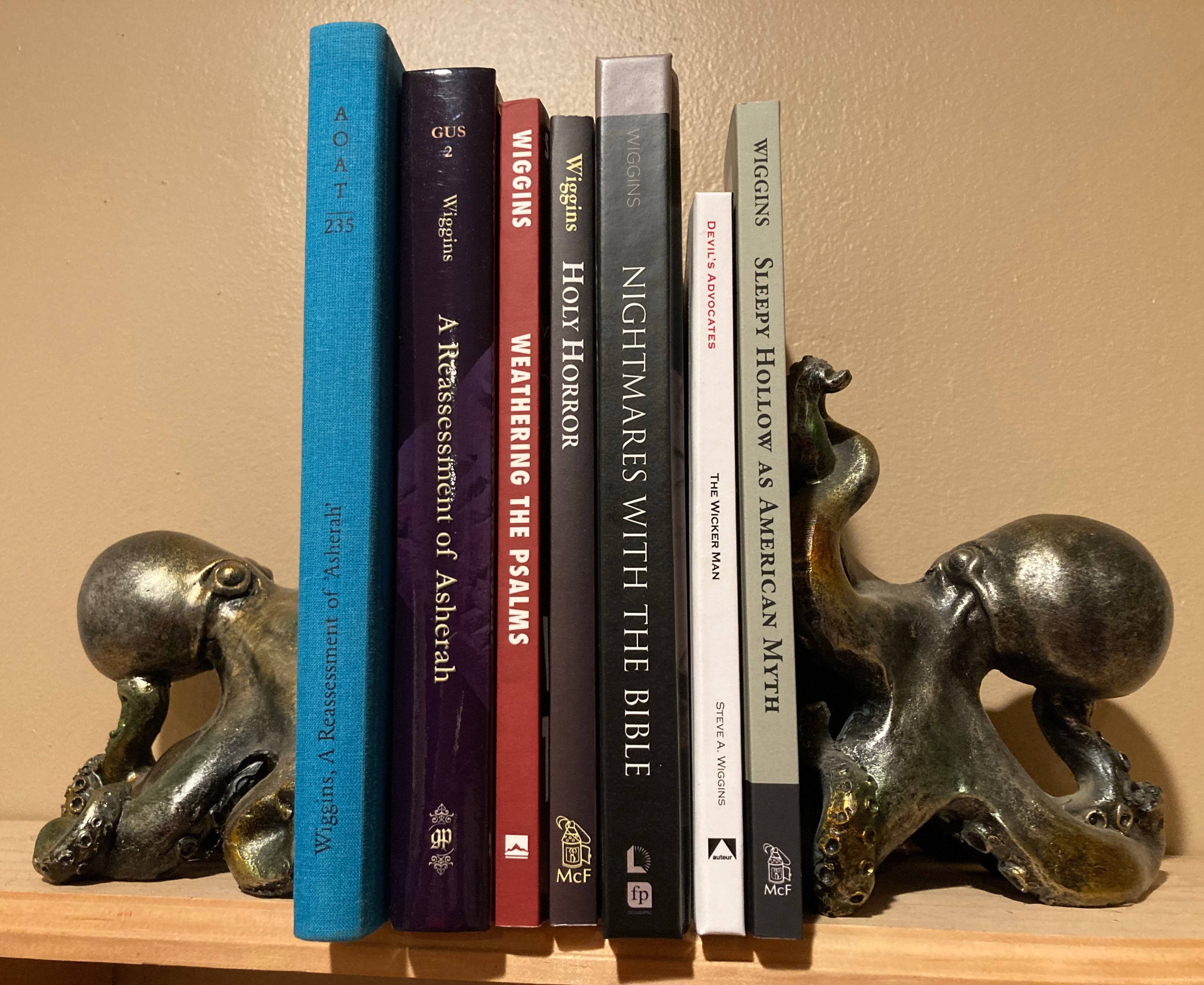
It seems like ancient history.  Actually, it is ancient history.  Ancient history with a new angle.  A Reassessment of Asherah is finally available in paperback.  Although my research has moved in a different direction, an author cares for all of their books and Asherah is my firstborn.  My doctoral dissertation originally, what separates it from many proposals I now see as an editor, is that it has a broad topic and some native sense of writing.  I have always eschewed technical jargon.  Academese obfuscates.  And is boring to read.  In any case, being young and naive, at the instruction of one of my doctoral supervisors, I sent it to the distinguished series AOAT (Alter Orient und Altes Testament), published in Germany.  It came out as an expensive hardcover and sold through its only print run.

Years later, evicted from academia, I found a foothold in publishing at Gorgias Press.  The owner of the press did something that even Eisenbrauns couldn’t, he talked what was then Ugarit Verlag into granting Gorgias the rights to republish my out-of-print book.  But he decided to do it in hardcover, so it was still too expensive for most potential readers.  Also, to make this a proper second edition, I added all of the articles I’d written about Asherah as well as the original text of the AOAT version.  If I recall correctly, it sold pretty well for Gorgias.  I moved on to other things.  Weathering the Psalms had been written before my career malfunction, but publishing that made me realize I could still write expensive books with low sales.

Four books further along, all on aspects of horror, a friend did the impossible.  He talked Gorgias Press into publishing a paperback of A Reassessment of Asherah, without my prompting.  For the first time in the thirty-plus years that the book has been available, it is now “individually priced.”  Please keep in mind, though, before emptying out your bank account, that “individually priced” here is still in the academic realm.  It seems the minimum price for books in this category is around $40, which is a bit steep for most of us.  But still, it is a new thing in the academic world.  I do hope that someone more persuasive than me might talk to Bloomsbury about a paperback of Nightmares with the Bible.  That has been, as far as I can tell, the poorest performing of all my expensive books.  It’s also the one that, I suspect, would have some individual readers.


Covid Books

There’s a fairly new phenomenon called “Covid books.”  No, I don’t mean books about Covid-19, but books affected by the virus.  (Not infected.)  Let me explain.  Many publishers, unaware of the menace, continued scheduling books through what became the pandemic.  You see, books take a long time to put together, and, interestingly, much of the work can be done remotely.  That meant that even as we locked down, books still published.  But in 2020, few people were interested in books on other subjects.  Children’s books and others intended for young readers did really well.  Online ordering made this possible.  Fiction for adults didn’t fare too badly.  What suffered was nonfiction on topics unrelated to the pandemic.  This is so much so that publishers designate as “covid books” those that underperformed and appeared in the early twenty-twenties.

To put a more personal spin on it, I published a covid book.  Nightmares with the Bible came out late in 2020.  Granted, the topic didn’t appeal to everyone, and the price was about $100 when people were wondering if their jobs would be there after this was all over.  (Is it over yet?  I still wear a mask in crowded places.)  The reason that I consider it a covid book is that although it has received more reviews than any of my other books, it has sold the worst of them all.  Less than its dollar amount.  The publisher, which was bought by another publisher, has no inclination to do it in paperback, so it will remain an obscure curiosity.  Interestingly, I found a Pinterest page that was a listing of unusual book titles and mine was there.  But it was a Covid book.

In the wider world, even in 2025 publishers discuss Covid books.  A promising author whose book appeared in the height of the pandemic may have sold down at my levels.  What with the gutting of government programs and agencies since January, it’s difficult to tell if we’ll ever get a pronouncement that the pandemic has ended.  Where two or three are gathered, I’ll be wearing a mask.  And I’ll likely be thinking of books of that lost generation.  Information that will never be processed.  Book publishing survived, despite being a nonessential business.  People still buy and read books.  Some day some bibliophile might write a book for other readers about the year that robbed us of interesting but ultimately irrelevant books.  There’ll be too many to list, of course.  But we have been given a lesson.  Let’s hope we continue to do our homework.


Word Words

So, in the old days, when books were paper, printers would rough out the typesetting on trays called galleys.  Prints from these plates would be sent out for review.  Naturally enough, they were called galley proofs, or simply “galleys.”  After those came back from an author marked up, corrections and further refinements, like footnotes, were incorporated.  Then page proofs, or second proofs, were produced and sent again.  The process took quite a bit of time and, as I’ve now been through six sets of proofs for my own books, I can attest it takes time on both ends.  Electronic submissions have made all of this easier.  You don’t have to physically typeset, much of the time, unless you merit offset printing—books in quantity.  You can often find uncorrected proofs in used bookstores, and sometimes indie bookstores will give them away.  That’s all fine and good.  The problem comes in with nomenclature.

These days proofs are sometimes still called “galleys” although they’re seldom made anymore.  If someone asks about galleys, it is quite possible they’re asking about page proofs.  It is fairly common in academic publishing for an author to see only one set of proofs—technically second proofs, but since no galleys were set, they could be called that.  Or just proofs.  Now, I have to remind myself of how this works, periodically.  It was much clearer when the old way was in force.  There were a couple reasons for doing galleys—one is that they were, comparatively, inexpensive to correct.  Another is that authors could catch mistakes before the very expensive correction at the second proof stage.  Even now, when I receive proofs I’m told that only corrections of errors should be made, not anything that will effect the flow, throwing off pagination.  This is especially important for books with an index, but it can also present problems for the table of contents.

Offset printing. Image credit: Sven Teschke, under GNU Free Documentation License, via Wikimedia Commons

The ToC, or table of contents, also leads to another bit of publisher lingo.  When something is outstanding and expected before long, many editors abbreviate it “TK” or “to come.”  Why?  “TC” is sometimes used to mean “ToC” or table of contents.  There are hundreds of thousands of words in the English language, yet we keep on bumping up against ambiguities, using our favorites over and again.  That’s a funny thing since publishers are purveyors of words.  None of my books have printed in the quantity that requires galleys.  In fact, academic books, despite costing a Franklin, are often pulped because they’re more expensive to warehouse than they are to sell.  This is always a hard lesson for an academic to learn.  The sense behind it is TK.


Writing, as We Know it

Times New Roman, I believe, is the font of this blog post.  I grew curious about how our fairly long-lasting Roman letters came to be in this form we use today.  The Romans, like the Greeks, tended to write in uncial form—what we call “upper case” because printers literally kept them in a case above the “lower case” or minuscule type.  Apparently the reason all caps faded from popularity wasn’t that people felt they were being shouted at all the time, but they took too long to write.  You’ve probably seen examples of medieval manuscripts where the letters are an odd mix between uncial and minuscule forms.  These eventually settled into what is called Roman half-uncial, a font that eventually favored minuscule to majuscule—a name for uncial that has very small, or no, ascenders (as in lower case b or d) or descenders (like lower case p and q).

As the power of the Roman Empire waned, a variety of scripts developed in different parts of Europe.  One that eventually came to have influence on the nascent Holy Roman Empire was scriptura Germanica, or the German script.  Under Charlemagne, the Holy Roman Emperor, the favored, and widespread form of writing Roman letters was carolingian minuscule.  This isn’t too difficult to read for modern people but it’s not the script we use.  Carolingian minuscule was eventually replaced by blackletter.  This heavy, Gothic-looking script isn’t always easy to read.  (It was used for German publications until 1941; I used to have an old German book written in blackletter.)  Keep in mind that during all this time there was no printing press in Europe; manuscripts were handwritten and read by few.  Literacy was rare.  Even so, the difficulty of reading blackletter eventually led writers to go back to carolingian minuscule to develop a new writing style, influenced by blackletter as well.

Blackletter. Image credit: Arpingstone, public domain, via Wikimedia Commons

The new writing style, called humanist minuscule, also known as “whiteletter,” is basically what we use today.  It comes in several different fonts, of course, but the basic idea of capital letters beginning sentences and proper nouns, but most letters being minuscules, has become the standard for most typefaces based on Latin letter-forms.  This history of writing, let alone individual scripts, is amazingly complex.  Today fonts have to be licensed to be used by publishers of print materials and techies can invent new fonts to license or sell.  I still have a soft spot for the “Roman” style, which is why this blog post, at least on my screen, is in Times New Roman. 


Editorializing

One of the realities of being an editor is that you have authors consistently ignore your advice and then ask you for solutions when what you predicted would happen does.  Oh, that sentence!  Let me put it this way: there used to be a time when simultaneous submission was frowned upon.  Even “forbidden” by some publishers.  The internet has changed all that.  Publishers who won’t accept submissions if anyone else is also considering them, lose out.  There are lots of publishers out there.  Many more than most people think.  Some of them are small and fly-by-night, but others are also ultra-specialized so they can hit their markets.  Even among academic publishers there are many to choose from.  If you submit to only one, wait to hear, and then get a “no,” you have to start all over again.  Or submit simultaneously.

Peer review can take a long time.  I mean a l-o-n-g time.  Especially since the pandemic, but even before, overwrought academics have trouble committing to adding one more thing to their plates.  If they do accept a review offer, the response is likely to be quite late; more often after the deadline than before.  I’ve been an anxious author waiting.  It’s the kind of limbo few actually enjoy.  It’s a reality, however.  If your book is about current events, or something trending, well, godspeed.  That’s a tough place to be.  Submitting to more than one publisher at a time gives you the leg up of not losing time if someone turns you down.  Some authors prefer a certain publisher and want to hold out for them.  Publishers get lots of proposals.  If I had so many proposals when I was in college I wouldn’t have been nearly so lonely.  Holding out is bad dating advice.

The best piece of editorial advice I can muster is to research publishers.  Academics are researchers by nature, but few take the time to research publishers.  There’s plenty of information out there.  When I couldn’t get an agent interested in Holy Horror, I turned to McFarland.  Why?  Because I’d familiarized myself with the kinds of books they publish and mine seemed a good fit for them.  Sure, there were more prestigious places to go, but I’m a bit too busy to bang my head against that wall all day.  Even a little bit of web searching on publishers can pay off.  Publishing is a business.  Never forget that.  If you only want to get your ideas out there, starting a website (which isn’t expensive) is probably a better way than getting a book published.  Writing books is great, and getting them published is incredibly validating.  But do yourself a favor, if your editor suggests a course of action to you, take it.


Being Perceived

The philosopher George Berkeley argued that to be is to be perceived.  This perspective goes by the name of immaterialism and I have to admit to being sometimes seduced by it.  The real question comes down to who counts as a perceiver.  In any case, as a book author there’s always a worry that the book sent to the publisher isn’t real until it appears in print.  I’m Berkeleyian enough to think that ebooks aren’t really perceived, and so I mean in print.  Until I see a copy of the book, I don’t really believe it exists.  This entire week I’ve been waiting.  Sleepy Hollow as American Myth was released on either Monday or Wednesday, depending on who you believe about such things, and my author copies have been on their way.  At last, the book exists!

In the publishing industry there are those who consider a book like a box of puzzle pieces.  They often refer to books as “content,” or “product.”  Something that can be divided up and sold piecemeal in electronic form.  A chapter at a time.  Never mind what the author was trying to do when s/he wrote the book.  Such people, it seems to me, should be forced to spend several years working on an integrated project only to see the producer of said product take it apart and sell insubstantial pieces of the whole.  It feels like being eviscerated.  Books are objects and those who love them form cultures.  I know there are people who read ebooks, and I don’t judge them for it—readers are readers and we need more of them!  But for me, book culture involves, well, books.

One of the greatest thrills a writer can know is opening that first box of their author copies of a book.  Many academic publishers are cutting down the numbers, to save money, of course.  McFarland, I’m happy to report, still provides ten, which used to be standard.  So before I start doling them out, I have, for the moment, ten copies of my sixth book.  I have only one copy of the second edition of A Reassessment of Asherah and two copies of Nightmares with the Bible.  They’re both too expensive for me to buy more.  (Income from writing books may bring images of Stephen King or J. K. Rowling to mind, but they’re household names because their situation is so exceptional.)  Right now, however, I’m bathing in the glow of knowing, at least at the moment, my latest book is being perceived.


Publish, Perish

Publish or perish has been around for quite a while and I feel for younger scholars who are trying to publish their collected essays as their second book.  Collected essays, in case you’re not familiar with dark academia, are generally what senior scholars do before they retire and they can’t be bothered to rewrite everything into a proper book.  Or maybe the topics are disparate and don’t easily fit together in one category.  When I was teaching the general rule was an article a year and a second book for tenure.  I was able to do this without a sabbatical, and with a heavy teaching load and administrative duties at Nashotah House.  It’s a lot of work.  My biggest challenge was coming up with ideas for new books.  Eventually I published my collected essays on Asherah in the second edition of my dissertation.

I’d written a 50-page article on Shapshu, the Ugaritic sun deity, that was intended to be my second book.  Then J. C. L. Gibson retired and I had to have something for his Festschrift.  There it went.   It was about that time that I started Weathering the Psalms.  That was my “tenure book.”  There was over a decade between that and Holy Horror, for a number of reasons.  The main one was that I was trying to cobble together a career between Gorgias Press and moonlighting as an adjunct at Rutgers University.  There was no time for research and publication.  Ironically, that only came after I gave up academia to enter the commercial world of publishing.  I see younger scholars now expected to produce that second book, and some of them go for the collected essays approach.  I understand.

Back when I was applying for first jobs—and the scene was already very tight, I assure you, despite promises just a few years earlier—I applied for everything.  One search committee chair wrote a scolding letter saying I wasn’t senior enough to apply.  By the end of his dressing down, he concluded with something along the lines of “unless you’re applying because there are so few positions, in which case it’s understandable.”  He was right.  So few jobs and so much student debt!  I landed at Nashotah and began cranking out the articles.  In a moment of weakness I offered to write some further academic treatments after my horror movie books appeared.  They don’t do anything for my career, of course.  And they take away time from popular writing practice.  Who knows?  Maybe some day I’ll gather them into a book.  Then again, maybe I’ll find myself growing younger too.


More Writing

I keep a list.  It includes everything that I’ve published.  It’s not on my CV since I keep my fiction pretty close to my vest.  The other day I stumbled across another electronic list I’d made some time ago of the unpublished books I’d written.  Most were fiction but at least two were non, and so I decided that I should probably print out copies of those I still had.  As I’ve probably written elsewhere, I started my first novel as a teenager.  I never finished it, but I still remember it pretty well.  Then I started another, also unfinished.  After my wife and I got engaged and before we moved to Scotland, I’d moved to Ann Arbor to be in her city.  Ann Arbor, like most university towns, has many overqualified people looking for work and I ended up doing secretarial support for companies that really had nothing for me to do quite a bit of the time.  I wrote my first full novel during dull times on the job.

My writing was pretty focused in Edinburgh.  My first published book was, naturally, my dissertation.  I started writing fiction again when I was hired by Nashotah House, but that was tempered by academic articles and my second book.  An academic life, it seems, doesn’t leave a ton of time for writing.  What really surprised me about my list was what happened after Nashotah.  In the years since then I’ve completed ten unpublished books.  Since my ouster from academia I’ve published five.  I honestly don’t know how many short stories I’ve finished, but I have published thirty-three.  What really worries me is that some of these only exist in tenuous electronic form.  I guess I trust the internet enough to preserve these blog posts; with over 5,700 of them I’d be running out of space.

I see a trip to buy some paper in my future.  For my peace of mind I need to make sure all of this is printed out.  My organizational scheme (which is perhaps not unusual for those with my condition) is: I know which pile I put it in.  Organizing it for others, assuming anybody else is interested, might not be a bad idea.  I know that if I make my way to the attic and begin looking through my personal slush pile of manuscripts I’ll find even more that I’ve forgotten.  That’s why I started keeping a list.  Someday I’ll have time to finish it, I hope.


Mass Market

The mass market paperback.  This may very well be one of the best symbols of my younger years.  One of the largest distributors of mass market paperbacks (Readerlink) has announced that it will no longer distribute them.  It seems that the writing, instead of in readers’ hands, is on the wall.  Mass market paperbacks are the least expensive formats of books to buy.  Publishers have increasingly been tending to push trade size (about 6-by-9 inches)—they can charge more for them.  They don’t fit easily in your pocket, however, and well, they cost more.  Often, as someone who reads in public, I find myself wishing more literary fiction was still produced in mass market form.  Only the best selling authors ever make it down to that size.  I miss being able to stick a book in my pocket.  

The mass market paperback’s story began with railroad books, once innovated by my erstwhile employer, Routledge.  The form we recognize today only really took off in 1935.  When I was growing up, I considered all other formats somehow too big.  My book collection and reading habits began with mass market size.  When we moved to our house a few years back, I repurposed an old dresser as a bookshelf.  The top drawer slots were just tall enough for mass market books.  I discovered that I really didn’t have enough of them to fill that shelf.  Books have grown bigger.  Now, working in publishing I realize profit margins are thin in this industry.  Many publishers need the big sellers to help make up for disappointing sales of other titles.  (You have to have thick skin to be an author, I know from experience.)  They need to stay solvent.

But still, this feels like the end of an era.  Books in this format have been around really only less than a century.  Literacy—reading for pleasure—among the masses hasn’t been around much longer.  Books were expensive and were afforded by the elite, then cheaper forms and formats became available.  The electronic revolution has made much of life more convenient but some of us miss the challenge of having to fold a road map and never really knowing, for sure, where we are.  We’re also the ones who likely have a book in the car.  On the occasions when I don’t, I often regret it.  And one of the ways to encourage people to take books with them is to make them of a size that would sell thousands.  So many, in fact, that they would be given the title “mass market.”