Proofing Yourself

Some publishers give you advance warning.  Many do not.  As a struggling writer, after I submit one manuscript I move on to the next project, knowing proofs will eventually come.  The thing is, I’m obsessive.  When I’m in the middle of a project I can think of little else, thoughts of it leaking into other activities throughout the day.  I’m in the middle of one such project, as I have been for at least three months now.  Then the proofs came.  If you write books you know that proofs always come with deadlines.  You need to drop everything and prioritize them.  I read many academic books with tons of errors, and I think I know why.  If proofs come at an inopportune time, you read them as other required activities (I’m looking at you, 9-2-5) permit.  For me, it’s difficult to let go of my present project.  My current fascination.

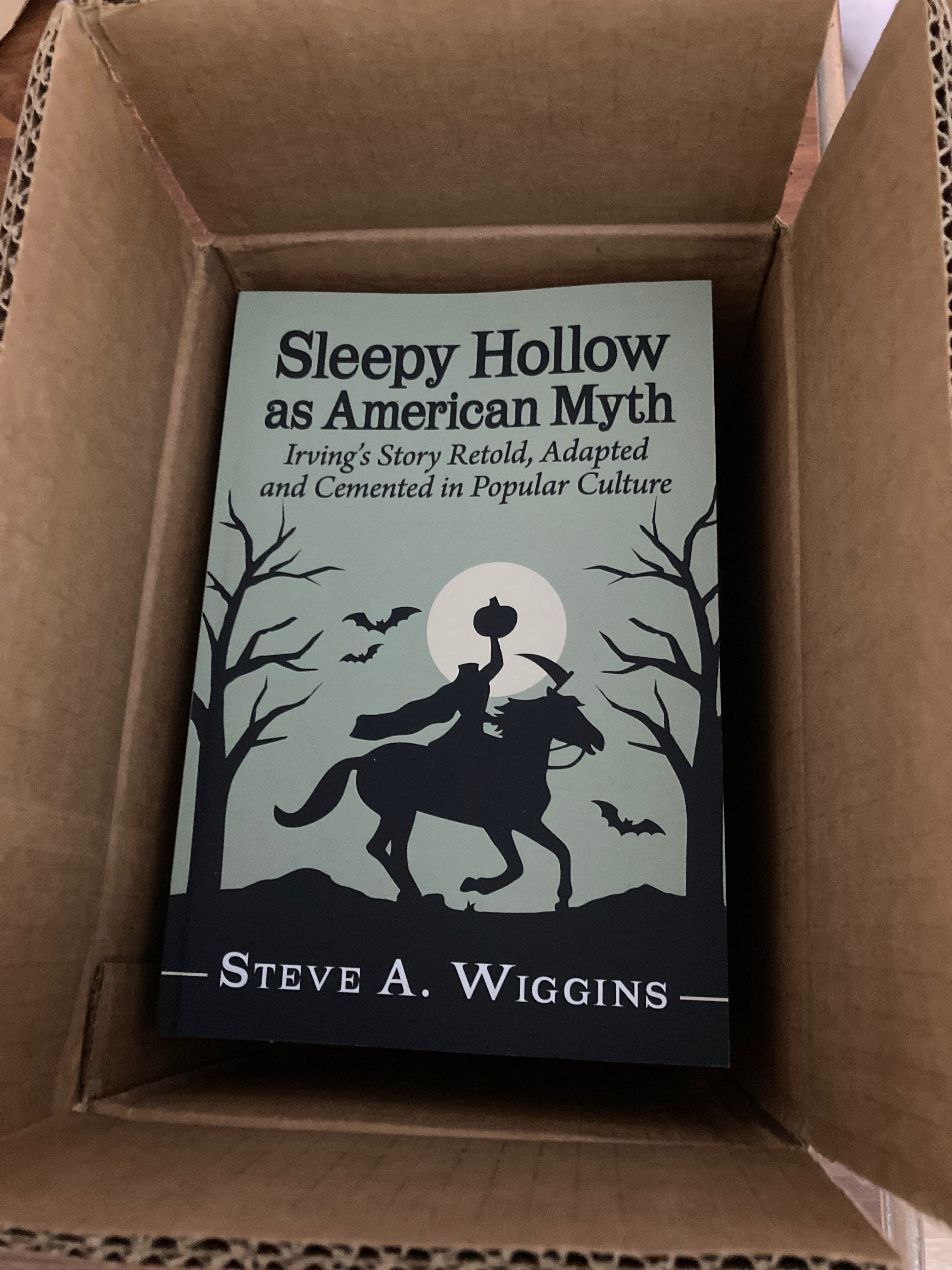
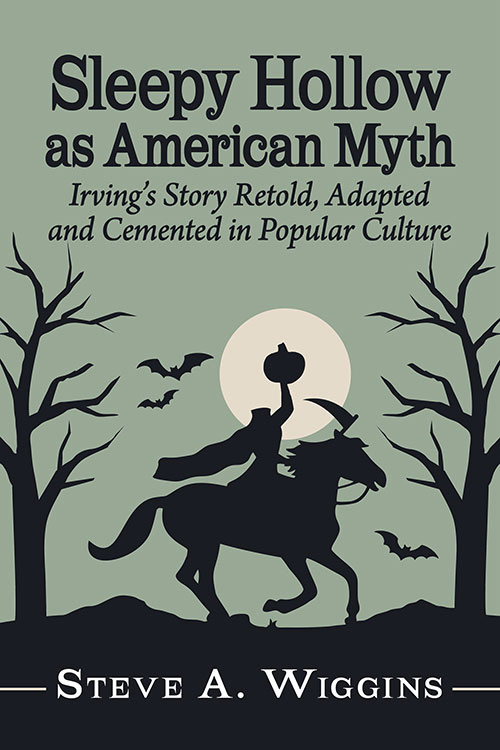
The proofs for Sleepy Hollow as American Myth arrived yesterday.  I’m excited for this book.  I have hopes of reaching out to local magazines and pitching stories about the Legend this autumn.  But I’m red hot into a new project.  My mind is of an age where there’s no guarantee that I’ll remember precisely what I was thinking if I lay aside my present project for a week to read the proofs.  Indeed, the last two weekends have been so busy with other things that I haven’t had time to watch any horror movies at all.  Just yesterday I awoke at 4 a.m. feeling hopelessly behind already, a feeling that lasted all day.  Then at 4 p.m. the proofs arrived. ( For context, 4 a.m. is late for me.  I’ve been waking up later due to that pointless ritual of annual time changes which, like everything else, the government can’t seem to get right.  In any case, proofs trump all.)

My time is extremely regimented.  I had to drop all committee work at our local faith community because the meetings were all in the evening, scheduled for after when I’d normally be asleep.  I wake early to write and read before the snowplow of the 9-2-5 throws me off the road for another day.  Everyone who talks to me feels that they don’t have time for what’s important any more.  The proofs are here and I’ll get them back by the deadline.  I’ve never been late once told when they have to be in.  My accountant tells me that anything that leads to royalties, no matter how small, counts as a second job.  I hope this one sells well enough to make it feel like that.  In the meantime, please don’t come knocking because I’ll pretend I’m not at home.


In Praise of Paper

I write quite a lot.  I’ve done so for decades.  As I’ve tried to carve out a writer’s life for myself I noticed a few things.  I’ll start a story or novel and put it aside.  Sometimes for a decade or more, then come back to it.  I recently found what looks to be a promising novel that I began writing, by hand, back in the last century.  As electronics forced themselves more and more into my life, I began writing it on my computer.  I must’ve picked this story up a few years back because I clearly began revising it, but I ran into a problem.  The program in which I’d written it—Microsoft Word—was no longer supported by Apple products.  I eventually found a workaround and was able to extract a Rich Text Format from files that my computer told me were illegible.  If you want illegible, I felt like telling it, go back to the original hand-written chapters!

I dusted this off (virtually) belatedly, and started working again.  Then I reached chapter four.  That’s where I’d stopped my most recent revision.  Then I discovered why.  Near the end of the chapter were two paragraphs full of question marks with an occasional word scattered in.  A part of the Word file that the RTF couldn’t read.  Frustrated and heartbroken—there’s no way I can remember what this said some thirty years after it was initially written—I simply stopped.  This time I went to the attic and found the hand-written manuscript.  I went to the offending chapter only to find that the corrupted passage was missing.  It was what we used to call a “keyboard composition” and it was eaten by the equivalent of electronic moths.

Photo by Everyday basics on Unsplash

Now, I’m no techie, but I just don’t understand why a word processing file can no longer be read by the program in which it was written.  Publishers urge us to ebooks but how many times in my life have I seen a new system for preserving electronic files fold, with the loss of all the data?  It’s not just a few.  And they’re asking us to make literature disposable.  If I have a book on my shelf and I need to look up a passage, I can do so.  Even if I bought the book half a century ago and even if the book had been printed a century before that.  I’m aware of the irony that this blog is electronic—I used to print out all of the posts—and I have the feeling that my work is being sacrificed to that void we call electronic publication.  That’s why I keep the handwritten manuscripts in my attic.


Writing Academic

One of the things that Stephen King detests (or at least detested back in the seventies) was academic literary criticism.  Perhaps you’re more normal than King or I, but if you read such things you find yourself immediately sucked into a world where the writer seems determined to demonstrate their erudition by splicing together words that shouldn’t really sleep together and then throws theory at you until you fall off the cliff.  It can be a frustrating experience for the reader, even as the writer is granted tenure for it.  One of these days I’ll learn my lesson.  Buying books by academics is dicey prospect.  I’m drawn in by the ideas, and the early pages, then I’m soon in the deep end remembering that I never learned to swim.

Is it really fair, I wonder, to begin a book—the first one or two pages impossibly engaging—then start winging ponderous, theory-laden words at the reader?  Your publisher paid for an attractive, inviting design and the reader, lured like a child to a candy store, thinks this will be sweet.  Then the sugar coating wears off and you’re faced with another 253 pages of clawing at words you recognize, hoping to make some sense out of what seemed, and still is, an engaging idea.  This has happened to me multiple times.  I live between worlds.  Even when I was an academic, however, I eschewed theory-heavy language.  I had nothing to prove, other than the point of my article.  And to prove a point, it seemed to me, people have to understand what you’re trying to say.

Higher education is in crisis mode.  Among the various fields you can study, the humanities are under especial scrutiny.  Have you read a book by an English professor lately (present company excepted!)?  Although their title is “English” you can be left wondering what language it actually is that they’re writing.  And they are capable of plain speaking.  Those first two pages demonstrate that.  They are capable, but are they willing?  I begin to understand Mr. King’s reservations.  I’ve run into books even in the field in which I have a doctorate that I can’t understand.  I find myself tentatively cracking open the Oxford English Dictionary to see if perhaps I’ve misunderstood the connotations of that word for my entire life.  I don’t mind a challenging read now and again.  At the same time, I mourn the loss of something beautiful when I can’t make out what the author seems to be saying.  Perhaps such books should come with warning labels.  I suspect Stephen King would have a good turn of phrase for what such a label should say.


Academic Publishing

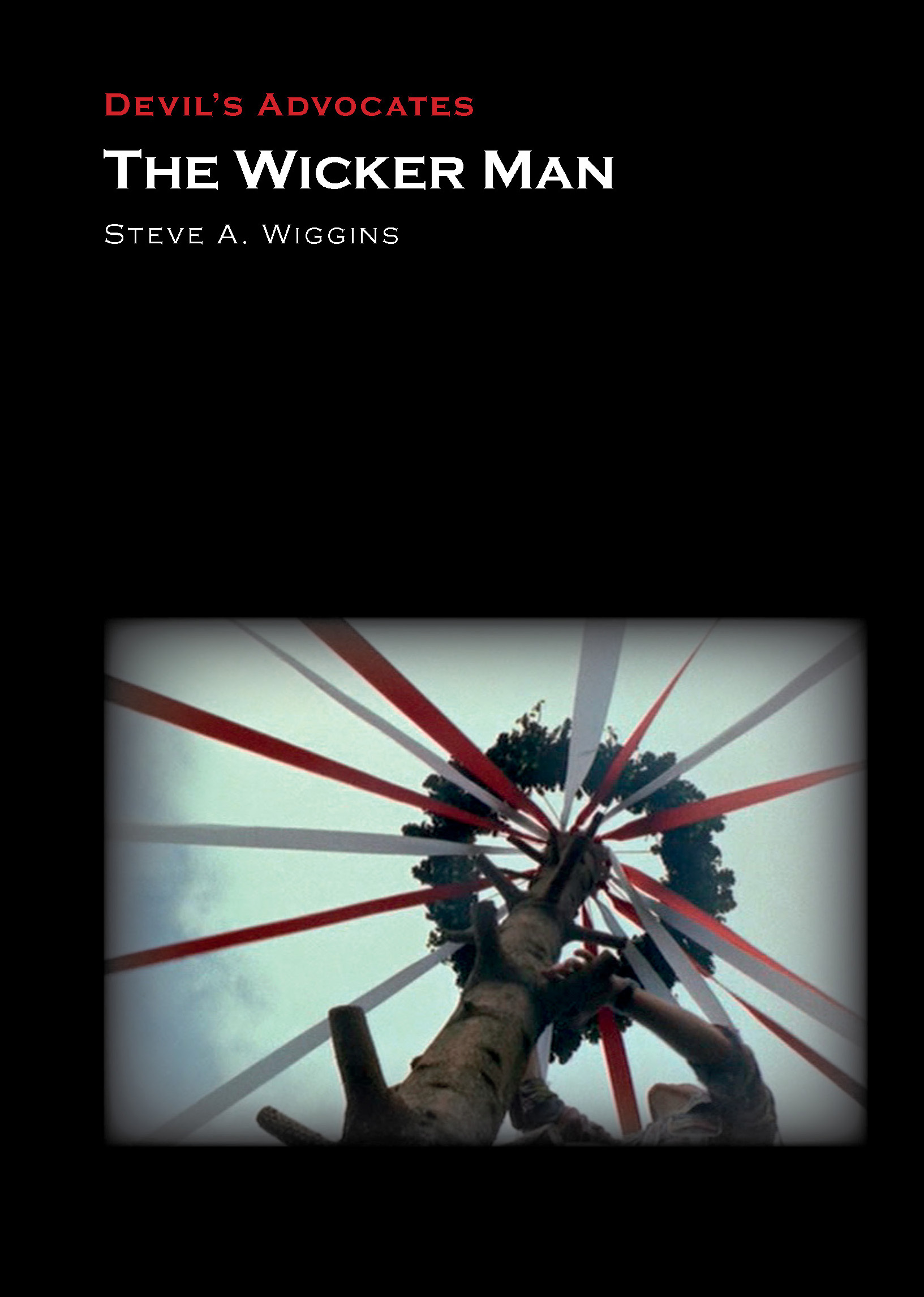
I had lunch with a friend a couple months back.  He is one of the few people who’s read The Wicker Man (the Devil’s Advocate version).  Not many reviews appeared and no royalties at all have yet followed its publication.  The funny thing is, when I search for reviews I notice that the book is “for sale” on far more websites than copies actually sold (I’m assuming).  You see, one of the best-kept secrets in publishing (both trade and academic) is the number of copies sold.  Publishers are terrified of poachers after their authors, and don’t advertise actual sales figures.  For an author only the royalty statements reveal just how many (or few) copies ever made it to the hands of potential readers.  We’re all adults here; we know that not every book purchased is read.  I do wonder if there has been any interest in this little book at all.

My friend actually went and watched the movie because of my modest little book.  The film The Wicker Man is widely known in certain circles, but it is still a movie with a cult following.  Horror fans know it, of course, with some declaring loudly that it’s not horror.  It gets referenced all the time in more mainstream media.  I occasionally read quirky little books like Your Guide to Not Getting Murdered in a Quaint English Village.  I wasn’t surprised to see The Wicker Man (the movie) referenced there.  As I discuss in the book, it’s even the subject of a Radiohead video for their song “Burn the Witch.”  Beyond a few academics, however, nobody’s really interested.

My friend suggested a topic for a new book for me to write.  I didn’t have the heart to tell him that, barring a teaching post coming my way, I’ve given up writing books for academic presses.  I’m pleased McFarland accepted Sleepy Hollow as American Myth, but the crude cost-benefit analysis that I do tells me writing books for academic presses, without library access, is always a money-losing venture.  Remember those old Guiness Book of World Records paperbacks?  I recall seeing, as a child, the least successful author listed.  Of course I don’t remember his name.  I now know that at least that record hasn’t been broken.  Not officially, but when books cost so much to write… Academic publishers are facing hard times but I don’t see the wisdom in pricing your books so that nobody can afford them, just to scrape in a few university library sales.  Not to sound as mercenary as a Hessian, but what’s in it for me?  Certainly not tenure or groundskeeper Willie’s retirement grease.  I’m not paid like a professor. Right now, though, I’m wondering if maybe I’ve broken that record after all.


Publishing Deportment

I don’t know if anybody reads this blog for publishing advice (editors are easily edited out, I know!).  But still, here goes.  It pays, in many ways, to research your targeted publisher.  And no matter which publisher you decide to approach, do it professionally.  “Friending” an editor on social media and then asking her/him to consider your book on said media is not professional.  Many publishers don’t allow any kind of business to take place through social media.  Be smart about it—go to a publisher’s website and follow their instructions.  Or email an editor.  At their work email.  Again, many publishers do not allow business to be conducted through private emails.  I may be an outlier editor for trying to build a social platform, but if you want to talk business, please use my work address.

More books are being published now than ever before.  Even small presses are closing submission windows because too many people keep trying to get published.  As someone who’s published a few books, I would urge you to ask yourself: why do I want to publish this?  Is it just because you wrote it?  Then look for a press that publishes that kind of thing.  Be prepared to face some frustration, but homework is never easy.  Is it because you think publishing a book will lead to fame?  Adjust your frame of reference.  The vast majority of authors are, and remain, obscure.  It is possible to make some money in publishing, but most of the time it’s not very much.  If it’s money you’re after, you need to get an agent.  It might seem as difficult to get an agent as it is to get published.  That should tell you something about the possibility of making money from books.

I’m no publishing guru.  Editing’s my day job.  One thing I’ve learned, however, is that publishers like to see that you’ve taken their guidelines seriously.  A quick social media introduction isn’t the same thing as an email that shows someone at least looked you up at work.  And most publishers have descriptions of what they want to receive on their websites.  This applies both to fiction and non.  I get it.  I remember being a kid in high school dreading all that homework—all those books I’d have to haul home day after day.  But that’s the tried and true way to learn something new.  And if you want to get published you do need to learn how to do it.  And just like in high school, deportment counts.


Personal Publishing

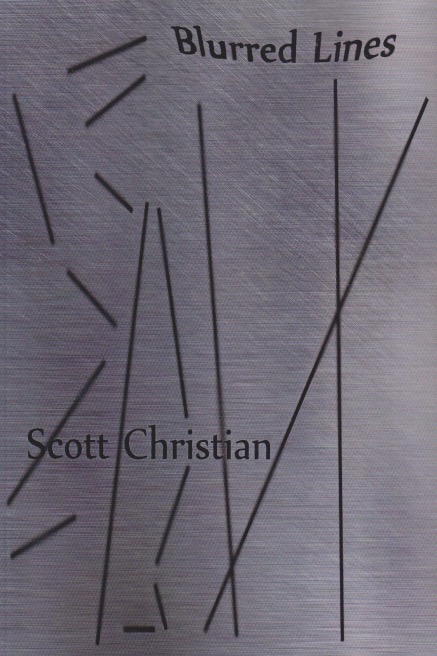
I recently joined the Greater Lehigh Valley Writers Group.  I haven’t really met any other members yet, although I know one from another local community.  By my reckoning, this is the fourth writers’ group I’ve joined and I do hope it leads to some friendships.  I like talking about writing.  I read Blurred Lines by Scott Christian because he’s a person I recently met and he kindly gave me a copy.  A collection of poems and stories, it’s a small book but a deeply personal one.  I guess that’s one reason that I like talking about writing with other people—it is deeply revealing.  There are those who write as a job, and there are those who write because they must.  This book falls into the latter category.  Some of us are compelled to write down what we experience, whether it be in poetry, fiction, or fact.

Self-publishing can be a way of expressing what the publishing industry suppresses.  I once told a group that it’s a little disturbing how much power publishers have in determining what people can read.  I write “can” intentionally.  Only the biggest in the industry have the financial wherewithal to get books into bookstores (where readers congregate like bees on a warm day in October) where they’ll be laid out on tables and priced to move.  Like many others, I began my writing in academia.  It took some time before I realized that academic prices are a deterrent to readers.  Breaking out of that mold is also difficult.  At the same time, publishers have resources to devote to marketing that an individual seldom has time for, or the reach to accomplish.  So it goes.

Another review of Nightmares with the Bible has appeared (this one in Catholic Biblical Quarterly).  While not glowing, it does recommend reading the book, despite the fact that the publisher has no interest in paperbacking the series and it takes a great deal of motivation for even me to spend that much for a book.  Yes, I can understand self-publishing.  It is a writer’s chance to get their voice heard.  Even some famous authors—Mark Twain comes to mind—had to get their start by paying to have their books published.  Some of us write because we can do no other.  We have thoughts and feelings to share.  And I keep joining local writers groups looking for the rare person who will talk to a stranger about that most intimate act we call writing.  Reading such a book is a very personal thing to do.


The Publishing Self

One of the things I noticed while researching Sleepy Hollow as American Myth was that many resources on the legend were buried in self-published editions of the “book” itself.  And other material about the legend was from self-published sources.  This lack of serious attention was behind my writing of the book.  Clearly the story is an integral part of American Halloween and Halloween is a big business.  Why aren’t mainstream publishers interested?  (I tried several agents but nobody seemed terribly drawn to the project.)  In any case, my thoughts today are about self-publishing.  Some of these self-published books aren’t even listed on Amazon, which is pretty amazing.  I even found one that apparently lacks an ISBN!  The author’s website (the only place it can be purchased) lists it as out of stock.  Self-publishing must require vigilance in order to be a way to make a living.

The profits from self-publishing are likely better than publishing with an academic press.  (Unless, of course, you’re given the rare trade treatment.)  If you’ve ever tried to find a publisher, the urge to self-publish is understandable.  The publishing world tends to be cliquish.  The same names keep coming up time and again.  If you’re friends with one of them, well, you can get in the door.  And mainstream publishing, surprisingly, doesn’t really like new ideas.  Most publishers prefer to keep on acquiring titles in the vein of one of their successes.  “More like this,” you can imagine them saying in their sleep.  New ideas are untested and may flop.  Bestselling authors seldom flop and those who imitate them often get a seat at the table.  The rest are left to self-publishing, or perhaps academic publishing.

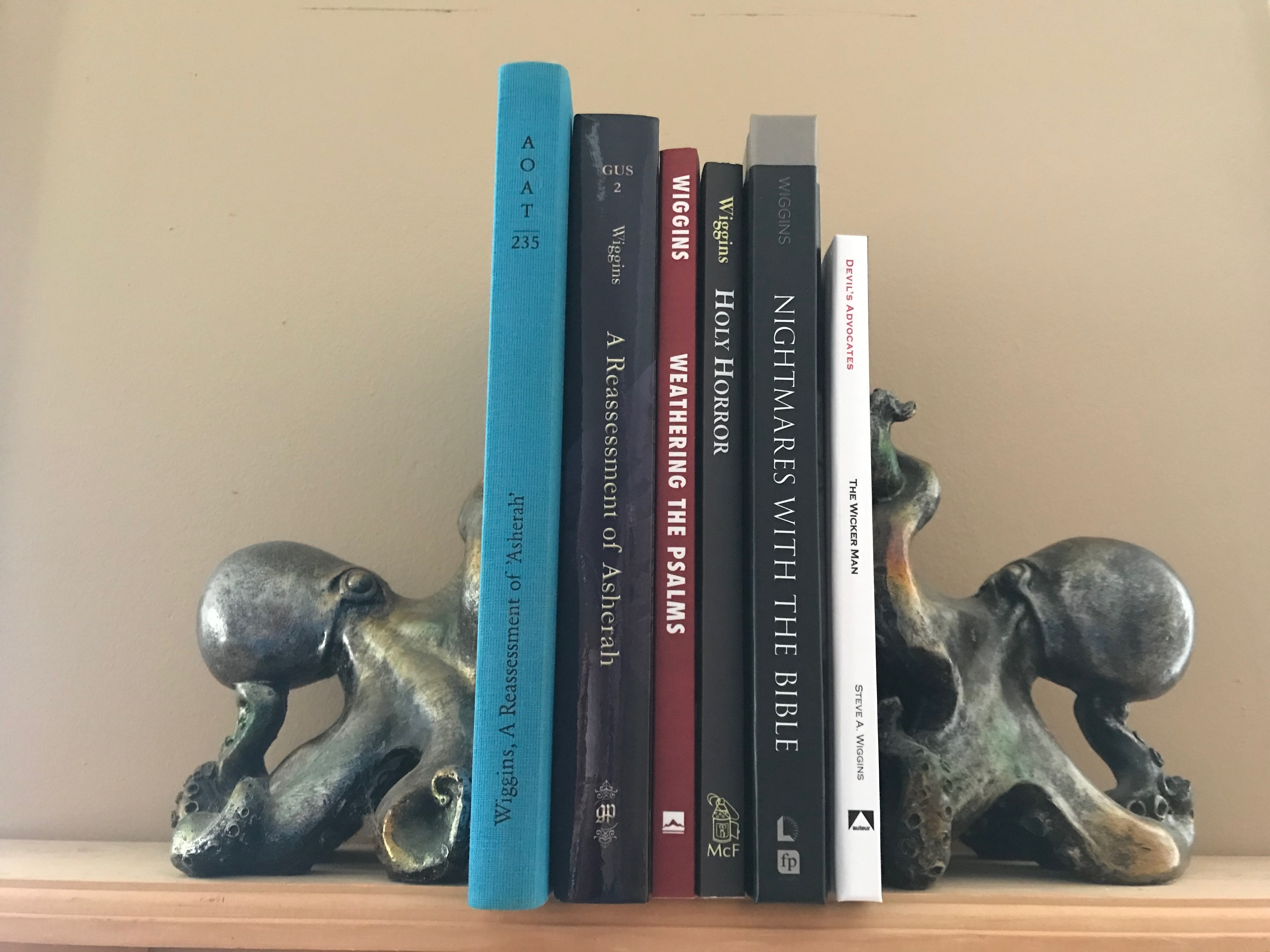
I’ve read many self-published books and most of them have led to disappointment.  You see, a book is better if someone reacts against it.  The problem in mainstream publishing is the reaction against is generally a rejection and that means even if you improve you still have to publish yourself.  I was sorely tempted to self-publish a book before Holy Horror.  Having found a publisher for that book somewhat painlessly (the agents weren’t impressed with it either), led me to keep on going.  Nightmares with the Bible and The Wicker Man were both series books, so again, fairly straightforward.  Sleepy Hollow as American Myth followed the track of Holy Horror.  Written not for a series, I tried to find an agent, failed, and again turned to McFarland.  At least they’ll publish it in paperback.  I’m still discovering self-published books on Sleepy Hollow that I missed in the writing of my book.  For all its faults, academic publishing at least generally offers a good bibliography.


In Praise of Paper

There’s an old saying that the tech industry might consider.  “If it ain’t broke, don’t fix it.”  I’m thinking books.  I work in an industry that’s running after ebooks, sometimes at the expense of actual books.  You know what I mean—the kind printed on paper.  With a cover.  An object.  What techies don’t seem to understand is that something happens to you when you’re reading a book.  It changes you.  Curled up in a chair with a half-pound of bound paper in front of you, you become absorbed.  Chair, person, paper.  All one.  And you’re taken somewhere else.  I’m not saying that reading online isn’t valuable.  Clearly it is.  The experience, however, isn’t the same.  Industry moguls express surprise at vinyl’s return.  They shouldn’t.  It wasn’t broke either.

After reading a meaningful book I’ll carry it around with me for days like Linus’ security blanket.  Its mere presence reminds me that something profound happened to me while I was spending time with that tome.  Especially meaningful books I hesitate to shelve away with the others.  No, I want them to hand to remind me.  To bring back, at a glance, the fascination they engendered.  Let’s call it enchantment.  Capitalism removed enchantment from the world.  In the heat of materialism’s fervor, it made all alternatives irrelevant.  That’s what’s driving the ebook craze.  Hey, I’m fine if you like to read on a piece of plastic, but please leave the option of paper for those who prefer to truly get lost.

I spend most of my waking hours (and all of my sleeping ones) surrounded by books.  When my eye falls on one that I really enjoyed, I take a nanosecond pause to appreciate it.  We all have to decide how we’ll spend our time on this weary old planet.  A good deal of it will be work, and if we’re lucky it will be doing something we enjoy.  Otherwise we have roughly five hours of waking time five days a week to squeeze in the necessary and the enjoyable.  Some will go out and party with friends, others will stay home and read a book.  Many will use devices to fill the time outside the office, whether alone or with friends.  I tend to be in the book crowd.  I’m not embarrassed by that.  Books have been good to me.  Very good.  They say reading is fundamental.  I would add that reading a real book is life itself.


Not Content

I write books.  When I want to “create content” I do it on this blog.  (And a few other internet sites.)  These aren’t the same thing.  I find it distressing that publishers are trying to drive us to ebooks where content can easily be changed, as opposed to print books.  The shelves of this room are lined with books and the technology doesn’t exist to come in and change “data” without my knowing it.  Facts are secure in print, right Ilimilku?  I’m not looking forward to a Star Wars future where there’s no paper.  I was born in the last century and, perhaps, I’ll die there too.   You see, when you write a book you have a project in mind that has an endpoint.   It may change and shift as you write, but you know what a book is and that’s what you produce.  It gets shelved and you move on to other things.  (At least I do.)

Content is something different and the creative process behind it also differs.  If I find something wrong after the fact, I go into my past posts and change it.  I’m not afraid of admitting I’m wrong.  The point of this blog is to share ideas with the world, not to write a book.  (Although, I confess that I would not say “no” if someone in publishing wanted a selection of worthwhile posts for a book… just saying.)  It amazes me how publishers have pretty much gone after the money and have forgotten what the creative process is like.  Of course, they’re having to figure out how this whole internet with free content plays into it too.  But still, my book writing uses a different fold in my gray matter than my blog writing does.  All of it feels pretty different from writing fiction too.

These things together adds up to a writing life.  I have a ton of “not for publication” writing.  This is something different again.  I suspect it will never be read by anybody, moldering away on some old hard drive after some AI-induced apocalypse.  I write it for of the same reason, I suspect, that people used to spray-paint “Kilroy was here” on things.  The book of Job, it seems to me, was the preservation of words that someone simply had to write.  We know the framing story is folklore.  But those who have words to carve with iron on lead, or engrave on a stone to last forever.  It’s more, I hope, than just “creating content.”


International Standard

Probably nobody gives them much of a thought.  ISBNs, that is.  International Standard Book Numbers.  An ISBN is a book’s unique identifier.  And they cost money.  I’m not sure how self-publishing works, but at some stage, whether it’s obvious or not, you have to pay for an ISBN if you want wide distribution.  And since they cost money, most publishers don’t assign an ISBN until a contract is signed.  If a deal falls through, hopefully they can recycle the ISBN and assign it to another book.  The system only began in the 1960s and not all books printed their ISBNs.  The thing about them is, the best way to find the book you’re looking for is by using the ISBN rather than the title.  Titles can’t be copyrighted, and that’s why you see so many books with the same name.  The ISBN won’t let you down.

My book, The Myth of Sleepy Hollow, now has an ISBN.  I just found out yesterday.  It’s 978-1-4766-9757-4, in case you’re curious.  It won’t lead to anything on the web yet since I haven’t submitted the manuscript and work hasn’t begun on the title.  It is, however, a step in that direction.  In the past, when I’ve signed book contracts, I’ve always felt a little anxious until the ISBN is assigned.  Is the publisher really sure about this?  Once they assign an ISBN they’ve started to invest in your ideas.  My book has existed in draft form for several months, but I’m going through it again, for the umpteenth time, to make it presentable to the world.

One of my jobs at Gorgias Press, my first full-time publishing gig, was to assign ISBNs.  They had to buy blocks of them and they came in a printout in a large notebook.  If a project with an ISBN didn’t materialize, some White-Out and a pen could save the company some money.  It was all very hands-on.  I imagine it’s gone electronic these days.  The ISBN is a technical code, by the way.  The 13-digit code, which is now common (it used to be ten), has a meaning.  The schematic below explains that.  The “group” section has to do with language and that’s followed by the publisher’s ID.  Simple deduction (and dashes) tell me that 4766 is McFarland.  That’s followed by the title identifier.  I’m not a numbers person, however.  Those of us drawn to the words part generally try to provide the inside content.  And since it’s a weekend I’d better get to it.  I have a submission deadline I’d like to meet. But I’m thinking about the ISBN.

Image credit: Sakurambo; via Wikimedia Commons, GNU Free Documentation License

Number Six

Signing a book contract always makes me happy.  There’s a validation to it.  Someone thinks my thoughts are worthwhile.  And now I can reveal what it’s about.  Regular readers likely already have some inkling, due to the number of times I referenced Sleepy Hollow over the past couple of years.  I’ll provide more details closer to the time, but it struck me back when working on Holy Horror that few resources exist for “The Legend of Sleepy Hollow,” despite its status as such a well-known story.  An agent or two agreed with me that the topic was good but they really weren’t sure it was a commercial project.  This despite the fact that Lindsey Beer is slated to write and direct a reboot of the famous 1999 movie.  It seemed that a book on the topic available at the time might sell.

John Quidor, The Headless Horseman Pursuing Ichabod Crane, public domain via Wikimedia Commons

I tried a number of independent publishers that don’t require agents.  I learned that most of them won’t even reply to your emails.  It seems that to get published by any trade publisher you have to be already famous.  Or maybe my idea’s just not good.  Weird.  Finally I found a university press that thought it might be a good fit, and it occurred to me that McFarland, who recently dropped the price on Holy Horror, would be a good press for this kind of thing.  McFarland made an offer first, and yesterday they sent a contract.  Hopefully the book will be out next year.

This is quite a personal project.  The story is one of my early memories—most likely due to the Disney version of the story, and most likely as seen on television.  My treatment is, as in all of my books, idiosyncratic.  I look at things differently than other people do.  And I’ve been looking at Sleepy Hollow for half a century or so, and I’ve read quite a lot about Washington Irving and the Hudson Valley.  I don’t want to say too much since others write more swiftly than I do and some presses speed books along.  For the time being I can enjoy that rare feeling of having a book contract and an editor who’s excited about my project.  I do hope that the next book, number seven, might find a trade publisher.  What’s it about?  Well, I’m working on two at the moment, and it depends which reaches book length first.  And I can’t say anything since someone may scoop me.  So I’ll just bask a little bit before starting another work day.


Tech Warning

My moon roof is open.  That’s what the late-night alert says.  Thing is, I don’t have a moon roof.  Maybe I should go out to the garage and check, just to be sure.  You see, these new cars, which are as much computer as they are a means of conveyance, are subject to glitches just like the computers at work always seem to be.  And if this is true of a massive and lucrative company like Toyota, how can the rest of us really trust what our devices tell us?  After all, mainly they exist to sell us more stuff.  So whenever we take the Prius out, after it’s put away I get some kind of warning on my phone.  Nearly every single time.  If somebody’s been sitting in the back seat—or even if a bag was resting there—I’m cheerfully reminded to check the back seat once I get into the house.  I appreciate its concern and when I grow even more forgetful I may need it.  But that moon roof…

I use and appreciate technology.  I believe in the science behind it.  It makes life simpler, in some ways.  Much more complex in others.  I confess that I miss paper maps.  Do you remember the thrill of driving into an unknown city and having to figure out how to get to an address with no GPS?  Now that seems like an adventure movie.  Our cars practically—sometimes literally—drive themselves.  I’m no motor-head, not by a long shot.  I do remember my first car that didn’t have power steering or power brakes.  It had a stick-shift and you had to wrassle it at times.  Show it who was in charge.  With technology we’ve all become the serfs.  It breaks down and you have to take it to an expert.  Not quite the same as changing a tire.

I worry about the larger implications of this.  As a writer I worry that my largest output is only electronic.  Publishers don’t seem to realize that those of us who write do it as a way of surviving death.  We have something to say and we want it etched in stone.  Or at least printed on paper.  Tucked away in some Library of Congress stacks in the hopes that it will remain there for good.  I often think of dystopias.  The stories unfold and ancient documents—our documents—are found.  But unless they get the grid up and running, and have Silicon Valley to help them, our electronic words are gone.  It’s as if you left the moon roof open, even though you don’t have one.


Price Drop

Here’s a public service announcement for your Friday.  If you’ve been wanting to read Holy Horror but found the price too high, McFarland has now lowered the cover price to under $30.  Here’s the link: Holy Horror.  Of my non-academic books, this has been my “best seller.”  Since I’m currently shopping around another book, and since agents aren’t interested (at least not any more), I wondered whether McFarland might look at it.  The editor who handled Holy Horror had left, and the new editor responded to my concern about pricing by telling me that they lower prices after a couple of years.  She noticed, however, that Holy Horror had been overlooked in the price lowering process, so voila!  It’s now affordable.

This model, while not the same as trade publishing’s efforts to get primarily front-list sales, seems to make sense.  Too many publishers raise prices year after year, so if you don’t buy immediately you’ll pay more.  McFarland tends toward a paperback first model.  The first couple of years are aimed at library sales—and they do well at those—then they lower for individual purchase.  All I had to do was ask.  Two years ago I asked Lexington/Fortress Academic if they’d do a paperback of Nightmares with the Bible.  That poor book never had a chance.  The editor said they were considering it.  Instead they did the trick that publishers seem to like: decoupling the ebook price from the hardcover.  So you can buy some expensive electrons instead of holding a real book.  So it goes.  I’ve written a museum piece.

It’s a little too soon to say about The Wicker Man.  My experience has been that university presses, particularly British ones, like to raise prices rather than chasing sales.  If you’re reading this blog you know that I’ll market my books.  I even printed bookmarks for Holy Horror at my own expense.  Maybe it’s time to start distributing them again.  What a difference ten dollars can make!  I’m a book booster.  (You might not have noticed.)  I’m glad that McFarland understands that individuals will buy books, even if they’ve been out for a while.  The standard wisdom among academic publishers is “three years and then you’re done.”  If you’re inclined to help prove that business model wrong, you can now get Holy Horror without having to take out a second mortgage.  That’s cause for hope—any writer has the dream that her or his book will keep on selling.  Sharing this information will, it seems, make it wider known. Please pass it on.


Learning to Write

It’s a reciprocal relationship.  Ideally a symbiosis.  The publisher has a reach, and know-how, that an author lacks.  An author provides content the publisher needs.  Yet publishing is a business in a capitalistic world and has to (unless subsidized) turn a profit.  As an author who works in publishing I’m skewered on the horns of this dilemma.  It’s heartbreaking to see the lengths some authors go to only to find out their book is priced the same as a week’s worth of groceries.  Or three tanks full of gas.  Who buys a $100 book?  Libraries.  Well, some libraries.  Occasionally a publisher will run sales, if you order direct, but by then interest in your book (which may be timely) has passed on.  You become just another name on the shelf in the Library of Congress.

I’m looking for a publisher for my sixth book.  This has to be someone who understands that even $45 is beyond the reach of most intelligent readers.  “What the market will bear” feels like the death sentence to the years of your life you’ve put into writing the thing.  A friend once asked me, “Why do you do it?”  For authors the real question is “How can you not do it?”  The need for the validation through publication runs very deeply in some people.  More deeply than our national love for Taylor Swift.  It has to do with meaning.  Purpose.  A sense of what we’re put on earth to do.  

Image credit: Codex Manesse, public domain via Wikimedia Commons

The standard “wisdom,” and practice, is to publish in hardcover, priced for the library market, and if it sells well at $100, perhaps offer a paperback.  Hopefully priced lower than $45, but don’t hold your breath.  “What the market will bear,” should be your mantra.  It’s a wonder that civilized people ever got educated.  I grew up on cheap books from Goodwill, which is all I could afford.  College, on borrowed money, taught me the price of reading seriously.  It was a lesson I never forgot.  I’d begun my faltering steps to writing books while in high school.  I started writing short stories even earlier than that.  It has been a life of writing.  Even series books, I’ve come to see, are too easily exploited in this way.  My shortest book is priced at $40.  At least I know that I’ve written some collectors’ items.  Take heart, my fellow writers trying to emerge from academe.  There are other ways of being in the world.  And some of them may even be symbiotic.


Finding Books

This is a public service announcement to those who try to find books that aren’t issued by one of the big publishers.  I’m not shy about saying that my books all fall into that category.  One of the things I’ve noticed is that books feed out to different internet venues at an odd rate, before they’re published.  Some publishers use what they call New Book Announcements (NBAs) to get the metadata out to wholesalers, distributors, and other vendors.  Sometimes a book comes to public light in strange ways.  I’ve had my eye on a book that a friend pointed out.  I don’t know how they heard about it, but I went searching for it and found it on Barnes & Noble’s website, but not Amazon.  Well, that’s not quite true.  It is on Amazon, but not in North America.  Amazon China and Amazon Singapore have it, but you can’t find it here.  Yet.

I noticed a similar thing with The Wicker Man.  An anxious author, I kept searching for it online when I didn’t hear from the publisher.  It was first announced at German booksellers.  Eventually it got around to English-speaking sites, and eventually (it took a few months after publication), it became available in “all channels.”  Although, several websites still only list the hardback which retails for more than a dollar a page.  Now that’s inflation!  Even $40 for such a short paperback is a lot, but that’s why I’m looking for anything but an academic publisher for the next book.  But there’s a larger issue here.

Like old Joe, I sometimes can’t remember things.  I have an elaborate and Byzantine set of reminders that fit my neurological profile (mostly).  For books I want to remember to look up after they’re published (I can’t generally afford to buy them right away, so this takes advanced planning), I have an online list.  That online list is associated with a bookseller and I can’t easily add to my list until the book appears on said seller’s site.  I suppose I could write it down in my zibaldone, but will I recall that I wrote it there?  (Those little notebooks get filled up pretty quickly.)  It would just be easier if information on the internet could feed out instantaneously.  If, say, Amazon Singapore could let Amazon USA know that a book that is publishing in the United States can be listed—well, wouldn’t that make sense?  Systems are complicated.  So complex, in fact, that architects must be hired to keep them in order.  Or maybe books could be announced when they’re actually available? What? Lose the buzz?  In the meantime I’ll put a bookmark in this page and hope that I remember to look it up when the time comes.