
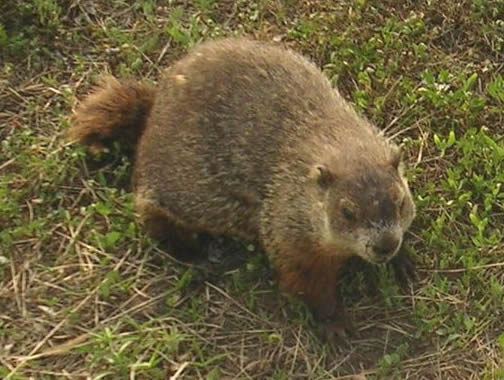
Punxsutawney Phil phled his shadow this morning, leaving many despairing another six weeks of winter, which meteorology seems to dictate anyway. I used to tell my students that Phil is a most peculiar prophet, in that he is, presumably, neither Christian nor Jew, but rather of the rodent religion (whatever that may be). People pretend the little guy has powers beyond those of the average mammal when it comes to predicting vast, chaotic systems. If a groundhog flaps his eyelids in Pennsylvania, prepare for plows and shovels and more thermal underwear. Playing into this annual phenomenon is the provocative persistence of the idea that prophecy is prediction. As much as scholars attempt to expunge the idea that foretelling wasn’t what prophets were ever really about, the populace likely wouldn’t have paid them any attention, had the possibility not presented itself that these preachers knew something the rest of people didn’t.
Prophecy is a strange phenomenon. We claim that we would like to know the future, but I’m not sure that we really would. Knowing that we’ve set ourselves on many tracks that inevitably lead to tears, do we really want to know? After taking my daughter back to college, we sat in a fast-food place to grab a bite on the way home. It had been snowing again, as it will do in the winter, and the television in the corner was blaring on about another apocalyptic band of snow. A bearded and burly Pennsylvanian at the next table turned to me, attracted, I supposed by my own facial hair, and said, “What about this global warming?” I nodded politely, not being very burly myself, but I thought of the fact that global warming does mean more severe winters in some places and warmer conditions in others. It is marked, scientists predict, by erratic weather, not a constant sauna in those regions accustomed to snow.
Although a Pennsylvanian by birth, I have noticed that my ancestral New Jersey does not receive much snow. Until this year. We’ve had the white stuff on the ground for over two weeks in a row. Yes, it snows in winter, but not usually here. I shiver and think of global warming. It is a chilling thought. Punxsutawney Phil may live far enough inland not to have to worry about learning to swim, but the same can’t be said of the inhabitants of most of the major cities of this country. We know it is coming, but we turn a blind eye. Progress in the name of unbridled big business interests brighten a future otherwise a bit more gloomy than we might prefer. Phil ducks back into his burrow and the rest of us clutch our coats a little tighter around us. Prophecy is a mixed blessing indeed. We already know the outcome before the groundhog awakes.

An agnostic groundhog ponders the inevitable (photo credit: I. EIC)
 Steve A. Wiggins