Book Stories

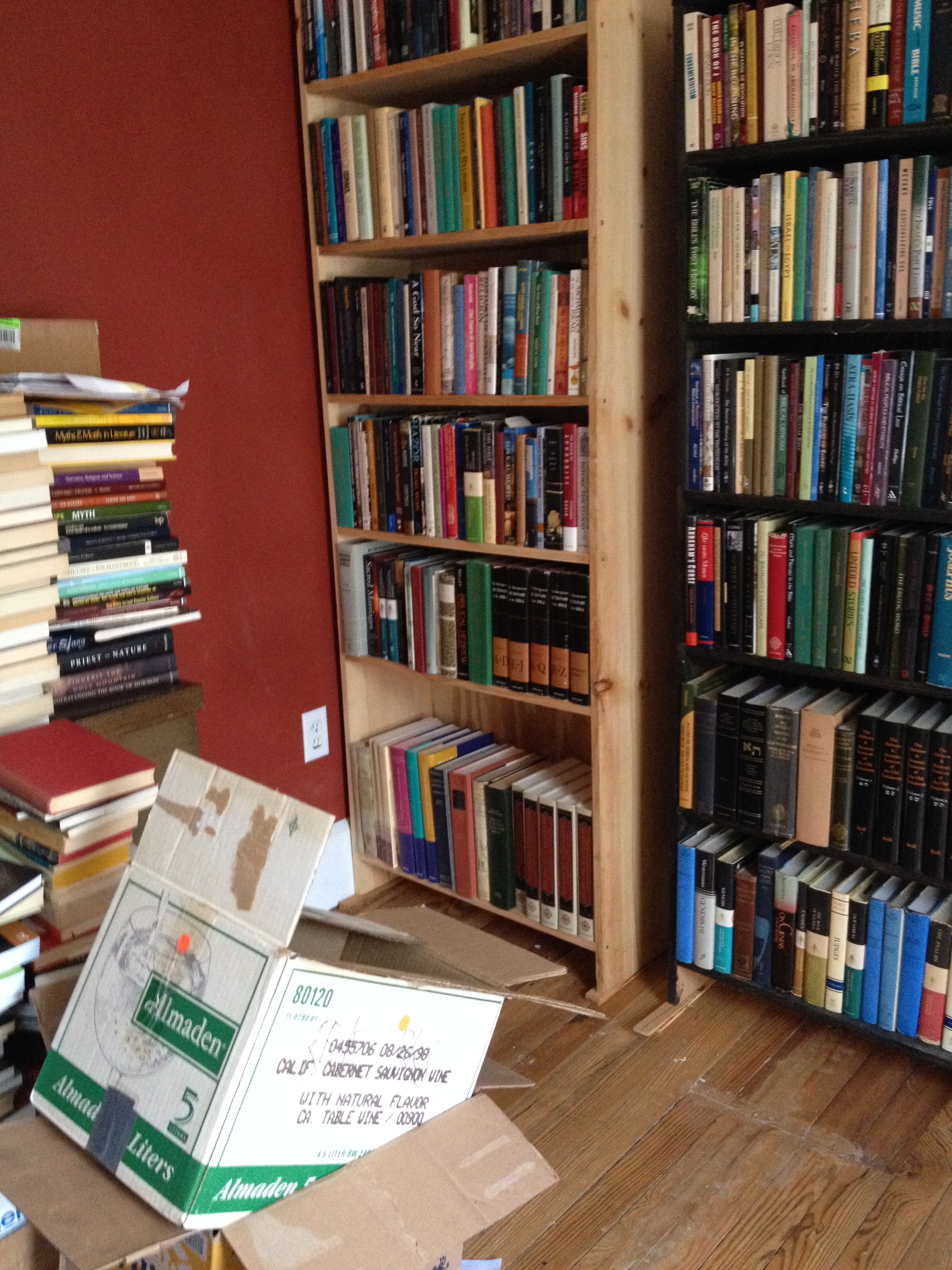
I’m a headline browser.  Sometimes a story will make me sit up straight and click.  I was browsing the headlines in Publisher’s Weekly’s daily updates earlier this week.  One of their regular sections is on independent bookstore news.  When I saw “Oil City” and “Pennsylvania” in the same headline, well, I sat up straight.  I grew up very near Oil City, and attended Oil City High School.  One thing I noticed, even as a child, is that the nearest bookstore we knew of was over in Meadville.  (Eventually a B. Dalton’s, or Waldens, I can’t remember which, opened in the local mall that is now a very sad superstructure to visit.)  I would work the summers and after buying my school clothes would beg mom to take me to Meadville so that I could visit the bookstore.  It was a place that made me happy.

I don’t remember a bookstore ever being in Oil City (or Franklin, except a Christian bookstore).  I wish Raven’s End very well.  If it weren’t six hours away I’d drive there this weekend just to support them.  In these times of challenging human intelligence, we need more bookstores.  We need more readers.  That’s one of the reasons, I suspect, that Publisher’s Weekly informs readers of new bookstores opening.  As a young person you tend to accept things the way that they are.  In one of my philosophy classes I learned that this was called “naive realism.”  I also learned along the way that our brains evolved to help us survive, not to discover reality.  We have to work at the latter, and that means reading.

I live in the Lehigh Valley, a community that has had to remake itself after the closing of Bethlehem Steel.  I grew up in the Oil City and Franklin area which would eventually have to remake itself after the closing of Pennzoil and other large, heavy industries.  As I was growing up there I found books, but in department stores like Woolworths, or more commonly, secondhand at Goodwill.  People are changed by the books they read and, given their own devices, most won’t go online looking for books.  After work I tend to shut the computer down and pick up a book to read.  I also try to carve out reading time each morning.  I grew up without easy access to bookstores.  It gladdens me to see one opening in the small town where I began to realize the importance of picking up a book and learning about this ever-changing world.


Double-Dipping

Double-dipping takes many forms.  The kind I’m talking about is trying to get more than your fair share by either taking twice, or by fooling others into buying the same thing two times.  I’ve fallen victim myself.  Some publishers will sell a hardcover book and then release the paperback with a different title a couple years later.  If you’re a fan of the subject, you’ll buy the same book twice because they won’t easily tell you that it is the same one.  On paper the strategy is to get libraries to buy the hardcover (which costs more) instead of waiting for the paperback.  Why change the title if not to fool someone?  Maybe I’m just embarrassed by the vegan egg on my own face because I realize that I’ve bought the same book more than once.  Maybe more than once.  With a limited budget, I don’t appreciate being deceived.

The egg is even older and more obvious when I realize that those of us of a certain age can’t keep our memories as sharp as they used to be.  I read a lot.  I try to get through 60 or 70 books a year.  Have done for over a decade now.  If a book doesn’t create a strong impact, it may go into that category of enjoyable but not really memorable.  So when I recently learned that a publisher had double-dipped with a book I’d bought and read—twice—I felt violated and embarrassed.  Even more troubling was the fact that I wrote blog posts about each of the books (about three years apart) without recognizing I’d already read it.  To be fair, buried on the copyright page (who reads that?) the paperback confessed that it was the same as the differently titled hardcover.  Of course, I’d already bought the book, read it, and blogged about it (twice) before someone pointed out to me that it was the same book.  Gotcha!

I hold myself to high ethical standards.  I hope that I’m an honest person; I tell the truth whenever possible.  I’d certainly not try to sell someone two of the same thing without telling them that they weren’t buying something new, but simply giving more money for something they already had.  Even Amazon says, “Purchased on,” and gives you the date if you call up a book you’ve already bought.  Publishers, I know, have a difficult time.  Publishing is a “low margin” business, which means that you have to sell lots in order to stay solvent, and each sale brings in only a small profit.  Temptation to double-dip must be very strong.  Still, I feel a bit silly to have fallen for it, even when it’s what I do for a living.


A Glimmer

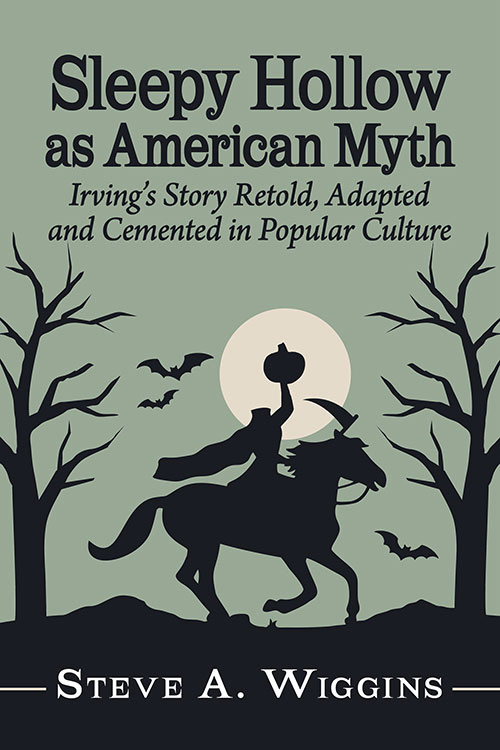
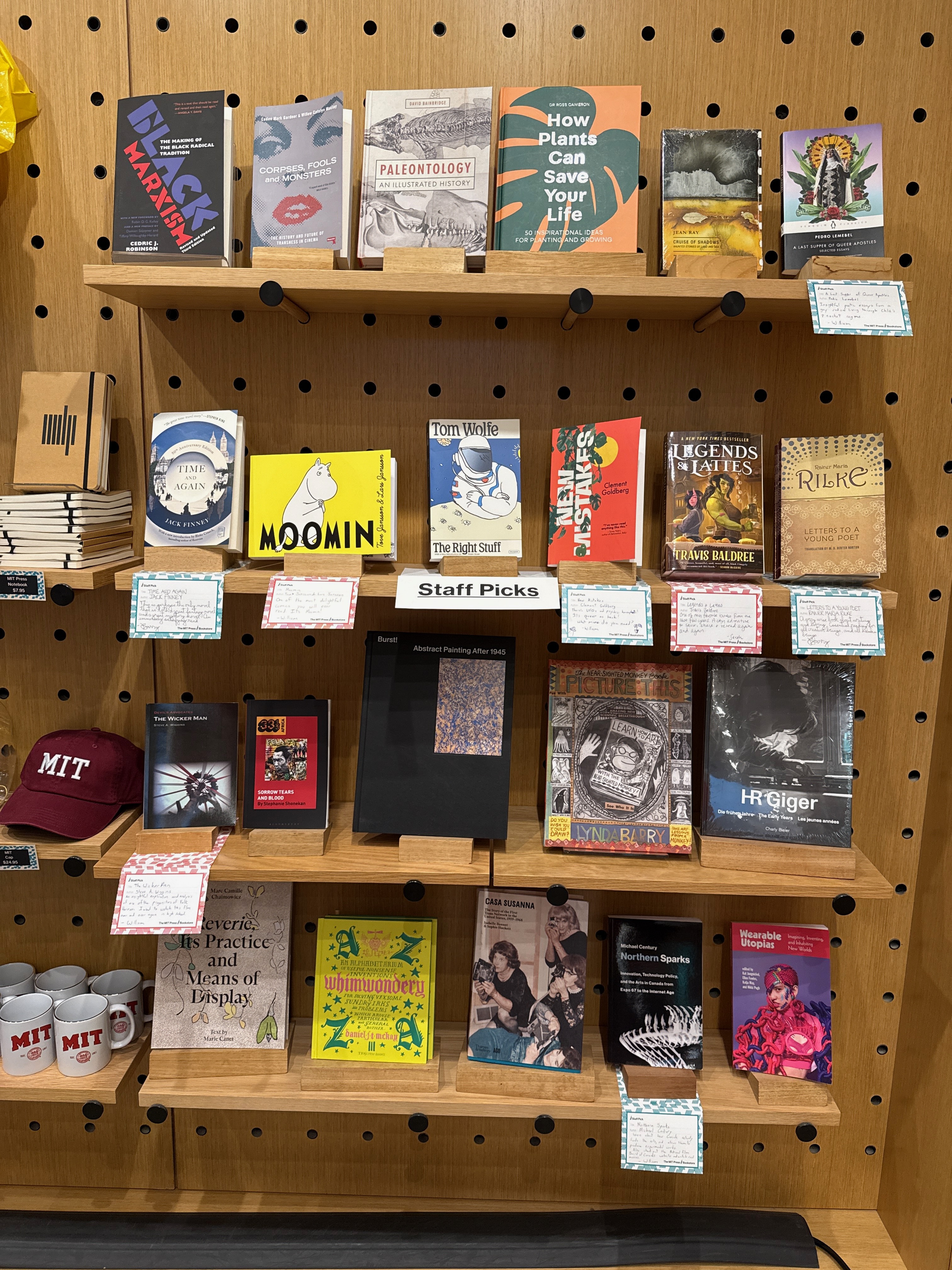
You just never know.  A few months back I emailed Liverpool University Press because my book, The Wicker Man, has apparently not sold any copies.  I had never received (have still never received) a royalty statement or any payment.  Now, I’m willing to accept that no copies have sold.  I’m not a recognized name and a bigger book came out in 2023, the fiftieth anniversary of the film.  I moved on.  Then, the day before my Sleepy Hollow as American Myth copies were scheduled to arrive, a friend sent me a text that made my day.  He’d seen on the MIT bookstore staff picks shelf, a copy of my humble little book.  I was floored.  Someone had read it and liked it.  And MIT!  I mean, that’s worth celebrating.  It also made me curious.

Image credit: a friend

I checked a website that tracks classroom adoptions.  The Wicker Man had been adopted for a class at Kennesaw State University in Georgia.  Ironically, just the day before my friend’s text arrived, a colleague at a nearby seminary asked if I’d come and give a talk about Weathering the Psalms.  This is all very dizzying to me.  I am an obscure private intellectual because no schools will open resident scholar or any other such non-tenure positions to me.  I can’t even verify myself on Google Scholar.  But a few people, it seems, have found my books.  In case you might think otherwise, I’m very well aware that the scholarly world is small (and the current administration would like to make it smaller by the day).  But I tend to think of myself as lost in that small world.

The Wicker Man was a departure for me, as is Sleepy Hollow as American Myth.  In these two books I moved away from my identity as a scholar of religion.  Don’t get me wrong, I’ve used my background and experience, and even latent knowledge of religious studies in both books, but they aren’t fronting religion.  It remains to be seen if the just curious will pick them up.  I know many people don’t default to, “I find this interesting, I’ll buy a book on it,” as I do.  And I’m more than willing to suppose that others aren’t interested in what I have to say.  Still, just when I’m starting to feel down on all my efforts, a little ray of hope shines through.  Someone in a bookstore somewhere has recommended one of my books.  And it feels good.


Letting Go

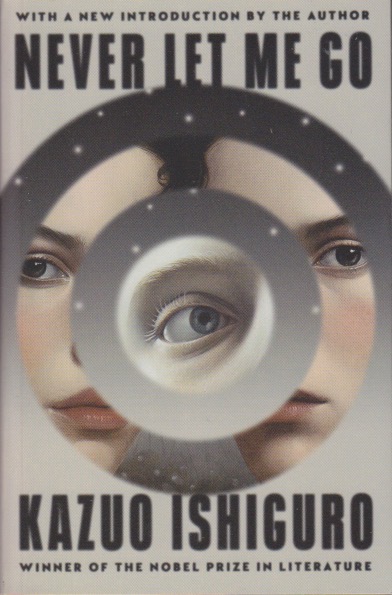
I should’ve known from the title that this would be a sad story.  Kazuo Ishiguro’s Never Let Me Go won the Nobel Prize in Literature, despite being speculative.  It’s only mildly so, but enough that it is sometimes classed as science fiction.  It’s appropriate that a twentieth anniversary edition was released because it is an extended consideration of the price of technology as well as dehumanization.  I’ll need to put in some spoilers, so here’s the usual caveat.  I read this novel because it’s often cited as an example of dark academia and it certainly fits that aesthetic.  It starts out at a private school called Hailsham, in England.  The students are given some privileges but their lives aren’t exactly posh.  Most of their possessions are purchased on days when a truck sells them things they can buy with money they earn by creating art.  They aren’t allowed to leave the school.  Spoilers follow.

The special circumstances of the children are because they’re clones being grown for replacement organs.  The public doesn’t want to know about them or interact with them.  In fact, most people believe they don’t have souls, or aren’t really human.  They’ve been created to be used and exploited until they die, always prematurely.  While this may sound grim, the story is thoughtfully told through the eyes of one of these children, Kathy.  She becomes best friends with Ruth and Tommy, who later become a couple.  Ruth is a difficult personality, but likable.  As they grow they’re slowly given the facts about what their life will be.  They’re raised to comply, never to rebel or question their role.  Most simply accept it.  Kathy, Ruth, and Tommy, in a submissive way, try to get a deferral regarding their “donations.”

I suppose it’s presumptuous to say of a Nobel Prize winner that it’s well written, but I’ll say it anyway.  Ishiguro manages to capture the exploratory friendships of youth and reveals what you need to know in slow doses, all told with a compelling, if sad and accepting voice.  Although the genre could be sci-fi, it’s set in the present, or, more accurately, about twenty years ago.  The technology, apart from the cloning, is about what it was at the turn of the century, or maybe a decade or two before that.  With what we see happening in the world right now, people should be reading books like this that help them understand that people are people, not things to be exploited.  And that Nobel Prizes should be reserved for those that are actually deserving for their contributions to humanity. 


Sad Joy

I sometimes make the mistake of thinking a short book will be a quick read.  Melancholic Joy is a case in point.  Every time I indulge in a book of philosophy I wonder if I missed my true calling.  As my wife is well aware, I’m prone to philosophical musings about the meaning of life although I tend to place myself among the existentialists.  As soon as I saw the title of Brian Treanor’s book it went on my reading list.  It’s short and I thought maybe a week would be enough.  But it wasn’t.  I do hope I can remember much of it.  A word to the wary, the first chapter is very depressing.  Treanor doesn’t sugarcoat the world in his quest on a Life Worth Living.  Those of us who ponder things deeply tend toward melancholy, in my experience.  But stick with it.  There is gold in this book.  Starting with chapter two I was reminded why I took so much philosophy in college.

The world is full of depressing facts.  By the time I was born we’d already devised ways to wipe out the entire human race.  Many, far too many, people live lives of suffering, much of which could be prevented if we didn’t have people like Donald Trump running things.  The political situation is so bad that I’ve disengaged.  Yet still, amid my melancholy, I do feel joy.  You need to parse words carefully here.  Treanor knows that joy and happiness aren’t the same thing.  For those of us predisposed toward melancholy, joy is probably much more common in our lives than happiness.  This book is one that led me to start underlining again.  I do hope to come back to it when my outlook becomes too bleak.  Treanor interacts with both other philosophers and other writers, even some who aren’t always classified as philosophical.  It is a nepenthe.

Some of us think incessantly and can’t help doing so.  It’s a bit difficult to be cheerful if that’s the case.  Melancholic Joy, if I can keep it in mind, may help with that.  There are sections where I had to go back and re-read because my attention had wandered (it happens to us all), but to do so was rewarding.  For anyone who finds many aspects of the world oppressive, and depressing, and who has a philosophical bent, this book is for you.  Just be careful with that first chapter.  Whatever you do, don’t stop there.


Cat Tales

Sometimes I go into an independent bookstore and just look what’s on the shelf.  Often this ends up being an attempt to find a book that isn’t monstrous in length.  Much of what’s currently on offer is long, but I grew up reading 128-page paperbacks (not great literature, granted) that set my expectations.  Now, I do read long books.  Since books and movies are staple topics for discussion on this blog, however, I need to keep things moving in both kinds.  All of which is to say that I picked up Sosuke Natsukawa’s The Cat Who Saved Books because it was short.  This particular bookstore was one where I know and trust the owner’s taste.  I’d bought Haruki Murakami’s works there before.  I really didn’t know what I was getting into this time, though.  I like cats.  I like short books.  I like the Japanese authors I’ve read.  So.

The BISAC code on the back of this one didn’t state that it was fantasy.  I like some fantasy fiction, but my tolerance is limited.  The fault is mine entirely; I own that.  I enjoy speculative fiction and a book with a talking cat felt like it might fit that niche.  I thought the story of The Cat Who Saved Books was good, and the message was sound.  But it felt a bit trite.  The previous Japanese author I’d read was Murakami, and he’s pretty incredible.  I can give you a taste of this book, however, and raise a question about it.  A teenage boy is left taking care of his grandfather’s bookshop after his guardian dies.  A talking cat appears and leads him to four labyrinths where the boy has to rescue books that are being misused.  His arguments to save them don’t seem profound, but something might’ve been lost in translation.

The question is that one of the characters claims to be a book almost two-thousand years old that has had more influence than any other book. Was this the Bible?  Interestingly, nearly every book mentioned in this novel is from the “western canon.”  I have to wonder if this particular book, which is a rather severe character, is the Good Book.  I don’t suspect there’s any way to find out, really.  Still, it seems to fit the sense that Natsukawa uses.  This is an innocent enough fantasy novel.  I guess I prefer my fantasy to have solid rules laid down so that I have an idea what to expect.  But then again, my perspective is that of a primarily western reader, and one who craves short books now and again. I’m open to learn.


More Writing

I keep a list.  It includes everything that I’ve published.  It’s not on my CV since I keep my fiction pretty close to my vest.  The other day I stumbled across another electronic list I’d made some time ago of the unpublished books I’d written.  Most were fiction but at least two were non, and so I decided that I should probably print out copies of those I still had.  As I’ve probably written elsewhere, I started my first novel as a teenager.  I never finished it, but I still remember it pretty well.  Then I started another, also unfinished.  After my wife and I got engaged and before we moved to Scotland, I’d moved to Ann Arbor to be in her city.  Ann Arbor, like most university towns, has many overqualified people looking for work and I ended up doing secretarial support for companies that really had nothing for me to do quite a bit of the time.  I wrote my first full novel during dull times on the job.

My writing was pretty focused in Edinburgh.  My first published book was, naturally, my dissertation.  I started writing fiction again when I was hired by Nashotah House, but that was tempered by academic articles and my second book.  An academic life, it seems, doesn’t leave a ton of time for writing.  What really surprised me about my list was what happened after Nashotah.  In the years since then I’ve completed ten unpublished books.  Since my ouster from academia I’ve published five.  I honestly don’t know how many short stories I’ve finished, but I have published thirty-three.  What really worries me is that some of these only exist in tenuous electronic form.  I guess I trust the internet enough to preserve these blog posts; with over 5,700 of them I’d be running out of space.

I see a trip to buy some paper in my future.  For my peace of mind I need to make sure all of this is printed out.  My organizational scheme (which is perhaps not unusual for those with my condition) is: I know which pile I put it in.  Organizing it for others, assuming anybody else is interested, might not be a bad idea.  I know that if I make my way to the attic and begin looking through my personal slush pile of manuscripts I’ll find even more that I’ve forgotten.  That’s why I started keeping a list.  Someday I’ll have time to finish it, I hope.


Storytelling

Those who know me personally say that I’m a good storyteller.  My own head houses, however, my harshest critic.  Since I tend to work alone this creates an inherent conflict.  This is most evident in my fiction.  I finished a draft of my eighth novel earlier this year, but it still needs work.  (No, really it does—not just harsh critic speaking.)  Part of the problem is obviously time.  My morning writing period is frequently held hostage by my moods.  Some of my past novels are, I think, publishable.  I’ve tried repeatedly with one of them, getting as far as having a signed contract, but things collapsed after that.  It sits brooding on my hard drive.  Another—I think it may be number four or five—seems publishable but it requires reworking with magic pixie dust.  Sometimes my supply of it runs low.  (Moods again.)

I sometimes wonder if I read too much nonfiction.  I’m a curious sort of chap, interested in the world around me.  When that world seems to be falling apart, however, fiction is my friend.  I’ve been reading a lot of novels and I’m often struck by the beauty of the prose.  Head critic says, “why can’t you do that?”  Then I recall the writing advice that I picked up from Stephen King’s nonfiction, On Writing.  Adjectives may be bad for your health.  Just tell the story.  With style.  My current novel (eight) tells an interesting story, I think.  If I’m honest I’ll say that I started working on this before any of the other completed novels (except number one, and that was a throwaway).  It was an idea that just wouldn’t go away.  I knew the beginning and the ending, and part of the middle.  I even found a potential publisher, but it has grown too long for them.

About three chapters from the end I realized that I hadn’t tied things up as well as I’d initially thought.  What I need is time away from work to think about it.  Thinking time is rare, even in the time I manage to wrestle from the 9-2-5.  There’s always more to be done, trying to stay healthy and out of the weather.  And really, maybe I should be reading even more fiction.  But what about the “real world” out there, which requires nonfiction to face it boldly and with informed decisions?  It’s dramatic, isn’t it?  Like a protagonist (hardly a hero) on the edge of a cliff.  How does the story end?  Perhaps an actual storyteller might know.


Island Life

The spirituality of place.  Although it’s largely secular, Robert L. Harris’ Returning Light, his memoir of spending three decades working on Skellig Michael, is about spirituality of place.  Poetically written, his is the account of being one of the caretakers on an island about seven miles west of southern Ireland.  Some call the book nature writing, and I suppose in a sense it is.  He describes his companions—puffins, razorbills, and gannets—and life among the ruins of a monastery from the Medieval Period.  There’s no straightforward narrative arc here.  This is a set of reflections produced by a wind-swept, weather-beaten man who, when on the island, lived with very little.  His writing, as is often the case with those who isolate themselves, tends toward the reflective.  It may raise more questions than it attempts to answer.  And it fires the imagination with monks seeking such an inaccessible place to pray.

My wife and I came to read this book somewhat accidentally.  Someone we know was having a difficult time getting through it—looking for that missing narrative arc—and suggested that it might appeal to us.  In our three years and change in Scotland, we never did make it to Ireland.  From the pictures of Skellig Michael, it’s like Skye (which we did reach), only more so.  And smaller.  More intimate.  We did spend a pleasant time on Iona.  The photos didn’t turn out because, in those days you had to mail your slide canisters in the Royal Post for processing and the poor thing got crushed, exposing the film to light.  Iona is less sharp, less demanding.  More accessible.  But the idea of finding yourself an island, even if only tidal, like Lindisfarne (which we also did see), is a time-honored way of reconnecting with your soul.

Harris doesn’t write in a traditional Christian idiom, but he focuses on light.  The monks’ cells, at least some of them, share the early Celtic monument alignment with angles of the sun illuminating rooms with no artificial lights.  Illumination is, it seems, what he was seeking,  It came as no surprise that his words evoke those of Thomas Merton for some.  Harris observes, thinks, and contemplates.  Sometimes bursts into poetry.  His is a memoir of a man who spent quite a lot of time alone.  Who befriended, briefly, sea birds.  Returning Light isn’t really a book to rush through, but one to engage slowly.  In a sense, I suppose, by isolating yourself on an island where monks once hid and prayed.


Gothic Novelties

I’m a sucker for a good gothic novel.  Dilapidated houses on the moors, suggestions of ghosts, the kind of encompassing darkness that enfolds you.  Women facing a man’s world just as Victoria took to the throne.  Hints of the supernatural.  So when offered a review copy of Kate Cherrell’s Begotten, I jumped at the chance.  Gothic it is, that I’ll give you that.  Perhaps I’m getting more discriminating in my tastes, but the classics are hard to beat.  I’m particularly fond of Jane Eyre and Wuthering HeightsBegotten’s not up to that level, of course, but I found the pacing slow and the narrator difficult to sympathize with. It has the kind of ending that sets me off, as I’ve written about before. (No spoilers here!)   Given that I’ve never succeeded in having a novel published (not for not trying), I am impressed.  

Novel writing is difficult.  Let me qualify that—good novel writing is difficult.  It’s more than simply stringing a story out over two-hundred-plus pages.  There are so many things to keep in mind.  That element you introduced on page 50—was it necessary?  Does it show up again in some significant way?  Secondary or tertiary characters that you introduced; will readers wonder about them after they depart the story?  Have you given them too much emphasis and therefore you need to provide them with a proper send off?  Do the characters sound like they fit in the time-frame you’ve chosen into which to set the story?  The history element is crucial for me.  A book set in the early nineties that has characters using the world-wide-web is suspect.  Or in the case of a gothic story, did Victorians express themselves that way?

I’m struggling writing my current novel.  I’ve completed seven others, some of which have hung together better.  A wise man once told me that to write a novel you should write 100,000 words and throw them away.  Or maybe it was 200,000.  Or five.  In any case, I passed that benchmark decades ago.  The novels I think worth publishing are those I’ve gone over a few times, polishing and editing as I go.  Maybe someday they’ll be ready to face the blue pencil, but until then I keep working at them, making them as worthy of a reader’s time as possible.  Not all writers do this kind of intensive revision.  Tales with unreliable narrators are often very hard to pull off convincingly.  But I know what it’s like to have a story living inside you bursting to be spilled on paper.  And if it’s gothic, that can cover a host of sins.


Shadow off Campus

I’ve been to quite a few academic conferences in my life.  Some have been held in neighborhoods declared “unsafe.”  I even had a job interview in a hotel room (such can’t happen now) with a college that didn’t want to pay the fee for using the society’s services.  (A friend who’d also interviewed with the same school said to me afterwards, “I thought they were going to jump me!”)  (Neither one of us got the job.)  I even went to a conference where I had to drive through a crime-ridden neighborhood to get to an off-site hotel.  But I’ve never been to a conference where someone was murdered.  That’s the premise behind Kathleen Kelley Reardon’s Damned If She Does.  Reardon’s keenly aware of the kinds of issues women face in the professorate.  There are some unsavory guys in the profession and power is very difficult to wrest from those who hold it (generally white men).  In this follow-up to Shadow Campus, she tells Meg and Shamus Doherty’s experience with murder, and more, at an academic conference.

Academics are so necessary for studying things closely, opening up true understanding.  They are, however, people too.  And people can be petty, vindictive, and selfish.  They’re usually not inclined to murder, however.  I’ve been meaning to read that book about the murder of a religion professor at the University of Chicago several years ago precisely because such things are so unusual.  In dark academia, however, events like that are fairly common.  The thing is, many academics are also quite smart.  If someone were to put their mind to an undetectable murder, hmm.  The old gray matter starts churning.

In Damned If She Does, the apparent motive is publication in prestige journals.  In the end, it turns out that there’s more to it than that, but it’s somehow believable that a matter like publication could lead to homicide in academia.  As an editor, and writer, myself, I know how important publication with specific presses can be.  Even after doing this for over thirty years, an acceptance notice creates a sense of validation like no other.  Dark academia explores such territory.  I suspect that I’ve always been a bit naive when I’ve attended conferences.  I go, present papers, and keep interactions, well, academic.  I’ve heard whispers of them being places of temporary flings and I’ve seen colleagues use them as places to party.  On occasion I’ve seen established scholars very inebriated.  They’re people too, of course.  And as long as nobody is murdered, the code seems to be that what happens at a conference stays at the conference.


Around Us

Our Wives Under the Sea is a gentle, but chilling horror story by Julia Armfield.  Two women are married and one of them is a marine biologist being sent on a submarine to explore deep ocean life.  A planned three-week voyage becomes six months and when the sub finally surfaces again, Leah, the biologist, has “come back wrong.”  She’s transforming.  Something happened to her under all that water.  Told alternately by Leah and Miri, the story is one of loss and mourning and lack of any reasonable explanation.  Haunting, in a word.  The writing is exceptional.  And probing.  I quite enjoyed this book.  I can’t recall how I first heard about it—it was published in 2022—but I knew I wanted to read it even then.  The sea is that way.  Moby-Dick, cited in an epigraph, has always been my favorite novel.  One of my early reading memories is Rachel Carson’s The Sea Around Us (also cited here).  The story is a winner.

There’s something about the ocean.  We, in reality, know little about it.  Penetrating the crushing depths requires a well-funded science, something we’ve moved away from in favor of personal greed.  Life takes unexpected forms deep under the surface, even as we deplete the resources we can reach—over-fishing and consuming.  We’re never told what it is Leah and her crew-mate see so far down.  We all know of lantern-fish (lately in the news) and other sub-surface terrors.  We don’t know the potential life we might discover if we only cared to look.  The company that sent Leah down, however, is as shadowy as the government.  Promising help but not answering the phone when you call.  Yes, this is a haunting book.

Mostly, however, at least in my reading, it is about coping.  We attach our lives to others and when something changes them we have to try to adjust, because love is that way.  Caregivers understand.  The novel evokes both the endless draw of the ocean and its mystery.  Even as a child I wanted to live on the stormy east coast, preferably in Maine.  I wanted to be near the water.  As my mother was in her final decline, one of her dearest wishes was to return to the ocean.  She’d spent a fair bit of her childhood in New Jersey and always felt the draw of the sea.  She was no swimmer, but just being near the ocean was something she loved.  And that has passed down, it seems, to my generation.  Fearful yet drawn.  It is the dilemma that can lead to effective horror stories that make you both think and feel.


Mass Market

The mass market paperback.  This may very well be one of the best symbols of my younger years.  One of the largest distributors of mass market paperbacks (Readerlink) has announced that it will no longer distribute them.  It seems that the writing, instead of in readers’ hands, is on the wall.  Mass market paperbacks are the least expensive formats of books to buy.  Publishers have increasingly been tending to push trade size (about 6-by-9 inches)—they can charge more for them.  They don’t fit easily in your pocket, however, and well, they cost more.  Often, as someone who reads in public, I find myself wishing more literary fiction was still produced in mass market form.  Only the best selling authors ever make it down to that size.  I miss being able to stick a book in my pocket.  

The mass market paperback’s story began with railroad books, once innovated by my erstwhile employer, Routledge.  The form we recognize today only really took off in 1935.  When I was growing up, I considered all other formats somehow too big.  My book collection and reading habits began with mass market size.  When we moved to our house a few years back, I repurposed an old dresser as a bookshelf.  The top drawer slots were just tall enough for mass market books.  I discovered that I really didn’t have enough of them to fill that shelf.  Books have grown bigger.  Now, working in publishing I realize profit margins are thin in this industry.  Many publishers need the big sellers to help make up for disappointing sales of other titles.  (You have to have thick skin to be an author, I know from experience.)  They need to stay solvent.

But still, this feels like the end of an era.  Books in this format have been around really only less than a century.  Literacy—reading for pleasure—among the masses hasn’t been around much longer.  Books were expensive and were afforded by the elite, then cheaper forms and formats became available.  The electronic revolution has made much of life more convenient but some of us miss the challenge of having to fold a road map and never really knowing, for sure, where we are.  We’re also the ones who likely have a book in the car.  On the occasions when I don’t, I often regret it.  And one of the ways to encourage people to take books with them is to make them of a size that would sell thousands.  So many, in fact, that they would be given the title “mass market.”


Craving Enchantment

I really want to know, but just can’t figure out, how to write like Katherine May.  My wife and I read her book Wintering and now have added Enchantment.  In many ways I seem to be like May; we may be different shades of neurodivergent, but I understand what she says.  Indeed, at one point in Enchantment she talked me down from a writer’s dilemma that had me worked up for days.  But I can’t write like her.  I have times when my rhetoric for a blog post or two might come close, but I have tried to sustain it for an entire book, so far without success.  My background was perhaps too sullied by academic writing, although May is also an academic, so I may simply be making excuses for lack of talent.

That’s too bad because Enchantment is meant to improve your outlook.  Subtitled Awaking Wonder in an Anxious Age, it consists of life lessons the author learned during the pandemic.  I often, if I allow myself in this constant struggle for my time, experience the sense of wonder May describes.  I enjoy walking in the woods, watching heavenly bodies, staring into a river or pond, and trying to draw lessons from such things.  Lately, however, I find myself rushing through them because I have something else I have to do.  Daily, it’s the 9-2-5, of course.  That schedule overloads my weekends with things that have to be done even if I want to spend time appreciating the enchantment I can find, if I have the time.  Sorry, I’m letting the anxious part take center stage.

This is a wonderful book.  I admire the way that May is able to face down her own struggles with grace and remain open to possibilities.  I found such things much more readily when I was at Nashotah House.  There were moments between classes and there were semester breaks.  We lived in the woods.  By a lake.  There was wonder there, for the taking.  Having a young child to introduce to the wonders of nature definitely helped as well.  Children force you to see through new eyes (it’s not a surprise that May has a young son when writing).  Too quickly we grow up and let capitalism tell us what to do.  It takes so much from us and gives so little.  I’m looking out my window at nature, as I write this.  I know it has enchantment to offer.  I also know that work begins in fifteen minutes.


Therapy with Books

I’ve been doing this for years and just found out there’s a name for it.  Bibliotherapy is a treatment method that uses reading to deal with anxiety.  It is closely related to writing therapy, which I also use.  Both have been self-moderated, in my case, and both have been part of my way of coping for decades.  I was actually surprised to learn that these are valid methods of treatment that some therapists use.  I knew about journaling (I suppose blogging counts), but the larger picture was never in focus.  We live in stressful times.  We went through a very stressful four years about, let’s see, eight years ago.  This time I’m intentionally using bibliotherapy.  Reading a book (eyes off the screen, please!) is a way of entering another reality for a while.  Already this year I’ve stepped up my reading, as much as work will allow.  (And now, proofs.)

Writing is therapeutic as well.  Both reading and writing engage your mind.  And can remind you that there are other things to life besides headlines.  I’ve been writing a lot of fiction lately.  That doesn’t mean I’ve been publishing a lot of it—that part’s still very difficult for me—but writers do it because that’s what writers do.  And it makes me feel better.  More balanced.  One of the truly difficult things in my life is when I’m on a roll, particularly with fiction, then I have to stop for work.  The whiplash is almost too much some days.  I realize that you can’t make a living out of pouring your soul into words, unless you’re very lucky.  And even then I suppose it might soon start to feel like work.  Maybe some day I’ll find out, but until then reading and writing will see me through.

I know I’m not alone in this.  There are other people out there who spend as much time as possible between the pages and/or with pen in hand.  There’s nothing like it.  These therapies can change your mood.  Give you hope.  Make you feel complete.  And this can happen whether something you’ve written gets published or not.  I admit to having seen therapists from time to time; I probably should do it more.  None of them, however, have suggested bibliotherapy.  It’s something I stumbled onto myself.  That’s probably no surprise.  I bumble my way through life most of the time.  We all know, I suspect, when our brains are firing properly, what makes us feel better.  The shelves that surround me most of every day certainly know.  And there is a name for it.