Iron Age Angst

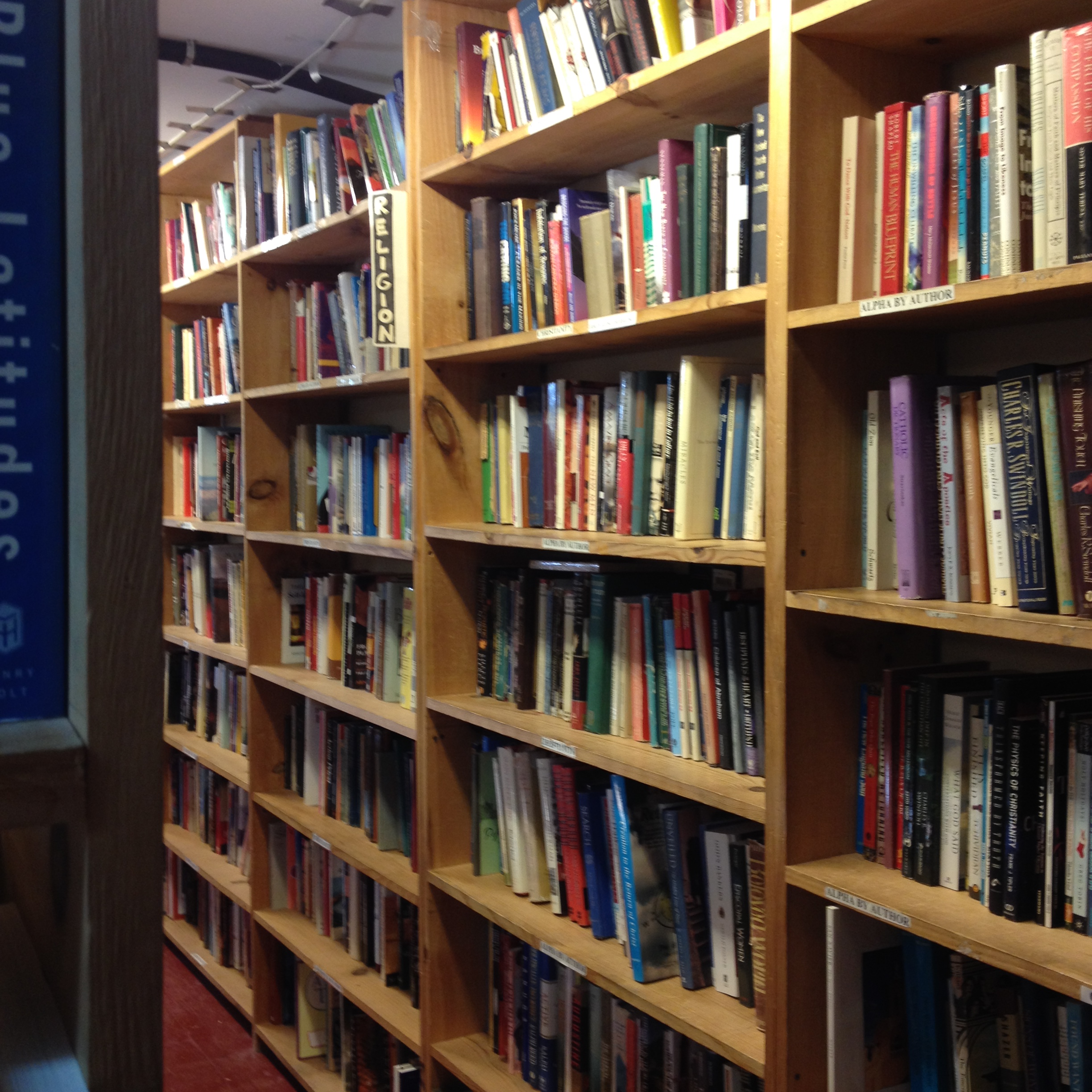
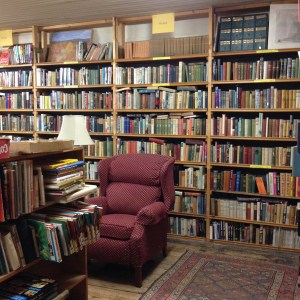
Browsing can lead to unexpected finds.  Such is the magic of bookstores.  Most of the books I read are recommended to me either through online sources or from people who have an inkling of my tastes.  Often such books are on the long side.  While I don’t object to really getting into a book, like most people I wonder where the time goes and a short read gives you a sense of accomplishment.  So it was that I was browsing a local bookstore for something brief.  I came across Ghost Wall by Sarah Moss.  The back cover bore no BISAC info telling the genre, but in this case the blurbs convinced me that I’d find this a rewarding read.  It’s not horror, but it has a sense of doom about it.  There may be some spoilers below but I won’t give away the ending.

Told from the point of view of Silvie, a teenage minor, it recounts a college anthropology experiment on the moors of northern England.  Silvie isn’t one of the students, but rather a high-school-aged daughter of a bus driver enamored of Iron Age Britain.  A professor has three students set to live part of the summer like Iron Agers, and Silvie’s father has brought her and her mother along to do “the women’s work.”  Yes, he’s a chauvinist and he has violent tendencies.  He clearly wishes he’d lived in “simpler” times.  I suspect what makes a novel like this work is that many of us know people like the father.  Hard, angry men.  As the story unfolds we witness his abuses and the clueless professor simply continues play-acting Iron Age.  Until they get the idea of sacrificing a victim like the bog people of northern Europe.

The style is spare, like Cormac McCarthy’s The Road.  As one of the blurbs says, there are echoes of Lord of the Flies as well.  What do groups of men get up to when unleashed from civilization?  It took me some time to figure out, since this is entirely first-person narrative, that there are only three students—one woman and two men.  With the chaperones it’s two men and a woman.  This uneven power structure raises its own questions.  Meanwhile Silvie is coming of age, beginning to realize her own sexual awakening.  Her best role model is the co-ed among the group since her working-class mother lives in fear of her husband.  The story is compelling and a bit scary.  It’s also a rewarding read that won’t take a month or more to finish.


In Praise of Libraries

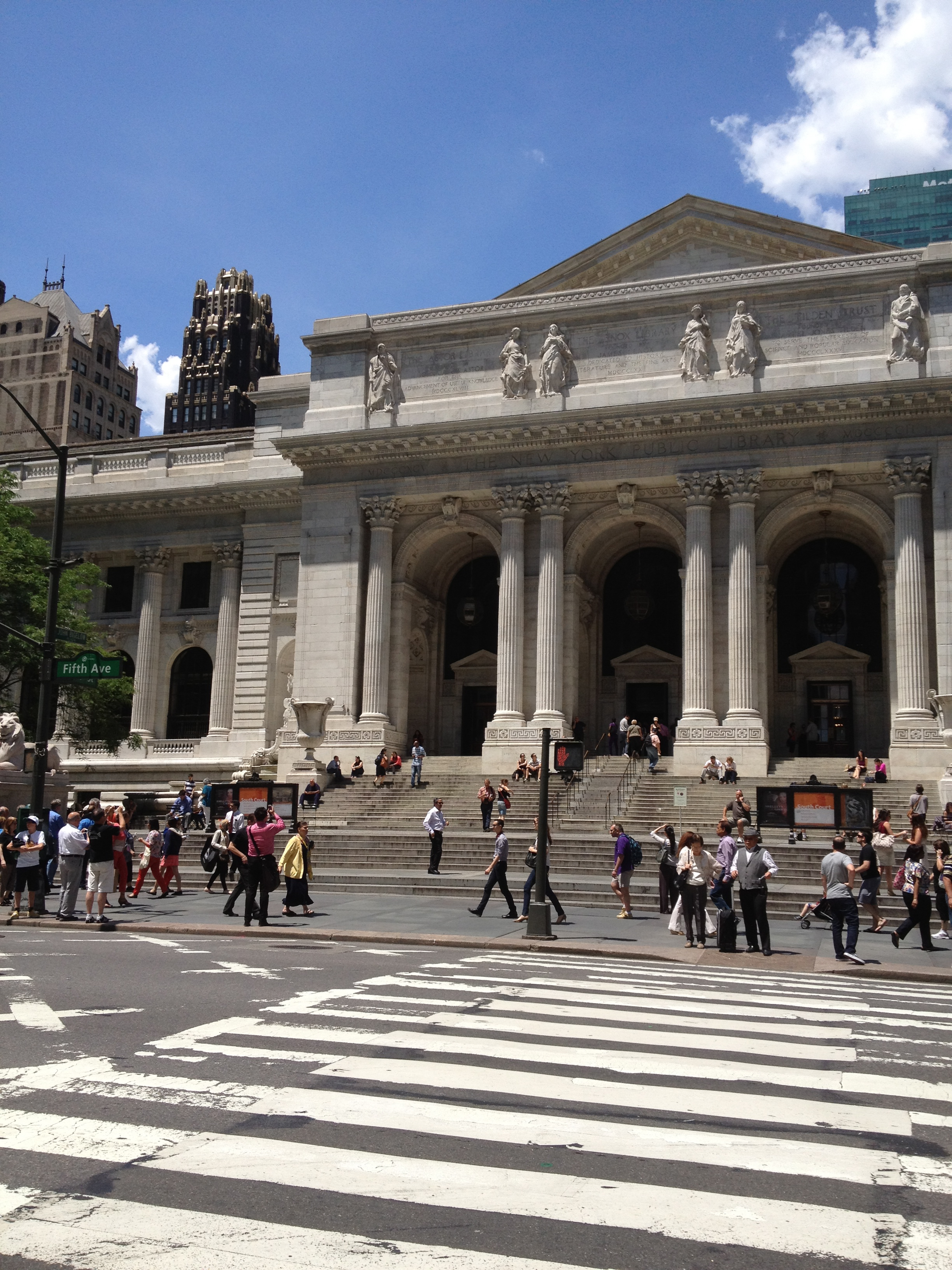
It felt like a rare, and momentous moment in a young writer’s life.  While working at Routledge I happened to notice that the New York Public Library did not have a copy of A Reassessment of Asherah in their catalogue.  The first edition was published in Germany, so I wasn’t surprised that it was not there.  Gorgias Press, however, had published a second edition and few people were citing it.  I contacted the office on Fifth Avenue and offered to donate a copy.  A librarian contacted me and we set up a time.  I went between the stone lions (Patience and Fortitude by name), met my contact, and handed my work over without ceremony.  He seemed genuinely glad to have the book and I felt like I’d made a small contribution to a big city.

When I need a pick-me-up I look at WorldCat.  WorldCat is a conglomeration of library catalogues where you can find just about any book, including obscure ones, such as mine.  I recently hopped on to see how many libraries had Holy Horror.  (The answer is 90.)  While there I decided to check my others.  Nightmares with the Bible registered 68.  These numbers aren’t bad considering neither publisher markets the books and they’re priced too high.  The Wicker Man is still new and is only in 42.  What surprised me was when I looked back.  A Reassessment of Asherah is in 305 (total for both editions, one being in the New York Public Library).  What really surprised me was Weathering the Psalms, which 324 libraries claim.  Since it’s priced under $30, maybe there is something to the idea people will buy books if they can afford them.  As an editor I know that sales of monograph over 300 are considered successful.  Two of my books qualify.

Publishers don’t share sales information.  I can look up those at my current publisher, and I can check some on Nielsen’s BookScan (now called NDP BookScan), the service publishers use to get an idea of other publishers’ sales.  That’s the same Nielsen that does television ratings, by the way.  Searching my own titles there is too depressing, so I stick to library catalogues.  Libraries are feel-good places.  (I couldn’t help but notice that Princeton has all my books—thank you, Tigers!  The seminary has my first two, but the university has my books on horror films.)  I can just feel all the ideas in the air.  And I’m humbled to have contributed to them in a way, no matter how small.


Playing Authors

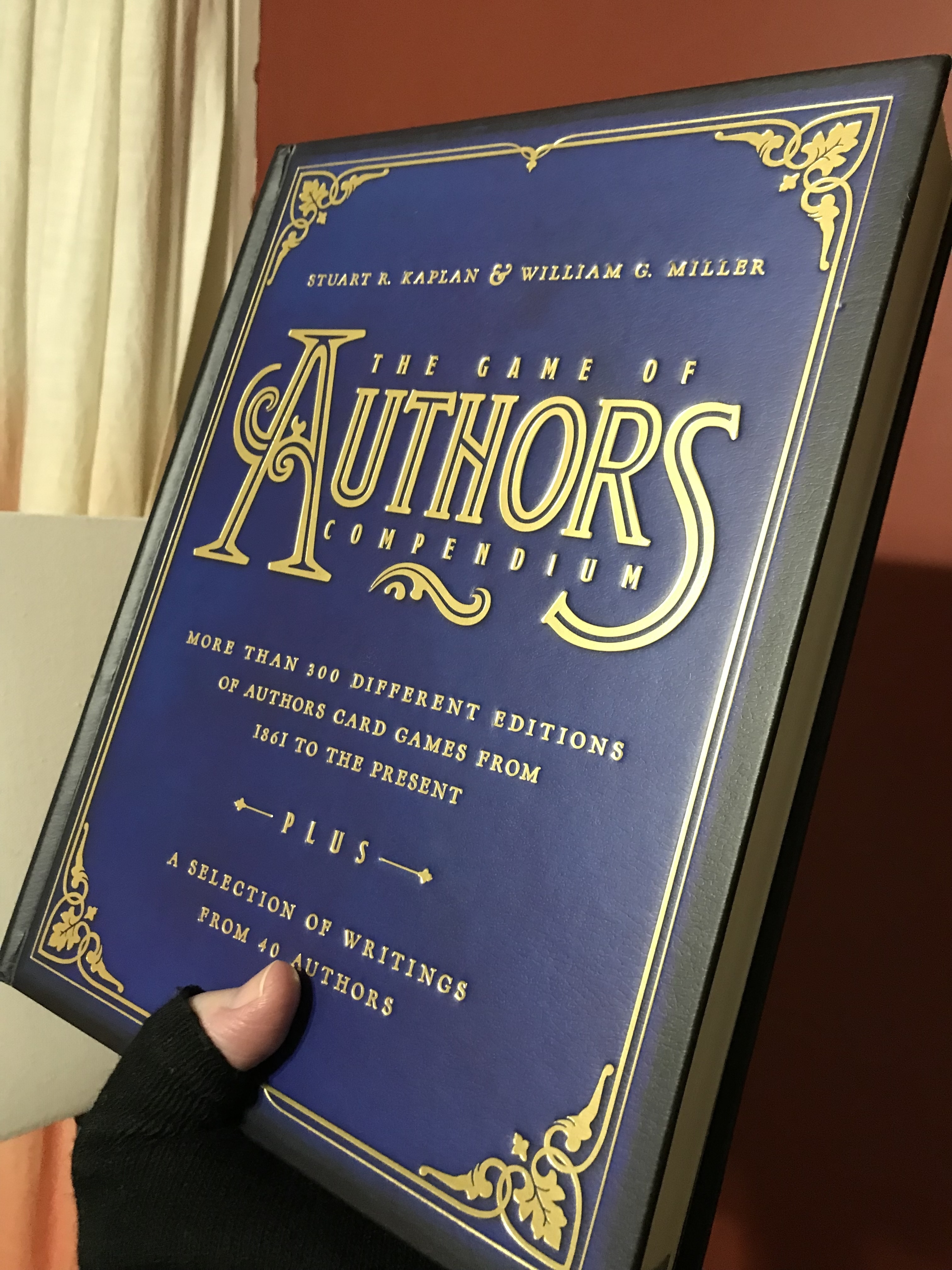
My family looked at me funnily, but not for the first time.  With a holiday gift card I’d ordered a book on the card game Authors that I’d blogged about recently.  You see, there’s not a ton of information on it on the web, and it was a formative influence in my life and I wanted to know more.  I suppose it’s typical for someone raised as a fundamentalist not to immediately think of evolution, but Authors has evolved over the years.  And quite a lot.  For one thing, you can’t copyright an idea and other game-producing companies made their own versions of the original game.  And what I’d assumed had been the original (since it was the one I had as a child) was only one of many versions.  The book even documents the Bible Authors game I’d mentioned.  My real interests included that age-old question—did it ever include Edgar Allan Poe?

Today is Poe’s birthday.  It’s fair to say that he’s one of the most recognizable authors in the world now.  He also had a tough time being accepted.  This book, which I haven’t read through—it’s more of a reference book, in any case—points out that Poe was indeed included in more than one edition of the game.  He isn’t one of the strongly recurring authors (which include several of whom I’d never heard).  This is the fate of writers.  Reading about Dickens lately, I came to realize that even after several best-selling novels (at numbers that would make any modern publisher gloat), he was effectively living off debt until well into his forties.  And he died at 58.  He was famous, but until his final years not what you could consider wealthy.  

Another realization dawned.  Writing for a wider readership means getting away from academic publishers.  I had an agent interested in my current book project for a couple of months before he decided it wasn’t for him.  I’ve also come to see that several authors I respect, and whose books are priced below $20, have published with presses that aren’t part of the Big Five.  And they earn some profit from their efforts (unlike academic publishing).  In other words, becoming an author of either fiction or non, often involves book sense that I’ve been slow to gain.  At the Easton Book Festival a few years back I met several local writers who were putting additions onto their houses with the royalties they earned.  I’d published three books at that point and was turning my pockets inside out hoping for forgotten spare change.  Authors is a game.  Those who are included are those who figured out how it’s played.


Reading 2023

As has become my tradition, I’ll end the year reflecting on the books I’ve read.  For a variety of reasons this is the first time in nine years that I haven’t cleared seventy books.  (I ended up one shy.)  But looking back over what I read, I may see some logic behind this.  Many of the books were academic, and specifically, academic in fields outside my formal training.  That also means they generally didn’t make it to my list of favorites.  2023 was also unusual in that it wasn’t until about late spring that I started to read books I really enjoyed.  The first on my list of memorable titles is Andi Marquette’s The Secret of Sleepy Hollow.  This was followed by a couple other fiction titles, Grady Hendrix’s Final Girl Support Group and Gina Chung’s Sea Change.  Those ended up being my favorite three fiction titles of the year.

For nonfiction, I finally read John Hersey’s Hiroshima, memorable, if terrifying.  Also along the lines of history, I found Lesley Pratt Bannatyne’s two books Halloween and Halloween Nation, to be particularly good.  Mark Dawidziak’s Mystery of Mysteries may well have been my favorite historically-oriented book of the year.  Donna Kornhaber’s Silent Film: A Very Short Introduction was also quite well done.  I always enjoy books on horror films, and two on The Exorcist were noteworthy: Nat Segaloff’s The Exorcist Legacy and The Exorcist Effect by Joseph P. Laycock and Eric Harrelson.  Why It’s OK to Love Bad Movies by Matthew Strohl, which I read a bit earlier in the year was also quite good.  By far the most helpful book in a personally troubling year was The Boy, the Mole, the Fox and the Horse by Charlie Mackesy.

In years past I’ve generally had more commendable books on my list.  I did, however, finish the last three Dark Shadow’s novels by Marylin Ross, reaching the bucket-list item of having read the entire series.  I also found Jessica Verday’s three-volume series strangely memorable, although written for young adults (found here, here, and here).  While the number of books I really enjoyed wasn’t as high as in some other years, these highlights make me optimistic regarding 2024.  I used to follow the Modern Mrs. Darcy’s reading challenge guidelines, until they stopped being published, and now I find myself left to my own devices, for the most part.  Much of my reading is driven by research, and I suppose I should also mention that my own fifth book was published in 2023 as well.  I don’t expect it’ll be anybody’s favorite, but it is nevertheless an honor to be part of the conversation.


Reading Memory

I recently wrote about writing too much (as if such a thing were possible).  After posting that I thought of how much the same can be said of reading.  I like to believe that whatever I’ve read is stored in my brain somewhere, rather like my writing on all those external drives.  I get some hopeful hints of this when a fragment of something read long ago suddenly reappears.  It’s good to know it’s there somewhere.  What brought this to mind is that a book I’m currently reading used a significant term.  Overly confident as I only am when reading, I figured I’d remember where it occurred.  A few days later I’d forgotten.  “No problem,” I thought, “the index.”  Indexes are never perfect and I’m always amazed by what strikes me as being so important failed to make the author’s cut.  So it happened.

This particular book was compactly written, but even so, it was more than sixty pages ago.  It took a few days of skimming, and finally going through line-by-line to find the word again.  It was a capitalized word and I thought mere skimming would be able to pick it out.  No such luck.  Part of the problem, I suppose, is that since I’ve left academia I’ve pretty much stopped writing in books.  I always did it in pencil, but still—there’s something about that pristine page so carefully typeset and laid out.  Well, if I had all the time in the world I could re-read those first sixty pages again, but I don’t have time to read all the books I need to, so I grabbed my old Pentel and began marking the spots I wanted to remember.

When we age it’s recall that suffers.  I tend to think the memories themselves are still there, sometimes distorted, sometimes altered, but present.  Books, after all, can be reread.  If I read something while commuting to Manhattan, there is a good likelihood that some of it was occluded by the worries of work lying ahead, coupled with the anxiety of catching the bus back home at the end of the day.  Not to mention anything that might’ve been happening in real life—that place outside of work that you really care about.  I’m glad for the commute reading; I regularly read over 100 books a year.  You couldn’t take notes while on a New Jersey Transit bus, though.  It’s not possible to read too much, but reading memory, it seems, is a sometimes a scarce resource.


Paid Reading?

It’s like when you slowly pull a cotton ball apart.  Interrupted reading, that is.  Some people never cotton onto reading—we’re all different—but some of us find it such a beguiling exercise that we neglect other aspects of life so that we can engage it.  Almost an altered state of consciousness.  That moment when you have to close a good book, though.  There’s nothing else like it.  It’s difficult to pinpoint whether images or words make up the continuity a reader experiences.  For me it’s like a continuous conversation.  Since my life may be too regulated (“nine-to-five” jobs are like that), every day at work begins with interrupted reading.  If you’re awake early, you’ll find there’s no other uninterrupted time like it.  No librarian has to shush anyone at three a.m.

My job is largely reading.  It’s also a good deal of customer service.  As an author myself I guess I get that.  Content is what the world wants, and if you find a writer who does what your press likes, well, you try to keep her happy.  Why doesn’t enforced reading feel like reading by choice, though?  It’s that reading before work that feels like the pulling apart of fibers that’ve organically grown together.  By nighttime, which is still light in summer, it’s not so much pulling apart cotton balls.  Bedtime reading is more like stumbling through a forest.  When you come to that part of the path you know you’ve been on before—perhaps multiple times—it’s time to put the book down and hopefully reboot.

There may be jobs which consist entirely of reading for pleasure.  If there are I never learned about them in high school or college.  I have a friend who’s a musician.  Many years ago I asked him what he like to play for fun.  He looked at me and said “Music, for me, is work.”  I have to believe that somewhere deep inside he still found it enjoyable, but I instinctively grasped what he meant.  Once you take your passion and convert it into a source of income the magic goes out of it.  Once I get out of work the thing I want to do immediately is read, but what I want to read. And although studies show that the reasonable way to get your best work out of your employees is to give them more time off, employers tend to disagree with the data.  The more hours you put in the more “dedicated” you are.  But then, some of us are in publishing because we love to read.  But even now, as work time approaches, the cotton ball begins to shred.


Literary Life

Trying to live a literary life is, I suppose, irresponsible.  Especially if your efforts and writing bring basically no money.  It takes considerable effort to make daily time to read and write, and so much else remains to be done.  At times I feel guilty for trying.  My books have all been published, for various reasons, with academic publishers.  Academic publishers don’t try to sell many copies of an individual book, relying as they do on the long tail philosophy.  Most academics have good paying jobs that expect research and writing in return.  For the outsider, however, there are other pressing matters.  The nine-to-five being the largest among them.  And any social organizations you join to keep you sane and connected.  Then there’s social media to take your time.  And the lawn’s ready for mowing.

I’ve always believed lack of time was (is) a theological problem.  I came up with that when I was an academic and had time to ponder such things.  Unlike many of my colleagues, I did research and write.  Now I want to move into that world where you might earn a little from all the effort.  And yet, that old Protestant guilt has a way of getting its talons around you.  You’re reading?  Shouldn’t you be doing those minor repairs you can handle without a contractor?  (Or at least think you can handle?)  Or maybe shouldn’t you be looking for a job that pays enough to hire someone to do such things?  And don’t you dare let that word “retirement” anywhere near your head.  What are you, irresponsible?

Reading takes commitment.  I try to read, on average, at least a book a week.  It requires a lot of time.  And a literary life includes giving back.  You want to share your writing with the world.  Hoping that either your fiction or nonfiction might eventually bring you some notice.  That’s the plan anyway.  The starving artist paradigm doesn’t feel so comfortable when you’ve got a mortgage.  Still, the imagination refuses to be tamed.  I’ve often said I could be content on a desert island as long as I had a huge stack of paper and never-ending supply of pens.  But that’s not the reality I inhabit.  That mortgage pays for a roof over my books and writing computer, always complaining it’s full.  It may not be glamorous.  In fact, it’s about the exact opposite of that.  But it is, after all, a literary life.


Lines and Silver

If you’re thinking about silver linings, here’s one to ponder: waiting in lines has, with certain exceptions, disappeared during the pandemic.  Yes, some people waiting in line to be tested, others to be inoculated.  Early on lines were long to buy toilet paper.  By and large, however, waiting in lines has ceased for many of us.  For me that’s a silver lining.  Even from my youngest days I’ve found waiting in line problematic.  Not that I think I’m more important than other people—not at all—my mind keeps itself pretty active and standing in line has been one of the more difficult times to keep it engaged.  I generally keep a book with me.  The lack of mass-market paperbacks in the categories I tend to read, however, makes having a book in your jacket pocket difficult.

People standing in line are often surly.  It’s not always a great place to strike up a conversation, to improve your mind.  It is the epitome of wasted time.  Not just for me, but for everyone involved.  Learning to live mostly at home has greatly reduced that wasted time.  Interestingly, many people have reported being bored with their extra time.  Others of us find this small windfall just enough to keep in place as we continue sprinting along.  Regardless, the line waiting absence has been one silver lining.  When I was a student I used to call waiting in line a theological problem.  What I believe I meant was that time should not be wasted and your options were severely limited by standing in a queue.

For many people, I suspect, the smartphone has addressed the issue even before the pandemic came.  My smartphone has never been that much of a comfort to me, when it comes to time.  Although I’m on social media I don’t spend a whole lot of time on it.  It can easily become yet another way of spending time I don’t have to squander.  Reading ebooks on a small screen doesn’t really lead to any sense of accomplishment for me.  Perhaps I think about it too much, but it seems that real goals are met in the real world.  Ah, but this is meant to be a silver lining post, the lack of lines.  As the pandemic slowly dies down, queues will return.  Books won’t have grown any smaller in the meantime.  Perhaps I could use the time wisely by learning to explore the wonders of the universe in my pocket.  Just after, however, I finish this book in my hands.


Strange Reading

The internet has changed things.  Perhaps forever.  I’m thinking particularly of the way we read.  Not just ebooks, either.  I’m primarily a book reader.  That is to say, I prefer long-format, print writing.  Since we’re fairly isolated (this applied to me even before Covid-19), one of the ways we discuss books is via social media.  There are any number of sites where this takes place such as Book Riot or Goodreads.  I tend toward the latter because that’s what publishers tend to pay attention to.  Each year I participate in a couple of reading challenges.  On Goodreads my goal is a set number of books.  But this has a hidden aspect as well.  What counts as a book?

As a matter of course I don’t count the odd Dr. Seuss book I pick up and read in a matter of minutes.  Nor do I count the many, many books I read as part of my job.  The ideal method of tracking reading on Goodreads is to use the ISBN.  Older books, especially, come in multiple editions, often with differing content.  One way that publishers make money on public domain books is by adding a new introduction or preface to which they own the copyright even though the majority of the text is in the public domain.  The first commandment of capitalism includes the phrase “what the market will bear.”  You can price up until people stop buying.  In order to get value for money, short books are often bound together with other material.  This especially applies to novellas.   Who’s going to pay ten bucks for a book of under 100 pages?

The problem is counting them on Goodreads.  In order for the ISBN to count, you really need to read all the stories in a book.  In steps Amazon.  Making it simple to self-publish, many individuals have rushed in and have saturated the market with public domain material bound and distributed by their own print-on-demand editions.  If I want to read Joseph Conrad’s Heart of Darkness, the older dilemma was you couldn’t buy it alone.  It was almost always bound with some stories I didn’t want to read.  Now, however, some savvy book smith can download an electronic copy, word-process it, format it and sell it to you at a nice markup.  And you can enter the ISBN and get credit for only what you actually did read.  This is a strange new way of reading.  Before I had challenges to complete I’d read a short story or novella and not worry about the rest of the book.  For now, anyway, my reading patterns have changed just to keep up with the challenge.


Infinity

It occurred to me the other day that I will never read all the books on my list.  Only in my fifties, it’s not as if I’m knocking at death’s door, but who hasn’t been aware that that gentle rapping might come at any time?  Macabre?  Maybe.  Realistic?  Definitely.  Perhaps I’m a little old to be thinking about prioritizing, but it’s pretty clear that between work, writing, and the requirements of daily life (taking the car to the shop, scheduling a dentist appointment, trying to find time for a haircut, lawn care), that something’s got to give.  Work’s the non-negotiable since without it avoiding starvation (or perhaps getting medical coverage) becomes a full-time job.  Best to leave that sleeping dog slumber.  Then come the other three Rs: relationships, reading, and writing.  After that the time left to divide is pretty petty indeed.

My reading list grows almost daily.  Reading is a form of relationship.  I’ve recklessly written to writers after finishing their books, convinced that they’d written it to me.  I’ve also read material that, when done, makes me regret the time spent.  Still, I don’t, I can’t give up.  Writing is a form of giving back.  The other day an editor who’d accepted one of my fictional stories wrote that she couldn’t stop reading it.  It doesn’t matter that the magazine doesn’t pay—I’ve received back already what I’d planned for all along.  A kind of relationship with a reader.  If WordPress is to be believed, there are some followers on this blog.  Most think I write too much, and some, perhaps, too little.  Writing, however, like reading, is the formation of relationships.

Like relationships, reading takes time.  I carve out a spot for it daily but that doesn’t really make a dent in the growing reading list.  I can’t claim that it’s because I’m no longer a professor.  Except during the summer I read more now than I did when I was teaching (the professor’s life isn’t what most people think).  It is, I believe, that there are so many interesting ideas out there that one person simply doesn’t have time to think them all.  Reading and writing are a form of very slow conversation.  Of course, with technology the rest of life is speeding up.  Things seem now to happen instantly.  The world of books is slower, and the pace is far more sane.  I may never get through my list of books to read, but at least I have good conversation with those I don’t know, and that’s what really matters.


Myth and Magic

Magic and religion are difficult to tell apart.  Scholars have known this for some time, but don’t often say anything about it for fear of offending.  A few days ago Religion News Service ran a story headlined “How the ‘Harry Potter’ books are replacing the Bible as millennials’ foundational text.”  While many reacted with shock, to me the fact that a foundational text can be identified at all is a relief.  You see, reading is good for you.  Really, really good for you.  One of the most hopeful things I observed as a parent was the increased quality and volume of young adult literature available.  Of course it’s produced to make a profit, but the fact is it showed that reading is alive and thriving.  If the young make a habit of it, well, let’s hope that habit’s hard to kick.

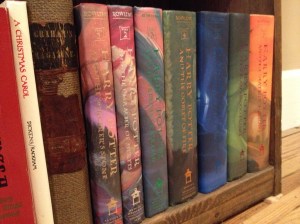
My own reading doesn’t always keep pace with my desire to do more of it.  I go for a couple of weeks sometimes without finishing a book.  I begin to feel depleted.  There’s something spiritual about reading, and fiction can reach parts of your soul that are on guard when non-fiction’s your subject.  And that’s like magic.  It took a couple years for me to catch on to the Harry Potter craze.  Eventually my wife and I broke down and bought book one and read it together.  As millions of readers can attest, that first book was a fishhook.  We all really hope the world does contain some magic.  Many people find that solace met with religion.  Either way, fiction can enhance the experience.  We read the original series, hanging tensely until the final volume came out.

Many of those who believe in a magical religion protested the sale of magical fiction.  We were still in Wisconsin at the time, but we saw the protestors outside a local bookstore the release day for one of the later volumes.  Like Death-Eaters the protestors opposed Harry Potter.  The root of the problem seems to have been unique truth claims.  Whenever a religion declares itself the sole harbinger of “the” truth, every other way of looking at things becomes evil.  Even if it expressly declares itself to be fantasy fiction for young adults.  Years have passed, and Harry Potter, like other forms of pop culture, has grown to the status of a religion.  Even Nones want to believe in something.  Magic and religion are, after all, very difficult to tell apart.


Mastication Meditation

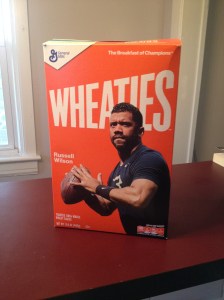
Musing while munching a bowl of Wheaties, a thought came to me.  Not only do we owe the practice of eating breakfast cereal to an evangelical strain of Christianity, but we also encounter the early morning ideas that stay with us through the day.  Cereal boxes start our day.  Advertisers and marketers know that images are important.  If successfully done they stay with us and may influence future purchasing choices.  In the case of Wheaties (which I’ve always liked) the box shows some athlete or other, implying that we’ll be champions too if we partake.  We are what we wheat.  Now, I don’t follow sports.  I can tell a football from a basketball, but watching grown men (usually) chasing one about really has no appeal to me.  I don’t eat Wheaties to become big and strong.  (At my age you don’t want to get bigger.)

As I ponder my fodder, I wonder what it would be like if we put pictures of people reading on our cereal boxes.  Would we experience a massive renaissance of literacy if cool people were shown with a book instead of a ball?  Don’t get me wrong—I’m all for exercise.  I’m a fidgety sort of guy who doesn’t sit still well.  I like to get out and jog or walk.  I don’t mind doing household repairs.  I like to move about.  But reading is one of the great rewards I allow myself.  When work becomes dull, I look forward to an evening of reading (I tend to do my writing in the morning, before the mental exhaustion of the day kicks in.  Wheaties are, after all, a morning food).  It’s kind of like living in pre-television times, I suspect.

Among the publishing industry the fate of book reading is a constant topic of discussion.  Or, not to put too fine a point on it, book buying.  Reading itself is doing fine.  If, for example, you are reading this you are probably doing so on a screen but you’re still reading.  You don’t have to pay for reading, and it passes the time.  No, the crises is getting people to buy books.  People like yours truly buy books even when many are available free online.  I spend at least eight hours a workday in front of a computer screen, and by the end of it, nervous and twitchy, I need a break.  I need a physical book.  And maybe a physical constitutional walk.  If only my breakfast cereal encouraged others to explore the joys of the literary life—but then, I’ve got to get going; my Wheaties are getting soggy.


Moving Books

One of my anxieties about moving is that commuting time was my reading time.  Enforced sitting for over three hours a day meant consuming book after book.  Now I have to carve out time to read.  Life has a way of filling the time you have.  I say the following fully aware that you’re on the internet now, but one of the biggest time drains is the worldwide web.  Humans are curious creatures and the web offers to answer any and all queries.  (It still hasn’t come up with a satisfactory answer to the meaning of life, however, IMHO.)  Even when I’m working on my current book, a simple fact-check can lead to surfing and before I know it, I’m out to sea.  That’s why books—paper books—are such a good option.  A footnoted source meant another trip to the library, and libraries led to more reading.

I’m a Goodreads author.  I like Goodreads quite a lot, and I actively accept new friends there.  In the past I set goals of reading 100+ books per year.  Aware back in January that a move might take place, I lowered my expectations.  I figured, even without commuting, that 65 books would be attainable in a year.  Of course, Goodreads doesn’t count the books you write, only those you read.  I had to tell even Amazon Author Central that Holy Horror was my book.  Moving, however, is a liminal time.  Every spare minute is spent packing.  And you still owe “the man” eight hours of your day.  That rumble that you feel is the moving truck growing closer.  Reading time has become scarce.  I fear I’m becoming illiterate.

And Goodreads makes me think of Twitter.  I’ll just click over there a while and wonder why I can’t seem to grow a following.  Ah, it turns out that you have to tweet often and incessantly, with erudite and trenchant things to say.  The birds chirping once a second outside my window can’t even keep up.  Problem is, I have a 9-to-5 job, and I’m trying to write Nightmares with the Bible.  And there’s just one more fact I have to check.  Wait, what’s the weather going to be like today?  Gosh, is that the time?  I have to get packing!  That moving van will be here only hours from now.  I need to calm down.  The way to do that, in my case, is to read a book.


Indie Bookstore Day

Although a year can seem like a long sentence, holidays are the punctuation marks that help us make sense of and organize it. Ordinary time, such as time at work, or commuting, can be endlessly tedious. Holidays, some personal, some local, others national or international, help us break up the time. Give us something to look forward to. My pity goes out to those religions that recognize no holidays and face time with a grim, Presbyterian determination to get to judgment day. The rest of us like to celebrate once in a while. So what’s today? It’s Independent Bookstore Day! Anyone who reads more than a post or two on this blog knows that I’m a lover of books. I first started taking solace in reading when things were difficult in my younger years, and reading has never let me down. In fact, I’ve often told myself that I could put up with just about any job as long as I could write.

It’s because of being in publishing that I learned about Independent Bookstore Day. Yes, it’s a promotional holiday, but it’s also a genuine celebration. As the outside world daily reminds us, those of us who read are a minority. The realistic author knows that the reading public is a small fraction of the whole. The number of people, percentage-wise, who spend their money on books is minuscule compared to those who fling their lucre elsewhere. But those of us who read appreciate the depth and reflection of each other. We may read different things, but we read. And that’s why I don’t mind going to an indie bookstore today and buying something.

One of the simple pleasures in life—call it a punctuation mark, a comma maybe—is being surrounded by unfamiliar books. Oh, I often worry what happens when we decide to move; we have lots of books at home. The last time the movers actually complained in our hearing that we had too many boxes of books. Talk about me at the bar afterwards, but don’t castigate my simple pleasures to my face, please. Books are the rare opportunity to commune with others on a deep level. How often have you put down a book and felt that you knew the author? Their soul was revealed in their writing and you had touched it. Just being in a bookstore is cause for celebration. If you have no plans for today, why not make your way to your local indie? Stand up and be counted as the literate resistance. It’s our silent Bastille Day, after all.


Shocking Truth

The electrician recently stopped by. We’re renters and although I don’t mind doing minor household repairs to benefit the landlord, I draw the line at electricity. It’s a scary thing. I’ve been shocked too many times to want a jolt bigger than I can handle. I even once accidentally grabbed the metal prongs when unplugging something as a child (it was a microscope light, I remember) and that helpless feeling of being unable to drop the plug even while my body jerked uncontrollably left me with a healthy respect for those who actually understand insulation, capacitors, and those impossible electrical diagrams. So when the pull chain came out of the ceiling light I wasn’t going to try to fix it.

The electrician, like most people who see our apartment, commented on the books. “You like to read,” he said. I can’t help but feel guilty about that. It’s almost as if you should apologize for requiring the stimulation of so many tomes. I confessed that I did, but I wanted to justify it. “I work in publishing,” I feebly offered as an excuse. Concentrating on the fixture above his head, he said, “I don’t ever read a book unless I have to.” He fixed the pull chain and left. I couldn’t have fixed the thing so quickly, or safely. He even had a metal ladder. I was grateful for the light, but once again felt somewhat freakish for my bibliophilia.

Those of us who write books must read books. You can’t learn how to do one without the other. Because of movies and television, we picture writers as people with large houses and separate rooms as libraries where they can sit surrounded by books as they type away at their next bestseller. Those of us who work for a living seldom have such luxury. A separate room just for books? I like letting my books reside in whatever room they feel like. Most affordable apartments don’t come with a study. There are living room books that you want people to see, and kitchen books that suggest good things to eat. There are bedroom books that you might not want others to see. What I don’t have is a library. A book zoo. My books roam freely about my home. It occurs to me that one area lacking in my collection is one about household wiring. Maybe instead of feeling weird I should get wired. I’m sure there are books out there that will tell me how. Or at least that will let me know that a wooden ladder makes a poor conductor.